Don’t call them lazy

Izzy and I do a fair amount of volunteering for our local re-homing group, Greyhounds as Pets.  In describing the greyhound, I often hear the term lazy used as in “they are very lazy dogs and like to sleep most of the day.”

The Oxford dictionary defines lazy as “unwilling to work or use energy.”   I don’t find Izzy unwilling to expend energy; she’ll happily join me for walks twice a day (except when it is raining heavily and then she needs some encouragement).    Often she will instigate play time herself – typically in the evening after dinner – when she zooms around the house with one or more of her toys.  Yes, she plays for about 5-10 minutes, but she does play.

And in my mobile service, she often accompanies me in the car to meet and greet clients.  (Yes, she also sleeps in the car but the point is – she is always happy to go in the car and usually bounces into the garage before I have time to clip on her car harness.)

The synonyms for lazy include slothful, inactive,  idle and slow-moving.    These terms remind me of the stereotypical fat person whose preferred activity is sitting on their sofa eating junk food and drinking.

Like Homer Simpson.

And greyhounds are definitely not slow-moving when they decide it’s time for a zoomie.

Izzy is certainly not fat, either.  She’s a svelte girl who has maintained her ideal weight for the 3 1/2 years that she has been in my life.  Most of her greyhound friends are equally as fit.

So I think we do a disservice to the breed by calling them lazy because lazy has many negative connotations. No one enjoys working with someone who is lazy and doesn’t carry their weight, for example.

Instead, I propose:

“Greyhounds are discerning in what activities they choose to undertake.”  (A sign of quality and taste!)

and

“Greyhounds are energy-conserving.” (A dog that is kind to the earth and sustainable!)

Greyhounds – don’t call them lazy.


I'm not lazy

Kathleen Crisley, specialist in dog massage, rehabilitation and nutrition/food therapy, The Balanced Dog, Christchurch, New Zealand

Demography and disorders of the French Bulldog population

French Bulldogs, predicted soon to become the most popular dog breed in the UK, are vulnerable to a number of health conditions, according to a new study published in the open access journal Canine Genetics and Epidemiology.

Researchers at The Royal Veterinary College (RVC), UK found that the most common issues in French Bulldogs over a one year period were ear infections, diarrhea and conjunctivitis (inflammation of the eye surface).

FB

French Bulldog puppy. Credit: © Mary Swift / Fotolia

Dr. Dan O’Neill, RVC Senior Lecturer and the main author, said: “French Bulldogs are a relatively new arrival to the list of common UK breeds so there is very little current research on them in the UK. Our study — the first on this breed in the UK — is based on anonymised records gathered from hundreds of UK vet clinics. It provides owners with information on the issues that they could expect and should look out for in French Bulldogs. It may also help potential new owners to decide if a French Bulldog really is for them.”

Dr. O’Neill adds: “One of the interesting finding from our research is that male French Bulldogs appear to be less healthy than females. Males were more likely to get 8 of the 26 most common health problems while there were no issues that females were more likely to get than males.”

The authors suggest that the distinctive appearance of the French Bulldog, with their short muzzles and wide, prominent eyes, may be a key factor influencing their popularity. However, these characteristics may also increase the risk for some of the health problems seen in French Bulldogs. For example breathing issues, seen in 12.7% of the dogs in this study, are a known problem in breeds with short noses and flat faces. Skin problems overall were the most common group of health issues and the authors suggest that this may be due to the skin folds that are characteristic of the breed.

Dr. O’Neill said: “This study also documents the dramatic rise in popularity of the French Bulldog, from 0.02% of puppies born in 2003 to 1.46% of puppies born in 2013. This level of population growth in a single dog breed is unprecedented. There is a worry that increased demand for the French Bulldog is damaging to these dogs’ welfare because of the health risks associated with their extreme physical features.”

The authors analyzed data on 2,228 French Bulldogs under veterinary care during 2013 from 304 UK clinics, collected in the VetCompass™ database. The French Bulldogs had a median age of 1.3 years old compared to a median age of 4.5 years for the other dog breeds in the VetCompass™ database. This reflects the growth in popularity of French Bulldogs.

The authors caution that the study may even under-estimate the true number of dogs with health problems as the data may include more severely affected animals that require veterinary management. Additionally, as French Bulldogs have only recently become popular the data was mostly collected from young dogs and it is well recognized that health problems generally become more common with age.

Source:  Science Daily

Read the journal article here


Doggy quote of the month for May

“The final piece of verbal activism is this:  we need to  speak out in the defense of companion animals.  We are accountable for what we say and also for what we do not say.  Silence is a form of acquiescence.  Qui tacet consentire videtur.  He who is silent is taken to agree.”

-Jessica Pierce, author of Run, Spot, Run

Edweena

The differences between flower essences and essential oils

I have found that there is often confusion between essential oils and flower essences.  This isn’t surprising – both evoke connotations of fresh smells and flowers.  However, it’s important to understand the difference and the use of these products when caring for your dog.

Essential oils are a fundamental part of aromatherapy.  They are often diffused in a burner of some sort, such as the traditional one with a tea candle below the area where the oil is placed, or in the newer modern version – ultrasonic diffusers.

When used for massages, the essential oils (which are very strong) are diluted in carrier oil such as sweet almond oil or in a waxier, balm-like base.  Most of my human massage therapist colleagues use essential oils in their practices in this way – lavender is very common, for example, for relaxing human clients!

Essential oils are very much for use outside the body (not to be ingested).

Now here’s the thing:  I am generally not a fan of using essential oils in dog care. 

These oils are quite powerful.  And for the same reason that I don’t like chemical sprays for air fresheners and fly control (See:  Before you install these devices, consider your dog), I don’t think they are useful with dogs.  If dogs have a sense of smell that is 100,000 times more powerful than ours, how can we be sure that we aren’t driving them crazy with the odour of these oils?  I don’t believe we can.

Flower essences are a whole other ball game.  The most famous of the flower essences is Bach’s Rescue Remedy, which is a blend of flower essences designed to help with stress and anxiety.   Dogs can be given Rescue Remedy in times of need  – such as fireworks season.

Because of the popularity of Rescue Remedy, many dog owners don’t realise that there are a wide range of flower essences (some of which technically come from trees) which can be used for emotional and other imbalances.  Dr Edward Bach, an English doctor and homeopath, originally studied and documented flower essences in the 1930s.  For this reason, they are often referred to as Bach Flower Remedies.  However, there are other essences such as those that come from Australian wild flowers which cannot be attributed to Dr Bach.

Flower essences are made by infusing the plant material using a heat source (often sunshine) and air into water.  The infusion is then preserved with something like brandy and stored – ready for use.  Flower essences contain the natural energy of the plant material (not the plant material itself) and we can use these, internally – unlike essential oils –  to help with imbalances.

The principle behind flower essences is that they are based on energy and so if your dog doesn’t need that particular energy, nothing will happen.  But by matching the right essence to their condition, flower essences can help.

The only thing that ‘smells’ about a flower essence is the alcohol preservative in the mixture.  This is a major difference between the essences and essential oils and is key to why I am happy to use them in my practice.

Kathleen Crisley, specialist in dog massage, rehabilitation and nutrition/food therapy, The Balanced Dog, Christchurch, New Zealand

Is There A Link Between Your Pets and Your Food Choices?

People who grow up with a greater variety of pets are significantly more likely to follow a vegetarian diet as adults, according to research by a professor-student team in the University at Albany psychology department.

Sydney Heiss, graduate student in the department of psychology, worked with assistant professor Julia Hormes to gain a better understanding of the factors that play a role in a person’s decision to refrain from animal products as adults.

pets_and_vegetarians_550(1)

Assistant Professor of Psychology Julia Hormes, left, and graduate student Sydney Heiss, both with their dogs, conducted research on the influence that childhood pets have on a person’s diet choices in adulthood. Photo by State University of New York, Albany

The two recruited study participants from social media webpages focused on food in general, including those focused on vegetarianism and veganism, resulting in a pool of 325 participants with a mean age of 30 years.

Participants provided their demographic information and whether they followed any vegetarian diet, including “flexitarian” (mostly vegetarian, but sometimes eats meat), “semi-vegetarian” (eats some types of meat but refrains from others), “pescetarian” (eats fish, eggs and dairy but refrains from other meat products), “lacto-ovo-vegetarian” (eats eggs and dairy, but refrains from all animal flesh), “vegan” (no animal products whatsoever), and “raw vegan” (consumes exclusively uncooked non-animal products).

Heiss and Hormes then assessed the individual’s beliefs and attitudes regarding the use of animals in food, clothing and research and surveyed them on their ownership and relationship with any childhood pets. Participants were asked about the number and types of their childhood pets, how often they were responsible for their animal(s) care, how close they felt to the animal(s), etc.

After a statistical analyses of all responses, the duo found:

  • Those who owned pets in childhood were significantly more likely than those without pets to follow a vegetarian or vegan diet as an adult.
  • Those who owned a variety of pets (i.e. hamsters, dogs and cats, as opposed to just dogs) were more likely to avoid a wider range of animal products (e.g., refrain from all animal products as opposed to only meat) than those who owned fewer pets.
  • A wider variety of pets led to a stronger opposition towards animal exploitation, which in turn led to less animal product consumption.
  • Closeness to ones’ pet was a significant predictor of a person’s likelihood to refrain from animal products as an adult.

“It seems as though individuals who had different types of pets more easily empathize with farmed animals or those used in research,” said Heiss. “For example, someone who had only a dog may have difficulty feeling empathy for a cow, whereas someone who grew up with farm animals may be more attuned to characteristics that are shared across all species and therefore, better able to empathize with all animals.”

Though research previously existed suggesting a potential link between pet ownership and animal product restriction, Hormes notes there’s a key difference about this most recent study.

“Past research has suggested that closeness to a childhood pet is the key factor that predicts increased empathy and vegetarianism in adulthood,” said Hormes. “Our findings suggest that there may be more than one pathway to vegetarianism in adulthood – the number of pets in childhood, ethical concerns towards animal use, and level of vegetarianism is significant.”

The full study can be read here.

Source:  State University of New York press release


Dogs could be more similar to humans than we thought

Dog and human gut microbiomes have more similar genes and responses to diet than we previously thought, according to a study published in the open access journal, Microbiome.

Canine Microbiome

The canine microbiome is quite similar to that of humans. Credit: © Kar Tr / Fotolia

Dr Luis Pedro Coelho and colleagues from the European Molecular Biology Laboratory, in collaboration with Nestlé Research, evaluated the gut microbiome of two dog breeds and found that the gene content of the dogs microbiome showed many similarities to the human gut microbiome, and was more similar to humans than the microbiome of pigs or mice.

Dr Luis Pedro Coelho, corresponding author of the study, commented: “We found many similarities between the gene content of the human and dog gut microbiomes. The results of this comparison suggest that we are more similar to man’s best friend than we originally thought.”

The researchers found that changes in the amount of protein and carbohydrates in the diet had a similar effect on the microbiota of dogs and humans, independent of the dog’s breed or sex. The microbiomes of overweight or obese dogs were found to be more responsive to a high protein diet compared to microbiomes of lean dogs; this is consistent with the idea that healthy microbiomes are more resilient.

Dr Luis Pedro Coelho, commented: “These findings suggest that dogs could be a better model for nutrition studies than pigs or mice and we could potentially use data from dogs to study the impact of diet on gut microbiota in humans, and humans could be a good model to study the nutrition of dogs.

“Many people who have pets consider them as part of the family and like humans, dogs have a growing obesity problem. Therefore, it is important to study the implications of different diets.”

The researchers investigated how diet interacted with the dog gut microbiome with a randomized controlled trial using a sample of 64 dogs, half of which were beagles and half were retrievers, with equal numbers of lean and overweight dogs. The dogs were all fed the same base diet of commercially available dog food for four weeks then they were randomized into two groups; one group consumed a high protein, low carb diet and the other group consumed a high carb, low protein diet for four weeks. A total of 129 dog stool samples were collected at four and eight weeks. The researchers then extracted DNA from these samples to create the dog gut microbiome gene catalogue containing 1,247,405 genes. The dog gut gene catalogue was compared to existing gut microbiome gene catalogues from humans, mice and pigs to assess the similarities in gene content and how the gut microbiome responds to changes in diet.

The authors caution that while humans and dogs host very similar microbes, they are not exactly the same microbes, but very closely related strains of the same species.

Source:  Science Daily

Increased protections for animals

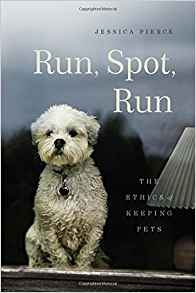
Earlier this month, I reviewed Run, Spot, Run by Jessica Pierce.  In that book, Pierce provides a list of incremental changes each of which would offer increased protections to animals.

I quote them here for sharing purposes because they are the most comprehensive list I have found thus far in terms of explaining the shortcomings we still have in animal care,  welfare, and protection.

Chester looking out window

  • licensing requirements for all pet owners
  • laws limiting or prohibiting the sale of live animals
  • laws regulating international and interstate shipping of live animals
  • a federal prohibition on the sale of crush films, in particular, and animal pornography in general
  • state laws making sexual assault of an animal punishable (not limited to sexual assaults that are fatal or cause severe injury)
  • better and more frequent inspections of breeding facilities
  • better and more frequent inspections of animal wholesale facilities
  • greater transparency in the pet industry, such as, perhaps, in identifying the sourcing of animals for sale
  • greater transparency in the shelter industry
  • state laws requiring at least eight hours of training for anyone performing euthanasia
  • free speech protections for those who expose corporate animal abuses
  • reporting requirements for veterinarians (e.g. abuse, sexual assault)
  • combined/coordinated reporting of animal abuse and domestic partner, child or elder abuse
  • a publicly accessible national registry of those convicted of animal cruelty or sexual assault
  • increased (and responsible) media reporting of crimes against animals
  • more community resources (e.g. tax money) dedicated to shelters, animal control facilities, and cruelty investigators
  • state-appointed lawyers to represent animals in court
  • required humane education in schools
  • laws making failure to provide timely veterinary care a legally enforceable welfare violation
  • laws allowing pet owners to collect damages for emotional pain and suffering resulting from the loss of a pet at the hands of another human
  • laws making “convenience euthanasia”an animal cruelty violation
  • greater regulation of the pet food industry, including more rigorous inspection of ingredients, greater transparency about sourcing and ingredients, and a well-coordinated method of alerting customers about recalls

Source:  Run, Spot, Run by Jessica Pierce, pages 211-212

Kathleen Crisley, specialist in dog massage, rehabilitation and nutrition/food therapy, The Balanced Dog, Christchurch, New Zealand

Run, Spot, Run – book review

Run, Spot, Run -The Ethics of Keeping Pets by Jessica Pierce takes its name from the black and white puppy of the Dick and Jane early reader books that were used from the 1930s until the 1970s.

Spot is a stand-in for all the animals that are kept as pets; this is not just cats and dogs but also exotics and other animals.

Run Spot Run by Jessica Pierce

The scope of this book is a mixture of information which is enlightening, challenging and thought-provoking.

Pierce, a bioethicist, aims to answer the fundamental question, “Is it ethical to keep pets?”  And the issue isn’t nearly as black and white as Spot the dog was.

She covers the implication of care needs such as spay/neuter, enrichment and feeding, for example.  The feeding chapters canvas the issues of what we choose to feed, and how these feeds are sourced – powerful stuff that is often missed in the ever-present “raw vs kibble” debate.  Food for thought, definitely.

Cruelty and neglect are also covered, as are the hard-hitting facts of other animal abuse such as sexual abuse of animals (this chapter comes with a warning about offensive and disturbing content).   Exotic pets and their plight are also discussed.

This book is not a light read; but for any true pet lover, you owe it to yourself to look at the wider ethical issues around pet care and responsibility.  Pierce’s final words are a fitting closure to this book:

“I leave you with a call to action.  Change starts with awareness.”

Kathleen Crisley, specialist in dog massage, rehabilitation and nutrition/food therapy, The Balanced Dog, Christchurch, New Zealand

Dogs – a driving force behind the home buying market

A major reason I bought my first home was to adopt a dog; I couldn’t confidently bring a dog into my home when I was renting.

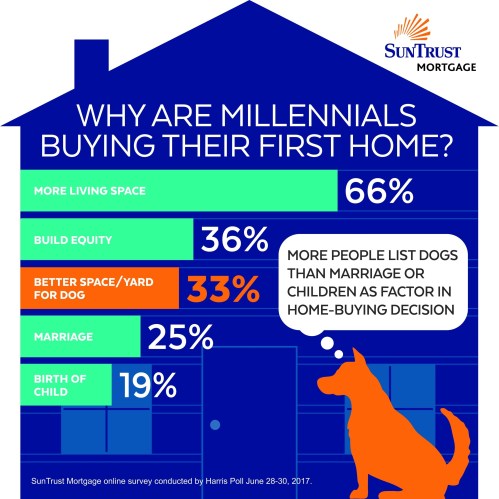
I see that I was a woman ahead of my time (Gen X – not Millennial).  A study by SunTrust Mortgages from the USA reveals some interesting trends for first-time home buyers:

Harris Poll on behalf of SunTrust Mortgage Infographic

That’s right – not children or marriage, but dogs were one of the top 3 motivators for buying a home.

“Millennials have strong bonds with their dogs, so it makes sense that their furry family members are driving home-buying decisions,” said Dorinda Smith, SunTrust Mortgage President and CEO. “For those with dogs, renting can be more expensive and a hassle; home ownership takes some of the stress off by providing a better living situation.”

Among millennials who have never purchased a home, 42 percent say that their dog – or the desire to have one – is a key factor in their desire to buy a home in the future, suggesting dogs will also influence purchase decisions of potential first-time homebuyers.

What does this mean if you are selling a home (or are a real estate sales agent)?  Make sure you strongly advertise a securely-fenced section, local parks and dog-friendly facilities such as dog parks or cafes.

Kathleen Crisley, specialist in dog massage, rehabilitation and nutrition/food therapy, The Balanced Dog, Christchurch, New Zealand

Source:  PR Newswire


Netflix and Woof

When it comes to watching TV, most people — 58 percent — find pets to be the best binge partner, a new survey released by Netflix reveals.

One in three respondents, meanwhile, said they’ve turned to their furry friends for comfort during a sad or scary scene. And 22 percent have talked to their pet about the show or movie they were watching.

dog watching tv on the couch

Additional stats:

  • 37 percent have moved where they were sitting so their pet would be more comfortable.
  • 22 percent have bribed them with treats to watch longer.
  • 12 percent have turned off a show because their pet didn’t appear to like it.

Dog owners are more likely to choose action like Narcos and Marvel’s Daredevil, the survey found. Cat owners prefer sci-fi series like Black Mirror and Star Trek Discovery. And bird lovers like comedies such as Orange is the New Black.
The one show that brings all streaming species together: Stranger Things.

The survey was conducted Jan. 9-25 by SurveyMonkey and based on more than 50,000 responses. The sample is representative of an adult online population who watch Netflix with their pets in Argentina, Australia, Brazil, Canada, Chile, Colombia, Denmark, France, Germany, India, Ireland, Italy, Mexico, Netherlands, New Zealand, Peru, Poland, Portugal, Romania, South Africa, South Korea, Spain, Sweden, Thailand, Turkey, the U.S. and the United Kingdom.

Source:  Pets Plus