Dogs´social skills linked to oxytocin sensitivity

The tendency of dogs to seek contact with their owners is associated with genetic variations in sensitivity for the hormone oxytocin, according to a new study. The findings contribute to our knowledge of how dogs have changed during their development from wolf to household pet.
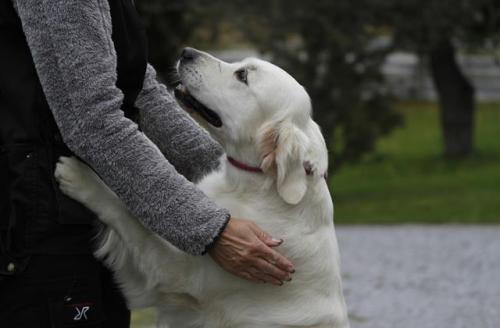
Golden Retriever

A golden retriever turns to his owner for help. Photo credit: Mia Persson

During their domestication from their wild ancestor the wolf to the pets we have today, dogs have developed a unique ability to work together with humans. One aspect of this is their willingness to “ask for help” when faced with a problem that seems to be too difficult. There are, however, large differences between breeds, and between dogs of the same breed. A research group in Linköping, led by Professor Per Jensen, has discovered a possible explanation of why dogs differ in their willingness to collaborate with humans. The results have been published in the scientific journal Hormones and Behavior.

The researchers suspected that the hormone oxytocin was involved. It is well-known that oxytocin plays a role in social relationships between individuals, in both humans and animals. The effect of oxytocin depends on the function of the structure that it binds to, the receptor, in the cell. Previous studies have suggested, among other things, that differences in dogs’ ability to communicate are associated with variations in the genetic material located close to the gene that codes for the oxytocin receptor. The researchers in the present study examined 60 golden retrievers as they attempted to solve an insoluble problem.

“The first step was to teach the dogs to open a lid, and in this way get hold of a treat. After this, they were given the same task with the lid firmly fixed in place, and thus impossible to open. We timed the dogs to see how long they attempted on their own, before turning to their owner and asking for help,” says Mia Persson, PhD student at the Department of Physics, Chemistry and Biology, and principal author of the article.

Before the behavioural test, the researchers increased the levels of oxytocin in the dogs’ blood by spraying the hormone into their nose. As a control, the dogs carried out the same test after having received a spray of neutral salt water in the same way. The researchers also collected DNA using a cotton swab inside the dogs’ cheek, and determined which variant of the gene for the oxytocin receptor that each dog had.

The results showed that dogs with a particular genetic variant of the receptor reacted more strongly to the oxytocin spray than other dogs. The tendency to approach their owner for help increased when they received oxytocin in their nose, compared with when they received the neutral salt water solution. The researchers suggest that these results help us understand how dogs have changed during the process of domestication. They analysed DNA also from 21 wolves, and found the same genetic variation among them. This suggests that the genetic variation was already present when domestication of the dogs started, 15,000 years ago.

“The results lead us to surmise that people selected for domestication wolves with a particularly well-developed ability to collaborate, and then bred subsequent generations from these,” says Mia Persson.

The genetic variations that the researchers have studied do not affect the oxytocin receptor itself: they are markers used for practical reasons. Further research is necessary to determine in more detail which differences in the genetic material lie behind the effects.

Per Jensen points out that the study shows how social behaviour is to a large extent controlled by the same genetic factors in different species.

“Oxytocin is extremely important in the social interactions between people. And we also have similar variations in genes in this hormone system. This is why studying dog behaviour can help us understand ourselves, and may in the long term contribute to knowledge about various disturbances in social functioning,” he says.

The article: Intranasal oxytocin and a polymorphism in the oxytocin receptor gene are associated with human-directed social behavior in golden retriever dogs, Persson, M.E., Trottier, A.J., Beltéky, J., Roth, L.S.V., Jensen, P., 2017, Hormones and Behavior 95, 85–93, published online 17 August 2017. doi:10.1016/j.yhbeh.2017.07.016

Source:  Linköping University media release

De-stressing airport passengers – PUPs

I flew through LAX earlier this week, and the Las Vegas shooting happened when I was in the air on my way home to New Zealand.  LAX (Los Angeles International Airport) has had a dog therapy programme in place for a few years.

The airport announced this week that in the wake of the Las Vegas shooting, it had added more of its PUP teams to support passengers at a time of intense stress and grief.

PUPS

Volunteer PUPs Jack and Chance with their “moms” Debra Mindlin and Heidi Huebner at LAX’s terminal 4 on Monday, Oct 2, 2017. (Photo courtesy Heidi Huebner)

The PUP teams are made up entirely of volunteers who enjoy sharing their dogs with passengers and staff at the airport.  Yet another way that our dogs can work for us, and use their unique gifts of unconditional love and support.

I wrote about the PUPs programme in August 2014, by the way:

August 2014

Kathleen Crisley, specialist in dog massage, rehabilitation and nutrition/food therapy, The Balanced Dog, Christchurch, New Zealand

Inspirations

How time flies.  This time last month, I was frantically busy getting ready for a study and work trip to Best Friends Animal Society.  I’m back at work this week and my trip is becoming a memory – far too quickly.

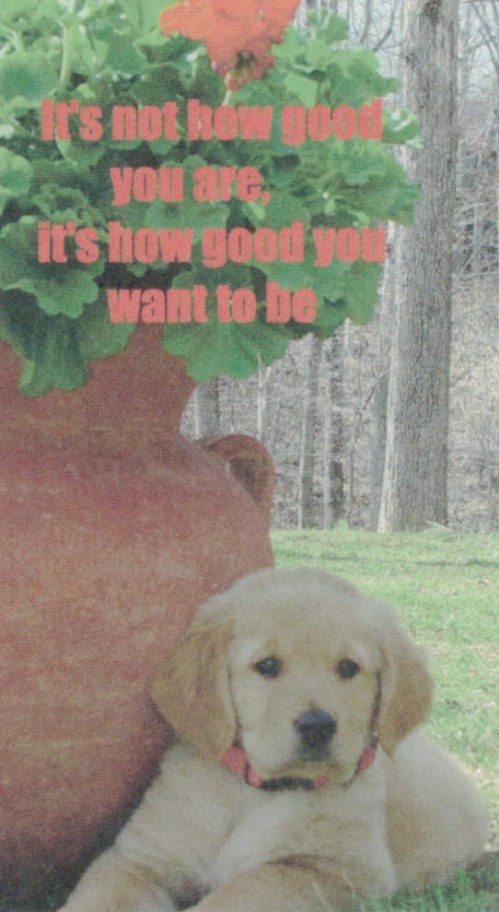
But there are still a few items to put away – including my inspiration cards.  A lady on my course encourages people to pick one every day as an inspiration and thought for the day.

I’ll share them all with you – but here’s the first one:

It's not how good

Kathleen Crisley, specialist in dog massage, rehabilitation and nutrition/food therapy, The Balanced Dog, Christchurch, New Zealand

Pet obesity

October 12th is National Pet Obesity Awareness Day in the USA.  Pet obesity is a ‘first world’ problem; I often see dogs in my practice that are overweight or obese.

This handy obesity chart gives you an idea of how to score your dog’s (and cat’s) body condition:

Layout 1

A vet check is always advisable before starting your dog on a weight loss programme.  In my experience, weight loss isn’t just about dietary changes.  Massage and stretching combined with exercise can help your dog feel  better and move more freely – meaning more calories are burned to assist with any reduction in food intake.

Kathleen Crisley, specialist in dog massage, rehabilitation and nutrition/food therapy, The Balanced Dog, Christchurch, New Zealand

Doggy quote of the month for October

“Dogs laugh, but they laugh with their tails.”

tail wagging dog

—Max Eastman, writer

Dog park designs

If I ever win Lotto, I’d like to sponsor a major dog park development.

Dog park designs are an interesting line of work for landscape architects.  James Harrison Melnick of the University of Arizona did a review of A Successful Southwest Dog Park in 2013.

His report is still a useful document with various designs, their pros and cons, reviewed and discussed.

Chaparral Dog Park Scottsdale AZ

The Chaparral Dog Park in Scottsdale, Arizona

His report is downloadable through this link.

Kathleen Crisley, specialist in dog massage, rehabilitation and nutrition/food therapy, The Balanced Dog, Christchurch, New Zealand

Common signs of pain in dogs

How do I know my dog is in pain?

(It’s a question I get fairly frequently)….

Here’s a list of things to look out for:

  • Decreased social interaction
  • Anxious expression
  • Submissive behavior
  • Refusal to move
  • Whimpering
  • Howling
  • Growling
  • Guarding behavior
  • Aggression, biting
  • Decreased appetite
  • Self-mutilation
  • Changes in posture

If you think your dog is in pain, then a visit to your vet is the first priority.  Once we have a working diagnosis, then consider what complementary therapies can do to manage your dog’s quality of life – often with reduced or no drugs.

Kathleen Crisley, specialist in dog massage, rehabilitation and nutrition/food therapy, The Balanced Dog, Christchurch, New Zealand

The Gloucester dog park

Whenever I travel, I like to visit dog parks, independent pet stores and other locations to see what works and to pick up on new ideas.

Today, I was able to visit the Gloucester dog park.  In this case, it was quite by accident – the dog park happens to be located across the road from the Welcome Center.

I particularly liked to see that prong, choke and spiked collars are specifically prohibited and that dog owners are encouraged to make donations to the upkeep of the park.

The double gated entries to both the large and small dog areas were spacious and easy to manage.

Well done to the Town of Gloucester (Massachusetts)!

Kathleen Crisley, specialist in dog massage, rehabilitation and nutrition/food therapy, The Balanced Dog, Christchurch, New Zealand


Owners of seriously ill pets at risk of stress, anxiety and depressive symptoms

Owners of seriously or terminally ill pets are more likely to suffer with stress and symptoms of depression and anxiety, as well as poorer quality of life, compared with owners of healthy animals, finds a study published by Veterinary Record.

old dog

Caring for a sick or dying pet can be a serious emotional burden. Credit: © tuaindeed / Fotolia

This ‘caregiver burden’ may also lead to increased veterinarian stress, say the authors.

Research on human caregiving describes ‘caregiver burden’ as a response to problems and challenges encountered while providing informal care for a sick family member. But little is known about the impact of caregiver burden on owners of animals with chronic or terminal diseases – and the veterinarians who care for them.

So a team of researchers, led by Mary Beth Spitznagel at Kent State University in Ohio, set out to assess caregiver burden and psychosocial function in 238 owners of a dog or cat.

They compared 119 owners of an animal diagnosed with a chronic or terminal disease with 119 healthy controls blindly matched for owner age and sex and animal species.

Symptoms of stress, anxiety and depression were measured using recognised scales, and quality of life was assessed by questionnaire. Owners’ demographic information was also recorded.

Results showed greater burden, stress and clinically meaningful symptoms of depression and anxiety, as well as poorer quality of life, in owners of animals with chronic or terminal disease. Higher burden was also related to poorer psychosocial functioning.

The authors outline some study limitations which could have introduced bias, but they say their findings “may help veterinarians understand and more effectively handle client distress in the context of managing the challenges of sick companion animal caregiving.”

And they suggest that future research is needed to better understand risks for caregiver burden in the client, how this might be reduced, and how it impacts veterinarian wellbeing.

In a linked commentary, Katherine Goldberg calls for improved training for veterinarians around provision of long term care for serious illness. This includes tailoring treatment plans to client preferences, recognising when clients are distressed, and partnering with mental health professionals to provide support.

“This inaugural exploration of caregiver burden within a veterinary setting is the first step in assessing the impact of veterinary caregiving on clients, as well as the impact of client emotional distress on veterinarian wellbeing,” writes Goldberg. “It is my hope that with continued dialogue, we will continue to build the literature in these essential areas.”

Source:  BMJ press release

Willa – Our Sweet Girl

Willa is a special dog.

An American Pit Bull x Boxer, Willa has breast cancer which has likely spread. She’s on medication, but with time being precious, it’s important to focus on quality of life.   Willa is a popular sleepover dog at Best Friends Animal Sanctuary – every precious sleepover adds to Willa’s quality of life and enrichment.  She really enjoys getting out of kennels, getting cuddles and having a good, deep sleep.

IMG_1818[1]

Willa loves rides in the car

IMG_1810[1]

A special tag for a special girl

I really enjoyed staying with Willa and seeing her sweet nature in person.  Let’s hope she gets a home soon.

Kathleen Crisley, specialist in dog massage, rehabilitation and nutrition/food therapy, The Balanced Dog, Christchurch, New Zealand