Training of explosive-detecting dogs

With a sense of smell much greater than humans, dogs are considered the gold standard for explosive detection in many situations. But that doesn’t mean there isn’t room for improvement.

In a study appearing in the journal Analytical Chemistry, scientists report on a new, more rigorous approach to training dogs and their handlers based on real-time analysis of what canines actually smell when they are exposed to explosive materials.

Vapor analysis training

New training techniques based on real-time analysis of what a dog smells could improve explosives detection. Credit: wellphoto/Shutterstock.com

Explosives are often used in terrorist attacks. Dogs trained to detect odors emanating from TNT, nitroglycerin and other explosives are a crucial part of the first-line defense against these incidents. But delivering low-concentration vapor during training sessions is a challenging task. Cross-contamination of training materials with samples from different explosives can skew results and confuse both dogs and handlers. To address these concerns, Ta-Hsuan Ong and colleagues sought to better understand the components within explosive odors that cue a dog’s reaction.

The researchers developed a real-time vapor analysis mass spectrometer to more accurately measure the vapor plumes from explosives that trigger a canine response.

In field trials, they used the device and found that some mistakes the dogs made were indeed correct identifications. For example, some “blanks” were used that were ostensibly prepared without explosive material, but the dogs indicated an explosive was present. When the researchers used the mass spectrometer on such blanks, they found evidence of explosive vapors, indicating cross contamination occurred or other interferents were present.

Based on these findings, the researchers suggest that use of real-time vapor analysis could help differentiate canine mistakes from cross contamination and other issues during training.

Source:  American Chemical Society

Doggy quote of the month for July

“Acquiring a dog may be the only time a person gets to choose a relative.”

– Mordecai Siegal, author

Izzy the greyhound

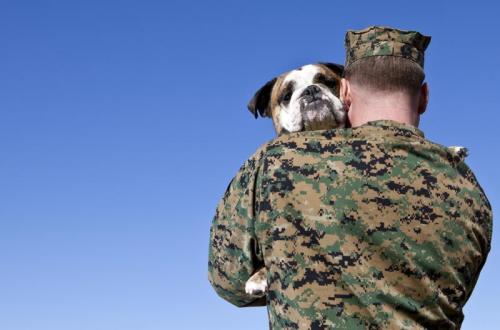
Quantifying the Effects of Service Dogs for Veterans with PTSD

veteran with dog


Researchers from the Purdue University College of Veterinary Medicine’s Center for the Human Animal Bond will analyze the influence service dogs have on the lives of military veterans suffering from post-traumatic stress disorder (PTSD) in a unique clinical trial.

According to the United States Veterans Administration, 22 veterans commit suicide each day, and at least 40 percent have been diagnosed with PTSD. The rate could be even higher, as many cases of PTSD go undiagnosed.

Previous studies have suggested that individuals who bond with their pet dogs exhibit elevated levels of oxytocin – sometimes referred to as the “cuddle hormone” because it sparks emotional responses that contribute to relaxation and trust. Additionally, the National Center for PTSD claims dogs can encourage veterans to communicate more through commands and training, and prompt them to spend more time outdoors and meet new people.

These benefits support anecdotal reports that show an increase in the prevalence of service dogs for individuals with PTSD, but scientific evidence examining this growing trend and its effects on PTSD patients is still lacking.

“Many veterans are increasingly seeking complementary interventions for PTSD, including service dogs,” stated Maggie O’Haire, lead researcher and assistant professor of human-animal interaction at Purdue. “Yet, even with the well-meaning intentions of service dog organizations that are working to meet the demand, our systematic review of scientific literature confirms a lack of published, empirical research on the effects that service dogs have on veterans and their spouses.”

To help carry out the study, the research team has partnered with K9s for Warriors – one of the nation’s leading providers of service dogs to military vets suffering from a variety of conditions including PTSD, traumatic brain injuries, or sexual trauma as a result of service post-9/11.

The team hopes to determine what sort of PTSD symptom changes veterans may experience as a result of having a service dog, as well as any effects on social functioning and physiological biomarkers.

According to a university release, standardized survey instruments and objective measures of physiology will be used to track stress and functioning. The researchers will also use a novel ecological momentary assessment protocol to capture the role and function of the dogs in everyday life.

The results will be the first evidence-based data to be published that quantitatively identifies the roles and effects of service dogs for military veterans with PTSD.

The study is unique because it applies research methodology and evidence-based science to an area that has typically relied on emotion, according to O’Haire.

“Without scientifically sound studies that establish proof-of-concept for the therapeutic efficacy of PTSD service dogs, this animal-assisted intervention strategy will continue to be minimized as an unsupported and potentially unsound practice, despite anecdotal reports that the dogs may have a significant impact,” added O’Haire.

Source:  www.laboratoryequipment.com

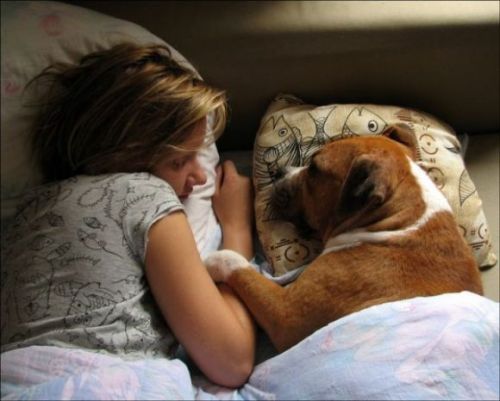
Sharing your bed with your pet (or other humans)

About half of all pet owners share their beds or bedrooms with their pets at night. Although this has been the case through the ages, remarkably few studies have been done about the benefits and drawbacks of this practice.

In an article in Springer’s journal Human Nature, the authors argue that society regards both human-animal and adult-child co-sleeping with the same unnecessary apprehension. These concerns should, however, be set aside because both practices have their benefits, says lead author Bradley Smith of Central Queensland University in Australia.

sleeping together

Sleeping arrangements between humans have evolved over time and across cultures. In medieval Europe, for instance, sleep was a public and communal affair. It was not uncommon to receive visitors in the bedroom, or for many people to sleep in the same bed. Sleeping with others was a way to increase personal security, conserve resources, and generate warmth. Sleeping with children from birth is still the norm in many cultures, for instance in Egypt and among indigenous cultures in unindustrialized populations. Intergenerational co-sleeping is generally more prevalent in collectivist Asian countries than in contemporary, individualistic or industrialized Western cultures.

In the West, sleep is nowadays regarded as an individual and private experience that helps the body and mind to optimally rest and recuperate. The normative shift from sleep as a public and social affair to a private one arose through a complex “civilizing” process starting in the Victorian era. Social norms and rules began to dictate that each person should sleep in a single bed, in a private place away from public view, and wear appropriate sleeping attire. This gradually introduced the concept of the private bedroom and private sleep to many social classes.

In their paper, Smith and his co-authors use dogs as an example of human-animal co-sleeping. They compare human-canine sleeping with adult-child co-sleeping and argue that both forms of co-sleeping share common factors for establishment and maintenance, and have similar advantages and disadvantages.

According to the Australian researchers, current apprehension about human-animal co-sleeping and bed sharing between parents and their children focuses too much on possible negative aspects or consequences, such as poor health, impaired functioning, the development of problematic behavior, and even sexual dysfunction.

“Apart from its clear reproductive function for the survival of the species, as well as physiological support for the quality and quantity of sleep that are essential to individual health and well-being, co-sleeping fulfils basic psychological needs and reinforces and maintains social relations,” highlights Smith. “Throughout history, humans have shared their sleeping spaces with other humans and other animals.”

“We propose that human-animal and adult-child co-sleeping should be approached as legitimate and socially relevant forms of co-sleeping,” says Smith, who believes that more research should be done on human-animal co-sleeping practices. “Moreover, a comprehensive understanding of human-animal co-sleeping has significant implications for human sleep, human-animal relations, and animal welfare.”

Reference: Smith, Bradley P. et al. (2017). A Multispecies Approach to Co-Sleeping: Integrating Human-Animal Co-Sleeping Practices into Our Understanding of Human Sleep, Human Nature, DOI: 10.1007/s12110-017-9290-2

Source:  Springer publishing media statement

Dog registration

It’s that time of year again – time to renew Izzy’s registration.

Dog registration is a legal requirement throughout New Zealand and dogs must be registered before they reach the age of 3 months.

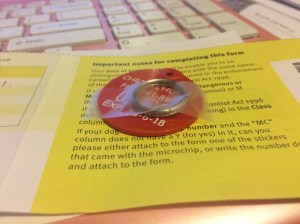
Licence tag

Dog registration fees vary widely across different city and district councils but most offer discounts for spaying/neutering and also holding responsible dog owner status.  In my case, I have held responsible dog owner status for years and this qualifies me for the lowest rate possible.

My $57 fee goes towards the support of services like impounding lost dogs until they can be re-united with their families (hopefully) and officers responding to complaints about dog bites or attacks.

Unfortunately, there’s a portion of our community who don’t register their dogs and so they are not paying their fair share for services.  I know that some people will say that they can’t afford to pay the fees; but I have to ask – if you can’t pay your registration fee how can you afford to care for your dog?

I support efforts to make people better dog guardians.  It starts with an understanding that having a dog is a privilege and not a right.  If you are going to be a good dog owner, then pay your fair share to manage dogs in your community.

Below is the schedule of dog registration fees for 2017/2018 in the Christchurch City Council area:

Item Fee
Dogs classified as dangerous
If paid on or before 31 July $137.00
If paid on or after 1 August $169.00
Un-neutered dogs (other than Responsible Dog Owner status)
If paid on or before 31 July $91.00
If paid on or after 1 August $124.00
Spayed/neutered dogs (other than Responsible Dog Owner status)
If paid on or before 31 July $80.00
If paid on or after 1 August $112.00
Owner granted Responsible Dog Owner status
First dog
If paid on or before 30 June $57.00
If paid between 1 July and 31 July $80.00
If paid on or after 1 August $112.00
Second and subsequent dogs
If paid on or before 30 June $39.00
If paid between 1 July and 31 July $80.00
If paid on or after 1 August $112.00
Working / Rural dogs
First dog
If paid on or before 31 July $27.00
If paid on or after 1 August $39.00
Second and subsequent dogs
If paid on or before 31 July $22.00
If paid on or after 1 August $32.00
Disability Assist dogs NIL
More Than Two Dogs licence (other than rural zoning and Banks Peninsula wards)
Licence for 3 dogs $70.00
Re-inspection fee – same property $32.00

Kathleen Crisley, specialist in dog massage, rehabilitation and nutrition/food therapy, The Balanced Dog, Christchurch, New Zealand

Take Your Dog to Work Day

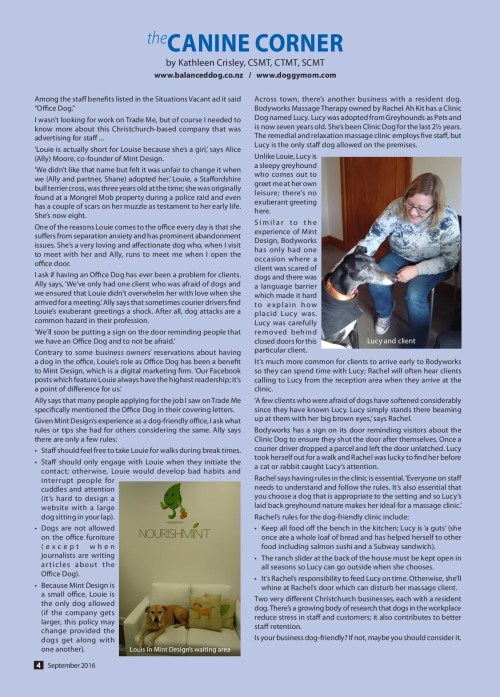
Take Your Dog to Work Day is coming up on Friday.  I hope many of you are able to take your dog with you for the dayand maybe even convince your manager that a pet-friendly workplace has ongoing benefits.

Here’s my column on Office Dogs…profiling two Christchurch businesses that allow dogs to come to work!

September 2016-page-001

Kathleen Crisley, specialist in dog massage, rehabilitation and nutrition/food therapy, The Balanced Dog, Christchurch, New Zealand

Picking puppies most suited to guide dog training

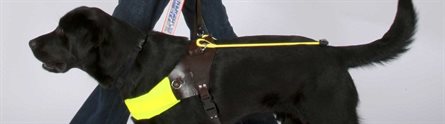
Animal behaviour experts at the University of Nottingham have developed a new tool which can be used to predict a young dog’s likelihood of successfully completing guide dog training.

Guide dog

Working dog organisations like the charity Guide Dogs, who funded the research, need to regularly assess the behaviour of the dogs they breed for training as not all of them turn out to be suited to the role. The charity is the largest of its kind in the world, breeding around 1,400 dogs for possible guide dog training every year.

As part of a wider £500k epidemiology research collaboration with Guide Dogs, the researchers in the University’s School of Veterinary Medicine and Science have created and tested a questionnaire-style decision tool which could help trainers from Guide Dogs to monitor and evaluate their dog’s behaviour. The tool successfully predicted training outcomes in 16.9% of young dogs of 5 to 12 months old to an accuracy of 84%. The tool is called the Puppy Training Supervisor Questionnaire (PTSQ).

The aim is to identify dogs who are not suitable to a guiding role early, before they enter time-consuming and costly formal training. The PTSQ is also intended to improve the understanding of a young dog’s behaviour, which Guide Dogs will use to inform their future training processes to give the best chances of success. The full study has been published in the journal PLOS ONE.

Lead researcher on the project, Dr Naomi Harvey, said: “Predicting working dog suitability in puppies has been a huge challenge to organisations for many years. If you’ve ever owned dogs you will know that every dog is different. They have their own characters and personality, which are heavily influenced by their life experiences. We were really pleased that this questionnaire-style behaviour assessment was able to effectively identify the dogs who were most, and least, suitable to guiding work, from a young age, and help to highlight those in between dogs who were at risk of failing training.” 

Chris Muldoon, Guide Dogs Research Development Manager, said: “The Puppy Training Supervisor Questionnaire is part of a suite of tools developed by the University of Nottingham for Guide Dogs. This tool, and the wider research project, is increasing our understanding of dog behavior and temperament to make informed decisions that will shape and improve our training processes.” 

The new behaviour assessment has been designed to be completed by training supervisors of young dogs at the age of 5, 8 and 12 months old. Questions were sourced either from previously published literature or created from suggestions from Guide Dogs staff surveys and feedback. This large study revealed seven reliable and interpretable character scores for measurement by the questionnaire. These were:

  • Adaptability
  • Body sensitivity
  • Distractibility
  • Excitability
  • General anxiety
  • Trainability
  • Stair anxiety

The research also evaluated aspects of the questionnaire’s reliability and accuracy. The results of the questionnaires completed by the training supervisors – 1,401 in total – showed consistency of individual dogs’ scores over the three age ranges. Of the dogs included in the study, 58% went on to qualify as guide dogs, 27% were behaviourally unsuited to guiding work and the remainder were unsuited for health reasons. Within this number there were also dogs with exceptional character and temperament who were selected for breeding.

The researchers say the work could be extended in the future to follow up the dogs’ working life as a guide dog. They say this could help shed light on why some dogs are retired early for behavioural reasons and the human and dog factors which contribute to this unique partnership’s success.

Source:  University of Nottingham press release

Owner, dearest friend

One of the saddest times in our lives will be those times when we face the loss of our animals.

This poem helps to remind us that grieving is expected – and accepted.

To all my clients who are grieving for their lost dogs…

Kathleen Crisley, specialist in dog massage, rehabilitation and nutrition/food therapy, The Balanced Dog, Christchurch, New Zealand

Play date

A change of scene, play, and social time with other dogs are all important to the emotional health of our dogs.

Izzy, for example, has a boyfriend who lives on the other side of the city.  His name is Bergie and they have a special relationship.  I can’t even remember when it started; they just met at greyhound walks and bonded to each other.

So, it’s important to his owners and to me that we make the time for them to see each other.  This week, they finally managed to have a play date after being severely rained out of one date and then missing another chance to see each other when, again, the rain and cold interfered with the monthly farmers market display for Greyhounds as Pets.

On this date, Bergie decided to impress Izzy with his hole digging skills…she took a front row seat!

Kathleen Crisley, specialist in dog massage, rehabilitation and nutrition/food therapy, The Balanced Dog, Christchurch, New Zealand

The Great Global Greyhound Walk

The Great Global Greyhound Walk has become an annual event since 2014 to raise the profile of adoptable greyhounds.  (The event was started in 2010 as the Great British Greyhound Walk but interest soon went global.)

Groups from around the globe organize walks with their hounds to show them off to the public and to raise funds for greyhound adoption.

This year, the date is this Sunday – 11th June.  gggw-logo  If you follow the Walk’s website, there’s a searchable database to find the walk closest to you.

Check out the map while you are there – this event is truly global.

As Izzy is a greyhound and we volunteer for Greyhounds as Pets, you can guarantee that we will participate in our local walk in central Christchurch.

Interested in knowing more about bringing a greyhound into your life?  Why not come out on Sunday and meet lots of hounds and their owners.  Owners love to talk about their dogs and their enthusiasm is infectious.  Bring your spare change and make a donation, too, so more hounds can find a forever home.

Kathleen Crisley, specialist in dog massage, rehabilitation and nutrition/food therapy, The Balanced Dog, Christchurch, New Zealand