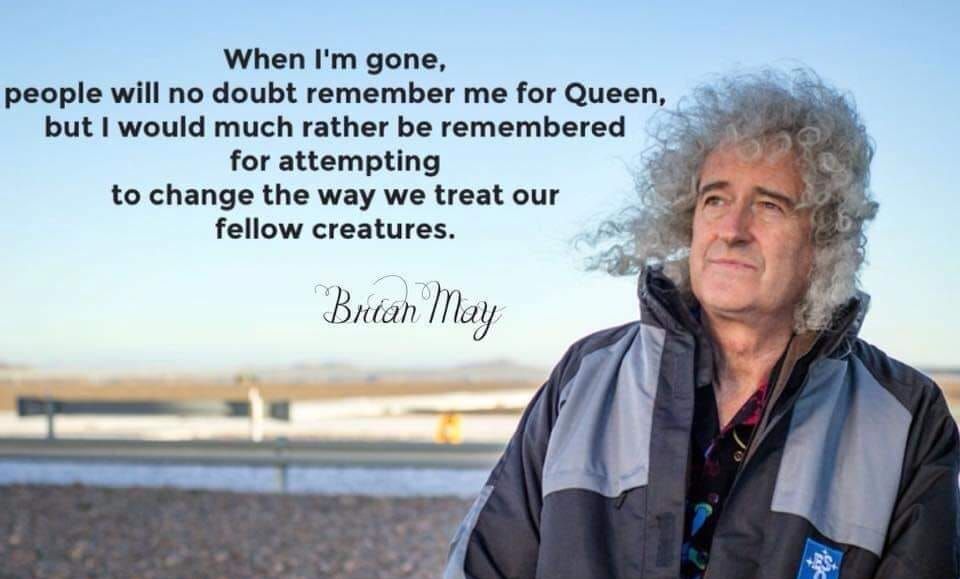
Sir Brian Harold May is the lead guitarist for the band Queen and is an animal welfare activist and astrophysicist.

Sir Brian Harold May is the lead guitarist for the band Queen and is an animal welfare activist and astrophysicist.
Posted in dog quotes, Dogs
Tagged animal activist, animal welfare, astrophysicist, Brian May, guitarist, queen, Sir Brian May
I’ve just read this piece by Dr Mia Cobb of the University of Melbourne and had to share it. Thankfully, it was published under a Creative Commons license to enable re-publication with citation.
For decades, greyhound racing has appeared resilient to welfare concerns. Despite ongoing media exposés about injury rates, training methods, doping and questions about how racing dogs live when they’re not on the track or where they go when no longer competitive, the industry continued operating in Australia.
But something has changed globally over the last year, and it has big implications for dogs worldwide.
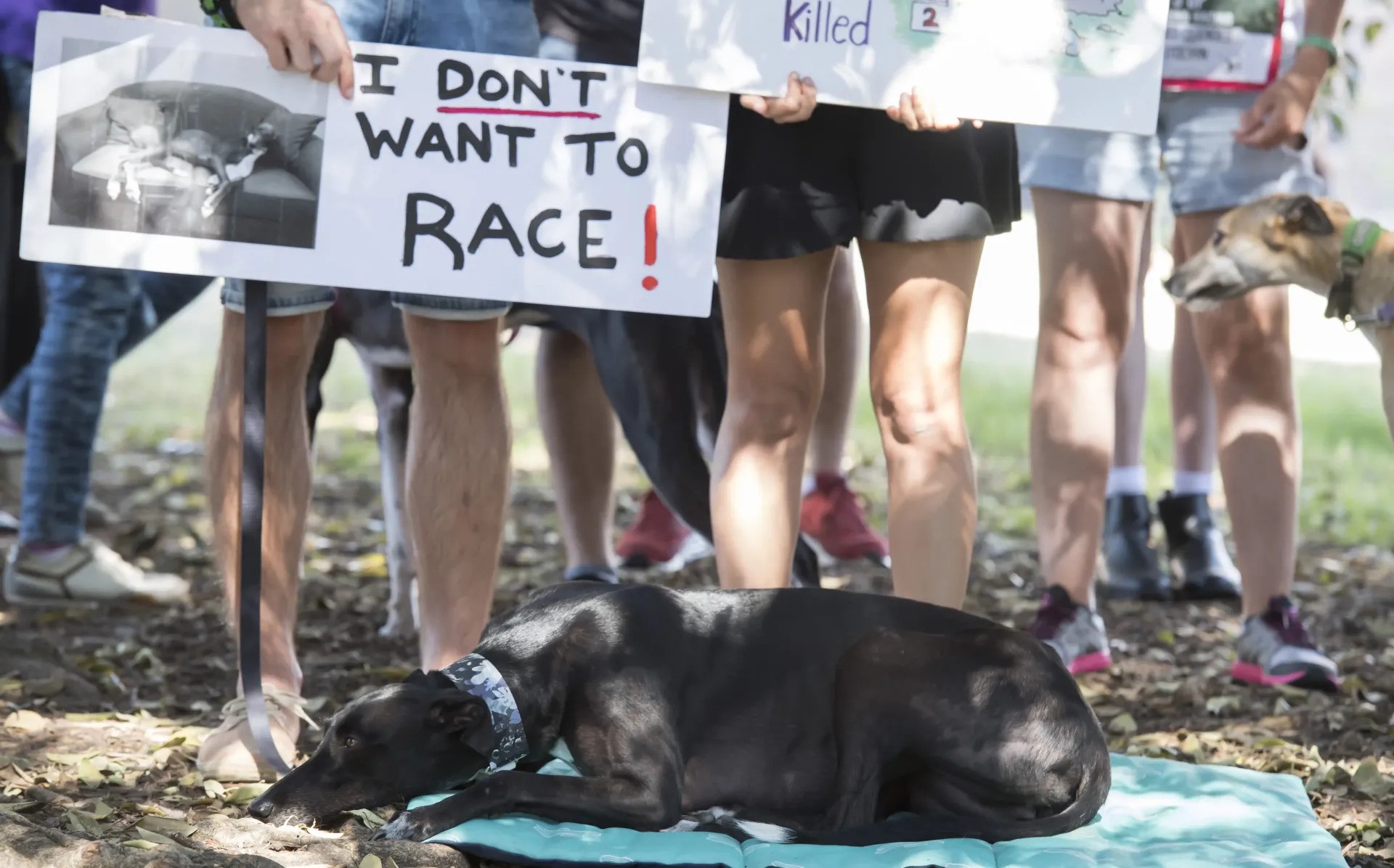
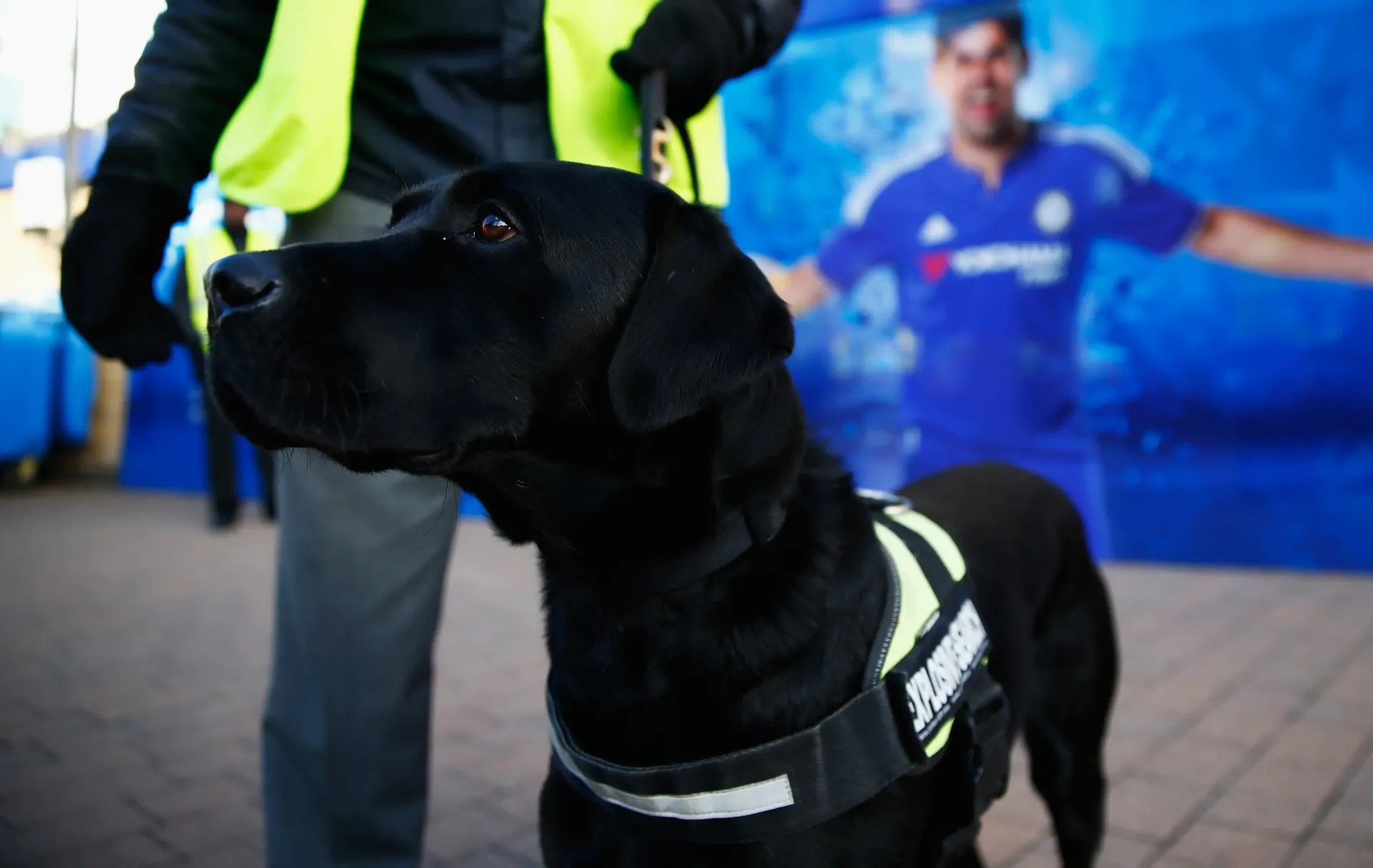
But what does this mean for the other dogs in our lives? The detection dogs in our airports, the dogs assisting people with disabilities, those supporting students in our schools or even the dog asleep on your couch?
My research shows that over 95 per cent of people say dog welfare is very important to them. Yet most of us rarely think about the lives of dogs in our communities beyond our beloved four-legged companions at home.
We may donate to assistance dog charities, watch border detection programs on TV and admire search-and-rescue teams helping in disaster zones without considering what daily life looks like for these canine workers.
As people become increasingly conscious about animal treatment, from farm animals to those in entertainment, this awareness is expanding to include all the ways we ‘use’ dogs.
The recent greyhound racing collapse demonstrates how quickly public support can evaporate when welfare concerns aren’t adequately addressed.
Consider the contrast between those who embrace scrutiny versus those that resist it.
Some organisations or operators working with dogs proactively demonstrate their welfare standards, welcome independent oversight and engage openly with concerns. Others operate behind closed doors or respond defensively when questions arise about how their animals are bred, reared, housed, trained and rehomed.
Those thriving under increased public attention share common approaches: they treat welfare as a core priority rather than a compliance exercise, even when it means making major changes to the way in which they operate (for example, their training methods or the equipment used).
They also understand that genuine transparency builds public trust in ways that defensive responses never can.
But there’s an important distinction between real change and ‘welfare washing’ surface-level improvements designed more for public relations than to genuinely assure animal wellbeing.
The public is becoming increasingly sophisticated at spotting the difference.
The speed of recent racing bans – three jurisdictions in around 18 months – shows how rapidly momentum can build once public opinion shifts.
The organisations embracing increased welfare scrutiny share common characteristics.
They proactively demonstrate care standards rather than waiting for pressure. They welcome independent monitoring and engage genuinely with concerns rather than dismissing them.
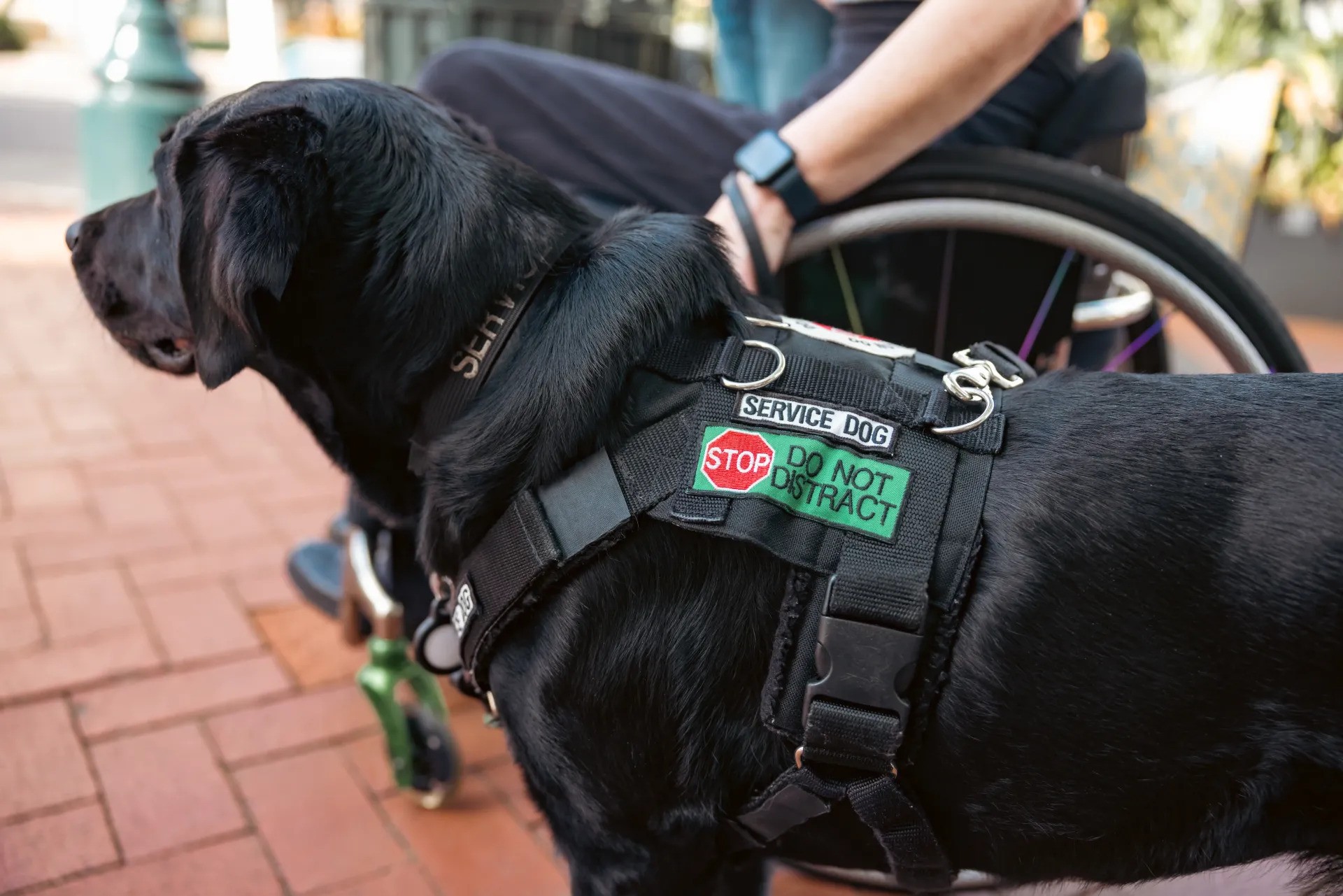
Most importantly, they recognise that working with dogs comes with profound responsibilities.
This reframing, from dogs as tools we use to co-workers we partner with, means ensuring dogs have agency in their daily lives – the ability to make choices about when to rest, opportunities to be dogs rather than just workers and environments that offer them positive social and physical experiences.
It means transparency about career length, retirement plans, injury rates and living conditions. It means treating welfare as a core business priority, not a public relations exercise.
International Dog Day provides an annual opportunity to shine a spotlight on all the dogs we rely on in our lives, not just our pets at home.
t’s a chance to ask: are we caring for these animals as well as we can?
The greyhound racing industry’s decline shows what happens when the answer is unclear or unconvincing.
Public trust, once lost, is extraordinarily difficult to rebuild, especially when alternatives exist that don’t rely on the use of real animals.
Everyone relying on dogs should be asking themselves: if public attention suddenly focused on our operation tomorrow, would we welcome that scrutiny? Can we demonstrate genuine care for our animals’ wellbeing, not just their productivity?
The dogs supporting our lives – whether working at airports, guiding people safely across roads or living as companions in our homes – deserve nothing less than our full consideration of their wellbeing.
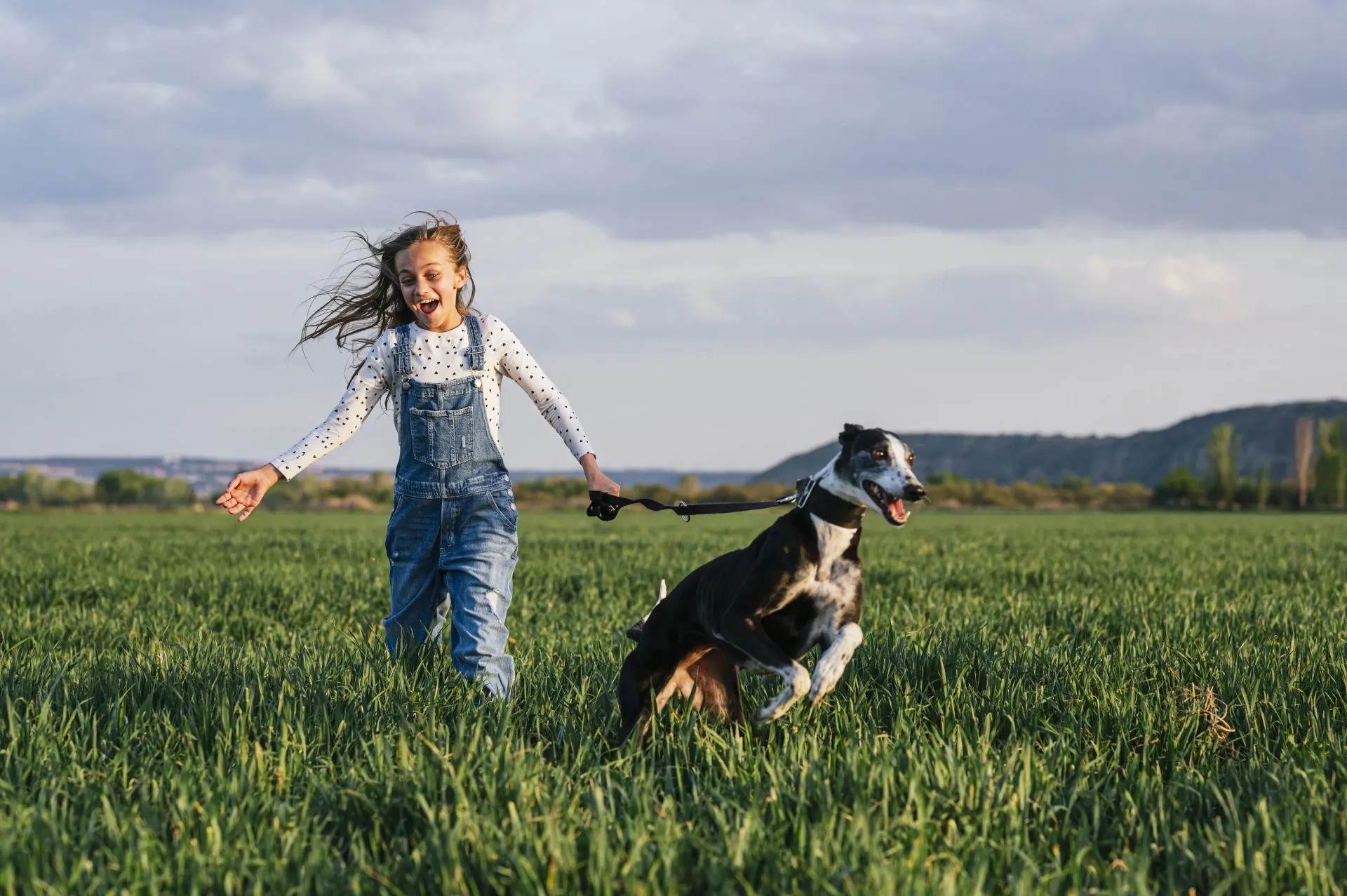
And as the racing industry is discovering, the public increasingly expects to see proof of that care, not just promises.
Those who can show genuinely wagging tails and happy dogs will thrive.
They’ll be part of building a sustainable future where our partnerships with dogs are genuinely rewarding for both species. Those who can’t may find themselves wondering how something that seemed so permanent could disappear so quickly.
The choice is theirs to make – but the window for making it may be narrower than they think.
Dr Cobb delivered invited, plenary and keynote international addresses on canine welfare at the Joint Symposium for Working K9s, International Working Dog Conference, International Guide Dog Federation Conference and the Canine Science Forum in 2025.
Source: This article was first published on Pursuit. Read the original article.
Posted in animal welfare, Dogs
Tagged animal welfare, animals, Dog, dogs, Dr Mia Cobb, greyhound racing, greyhound racing ban, pets, University of Melbourne, working dogs

“Not everyone is in a position to help other animals, but everybody is in the position not to harm them.”
-Anthony Douglas Williams, author

Posted in dog quotes, Dogs
Tagged animal welfare, Anthony Douglas Williams, greyhounds, harm
“Well, then they can race around the park, and they can race around the beach, but they won’t be racing on a track and getting themselves injured to the degree that they are getting themselves injured now.”
– Rt Hon Winston Peters, Minister of Racing, in the press conference of 10 December 2024 where it was announced that New Zealand will ban commercial greyhound racing effective 1 August 2026 on animal welfare grounds

The Human Animal Bond Research Institute (HABRI), the Pet Food Institute (PFI) and the Pet Advocacy Network co-hosted Pet Night on Capitol Hill on 11 September 2024, paying special tribute to the important role of service animals for our nation’s disabled veterans, and celebrating the positive impact of pets in America. Pet Night on Capitol Hill brought together Members of Congress, congressional staff, and leaders in the pet care community to share programs and policies that protect human and animal well-being.
“Pet Night on Capitol Hill is more than just an evening spent with some incredible pets—it’s a chance to convey to Congress the vital message that policies and programs keeping people and pets together promote better health and well-being for all,” said Vic Mason, President of the World Pet Association (WPA) and presenting sponsor of Pet Night.
“HABRI is proud to co-host Pet Night on Capitol Hill, a night dedicated to honoring the human-animal bond and its positive impact on the well-being of individuals, families and communities, including our nation’s veterans who rely on the healing support of service dogs,” said Steven Feldman, President of HABRI.
At the event, attendees interacted with Pet Partners therapy animals, show cats provided by the Cat Fanciers’ Association, and adoptable puppies from Petco Love.
Veterans and their service dogs were recognized during the Ceremony for their service to our country, and the National Service Dog Memorial displayed a replica of the resin casting of “Sully”, President George H.W. Bush’s Service dog by Susan Bahary, which will be placed in the permanent collection of the George H. W. Bush Presidential Library and Museum in College Station, TX.
The Animal Health Institute (AHI) honored the winners of the Cutest Pets on Capitol Hill contest, now in its sixteenth year, recognizing the most adorable animals belonging to Members of Congress and their staff.
Cutest Dog: Palmer
Owner: Joe Ballard
Office of Rep. Kelly Armstrong (ND)
Cutest Cat: Moony
Owner: Izzah Yousuf
Office of Rep. Al Green (TX-9)
Cutest Exotic: Froth
Owner: Larson Church
Office of Rep. Andrew Clyde (GA-9)
“I’m happy to once again partner with AHI to be a part of this event, which brings together members from both parties to share our mutual affection for our beloved pets. This event is also a fantastic reminder that ensuring our pets’ and animals’ health and safety is crucial for both their wellbeing and ours,” said Congresswoman Schrier. “That’s why in Congress, I’ve advocated for animal health through legislation like ADUFA to get new, innovative, and safe veterinary medications to market, and I am incredibly proud that this legislation was signed into law last September.”
“I’m honored to be a congressional judge for this year’s AHI Cutest Pets Contest,” said Rep. Cammack (R-FL-03). “Folks on the Hill know my office is home to our three pups who often greet guests and visitors, so we always appreciate the opportunity to support our furry friends! This year’s Pet Night is also special as we pay homage to the heroes and animals who have served our nation. I’m grateful to the Animal Health Institute for inviting me to participate in this year’s event.”
“The Animal Health Institute’s Cutest Pets on Capitol Hill is always a highlight, but there’s so much more to it than just cuteness – it’s all about the importance of pets in people’s lives,” said Alex Mathews, President and CEO of AHI. “The animal health industry serves not only to keep pets healthy, but also to keep families healthy and happy together, and we’re proud to celebrate this each year at Pet Night on Capitol Hill.”
HABRI’s “Human Animal Bond Leadership Award” was conferred upon Representative Claudia Tenney (NY-24) and Representative Deborah Ross (NC-02) for their sponsorship of the People and Animals Well-being (PAW) Act, a newly introduced bill that would allow people to use up to $1,000 of their Health Savings Accounts (HSAs) or Flexible Spending Accounts (FSAs) for veterinary care or a pet health insurance policy for their pets. The bill would impose no limit on veterinary care for service animals, providing even more support for people with disabilities, including our nation’s veterans.
“Our pets and service animals are cherished members of our families, and it’s essential that owners have the ability to pay for quality care,” said Congresswoman Tenney. “The PAW Act offers greater flexibility to pet owners by allowing them to use HSAs and FSAs for pet care expenses. This legislation will help veterans, and all pet owners afford veterinary care for their beloved pets and service animals.”
“The Pet Advocacy Network’s “Pets’ Best Friend” award was conferred upon three Members of Congress and Senators who have demonstrated a commitment to supporting pets and pet owners. Congressman Jake LaTurner of Kansas was jointly recognized by PAN and PFI, and Senator Chuck Grassley of Iowa and Congressman Glenn “GT” Thompson of Pennsylvania were recognized for their tireless service on behalf of companion animals and those who serve and support them.
“We were thrilled to recognize these Members of Congress with the Pets’ Best Friend award and to once again co-host this important celebration of pets and pet ownership in America,” said Pet Advocacy Network President and CEO Mike Bober.
“Just as complete and balanced nutrition is critical for pets, policies and programs that ensure healthy lives for people and pets are also important. Pet Night on Capitol Hill is a wonderful opportunity for the pet care community to showcase its longstanding commitment to the importance of service dogs for veterans, pets in classrooms for children, and the dire need for more pet-friendly housing, especially for domestic violence shelters,” said Dana Brooks, President & CEO of PFI.
Pet Night is part of Pet Week on Capitol Hill, a week-long series of virtual programming and in-person visits. Virtual sessions share key data about how pets are important for human health and quality of life and highlight the most pressing issues relating to pet ownership in America. All recorded sessions from Pet Week on Capitol Hill are now available to view on-demand at http://www.petnight.com
Source: Pet Business
Posted in animal welfare, Dogs
Tagged advocacy, animal welfare, Capitol Hill, Dog, dogs, HABRI, pet care, Pet Night, pets, service dogs
When his girlfriend Misty came to stay, I took Sox and Misty to Christchurch’s red zone for off-lead time.
In this video, the dogs run and play. Greyhounds love to run. In this video, both dogs are free to stop, change direction, dodge and weave as they see fit, and stop when they are ready. This greatly reduces the risk of injury and supports enrichment. It allows them to make choices, something that behaviourists call ‘agency.’
The definition of “to run” is “to move along, faster than walking.” The dogs choose to do this and for how often.
The definition of “to race” is “a competition between runners, horses, vehicles, etc. to see which is the fastest in covering a set course.”
Most dogs love to have a run and play, such as I explain in my post There’s a technical term for almost anything – the zoomie. To truly love to race, a sentient being, be it human or animal, must be able to opt into competition of their own free will, accept the risks associated with the race, and take pleasure in it.
Kathleen Crisley, Fear-Free certified professional and specialist in dog massage, rehabilitation and canine fitness, The Balanced Dog, Christchurch, New Zealand.
Posted in animal welfare, dog breeds, dog care, Dogs
Tagged agency, animal welfare, free will, greyhound racing, Greyhound Racing NZ, human construct, love to run, racing, winston-peters
On 23 May 2023, MP Kieran McAnulty released a report about greyhound racing that was dated December 2022. Authored by the Racing Integrity Board (RIB), this report is 175 pages long.

There have already been three (3) reports, all reviews, of the NZ greyhound racing industry, in 2013, 2017 and 2021. All have included substantive lists of shortcomings in the industry with issues for improving the welfare of greyhounds. This latest report was to have been the final report – the industry was ‘put on notice’ that it should improve and given one year – until the end of 2022 – to do so.
Since I’m writing this blog in June 2023, I figure you can guess that government has failed to act on its promise; even the delay of five months in releasing the report is suspect in terms of who is committed to animal welfare.
I used to work for local and central government agencies in my earlier working life. Whenever a report is long, it is usually because the writers do not want to be the bearers of bad news and so wade through every possible detail to hide the glaringly obvious. Such is the case with this report.
Please bear in mind that the Racing Integrity Board’s purpose is: Promote and ensure the racing industry complies with high standards of animal welfare, integrity and professionalism for the benefit of the public, participants and racing industry
Let me repeat that – high standards, integrity and professionalism…
Key points (direct quotes from the report):
If you’re reading this and wonder what’s next for NZ’s greyhounds, please ensure you focus on the last few bullet points above. If racing is allowed to continue, progress is unlikely to be achieved without close monitoring for which the RIB does not have the budget and resources to undertake. No one else in NZ is resourced to do this either, and the industry itself will face costs to improve.
What’s the odds of these things happening given NZ’s current economic situation and with the lack of leadership?
But wait, there’s more! The RIB has issued a supplementary report, another 31 pages, this time dated March 2022. I’ll cover that report in a future blog.
Kathleen Crisley, Fear-Free certified professional and specialist in dog massage, rehabilitation and nutrition/food therapy, The Balanced Dog, Christchurch, New Zealand
Posted in animal welfare, Dogs
Tagged animal welfare, greyhound racing, Greyhound Racing NZ, greyhounds, GRNZ, Minister of Racing
Last week, a new review report into the greyhound racing industry in New Zealand was released. As most of you know, greyhound welfare is a topic near and dear to my heart because Izzy is an ex-racer.
This review, by the Hon Sir Bruce Robertson, is not the first review of the industry. It’s not even the second (but the second, known as the Hansen report was a whopping 93 pages. I discussed that earlier report in my blog post How many hounds needing a home?). The 2021 review is the third review of greyhound racing in this country.
So the report made some headlines last week in the news because the Minister of Racing, Grant Robertson, says he’s putting the industry ‘on notice.’ Frustratingly, none of the mainstream news sources provided a link to a copy of the actual report. Being the information geek that I am, I tracked down the report and read it thoroughly over the weekend – with highlighter pen in hand.

Before I go into some of the key findings, you should be aware that a major reason why this review was undertaken is that Greyhound Racing NZ (GRNZ) wrote to the Minister for Racing in June 2020 stating that all 20 recommendations stated in the Hansen review had been successfully implemented and so they would no longer be providing progress reports. The National Animal Welfare Advisory Committee felt that the information provided was insufficient and, with more deaths and injuries of greyhounds on the track, this review was commissioned.
I like this review, for one reason because it is PITHY. 19 pages including the appendices, it gets straight to the heart of the matter.
Key points:
Conclusions
It has become clear that no matter the outcome of this report, or any reports henceforth, the social license of the industry will continue to be challenged for the foreseeable future. If GRNZ wishes to secure a future for the industry it governs, then it must set out to demonstrate the decency of the greyhound racing industry at every possible opportunity.
GRNZ has made its job harder by unnecessarily obfuscating information and pushing back against those with an interest. All information should be recorded, and it should be available. Arguably GRNZ has data to support its stances on the issues raisedin this report but is seen as unwilling to share this.
For those of you who have an interest, I encourage you to read the report in its entirety and share it with others. The current NZ Government says the industry is on notice and must report by the end of 2022 on its actions in response.
My view is that greyhound racing has been banned in many countries because of the animal welfare considerations. New Zealanders must ask themselves why those animal welfare issues don’t exist here. Because clearly this review has found that they do.
Kathleen Crisley, Fear-Free certified professional and specialist in dog massage, rehabilitation and nutrition/food therapy, The Balanced Dog, Christchurch, New Zealand
Posted in animal welfare, Dogs
Tagged animal welfare, greyhound racing, greyhounds, New Zealand
Dogs can have either an optimistic or a pessimistic view of the world, new research shows. The approach used in the research will have uses in assessing animal welfare generally, but also in assessing suitability of dogs for various working roles.
“This research is exciting because it measures positive and negative emotional states in dogs objectively and non-invasively (important for those concerned about animal welfare in research),” said Dr Melissa Starling, from the University of Sydney’s Faculty of Veterinary Science.
Dr Starling has been working with Assistance Dogs Australia to investigate whether measuring optimism would assist in selecting dogs for training.
Dogs were taught to associate two different sounds (two octaves apart) with whether they would get the preferred reward of milk or instead get the same amount of water. Once the dogs learned the discrimination task, they were presented with ‘ambiguous’ tones.
If dogs responded after ambiguous tones, it showed that they expect good things will happen to them, and they are called ‘optimistic.’ They can show how optimistic they are by which tones they respond to. A very optimistic dog may even respond to tones that sound more like those played before water was offered.
“Of the dogs we tested we found more were optimistic than pessimistic but it is too early to say if that is true of the general dog population,” said Dr Starling.
“This research could help working dog trainers select dogs best suited to working roles. If we knew how optimistic or pessimistic the best candidates for a working role are, we could test dogs’ optimism early and identify good candidates for training for that role. A pessimistic dog that avoids risks would be better as a guide dog while an optimistic, persistent dog would be more suited to detecting drugs or explosives.”
Dr Starling talks more about her research in this video:
In this New York Times opinion piece, Professor Gregory Berns discusses the MRI findings of brain activity in dogs, the evidence for ‘sentience’ and the reasons why dogs’ rights should go beyond consideration of animals as property.
For anyone involved in animal welfare advocacy, it is essential to have animal welfare laws that recognise dogs as sentient beings – with the ability to experience emotions like love and grief – because abuse and harm done to sentient beings carries a higher penalty in law than if an item of property is damaged. (In many areas, dogs are considered nothing more than property.)

Jane Evelyn Atwood/Contact Press Images
Posted in animal welfare
Tagged animal welfare, canine brain, canine cognition, dogs, MRI, New York times, Professor Gregory Berns, sentience, sentient beings







 DoggyMom.com