Tag Archives: behaviour

Behaviour in dogs depends on the paw preference

I’ve previously written about how to test if your dog is right-pawed or left pawed.  Researchers at the University of Adelaide led by Dr Luke Schneider tested a group of 73 dogs using 50 manipulations of an object to determine their paw preference.  They then interviewed the dog owners about their dog’s behavior to see if there was a pattern.

“We found that dogs with a preference for left paws were reported by their owners to show high levels of aggression towards strangers. The left pawed dogs scored almost twice as high as ambilateral (ones with no preference) and also higher than dogs with right paws.

“There is research in the human world as well that positive and negative emotions can be located in the left and right hemispheres and it seems to go the same way in humans and other animal species, that the negative emotions are located in the right hemisphere. There are many, many overlaps between human and animal brains.”

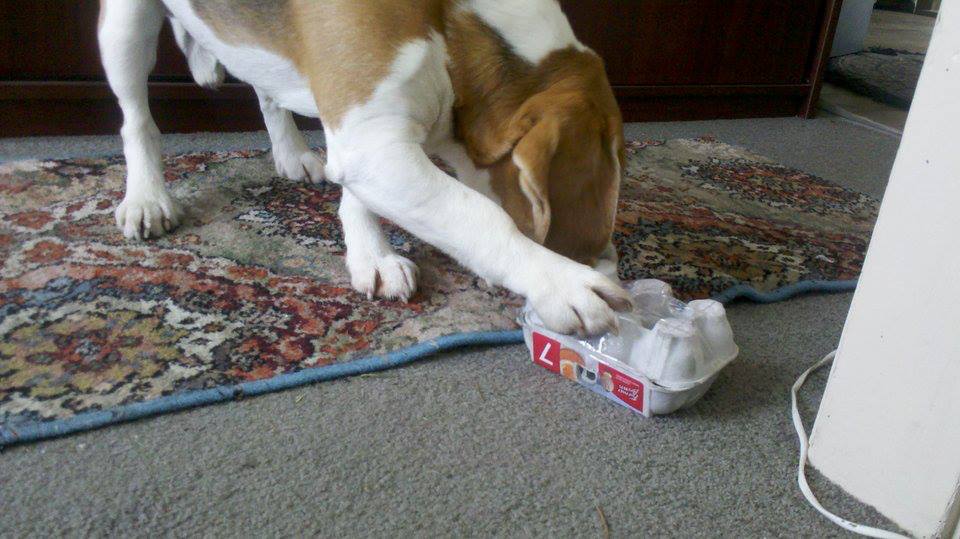
Blake the Beagle shows his preference for the right paw

Blake the Beagle shows his preference for the right paw

When testing dogs for paw preference, the research team found a roughly even split between those dogs that had a right paw preference vs those with a left paw preference.

None of the dogs in the study were noted as particularly aggressive, and so the research team wants to do more work with dogs who are noted for aggression-type responses.  A larger testing group would also help to validate results.  The research team’s study has been published in the Journal of Veterinary Behavior.

A mixed news week for dogs in Christchurch

It’s been a variable week of dog news here in Christchurch (to say the least).

The news was all bad by mid-week, when it was reported that two Rottweilers mauled a young boy of eight, named Mason Bennett.  Mason had been staying with his mother and her partner (who owned the dogs).    And there had been a previous incident when the dogs were aggressive with another young boy.

Read Dad’s shock at earlier attack by same dogs
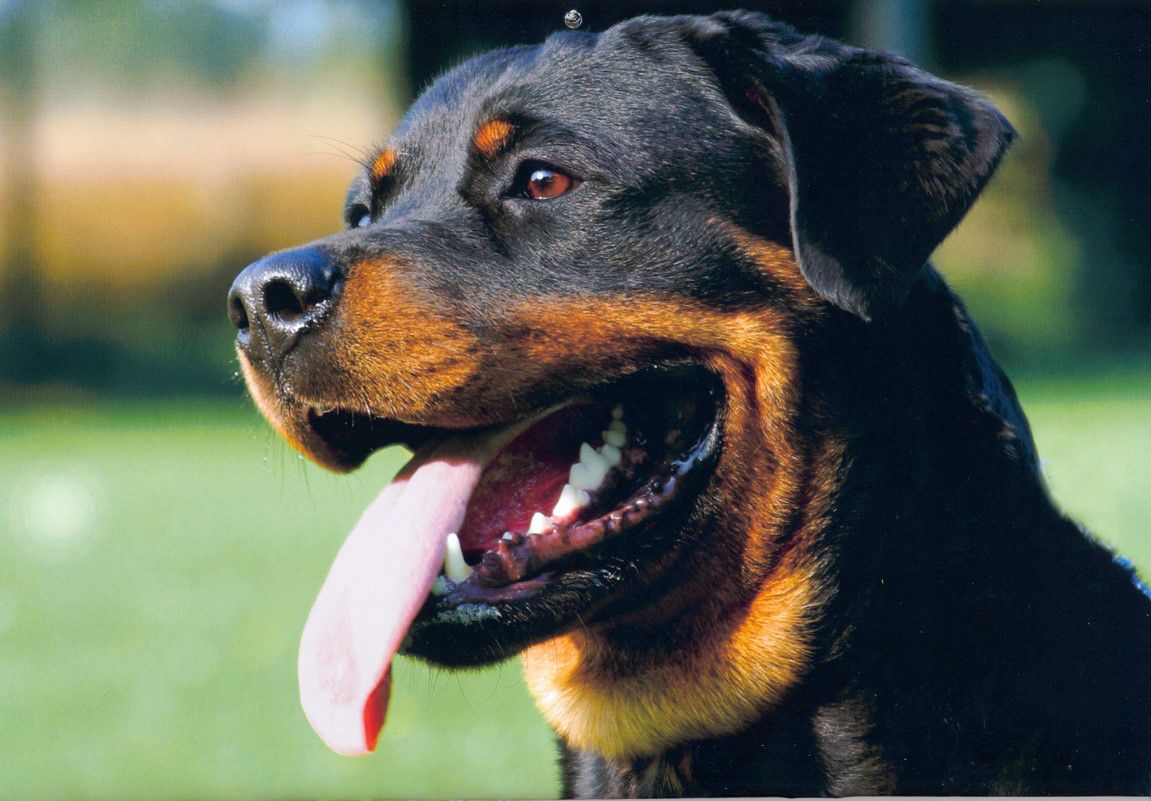
The recent dog attack saw lots of comments about how Rottweilers can't be trusted.  Was it the dog or the owners who are to blame?

The recent dog attack saw lots of comments about how Rottweilers can’t be trusted. Was it the dog or the owners who are to blame?

In the same edition of the newspaper, columnist Rachel Young wrote about My dog was a rottweiler. In general, a defense of the breed, Ms Young also mentions in her story that when her family Rottweiler, Zeb, became unwell with kidney disease he became more aggressive.  Her parents decided to euthanize him.  To quote “Despite the loving environment, at times you can’t beat nature. In Zeb’s case, it seemed the protective, aggressive nature was developing as he got older and sicker.”

Which shows that even some dog owners don’t know a thing about dogs.  Maybe a sick dog lashes out because they are in pain and can’t communicate that in spoken words – and their family doesn’t get it!!!!!

This provoked a Letter to the Editor on my part – which the newspaper largely got right but they decided to edit it by attributing the dog attack to dogs that were unwell (which there isn’t any evidence of – just poor owners!)

The dog news turned for the brighter the next day when police dog Gage was honoured with the PDSA Gold Medal posthumously.  Killed in 2010 during a drug raid, Gage took a bullet that was meant for his handler Bruce Lamb.  The PDSA Gold Medal is known as the Animal’s George Cross, for civilian bravery.

Bruce Lamb tells his and Gage’s story here Shot police dog Gage honoured for bravery

Today is Monday and there is mixed news for dog owners in today’s newspaper.  Front page news is the story of landlords charging special pet bonds to allow tenants to keep pets.  This is when a tenant pays more than the standard four week’s rent upfront to secure their rental and it is illegal.

The story goes on to say that charging more for a pet-friendly rental (week to week, or month to month) is okay.  Unfortunately, since Christchurch is still in earthquake recovery mode, rental housing is at a premium.  Many dog owners don’t dare contest a pet bond because they need a home for all members of the family.  Read Landlords in dog box over pet bonds.

Further into the newspaper, some better news.  A little puppy of about six weeks old was found cowering under the seat of a car when it was stopped by police.  The offenders fled and the dog is believed to be stolen property.  A police constable is appealing for information about the wee puppy.

Read Police pursuit nets puppy

Here’s hoping that the stolen pup is returned home soon…

I’d like to see more positive news about dog and dog ownership in Christchurch.  But it seems that for every bad news story, we need about ten more to gain the confidence of the public.

How does your city/town deal with dog news?  Please get in touch.

Kathleen Crisley, specialist in dog massage, rehabilitation and nutrition/food therapy, The Balanced Dog, Christchurch, New Zealand

Another study about dogs (yawn)

It’s official (again) – dogs yawn more often in response to their owners than to other people.

dog yawning

Last year, researchers in Sweden published research on contagious yawning in dogs.  This year, researchers at the University of Tokyo have published additional research in the open journal PLoS One.

Their research focuses on a ‘familiarity bias’ in contagious yawning by dogs.

Pet dogs in the study watched their owner or a stranger yawn.  They responded more in response to their owners than to the strangers.

The researchers conclude that the dogs have an emotional connection to their owners, which is exhibited through empathy with the yawning movements.

The five freedoms

Let’s go back to basics for a moment and think about our role as caregivers for our dogs.  Every animal owner should understand the Five Freedoms which are an internationally recognised code for animal welfare.

Anyone responsible for looking after animals should aim to meet each of these freedoms.

1.  Freedom from hunger and thirst

This means giving your dog adequate food and water to keep them healthy

2.  Freedom from discomfort

All animals deserve adequate shelter and a place to rest

3.  Freedom from pain, injury and disease

Owners should focus on keeping their animals safe from harm and, when they are sick, they should be taken for appropriate care without delay

4. Freedom to behave normally

This is about ensuring there is enough space for an animal to exhibit its normal behaviour including having opportunities to interact with others of its own kind

5.  Freedom from fear and distress

Treatment should ensure that animals are not distressed or fearful, exhibiting good mental health

Dogs help to improve moods of teens in treatment

Lindsay Ellsworth, a doctoral candidate at Washington State University,  has a new, mood-boosting therapy for teenagers in drug and alcohol treatment.

The treatment is shelter dogs!

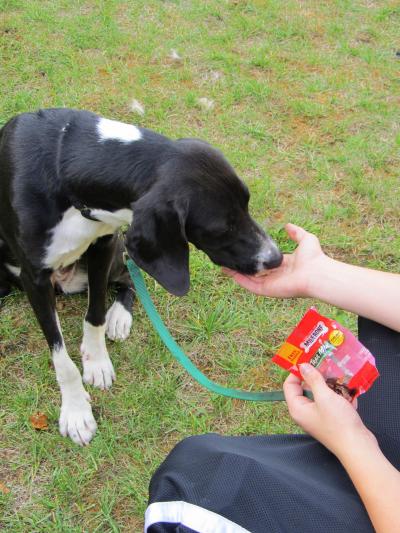
A participant at Excelsior Youth Center in Spokane, Wash., gives treats to a shelter dog from the Spokane Humane Society. A first-of-its-kind study demonstrates how dog-interaction activities improve the mood of teenagers living in residential treatment centers.  Photo courtesy of Washington State University

A participant at Excelsior Youth Center in Spokane, Wash., gives treats to a shelter dog from the Spokane Humane Society. A first-of-its-kind study demonstrates how dog-interaction activities improve the mood of teenagers living in residential treatment centers. Photo courtesy of Washington State University

On Friday afternoons, a group of approximately four dogs from the Spokane Humane Society visit the Excelsior Youth Center, where teenagers in treatment there can help brush, feed and play with the dogs.

“We found one of the most robust effects of interacting with the dogs was increased joviality,” she said. “Some of the words the boys used to describe their moods after working with the dogs were ‘excited,’ ‘energetic’ ‘and happy.'”

Ellsworth’s study is the first of its kind to demonstrate how dog-interaction activities improve mood among teenagers living in residential treatment centers.

Ellsworth’s methodology is fairly standard to research projects, involving a test group and a control group.  Once a week, during the daily recreation time at the Center, Ellsworth breaks about eight participants into two groups. One group plays pool, video games or basketball provided in the treatment center. The other group interacts with the shelter dogs for about an hour.

Before the activity period, participants identify 60 mood descriptors on a scale of one to five on what is known as the PANAS-X, a self-reporting method organizational psychologists use to scale and study emotion. After the activity, the participants fill out the same scale.

Robert Faltermeyer, executive director of the youth center, and the staff are hopeful this kind of science-based program could be established as part of treatment centers’ structured activities.

“It’s an opportunity for kids in a real chaotic life, making unhealthy choices, to focus in on a specific task with an animal,” he said. “It empowers them to make positive changes even on the simplest scale of correcting the animal’s behavior.”

Source: Washington State University media release

How your dog matches words to objects

Researchers at the University of Lincoln (UK) have published a study based on the learning patterns of a Border Collie named Gable.  They wanted to see if Gable could match words with objects based on shape, which is the learning pattern in humans of toddler age.

Credit: Sally Smith; van der Zee E, Zulch H, Mills D (2012) Word Generalization by a Dog (Canis familiaris): Is Shape Important?

Gable could identify an object by name, but over time he associated the same word with objects of similar texture or size (not shape).

The researchers concluded that where shape matters for humans, size or texture appears to be the dominating issue for a dog.

This is small study (using only one dog) but it does provide insight into the learning and development of dogs.  I’m sure there is more to come in this research field.

Source:  Word Generalization by a Dog (Canis familiaris): Is Shape Important?

The importance of pain management

Whenever I take on a new client, I use a health questionnaire that covers current conditions as well as the dog’s health history.  One of the issues I address is any recent changes to the dog’s behaviour or living conditions.

What I am trying to ascertain is if a dog is in pain or having adjustment difficulties. There is a clear link between pain and aggression and this has been supported in a recent study by researchers at the Autonomous University of Barcelona in Spain.

In the Spanish study, which has been published in the Journal of Veterinary Behavior, 12 dogs that were brought in by their owners for ‘aggression problems’ were studied.  All were found to have pain-induced aggression with eight diagnosed as having hip dysplasia.

The breeds in the study were:  a Giant Schnauzer, Irish Setter, Pit Bull, Dalmatian, two German shepherds, Neapolitan Mastiff, Shih-tzu, Bobtail, Catalan Sheepdog, Chow Chow and Doberman.

The researchers concluded “if the pet is handled when in pain, it will quickly act aggressively to avoid more discomfort without the owner being able to prevent it.”

So, when a dog is behaving differently or is “out-of-sorts”, a visit to the vet is recommended.  Behaviour changes can be the first indicator that something is wrong and your vet can help to run appropriate tests to see if there is an underlying health problem.

Dogs have a way of not telling us they are in pain until a problem is more pronounced because their natural instinct is to protect themselves by not exhibiting any noticeable vulnerabilities.  Therapies such as massage and low level laser (which I employ in my canine rehabilitation practice) are useful in helping to manage pain through appropriate stimulation of acupressure points and managing muscle, tendon and ligament condition.  I’m also a strong supporter of acupuncture and refer clients to a local vet who is trained in veterinary acupuncture.

These complementary therapies can be employed alongside traditional pain medications such as NSAIDs to support your dog’s quality of life.  When pain is managed, quality of life improves for everyone in the household.

Source:  Plataforma SINC. “If your dog is aggressive, maybe it is in pain.” ScienceDaily, 13 Jun. 2012. Web. 15 Jun. 2012.

What is your dog thinking? Researchers are on the case!

Researchers at Emory University have published new research into canine cognition.  Entitled Functional MRI in Awake Unrestrained Dogs, the paper outlines findings of research that required two dogs to remain motionless in an MRI machine.

Yes – that’s right. Motionless.  The two dogs were outfitted with special ear muffs to protect them from the noise of the MRI and trained to rest their heads on a chin rest inside the machine.   As the MRI took scans of the dog’s brain activity,  hand signals were used to show the dogs whether there was or wasn’t a food reward.

This is a first-ever study on awake dogs, rather than those that have been sedated.  Importantly, part of the animal ethics of the study was to ensure the dogs were willing participants.

The findings show a definite brain activity response when the hand signals indicated a food reward.  Those dogs are paying attention!

The lead researcher, Professor Gregory Berns, says “We hope this opens up a whole new door for understanding canine cognition and inter-species communication. We want to understand the dog-human relationship, from the dog’s perspective.”

Professor Bern’s dog Callie in training in a mock-up of the MRI scanner (copyright Emory University)

Listen to Professor Berns talk about this project in the Emory University YouTube video:

Source:  Emory University press release 4 May 2012

In Defence of Dogs

John Bradshaw, in his book In Defence of Dogs, explains that most dogs today live in urban environments where they are “expected to be simultaneously better behaved than the average human child and as self-reliant as an adult.”  Yet, many dogs still retain their natural traits such as herding instinct which are viewed as ‘problematic.’

Add on top of this the popularity of dog trainers who insist on the theory of dominance, and Mr Bradshaw says that our dogs are in crisis and need our support.

Mr Bradshaw’s book is about breaking down misconceptions.  He says in his Introduction, “We must strive to better understand their needs and their nature if their niche in human society is not to diminish.”

Mr Bradshaw is a passionate supporter of dogs and his book demonstrates his beliefs clearly.   If you are a dog owner who is concerned about the increasing restrictions on dogs in our modern, living environments or you are simply open-minded enough to explore other ways of looking at canine behaviour,  then this book is for you!