Tag Archives: brain

Dogs know if we’re happy, sad or scared just from our expressions, study suggests

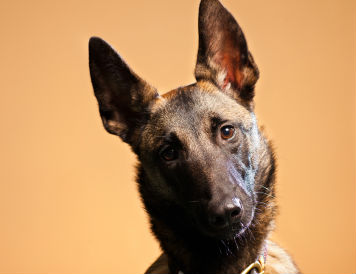
Trained pet dogs remained awake during fMRI scans as researchers measured their brain activity while they viewed images of human faces expressing happiness, anger, fear and sadness. Photo credit: Laura V. Cuaya

It’s something every dog owner knows — but now we have the science to prove it: Dogs really can tell when we’re happy or sad.

Scientists have scanned the brains of dogs to reveal how they process various human expressions, including happiness, sadness, anger and fear, according to a study published Monday in the journal iScience.

The scans, carried out by a team from the University of Vienna, show how the animals’ brains respond differently depending on the expression that humans display.

Senior study author Laura Cuaya explained their findings in a press release published on the university’s website. “When we compare humans with primates, we are looking at abilities that may have come from a common ancestor,” she said.

“With dogs, the story is totally different. They followed a very different evolutionary path, yet through domestication, they developed the social abilities needed to understand and cooperate with us.”

The researchers scanned the brains of eight dogs — six border collies, a labrador and a golden retriever — while showing them images of strangers with either a happy or a neutral expression. The pictures of happy faces increased activity in the parts of the brain associated with higher cognitive and reward processing: the temporal cortex and caudate nucleus.

“It suggests that happy human faces may have emotional significance for dogs,” said Cuaya, who began the research at the National Autonomous University of Mexico and later expanded it through a collaboration at Eötvös Loránd University in Hungary before moving to the Austrian capital.

Next, the researchers wanted to know if the same areas of the dogs’ brains would respond to other emotions. They showed 12 dogs pictures of people feeling happy, angry, fearful or sad and used machine learning to analyse their brain activity.

But the dogs’ brains did not respond in the same way to the angry, fearful or sad expressions as they did to happiness. However, a whole-brain analysis did show distinct patterns of activity when the dogs saw faces showing the negative emotions.

“Humans are really good at picking up small details on the face, so are dogs,” said first author Raúl Hernández-Pérez, also from the University of Vienna. “This makes dogs very interesting. By studying their brains, we can understand what adaptations have developed to support their remarkable social and emotional understanding of humans.”

Cuaya and Hernández-Pérez are partners in their private as well as professional lives and have two dogs, Odin and Kun-kun, who were part of this study.

Hernández-Pérez told CNN that “finding that the caudate nucleus was involved in processing happy faces was a nice surprise,” adding: “Across species, this region has been associated with reward processing. In dogs specifically, caudate activity has been linked to food rewards, but also to social rewards, such as hearing words of praise and perceiving the odor of a familiar person.”

“Although we cannot access dogs’ subjective experience directly, our results suggest that seeing happy faces, even those of strangers, involves positive affective processing.”

The team stressed that there is more to how dogs process emotion than looking at a picture of a still facial expression, as they take other things like the human’s body language, voice and scent into account. They said it is also important to note that the dogs involved in the research were all from loving homes. Those who live on the street may have a completely different way of processing human cues.

Hernández-Pérez told CNN that the dogs had to be specially selected and trained in order to take part. “The dogs needed to be medium-sized, mainly because of the dimensions of the MRI equipment, healthy, and without behavioral problems such as a strong fear of loud sounds,” he said.

“We first teach the dogs that the task is simply to remain still, starting with only one or two seconds and slowly increasing the duration. In fact, one of the most challenging parts is communicating to the dog that ‘doing nothing’ is actually the task. We then gradually introduce the different elements of the MRI environment, including the position, equipment, and scanner sounds. The dogs always participate voluntarily and can leave at any moment.”

The research had several limitations, the authors said. The number of dogs involved in the study was small and most of the dogs were border collies, a smart breed known for its ability to follow social cues.

“It is possible that border collies have a greater ability to interpret human facial expressions, and future studies are needed to determine whether there are behavioral and cerebral differences in the perception of human facial expressions across breeds,” the study said.

The scientists now hope to adopt a “more dogcentric approach” to their research in order to understand how dogs use these signals to make sense of humans.

Hernández-Pérez told CNN: “By reflecting on how remarkably attentive dogs are to our emotions, we can also try to become better at recognizing how they express their own. Emotions are a powerful form of communication that can connect us across species.”

Source: CNN

Journal reference: Dog brain representations of human facial expressions: Encoding happiness and differentiating specific negative expressions
Dogs pay attention to what we are saying

When people hear another person talking to them, they respond not only to what is being said–those consonants and vowels strung together into words and sentences–but also to other features of that speech–the emotional tone and the speaker’s gender, for instance. Now, a report in the Cell Press journal Current Biology on November 26, 2014 provides some of the first evidence of how dogs also differentiate and process those various components of human speech.

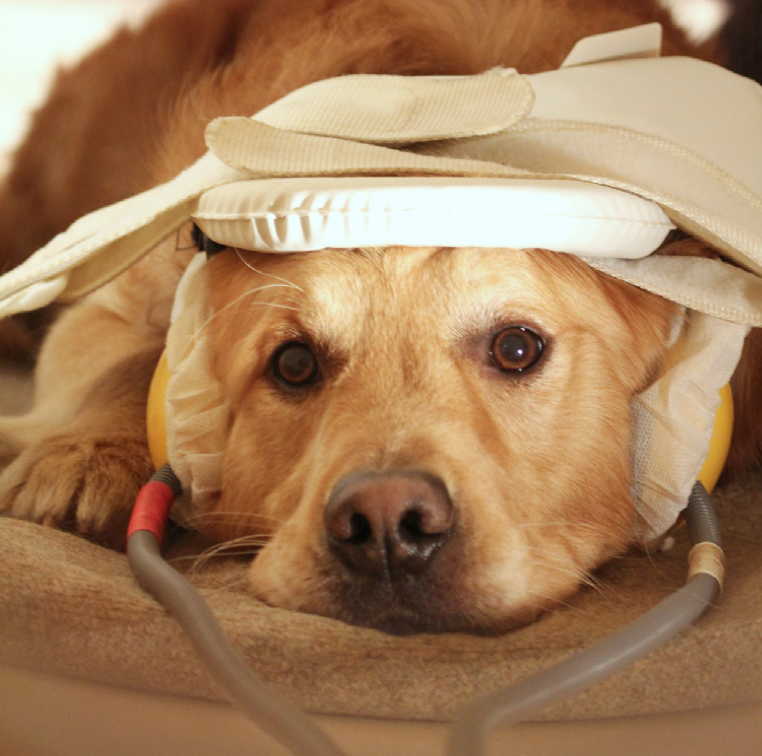
I'm listening...new research proves our dogs are paying attention to what we say and how we say it

I’m listening…new research proves our dogs are paying attention to what we say and how we say it

“Although we cannot say how much or in what way dogs understand information in speech from our study, we can say that dogs react to both verbal and speaker-related information and that these components appear to be processed in different areas of the dog’s brain,” says Victoria Ratcliffe of the School of Psychology at the University of Sussex.

Previous studies showed that dogs have hemispheric biases–left brain versus right–when they process the vocalization sounds of other dogs. Ratcliffe and her supervisor David Reby say it was a logical next step to investigate whether dogs show similar biases in response to the information transmitted in human speech. They played speech from either side of the dog so that the sounds entered each of their ears at the same time and with the same amplitude.

The input from each ear is mainly transmitted to the opposite hemisphere of the brain,” Ratcliffe explains. “If one hemisphere is more specialized in processing certain information in the sound, then that information is perceived as coming from the opposite ear.”

If the dog turned to its left, that showed that the information in the sound being played was heard more prominently by the left ear, suggesting that the right hemisphere is more specialized in processing that kind of information.

When presented with familiar spoken commands in which the meaningful components of words were made more obvious, dogs showed a left-hemisphere processing bias, as indicated by turning to the right. When the intonation or speaker-related vocal cues were exaggerated instead, dogs showed a significant right-hemisphere bias.

“This is particularly interesting because our results suggest that the processing of speech components in the dog’s brain is divided between the two hemispheres in a way that is actually very similar to the way it is separated in the human brain,” Reby says.

Of course, it doesn’t mean that dogs actually understand everything that we humans might say or that they have a human-like ability of language.  But, says Ratcliffe, these results support the idea that our canine companions are paying attention “not only to who we are and how we say things, but also to what we say.”

Source:  EurekAlert! media release

Journal reference:  Ratcliffe et al. Orienting asymmetries in dogs’ responses to different communicatory components of human speech. Current Biology, November 2014

Dogs’ brains respond to human voices

Yet more research on how dogs’ brains work.  This time from a research team at Eötvös Loránd University in Hungary and published in the journal Current Biology.

Using functional MRI, the team could see where blood flowed in the brains of a group of 11 dogs.  The dogs had been specially trained using positive reinforcement techniques to lie still in the MRI scanner for six minutes.

A dog lies still in the fMRI scanner, wearing earphones to pipe in sounds as part of the study. (Photo by Eniko Kubinyi)

A dog lies still in the fMRI scanner, wearing earphones to pipe in sounds as part of the study. (Photo by Eniko Kubinyi)

which tracks blood flow to various areas of the brain, a sign of increased activity—to peer inside the minds of dogs. One of a handful of labs groups worldwide that’s using the technology in this way, they’ve used positive reinforcement training to get a study group of 11 dogs to voluntarily enter the fMRI scanner and stay perfectly still for minutes at a tRead more: http://www.smithsonianmag.com/science-nature/your-dog-can-tell-from-your-voice-if-youre-happy-or-sad-180949807/#DXcpTX0jfeQGFWVY.99
Give the gift of Smithsonian magazine for only $12! http://bit.ly/1cGUiGv
Follow us: @SmithsonianMag on Twitter

The team played each dog a series of over 200 sounds across several MRI sessions.  The sounds included human voices, dog vocalizations, and meaningless noises.

When the results were compared, it showed that the dogs’ brains appear to have a dedicated area that displays more activity in response to voices (whether human speech or dogs barking) than other meaningless noises (such as glass breaking).

More importantly, that part of the brain shows more activity upon hearing an emotionally positive sound, as compared to a negative one.  This means that our dogs are able to distinguish a tone of voice that is positive from one that is negative. (Something many of us probably already knew)

The voice areas of the dogs’ brains is similar to that found in humans, suggesting that our species evolved from a common ancestor almost 100 million years ago, enabling a high degree of communication and social structure.

“We know that dogs don’t have language, per se, but we see now that dogs have very similar mechanisms to process social information as humans,” Attila Andics, lead researcher on the study says. “It makes us wonder what aspects of so-called ‘language skills’ are not so human-specific after all, but are also there in other species. That’s something we plan to look at.”

Source:  Smithsonian Magazine

Here are my earlier blogs about functional MRI studies on dogs:

they show that the dogs’ brains appear to have a dedicated area that displays more activity in response to voices (whether human speech or dogs barking) than other meaningless noises (such as glass breaking), and that part of this area shows more activity upon hearing an emotionally positive sound, as compared to a negative one.Read more: http://www.smithsonianmag.com/science-nature/your-dog-can-tell-from-your-voice-if-youre-happy-or-sad-180949807/#DXcpTX0jfeQGFWVY.99
Give the gift of Smithsonian magazine for only $12! http://bit.ly/1cGUiGv
Follow us: @SmithsonianMag on Twitter


