Tag Archives: canine massage

The blessing and curse of a thick file

I keep paper records in my massage practice; sometimes the time-tested way is the best.  I use diagrams as well as text in my treatment notes, something that is hard to do on a laptop or tablet without wasting a lot of contact time with the client.  I’ve also lost count of the number of times I’ve traced back through notes in discussion with an owner.  Being able to lay out these notes in sequential order is much more powerful than huddling over a computer screen.

And, as the end of the year approaches and I reflect on progress made during the year, I start to take note of the thickness of some of my files.  These are dogs that have been with my practice for a while – usually more than a year and often much longer than that.file-folder

The thick file is both a blessing and a curse.

It’s a blessing because the owners of these wonderful dogs have allowed me to work with their animal regularly, and I get the satisfaction of seeing them make progress and stay healthy through a wellness program that changes as their needs change.  And I also get the satisfaction of playing a part in giving these dogs and their owners quality time together.

It’s a curse because it’s a sure sign that the dog is getting older.  The passage of time becomes more pressing; we are all aware that the dog is aging and slowing down. And as much as we want to keep them with us forever, our window of quality time is closing.

For some of my dogs, this will be their last Christmas.  Their families will ensure it is a good one.

Kathleen Crisley, specialist in dog massage, rehabilitation and nutrition/food therapy, The Balanced Dog, Christchurch, New Zealand

The benefits of stretching

Dog doing morning stretches

Vera does her morning yoga (photo by Jenny Hamilton)

I remember watching a yoga video years ago where the instructor described the act of stretching as ‘making space in the joints.’

As a canine massage therapist, I think stretching is essential.  It lengthens muscles in a controlled and safe way to ensure good range of motion in the limbs and it helps to maintain blood flow to essential soft tissues.

As our dogs age, or when they are injured, then often need help with stretching (the same is true of people).  That’s where professional massage comes in – someone to help warm and stretch the muscles, tendons and ligaments.

Owners can also learn to stretch their dogs; it’s something I include in special massage workshops for greyhound owners.  I’ve found that greyhounds, with their sleek builds and racing instinct, often tighten up when in a pet home or when they don’t get regular off-lead exercise.

Kathleen Crisley, specialist in dog massage, rehabilitation and nutrition/food therapy, The Balanced Dog, Christchurch, New Zealand
 

Teaching others the benefits of dog massage

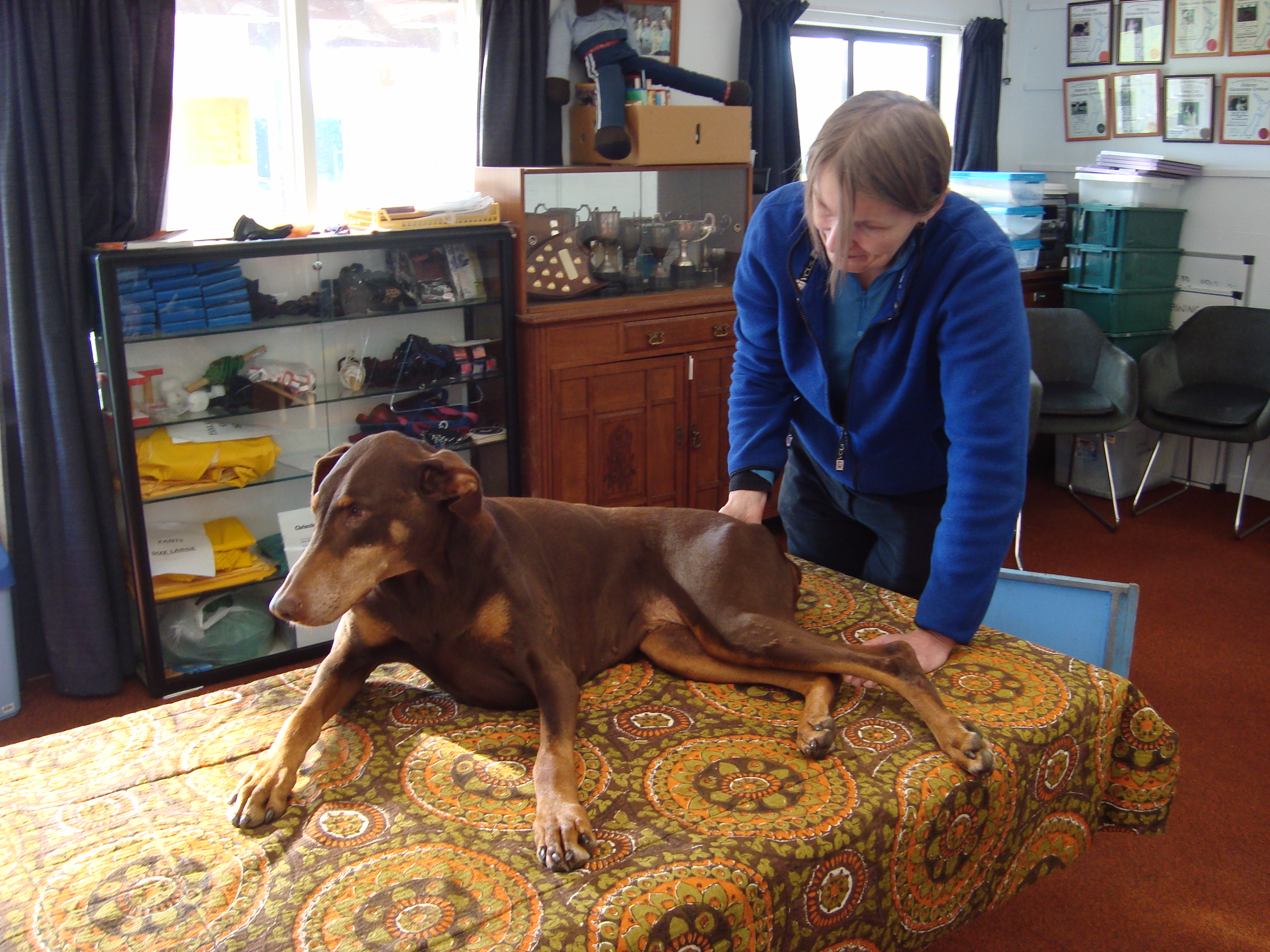
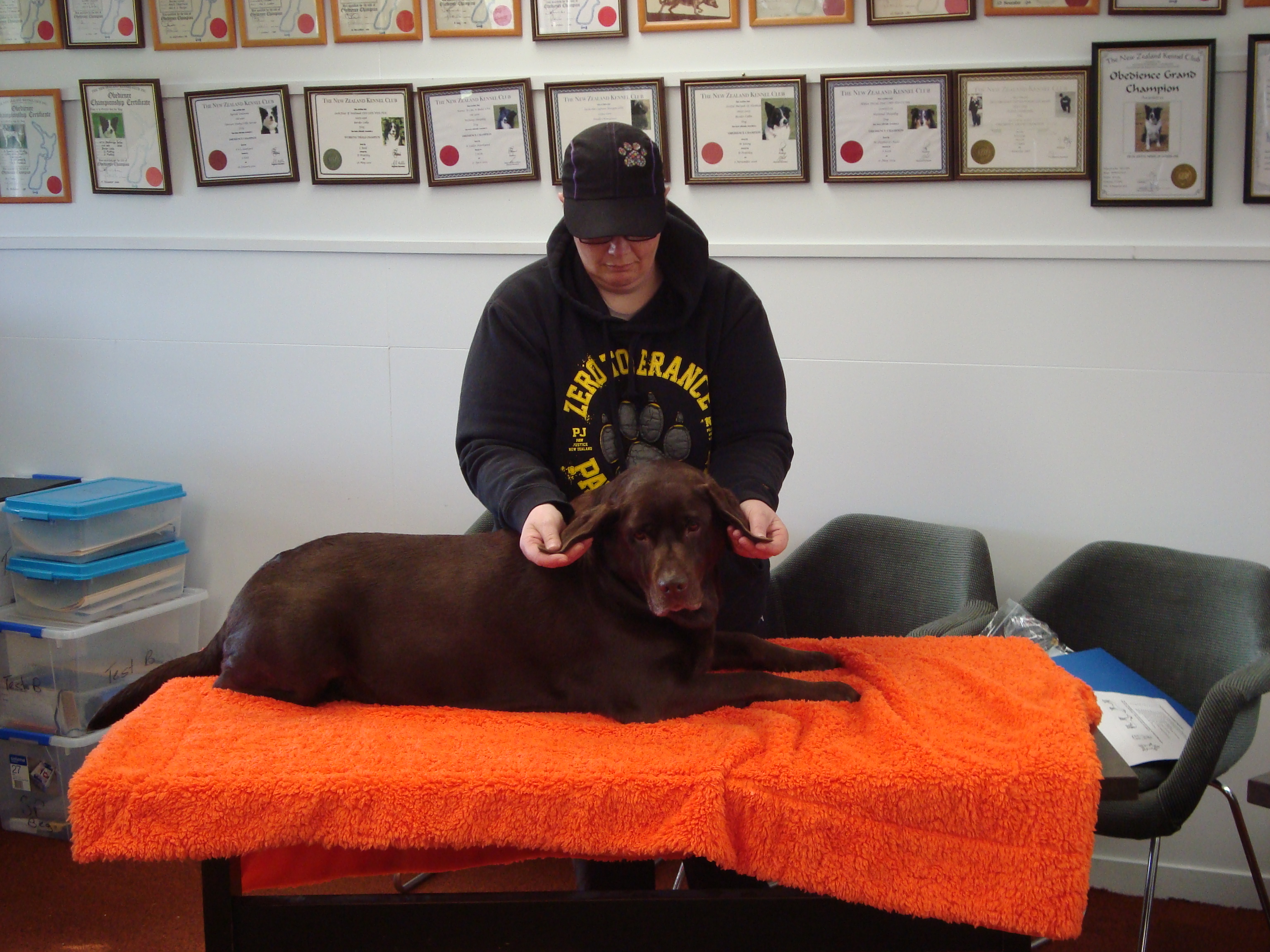
Last weekend, I held my first dog massage workshops in five years.  These half-day workshops cover my own 12-step relaxation massage sequence for dogs along with the basics of gait analysis, senior dog care and keeping records on lumps and bumps.

Today, I received this text:

“Hi, Coffee and I came to your massage class last weekend and, when we were doing hands on, I noticed a golf-ball sized lump on her.  I took her to the vet and they have operated and removed it, so just wanted to say thanks as would not have come across it if it wasn’t for your class.”

I can’t wait to do more workshops on a variety of holistic dog care topics…and I am so happy that Coffee’s lump was found in time – all because of massage.

And here are some photos from the weekend:

DSC03033DSC03030


DSC03038DSC03029


Kathleen Crisley, specialist in dog massage, rehabilitation and nutrition/food therapy, Canine Catering Ltd, Christchurch, New Zealand

Proud Mum

It has been a great week for Izzy (and it’s only Wednesday!).

Over the weekend, she was my ‘demo dog’ at workshops to teach owners how to give their own dogs a relaxation massage.   Izzy is very comfortable on  my massage table and chose to remain there during the last half of the workshop rather than getting down on the floor…

Izzy relaxes on my massage table during my "Learn Dog Massage" workshop

Izzy relaxes on my massage table during my “Learn Dog Massage” workshop

And then on Monday night, she visited a local scout group so our local coordinator for Greyhounds as Pets could talk about the re-homing of retired greyhounds.  Izzy loves children, and soaked up all their love and affection.

Izzy at ScoutsIMG_0380


I’m so proud!

Kathleen Crisley, specialist in dog massage, rehabilitation and nutrition/food therapy, Canine Catering Ltd, Christchurch, New Zealand
Palliative care for dogs

In humans, palliative care is provided to patients to help relieve symptoms of chronic or serious illnesses, such as Alzheimer’s disease or cancer.  This type of treatment includes pain relief but also stress relief to enhance quality of life.

Palliative care is also available for dogs and is a viable alternative to immediate euthanasia when the vet and the family feel that the dog still has quality of life and any pain can be managed.

As a canine massage and rehab practitioner, I get involved in palliative care cases.  Some dogs are at the palliative care phase when I am called in.  Others have been my clients for a while and their life situation has changed.  Using acupressure, massage and/or low level laser, I’m able to help with pain management and give the dog a bit of TLC.  I often play relaxing music for the dog to make the time even more special.

In my experience, palliative care can be a very positive, transitional phase for the family.  It’s a time to say goodbye. If there are children in the household, parents are able to explain what will happen when a dog is put to sleep and the children learn to understand the vulnerabilities of a dog who is old or who is ill.

It will never be easy to say goodbye, but thanks to quality veterinary care and a greater understanding of pain management, more owners can opt for a palliative care phase for their dog – so they can enjoy as much time together as possible.

I didn’t want to say anything…

Most of my regular readers know that I work as a canine massage therapist and helping elderly dogs and those recovering from injuries is very rewarding for me.   Many of my clients use massage for their dogs as a way of staving off the need for non-steroidal inflammatory drugs (NSAIDs), or at least to keep the dosages of these drugs as low as possible.

So here’s a wee story of something that happened to me this week.

I was working on a dog who I have been seeing for 18 months.  He’s a lovely Labrador and he is starting to have the aches and pains of old age.  With a regular 5-weekly regime of massage, he’s been pain free.

Because I know this boy well, I could pick up that he was tight through his hind legs – a muscle called the biceps femoris.  When I said ‘he’s tight down here’ to his owner, she replied, ‘I didn’t want to say anything…I wanted to see if you’d notice.’

This happens fairly often.  Some people like to test me to see if I actually know what I’m doing (some owners remain doubtful about complementary therapies) but most of the time it is because owners doubt if the changes they observe are real.  When you live with someone with a chronic health condition and see them on a daily basis, it is often hard to pick up changes in their condition.

In this case, it was the latter.  This lady wasn’t confident that she was really seeing her dog running stiffly.  He was tight, but was moving freely when he left after his massage.

Success for the week!

What’s the lesson here? It’s unrealistic to expect a massage therapist to ‘solve’ a dog’s problem in a single visit.  Dogs have to get used to the therapist and massage is a new experience for them.  So, the first visit is usually a time when they aren’t as relaxed because they are uncertain.

Because I keep notes on every massage session, I can refer back to these to track a dog’s condition.  This is no different than what your vet does.  When I am familiar with a dog and their unique characteristics, I’m much better able to pick up changes and act swiftly to help.

Please consider your dog’s therapist as a member of your healthcare team and part of your dog’s preventative healthcare regime.  It’s much better than the ‘ambulance at the bottom of the cliff.’

Kathleen at work with Zara (another client).  copyright June Blackwood

Kathleen at work with Zara (another happy customer) copyright June Blackwood

DoggyMom’s First Post – Welcome!

Welcome to my new blog – about everything dog!   Unlike my column for a previous NZ-based website, this one is totally under my control.  It won’t be going anywhere (except growing in content).  Join me as I discuss all sorts of topics related to the love and care of dogs.

Kathleen Crisley, specialist in dog massage, rehabilitation and nutrition/food therapy, The Balanced Dog, Christchurch, New Zealand