Tag Archives: dog behavior

Genetic links to herding behaviours

It’s a win for Darwin’s Dogs and open access data! A new study published in the journal Science Advances has identified genomic links to the behaviours of herding breeds. The study used data entirely sourced from open-access databases.


Researchers at Korea’s Gyeongsang National University and the U.S. National Institutes of Health analyzed data exclusively from publicly available repositories, including genomic and behavioral data from the community science initiative, Darwin’s Dogs. Their findings are powerful examples of how open science—making research data freely and publicly available—can accelerate discovery by helping scientists leverage existing data in innovative ways.

Herding breeds carry genes linked to cognitive function

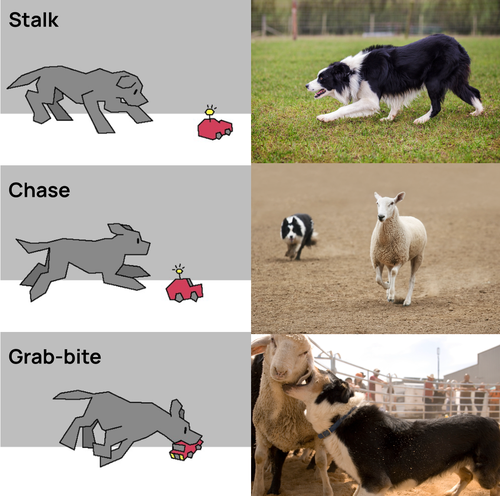
Herding breeds like the Australian cattle dog, Belgian Malinois, and border collie have a long history of helping humans move and manage livestock. These dogs are renowned for their precise motor control, sharp intellect, and unwavering drive. In fact, motor patterns required for effective herding—like eyeing, stalking, and chasing animals without killing them—have been so deeply ingrained in herding dogs through generations of selective breeding that even non-working lines often display these traits. But while herding behaviors have been recognized and refined for centuries, their genetic roots have remained largely unknown.

To explore the genetic foundations of herding behaviors, researchers conducted a large-scale genomic comparison across dogs from 12 herding breeds and 91 nonherding breeds. They identified hundreds of genes that have been naturally selected in herding breeds, several of which, through additional analysis, they found linked to cognitive function.

Narrowing their focus to the border collie, a breed celebrated for its intelligence, the research team identified more than eight genes strongly associated with cognition. One of the standouts was EPHB1, a gene involved in spatial memory. Several variants of EPHB1 appeared across herding breed genomes, suggesting that this gene may support the array of complex motor patterns and decision-making skills essential for herding.

Darwin’s Dogs’ database connects genomic discoveries with behavioral insights

Identifying genes associated with breeds is one thing, but understanding their function is another. This is where Darwin’s Dogs’ open-access behavioral and genomic datasets became critical to expanding the impacts of the study’s findings.

Darwin’s Dogs invites dog owners to participate in scientific research by taking behavioral surveys about their dogs and contributing DNA samples for whole genome sequencing. As part of Darwin’s Ark’s open science commitment, this data is de-identified and made available to researchers around the world, creating a unique open-access resource that allows scientists to explore connections between canine DNA and behavioral traits.

The researchers analyzed data from 2,155 dogs in the Darwin’s Dogs database to see whether dogs with the EPHB1 gene behaved differently than dogs without the gene. They found a strong link between EPHB1 and behavior: dogs with this gene were significantly more likely to show toy-oriented behaviors such as stalking, chasing, and grab-biting toys. These actions closely resemble motor patterns seen in herding behaviors.

This link held true even among dogs with mixed breed ancestry, and within border collies from working versus non-working lines, reinforcing the strong connection between EPHB1 and herding-related behaviors.

Open science opens doors to discovery

This study’s discoveries were made possible through open science. Data from open science initiatives like Darwin’s Dogs—and the thousands of community scientists who shared behavioral insights about their dogs—helped researchers connect genomic markers to observable behaviors. The scale and scope of the Darwin’s Dogs database helped the research team analyze behavioral associations to the EPHB1 gene across dogs with varied breed ancestry.

This research serves as a model for how professional researchers and community scientists can come together to accelerate scientific progress. When community scientists contribute to open repositories like Darwin’s Dogs, the possibilities for discovery are endless.


Resources

Read the paper published in Science Advances: Hankyeol Jeong et al. , Genomic evidence for behavioral adaptation of herding dogs. Sci. Adv. 11,eadp4591(2025).DOI:10.1126/sciadv.adp4591

Source: Darwin’s Ark blog

We’re multitasking while walking our dogs. Animal experts say this is a problem

We’ve all seen it. Many of us have done it.

We treat dog walks as a chance to accomplish two (or three) things at once, leading our pooches around the neighborhood while gazing at our phones, chatting with a friend, listening to a podcast or pushing a stroller.

A dog walker checks his phone while guiding dogs on February 21, 2023, at Washington Park in Denver. Photo by: David Zalubowski/AP

The more ambitious among us even incorporate dogs into our exercise regimens, jogging or biking while our pets trot alongside.

It’s understandable. In today’s overscheduled world, this kind of multitasking can feel extra productive. And walking a dog twice a day around the same streets can get boring.

But animal behaviorists say that at best, dog walkers who aren’t paying full attention can confuse or frustrate dogs by giving them conflicting signals. And at worst, they can endanger the dog’s safety — and their own as well.

“It’s kind of like the dog-walking equivalent of distracted driving,” says Leslie Sinn, a board-certified veterinary behaviorist in Ashburn, Virginia. “You’re not paying attention to the signs that your dog is uncomfortable … and if you’re missing all those clues because your head is elsewhere, that’s a problem.”

Dogs can gobble something harmful when you’re not looking

Matt Semrad is an avid reader and devours audiobooks from the library — about one a week. He also spends several hours each day walking his two black doodles, Sirius and Sonny.

So to maximize his reading time, the suburban Atlanta resident listens to books on his dog walks.

“I would be bored just walking the dogs,” he says.

Semrad says he doesn’t worry much about his dogs’ well-being on walks because they’re well-behaved and he watches them closely when they pass other dogs on the street.

Other dog walkers may not be as vigilant. CNN spoke to a handful of animal behaviorists who say they routinely see people walking dogs in their neighborhoods who are on their phones or pushing strollers and appear to be largely ignoring their pets.

This can pose a safety problem for several reasons, dog experts say. Research has shown that only a small percentage of people can multitask effectively. Distracted dog walkers may not notice potential threats: bicyclists, joggers, cars or unleashed dogs, experts say. By the time a person looks up from their phone, their pet could be in an altercation with another dog — or worse.

“You need to be alert at all times,” says Jacob Hollier, founder of Crate Escape, a dog-walking and pet-sitting service based in Atlanta. “If there’s a car out of control or a scooter coming on the sidewalk … at any given moment, it could be dangerous and possibly be fatal.”

Hollier says he requires his employees to stay off their phones while walking dogs — except to snap photos of the dogs to send to their owners.

“I work with an 180-pound Great Dane, and I have to be watching him at all times,” he says. “He’s bigger than me.”

It’s not just the dogs that are at risk. Experts say they have seen distracted dog walkers injure themselves tripping over sidewalks or even their own dogs. One study found that humans’ injuries while dog walking increased more than fourfold from 2001 to 2020.

Also, dogs are notorious for eating stuff that’s bad for them, experts say.

“If you aren’t paying attention, dogs can pick up and eat things QUICKLY — chicken bones, cigarette butts, dead/poisoned rats, etc.,” says Amy L. Pike, a board-certified veterinary behaviorist in Fairfax, Virginia.

“If you didn’t see it, you won’t know to take them into the vet. Or if you do take them in because they are sick, you won’t know what they ingested, which helps your vet treat them.”

Distracted dog walkers can affect pets’ mental health, too

Physical safety is the most urgent concern, but distracted dog walking also can be detrimental to a dog’s behavioral training and even mental health, experts say.

A multitasking dog owner may be missing an opportunity to reinforce basic training — sit, come, stay and other commands — in a practical setting, says animal behaviorist Mary R. Burch, director of the American Kennel Club’s Family Dog program.

Someone buried in their phone also may not notice when their dog becomes agitated or shows signs of fatigue or an injury.

“Your dog ‘speaks’ primarily with their non-verbal body language,” Pike says. “If you aren’t paying enough attention to what they are ‘saying,’ you won’t know how your dog feels.”

Walks are about more than physical exercise for dogs — they offer mental benefits as well, says Valli Parthasarathy, a board-certified veterinary behaviorist at Synergy Veterinary Behavior in Portland, Oregon. Parthasarathy says dogs like structure and consistency on their walks.

If their owner is just marching forward or not paying full attention, the dog could become confused by conflicting signals — for example, being allowed to sniff one bush but jerked away from sniffing another.

Dogs experience much of the world through their nose, and can become frustrated if they’re not allowed some latitude to explore, Parthasarathy says.

“My ideal walk for a dog is one where they have a lot of time to sniff and take in their environment,” she says. “They have their own doggy priorities. Using the nose is their enrichment … it’s like they’re reading the news.”

Parthasarathy says she’s even seen oblivious dog owners yank on the leash while their dog was in the middle of peeing.

A distracted walker also may be missing an opportunity to bond with their dog, says Burch of the American Kennel Club. “Interacting and having fun together forms a bond that can last a lifetime,” she says.

Some dog owners try to multitask during walks without sacrificing their animal’s wellbeing. Teddy Thomas of suburban Atlanta likes to listen to music or audiobooks on his walks with Stella, a tan-colored rescue mix.

“I don’t feel like I look at my phone all that much while I’m walking her,” he says. “I’d say she has most of my attention — maybe not 100% of it, but enough to keep us both safe.”

Parthasarathy says she understands why some people multitask while walking their dogs. Some overworked parents can’t leave their kids behind during dog walks, so they bring the kids along. Other parents don’t have time for separate outings each day.

“Everyone’s trying the best that they can,” she says. “But going for a walk with your dog should be about building that relationship and focusing on what your dog needs. That may be the only time he gets out of the house that day.”

Source: CNN


My two cents

If you have reached the bottom of this article – congratulations and thank you. I had to share it because the reporter has done a good job of seeking commentary from a number of experts and in a range of contexts.

In my practice, I employ a standard intake questionnaire which includes behavioural questions and observations by owners. The more you observe, the better information we have to adjust your dog’s programme and to understand what is going on with your dog in the first place. I often ask owners to record their observations which helps us discern trends.

The dog trainers I work alongside often ask for recorded observations, too.

If you use a dog walker, you can ask them to observe your dog but remember that most walkers undertake group walks and have many dogs to look after. Please take the time to walk with your dog (without multitasking) to enhance your bond and to watch them!

Kathleen Crisley, Fear-Free certified professional and specialist in dog massage, rehabilitation and nutrition/food therapy, The Balanced Dog, Christchurch, New Zealand

Understanding one another

Like us, dogs have their own forms of verbal and non-verbal communication.  Getting to know your dog and being a careful observer of their behavior helps you to develop a deep understanding of your dog.

We know that our dogs are great observers of our behavior, too.  That’s how they learn our cues, moods, and habits.

Having a good understanding of one another pays benefits when you have a dog who is getting older, or has disabilities.

Take Izzy.  She is an ex-racing greyhound and we’ve known for some time that she has arthritis in her carpus (wrist) and toes.  I picked up on the arthritis quite early.  I had noticed that almost every time I looked at her over the course of about a week,  she was licking her left foot.  A visit to the vet for an x-ray confirmed early signs of arthritic changes.  In response, she started getting rub-downs with an anti-inflammatory gel, I started her on additional deer velvet supplements (in addition to her glucosamine and chondroitin supplement) and I also increased the frequency of her visits to a local hydrotherapy pool and her massages.

Over the last year, we’ve also been battling corns  – something that plagues sighthounds in particular but has been aggravating her arthritis and was the main cause of her progressively becoming more lame.  I knew we were having a corn problem because she would limp only when crossing the road over chip-sealed road (intolerance of rough surfaces is typically the first sign).

As she then developed two corns on the same toe, her lameness became constant and our walks shorter, with a pram when she needed it.

Izzy had a flexor tenotomy surgery last month and this has helped greatly in managing the corns but of course the arthritis is still there, she is that much older, and she’s had months of reduced/shortened walks because of her lameness.

Now the bright side.  She is getting fitter and stronger and I’m carefully increasing the amount of activity she has.  Today, she didn’t want to go out initially for an afternoon walk and so I put her in her pram.

We got as far as around the block before she let me know she was ready to get out and walk.  (This is signaled by a high-pitched bark)

I know Izzy is getting tired when her head drops and she starts taking more and more time sniffing bushes, grass and trees.  These are signs that she is tiring and the excess sniffing is both a diversionary behavior and, at times, a sign she is stressed and uncomfortable.

That’s when I put her back in her pram.  She gets plenty of stimulation and enrichment by watching the world go by.  She also loves the attention she gets from passersby – both on foot and in cars.  (Shortly after I stopped this video, the couple who approached on foot spent at least 5 minutes talking to her, giving her treats and chatting about her care).

I am always grateful when people stop to talk to us about ‘what’s wrong with her’ and to ask about greyhounds and their welfare.

Kathleen Crisley, Fear-Free certified professional and specialist in dog massage, rehabilitation and nutrition/food therapy, The Balanced Dog, Christchurch, New Zealand


Dogs´social skills linked to oxytocin sensitivity

The tendency of dogs to seek contact with their owners is associated with genetic variations in sensitivity for the hormone oxytocin, according to a new study. The findings contribute to our knowledge of how dogs have changed during their development from wolf to household pet.

Golden Retriever

A golden retriever turns to his owner for help. Photo credit: Mia Persson

During their domestication from their wild ancestor the wolf to the pets we have today, dogs have developed a unique ability to work together with humans. One aspect of this is their willingness to “ask for help” when faced with a problem that seems to be too difficult. There are, however, large differences between breeds, and between dogs of the same breed. A research group in Linköping, led by Professor Per Jensen, has discovered a possible explanation of why dogs differ in their willingness to collaborate with humans. The results have been published in the scientific journal Hormones and Behavior.

The researchers suspected that the hormone oxytocin was involved. It is well-known that oxytocin plays a role in social relationships between individuals, in both humans and animals. The effect of oxytocin depends on the function of the structure that it binds to, the receptor, in the cell. Previous studies have suggested, among other things, that differences in dogs’ ability to communicate are associated with variations in the genetic material located close to the gene that codes for the oxytocin receptor. The researchers in the present study examined 60 golden retrievers as they attempted to solve an insoluble problem.

“The first step was to teach the dogs to open a lid, and in this way get hold of a treat. After this, they were given the same task with the lid firmly fixed in place, and thus impossible to open. We timed the dogs to see how long they attempted on their own, before turning to their owner and asking for help,” says Mia Persson, PhD student at the Department of Physics, Chemistry and Biology, and principal author of the article.

Before the behavioural test, the researchers increased the levels of oxytocin in the dogs’ blood by spraying the hormone into their nose. As a control, the dogs carried out the same test after having received a spray of neutral salt water in the same way. The researchers also collected DNA using a cotton swab inside the dogs’ cheek, and determined which variant of the gene for the oxytocin receptor that each dog had.

The results showed that dogs with a particular genetic variant of the receptor reacted more strongly to the oxytocin spray than other dogs. The tendency to approach their owner for help increased when they received oxytocin in their nose, compared with when they received the neutral salt water solution. The researchers suggest that these results help us understand how dogs have changed during the process of domestication. They analysed DNA also from 21 wolves, and found the same genetic variation among them. This suggests that the genetic variation was already present when domestication of the dogs started, 15,000 years ago.

“The results lead us to surmise that people selected for domestication wolves with a particularly well-developed ability to collaborate, and then bred subsequent generations from these,” says Mia Persson.

The genetic variations that the researchers have studied do not affect the oxytocin receptor itself: they are markers used for practical reasons. Further research is necessary to determine in more detail which differences in the genetic material lie behind the effects.

Per Jensen points out that the study shows how social behaviour is to a large extent controlled by the same genetic factors in different species.

“Oxytocin is extremely important in the social interactions between people. And we also have similar variations in genes in this hormone system. This is why studying dog behaviour can help us understand ourselves, and may in the long term contribute to knowledge about various disturbances in social functioning,” he says.

The article: Intranasal oxytocin and a polymorphism in the oxytocin receptor gene are associated with human-directed social behavior in golden retriever dogs, Persson, M.E., Trottier, A.J., Beltéky, J., Roth, L.S.V., Jensen, P., 2017, Hormones and Behavior 95, 85–93, published online 17 August 2017. doi:10.1016/j.yhbeh.2017.07.016

Source:  Linköping University media release

The behavior connection – some lessons

Just a few thoughts in this post about the need to investigate behavior changes in our dogs.

Since our dogs can’t communicate with us in our language, behavior changes can be an indicator of an underlying physical condition.

A few instances from my practice just within the last couple of weeks…

a)  I have been working with a client in my nutrition practice to isolate the food ingredients that her dog will tolerate.  He’s been a very itchy boy.  Working in combination with a vet, we’ve isolated both the foods he can’t tolerate and also environmental factors that need to be managed.  He was still gnawing at his feet, however.  So this very good owner called in a dog trainer who pointed out that her dog was anxious – needing more boundaries at home.  His condition continues to improve as his owner implements a training program and I am now working on recipes for the homemade portion of his diet.

Lessons:  A good owner keeps observing and bringing the right skills and people into their dog’s care team.  Problems are often multi-layered and they need different skill sets.  Rarely does one professional tick all the boxes.

b)  I was contacted by a dog owner who has had their dog on pain medication for a while and wanted to know what I could do for him since he didn’t respond to acupuncture.  They returned from an overseas vacation and were told that there dog was happy and playful at the boarding kennels.  But, to them he was withdrawn and unhappy.  My recommendation was to get back to the vet for x-rays to help with a diagnosis before taking a ‘shot in the dark’ about what to try.  The x-rays have proven a number of structural conditions with his spine and tail.  We now have a better chance of getting together a management plan that will work.

Lessons:  It’s understandable that owners are reluctant to put their dog under anesthesia in order to have tests done.  But if a condition isn’t improving, pain medication alone isn’t the answer without knowing the rest of the story.  Your dog deserves a solid diagnosis and you need it to have the best chance of success in managing their health.

c)  Another itchy dog.  This time, much more than usual.  He’s had a history of food reaction.  The owners introduced a new treat that marketed itself as having high levels of antioxidants as a way of augmenting his homemade diet.  Who wouldn’t give this a try?  But the change in behavior – itching not only his ears and feet but also constantly licking at his private parts – was marked.

I read the label on these new treats, which use wheat.  I am 99% sure that his previous intolerance to commercial foods was caused by the grain content.  My recommendation – ditch the new treats and move onto other solutions.  We’re doing this now.

Lessons:  Just because the label says the product benefits health doesn’t mean it will for every dog.  Be willing to withdraw products in favor of new ones.

Kathleen Crisley, specialist in dog massage, rehabilitation and nutrition/food therapy, The Balanced Dog, Christchurch, New Zealand

Dogs share food with other dogs even in complex situations

Generosity, even among family members, had long been considered to be a specifically human characteristic. Yet rats, chimpanzees and other animals also exhibit similar behaviour. Rachel Dale, Friederike Range and colleagues, of the Messerli Research Institute at Vetmeduni Vienna had already shown that dogs also share food rewards with other dogs. Using a bar-pulling task, the dogs delivered the treats to partner dogs – especially if these were already known to them.

A new study by the research team, published in the journal PLoS ONE, now used a more complex task set-up to confirm the prosocial behaviour of dogs. The experiment showed that dogs continued to prefer familiar partners. However, the increased complexity of the task influenced the readiness with which the dogs delivered a food reward to another animal. The study thus confirmed that the chosen method affects the result and is much more dependent on social proximity than had previously been assumed.

Recognition of objects necessary for giving treats

Instead of pulling on a rope, the dogs in the present study had to recognize special objects in the form of tokens in order to deliver a food reward to the other dog. “This time we not only tested a different experimental set-up but also the level of difficulty,” explains Dale. “The dogs were first trained to touch a token in exchange for a food reward for themselves. They were then trained to recognize two more tokens: one that resulted in a reward being delivered to a partner dog and another which did not.” Three experiments were then conducted to test whether the dogs exhibited prosocial behaviour even in this more complex task and whether they would deliver a food reward to a partner or not. The researchers also tested whether it made a difference to the donor dog if the receiver was familiar or a stranger and whether the presence of another dog was enough to trigger generous behaviour in the test dog even if the partner had no access to the food.

prosocial-behaviour-photo-1

For testing prosocial behaviour, donor dogs had to choose via tokens, if they share Food or not. (Photo: Rachel Dale/Vetmeduni Vienna)

Do dogs have to see the recipients to reward them?

The test set-up consisted of two enclosures. The test dog was trained to wait on a specific location in one enclosure until the researchers revealed a board containing the tokens. The dog could then choose to deliver a food reward to the receiver dog or not. In the first test, either a familiar dog or a stranger sat in the receiver enclosure. The dogs could see each other during the experiment. In the second test, the receiver enclosure remained empty but the other dog was present in the testing room. In a third test, the test dogs were alone in the entire set-up. At the end of each test series, the donor animals could reward themselves by being allowed to touch the token that delivered the food reward to them. This was done to ensure that the dogs remained motivated and unstressed and did not become distracted by an unfamiliar dog.

Dogs remain charitable even in complex tasks

The experiment confirmed that dogs continue to exhibit prosocial behaviour despite the more complex task. The dogs clearly showed a preference for sharing the food reward with a familiar dog. Unfamiliar dogs were rewarded nearly three times less often than familiar ones. The higher level of complexity, however, impacted the general frequency of the food delivery. This influence could be shown among dogs for the first time by comparing the token choice experiment with the simpler bar-pulling set-up and confirms the results of similar tests performed with small children and chimpanzees.

prosocial-behaviour-photo-2

The donor dogs shared food even in the more complex token-test, but more likely for dogs they know. (Photo: Mylene Quervel-Chaumette/Vetmeduni Vienna)

Presence of a partner makes dogs more likely to share

The behavioural biologists found another significant difference regarding the question whether the presence of a partner was important for the motivation of the test dog. Even when a second dog was present in the testing room without being in the other enclosure, the donor dogs were more motivated to give a food reward. When the test dogs were alone in the room, the number of food deliveries went down.

This aspect, known as social facilitation, could not be shown in the first study. The social facilitation theory starts from the assumption that animals will perform more readily in the presence of conspecifics. Given a more complex task, the presence of a partner appears to play a greater role. In this case, too, the donor dogs preferred familiar partners. “The difference was smaller, however, than when there was direct visual contact. Social facilitation should therefore be considered and controlled more strongly in future studies and in simple experiments,” says Range.

Source:  Vetmeduni Vienna press release

How to Deal with a Crotch Hound

We all know the type…but are probably afraid to classify our own dogs as Crotch Hounds since it sounds so rude.  The dog trainer is this video calls the behavior ‘checking the oil’ when visitors arrive!

Here’s a new video with some advice on how to re-train your dog so your visitors are greeted in a more socially acceptable way.

Kathleen Crisley, specialist in dog massage, rehabilitation and nutrition/food therapy, The Balanced Dog, Christchurch, New Zealand

Premature greying in dogs

A research team including the legendary Temple Grandin have published a study into the premature greying of dogs and linked behavioral factors such as anxiety, fear and impulsivity as causes of a dog becoming prematurely grey.

Dog with greying muzzle

A sample of 400 dogs, ages 1–4 years was obtained at dog parks, shows, veterinary clinics, and other venues. Each dog was photographed and the degree of muzzle greyness was rated on an ordinal scale ranging from “no grey” to “full grey.” White, merle or pale colored dogs were dropped from the study because it was impossible to determine degree of greyness.

Each owner filled out a questionnaire assessing the constructs of anxiety and impulsivity, as well as other behaviours and characteristics. To prevent response bias, owners were told that the purpose of the study involved dog lifestyle. Distractor items were added to the survey to prevent the owner from guessing the purpose of the survey. Examples of survey items indicating anxiety included: destruction when left alone; hair loss on vet exam or being in a new place; and cringes/cowers in response to groups of people.

Examples of survey items indicating impulsivity included: jumping on people, inability to calm, loss of focus, hyperactivity after exercise.

In this sample of young dogs, latent variable regression showed that the extent of muzzle greyness was significantly and positively predicted by anxiety (p = 0.005) and impulsivity (p < 0.001). Dog size, spay/neuter status, or medical problems did not predict extent of muzzle greyness. Fear responses to loud noise, unfamiliar animals and people were associated with increased greyness. Ordinal regression analysis showed that muzzle greyness was significantly predicted by fear of loud noises (p = 0.001), unfamiliar animals (p = 0.031), and unfamiliar people (p < 0.001).

The team concluded that premature greying in young dogs may be a possible indicator of anxiety, fear or impulsivity issues in dogs under four years of age.

Source: Anxiety and impulsivity: Factors associated with premature graying in young dogs, Applied Animal Behaviour Science, December 2016

The Most Desirable Traits in Dogs for Potential Adopters

Note from DoggyMom:

Shelters need all the help they can get to increase rates of adoption.  This latest research from Texas Tech University may help them do that and the results may surprise you – traditional ‘training’ may not be the answer.


Alexandra Protopopova has performed extensive research trying to increase the adoption rates and decrease euthanasia rates for animal shelters throughout the country.

Walking down the long rows of pens at any animal shelter reveals a veritable smorgasbord of canine variety.

Big dogs. Little dogs. Outgoing dogs. Shy dogs. Hyper dogs. Calm dogs. Happy dogs. Sad dogs.

But finding which one is right for a potential adopter is a big challenge for animal shelters throughout the country. The way to find that right fit between adopter and adoptee has almost always been about matching personalities and has never really had much scientific theory behind it.

Until now.

Alexandra Protopopova, a behavioral analyst and assistant professor in companion animal science in the Department of Animal & Food Sciences at Texas Tech University, has turned what started as her doctoral dissertation into a major research focus. She is attempting to determine what behavioral traits in dogs are most attractive to potential adopters and then working with shelters to train dogs to exhibit those traits when an adopter shows interest.

“Currently there are numerous pets living in animal shelters, not only in Texas but in the U.S. and around the world,” Protopopova said. “The problem is that a lot of these animals are living for quite some time at these shelters, even if the shelters are well-funded. Because of space restrictions, the animals are typically socially deprived, they are housed in single or very small groups without a lot of human interaction, and the euthanasia rates are still very high across the country.

“Can we figure out a way to train dogs in the shelter so that when people come in and see the trained dogs, it will improve their adoption rate and decreases euthanasia rates?”

The answer, through her research, appears to be a likely, yes.

But finding that answer not only meant discovering and displaying the most attractive traits in a dog, but also breaking down some of the myths that have, over time, seemed to determine the most attractive qualities in a canine companion.

Breaking assumptions
Determining what traits in dogs are most attractive to potential adopters involved not only observing canine behavior but also breaking away from some of the traditionally held assumptions from the past.

These are traits that Protopopova said she has been investigating since her time as a graduate student. Many shelters have training programs that are based on these assumptions, and it took going back to the basics and avoiding the widely held assumptions to determine what true traits in dogs were most and least attractive to potential adopters.

Kennel dog“A typical assumption was that training dogs to sit and not jump or bark would result in higher adoption rates, since that is what we had assumed adopters wanted in their dogs,” Protopopova said. “I also had my own assumption that people really like a dog that would gaze lovingly into their eyes, when in fact we saw no evidence of that in our research. So why don’t we take a step back and systematically figure out what it is people want to see in a dog? We approached it from a marketing perspective, and from there we could see, after knowing what behaviors are favorable to people, what programs we needed to work on to improve behavior and ultimately increase adoption rates.”

An extensive examination of canine behavior in kennels was then undertaken to determine which behaviors were the most and least favorable for potential adopters. Protopopova observed in-kennel behavior and examined everything the dogs did as people walked by.

Behaviors such as barking, sitting and jumping had no effect whatsoever on attracting potential adopters, but a dog that would pace in the kennel, turn their face away from those walking by or lean sadly to one side of the kennel would deter adopters and lengthen the dog’s stay in the shelter.

But the most telling behavior came when there was actual interaction between the dog and potential adopters outside the kennel. It is standard practice at shelters to allow potential adopters to select one or two dogs they might be interested in and allow them to interact in an outdoor area to see if they are compatible.

Two behaviors stood out among all others as the strongest determinants toward whether or not the dog was adopted. If the dog laid down in proximity to the adopter, that increased the likelihood of adoption. Conversely, if the dog ignored the initiation of the potential adopter to play, that decreased quite severely the likelihood of adoption.

Knowing those two key traits in dogs, Protopopova and her fellow researchers were able to develop a structured training program where the shelter volunteer or staff member could go with the potential adopter and guide the dog’s behavior based on its toy preference, knowing the dog would not ignore the toys it likes, or eliminate toys altogether if it was determined the dog did not like playing with toys.

Shelter volunteers and staff also would encourage the dog to lie down next to a potential adopter using treats. All these efforts, Protopopova said, resulted in a discernable increase in adoption rates.

“We also asked people why they chose the dog they adopted and why they did not choose the dog they didn’t adopt after those interactions in the experimental setting,” Protopopova said. “It’s fun to take those words the adopters use, those constructs and figure out what they mean. If an adopter told us they adopted the dogs because it was ‘social and liked me,’ they could simply mean ‘the dog lay down next to me.’”

This training program also is cost-efficient, knowing shelters do not have the resources to afford a professional training staff, which is why Protopopova considers it more behavior management than actual training.

But is it actual training? Or could this be considered more of a way of tricking the dog into behaving a certain way to increase its adoptability? That was certainly something Protopopova considered, though adopters indicated afterward the method was no more intrusive than the control group where the dog was allowed to do whatever it wanted.

“The interactions between adopters and dogs are only eight minutes long because that is how long previous research has shown it takes adopters to decide,” Protopopova said. “The dogs have only eight minutes to show their best side, so if we can do anything to show them off in the best light possible, that is a good thing for the adopter and the dog.”

The next step has been partnering with Maddie’s Fund foundation, which offers grants to shelters that works with community veterinarians, rescue groups and animal control agencies. Through Maddie’s Fund’s help, Protopopova is taking her research to a national scale, trying the same techniques at different types of shelters across the country.

“Will it work in smaller, rural community shelters? Will it work in the big city environment?” Protopopova asked. “Furthermore, will it work in different parts of the country? Our assessment was in Florida, but will it work in Texas, in Boston, in San Francisco? We will take it to six shelters nationally and try it out there.”

Other factors besides behavior
Obviously, factors beyond behavior go into why potential adopters choose the dogs they choose. Adopters can be looking for a certain breed or a certain size of a dog.

Certain breeds such as long-haired dogs, shepherd breeds and collie breeds tend to have high adoption rates, as do toy breeds such as Pomeranians or Chihuahuas. But a second question begged to be asked after the initial research by Protopopova – are some breeds more or less susceptible or accepting of behavioral training?

One problem with answering that question is the majority of dogs in a shelter are not purebreeds, but rather a mix of many breeds or dogs that have never had a purebred ancestor. So determining their trainability based on breed would be difficult.

Age also is an important factor in whether the dog’s behavior can be modified to make it more adoptable. Typically, puppies are more likely to be adopted because of their age and the fact adopters want to find a dog that can be with them for a long time. So training of puppies in an animal shelter setting might not be the best use of limited resources.

Conversely, older dogs that are well into their adulthood tend to stay in the shelter longer because adopters don’t seek them. So the ideal group for this experiment was dogs in their adolescence or just into adulthood. The good news is that, contrary to the old saying, old dogs can be taught new tricks.

“It just makes more sense if you’re a shelter volunteer to put your resources in training adolescent dogs,” Protopopova said. “But how does age affect training in general? It doesn’t affect it a whole lot. But, of course, socialization is very important for puppies. If you haven’t socialized your puppy to different people, different sounds, different environments and other dogs, you will have a much harder time young adult dog is much easier on families. Puppies engage in much worse behavior.”

Protopopova said in some cases it’s also difficult to determine how the dog was treated before arriving at the shelter. Dogs in shelters fall into one of three categories – owner-surrender, stray or confiscated due to abuse or cruelty.

The difficulty comes in owners who surrender dogs to a shelter. Shelters charge a fee to owners who give up their dogs, so in many cases, owners tell the shelter the dog was picked up as a stray to avoid paying that fee, or because they are wracked with guilt for giving up their beloved pet.

Those labels not only make a difference to potential adopters, but an owner-surrender dog, somewhat surprisingly, is more likely on a national scale to be euthanized than a stray, Protopopova said.

While the first study involved roughly 250 dogs, the bigger national study will involve many, many more and will involve dogs from a variety of shelter types, from municipal shelters to limited-admission shelters – a term Protopopova prefers over no-kill shelters. Protopopova is anxious to see how the study works on that national scale and how many adoptions encouraged by a dog’s modified behavior result in some dogs being returned.

Given what has been discovered so far, though, Protopopova is encouraged her efforts and those of her fellow researchers have forged a path to increasing adoptions across the board.

“We are very excited about this procedure because this is really the first time we have experimentally and systematically demonstrated an increase in adoption rates through behavioral training,” Protopopova said.

Source:  Texas Tech University media release

Intestinal health can impact dog behavior

intestinal-health-can-impact

Photo credit: University of Helsinki

General fearfulness, sensitivity to noise as well as hyperactivity and impulsiveness are the most common behavioural problems in dogs. At their worst, they can have a very negative impact on the wellbeing of the dog and owner alike.

“Behaviour and behavioural disorders often develop as a combination of hereditary and environmental factors, which makes studying them challenging. Metabolomics, or the study of the metabolism, provides us with new clues on the biological issues underpinning behavioural disorders while promoting genetic research. At the moment, metabolomics research in dogs is rare, and the purpose of this pilot study was to examine new approaches and attain information on any metabolic abnormalities associated with hyperactivity in dogs,” explains Professor Hannes Lohi of the University of Helsinki  and the  Folkhälsan Research Centre.

Ab­nor­mal meta­bolic blood test res­ults in hy­per­act­ive dogs

Determining the blood metabolites in hyperactive and normally behaved German Shepherds revealed a significant link between hyperactivity and lower blood phospholipid levels.

“We knew to expect this discovery from research on the human side, as several studies have recorded lower blood lipid and fatty acid levels in ADHD patients than in control groups. However, the causal relationship is not clear and requires further studies, particularly ones with more extensive research data. Our discovery supports the existing belief that human and canine diseases are similar, which suggests dogs can serve as excellent models for human illnesses,” states doctoral student Jenni Puurunen.

“It is significant that the dog’s age, sex or fasting had little impact on the link between behaviour and metabolites. We also controlled for dietary changes by feeding all dogs the same food for two weeks before testing,” explains Puurunen.

In­test­inal health can im­pact can­ine be­ha­viour

One of the most interesting discoveries in the study was the negative correlation between hyperactive behaviour and the levels of the metabolites of tryptophan, a vital amino acid. This metabolite is only produced when intestinal bacteria process the tryptophan received in food. The discovery suggests differences in the gut bacteria of hyperactive and normally behaved dogs, which is very significant in light of the discovery made a few years ago about the connection between the brain and the intestines.

“We know that the composition of the gut microbiota significantly influences the creation of neurotransmitters, for example, those which regulate mood and behaviour. The effect also works vice-versa, so that a stress reaction in the brain can have an adverse effect on the gut microbiota. Consequently, we cannot tell whether our discovery is the cause of canine hyperactivity or its consequence,” Puurunen says.

A glob­ally unique meta­bolo­m­ics pro­ject is un­der­way

Earlier this year, Lohi’s research group released an article on a study of the metabolomics of fearful dogs, which revealed differences between the blood counts of fearful and fearless dogs. However, more extensive research is required to confirm these pilot-stage findings. The research group has launched an extensive collection of samples to test new metabolomics technology together with the company Genoscoper. If successful, the new system could become a significant tool to speed up genetic research, particularly as it relates to behavioural studies.

The study is part of a more extensive canine behaviour project underway at the research group. The project seeks to determine the environmental and hereditary factors as well as metabolic changes relating to behaviour and behavioural disorders, and map their similarities with corresponding illnesses in humans.

Source:  University of Helsinki media release