Tag Archives: Dog

Pet Night on Capitol Hill

Congresswoman Claudia Tenney (NY-24) introduces the PAW Act during Pet Night on Capitol Hill

The Human Animal Bond Research Institute (HABRI), the Pet Food Institute (PFI) and the Pet Advocacy Network co-hosted Pet Night on Capitol Hill on 11 September 2024, paying special tribute to the important role of service animals for our nation’s disabled veterans, and celebrating the positive impact of pets in America. Pet Night on Capitol Hill brought together Members of Congress, congressional staff, and leaders in the pet care community to share programs and policies that protect human and animal well-being.

“Pet Night on Capitol Hill is more than just an evening spent with some incredible pets—it’s a chance to convey to Congress the vital message that policies and programs keeping people and pets together promote better health and well-being for all,” said Vic Mason, President of the World Pet Association (WPA) and presenting sponsor of Pet Night.

“HABRI is proud to co-host Pet Night on Capitol Hill, a night dedicated to honoring the human-animal bond and its positive impact on the well-being of individuals, families and communities, including our nation’s veterans who rely on the healing support of service dogs,” said Steven Feldman, President of HABRI.

At the event, attendees interacted with Pet Partners therapy animals, show cats provided by the Cat Fanciers’ Association, and adoptable puppies from Petco Love.

Veterans and their service dogs were recognized during the Ceremony for their service to our country, and the National Service Dog Memorial displayed a replica of the resin casting of “Sully”, President George H.W. Bush’s Service dog by Susan Bahary, which will be placed in the permanent collection of the George H. W. Bush Presidential Library and Museum in College Station, TX.

The Animal Health Institute (AHI) honored the winners of the Cutest Pets on Capitol Hill contest, now in its sixteenth year, recognizing the most adorable animals belonging to Members of Congress and their staff.

Cutest Dog: Palmer
Owner: Joe Ballard
Office of Rep. Kelly Armstrong (ND)

Cutest Cat: Moony
Owner: Izzah Yousuf
Office of Rep. Al Green (TX-9)

Cutest Exotic: Froth
Owner: Larson Church
Office of Rep. Andrew Clyde (GA-9)

“I’m happy to once again partner with AHI to be a part of this event, which brings together members from both parties to share our mutual affection for our beloved pets. This event is also a fantastic reminder that ensuring our pets’ and animals’ health and safety is crucial for both their wellbeing and ours,” said Congresswoman Schrier. “That’s why in Congress, I’ve advocated for animal health through legislation like ADUFA to get new, innovative, and safe veterinary medications to market, and I am incredibly proud that this legislation was signed into law last September.”

“I’m honored to be a congressional judge for this year’s AHI Cutest Pets Contest,” said Rep. Cammack (R-FL-03). “Folks on the Hill know my office is home to our three pups who often greet guests and visitors, so we always appreciate the opportunity to support our furry friends! This year’s Pet Night is also special as we pay homage to the heroes and animals who have served our nation. I’m grateful to the Animal Health Institute for inviting me to participate in this year’s event.”

“The Animal Health Institute’s Cutest Pets on Capitol Hill is always a highlight, but there’s so much more to it than just cuteness – it’s all about the importance of pets in people’s lives,” said Alex Mathews, President and CEO of AHI. “The animal health industry serves not only to keep pets healthy, but also to keep families healthy and happy together, and we’re proud to celebrate this each year at Pet Night on Capitol Hill.”

HABRI’s “Human Animal Bond Leadership Award” was conferred upon Representative Claudia Tenney (NY-24) and Representative Deborah Ross (NC-02) for their sponsorship of the People and Animals Well-being (PAW) Act, a newly introduced bill that would allow people to use up to $1,000 of their Health Savings Accounts (HSAs) or Flexible Spending Accounts (FSAs) for veterinary care or a pet health insurance policy for their pets. The bill would impose no limit on veterinary care for service animals, providing even more support for people with disabilities, including our nation’s veterans.

“Our pets and service animals are cherished members of our families, and it’s essential that owners have the ability to pay for quality care,” said Congresswoman Tenney. “The PAW Act offers greater flexibility to pet owners by allowing them to use HSAs and FSAs for pet care expenses. This legislation will help veterans, and all pet owners afford veterinary care for their beloved pets and service animals.”

“The Pet Advocacy Network’s “Pets’ Best Friend” award was conferred upon three Members of Congress and Senators who have demonstrated a commitment to supporting pets and pet owners. Congressman Jake LaTurner of Kansas was jointly recognized by PAN and PFI, and Senator Chuck Grassley of Iowa and Congressman Glenn “GT” Thompson of Pennsylvania were recognized for their tireless service on behalf of companion animals and those who serve and support them.

“We were thrilled to recognize these Members of Congress with the Pets’ Best Friend award and to once again co-host this important celebration of pets and pet ownership in America,” said Pet Advocacy Network President and CEO Mike Bober.

“Just as complete and balanced nutrition is critical for pets, policies and programs that ensure healthy lives for people and pets are also important. Pet Night on Capitol Hill is a wonderful opportunity for the pet care community to showcase its longstanding commitment to the importance of service dogs for veterans, pets in classrooms for children, and the dire need for more pet-friendly housing, especially for domestic violence shelters,” said Dana Brooks, President & CEO of PFI.

Pet Night is part of Pet Week on Capitol Hill, a week-long series of virtual programming and in-person visits. Virtual sessions share key data about how pets are important for human health and quality of life and highlight the most pressing issues relating to pet ownership in America. All recorded sessions from Pet Week on Capitol Hill are now available to view on-demand at http://www.petnight.com

Source: Pet Business

When Dogs Smell Your Stress, They Act Sad

Hailey Seelig/Getty Images

Humans and dogs have been close companions for perhaps 30,000 years, according to anthropological and DNA evidence. So it would make sense that dogs would be uniquely qualified to interpret human emotion. They have evolved to read verbal and visual cues from their owners, and previous research has shown that with their acute sense of smell, they can even detect the odor of stress in human sweat. Now researchers have found that not only can dogs smell stress—in this case represented by higher levels of the hormone cortisol—they also react to it emotionally.

For the new study, published Monday in Scientific Reports, scientists at the University of Bristol in England recruited 18 dogs of varying breeds, along with their owners. Eleven volunteers who were unfamiliar to the dogs were put through a stress test involving public speaking and arithmetic while samples of their underarm sweat were gathered on pieces of cloth. Next, the human participants underwent a relaxation exercise that included watching a nature video on a beanbag chair under dim lighting, after which new sweat samples were taken. Sweat samples from three of these volunteers were used in the study.

Participating canines were put into three groups and smelled sweat samples from one of the three volunteers. Prior to doing so, the dogs were trained to know that a food bowl at one location contained a treat and that a bowl at another location did not. During testing, bowls that did not contain a treat were sometimes placed in one of three “ambiguous” locations. In one testing session, when the dogs smelled the sample from a stressed volunteer, compared with the scent of a cloth without a sample, they were less likely to approach the bowl in one of the ambiguous locations, suggesting that they thought this bowl did not contain a treat. Previous research has shown that an expectation of a negative outcome reflects a down mood in dogs.

The results imply that when dogs are around stressed individuals, they’re more pessimistic about uncertain situations, whereas proximity to people with the relaxed odor does not have this effect, says Zoe Parr-Cortes, lead study author and a Ph.D. student at Bristol Veterinary School at the University of Bristol. “For thousands of years, dogs have learned to live with us, and a lot of their evolution has been alongside us. Both humans and dogs are social animals, and there’s an emotional contagion between us,” she says. “Being able to sense stress from another member of the pack was likely beneficial because it alerted them of a threat that another member of the group had already detected.”

The fact that the odor came from an individual who was unfamiliar to the dogs speaks to the importance of smell for the animals and to the way it affects emotions in such practical situations, says Katherine A. Houpt, a professor emeritus of behavioral medicine at Cornell University’s College of Veterinary Medicine. Houpt, who was not involved in the new study, suggests that the smell of stress may have reduced the dogs’ hunger because it’s known to impact appetite. “It might not be that it’s changing their decision-making but more that it’s changing their motivation for food,” she says. “It makes sense because when you’re super stressed, you’re not quite as interested in that candy bar.”

This research, Houpt adds, shows that dogs have empathy based on smell in addition to visual and verbal cues. And when you’re stressed, that could translate into behaviors that your dog doesn’t normally display, she says. What’s more, it leaves us to wonder how stress impacts the animals under the more intense weight of an anxious owner. “If the dogs are responding to more mild stress like this, I’d be interested to see how they responded to something more serious like an impending tornado, losing your job or failing a test,” Houpt says. “One would expect the dog to be even more attuned to an actual threat.”

Source: Scientific American

Wolves, dogs and dingoes

Dogs are generally considered the first domesticated animal, while its ancestor is generally considered to be the wolf, but where the Australian dingo fits into this framework is still debated, according to a retired Penn State anthropologist.

“Indigenous Australians understood that there was something different about the dingoes and the colonial dogs,” said Pat Shipman, retired adjunct professor of anthropology, Penn State.  “They really are, I think, different animals. They react differently to humans. A lot of genetic and behavioral work has been done with wolves, dogs and dingoes. Dingoes come out somewhere in between.”

A) Person holding the front paws of a dingo spread wide.  B) Shows a dingo climbing rocks. Image: Lyn Watson

Wolves, dogs and dingoes are all species of the canidae family and are called canids. In most animals, hybridization between closely related species does not happen, or like female horses and male donkeys, produce mules — usually non-fertile offspring.  However, many canid species, including wolves, dingoes and dogs, can interbreed and produce fertile offspring. Defining species boundaries in canids becomes more difficult.

Domestic dogs came to the Australian continent in 1788 with the first 11 ships of convicts, but dingoes were already there, as were aboriginal Australians who arrived on the continent about 65,000 years ago. A large portion of dingoes in Australia today have domestic dog in their ancestry, but dingoes came to Australia at least 4,000 years ago according to fossil evidence. Shipman believes that date may be even earlier, but no fossils have yet been found.

“Part of the reason I’m so fascinated with dingoes is that if you see a dingo through American eyes you say, ‘that’s a dog,'” said Shipman. “In evolutionary terms, dingoes give us a glimpse of what started the domestication process.”

Shipman reports her analysis of wolves, dogs and dingoes in a January 2021 special issue of the Anatomical Record.

Dingoes, and the closely related New Guinea singing dogs, look like the default definition of dog, but they are not dogs. 

“There is a basic doggy look to dingoes,” said Shipman.

Genetically and behaviorally they differ from dogs and are more like wolves in their inability to digest starches and their relationships with humans. 

Most domestic dogs evolved along with humans as humans became agriculturalists and moved to a diet containing large amounts of starch, whether from maize, rice, potatoes or wheat. Their genome changed to allow the digestion of these starches. Dingoes, like wolves, have very few of the genes for starch digestion.

While indigenous Australians stole dingo puppies from their dens and raised them, these puppies generally left human homes at maturity and went off to breed and raise offspring. The ability to closely bond with humans is limited in dingoes, although present in dogs. Native Australians also did not manipulate dingo breeding, which is a hallmark of domestication.

Dingoes are also well-adapted to the Australian outback and fare well in that environment. Domestic dogs that become feral do not survive well in the outback.

“Aboriginal Australians were not well-regarded as holders of knowledge or special skill when Europeans came to the continent,” said Shipman. “So, no one thought to ask them about dingoes. Even recently, asking aboriginals for their scientific or behavioral knowledge really was not common.”

However, aboriginal Australians have a long history of living with dingoes in their lives. Many people argue that dingoes are just dogs — strange dogs, but just dogs, said Shipman.  But, according to aboriginals, dingoes are not dogs.

With dingoes showing behaviors somewhere between wolves and dogs and exhibiting only slight genetic ability to consume starchy foods or tolerate captivity, Shipman concluded that “A dingo is a wolf on its way to becoming a dog, that never got there.”

Source: Penn State News

Doggy quote of the month for October

All his life he tried to be a good person. Many times, however, he failed. For after all, he was only human. He wasn’t a dog.

– Charles M. Schulz

Doggy quote of the month for December

“Thorns may hurt you, men desert you, sunlight turn to fog; but you’re never friendless ever, if you have a dog.”

– Douglas Malloch, poet

Izzy of The Balanced Dog

The Dog Lawyer

Earlier this year, I had the opportunity to interview Jeremy Cohen of Boston Dog Lawyers.

Yes – your dog can have a lawyer.  Or, more accurately, you can hire a lawyer to advocate for you and your dog.

Boston Dog Lawyers picture

It’s a sad fact that many dogs are often destroyed because poor laws and policy deem them to be dangerous.  Jeremy thinks we can do better and has a range of trainers, behaviorists and other experts he can call upon to represent an alternative position.

Couples who haven’t married legally may find themselves fighting over ‘ownership’ of their pet.  Custody battles are another area of the practice.

Jeremy is profiled in my column this month in NZ Dog World magazine.

I particularly like Jeremy’s simple to understand bite prevention tips:

Boston Dog Lawyers – Bite Prevention Tips

Never allow your dog to be alone with children under age 12

Integrate your dog into your family and don’t segregate it
Follow the leash law
Use the leash when entering and exiting the car
Exercise your dog daily
Post signs if dog is aggressive
Keep current with licensing and shots

Boston Dog Lawyers logo

Kathleen Crisley, specialist in dog massage, rehabilitation and nutrition/food therapy, The Balanced Dog, Christchurch, New Zealand

Doggy quote of the month for April

‘The dog is man’s best friend.

He has a tail on one end.

Up in front he has teeth.

And four legs underneath.’

– Ogden Nash, American poet

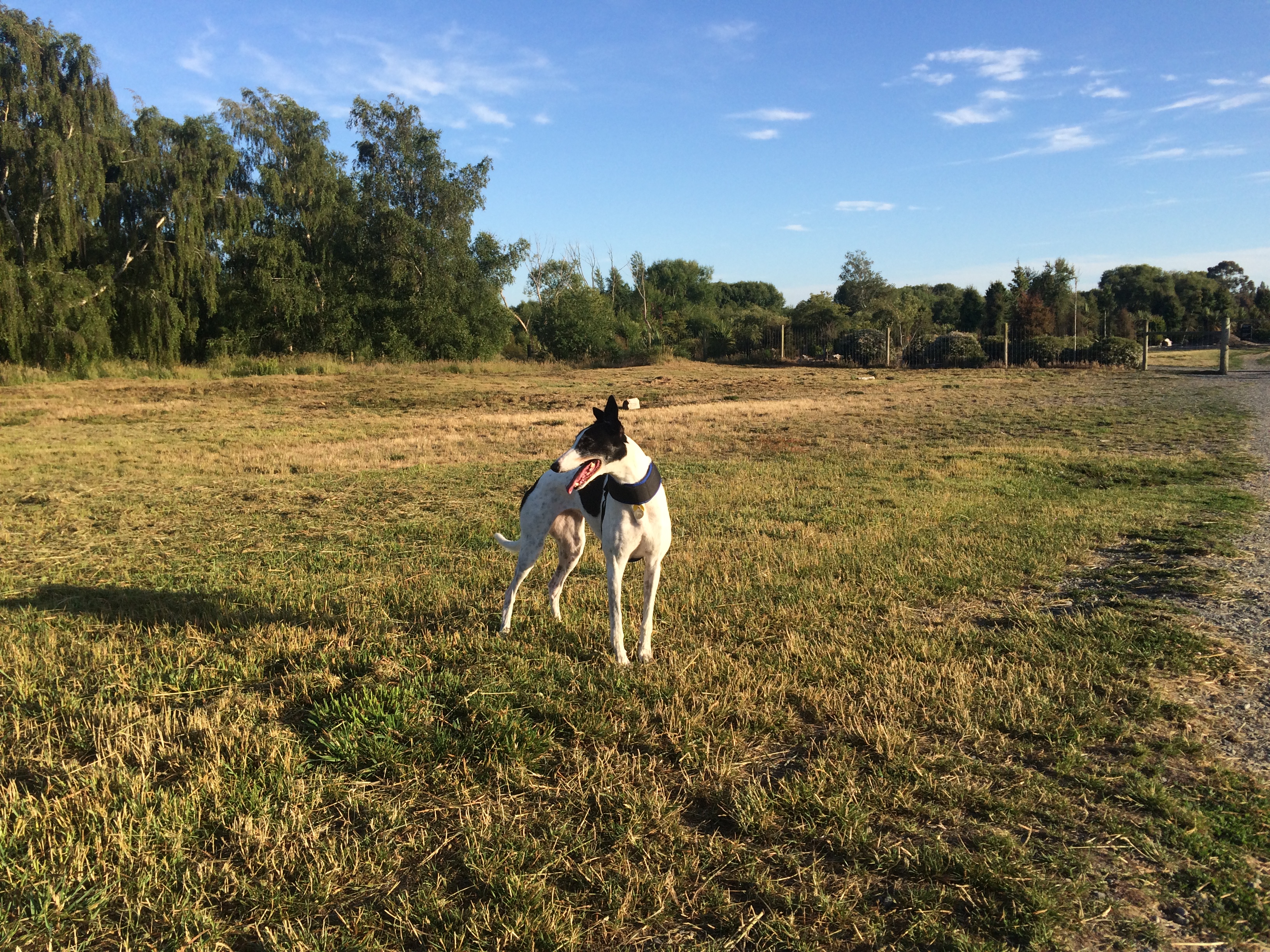
Izzy at Groynes


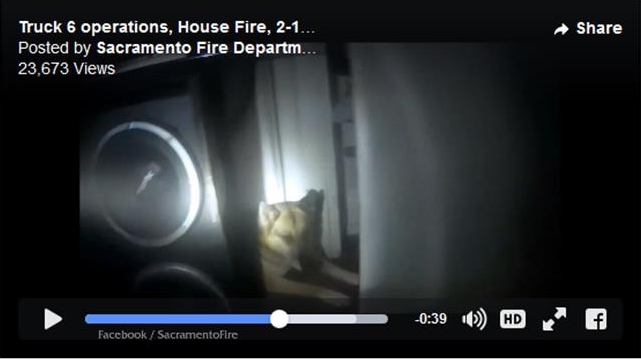
Firefighters rescue dog from burning home

A Sacramento homeowner’s smoke alarms did their job this week by waking the family so they could evacuate and raise the alarm with fire crews.

Unfortunately, it looks like their dog was left inside (dogs may run and hide during these situations; there is commotion and stress and people do not always think clearly – in terms of being able to get their dog out of the house with them).

Fire video screen shot

The Sacramento Fire Department did a great job in finding the dog, and his rescue was caught on ‘helmet cam’

You can view the video by following this link to a CBS news report.  The video is also available on the Fire Department’s Facebook page.

Smoke alarms save lives.  Tomorrow is Valentine’s Day – show your dog that you love them by checking that your smoke alarms are working.

Kathleen Crisley, specialist in dog massage, rehabilitation and nutrition/food therapy, The Balanced Dog, Christchurch, New Zealand

“Dog” (an appropriately named book)

Mitra Farmand is a comic book artist.  When she was studying at the Center for Cartoon Studies in White River Junction, Vermont, she was given an assignment.

“We had to draw a cartoon from a dream and I was dreaming about my dog a lot because she had just died.”

She called the book Dog (the original title was Gone – but she didn’t want to give away the ending).

I contacted Mitra through her website to see if she would allow me to publish some of the sketches from Dog.  She was very gracious and sent me a number – only some of which I will use here – because I’d like you to support this artist and buy her book (and other drawings).

Dog by Mitra FarmandDog, a small book of only 20 pages, would make a great gift this Christmas for any dog lover.  And it covers, with sensitivity and heart, the feeling of those days after you’ve lost a loved dog.

Kathleen Crisley, specialist in dog massage, rehabilitation and nutrition/food therapy, Canine Catering Ltd, Christchurch, New Zealand

Dogs capable of interspecies adoption

Interspecies relationships often make the news as human interest stories.  Dogs have developed caring relationships for a variety of species, including cats, rabbits, and lambs.

What this means, essentially, is the great depth at which dogs have emotional lives and the capacity to bond.  They bond to us – why not to other animals?

This video, of an Australian Dalmatian who took a spotted lamb under its protection, is an example of the interspecies bond that dogs can form.

What stories do you have about a dog bonding with another animals?

Kathleen Crisley, specialist in dog massage, rehabilitation and nutrition/food therapy, Canine Catering Ltd, Christchurch, New Zealand