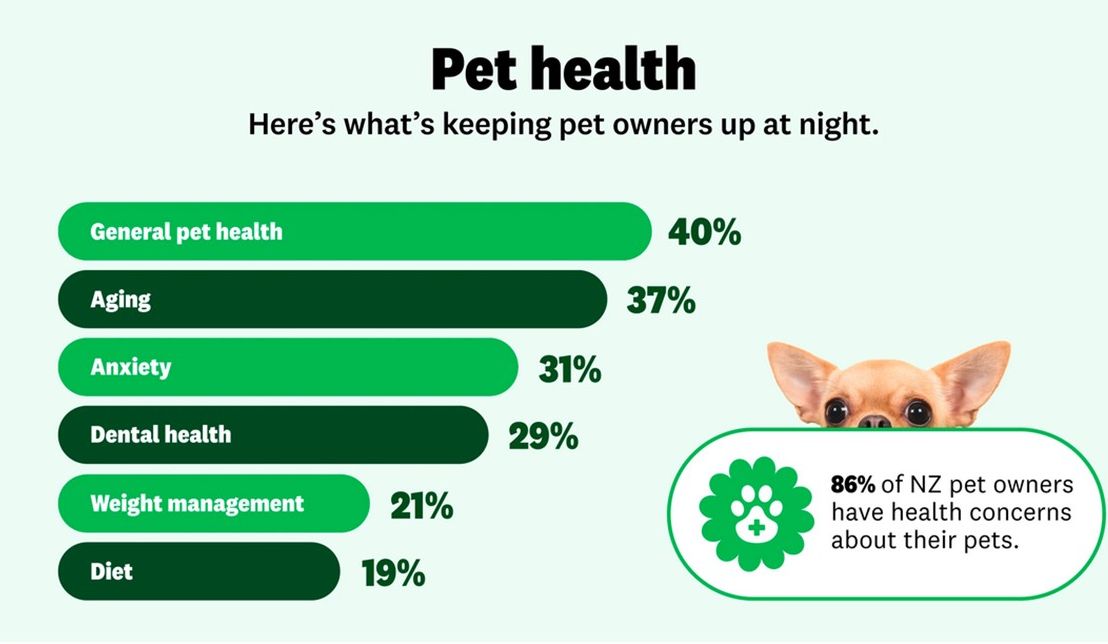
NZ-owned pet company Pet Direct released its pet survey recently and this infographic was the one I found most interesting and relevant.
The results align well with what my clients tell me. They seek out my services for support in their dog’s care – so of course general health features.
Arthritis is a major concern (no one likes to see there dog growing old) and there is a lot of confusion about what management options are available and that arthritis is actually a disease of the young dog. I still see too many pet parents who think a supplement is going to be their 100% solution which is the farthest from the truth. A multi-modal management strategy is needed.
And then comes anxiety. Thanks to my Fear Free certification, a lot of the clients I see have dogs with multiple issues and one of those is anxiety. Imagine living your life in a constant state of stress, unable to communicate in people language what is wrong! I really feel for these dogs. Massage, acupressure and lifestyle changes are all part of the picture for these dogs.
A friend of mine said she noticed that many of the posts on my Facebook page mention weight loss. Weight adds stress to the joints – so no surprises that weight management and diet are on my assessment list, too.
It’s certainly worth looking at the Pet Direct survey and thinking of what you can do for your dog and how you fit within the ‘norms’ of pet ownership in NZ. My full assessments include a review of your dog’s veterinary history, an in-home visit with gait analysis, massage and exercise game plan recommendations. Easy, convenient and cost effective.
Kathleen Crisley is Fear-Free certified dog massage therapist and canine fitness trainer. She has a particular passion for working with dogs and their families to ensure injury prevention and quality of life. She specialises in working with anxious and emotionally damaged dogs. Her mobile practice, The Balanced Dog, is based in Christchurch, New Zealand
Dogs significantly change the air in homes Keystone-SDA
Dogs influence the air quality in homes. A study from Lausanne has measured for the first time the gases, particles and microbes that four-legged friends bring indoors.
The researchers see the results as a basis for more realistic models of indoor air, the Swiss Federal Institute of Technology Lausanne (EPFL) said on Monday, 23 February 2026. The influence of humans on the air has been well researched. However, the researchers say that the impact of pets has hardly been considered to date.
According to the study, a large dog at rest emits about the same amount of CO2 as an adult human. The amount of ammonia emitted is also comparable. This gas is produced when proteins are broken down and is released via the skin and the air we breathe.
According to the data, however, dogs had the greatest influence on particles in the air. By shaking, scratching or stroking, they stir up large quantities of dust, pollen, plant residues and microbes. Large dogs release two to four times more microorganisms than a human in the same room.
The animals act as mobile “carriers”, transporting biological material from the outside to the inside and distributing it throughout the room through their activities. However, this increased variety of particles in the interior is not necessarily negative, according to the researchers. Some studies suggest that contact with various microbes can promote the development of the immune system, especially in children.
Chemical reactions with ozone
Another aspect concerns chemical reactions indoors. Ozone that enters homes from outside reacts with skin lipids and forms new substances such as aldehydes or ketones. In humans, squalene, a component of skin sebum, plays a role here.
Dogs do not produce squalene themselves. However, humans transfer skin residues to the animals’ fur when stroking them. These residues then also react with ozone. On average, however, dogs produced around 40% less ozone reaction products than humans.
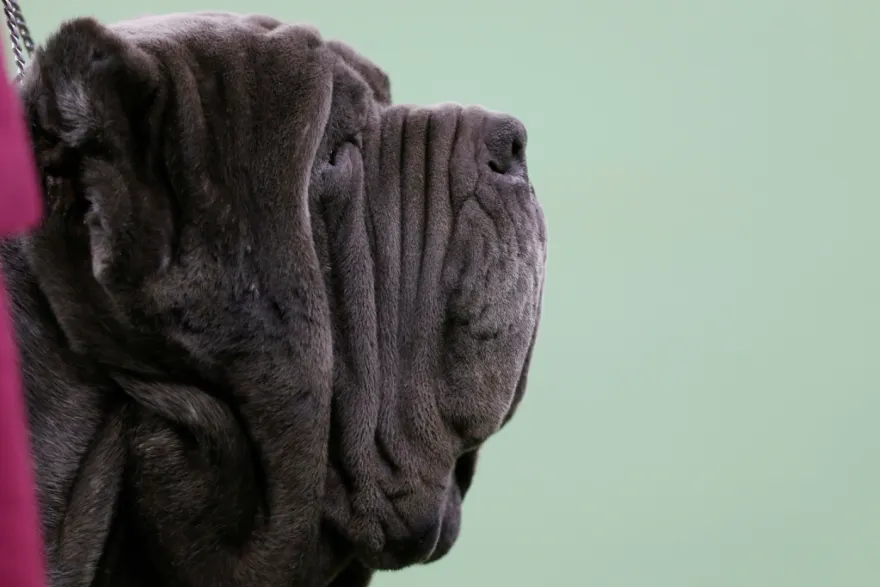
The team used a controlled environmental chamber at the EPFL in Fribourg for the measurements. Two groups of dogs were analysed: one with three large dogs (a Mastiff, a Tibetan Mastiff and a Newfoundland) and one with four small dogs (Chihuahuas). The study was published in the journal Environmental Science & Technology.
Lost in the noise of the 2025 holiday season was a story that should have attracted more attention. A New York woman, Amanda Reynolds, is taking the Internal Revenue Service (USA) to court stating that her Golden Retriever, Finnegan, is a dependent for all intents and purposes and should be a tax deduction like any human child would be.
This case goes to the heart of how households and family life are changing. The nuclear family is long gone and more adults are opting to care for pets as opposed to human children. Dogs are sentient and entirely dependent upon us – so why aren’t they considered a dependent for taxes? They require feeding and medical care – much the same as any human child.
In New Zealand, for example, under 13 year old children receive free medical care. Not so for the under 13 canines..
There will be issues of traceability if this case – facing huge hurdles – succeeds. A child is given a Social Security Number and can be tracked through school records, for example. It’s harder to track the legitimate existence of a dog and one who is properly cared for.
I look forward to seeing how this case develops…
______________
Americans love their pets. Dogs sleep at the foot of the bed, cats rule entire households, and pet photos and videos draw millions of likes on social media. It’s no surprise, then, that nearly all U.S. pet owners (97%) say their pets are part of their family.
While millions of U.S. households (about 94 million families) own one or more pets, pets are not considered part of the family for tax purposes. A recently filed case in district court aims to change that. Amanda Reynolds, an attorney licensed in New York and Utah who focuses largely on civil litigation insurance defense, recently filed a complaint in the Eastern District of New York, together with Finnegan Mary Reynolds. The catch? Finnegan is Amanda’s dog.
Amanda Reynolds says that her dog, Finnegan, is more like a daughter—and wants the courts to agree. Amanda Reynolds
Background and Facts
Reynolds says that Finnegan, her eight-year-old golden retriever, is entirely dependent on her for food, shelter, medical care, training, transportation, and daily living. Finnegan has no independent income, resides exclusively with her, and has annual expenses exceeding $5,000. That means, Reynolds argues, that Finnegan satisfies every meaningful element of dependency recognized under section 152 of the Internal Revenue Code—except for being human. As a result, Reynolds has asked the court to determine whether pets can be recognized as non-human dependents under federal tax law.
According to the complaint, while dogs are legally classified as property, that does not fully reflect their role within families and households. Reynolds says that Finnegan’s care responsibilities mirror, and sometimes surpass, those of human dependents. Reynolds writes that “For all intents and purposes, Finnegan is like a daughter, and is definitely a ‘dependent’.”
Despite this, Reynolds notes, the tax code doesn’t allow relief for taxpayers who shoulder the financial burden of companion animals, even though it provides various credits and deductions—such as the Child Tax Credit, Dependent Care Credit, and Earned Income Tax Credit—for human dependents.
Reynolds claims this results in an arbitrary and unfair tax burden since taxpayers who provide financial support for human dependents get the benefit of tax breaks, while dog owners who provide similar levels of care receive none. This unequal treatment, she says, lacks a rational basis, especially considering the IRS’s own recognition that some animals—specifically, service dogs—may qualify for tax advantages. Reynolds argues that, from a financial standpoint, there is no real difference between service animals and companion animals.
The lawsuit alleges that the current tax law violates both the Equal Protection Clause and the Takings Clause. The Equal Protection Clause is part of the 14th Amendment of the Constitution and says that a government must apply its laws fairly and cannot treat people differently without a valid reason. The Takings Clause is part of the 5th Amendment and requires just compensation for private property.
Treating similarly situated taxpayers differently solely based on whether their dependents are human, Reynolds says, is discrimination. And, she claims that denying a tax break for the support of pets constitutes a wrongful taking because the lack of an available deduction results in a higher tax bill. Taking all of that into consideration, Reynolds says, justifies recognizing dogs as “quasi-citizens entitled to limited civil recognition, including dependency status for tax purposes.”
It may sound far-fetched, but Reynolds argues “this case is not frivolous or meritless” and warrants serious consideration by the court.
Procedural Issues
The court does not appear inclined to take up the matter. Magistrate Judge James M. Wicks granted a motion to stay discovery pending the IRS’s anticipated motion to dismiss. (Magistrate judges are appointed by the district judges of the court. In most districts, they handle pretrial motions and hearings in civil and criminal cases. While most civil cases are tried by district judges, magistrate judges may also preside over civil trials if all parties agree.)
A motion to stay discovery is a formal request to pause the discovery process in a lawsuit. Discovery happens early on in a lawsuit. As part of discovery, the parties exchange information and evidence, including document requests and depositions. It can be time-consuming and expensive, which is why a defendant may ask the court to stay discovery when a motion to dismiss is pending or anticipated (as here) and there are threshold legal issues that could end the case entirely (also as here).
The goal of a stay of discovery is to avoid unnecessary costs and effort while the court determines whether a case can or should move forward. It does not decide the case’s merits but simply pauses information gathering until the fundamental legal questions are resolved.
The Ruling So Far
Under the Federal Rule of Civil Procedure, discovery can be stayed for “good cause,” but simply filing—or planning to file—a motion to dismiss does not automatically qualify. Courts usually consider at least three factors: whether the defendant has shown that the claims are likely without merit, whether discovery would be extensive or burdensome, and whether a stay would unfairly prejudice the non-moving party.
Applying those principles here, Wicks concluded that a stay is warranted. Specifically, Wicks found that the IRS made a substantial showing that the original complaint is unlikely to survive a motion to dismiss. In a detailed pre-motion conference letter, the feds outlined several defects in the complaint, including lack of standing, improper service, and failure to state a claim as a matter of law. (Reynolds did not oppose or respond to that letter, according to court documents.)
Lack Of Standing
Standing is a legal term that refers to your right to bring a lawsuit or have a court hear your case—to be heard, you typically have to show that another party has harmed you and that the only fix for that harm can be found in court. The idea is to ensure that matters that end up in court aren’t frivolous and are raised by the right parties.
In her lawsuit, Reynolds does not allege that she actually attempted to claim her dog as a dependent or suffered an actual injury. That raises a standing problem. There are other issues with the complaint, Wick found, that impact standing, including that the Anti-Injunction Act and the Declaratory Judgment Act generally bar challenges to tax assessments and collections. Notably, the Anti-Injunction Act prevents courts from hearing suits brought “for the purpose of restraining the assessment or collection of any tax,” while the Declaratory Judgment Act bars federal courts from issuing any declaratory relief “with respect to federal taxes.”
Improper Service
The IRS also claims improper service. In a lawsuit, service (or service of process) refers to the formal delivery of legal documents, like the summons and complaint, to the defendant. The goal of proper service is to give the defendant notice that they are being sued and to allow them an opportunity to defend themselves. Lawsuits against federal agencies, like the IRS, require strict compliance with federal rules when it comes to service, which the IRS argues did not occur here.
No Constitutional Claims
Finally, complaints aren’t allowed to proceed when “the allegations in a complaint, however true, could not raise a claim of entitlement to relief.” While Wicks didn’t officially rule on the merits of the case, he did note that the Fourteenth Amendment does not apply to federal agencies and that the Fifth Amendment takings claim is unlikely to succeed (the mere payment of taxes does not constitute a compensable taking). And, he notes that the laws and tax court precedent make clear that animals cannot qualify as dependents under section 152 of the tax code.
What Are Dependents?
Under the federal tax code, dependents are persons that you can claim on your tax return. There are two kinds of dependents: a qualifying child and a qualifying relative.
A qualifying child must be related to you (typically, your child, stepchild, foster child, sibling, or descendant), live with you for more than half the year, meet age requirements (generally under 19, under 24 if a full-time student, or permanently and totally disabled at any age), and not provide more than half of their own financial support. The child also cannot file a joint tax return with someone else (except under very limited circumstances).
A qualifying relative, despite the name, need not be related by blood—they must be a person who is related to you or lives as a member of your household for the entire year. They must receive more than half of their support from you and have gross income below an annually adjusted threshold. There is no age limit, so your elderly parent could qualify. However, your spouse is never your dependent.
The statute specifically uses the term “individual” which courts and the IRS have consistently interpreted to mean human beings. As a result, pets—no matter how much they might feel like a member of your family—don’t meet the criteria.
As for those tax benefits? Reynolds is right that claiming a dependent can result in tax-favored credits and deductions. These include the Child Tax Credit (and Additional Child Tax Credit), the Credit for Other Dependents, and the Earned Income Tax Credit. Dependents may also qualify for a favorable head-of-household filing status, which offers lower tax rates and a higher standard deduction. But there isn’t any language in case law or statutes that would allow pet owners to claim those tax breaks.
(It’s worth noting that the definition of a dependent can narrow, especially as it relates to age, depending on the specific deduction or credit you’re claiming.)
The Care Of Animals Can Be Deducted In Limited Instances
While pets can’t be claimed as dependents, the tax code permits some limited deductions for animals. For instance, expenses for service animals may qualify as medical deductions, animals used in a trade or business may generate deductible expenses (such as guard dogs), and the care of foster animals may lead to a charitable deduction.
Outside of these narrow categories, however, pet-related costs for food, veterinary care, grooming, and housing are considered personal expenses, and therefore, not deductible.
Next Steps
The case has not yet been dismissed, although it appears from the recent ruling that it will be. (The Department of Justice declined to comment on the matter.)
Reynolds, however, remains optimistic. In a statement provided to Forbes, she noted, in part, “I commenced this case out of a labor-of-love as a dog owner and pup-mom to a golden retriever whom I esteem as my own daughter, having raised her by myself while my friends got married and had children. She has been in daycare while I am at work, I have paid for her medical visits, hospital visits, food, shelter and all other facets attendant to dog ownership.”
She added that she expects the litigation to be largely paper-oriented. She’s expecting the motion to dismiss shortly and says she “will address their arguments in opposition at that time.”
For now, however, don’t expect to see dogs like Finnegan listed on Form 1040.
“Honey, will you take Luna to the P-A-R-K?” both parents and dog owners know that some words should not be spoken, but only spelled, to prevent small ears from eavesdropping on the conversation. At the age of 1.5 years toddlers can already learn new words by overhearing other people. Now, a groundbreaking study published in Science reveals that a special group of dogs are also able to learn names for objects by overhearing their owners’ interactions.
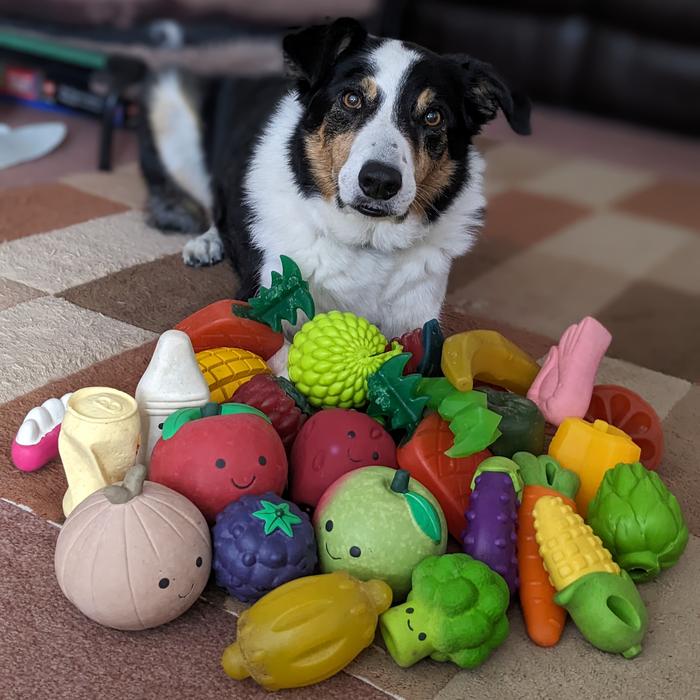
Bryn, an 11-year-old male Border Collie from the UK, that knows the names of about 100 toys. Photo credit: Helen Morgan
Similarly to 1.5 -year-old toddlers, that are equally good in learning from overheard speech and from direct interactions, these gifted dogs also excel in learning from both situations.
What makes this discovery remarkable
Although dogs excel at learning actions like “sit” or “down”, only a very small group of dogs have shown the ability to learn object names. These Gifted Word Learner (GWL) dogs can quickly learn hundreds of toy names through natural play sessions with their owners. Toddlers can easily learn new words through a variety of different processes. One of these processes is learning from overheard speech, where child learns new words by passively listening to interactions between adults. To do this, children must monitor the speakers’ gaze and attention, detect communicative cues, and extract the target words from a continuous stream of speech. Until now, it was unknown whether GWL dogs could also learn new object labels when not directly addressed.
“Our findings show that the socio-cognitive processes enabling word learning from overheard speech are not uniquely human,” says lead scientist Dr. Shany Dror, from ELTE and VetMedUni universities. “Under the right conditions, some dogs present behaviors strikingly similar to those of young children.”
How the researchers found that Gifted dogs learn toy names by eavesdropping
In the first experiment, the research team tested 10 Gifted dogs in two situations: 1. Addressed condition: Owners introduced two new toys and repeatedly labeled them while interacting directly with the dog. 2. Overheard condition: The dogs passively watched as their owners talked to another person about the toys, without addressing the dog at all.
Overall, in each condition, the dogs heard the name of each new toy for a total of only eight minutes, distributed across several brief exposure sessions. To test whether the dogs had learned the new labels, the toys were placed in a different room, and the owners asked the dogs to retrieve each toy by name (e.g., “Can you bring Teddy?”)
The result: In both conditions, seven out of ten dogs learned the new labels
The dog’s performance was very accurate already at the first trials of the test, with 80% correct choices in the addressed condition and 100% in the overhearing condition. Overall, the Gifted dogs performed just as well when learning from overheard speech, as when they were directly taught, mirroring findings from infant studies.
But that’s not all: Gifted dogs overcome one of the key challenges in learning labels
In a second experiment, the researchers introduced a new challenge: owners first showed the dogs the toys and then placed them inside a bucket, naming the toys only when they were out of the dogs’ sight. This created a temporal separation between seeing the object and hearing its name. Despite this discontinuity, most of the Gifted dogs successfully learned the new labels.
“These findings suggest that GWL dogs can flexibly use a variety of different mechanisms to learn new object labels” says senior scientist Dr. Claudia Fugazza, from ELTE University in Budapest.
What we can learn from this study
The study suggests that the ability to learn from overheard speech may rely on general socio- cognitive mechanisms shared across species, rather than being uniquely tied to human language.
However, Gifted Word Learners are extremely rare, and their remarkable abilities likely reflect a combination of individual predispositions and unique life experiences.
“These dogs provide an exceptional model for exploring some of the cognitive abilities that enabled humans to develop language” says Dr. Shany Dror “But we do not suggest that all dogs learn in this way – far from it.”
Is your dog a Gifted Word Learner dog?
This research is part of the Genius Dog Challenge research project which aims to understand the unique talent that Gifted Word Learner dogs have. The researchers encourage dog owners who believe their dogs know multiple toy names, to contact them by email (geniusdogchallenge.official@gmail.com), Facebook or Instagram.
A new Japanese study of 377 adults suggests that owning a dog quietly strengthens how connected people feel to their neighborhood.
Residents in a suburb west of Tokyo who lived with dogs reported a richer sense of belonging than neighbors without pets.
The work was led by social psychologist Itaru Ishiguro, Ph.D., at Rikkyo University near Tokyo. His research focuses on everyday social ties and human-animal interaction, and he collaborated with colleagues at Azabu University in Sagamihara.
In the new study, the team compared dog owners and non-owners on three distinct kinds of neighborly contact.
They looked at brief chats with strangers, close neighborhood friendships, and anchored personal relationships, recurring ties rooted in specific shared places and activities.
The main question was whether people with dogs built more of these local ties and, through them, a stronger sense of community.
People, dogs, and neighborhoods
In practice, anchored personal relationships might be the familiar faces you greet in the park or at the corner shop every afternoon.
These ties feel friendly and predictable, yet people usually do not swap phone numbers or invite one another into their homes.
The study argues that this middle layer of connection sits between quick incidental encounters and deep friendships in terms of intimacy and continuity.
Because these acquaintances almost always live nearby and share the same streets, the authors expected them to matter most for neighborhood belonging.
Dogs vs other neighborhood pets
When the team separated dog owners from people who kept cats or other animals, dog ownership alone showed a link with neighborhood relationships.
One likely reason is simply that dogs need daily walks in shared spaces, while many other pets stay almost entirely indoors.
In the survey data, ownership of cats and other pets did not relate to any relationship type or to sense of community.
That pattern suggests it is the shared walking routine, not pet ownership in general, that connects dog owners strongly to neighborhood social life.
What the survey captured
Researchers recruited several hundred adults living in Sagamihara City and nearby areas through posters, flyers, community events, and local government channels.
Participants completed an online or paper questionnaire about pet ownership, social contact around their homes, and how attached they felt to their area.
The sense of community questions drew on a standard place attachment scale that measures how strongly people feel rooted in specific locations.
To untangle links between variables, the analysts used generalized structural equation modeling, a statistical technique that handles chains of cause and association.
How ties strengthen
Dog owners were more likely than non-owners to report having people they regularly recognized in spots and frequent incidental conversations with passersby.
However, once factors like age, income, education, gender, and housing were taken into account, owning a dog did not predict having neighborhood friends.
All relationship types related to a stronger sense of community, yet only anchored personal relationships linked dog ownership directly to feeling locally rooted.
“Anchored personal relationships should be considered alongside incidental interactions and friendships,” wrote Ishiguro.
Global research links
Earlier work in Australian cities found that pet owners scored higher than non-owners on neighborhood social capital, trust, and civic engagement.
Those studies also noted that dogs, more than other pets, seemed especially effective at sparking conversations during walks and visits to public spaces.
The Japanese survey adds nuance by showing that chats and friendships are part of the picture, with anchored personal relationships carrying weight.
Taken together, this growing body of work hints that the social benefits of living with animals extend well beyond companionship inside the home.
Who picks dogs
Because the survey was cross-sectional rather than experimental, the authors cannot rule out the possibility that outgoing people choose to own dogs.
Personality traits such as extraversion, a tendency to seek stimulation, can predict both the size of someone’s network and their interest in pets.
Japan has relatively low relational mobility, a cultural pattern where new relationships are relatively hard to start.
In that context, it is not surprising that dog ownership did not translate into more close neighborhood friends, even when casual contact increased.
What this means for wellbeing
Many studies have explored whether living with pets improves health, with varied results but hints that dogs may support physical and mental wellbeing.
A Swedish cohort that followed more than three million adults found lower overall mortality among dog owners than among people without dogs.
This community-focused work does not claim that dogs extend life, yet it suggests one social pathway through which health effects might emerge.
Feeling more rooted in a neighborhood might support mental health, reduce loneliness, and make it easier to seek help during stressful times.
Dogs strengthen neighborhood life
For people who already live with dogs, the findings highlight the quiet value of regular routes, familiar faces, and friendly short conversations.
Stopping briefly to chat while following local rules about leashes and cleanup may be enough to build anchored personal relationships over time.
Neighbors who do not own dogs can benefit by greeting walkers, since the study suggests those small interactions contribute meaningfully to community feeling.
Put simply, the research suggests that every small, repeated meeting around a dog walk can add up to a welcoming neighborhood for everyone.
The study, Dog ownership enhances anchored personal relationships and sense of community: A comparison with incidental interactions and friendships is published in PLOS One.
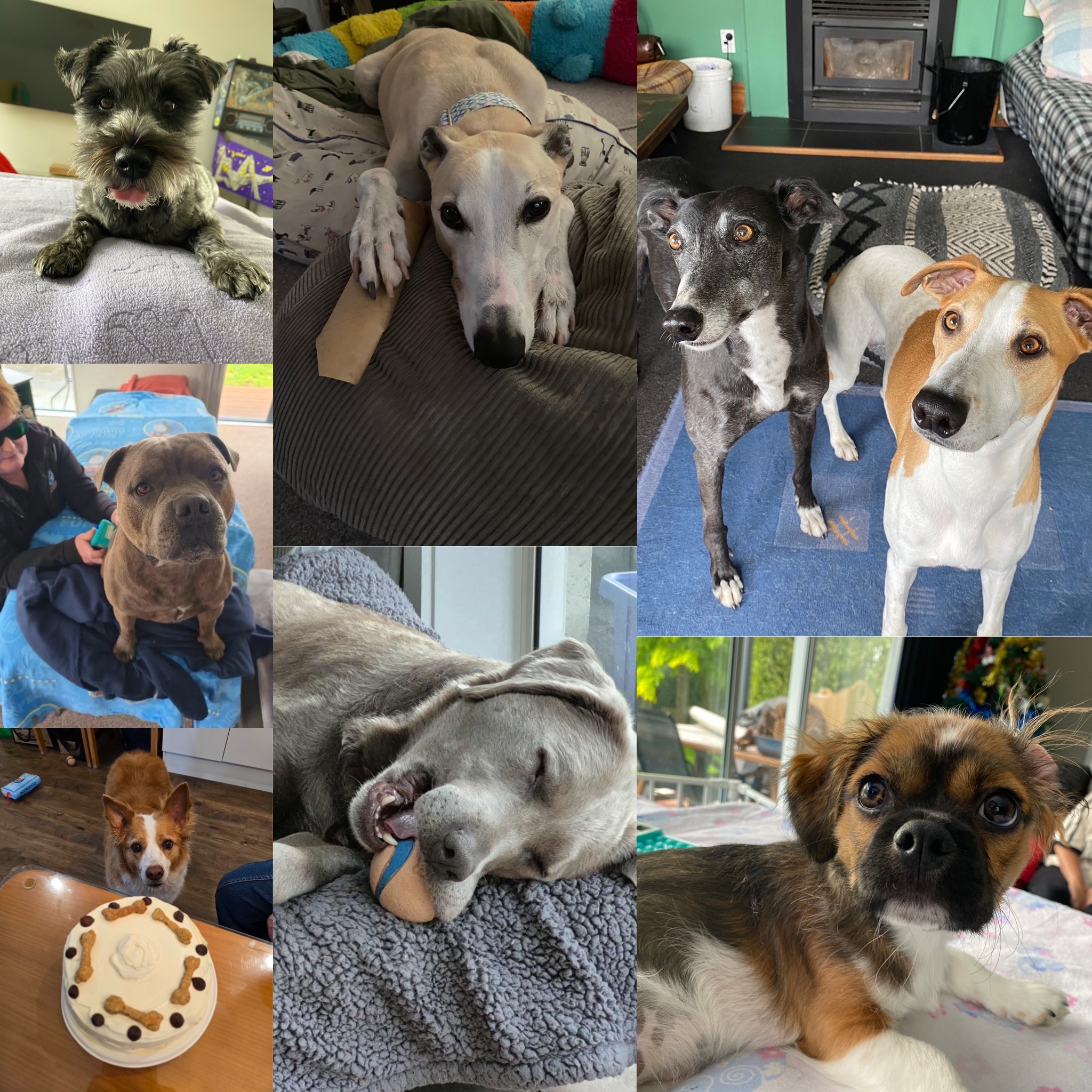
It’s been a big week at The Balanced Dog. I have just finished my last Saturday of consults for 2025 and, earlier this week, Sox turned 8 (his birthday party was a two weeks ago, to accommodate the travel plans of friends).
And there are only 20 days left to make a submission on the Racing Industry (Closure of Greyhound Racing Industry) Amendment Bill. A year ago, the NZ Government made an announcement of its intention to ban greyhound racing in this country; the bill has passed its first reading with wide cross-party support. It’s now time for the public to have their say…
Probably thanks to Sox’s birthday, and the number of greyhounds I work with in my practice, greyhounds, racing and animal welfare have been on my mind a lot recently. I am definitely making a submission.
Here are the points/issues I want to raise:
Animals are not statistics. Behind percentages are living, breathing and sentient creatures.
What do we mean by animal welfare? In layman’s terms, it’s quality of life for the entire life of the animal.
What is the definition of an accident? Depending upon which dictionary you use, this is defined as an unforeseen and unplanned event or circumstance or an unfortunate event resulting especially from carelessness or ignorance.
What is our lifetime responsibility as stewards and ”owners” of dogs?
What are the inherent risks of racing?
How painful is a broken hock, a fractured skull or other high impact injury?
With concerns that greyhounds will become extinct in New Zealand if racing is banned, what protections will there be for breeders who wish to continue their bloodlines and provide the NZ public with a greyhound if they choose to buy one?
I encourage anyone with an interest in the greyhound breed to submit. That’s what public submissions are for. There are many templates circulating to assist you in making a submission. I believe the most powerful submissions are those that share personal experience.
Be sure to read the legislation so you can align your comments with specific clauses and be sure to tell the Select Committee if you want to be heard (that is, appear in person or by video link).
Kathleen Crisley is Fear-Free certified dog massage therapist and canine fitness trainer. She has a particular passion for working with dogs and their families to ensure injury prevention and quality of life. She specialises in working with anxious and emotionally damaged dogs. Her mobile practice, The Balanced Dog, is based in Christchurch, New Zealand
Kathleen Crisley is Fear-Free certified dog massage therapist and canine fitness trainer. She has a particular passion for working with dogs and their families to ensure injury prevention and quality of life. She specialises in working with anxious and emotionally damaged dogs. Her mobile practice, The Balanced Dog, is based in Christchurch, New Zealand
In Christchurch, where I live and practice, we’re known for our flat landscape in most parts of the city and suburbs. However, we do have some hilly suburbs which are considered prime real estate for those wanting a view and a different level of privacy.
With those hilly sections come challenges.
Homes in these areas tend to require stairs or steep drives and a walk in the neighbourhood demands hill-walking; much different to the single story traditional housing on the flats. That said, new infill developments are building upwards. Usually, these take the form of multi-unit dwellings that are two or three stories high. All have staircases, most are steep to make the most of the available space.
As a mobile practitioner, I work with dogs in a range of settings. One fact that is universal, however, is that an aging dog is more likely to slip on floors and to have difficulty walking up/down stairs and hills. A dog of any age that has an injury is also going to have the same problems.
Owners of smaller breeds can carry them; for larger breeds, this is not an option.
So, if you are relocating to a new home, please think of your dog before signing on the dotted line. Your dog will age must faster than you do. A bit of planning can help you make a good choice so your dog can enjoy your home and neighbourhood for the rest of their life.
P.S. Not every family has the capacity to build a stair lift like Eddie’s family did. (RIP, Eddie)
Kathleen Crisley is Fear-Free certified dog massage therapist and canine fitness trainer. She has a particular passion for working with dogs and their families to ensure injury prevention and quality of life. She specialises in working with anxious and emotionally damaged dogs. Her mobile practice, The Balanced Dog, is based in Christchurch, New Zealand
Last month, the world lost a leader in animal welfare – Jane Goodall. Although she lived to a good age of 91 years, contributing to dialogue about important issues right to the end, it still seems like she was taken too soon. RIP, Jane.
Kathleen Crisley is Fear-Free certified dog massage therapist and canine fitness trainer. She has a particular passion for working with dogs and their families to ensure injury prevention and quality of life. She specialises in working with anxious and emotionally damaged dogs. Her mobile practice, The Balanced Dog, is based in Christchurch, New Zealand










 DoggyMom.com