Tag Archives: dogs

Vino Fido – the world of wine and dogs

Dogs feature in a range of wines and vineyards across the world.  As we are starting off a new year, I’m toasting the innovative ways wine makers have chosen to feature dogs.

I’ve been interested in wine labels portraying dogs since 2007, when I launched Canine Catering.  The launch was combined with a birthday party for Daisy and I bought some red wine from the local supermarket called ‘Dog Box Red.’  It had a cute picture of a dog on the label and was very appropriate to the occasion.  It was also a good bottle of wine.  Sadly,  I’ve never seen this wine again in the shops.  It was probably one of those short runs of wine we get here that are remainders from export shipments.  In fact, I can’t even find the wine on the internet – so it was probably a one-off.

Anyway, at the party we had a friend who asked for bottle of the wine to add to her ‘dog wine’ collection.  Since then, I’ve managed to buy her several other brands of wine to add to it.  I still get looks when I walk into wine shops and ask ‘Do you have any wines with dogs on the label?’ 

Since New Zealand is known for its wine exports, I’ll start here and then look abroad for wines with dogs.

First, there’s Huntaway Reserve.  This wine launched in 1996 and features varieties from the Marlborough, Gisborne and Hawkes Bay regions.

Huntaway is produced by the Lion Nathan Group

Huntaway is produced by the Lion Nathan Group

Hunters Wines from Marlborough feature a crest that has the image of a dog on the label.  According to the company website, the crest is that of the Hunter clan of Scotland, however some visitors to the vineyard associated the logo with Commodore, a St Bernard and then a Clumber Spaniel named Paddy who were owned by the Hunter family.  Here’s a photo of the Hunter crest:

Hunters logo

Then, there is the Dog Point Vineyard in Marlborough.  There’s no dog on the label but the website tells the story behind the name – that Dog Point is an area named by the pioneer shepherds in the area because of the dogs who became lost or wandered off there:

The name Dog Point dates back to the earliest European settlement of Marlborough and the introduction of sheep to the district.  These were the days where, due to a lack of fences, boundary riders used boundary keeping dogs to protect the local flocks of sheep.

Shepherds’ dogs sometimes became lost or wandered off, eventually breeding to form a marauding pack that attacked the same flocks they were meant to be protecting.

Eventually settlers were forced to cull the dogs and the area was named Dog Point.

These dogs lived on the tussock and scrub covered southern hills of Dog Point Vineyards.  This landscape was, and still is, characterised by the iconic New Zealand native plant the  Ti Kouka ‘cabbage’ tree which is also an established feature of the Dog Point property.

In Central Otago, there is the wine produced by Roger Donaldson called Sleeping Dogs.  Mr Donaldson directed a movie with this title and named his wine after it.  He produces Chardonnay, Pinot Noir, Pinot Gris  and  Sauvignon Blanc under this brand.
The Sleeping Dogs label

The Sleeping Dogs label

__________________________________________________________

Okay, leaving New Zealand, there’s Longue-Dog produced in Languedoc in the South of France.  This is a wine I’ve been able to buy here and add to my friend’s collection.  It features a Dachshund on the label.
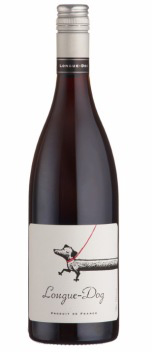
A bottle of Longue-Dog Syrah

A bottle of Longue-Dog Syrah

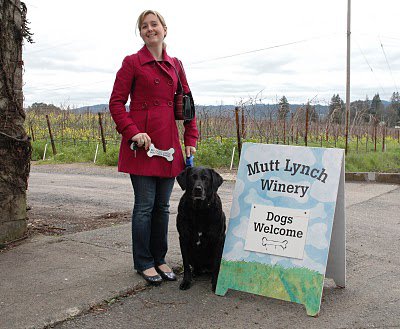
Let’s head to Healdsburg, California to the Mutt Lynch Winery next.  I’d really like to go there because the tasting room is dog-friendly!
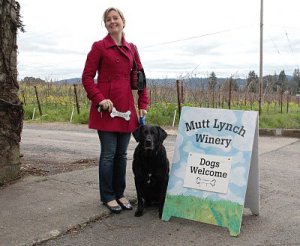
Dogs are welcome at the Mutt Lynch Winery

Dogs are welcome at the Mutt Lynch Winery

The vineyard donates a portion of proceeds from every bottle of wine they sell to local animal shelters and rescue groups.  This vineyard produces a wide range of wines all with a unique doggy label.  Here’s just a few:

Mutt Lynch wines

I can understand why Mutt Lynch’s website says Welcome to a wonderful world where wine and “all things dog” collide into something truly special.

Okay, next on my list is Cru Vin Dogs. This company is based in Colorado and is another socially-responsible business.  It also produces wines with a unique dog on every label.   Each label features an original, limited -edition illustration by artist Jay P. Snellgrove, who is one of the partners in the business  According to the company,  each label honors a real dog that has a special story-a reminder of how empty this world would be without the unconditional love and devotion of “man’s best friend.”

Here’s an example of some of Cru Vin’s wines:
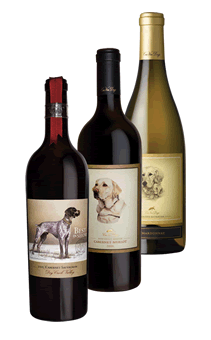
Cru Vin wines

Our next stop is Washington State, the home of Sleeping Dog Wines.  Because the owner always had a dog companion on his life’s journey, he decided to pay tribute to them by featuring a sleeping dog on the label (unfortunately, I couldn’t source a photo of it to show you).

In Paso Robles California is Écluse, a small family owned vineyard.  One part of their range is Blind Dog Wines, where proceeds are donated to Dogs for the Deaf. This vineyard is home to two blind dogs and they have produced this range of wines to commemorate their role in establishing and maintaining the vineyard.  I would have loved to share a photo of their wines, but one wasn’t available.

In the Willamette Valley of Salem, Oregon, Dog Gone Wine is also selling wine that benefits a dog organisation in their area.  (I wish their website would tell us which ones they support!)  But I like the names of their wines.  There’s Poodle Pinot, Basset Hound Blackberry Wine, Pug Bear Wine, and Pomeranian Pomegranate Wine.   All have really adorable labels:
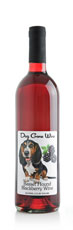
This is Basset Hound Blackberry Wine by Dog Gone Wine.

This is Basset Hound Blackberry Wine by Dog Gone Wine.

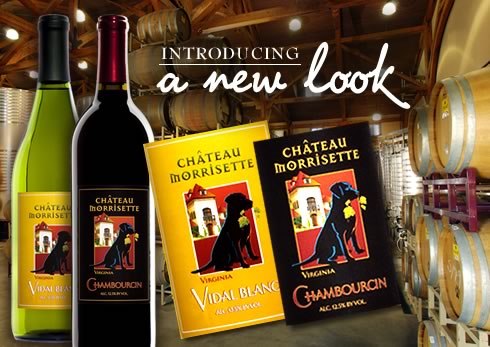
We’re going to the East Coast of the USA next to Floyd, Virginia which is home of Chateau Morrisette. Their wines also feature dogs on the label but I wish their website would tell us the connection!
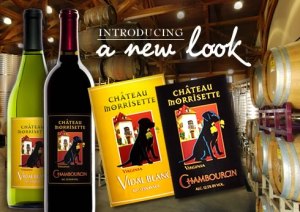
Chateau Morrisette wines

Chateau Morrisette wines

So when you are next in your local wine shop, look for dog labelled wine and let me know if there are others out there to try.  And remember:  wine is for humans not for dogs!

Cranberries and urinary tract infections

Many holistic veterinarians are now recommending the use of cranberries in the long-term treatment of pets who are susceptible to urinary tract infections, or UTI.

Diabetic dogs, in particular, seem to develop UTI more regularly than the normal dog population.  Spayed females are also more susceptible to infections.

Cranberries

When a dog has a UTI, they often struggle to eliminate urine or, when they do pee, not much comes out.  Sometimes blood is seen in the urine, the urine may smell stronger, or it has a dark colour.  If your dog has a UTI, then seeing your veterinarian for antibiotics is essential.  A urinary tract infection left untreated means your dog is uncomfortable and in pain and if the infection travels to the kidneys, then your dog is in serious trouble.

Cranberries can assist when your dog is being treated for a UTI because cranberries help to acidify the urine which helps to prevent bacteria growth.

But what about prevention?  This is where the cranberries come into their own.  Not only does the cranberry acidify the urine, but studies show that they have the ability to prevent bacteria from sticking to the walls of the bladder and urinary tract and so they minimise the chance of an infection recurring.

Some owners treat their dog with cranberry powder because the juice is tart and unpalatable.  Owners must be careful because lots of cranberry juices are full of sugar (that’s a warning for humans as well as pets).

I’m working on a wheat-free cranberry biscuit recipe now that will feature as the January/February special.  I’ve just perfected my recipe and the latest batch is looking great – with the added benefit of no artificial colours!

Dog peeing

In order to prevent recurring urinary tract infections, it’s also really important to ensure your dog has lots of fresh, clean water to drink and has lots of opportunities to go outside and pee.  For diabetic dogs, care must be given to their daily diet to manage their blood sugars (another reason to watch the sugar content of any cranberry supplements).

Watching your dog’s waistline

Body condition score

Take a look at the chart above.  It shows you how to spot ideal body condition on a dog.  Earlier this week, I was speaking with someone and she commented that she felt Daisy was too thin.  In fact, Daisy had just been to the veterinarian for her health check and was declared to be in ideal condition with an excellent body score.

The problem is that the person speaking with me owns several obese and overweight dogs.  She knows her dogs must lose weight, but she has become so accustomed to seeing an overweight dog that a dog in good condition looks too thin to her.

I work with dogs who need to lose weight by recommending exercise programmes combined with making the dog comfortable through massage, acupressure and laser therapies.  Dogs don’t get fat overnight; their weight loss programmes take a bit of time too.

Over these holidays, please don’t overfeed your dog.  And take the time to review the body conditions listed above.  If your dog isn’t in ideal condition, what do you need to do to get them there?

Researcher calls for monitoring of diseases in dogs and cats

Professor Michael Day of the School of Veterinary Sciences in Bristol, UK,  is the lead author in an article that recommends global monitoring of diseases in dogs and cats.  While it is known that many human diseases originate in animals, only diseases in livestock are currently monitored.

Professor Day makes the case that because cats and dogs are integrated into our lives and share our households, the potential for introduction of new zoonotic diseases exists.  He says:

‘The number of small companion animals is significant.  For example there are an estimated eight to ten million dogs living in up to 31 per cent of UK homes and in the USA, 72 million dogs in 37 per cent of homes. 

In developed countries the relationship between man and dogs and cats has deepened, with these animals now closely sharing the human indoor environment.  The benefits of pet ownership on human health, well-being and development are unquestionable, but as dogs and cats have moved from the barn, to the house, to the bedroom, the potential for disease spread to humans increases.’

Any new monitoring system will require resources and funding and the political will to see it established.  At a time when the global economy is struggling, one can be skeptical about whether there is a chance of seeing this recommendation become a reality.

You can read the article in the Emerging Infections Diseases journal  here.

Source:  University of Bristol media release

Kissing your dog and the link to gum disease

My mother was never happy when our dog got too close and  managed to lick her on the mouth.   In the Snoopy cartoons, you might remember when Lucy would run around yelling ‘Get the iodine, get the hot water.  I’ve been kissed by a dog.’ 

It turns out that there is need for caution when considering the mouth-to-mouth contact with your dog.

Researchers from Japan have tracked a microbe that is very common in dogs but rare in humans.   In dog owners, 16% of them had the microbe and it appears that they share close contact with their dogs – including kissing.

The researchers also found ten human strains of periodontitis-related bacteria in the dogs’ mouths.  And they found that low levels of contact were enough to transmit mouth bacteria either way.

In considering the research, Dr Paul Maza, of the College of Veterinary Medicine at Cornell University, told America’s Fox News:  ‘Many of the different types of bacteria in dogs and cats are the same type of bacteria as in humans. If owners practice oral hygiene on their pets, such as  brushing their teeth, a pet’s mouth can actually be even cleaner than a human mouth.’

Read the full story in the Daily Mail.

Doggy quote of the month for November

The gift which I am sending you is called a dog, and is in fact the most precious and valuable possession of mankind.

–  Theodorus Gaza

Contagious yawning in dogs

Ever been at a party or in a meeting and someone yawns – and then others (including you) do the same? Have you noticed your dog yawning when you do?

Research from Lund University in Sweden published in the journal Animal Cognition proves that dogs catch yawns from humans.  But, only dogs above the age of seven months appear to be susceptible.

The syndrome of contagious yawning is an indicator of empathy, mimicking the emotional responses of others.  You can’t really measure empathy directly.

This study involved 35 dogs in Denmark between the ages of  four and 14 months.  Given that contagious yawning may be an empathetic response, the results suggest that empathy develops slowly over the first year of a dog’s life.

The researchers tested the dogs with both an unfamiliar experimenter and their owner and found no evidence that the puppies yawned more in response to their owners.

Source:  Springer publishing

Doggy quote of the month for October

I have sometimes thought of the final cause of dogs having such short lives and I am quite satisfied it is in compassion to the human race; for if we suffer so much in losing a dog after an acquaintance of ten to twelve years, what would it be if they were to double?

–  Sir Walter Scott

National Holistic Pet Day

Today, 30 August 2012, is National Holistic Pet Day.

This is the day to celebrate all of the ways we can care for the ‘whole’ dog – their physiological health and their mental health.

As a canine massage therapist, I’m naturally a supporter of holistic approaches because I help treat dogs with acupressure, laser and massage therapies.  I also help dogs with rehabilitation programmes, even measuring dogs for mobility carts when necessary.  I also like to use bach flower remedies.

Here are a few ways to celebrate National Holistic Pet Day:

  • Treat your dog to a massage
  • Take your dog to the local hydrotherapy pool for a fun swim
  • Walk your dog in the fresh air and enjoy each other’s company
  • Take advice on feeding biologically appropriate dog food to your dog
  • Brush your dog’s teeth (and keep it up!)
  • Take your dog to a homeopathic or holistic vet for a check up
  • Look in your cleaning cupboard and throw away all of those chemical cleaning products – buy natural based products as replacement or even learn to make your own cleaners using natural products like vinegar and baking soda

Whatever you do – enjoy National Holistic Pet Day together.  The best thing you can give your dog is your time.

Kathleen Crisley, Fear-Free certified professional and specialist in dog massage, rehabilitation and nutrition/food therapy, The Balanced Dog, Christchurch, New Zealand

How dogs are helping the northern spotted owl

Researchers at the University of Washington Center for Conservation Biology have found a novel use for dogs – detection of northern spotted owl pellets.  Owl pellets are regurgitated by the owls and contain fur, bones and other materials that the owl does not digest.

The traditional method of locating the owls was to undertake vocalization surveys that simulated the sounds of the northern spotted owl so that ‘real’ owls would respond.  But, as this owl has come under threat by another owl – the barred owl – researchers felt that the owls were not vocalizing out of concern that they would be found.  Barred owls are known to kill northern spotted owls.

Max, an Australian Cattle Dog, pauses after locating a northern spotted owl roosting in a tree in the Shasta-Trinity National Forest. Copyright Jennifer Hartman, University of Washington

Enter the detection dogs.  They find owl pellets at the base of trees where the owls are roosting.  By mapping these finds, the researchers can understand the habitats where each type of owl is thriving.

By using the dogs for detection, there was a 30% improvement in detection probability.

The information about barred and northern spotted owl populations will help forest managers who are making changes to protect the northern spotted owl.

Source:  University of Washington press release