
Spending quality time with dogs reduces stress and increases the power of brain waves associated with relaxation and concentration, according to a study published on March 13, 2024 in the open-access journal PLOS ONE by Onyoo Yoo from Konkuk University, South Korea, and colleagues.
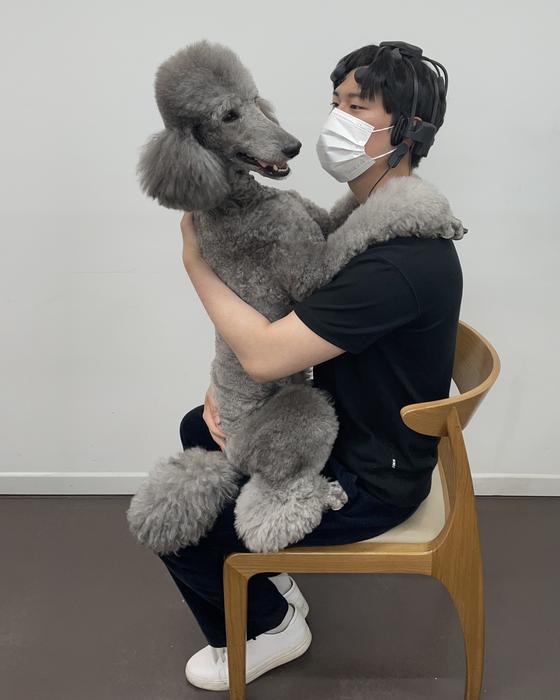
Yoo et al., 2024, PLOS ONE, CC-BY 4.0
Animal-assisted interventions, like canine therapy, are widely used in hospitals, schools, and beyond to help reduce anxiety, relieve stress, and foster feelings of trust. Studies of the potential benefits of animal interactions often take a holistic approach, comparing people’s mood or hormone levels before and after spending time with a service animal. But this approach doesn’t differentiate between types of interactions, like grooming, feeding, or playing with an animal, limiting our understanding of how each specific interaction impacts a person’s health and well-being.
To better understand how such animal-related activities affect mood, Yoo and colleagues recruited a small sample of 30 adult participants to each perform eight different activities with a well-trained dog, such as playing with a hand-held toy, giving her treats, and taking pictures with her. Participants wore electroencephalography (EEG) electrodes to record electrical activity from the brain while they interacted with the dog, and they recorded their subjective emotional state immediately following each activity.
The relative strength of alpha-band oscillations in the brain increased while participants played with and walked the dog, reflecting a state of relaxed wakefulness. When grooming, gently massaging, or playing with the dog, relative beta-band oscillation strength increased, a boost typically linked to heightened concentration. Participants also reported feeling significantly less fatigued, depressed, and stressed after all dog-related activities.
While not all participants had pets of their own, their fondness for animals likely motivated their willingness to participate in the experiment, potentially biasing the results. Nonetheless, the authors state that the unique relationships between specific activities and their physiological effects could serve as a reference for programming targeted animal-assisted interventions in the future.
The authors add: “This study provides valuable information for elucidating the therapeutic effects and underlying mechanisms of animal-assisted interventions.”
Source: Eurekalert








 DoggyMom.com