It’s been a big week at The Balanced Dog. I have just finished my last Saturday of consults for 2025 and, earlier this week, Sox turned 8 (his birthday party was a two weeks ago, to accommodate the travel plans of friends).
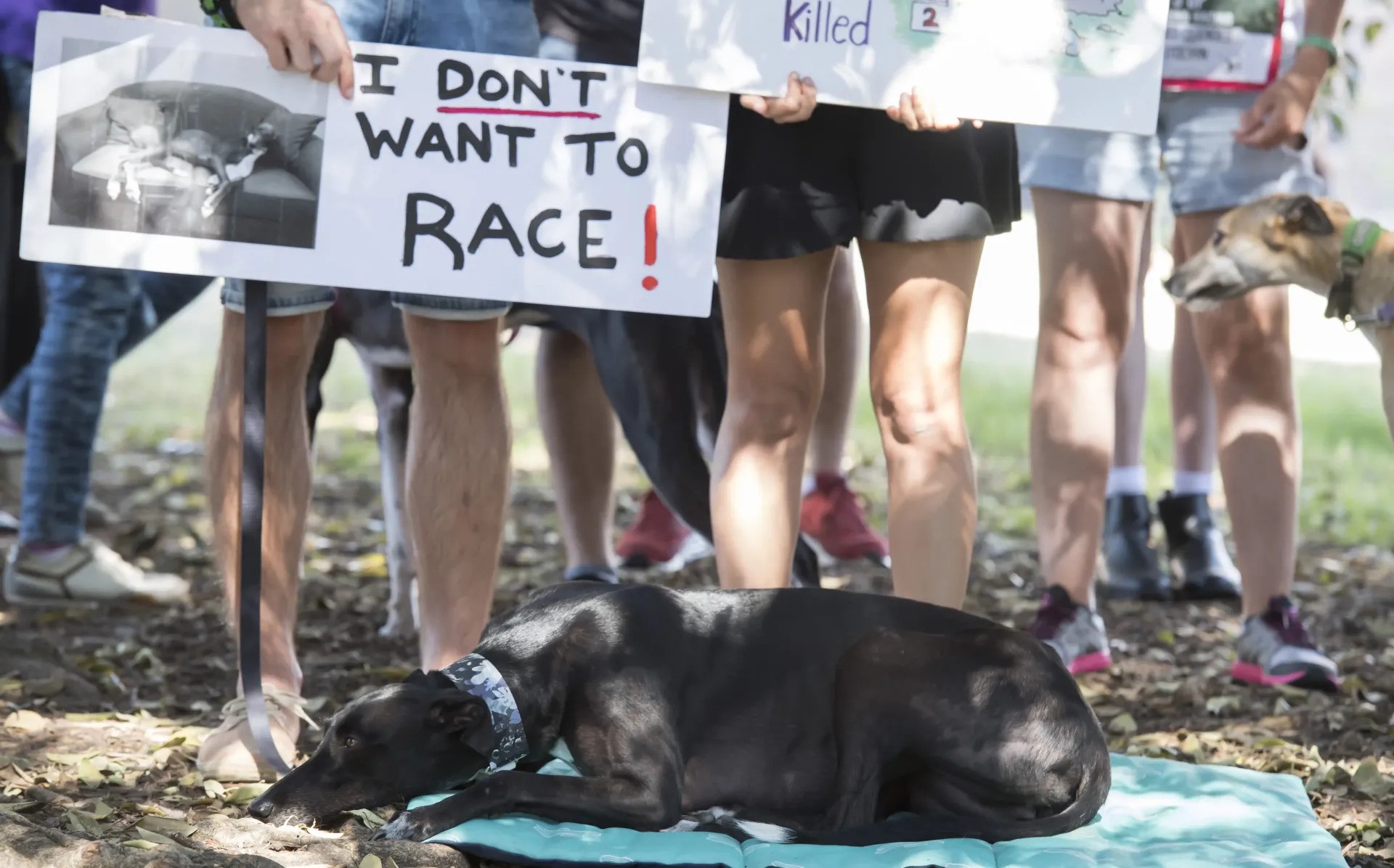
And there are only 20 days left to make a submission on the Racing Industry (Closure of Greyhound Racing Industry) Amendment Bill. A year ago, the NZ Government made an announcement of its intention to ban greyhound racing in this country; the bill has passed its first reading with wide cross-party support. It’s now time for the public to have their say…
Probably thanks to Sox’s birthday, and the number of greyhounds I work with in my practice, greyhounds, racing and animal welfare have been on my mind a lot recently. I am definitely making a submission.
Here are the points/issues I want to raise:
Animals are not statistics. Behind percentages are living, breathing and sentient creatures.
What do we mean by animal welfare? In layman’s terms, it’s quality of life for the entire life of the animal.
What is the definition of an accident? Depending upon which dictionary you use, this is defined as an unforeseen and unplanned event or circumstance or an unfortunate event resulting especially from carelessness or ignorance.
What is our lifetime responsibility as stewards and ”owners” of dogs?
What are the inherent risks of racing?
How painful is a broken hock, a fractured skull or other high impact injury?
With concerns that greyhounds will become extinct in New Zealand if racing is banned, what protections will there be for breeders who wish to continue their bloodlines and provide the NZ public with a greyhound if they choose to buy one?
I encourage anyone with an interest in the greyhound breed to submit. That’s what public submissions are for. There are many templates circulating to assist you in making a submission. I believe the most powerful submissions are those that share personal experience.
Be sure to read the legislation so you can align your comments with specific clauses and be sure to tell the Select Committee if you want to be heard (that is, appear in person or by video link).
Kathleen Crisley is Fear-Free certified dog massage therapist and canine fitness trainer. She has a particular passion for working with dogs and their families to ensure injury prevention and quality of life. She specialises in working with anxious and emotionally damaged dogs. Her mobile practice, The Balanced Dog, is based in Christchurch, New Zealand
I’ve just read this piece by Dr Mia Cobb of the University of Melbourne and had to share it. Thankfully, it was published under a Creative Commons license to enable re-publication with citation.
But something has changed globally over the last year, and it has big implications for dogs worldwide.
This rapid cascade of bans signals something much bigger. Picture: Getty Images
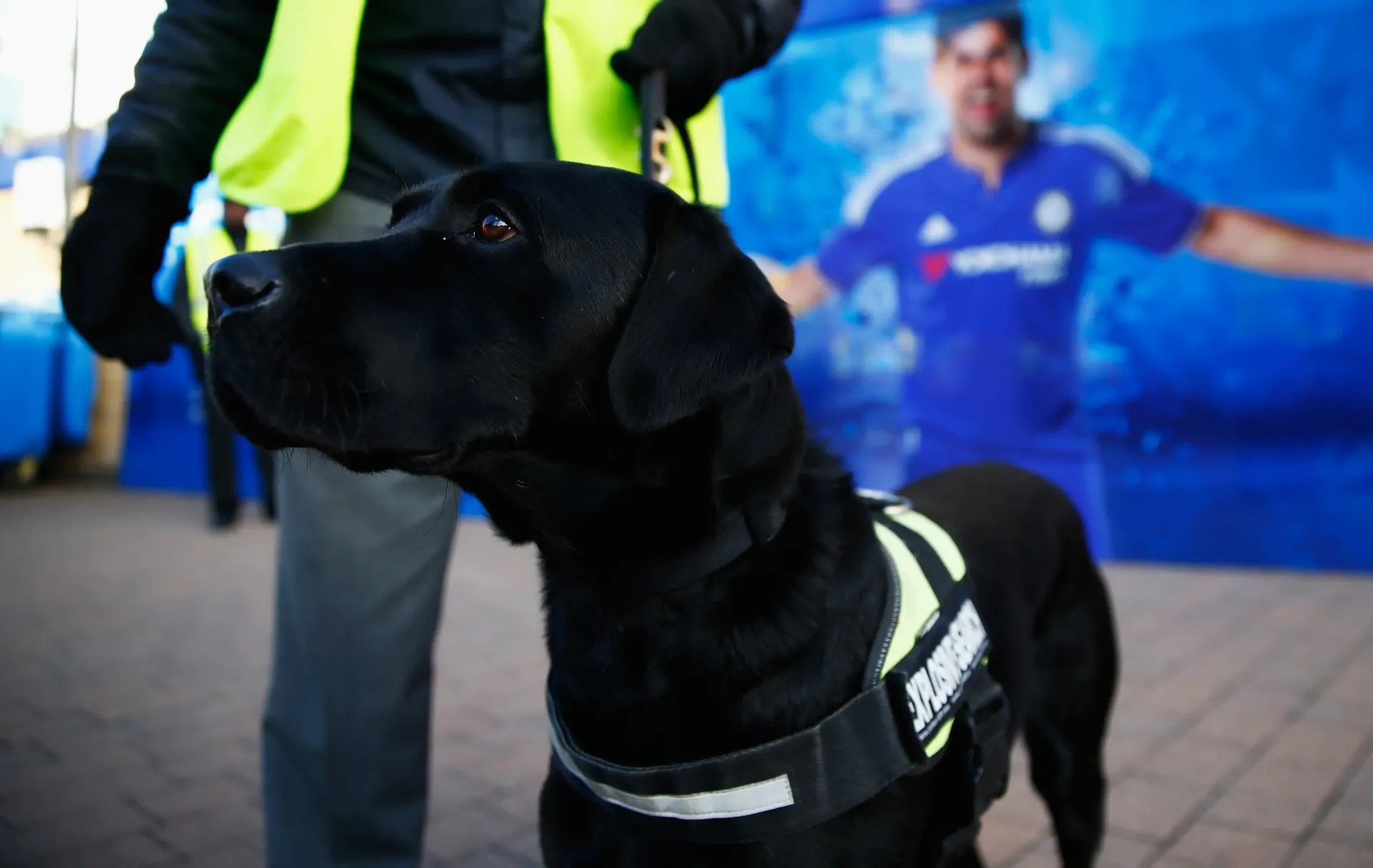
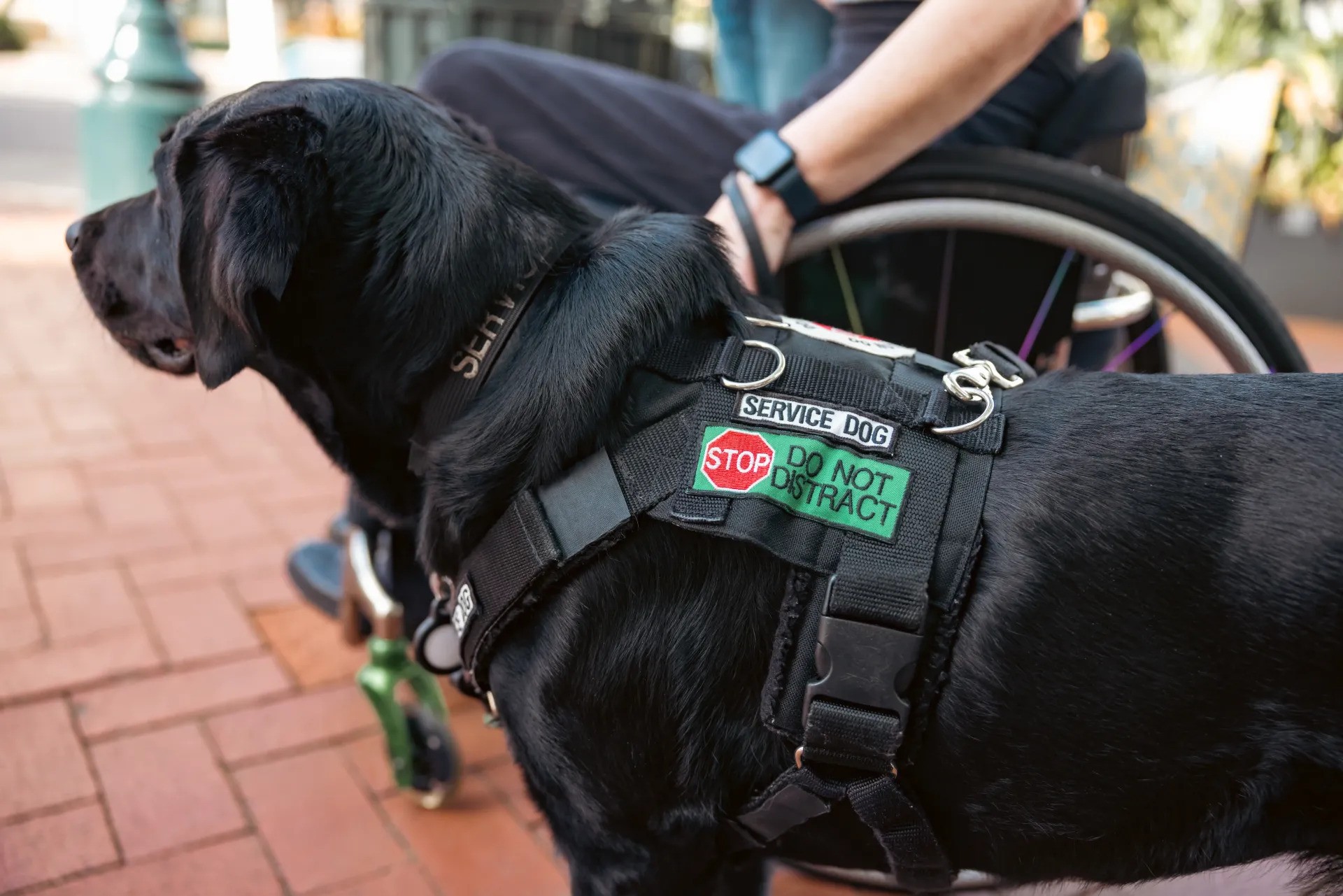
But what does this mean for the other dogs in our lives? The detection dogs in our airports, the dogs assisting people with disabilities, those supporting students in our schools or even the dog asleep on your couch?
We may donate to assistance dog charities, watch border detection programs on TV and admire search-and-rescue teams helping in disaster zones without considering what daily life looks like for these canine workers.
As people become increasingly conscious about animal treatment, from farm animals to those in entertainment, this awareness is expanding to include all the ways we ‘use’ dogs.
Our expanding awareness of animal treatment now includes all the ways we ‘use’ dogs. Picture: Getty Images
The recent greyhound racing collapse demonstrates how quickly public support can evaporate when welfare concerns aren’t adequately addressed.
Consider the contrast between those who embrace scrutiny versus those that resist it.
Some organisations or operators working with dogs proactively demonstrate their welfare standards, welcome independent oversight and engage openly with concerns. Others operate behind closed doors or respond defensively when questions arise about how their animals are bred, reared, housed, trained and rehomed.
Those thriving under increased public attention share common approaches: they treat welfare as a core priority rather than a compliance exercise, even when it means making major changes to the way in which they operate (for example, their training methods or the equipment used).
They also understand that genuine transparency builds public trust in ways that defensive responses never can.
But there’s an important distinction between real change and ‘welfare washing’ surface-level improvements designed more for public relations than to genuinely assure animal wellbeing.
The public is becoming increasingly sophisticated at spotting the difference.
The speed of recent racing bans – three jurisdictions in around 18 months – shows how rapidly momentum can build once public opinion shifts.
What earning trust looks like
The organisations embracing increased welfare scrutiny share common characteristics.
They proactively demonstrate care standards rather than waiting for pressure. They welcome independent monitoring and engage genuinely with concerns rather than dismissing them.
There’s a reframing from dogs as tools we use to co-workers we partner with. Picture: Getty Images
Most importantly, they recognise that working with dogs comes with profound responsibilities.
This reframing, from dogs as tools we use to co-workers we partner with, means ensuring dogs have agency in their daily lives – the ability to make choices about when to rest, opportunities to be dogs rather than just workers and environments that offer them positive social and physical experiences.
It means transparency about career length, retirement plans, injury rates and living conditions. It means treating welfare as a core business priority, not a public relations exercise.
The dogs supporting our lives
International Dog Day provides an annual opportunity to shine a spotlight on all the dogs we rely on in our lives, not just our pets at home.
t’s a chance to ask: are we caring for these animals as well as we can?
The greyhound racing industry’s decline shows what happens when the answer is unclear or unconvincing.
Public trust, once lost, is extraordinarily difficult to rebuild, especially when alternatives exist that don’t rely on the use of real animals.
Everyone relying on dogs should be asking themselves: if public attention suddenly focused on our operation tomorrow, would we welcome that scrutiny? Can we demonstrate genuine care for our animals’ wellbeing, not just their productivity?
The dogs supporting our lives – whether working at airports, guiding people safely across roads or living as companions in our homes – deserve nothing less than our full consideration of their wellbeing.
Are we caring for these animals as well as we can? Picture: Getty Images
And as the racing industry is discovering, the public increasingly expects to see proof of that care, not just promises.
They’ll be part of building a sustainable future where our partnerships with dogs are genuinely rewarding for both species. Those who can’t may find themselves wondering how something that seemed so permanent could disappear so quickly.
The choice is theirs to make – but the window for making it may be narrower than they think.
“Well, then they can race around the park, and they can race around the beach, but they won’t be racing on a track and getting themselves injured to the degree that they are getting themselves injured now.”
– Rt Hon Winston Peters, Minister of Racing, in the press conference of 10 December 2024 where it was announced that New Zealand will ban commercial greyhound racing effective 1 August 2026 on animal welfare grounds
It has taken me a couple of days to gather my thoughts about the Government’s announcement to ban greyhound racing. A 20-month notice period has been given to enable the industry to wind down and to find homes for the estimated 2,900 greyhounds in its care.
The ban is a decision that has been long in coming. There has been an abundance of evidence to show the negative animal welfare implications of an industry that relies on the use of these dogs solely for the purpose of providing entertainment.
I support the decision to ban the industry out of concerns for animal welfare. Here’s why.
Over the last two days I have seen comments from people who take a very strategic definition of animal welfare. For example, the claims that the industry has been brought down by a few bad players. These would be the trainers that abuse their dogs, use aversive training methods, and perhaps even drug them with meth or other substances.
In other words, these claims would have you believe that the only animal welfare concerns about the industry are largely off-track. They are not.
The primary animal welfare concern is on the track for all to see.
The act of commercial greyhound racing requires that the dogs be trained to get very excited and use their sighthound instincts to chase the moving lure and run like hell to get to it. Because they are dogs, they don’t have a sense of self-preservation. They run, and run hard.[1]
Photo sourced from Greyhound Racing NZ
In the process of running, a greyhound will often have all four paws off the ground.
Now imagine when another greyhound involved in the chase runs into that other greyhound because they are running in a tight pack. It’s a high-speed crash. And one, may I add, with no safety equipment. No air bags, no steel body of a car to protect them. Nothing.
These crashes lead to horrific injuries and are the ones that most commonly reach the news outlets when the dog is so severely injured that racetrack euthanasia is required.
There are others.
Bruising, hock (tarsus) fractures, concussions and muscle tears are common injuries that I have encountered as I have read through the health histories of ex-racers, which often have to be pieced together using the racing steward notes. Note: I don’t work at the race track – the greyhounds I work with are all ex-racers whose adoptive families seek out my help.
A dog can be injured many times in their career before they are retired from racing. They may be rested for as little as three days as evidenced in the racing records. They are back racing as soon as possible.
The industry responded to criticism of injuries by creating a Rehab to Rehome (R to R) programme. On the face of it, it sounds kind. A dog breaks a hock, or has a leg amputated, and they are put through rehabilitation so they can find a home where the adopter can assume responsibility for their ongoing care and the inevitable conditions like arthritis that they will present with.
The fact that the industry needs a rehabilitation programme shows that it accepts injuries as a normal part of operations. Yes, the R to R dogs can go on to have a good pet life – but is it really acceptable to hurt them so badly in the first place?
(It is said that the trainers love their dogs. I just don’t understand the kind of love that enables you to kiss the dog on the head as you load it into the start boxes knowing that within seconds it may be severely maimed or killed.)
And now for the bad players
In the 15 years I have been in practice, I have seen the evidence of the bad players in the industry.
These include:
A greyhound surrendered by his trainer with injuries from a mauling; no vet treatment was sought. His foreleg was frozen with scar tissue so he was unable to use it properly
A small female greyhound who tested positive for steroids which likely caused her malformed genitalia that pre-disposed her to urinary tract infections
A greyhound who was deaf from neglect; her ear passages were so severely scarred from untreated ear infections that she lost her hearing
A greyhound who came from a large breeder well-known for the poor living conditions of his dogs. She had to be wormed numerous times because her worm burden was so high.
In short, I have seen too much.
I accept that there are good players in the industry; I’m pretty sure every industry will have good players and bad ones. Back in the Dickensian times when child labour was an accepted practice, I’m sure that there were factory owners who were nicer than others. In time, however, society realised it wasn’t right to place children in harm’s way for profit and introduced child labour laws.
Are you seeing a theme yet?
I might add here that when greyhounds were raced at Addington last summer in 30+ degree heat, was it only the dogs of the bad players who were raced? I doubt it.
The human cost of closure
At this point, I would like to acknowledge that Greyhound Racing NZ says that 1,054 people are employed by the industry. Having lost my job several times during my career, I know how stressful redundancy can be.
If you love your job, being forced to give up what you love is a tough pill to swallow.
However, these job losses must also be put into context. Radio New Zealand has updated the total loss of jobs this year in the public sector alone to be 7,000 and companies across New Zealand have also laid off staff due to tough economic conditions. None of these people were given a 20-month notice period when they could continue to earn income and look for work. Today, most staff made redundant get about a month’s notice – maybe three if they are lucky.
Numerous reviews and promises – why a surprise?
The industry has been the subject of numerous reviews with a litany of animal welfare problems. I’m not going to go through all three reports in this post but quote only from the most recent one, released in May 2023:
There remains much to do
The industry has a way to go to convince stakeholders that animal welfare is the overriding imperative
Race day injuries have been a long-standing concern. The injury reduction strategy has not yet delivered improved outcomes.
Progress on track standards has been slow. Track assessments were completed but did not always result in timely remediation. This leads to the inevitable conclusion that greyhounds could have been injured unnecessarily.
Adoption of the Greyhound Australasia rules was a significant undertaking, underestimated by GRNZ (Greyhound Racing NZ).
The Racing Integrity Board (RIB) is confident progress would not have been achieved to the extent it has without the work programme in combination with close monitoring.
A broader range of greyhound registration process issues remain unresolved and are affecting traceability.
Implement education programmes that ensure all licensed persons understand their obligations under the standards, rules and policies. This is a long-standing issue, for which progress remains slow.
Should the industry continue, a high degree of monitoring will be essential.
If the RIB is asked to continue its role in the implementation and monitoring of a future work programme, there will be cost implications not currently budgeted
Inevitably there will be cost implications for the industry if greyhound racing is to continue based on a revised work programme.
I think we are all guilty of misleading ourselves at one time or another. In terms of the greyhound racing industry, it seems to be the workplace culture.
Scroll through the news feed about the industry and there have been consistent claims of making progress. The industry has survived and been allowed to continue after so many damning reviews. With a change in government late last year, and a Minister of Racing who was widely regarded as a racing supporter, they must have thought they were home free.
Politics can be a bitch.
Our current Government, one year into its term, has had its share of bad publicity. We’ve made worldwide headlines with the introduction of the Treaty Principles Bill, for example, while teenagers from boot camps have absconded. Heading into the Christmas break, this Government needed a win – something that most of the public would feel good about. (Surveys have shown that up to 75% of the NZ public would vote to ban the sport.)
In my opinion, that’s why Winston Peters decided it was time to pull the plug. I never expected him to do it and I’m sure that was the opinion of the industry, too. Winston, however, is a shrewd politician.
It’s rare for animals to come out the winners of any political maneuver. I’ll take the win.
RIP Diamond Roman
It should not be lost on anyone that hours after the ban was announced, on a Southland racing track, a greyhound named Diamond Roman was severely injured. The race report states that the greyhound was, “checked and fell into bend. Referred to the veterinarian and reported to have a compound fracture of right tibia/fibula which was severely comminuted[2] and displaced. Due to the catastrophic nature of this injury the greyhound was euthanised on humane grounds.”
Anyone still think there isn’t an animal welfare problem with greyhound racing?
[1] A racing greyhound, according to Greyhound Racing NZ, runs at a pace of 17 m per second, reaching speeds of up to 60 kilometres per hour. https://www.grnz.co.nz/greyhounds.aspx
[2] A comminuted fracture is caused by severe trauma resulting in a bone broken in at least 2 places.
Kathleen Crisley, is Fear-Free certified dog massage therapist and canine fitness trainer. She has a particular passion for working with dogs and their families to ensure injury prevention and quality of life. She specialises in working with anxious and emotionally damaged dogs. Her mobile practice, The Balanced Dog, is based in Christchurch, New Zealand. She has never worked for the greyhound racing industry.
When his girlfriend Misty came to stay, I took Sox and Misty to Christchurch’s red zone for off-lead time.
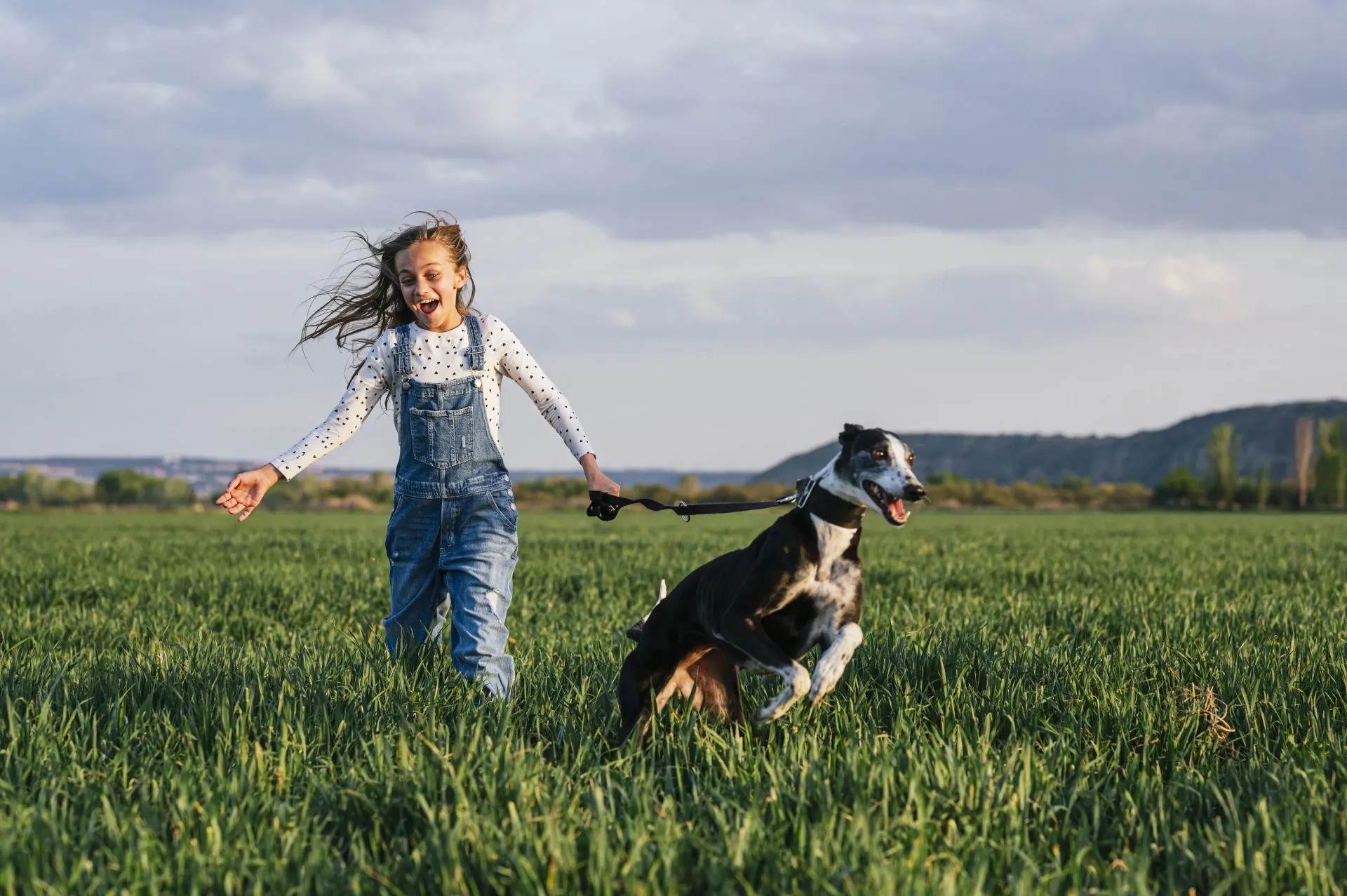
In this video, the dogs run and play. Greyhounds love to run. In this video, both dogs are free to stop, change direction, dodge and weave as they see fit, and stop when they are ready. This greatly reduces the risk of injury and supports enrichment. It allows them to make choices, something that behaviourists call ‘agency.’
The definition of “to run” is “to move along, faster than walking.” The dogs choose to do this and for how often.
The definition of “to race” is “a competition between runners, horses, vehicles, etc. to see which is the fastest in covering a set course.”
Most dogs love to have a run and play, such as I explain in my post There’s a technical term for almost anything – the zoomie. To truly love to race, a sentient being, be it human or animal, must be able to opt into competition of their own free will, accept the risks associated with the race, and take pleasure in it.
Kathleen Crisley, Fear-Free certified professional and specialist in dog massage, rehabilitation and canine fitness, The Balanced Dog, Christchurch, New Zealand.
In May, a smaller report from NZ’s Racing Integrity Board (RIB) was released.
The Supplementary Report (dated March 2023) was written at the request of the Minister of Racing. Whereas the December report talks at great lengths about all the things that would have to happen to reform the industry, the bulky report didn’t say much about options for closing down the industry.
The request of the RIB to report on options for closure was done with the express request to keep it confidential. That is, the Board could not talk with anyone working in animal welfare, or from within the industry, about how to manage closure. The report relies entirely on publicly available material from other countries with the understanding that a more detailed strategy and plan are needed.
The RIB is probably not the body that should be in charge of a closure plan, but they’ve come up with a long list of references. Had the Minister bothered to read submissions from previous reviews, he would have seen that people like me cautioned that a planned and phased closure are needed to preserve the rights and welfare of the hounds.
Such is the case, for example, with the State of Florida.
In 2018, 70% of Florida voters approved a ban on greyhound racing with an effective date of January 2021. The phase-out period was two years. The racing industry in Florida blacklisted adoption groups that had supported the industry’s closure; only adoption groups that were neutral or pro-racing were allowed to receive dogs for adoption. Nonetheless,‘it was reported that there are more willing adopters than dogs coming off the tracks.’
The Supplementary Report summarises the pros and cons of a shorter transition period vs a longer one for an industry closure. Those summaries are copied here:
Let’s face it, both options have their benefits and the risks will have to be managed. No one who truly cares about the dogs wants to see greyhounds over-raced and their welfare otherwise compromised. The RIB has already acknowledged in its longer report that progress towards animal welfare goals is only accomplished under strict supervision and watchful monitoring of the industry.
A closure of the industry will be no different.
This report is a start, but what NZ really needs is the leadership to make a decision on greyhound racing. If that leadership doesn’t eventuate, then a binding referendum will be needed and sooner rather than later.
Meanwhile, who looks after the dogs?
Kathleen Crisley, Fear-Free certified professional and specialist in dog massage, rehabilitation and nutrition/food therapy, The Balanced Dog, Christchurch, New Zealand
On 23 May 2023, MP Kieran McAnulty released a report about greyhound racing that was dated December 2022. Authored by the Racing Integrity Board (RIB), this report is 175 pages long.
There have already been three (3) reports, all reviews, of the NZ greyhound racing industry, in 2013, 2017 and 2021. All have included substantive lists of shortcomings in the industry with issues for improving the welfare of greyhounds. This latest report was to have been the final report – the industry was ‘put on notice’ that it should improve and given one year – until the end of 2022 – to do so.
Since I’m writing this blog in June 2023, I figure you can guess that government has failed to act on its promise; even the delay of five months in releasing the report is suspect in terms of who is committed to animal welfare.
I used to work for local and central government agencies in my earlier working life. Whenever a report is long, it is usually because the writers do not want to be the bearers of bad news and so wade through every possible detail to hide the glaringly obvious. Such is the case with this report.
Please bear in mind that the Racing Integrity Board’s purpose is: Promote and ensure the racing industry complies with high standards of animal welfare, integrity and professionalism for the benefit of the public, participants and racing industry
Let me repeat that – high standards, integrity and professionalism…
Key points (direct quotes from the report):
There remains much to do
The industry has a way to go to convince stakeholders that animal welfare is the overriding imperative
Race day injuries have been a long-standing concern. The injury reduction strategy has not yet delivered improved outcomes.
Progress on track standards has been slow. Track assessments were completed but did not always result in timely remediation. This leads to the inevitable conclusion that greyhounds could have been injured unnecessarily.
Adoption of the Greyhound Australasia rules was a significant undertaking, underestimated by GRNZ (Greyhound Racing NZ).
The RIB is confident progress would not have been achieved to the extent it has without the work programme in combination with close monitoring.
A broader range of greyhound registration process issues remain unresolved and are affecting traceability.
Implement education programmes that ensure all licensed persons understand their obligations under the standards, rules and policies. This is a long-standing issue, for which progress remains slow.
Should the industry continue, a high degree of monitoring will be essential.
If the RIB is asked to continue its role in the implementation and monitoring of a future work programme, there will be cost implications not currently budgeted
Inevitably there will be cost implications for the industry if greyhound racing is to continue based on a revised work programme.
If you’re reading this and wonder what’s next for NZ’s greyhounds, please ensure you focus on the last few bullet points above. If racing is allowed to continue, progress is unlikely to be achieved without close monitoring for which the RIB does not have the budget and resources to undertake. No one else in NZ is resourced to do this either, and the industry itself will face costs to improve.
What’s the odds of these things happening given NZ’s current economic situation and with the lack of leadership?
But wait, there’s more! The RIB has issued a supplementary report, another 31 pages, this time dated March 2022. I’ll cover that report in a future blog.
Kathleen Crisley, Fear-Free certified professional and specialist in dog massage, rehabilitation and nutrition/food therapy, The Balanced Dog, Christchurch, New Zealand
Following up on my previous post, the Minister for Racing, Kieran McAnulty, has responded about his report to Cabinet and release of the Racing Integrity Board report:
“The ongoing improvement of greyhound welfare remains a priority for this Government. That is why the previous Minister for Racing, Hon Grant Robertson, initiated the Robertson Review into Greyhound Racing. It is also why, following the conclusion of the Review in July 2021, the industry was put on notice to make improvements.
I received the final report from the Racing Industry Board (RIB) on the greyhound industry’s progress in December 2022. This report will form the basis of my recommendation to Cabinet on the future of the industry, alongside consultation with the industry and animal welfare groups. The report will not be released publicly until it has been duly considered by Cabinet.
I had intended to present my findings to Cabinet in February 2023. However, this year’s significant weather events have made it necessary for the Government to deal with more pressing issues, and as such the greyhound paper has been delayed but will be presented at the first opportunity. I’d like to get it started and I acknowledge this uncertainty may be causing anxiety and intend to release a statement and contact key stakeholders within the next week to provide an update on next steps.“
I am looking forward to hearing about what the Minister’s next steps will be.
Kathleen Crisley, Fear-Free certified professional and specialist in dog massage, rehabilitation and nutrition/food therapy, The Balanced Dog, Christchurch, New Zealand
Towards the end of each calendar year, it seems that the NZ Government releases a lot of reports before staff take holidays for Christmas and the summer season. Unfortunately, this also means that the contents of these reports do not always get as much attention by the public and media that they should.
In late November 2022, the Petitions Committee issued its report on the petition of Aaron Cross from the Greyhound Protection League of New Zealand to ban commercial greyhound racing.
The findings of this report are sobering and worth highlighting:
One of our principal concerns about this petition is that the industry’s responses to problems have been slow and do not show that the welfare of dogs is the industry’s main consideration. For example, despite the Hansen recommendation in 2017 regarding straight racetracks, there are still no straight tracks.
We have heard that the industry has focused more on reducing greyhound deaths than on reducing injuries and improving the quality of care. This can result in ill or traumatised dogs that are not suitable for rehoming as pets. We are also concerned for other dogs that do not get into the rehoming programme.
We note that the industry does not have a long-term plan for dealing with the large number of dogs that need rehoming each year. Further, we are concerned at the lack of a plan to track and manage the overall population of racing greyhounds in New Zealand and at the possibility that the industry may be breeding and importing too many dogs. Population management was raised as an issue in the WHK report, the Hansen report, and the Robertson report. We think a carefully considered population plan is long overdue.
We were interested to hear about the RIB’s attention to kennel audits and we hope that they lead to improvements in dogs’ care. We urge the RIB and GRNZ to also look at changes that will reduce injuries.
We are disappointed by the lack of consistent information and we note that this issue has been identified as a focus area in the Greyhound Review. We are keen to hear whether the quality and consistency of data has improved between the time that we received submissions (autumn and winter 2022) and the RIB’s report due next month (December 2022).
The industry’s lack of good systems and data, and the absence of transparency, have been flagged many times in the past but we have seen minimal improvement. This reduces confidence in the industry’s social licence. We believe that investment in systems to provide high quality data is urgent, as one of the requirements for the industry to retain its social licence to operate.
We also urge the industry to ensure that all its people are aware of, and comply with, animal health and welfare requirements.
In our view, the removal of the SPCA from the health and welfare committee shows poor judgement of what is needed for the industry to keep its licence to operate. Shutting out an organisation that, while it opposes GRNZ’s work, is prepared to help it improve its practices, has worked against the industry.
Similarly, we consider the GRNZ comment that methamphetamine may have accidentally contaminated dogs to be disingenuous at best. It indicated a disregard for a real health and welfare problem. A more appropriate response would have been to immediately acknowledge and investigate the problem.
We note that the RIB said it was developing a new animal welfare team to support and monitor each racing code’s animal welfare policies and initiatives and to promote and ensure compliance with animal welfare standards. We would like to know what (if anything) delayed this initiative, and whether (and how) it improves the lives of greyhounds.
We have doubts about whether the greyhound racing industry still has a social licence to operate in its current form. We have serious concerns about the way the industry is operating at present. We urge the Government to be mindful of our comments when it considers the future of the greyhound racing industry following the RIB’s report in December 2022.
The current Government promised that the industry was ‘on notice’ for a period of one year. Racing Minister Kieran McAnulty has had another report about the industry from the Racing Integrity Board since December 2022. The issue of greyhound racing was to have been decided at the first meeting of Cabinet in February 2023.
With the change in Prime Minister thanks to Jacinda Ardern’s resignation and the Civil Defense emergency caused by Cyclone Gabrielle, the first Cabinet meeting of February was taken up with other business. But, it’s now mid-March 2023 and it’s time for Minister McAnulty to make a decision – and at a minimum publicly release the Racing Integrity Board’s report which has been kept confidential to this point.
I spoke to the Minister’s press secretary, Joanna Ramsay, this morning and asked for an update on when the Minister will be making a recommendation to Cabinet, and if/when he will release a copy of the Racing Integrity Board’s report.
Kathleen Crisley, Fear-Free certified professional and specialist in dog massage, rehabilitation and nutrition/food therapy, The Balanced Dog, Christchurch, New Zealand
Last week, a new review report into the greyhound racing industry in New Zealand was released. As most of you know, greyhound welfare is a topic near and dear to my heart because Izzy is an ex-racer.
This review, by the Hon Sir Bruce Robertson, is not the first review of the industry. It’s not even the second (but the second, known as the Hansen report was a whopping 93 pages. I discussed that earlier report in my blog post How many hounds needing a home?). The 2021 review is the third review of greyhound racing in this country.
So the report made some headlines last week in the news because the Minister of Racing, Grant Robertson, says he’s putting the industry ‘on notice.’ Frustratingly, none of the mainstream news sources provided a link to a copy of the actual report. Being the information geek that I am, I tracked down the report and read it thoroughly over the weekend – with highlighter pen in hand.
Before I go into some of the key findings, you should be aware that a major reason why this review was undertaken is that Greyhound Racing NZ (GRNZ) wrote to the Minister for Racing in June 2020 stating that all 20 recommendations stated in the Hansen review had been successfully implemented and so they would no longer be providing progress reports. The National Animal Welfare Advisory Committee felt that the information provided was insufficient and, with more deaths and injuries of greyhounds on the track, this review was commissioned.
I like this review, for one reason because it is PITHY. 19 pages including the appendices, it gets straight to the heart of the matter.
Key points:
Kennel audits were supposed to have been undertaken regularly; GRNZ reported that audits were done annually. This review says that comprehensive information on both the regularity of the audits and their outcomes is not available.
The database on greyhounds was to have been updated to ensure it is easily accessible, and contains accurate information on every greyhound born in NZ or imported into New Zealand until it is de-registered. This review found that not only are the data difficult to access but even the National Animal Welfare Advisory Committee cannot obtain even the simplest of information. “There does not appear to be any reason why information regarding the welfare of greyhounds should be outweighed by reasons of privacy, commercial confidentiality, or otherwise.”
The first review of racing recommended that dogs privately re-homed (as in, not through an adoption agency), should be audited to verify their whereabouts. Yet, through submissions to this review, it was found that there is not sufficient information to give any true assurance about the welfare of these dogs.
GRNZ has expanded re-homing efforts BUT it has not established any form of public reduction targets, population projections, or estimated the number of dogs needed for the industry each year. In other words, there is nothing to stop the unchecked breeding of greyhounds for the industry which expects others to take care of their dogs for their lifetimes once they are no longer deemed suitable for racing. The Hansen report clearly said that re-homing alone was not going to solve the industry’s problems.
The negative impacts of racing on overall health often do not present until a dog is settled into a new home.
“No reason given” is still the most common reason for euthanising a greyhound – and by a significant margin.
It is unclear what education and experience standards are in place for individuals employed to assist with breeding and managing kennels.
Conclusions
It has become clear that no matter the outcome of this report, or any reports henceforth, the social license of the industry will continue to be challenged for the foreseeable future. If GRNZ wishes to secure a future for the industry it governs, then it must set out to demonstrate the decency of the greyhound racing industry at every possible opportunity.
GRNZ has made its job harder by unnecessarily obfuscating information and pushing back against those with an interest. All information should be recorded, and it should be available. Arguably GRNZ has data to support its stances on the issues raisedin this report but is seen as unwillingto share this.
For those of you who have an interest, I encourage you to read the report in its entirety and share it with others. The current NZ Government says the industry is on notice and must report by the end of 2022 on its actions in response.
My view is that greyhound racing has been banned in many countries because of the animal welfare considerations. New Zealanders must ask themselves why those animal welfare issues don’t exist here. Because clearly this review has found that they do.
Kathleen Crisley, Fear-Free certified professional and specialist in dog massage, rehabilitation and nutrition/food therapy, The Balanced Dog, Christchurch, New Zealand










 DoggyMom.com