Tag Archives: human-animal bond

Homeless youth with pets

Homeless youth can benefit from owning pets but not without a few challenges, according to a new study from the University of Guelph.

Led by researchers from the Ontario Veterinary College (OVC), the team found that homeless youth with pets are less likely to engage in potentially harmful behaviour, more likely to open up to veterinarians about their personal challenges and generally less depressed.
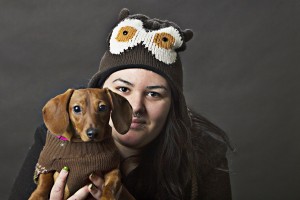
Homeless youth

(Photo courtesy Community Veterinary Outreach)

However, the team found that pets can make it difficult for their owners to obtain social services.

The study was published today in the journal Anthrozoӧs. 

Its findings mirror what researchers had been hearing anecdotally, said Prof. Jason Coe, Population Medicine.

“Those homeless youth with pets don’t want to risk incarceration or anything that would prevent them from being with their pets, so they are less likely to abuse alcohol or use hard drugs,” said Coe. He studies the human-animal bond and communication in veterinary care.

“We also found those without pets are three times more likely to be depressed, though we have not yet determined if this is directly relatable to having a pet.”

Among major challenges, he said, “Many shelters do not allow pets, so these youth may be limited in where they can sleep.”

Many youth are very open to discussing their struggles and issues with veterinarians, said lead author Michelle Lem, an OVC graduate.

She is the founder and director of Community Veterinary Outreach (CVO), a volunteer group providing mobile veterinary services to homeless people in Toronto, Hamilton, Kitchener-Waterloo, Guelph and Ottawa.

“We’re able to collaborate with public health and social workers as they attempt to reach these marginalized people, essentially using the human-animal bond and veterinary care as a gateway to provide accessible social support and healthcare,” Lem said.

“So many of these youth have lost trust in people, and the animal gives them unconditional love. They will do anything for their pets, which means they are less likely to commit potentially harmful acts, but also face more challenges with accessing housing, healthcare or addiction treatment services.”

Prof. Bill O’Grady, Sociology and Anthropology, studies youth homelessness and helped design the study.

Calling for pet-friendly shelters, he said “many homeless youth are prohibited from using services offered by the shelter system because they have pets, particularly dogs. There is an opportunity here to use this information when we’re developing services and plans for young people.”

Source:  University of Guelph media release

Dogs – part of the coping for kids of military families

Janelle Casson says it never gets any easier when her husband deploys as a U.S. Army combat engineer. But after four tours of duty in the last 12 years—assignments ranging from a year to 15 months each in Iraq—she and her four children eventually fall into a well-learned routine. “You have a muscle memory of how it feels to be without him and what we all need to do to keep moving forward,” she says.

Even Ebony, the family’s 9-year-old Scottish terrier-schnauzer mix, takes the deployments hard, moping about the house and keeping to herself. “It takes a couple of weeks for her to come to terms with the fact that dad is not here,” says Casson, of Killeen, Texas. Ebony inevitably forgoes her normal bed in the master bedroom to seek comfort sleeping alongside one of the children.

Terrier Schnauzer mix

This article didn’t come with a photograph of Ebony, but I imagine she looks something like this.

Fourteen-year-old Elijah, the oldest, is the main support for the dog, which joined the family when the boy was 5. “He’s been Ebony’s primary caretaker” whenever his father is away, says Casson. “He feeds her and takes her on walks. He just fell into the role of taking care of her, much the way [many military] kids fall into other typically dad roles when they’re gone.”

Ebony is probably helping Elijah, too. Recent Tufts University research finds that a strong relationship with a pet is associated with better coping skills in children who are managing the stress of having a parent deployed. The study came out of the new Tufts Institute for Human-Animal Interaction (TIHAI), which seeks to discover exactly how animals help us better handle physical and emotional stress, commit to fitness and educational goals, overcome physical disabilities and recover from psychological trauma.

Animals have been a part of our lives for thousands of years. We started keeping company with them as soon as we realized that dogs could help us hunt, cats would exterminate the rodents pilfering our grain stores and horses offered transportation.

But that’s not the whole story. Why do we continue to embrace these domesticated animals like members of our family, even though they no longer fulfill our pragmatic needs? The new Tufts institute, launched in 2015, is examining the importance of our relationships with other species. But instead of working in the traditional silos of fields such as veterinary medicine, human medicine and psychology, TIHAI draws on faculty, staff and students from myriad areas of expertise.

“We bring together all these different disciplines to put some sound evidence behind what we intuitively know is true: animals can enhance our lives in so many ways,” says Lisa Freeman, J86, V91, N96, a professor at Cummings School of Veterinary Medicine who directs the Institute.

Source:  TuftsNow

Study shows dogs can recognise human emotions

Dogs can recognise emotions in humans by combining information from different senses – an ability that has never previously been observed outside of humans, a new study reveals.

For the first time, researchers have shown that dogs must form abstract mental representations of positive and negative emotional states, and are not simply displaying learned behaviours when responding to the expressions of people and other dogs.

The findings from a team of animal behaviour experts and psychologists the University of Lincoln, UK, and University of Sao Paulo, Brazil, are published in the Royal Society journal Biology Letters.

The researchers presented 17 domestic dogs with pairings of images and sounds conveying different combinations of positive (happy or playful) and negative (angry or aggressive) emotional expressions in humans and dogs. These distinct sources of sensory input – photos of facial expressions and audio clips of vocalisations (voices or barks) from unfamiliar subjects – were played simultaneously to the animals, without any prior training.

The team found the dogs spent significantly longer looking at the facial expressions which matched the emotional state (or valence) of the vocalisation, for both human and canine subjects.

Dogs and emotions study

The integration of different types of sensory information in this way indicates that dogs have mental representations of positive and negative emotional states of others.

Researcher Dr Kun Guo, from the University of Lincoln’s School of Psychology, said: “Previous studies have indicated that dogs can differentiate between human emotions from cues such as facial expressions, but this is not the same as emotional recognition.

“Our study shows that dogs have the ability to integrate two different sources of sensory information into a coherent perception of emotion in both humans and dogs. To do so requires a system of internal categorisation of emotional states. This cognitive ability has until now only been evidenced in primates and the capacity to do this across species only seen in humans.”

Co-author Professor Daniel Mills, from the School of Life Sciences at the University of Lincoln, said: “It has been a long-standing debate whether dogs can recognise human emotions. Many dog owners report anecdotally that their pets seem highly sensitive to the moods of human family members.

However, there is an important difference between associative behaviour, such as learning to respond appropriately to an angry voice, and recognising a range of very different cues that go together to indicate emotional arousal in another. Our findings are the first to show that dogs truly recognise emotions in humans and other dogs.

“Importantly, the dogs in our trials received no prior training or period of familiarisation with the subjects in the images or audio. This suggests that dogs’ ability to combine emotional cues may be intrinsic. As a highly social species, such a tool would have been advantageous and the detection of emotion in humans may even have been selected for over generations of domestication by us.”

Source: AlphaGalileo media release

When Dogs Heal

When Dogs Heal is a photographic exhibition supported by the charity Fred Says, which helps people diagnosed with HIV.

The photographs tell the stories of the dogs who helped their HIV-positive owners through tough times.

When Dogs Heal photograph

Paolo and Stud

The photographs have been shown in Chicago and New York, and through the When Dogs Heal website, galleries can express interest in hosting an exhibit.

When Dogs Heal photograph

Sharon and Dulk

The stories behind the photographs are pretty hard-hitting, but then again so is HIV and the impact of an HIV diagnosis.  Just another example of the human-animal bond and the connection between dogs and good health.

Kathleen Crisley, specialist in dog massage, rehabilitation and nutrition/food therapy, The Balanced Dog, Christchurch, New Zealand


Kids with dogs have less anxiety

A research team at Bassett Medical Center in New York has found that kids with a dog at home experience far less clinical anxiety than do children who are dog-less.

This small study adds to the growing body of knowledge about the human-animal bond and the positive health impacts of dog ownership.

Child and dog

Read more about this study on NBC News.


Other blog posts about kids, dogs and health:

Kathleen Crisley, specialist in dog massage, rehabilitation and nutrition/food therapy, The Balanced Dog, Christchurch, New Zealand

Canine companions and the lure of inattentively pooping in public

The title of this post is unashamedly taken from an article in the journal Environmental Sociology.

Dog poop flagged for research

Photo by Matthias Gross

This article is a study, primarily focused on European nations, and the patterns of owners who do/do not clean up after their dog poops.

The author observed that people are more likely to clean up after their dog when there are people around to watch.

I’ll let you read it for yourself…

The study’s (published) conclusion is:

This exploratory study thus suggests that observing activities and strategies of defecating may provide new insight into human–animal relationships by exploring the role of droppings. An important prerequisite for successfully displaying poop and for diverting attention away from the fact that dog poop is increasingly to be seen in public is that the actors involved are skillful enough to attest to nonknowledge about the production of excrements by their best friends.

Kathleen Crisley, specialist in dog massage, rehabilitation and nutrition/food therapy, Canine Catering Ltd, Christchurch, New Zealand

Other blog posts about dog poop include:

The companionship of dogs helps kids undergoing cancer treatment

Although survival rates for children diagnosed with cancer have increased dramatically over the past 40 years, hard evidence of proven psychosocial benefits to improve quality of life among patients and families during treatment has remained elusive.

Many hospitals have therapy dogs who visit with patients, and anecdotal evidence underscores the positive impact these programs have on children with cancer and their families.

Preliminary findings from a new, multi-center trial provides some of the first quantitative data to validate these claims.  The study, to be presented at the American Academy of Pediatrics (AAP) National Conference & Exhibition in Washington, DC, collected data on blood pressure, pulse rates and anxiety levels of children before and after a weekly visit from a therapy dog. During the visits, children pet or talk to the dog, brush its fur, view the dog’s photos, watch the dog practicing tricks or commands, and learn about dog breeds.

Photo courtesy of University of Texas Health Science Center

Photo courtesy of University of Texas Health Science Center

Preliminary findings show that blood pressure readings in the group receiving animal-assisted interventions remains more stable across all sessions than in the control group, said lead researcher Amy McCullough, Ph.D., National Director of Humane Research and Therapy for the American Humane Association. Similarly, there was a higher degree of variability in heart rate within the control group patients than with the treatment group patients.

“These findings suggest that the dog may have a calming effect on the patient,” Dr. McCullough said.

In addition to the effects on pulse and heart rate to date, preliminary results indicate the canine encounters appear to improve anxiety levels among parents. Parents in the control group report fluctuating anxiety levels with peaks and valleys; parents in the treatment group show more consistency in anxiety levels, and even a small decline in anxiety levels by the end of their participating in the study. Overall, children in both groups saw a decrease in anxiety over the course of their study enrollment. Researchers are also gauging the therapy dogs’ temperament and behavior during the visits.

“This study will be a milestone in understanding of the benefits of the vital bond shared between people and animals,” Dr. McCullough said.

Source:  American Academy of Pediatrics media release

In Memory of Denali (a fitting 1000th post)

****Warning****   For anyone who has loved and lost a dog, this video will bring you to tears.  It certainly did for me.  But I couldn’t think of a more fitting 1000th post for this blog – a tribute to the human/dog bond.

This short film is about Denali, photographer/cinematographer Ben Moon’s dog, and their life story together.

Kathleen Crisley, specialist in dog massage, rehabilitation and nutrition/food therapy, Canine Catering Ltd, Christchurch, New Zealand


Happy faces/sad faces

This is the experimental set-up used to test whether dogs can discriminate emotional expressions of human faces.  Photo by Anjuli Barber, Messerli Research Institute

This is the experimental set-up used to test whether dogs can discriminate emotional expressions of human faces. Photo by Anjuli Barber, Messerli Research Institute

Dogs can tell the difference between happy and angry human faces, according to a research published recently in the journal Cell Biology.

The discovery represents the first solid evidence that an animal other than humans can discriminate between emotional expressions in another species, the researchers say.

Previous attempts had been made to test whether dogs could discriminate between human emotional expressions, but none of them had been completely convincing. In the new study, the researchers trained dogs to discriminate between images of the same person making either a happy or an angry face. In every case, the dogs were shown only the upper or the lower half of the face. After training on 15 picture pairs, the dogs’ discriminatory abilities were tested in four types of trials, including (1) the same half of the faces as in the training but of novel faces, (2) the other half of the faces used in training, (3) the other half of novel faces, and (4) the left half of the faces used in training.

The dogs were able to select the angry or happy face more often than would be expected by random chance in every case, the study found. The findings show that not only could the dogs learn to identify facial expressions, but they were also able to transfer what they learned in training to new cues.

“Our study demonstrates that dogs can distinguish angry and happy expressions in humans, they can tell that these two expressions have different meanings, and they can do this not only for people they know well, but even for faces they have never seen before,” says Ludwig Huber, senior author and head of the group at the University of Veterinary Medicine Vienna’s Messerli Research Institute.

This research adds to the body of knowledge about the human-animal bond.  The researchers believe it is likely that the dogs associate a smile with a positive meaning and an angry expression with a negative one.

Source:  EurekAlert! media release


Pet therapy and how it helps cancer patients

Therapy dogs may improve the emotional well-being of some cancer patients, according to results of a clinical study, the first to document the benefits of animal-assisted therapy in adult cancer patients. The research was published this month in the Journal of Community and Supportive Oncology.

The results show a significant improvement in quality of life for more than 40 patients who took part in a trial at Mount Sinai Beth Israel in New York City, where they interacted with therapy dogs following chemotherapy and radiation treatments.

Photo courtesy of The Good Dog Foundation

Photo courtesy of The Good Dog Foundation

The study, conducted by researchers at Mount Sinai Beth Israel, found that patients receiving intensive multi-modal radiation therapy and chemotherapy for gastrointestinal, head or neck cancers experienced increases in emotional well-being and quality of life when they received visits from a certified therapy dog during the course of their treatment.

Increases in emotional well-being were significant over the course of the animal-assisted visits, even as patients underwent marked and significant declines in both physical and functional well-being.

“This study is the first such definitive study in cancer, and it highlights the merits of animal- assisted visits using the same scientific standards as we hold for the cancer treatment itself. It shows the importance of an innovative environmental intervention during cancer treatment,” said Stewart B. Fleishman, MD, principal investigator and Founding Director of Cancer Supportive Services at Mount Sinai Beth Israel. “Having an animal-assisted visit significantly improved their quality of life and ‘humanized’ a high-tech treatment,” he said. “Patients said they would have stopped their treatments before completion, except for the presence of the certified Good Dog Foundation therapy dog and volunteer handler.”

“Thanks to this rigorously designed study, we now have strong evidence that pet therapy is an effective tool to help cancer patients get through challenging treatments,” said Gabriel A. Sara, MD, Medical Director, Infusion Suite at Mount Sinai Roosevelt, and Assistant Clinical Professor of Medicine, Icahn School of Medicine at Mount Sinai.

The study has been called another piece of ‘mounting evidence’ of how the human-animal bond can enhance emotional and physical health.

If you would like to pass on the journal article to your oncologist/hospital provider,  you can access it here.

Source:  EurekAlert! media release