Tag Archives: mental-health

Dog ownership enhances sense of community

A new Japanese study of 377 adults suggests that owning a dog quietly strengthens how connected people feel to their neighborhood. 

Residents in a suburb west of Tokyo who lived with dogs reported a richer sense of belonging than neighbors without pets. 

The work was led by social psychologist Itaru Ishiguro, Ph.D., at Rikkyo University near Tokyo. His research focuses on everyday social ties and human-animal interaction, and he collaborated with colleagues at Azabu University in Sagamihara.

In the new study, the team compared dog owners and non-owners on three distinct kinds of neighborly contact. 

They looked at brief chats with strangers, close neighborhood friendships, and anchored personal relationships, recurring ties rooted in specific shared places and activities. 

The main question was whether people with dogs built more of these local ties and, through them, a stronger sense of community. 

People, dogs, and neighborhoods

In practice, anchored personal relationships might be the familiar faces you greet in the park or at the corner shop every afternoon.

These ties feel friendly and predictable, yet people usually do not swap phone numbers or invite one another into their homes.

The study argues that this middle layer of connection sits between quick incidental encounters and deep friendships in terms of intimacy and continuity. 

Because these acquaintances almost always live nearby and share the same streets, the authors expected them to matter most for neighborhood belonging. 

Dogs vs other neighborhood pets

When the team separated dog owners from people who kept cats or other animals, dog ownership alone showed a link with neighborhood relationships. 

One likely reason is simply that dogs need daily walks in shared spaces, while many other pets stay almost entirely indoors.

In the survey data, ownership of cats and other pets did not relate to any relationship type or to sense of community. 

That pattern suggests it is the shared walking routine, not pet ownership in general, that connects dog owners strongly to neighborhood social life. 

What the survey captured

Researchers recruited several hundred adults living in Sagamihara City and nearby areas through posters, flyers, community events, and local government channels. 

Participants completed an online or paper questionnaire about pet ownership, social contact around their homes, and how attached they felt to their area. 

The sense of community questions drew on a standard place attachment scale that measures how strongly people feel rooted in specific locations.

To untangle links between variables, the analysts used generalized structural equation modeling, a statistical technique that handles chains of cause and association. 

How ties strengthen

Dog owners were more likely than non-owners to report having people they regularly recognized in spots and frequent incidental conversations with passersby. 

However, once factors like age, income, education, gender, and housing were taken into account, owning a dog did not predict having neighborhood friends. 

All relationship types related to a stronger sense of community, yet only anchored personal relationships linked dog ownership directly to feeling locally rooted. 

“Anchored personal relationships should be considered alongside incidental interactions and friendships,” wrote Ishiguro. 

Earlier work in Australian cities found that pet owners scored higher than non-owners on neighborhood social capital, trust, and civic engagement.

Those studies also noted that dogs, more than other pets, seemed especially effective at sparking conversations during walks and visits to public spaces.

The Japanese survey adds nuance by showing that chats and friendships are part of the picture, with anchored personal relationships carrying weight. 

Taken together, this growing body of work hints that the social benefits of living with animals extend well beyond companionship inside the home.

Who picks dogs

Because the survey was cross-sectional rather than experimental, the authors cannot rule out the possibility that outgoing people choose to own dogs. 

Personality traits such as extraversion, a tendency to seek stimulation, can predict both the size of someone’s network and their interest in pets.

Japan has relatively low relational mobility, a cultural pattern where new relationships are relatively hard to start. 

In that context, it is not surprising that dog ownership did not translate into more close neighborhood friends, even when casual contact increased. 

What this means for wellbeing

Many studies have explored whether living with pets improves health, with varied results but hints that dogs may support physical and mental wellbeing.

A Swedish cohort that followed more than three million adults found lower overall mortality among dog owners than among people without dogs. 

This community-focused work does not claim that dogs extend life, yet it suggests one social pathway through which health effects might emerge.

Feeling more rooted in a neighborhood might support mental health, reduce loneliness, and make it easier to seek help during stressful times.

Dogs strengthen neighborhood life

For people who already live with dogs, the findings highlight the quiet value of regular routes, familiar faces, and friendly short conversations. 

Stopping briefly to chat while following local rules about leashes and cleanup may be enough to build anchored personal relationships over time. 

Neighbors who do not own dogs can benefit by greeting walkers, since the study suggests those small interactions contribute meaningfully to community feeling. 

Put simply, the research suggests that every small, repeated meeting around a dog walk can add up to a welcoming neighborhood for everyone. 

The study, Dog ownership enhances anchored personal relationships and sense of community: A comparison with incidental interactions and friendships is published in PLOS One.

Source: Earth.com

Training service dogs can slow biological aging in female veterans

A new study reveals that training service dogs can slow biological aging in female veterans. Researchers from Florida Atlantic University, in partnership with other institutions, focused on women with post-traumatic stress disorder (PTSD)—a group often overlooked in military research. Instead of receiving a service dog, these participants volunteered to train dogs for fellow veterans, offering support to others as well as themselves.

For female veterans with PTSD, volunteering to train a service dog can slow cellular aging and ease stress and anxiety Depositphotos

To measure biological stress, the team looked at telomere length (a marker of cellular aging) using saliva samples, and heart rate variability (HRV), a sign of nervous system balance. Over eight weeks, female veterans were randomly assigned to either an active service dog training group or a comparison group that watched dog training videos. Both groups participated in weekly one-hour sessions, and researchers measured outcomes before, during, and after the intervention.

Saliva samples were used to determine telomere length, while heart rate variability provided additional insight into physiological stress. Results showed that those who trained service dogs had an increase in telomere length, indicating slower cellular aging, while the control group experienced telomere shortening and accelerated aging. The benefits of telomere preservation were most significant among women with a history of combat exposure; this subgroup saw the largest gains in telomere length, whereas combat-exposed control participants had the most pronounced declines.

Heart rate variability findings further backed the biological stress benefits, with those in active training demonstrating improved nervous system regulation. Psychological measures were also gathered using standardized questionnaires to assess PTSD symptoms, anxiety, and perceived stress. Both groups reported reductions in these symptoms throughout the study, suggesting that structured activity alone provides some mental health support. However, improvements in psychological outcomes did not differ significantly by intervention or combat experience. 

The study, published in Behavioral Sciences,  suggests that the skills learned during service dog training—such as positive reinforcement and reading animal behavior—may have strengthened participants’ bonds with their own pets at home, offering additional emotional support. Unlike general volunteering, service dog training uniquely blends emotional healing with building a close relationship between veterans and their animals, providing therapeutic benefits that go beyond typical community engagement.

Source: Biocompare.com

Do canine companions make us healthier?

Chances are you either have a dog, know someone with a dog, or spend too much time on the internet watching dog videos. Dogs. Are. Great. Maybe it’s from uniquely coevolving with humans, or maybe it’s because they’re so darn smart, agile, comforting, and cute—but there’s definitely a connection. Whenever we’re on the move, they’re on the move too—and excited about it. Even if it’s just to the kitchen, it is still a fun adventure together.  

Any one of us living with a dog (a whopping 60 million—or 45.5%—nationally) has anecdotal evidence to back it up. But how can we measure the ways dogs impact our movement habits and thereby our health and wellness? Katie Potter, Behavioral Medicine Lab director and associate professor of kinesiology, decided to find out.  

It all started with a little floppy-eared canine named Chloe. Potter, a slight, brown-haired woman with an athletic frame and a life-long affinity for dogs, adopted the short-haired pup in grad school, and they became inseparable. As someone studying kinesiology and behavioral health, Potter was more aware than most just how much her connection with Chloe improved her wellbeing. Time spent walking and playing with the sweet-tempered Chloe was also time that Potter spent being active and meeting new people in her neighborhood. On bad weather days, people without dogs can be tempted to stay inside in a cozy cocoon of home. But one look at Chloe’s innocent, black-and-white-splotched face had Potter pulling on her boots and reaching for a leash. Chloe also actively helped Potter once she started working in the Behavioral Medicine Lab at UMass, modeling new activity trackers, quality testing the lab treats, and reminding the team to stay in the moment and that, sometimes, you really just need to go for a walk. Potter was a doting pet parent but a scientist through and through.  

When Chloe passed away in 2021, Potter had already been inspired by her to research the ways pet ownership might help people become healthier and more active. Motivated by the understanding of how activity levels contribute to or mitigate health conditions like heart disease, type 2 diabetes, and osteoporosis, Potter was convinced that the addition of multiple, small physical activities to a person’s life could lead to big beneficial outcomes. But now, she was even more driven to find out how specifically and find a way to engage a community around a shared love of pet care. Currently, less than 25% of adults in the United States meet the federal guidelines for physical activity. And children aren’t doing any better.

Professor Katie Potter clasps a new activity tracking collar around Percy’s neck while wearing her own for monitoring how close they are to each other.

Dog ownership was a potential avenue to inspire people to move on a grand scale and it excited her. “People are already convinced that animals are good for their health, so we’re trying to determine the evidence base for that,” Potter explains. As she better understands what the impact is from our dog-human bond, she can glean which small actions can be recreated as programs and introduced to the population at large.  

Studies show that, to get people to make healthy, lasting changes to their daily routines, those changes need to be ones they actually enjoy. Luckily, a lot of people enjoy canine companionship. So, over the past five years, Potter and doctoral candidate Colleen Sands ’25 have designed observational studies to show how dog ownership affects/impacts physical activity levels, and the effects on specific health issues. 

The big question

Does getting a dog make you more active? This is one of the biggest questions Potter is trying to answer. It is equally likely that physically active people get dogs because dogs fit within their already active lifestyle. But how do you test for that? 

One of the most difficult parts of this type of experimentation is obtaining data on how active people are before they get a dog. “There’s currently a lack of studies that look at how getting a dog changes the owners’ activity and health—because they’re so logistically challenging,” says Potter. “You have to get data on folks before they bring the dog home and then follow them over time.”  

Fortunately, a Massachusetts-based organization called Last Hope K9 Rescue agreed to work with Potter on a 12-week “BuddyStudy.” The study monitored 11 participants for six weeks as they experienced fostering a new dog. Starting out with baseline measurements—their average daily steps and their perceived stress levels or signs of depression (via questionnaires)—Potter was then able to see any noticeable changes at their mid-point check in.

It should be noted that many of the program participants actually ended up adopting their foster dogs through Last Hope K9 Rescue, making the measurements taken at the end of the study all the more interesting. Though it was a small study, the results were promising. Nearly half of the participants saw large increases in physical activity and nearly three-quarters had improvements in mood after fostering their pups. More than half of the participants met someone new in their neighborhood on a dog walk. Most participants adopted their foster dog after the six-week foster period, and some maintained improvements in physical activity and well-being at the end of the study.

With the promising data from that study, Potter was able to see which metrics and methods were the best for helping find answers to her original question—and many others that popped up throughout this experiment. She hopes to do more studies with foster dogs and cats in the future.

An interest in healthy aging

Armed with questions and hypotheses that occurred to her during one of her earliest studies, Project Rover,Potter decided to double down on her interest in how dogs impact physical activity and health in the older population. In Project Rover, Potter had worked with people over the age of 60, but now she wanted to push the age up a bit higher to see how an older generation would be impacted. She recruited 70- to 84-year-olds to be part of a new observational study called the Lifestyle, Brain, and Cognitive Health Study. The participant pool was divided into dog owners and those who were dog-free. Then, for one week, they were asked to go about their normal lives while activity monitors tracked their activity levels. At the end of the week, participants returned to UMass to have a brain scan and take the NIH Toolbox Cognition Battery to test their cognitive function and fluid cognition abilities like problem solving, response time, and ability to adapt to new situations. Ideally, at the end of this type of study, Potter would see improvements across the board with faster response times, more creative problem-solving ideas, and faster transitions to situations. 

Though the group size for this study was too small to make generalizations about the results, Potter is excited about the social connection aspect of the study, since most participants said they had met people through their dog and that those people had become friends. The benefit of having the small sample size is that Potter was able to test her methodology, as she plans to conduct wider studies.

What about the kids?

Did you know that the Centers for Disease Control and Prevention (CDC) recommends kids exercise for at least 60 minutes a day? Unfortunately, roughly 40% of children in the United States fall well below that, contributing to a wave of preventable health issues, including mental health impacts. Sands, working on her dissertation under Potter’s tutelage, thought, if we want to create interventions for people, why not start them young? She set out to design the Kids Interacting with Dogs (KID) study, a child-friendly pilot to establish a baseline—starting with children who already had a family dog. 

To start, Sands met with participating families over Zoom for orientation. “While the dogs were certainly not required to join the remote study orientation calls,” Sands explains, “most of the kids were really excited to introduce me to their dogs.” Even though it was a remote study, she did get to witness the strong family-dog bond firsthand. 

Over a one-week period, the study tracked how frequently kids played with the family dog through data received from Actigraphs—Bluetooth accelerometers that also monitor proximity. Every member of the family wore them (Fido included). And, to Sands’s delight, many of the children immediately decorated the monitors for both them and their dogs. By processing the data coming in, Sands was able to see how many cumulative minutes the kids spent with the dogs, how much they walked, and how actively they played.

Surprisingly, only one-third of the time kids were active with their dog was spent walking and (maybe less surprising to anyone who spends time near children or once was one), the other two-thirds were spent playing. That is notable because adult-focused studies show that owners spend the majority of their active time walking their dog and very little time engaged in play. This kid-specific study opens up new ways to explore the development of future physical activity interventions based on play.

Down the leash

Both Potter and Sands are passionate about finding enjoyable interventions that can improve wellness on a large scale. Potter’s dream is to set up an assistance program that pairs students with older or disabled members of the community who need a little help caring for their dogs. Both the community members and the students would reap the benefits of having a dog in their orbit, as well as experiencing a new, intergenerational human connection. 

“One of the cool things about this line of research is that even though physical activity is our primary focus, there are social, emotional, and even academic benefits in human-animal interaction,” Potter shares. “So, there’s the potential for this much more holistic impact.” She says, “This can open up opportunities to areas where we can potentially collaborate with the researchers that are more focused on the animal side of it.” On a grander scale, Potter and Sands hope their research can create a viable, reproducible, scalable public health intervention program based on Potter’s idea. They also hope their research can inform changes around rental properties so people who want to be pet parents can find more housing options. 

For now, we can all use these findings to inspire our own interventions. “When the bond is there, people will go to the end of the earth for their pet,” says Potter. It’s heartening to learn that bettering our pets’ lives can improve our own health and wellness too. And they don’t need you to go to the end of the earth for them—just to the end of the block. 

Source: University of Massachusetts Amherst

Having a cat or dog is as good for your wellbeing as having a husband or wife, study finds

Coming through the door from a hard day’s work to be greeted by the irrepressible joy of a dog bounding towards you, like they haven’t seen you in years, can be as satisfying as returning to an actual human partner, according to a new study.

Raising a furry companion like a cat or dog can bring you the same psychological benefits as getting married or earning an extra £70,000 a year, researchers at Kent University have found.

Using the “life satisfaction” approach, economists can translate intangible assets like friendship and family into a hypothetical income.

The research conducted on 2,500 British families found that owning a pet was linked to an increase in life satisfaction of 3-4 points on a scale of 1-7, similar to values obtained for meeting with friends and relatives regularly.

The study’s authors say they suspect that many people don’t actually realise how important their pets are for them (Getty Images/iStockphoto)

Economists have shown that marriage, compared to being single, is worth around £70,000 a year. Separation, on the other hand, is equivalent to around minus £170,000 a year.

Dr Adelina Gschwandtner of the University of Kent, the lead author of the new study, told The Times she was inspired by a paper that put a price tag on human friendship.

“I thought, ‘well, if it’s possible for friends, why not for pets?’”

“I understand why some people might be sceptical [about the £70,000 value],” she said.

“Given that pets are considered by many as best friends and family members, these values appear to be plausible … I also suspect that many people don’t actually realise how important their pets are for them.”

Regular dog walkers are known to have better cardiovascular health, while having a dog at home can lower risk of asthma and allergic rhinitis in children exposed to pet allergens.

Simply stroking our pets can lower the levels of the stress hormone cortisol in our bodies, leading to a calmer approach to life and thus positively impacting our blood pressure and make you less likely to suffer from clinical depression.

Dr Gschwandtner added: “This research answers the question whether overall pet companions are good for us with a resounding ‘Yes’.

“Pets care for us and there is a significant monetary value associated with their companionship. This information can be used for health care practice and policy aiming to increase well-being and life satisfaction of humans involving pets.”

The research follows a 2022 Pets at Home study that found more than one-quarter of people asked preferred to see their pet over their partner after a day at work.

The research paper ‘The Value of Pets: The Quantifiable Impact of Pets on Life Satisfaction’ is published by Social Indicators Research.

Source: The Independent

With a nuzzle, paw and kiss, dogs offer a potent antidote to human loneliness

Loneliness has become an increased concern nationally since the pandemic. However, studies have shown companionship with dogs can greatly reduce the effects. (VCU Center of Human-Animal Interaction)

By Mia Stephens

Framed by the isolation of the pandemic, loneliness has become a huge concern across the world in recent years. Loneliness is considered as harmful as smoking 15 cigarettes a day and may be a greater public health threat than obesity

Long known as man’s best friend, dogs are being embraced even more now as a means of combatting loneliness. In one study, frequent interactions with dogs, either through ownerships or through long-term interventions, have been associated with positive psychological outcomes across the human lifespan.  

“They are skilled at socializing with humans, sensitive to our emotional states and gestures – they can communicate using complex cues and form complex attachment relationships with humans,” said Nancy Gee, Ph.D., C-AISS, professor of psychiatry and the director of Virginia Commonwealth University’s Center for Human-Animal Interaction and Bill Balaban Chair in Human-Animal Interaction. “Their attachment to their human owners mirrors that of human babies to their mothers.”  

Gee, whose been studying the relationship between therapy dogs and humans for more than two decades, spoke with VCU Health News about how interactions with dogs can relieve loneliness and increase connection with others.   

How can dogs combat human loneliness?  

Dogs are thought to fulfill the four roles of an attachment figure: They are enjoyable, comforting, missed when absent and sought in times of distress. Adults and children alike confide in their pets because they relieve us from the worry of confidentiality, judgments, or meeting expectations.  

Dogs are known as wonderful “social icebreakers” and referred to as the “great leveler” – people will risk directly engaging with unfamiliar people when there is a dog present. Additionally, research shows that pet owners have made friends through their companion animals, which have helped them engage more in the community.  

When humans interact with a dog in a calm way – where they are stroking the dog and making eye contact, or even talking to the dog – we see that both species release oxytocin (bonding/feel-good hormone), and their cortisol (stress hormone) levels drop. Additionally, their blood pressure and muscle tension lower, and their mood elevates.  

When you combine these responses together, it indicates the interactions are relaxing and enjoyable, which helps to reduce a person’s overall experience of loneliness. 

Is there a difference from other animals?  

Probably, yes, but there is not enough research on the subject to know for certain. We do know that dogs are unique in the animal kingdom. Through domestication and selection, dogs emerged from the grey wolf over a period of at least 35,000 years, and there is probably no other species on the planet as well-matched to human social needs as dogs.  

What are common types of service dogs, and do they differ in addressing human loneliness?  

There are three prominent classifications: 

  • A Service Dog (also called an Assistance Dog) has one handler who has a medically recognized disability. The dog is specially trained to assist that one person (their handler) with some aspect of that disability. For example, some dogs are trained to alert a person with a seizure disorder that a seizure is about to occur. This will allow the person to take medicine, call for assistance and/or get into a safe place/position so that they are not harmed during the actual seizure.  Service Dogs are covered under the American’s with Disabilities Act and are granted access to public facilities and housing that otherwise excludes pets. 
  • An Emotional Support Animal can be any animal species and requires no specific training. An ESA supports one person with a mental disability by comforting that person in a way that reduces symptoms. ESA status is determined by a mental health professional who writes a letter attesting to the animal’s role and housing status if pets are otherwise not allowed. However, ESAs are not permitted any other public access. 
  • A Therapy Dog is handled by one person, but the dog’s job is to interact with many people who may benefit from the interaction. Therapy dogs, like those in our center’s Dogs on Call program, are granted access to facilities and transportation based on the permission of the administration of the facility or transportation provider, and the requirements of the program in which the dogs participate. 

Currently, there is very little research that compares the three classifications of animals and the effects of SDs or ESAs in reducing loneliness. However, Dogs on Call specifically, and other therapy dogs in general, have been found to significantly reduce loneliness in the people they visit. 

Does human age matter in regard to loneliness and the benefits of interacting with dogs?  

We have results back from our own randomized clinical trials showing that for older adults and for adults with mental illness, interacting with Dogs on Call dogs and handlers is effective at reducing loneliness.  

We’ve just completed data collection on our pediatric study, so we don’t know the answer just yet, but we have reason to believe that across the human lifespan, interacting with a therapy dog can reduce loneliness. Additionally, one study showed that adolescents derive more satisfaction from, and engage in less conflict with, their pets than with their human siblings.

Source: VCU Health (Virginia Commonwealth University)

Therapy Dogs Ease Stress for Nurses, Doctors, Too

Therapy dogs can help boost the spirits of healthcare workers in the same way they brighten the moods of hospital patients, a new study shows.

Photo: Ohio State University Wexner Medical Center

 The furry, four-legged friends reduced emotional exhaustion and job stress among a small group of workers at two surgical and two intensive care units in the Midwest, researchers report.

“We brought the dogs to the units and many times we had staff in tears sitting with the dogs, telling them about their day,” said lead investigator Beth Steinberg, a senior researcher with Ohio State University’s Center for Integrative Health.

“For the most part, people have an affinity to a non-judgmental, warm, furry animal that can come and just sit with them and listen,” Steinberg said in a university news release. “Dogs don’t care what you look like, how you’re feeling that day; they just know that when you need them, they’re there.”

Steinberg is co-founder of Buckeye Paws, a therapy dog program initially aimed at improving the mental and emotional health of staff at the Ohio State University Wexner Medical Center.

Buckeye Paws launched in March 2020, shortly before the pandemic began taking its toll on overtaxed health professionals.

To see whether the program is making a difference, researchers focused therapy dog sessions with a group of 64 health care workers. The group included doctors, nurses, nurse practitioners, respiratory and rehabilitation therapists, patient care associates and unit clerks.

“The recruitment for this study was incredibly easy because as soon as you said, ‘We’re going to do a study assessing your response to therapy dog interaction,’ people were like, ‘I’m in!’” Steinberg said. “Even before COVID-19 hit hospitals so hard, the staff were already struggling with stress, burnout, lack of work engagement.”

Buckeye Paws handlers — all hospital employees who volunteered their time — brought in seven certified therapy dogs three times a week for eight weeks. The study ran from October 2021 to March 2022.

“There was free interaction with the dogs that people could spend as much or as little time as they wanted with the dogs,” Steinberg said. “Prior to their interactions, we asked them to fill out a basic 1 to 10 mood scale. And then, after the interaction, they did that again.”

Most interactions were brief, just a few minutes between a dog and a health care worker at a clinical workstation or in a team room or break room.

But results showed the brief sessions made a big impact.

Many study participants reported an immediate decrease in feelings of stress, emotional exhaustion, depersonalization and burnout.

“Our findings suggest that an animal-assisted activity, available for healthcare workers within busy inpatient settings, may offer immediate benefits through improved mood,” researchers concluded in their report, which was published recently in the International Journal of Complementary & Alternative Medicine.

Buckeye Paws expanded in March 2022, and now provides therapy dog assistance to students, faculty and staff at Ohio State University. There are now 29 dog-handler teams in the program, with another 11 teams going under training and eight more beginning the process, researchers said.

Source: Newsmax

Interactions with dogs can increase brainwaves associated with stress relief and heightened concentration

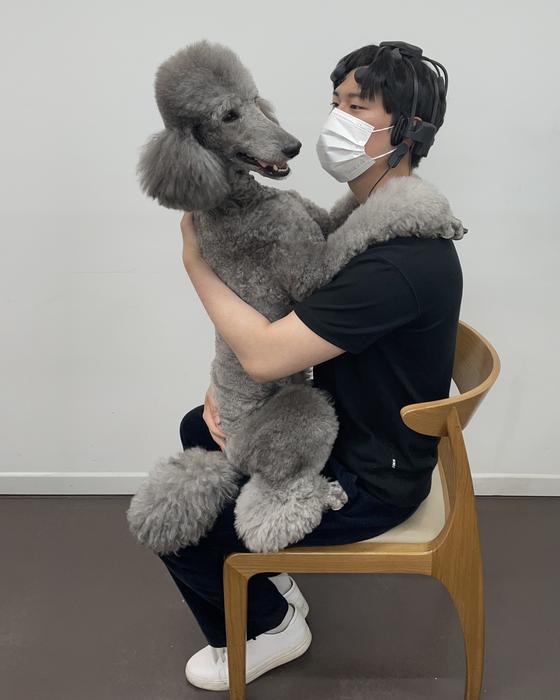
Spending quality time with dogs reduces stress and increases the power of brain waves associated with relaxation and concentration, according to a study published on March 13, 2024 in the open-access journal PLOS ONE by Onyoo Yoo from Konkuk University, South Korea, and colleagues.

An animal-assisted activity (hug) performed by a participant. Photo credit
Yoo et al., 2024, PLOS ONE, CC-BY 4.0

Animal-assisted interventions, like canine therapy, are widely used in hospitals, schools, and beyond to help reduce anxiety, relieve stress, and foster feelings of trust. Studies of the potential benefits of animal interactions often take a holistic approach, comparing people’s mood or hormone levels before and after spending time with a service animal. But this approach doesn’t differentiate between types of interactions, like grooming, feeding, or playing with an animal, limiting our understanding of how each specific interaction impacts a person’s health and well-being.

To better understand how such animal-related activities affect mood, Yoo and colleagues recruited a small sample of 30 adult participants to each perform eight different activities with a well-trained dog, such as playing with a hand-held toy, giving her treats, and taking pictures with her. Participants wore electroencephalography (EEG) electrodes to record electrical activity from the brain while they interacted with the dog, and they recorded their subjective emotional state immediately following each activity.

The relative strength of alpha-band oscillations in the brain increased while participants played with and walked the dog, reflecting a state of relaxed wakefulness. When grooming, gently massaging, or playing with the dog, relative beta-band oscillation strength increased, a boost typically linked to heightened concentration. Participants also reported feeling significantly less fatigued, depressed, and stressed after all dog-related activities.

While not all participants had pets of their own, their fondness for animals likely motivated their willingness to participate in the experiment, potentially biasing the results. Nonetheless, the authors state that the unique relationships between specific activities and their physiological effects could serve as a reference for programming targeted animal-assisted interventions in the future.

The authors add: “This study provides valuable information for elucidating the therapeutic effects and underlying mechanisms of animal-assisted interventions.”

Source: Eurekalert

Study Suggests Early-Life Exposure to Dogs May Lessen Risk of Developing Schizophrenia

Ever since humans domesticated the dog, the faithful, obedient and protective animal has provided its owner with companionship and emotional well-being. Now, a study from Johns Hopkins Medicine suggests that being around “man’s best friend” from an early age may have a health benefit as well — lessening the chance of developing schizophrenia as an adult.

And while Fido may help prevent that condition, the jury is still out on whether or not there’s any link, positive or negative, between being raised with Fluffy the cat and later developing either schizophrenia or bipolar disorder.

800 Toddler with Dog_Public Domain via Wikimedia Commons

A recent study by Johns Hopkins Medicine researchers suggests that exposure to pet dogs before the age of 13 may lessen the chance of developing schizophrenia later in life. Credit: Public domain via Wikimedia Commons


“Serious psychiatric disorders have been associated with alterations in the immune system linked to environmental exposures in early life, and since household pets are often among the first things with which children have close contact, it was logical for us to explore the possibilities of a connection between the two,” says Robert Yolken, M.D., chair of the Stanley Division of Pediatric Neurovirology and professor of neurovirology in pediatrics at the Johns Hopkins Children’s Center, and lead author of a research paper recently posted online in the journal PLOS One.

In the study, Yolken and colleagues at Sheppard Pratt Health System in Baltimore investigated the relationship between exposure to a household pet cat or dog during the first 12 years of life and a later diagnosis of schizophrenia or bipolar disorder. For schizophrenia, the researchers were surprised to see a statistically significant decrease in the risk of a person developing the disorder if exposed to a dog early in life. Across the entire age range studied, there was no significant link between dogs and bipolar disorder, or between cats and either psychiatric disorder.

The researchers caution that more studies are needed to confirm these findings, to search for the factors behind any strongly supported links, and to more precisely define the actual risks of developing psychiatric disorders from exposing infants and children under age 13 to pet cats and dogs.

According to the American Pet Products Association’s most recent National Pet Owners Survey, there are 94 million pet cats and 90 million pet dogs in the United States. Previous studies have identified early life exposures to pet cats and dogs as environmental factors that may alter the immune system through various means, including allergic responses, contact with zoonotic (animal) bacteria and viruses, changes in a home’s microbiome, and pet-induced stress reduction effects on human brain chemistry.

Some investigators, Yolken notes, suspect that this “immune modulation” may alter the risk of developing psychiatric disorders to which a person is genetically or otherwise predisposed.

In their current study, Yolken and colleagues looked at a population of 1,371 men and women between the ages of 18 and 65 that consisted of 396 people with schizophrenia, 381 with bipolar disorder and 594 controls. Information documented about each person included age, gender, race/ethnicity, place of birth and highest level of parental education (as a measure of socioeconomic status). Patients with schizophrenia and bipolar disorder were recruited from inpatient, day hospital and rehabilitation programs of Sheppard Pratt Health System. Control group members were recruited from the Baltimore area and were screened to rule out any current or past psychiatric disorders.

All study participants were asked if they had a household pet cat or dog or both during their first 12 years of life. Those who reported that a pet cat or dog was in their house when they were born were considered to be exposed to that animal since birth.

The relationship between the age of first household pet exposure and psychiatric diagnosis was defined using a statistical model that produces a hazard ratio — a measure over time of how often specific events (in this case, exposure to a household pet and development of a psychiatric disorder) happen in a study group compared to their frequency in a control group. A hazard ratio of 1 suggests no difference between groups, while a ratio greater than 1 indicates an increased likelihood of developing schizophrenia or bipolar disorder. Likewise, a ratio less than 1 shows a decreased chance.

Analyses were conducted for four age ranges: birth to 3, 4 to 5, 6 to 8 and 9 to 12.

Surprisingly, Yolken says, the findings suggests that people who are exposed to a pet dog before their 13th birthday are significantly less likely — as much as 24% — to be diagnosed later with schizophrenia.

“The largest apparent protective effect was found for children who had a household pet dog at birth or were first exposed after birth but before age 3,” he says.

Yolken adds that if it is assumed that the hazard ratio is an accurate reflection of relative risk, then some 840,000 cases of schizophrenia (24% of the 3.5 million people diagnosed with the disorder in the United States) might be prevented by pet dog exposure or other factors associated with pet dog exposure.

“There are several plausible explanations for this possible ‘protective’ effect from contact with dogs — perhaps something in the canine microbiome that gets passed to humans and bolsters the immune system against or subdues a genetic predisposition to schizophrenia,” Yolken says.

For bipolar disorder, the study results suggest there is no risk association, either positive or negative, with being around dogs as an infant or young child.

Overall for all ages examined, early exposure to pet cats was neutral as the study could not link felines with either an increased or decreased risk of developing schizophrenia or bipolar disorder.

“However, we did find a slightly increased risk of developing both disorders for those who were first in contact with cats between the ages of 9 and 12,” Yolken says. “This indicates that the time of exposure may be critical to whether or not it alters the risk.”

One example of a suspected pet-borne trigger for schizophrenia is the disease toxoplasmosis, a condition in which cats are the primary hosts of a parasite transmitted to humans via the animals’ feces. Pregnant women have been advised for years not to change cat litter boxes to eliminate the risk of the illness passing through the placenta to their fetuses and causing a miscarriage, stillbirth, or potentially, psychiatric disorders in a child born with the infection.

In a 2003 review paper, Yolken and colleague E. Fuller Torrey, M.D., associate director of research at the Stanley Medical Research Institute in Bethesda, Maryland, provided evidence from multiple epidemiological studies conducted since 1953 that showed there also is a statistical connection between a person exposed to the parasite that causes toxoplasmosis and an increased risk of developing schizophrenia. The researchers found that a large number of people in those studies who were diagnosed with serious psychiatric disorders, including schizophrenia, also had high levels of antibodies to the toxoplasmosis parasite.

Because of this finding and others like it, most research has focused on investigating a potential link between early exposure to cats and psychiatric disorder development. Yolken says the most recent study is among the first to consider contact with dogs as well.

“A better understanding of the mechanisms underlying the associations between pet exposure and psychiatric disorders would allow us to develop appropriate prevention and treatment strategies,” Yolken says.

Source:  John Hopkins Newsroom

Pets offer valuable support for owners with mental health problems

The body of research studying the value of pets in supporting mental health continues to grow.  A research team based at the University of Manchester published its results before Christmas, a study that involved 54 participants.

Said Helen Brooks, the lead researcher,

The people we spoke to through the course of this study felt their pet played a range of positive roles such as helping them to manage stigma associated with their mental health by providing acceptance without judgement

This YouTube video explains the research:

Awareness of the human-animal bond and how it impacts pet care

The Human Animal Bond Research Initiative (HABRI) Foundation partnered with Cohen Research Group to conduct an online survey of 2,000 pet owners, which had a margin of error of plus or minus 2.2%.

This is the first survey of its kind to explore how pet owners’ knowledge of the health benefits of the human-animal bond impacts pet care and welfare. The survey also looked for generational differences among pet owners on this subject.

img_0743

Key findings are as follows:

There is strong awareness of the health benefits of pet ownership

  • 71% of pet owners have heard about scientific research on the human-animal bond that demonstrates pet ownership can help improve physical or mental health in people
  • 88% of pet owners were aware that pets reduce stress
  • 86% of pet owners were aware that pets reduce depression
  • 84% of pet owners were aware that pets reduce anxiety
  • 81% of pet owners were aware that pets increase our sense of well-being
  • 80% of pet owners were aware that pets help with conditions like PTSD in war veterans
  • 68% of pet owners were aware that pets support healthy aging
  • 65% of pet owners were aware that pets help with conditions like autism
  • 60% of pet owners were aware that pets improve heart health
  • 56% of pet owners were aware that pets help with conditions like Alzheimer’s disease
  • 47% of pet owners were aware that pets support child cognitive development and reading skills
  • 45% of pet owners were aware that pets support classroom learning
  • 32% of pet owners were aware that pets help prevent child allergies

The majority of pet owners have personal experience with the health benefits of pets.

  • 74% of pet owners reported mental health improvements from pet ownership
  • 75% of pet owners reported a friend’s or family member’s mental health has improved from pet ownership
  • 54% of pet owners reported physical health improvements from pet ownership
  • 55% of pet owners reported a friend’s or family member’s physical health has improved from pet ownership
  • 83% of baby boomers and 82% of greatest/silent generations reported more personal experience with mental health improvements from pets than millennials (62%) and generation X (72%)

The more pet owners learn about scientific research on the benefits of the human-animal bond, the more likely they are to take actions to improve pet health.

When educated on the scientific research on the health benefits of pets:

  • 92% of pet owners are more likely to maintain their pet’s health, including keeping up with vaccines and preventative medicine
  • 89% of pet owners are more likely to take their pet to the vet for regular check-ups
  • 88% of pet owners are more likely to provide their pets with high-quality nutrition
  • 62% of pet owners are less likely to skip visits to the veterinarian
  • 51% of pet owners (78% of millennials) are more likely to purchase pet health insurance

Knowledge of the scientific research on the benefits of the human-animal bond improves animal welfare.

When educated on the scientific research on the health benefits of pets:

  • 89% of pet owners are more likely to take better care of their pets
  • 75% of pet owners are more likely to microchip a pet to ensure it can be found if lost or stolen
  • 74% of pet owners are less likely to give up a pet for any reason

In addition:

  • 77% of pet owners believe that pets benefit from the human-animal bond as much as people
  • 80% of pet owners who were aware of the health benefits of pets reported spending most of the day or a big part of their day with their pets, compared to 71% of pet owners who were unaware

Knowledge of the scientific research on the benefits of the human-animal bond boosts pet ownership.

When educated on the scientific research on the health benefits of pets:

  • 87% of pet owners are more likely to recommend a pet to a friend or family member
  • 81% of pet owners are more likely to get another pet in the future (if the one they have now passes away)
  • 49% of pet owners (74% of millennials) are more likely to get an additional pet
  • 57% of pet owners that currently reported having multiple pets are more likely to get yet another pet

Veterinarians are trusted resources for scientific information on the human health benefits of pets and have an opportunity to further strengthen their relationships with pet owners, especially millennials.

  • Virtually all pet owners (97%) have a favorable opinion of their veterinarian
  • 66% of pet owners (77% of millennials) would have a more favorable view of their veterinarian if they discussed the health benefits of the human-animal bond with them
  • 61% of pet owners (74% of millennials) would be more likely to visit their veterinarian if they discussed the health benefits of the human-animal bond with them
  • 25% of millennials always talk to their veterinarians about the health benefits of pet ownership, more than generation X (16%), baby boomers (6%), or greatest/silent generation (4%)

Doctors can also benefit from increased communication on the human-animal bond.

  • 88% of pet owners agree doctors and specialists should recommend pets to patients for healthier living
  • 65% of pet owners would have a more favorable view of a doctor who discussed the health benefits of the human-animal bond with them
  • 59% of pet owners would be more likely to visit a doctor who discussed the health benefits of the human-animal bond with them

Pet owners believe society should be more pet friendly and should act on the scientific research that shows pets improve human health.

  • 93% of pet owners agree the government should provide service animals to veterans with PTSD
  • 69% of pet owners (83% of millennials) agree the government should help make it more affordable to own a pet
  • 84% agree health and life insurance companies should give discounts for owning a pet
  • 87% would be more likely to buy products from pet-friendly businesses
  • 58% of pet owners (74% of millennials) agree employers should consider allowing employees to bring pets to work

Pets are family

  • 98% of pet owners agree that their pet is an important part of their family
  • 95% of pet owners could not imagine giving up their pet for any reason

Source:  HABRI