Tag Archives: nature

Scent detection dogs sniffing out a critically endangered orchid

Three spaniels, an orchid in hiding, and an innovative technique that could change how Saving our Species monitors elusive species.

Trying to save a species that’s hard to find is a problem many conservationists face. Imagine the challenge when a species spends most of its time lying dormant beneath the earth’s surface.

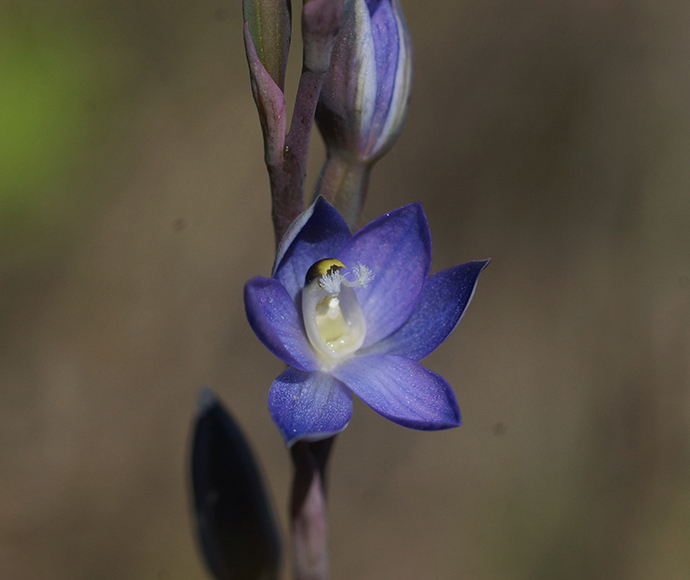
The critically endangered Wyong sun orchid (Thelymitra adorata) is one of these hidden species. It is hard to see unless it’s flowering, which makes monitoring a difficult task.

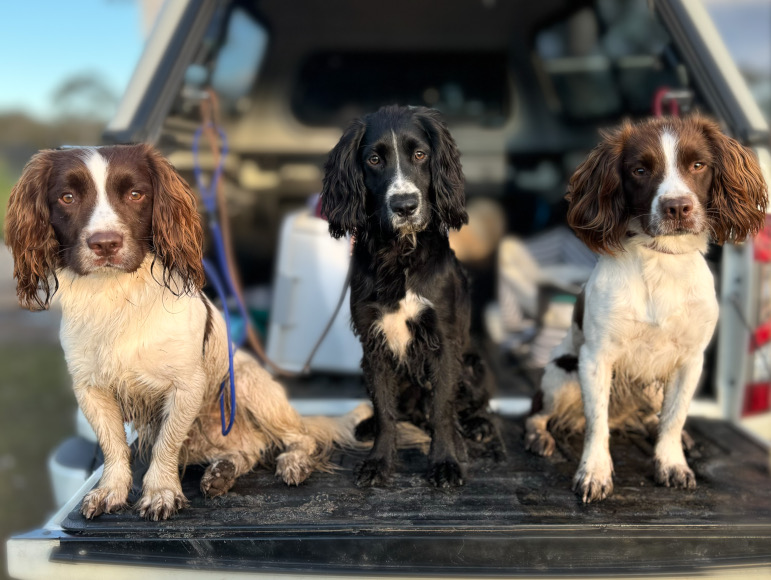
Three clever canines (Paddy, Sully and Vera) are being trained to use their strong sense of smell to help find this orchid. While the use of scent detection dogs is not new to conservation, this is the first time they have been used for Wyong sun orchid monitoring. It’s a trial that could mark the start of a game-changing method.
Hard-to-detect tubers

A tuber is a specialised plant stem that occurs underground, storing a lot of a plant’s nutrients. It exists in a type of hibernation mode. During this ‘resting’ phase, you could walk right over a tuber and never know it. When conditions above ground are favourable, a tuber will sprout and push through the soil, producing a plant that conservationists can finally see.

However, for the Wyong sun orchid’s tubers, the right conditions for emerging include the presence of fire (much like humans in winter). Imagine how much easier monitoring would be if conservationists could detect this plant without having to wait for these conditions.

A less invasive, innovative method

Thanks to a partnership between Saving our Species and dog training organisations On the Scent and The Good Dog, the team are one ‘sniff’ closer to detecting this species while it is sleeping.

‘If successful, this method may enable a year-round survey window, give greater certainty of survey results and assist in planning conservation actions, such as targeting areas for controlled burns’, said Paul Hillier, a senior regional conservation officer for Saving our Species.

‘Until now, the only way to find the Wyong sun orchid is by identifying the flower or leaf, whereas the dogs will attempt to find the plant by scenting the tubers under the ground in a minimally invasive way’, said Mel, owner and dog trainer, The Good Dog.

This unique partnership is expanding opportunities to conserve this critically endangered species, and if successful, may provide the basis for detecting other cryptic species in the future.

‘Both The Good Dog and On the Scent believe that supporting threatened species conservation is important to ensure they remain and repopulate in their habitat for years to come and don’t become just another item added to the extinction list’, said Philly, owner and dog trainer, On the Scent Canine Detection.
The project is also in collaboration with Australian Botanic Garden Mount Annan and Central Coast Council.

Source: NSW Environment and Heritage

Toxic algae warnings – an enduring message

New Zealand is in the heart of its summer season with record-breaking temperatures in many regions. Not surprisingly, dogs will want to go swimming to cool off.

Each summer, we have warnings about toxic algae and how it can kill your dog.  I first wrote about this subject over 10 years ago, in 2013, for NZ Dog World magazine. This post updates the original.


Photo courtesy of Susie Wood, Cawthron Institute

There’s a deadly toxin lurking in many of New Zealand’s rivers and lakes.  The savvy dog owner needs to understand it so you can protect your dog.

That toxin is produced naturally by blue-green algae, or cyanobacteria.  ‘Blue-green algae have existed on earth for millions of years,’ says Mark Heath, a researcher whose PhD thesis focused on why algal blooms form in rivers.  ‘However, it is human-induced changes to the environment that have created the ideal situations for the algae to flourish’.

‘We know that the algae have optimal growing conditions during the summer months, when there has been a stable period of little to no rainfall and warm conditions,’ says Susie Wood, Heath’s supervisor and a researcher at the Cawthron Institute‘Nutrients, which are often increased in waterways by land–use intensification, act as the algae’s food source and climate change means longer periods of little rainfall and warm temperatures.’

The algal mats float to the surface and collect on the margins of rivers and in stagnant pools of water.  Dogs are attracted to the earthy smell of the algae and they will readily lick or eat it.  The algae exude a powerful neurotoxin and only a small amount is enough to cause a dog to become ill and die.

Symptoms may include panting, twitching, convulsions, muscle tremors and lethargy.  There is no antidote to the poison and so if you suspect your dog has ingested the toxin, you need to rush to the nearest vet to have its stomach pumped and have activated charcoal administered.  Since the toxin is very fast-acting (some dogs die within 30 minutes of ingestion), prevention is the better course of action.

Dog owners need to be able to ‘spot’ the algae, which often is a dark green/brown to black colour as seen in the photo.  These mats have a velvety texture and a musky smell. If there has been a period of about two weeks without rainfall (which induces ‘flushing flows’ in rivers), then you should assume that conditions are ideal for the algae.  Walking a dog on lead is advised so you can keep a close watch on what your dog takes an interest in. ”If in doubt, keep them out.”

Vets should report a dog death to the regional council but reporting is not mandatory, meaning that many cases are likely to go unreported.

Rivers known for algal blooms include the Hutt River (Wellington region), the Selwyn and Ashley rivers (Canterbury region) and the Tukituki River (Hawke’s Bay).  The algae can also form in lakes which act as a sink for nutrient-enriched waters. In lakes, ponds, and lagoons, the algae is likely to be present if the water is cloudy or discoloured or has scums or small globules suspended in the water.

Dog owners should familiarise themselves with their regional council’s website for algal blooms in their area.

Toxic algae is such a prominent issue in Canterbury that the regional council has published an If In Doubt, Keep them Out brochure this year that is available through your veterinarian.

Kathleen Crisley, Fear-Free certified professional and specialist in dog massage, rehabilitation and canine fitness,  The Balanced Dog, Christchurch, New Zealand

Dogs give friends food (prosocial behavior in dogs)

A readiness to help and a positive attitude toward others are considered foundations of human relationships and human cooperation. But not only humans cooperate and support each other, animals do so, too. A group of ethologists from the Messerli Research Institute at the Vetmeduni Vienna have shown for the first time that dogs also behave prosocially toward others – provided that they know the other dog. The results were published in Nature’s Scientific Reports.

Compared to the rest of the animal kingdom, the human capacity for cooperation is something quite special. Cooperating with one another requires a certain amount of prosocial behaviour. This means helping others without any direct personal benefit.

“Dogs and their nearest relatives, the wolves, exhibit social and cooperative behaviour, so there are grounds to assume that these animals also behave prosocially toward conspecifics. Additionally, over thousands of years of domestication, dogs were selected for special social skills,” explains study director Range. For this reason, Range and her colleagues Mylene Quervel-Chaumette, Rachel Dale and Sarah Marshall-Pescini studied 16 dogs to test their readiness to benefit familiar versus unfamiliar partners.

The researchers studied the prosocial behaviour of the animals using a bar-pulling task in which the dogs had to pull trays and decide whether a second dog would receive a treat or not. In the test, the donor dogs used their mouths to pull a string to bring a tray toward a second dog. They could choose either an empty tray or a tray containing a treat on the partner’s side.

The donor dog (right) can pull a tray and donate food to the receiver-dog (left). (Photo: Mylène Quervel-Chaumette/Vetmeduni Vienna)

The donor dog (right) can pull a tray and donate food to the receiver-dog (left). (Photo: Mylène Quervel-Chaumette/Vetmeduni Vienna)

Dogs donate to familiar partners more often than to unfamiliar ones

Whether the donor dogs knew the recipient made a difference. Donor dogs pulled the giving tray more often for familiar dogs than for unfamiliar ones. “Dogs truly behave prosocially toward other dogs. That had never been experimentally demonstrated before. What we also found was that the degree of familiarity among the dogs further influenced this behaviour. Prosocial behaviour was exhibited less frequently toward unfamiliar dogs than toward familiar ones.

Prosocial behaviour put to the test

In the bar-pulling task, the donor dogs decided whether another dog would receive a treat or not. The donor dog itself did not get the treat. The only purpose of the task was to benefit the other dog. By conducting several control tests, the researchers excluded the possibility that the dogs were simply pulling the trays for the fun of it. Donor dogs were reserved in pulling the tray when an unfamiliar dog was in the next enclosure.

At the end of each test run, the researchers conducted another test to show that the donor dogs knew what pulling the tray meant. They allowed the donor dogs to pull on a tray to give themselves a treat, and all dogs did just that. “This control excludes the possibility that the dogs did not pull on the tray out of fear of the unfamiliar dogs. Given the same situation, the dogs gladly gave themselves a treat,” says Range.

“We were also able to disprove the argument that the dogs pulled the string less frequently because they were distracted by the unfamiliar partner during the test. Only rarely did a donor dog interact with the unfamiliar dog,” Range explains.

Source:   Vetmeduni Vienna media release

Christmas skijor anyone?

For those in the northern hemisphere, Christmas is a winter holiday and why not enjoy it with your dog?  Skijoring is a winter sport where a cross-country skier is drawn across the snow pulled by their dog.  In some cases, skiers will skijor with more than one dog.  In Norwegian, the term literally means ‘ski driving.’

Breeds like Huskies, Malamutes and Samoyeds are obvious choices for this sport, where the owner and dog get their exercise together.  However Pointers and Pointer crosses are also good sled dogs (Daisy likes that idea – although at her advanced age she will be a spectator only).

Skiing with dogs 2 Skiing with dogs 3 Skiing with dogs

In this sport, the cross-country skier provides power with skis and poles, and the dog adds additional power by running and pulling. The skier wears a skijoring harness, the dog wears a sled dog harness, and the two are connected by a length of rope. There are specialist suppliers of skijor equipment to get you started.

Of course, careful winter paw care is needed and some dogs may be fitted with protective footwear for the sport.

Christmas skijor anyone?

Lessons from a Freethinking Dog

I have just finished reading Merle’s Door (Lessons from a Freethinking Dog) by Ted Kerasote.  This book was published in 2007 and became a national bestseller.  That’s not a surprise.

Mr Kerasote is an accomplished author.  He has written for publications including National Geographic, the New York Times, and Science.  And he has other books to his name.

Merle’s Door, however, has to be one of Mr Kerasote’s top literary accomplishments and something that will be remembered as a hallmark of his writing career.  Buy it (don’t just download it into your Kindle).

Merle’s Door is a biography of Merle, a dog adopted by Kerasote when they met totally by accident in 1991.  Merle was ‘living rough’ in the Utah desert and Ted was on one of his many trips with friends to enjoy nature.

“You need a dog, and  I’m it” says Merle.  And so begins a lifetime of 13 years together where Ted learns to translate Merle’s thoughts, to give him free reign to learn about life and his surroundings and, in turn, Ted learns many things from Merle.

Using his dog door and the freedom that Ted allowed him, Merle becomes the unofficial mayor of Kelly, Wyoming and makes many friends.  Along the way Ted establishes a ‘dedicated quadruped couch’ in his house and Merle leaves lasting footprints in the varnish of the balcony of the house they built together (and where Kerasote still lives).

Merle’s Door is Merle’s biography.  Lovingly written by Ted, we learn about Merle’s trademark “Ha ha ha” as he would converse with Ted in a language all his own.  He’d go hunting for elk, but was gun-shy when hunting birds  (and we find out why later in the book).  He has his scraps with other dogs and comes out learning valuable life lessons.

Later in life, Merle’s back end starts to deteriorate and Ted employs the use of acupuncture and massage to help his dog recover (no wonder why I like this book!).  With respect, he lets Merle define what will be a good day and a bad day and they enjoy one another’s company to the end.

Mr Kerasote does a wonderful job in depicting the human-dog bond that so many of us dog lovers have appreciated in our lives.  And he does it with the flair of an accomplished writer.

Like all true dog stories, be prepared for the end of Merle’s life in 2004 which is  obviously written by someone who has lived through the last days of their dog’s life.  Have a box of tissues handy – you’ll need it.  (I did)

This is a book I intend on keeping and adding to my dog book collection.  I’m grateful for Mr Kerasote’s writing talent because, not only is this Merle’s story, but it is well referenced with footnotes to key pieces of dog research (15 pages of references in total).

Through Mr Kerasote’s writing, Merle’s story lives on for all of us to share.  A wonderful dog that walked this earth for almost 14 years and left pawprints on many hearts….


