Tag Archives: news

War Came to Ukraine and Its Dogs Are Not the Same

Four years ago, there were heartbreaking photos of Ukrainians fleeing their country, some with their dogs on leash, in prams, and in backpacks. Many dogs were not so lucky.

Now, there is new research to show how the dog population has changed in just those four short years. A kind of natural selection, expedited by the impacts of living in a war zone. Small dogs survive because they are less likely to trigger land mines, there’s less body mass to be impacted by shrapnel and they are more able to hide in confined spaces. Troops and researchers alike report the impacts of ongoing fear, anxiety and stress in the dogs – the trauma of living in a war zone when once they were a loved pet.

Below I share this New York Times piece in its entirety to spread the word that wars are environmental disasters which are entirely man made…


The human cost of the war in Ukraine has been well documented. But Russia’s invasion is also affecting the country’s pets in surprising ways.

In a study published in December 2025, in the journal Evolutionary Applications, a group of researchers found that exposure to the conflict in Ukraine had, in a short period, transformed dogs that were formerly pets into the kind of dogs found in more wild environments.

Scientists gathered a variety of data from 763 dogs across nine regions of Ukraine. The team worked with animal shelters, while veterinarians and volunteers gathered data from stray dogs in potentially safe areas and, sometimes, areas designated as dangerous territories.

But gathering data on the front line was more difficult. That work was led by Ihor Dykyy, a zoologist at the Ivan Franko National University of Lviv. Dr. Dykyy served on the front line — near the city of Lyman in the Donetsk region, and later close to Kharkhiv near the border with Russia — for two years starting in 2022 as a volunteer with the Ukrainian Armed Forces.

“Many stray dogs lived with us in the village of Zarichne,” Dr. Dykyy remembered. “They were terrified by the hostilities; some suffered from shell shock. One small dog had a broken leg that hadn’t healed properly, leaving it with a permanent limp. Another was blind in one eye, having lost it in an explosion.”

Dr. Dykyy and his fellow soldiers “fed all of them, gave them shelter and provided medical care whenever possible,” he said.

Although the research focused on domestic dogs, many were no longer under the care of their owners, and were living as strays.

“From the beginning of the war, we saw a very sad situation with pets in Ukraine,” said Mariia Martsiv, who was the paper’s lead author and is a zoologist at the University of Lviv. “Some people took their pets with them, but some were simply left at train stations or left behind in the occupied territories.”
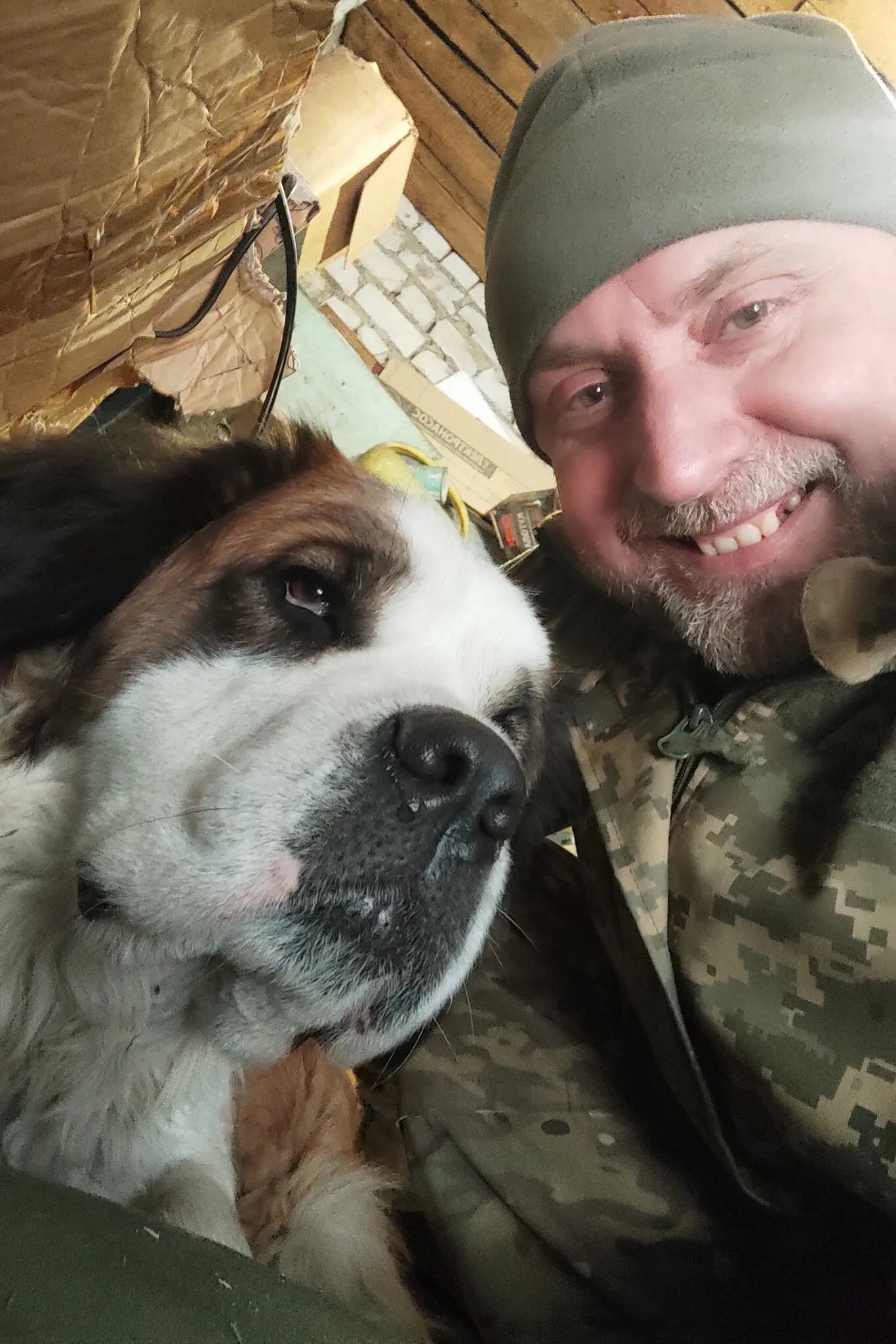
Ihor Dykyy, a zoologist at the Ivan Franko National University of Lviv, with Linda, a Saint Bernard who perished from a vehicle strike. Photo credit: Ihor Dykyy

Most of the team’s findings suggested that dogs on the front line, in a remarkably short period of time, had become more like wild dog species, such as wolves, coyotes or dingoes.

Examples of the transformation abounded in the data: The frontline dogs rarely had snouts that were either short like a French bulldog’s or elongated like a dachshund’s. Many also had reduced body mass. Even their ears took on a different shape, with pointed ears more frequent than floppy ears.

“On the front lines, dogs with signs of a ‘wild’ phenotype do indeed survive more often: straight ears, straight tail, less white,” Dr. Martsiv wrote in an email.

“War acts as a powerful filter, favoring traits that improve survival under extreme conditions,” said Małgorzata Witek, an author of the study and a doctoral student at the University of Gdansk in Poland.

Other characteristics more commonly associated with wild dog species were found in Ukraine’s conflict zones: There were fewer old, ill and injured dogs, and dogs on the front line were more likely to be found living in groups.

“What surprised us most was how quickly these changes appeared,” Ms. Witek said. “The war had been ongoing for a relatively short time, yet the differences between frontline dogs and other populations were already very pronounced.”

But the scientists did not want their findings interpreted as war-fueled accelerated evolution.

“The changes we observe in dogs are happening too quickly to be explained by molecular evolution,” Ms. Witek said.

What’s really happening is that the conditions of war favor animals that have certain characteristics. For example, a dog with less body mass is less likely to trigger land mines and more able to hide in confined spaces, and presents a smaller target for shrapnel.

Despite evidence of apparently wild personality traits and physical characteristics, most of the dogs remained dependent on humans for food, only supplementing their diet with plants and occasional hunting. At times, dogs survived by scavenging the bodies of fallen soldiers. Some were adopted by Ukrainian troops.

But the scientists did observe some dogs on the front line that no longer depended on people for their survival.

“This can be considered as feralization, a return to living independent of humans,” said Małgorzata Pilot, leader of the project and a biologist at the University of Gdansk.

While the study was restricted to dogs, it raises questions about the broader implications of environmental damage caused by war.

“Evidence that dogs are being strongly negatively affected by the horrors of war should serve as an alarm for other species that are far less mobile and more restricted in their diets and habitat requirements,” said Euan Ritchie, a wildlife ecologist at Deakin University in Australia who was not involved in the project.

Or as Dr. Pilot put it, “Wars are not only humanitarian crises. They are also environmental disasters.”

Source: Anthony Ham, New York Times
The benefits and importance of fostering

I have been giving a lot of thought lately to the issue of fostering.

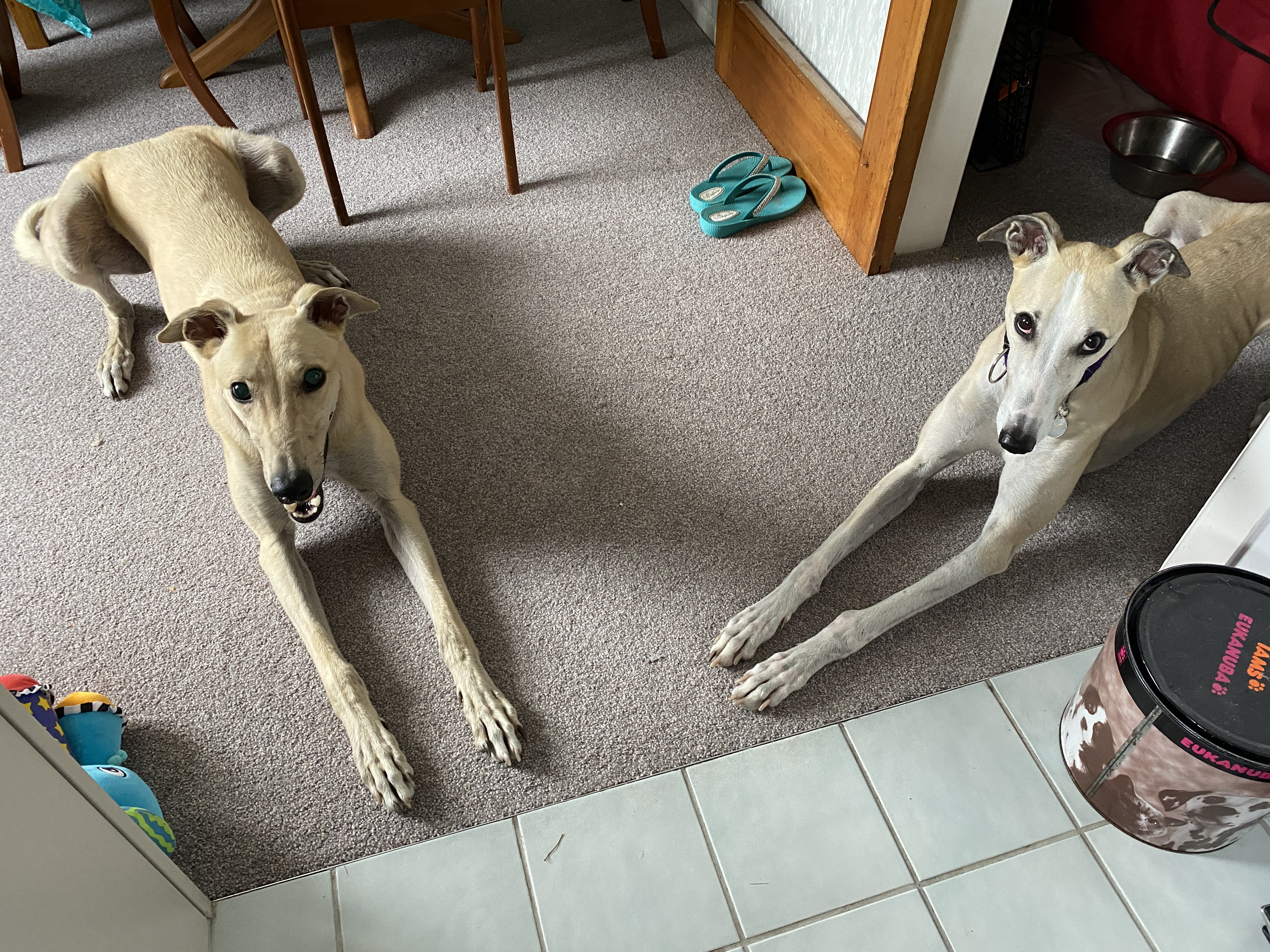
This time last year, Sox and I were fostering blind greyhound, Fred, who was adopted in mid-February and has settled well into a loving forever home. New Zealand has always had a homeless pet population – you don’t have to look far to find an adoption group (or two, three, or more) that operate in your area. And now, with a greyhound racing ban confirmed, our country has the responsibility to re-home the 2,900 hounds that the industry says it has it in its possession.

Fostering is the gift of life for dogs needing homes; it also has many benefits for the foster carer and the adoption agency.

Benefits of fostering

  • Fostering frees up space in shelters/kennels for another dog in need
  • For the fostered dog, it gives them a chance to de-compress (kennels keep dogs safe and fed, but they can also be noisy and negatively reinforcing – think of having roommates that you really wish would leave!)
  • For some dogs, they simply can’t cope in a shelter or kennel environment and these special dogs need to be cared for in a home before they are damaged from long-term kenneling
  • A fostered dog benefits from one-on-one attention and, if the foster carer/family own a dog (and/or other pets), then the fostered dog has the opportunity to learn the ‘house rules’ and how to interact with other companion animals
  • Fostered dogs often need to learn skills such as toilet training, walking on lead, and basic skills like wait, leave, and down (depending on the skills of the foster carer and the dog, of course) – a dog with life skills is less likely to have a failed adoption (returned to the adoption group)
  • Re-homing and adoption groups benefit from feedback from their foster carers; they learn about a dog’s likes and dislikes, behaviour, and areas for training – all of which enable them to give clearer information and support to adopters and to make a good and lasting match
  • Re-homing and adoption groups also benefit from the enthusiasm of their foster carers, who can help publicise the adoption group simply by taking the dog out for walks, promoting the dogs on their social media, and acting generally as a partner for the re-homing effort
  • An experienced foster carer is worth their weight in gold for the adoption groups they work with; some carers offer specialised skills that adoption groups often cannot afford to access on a commercial basis
  • For carers, fostering gives you the joy of companionship without necessarily the commitment of full-time ownership
  • There is huge satisfaction to be gained from giving a dog a second chance; the emotional reward is hard to describe

Setting expectations and standards

To be successful, fostering works best when the adoption agency and the foster carer are clear about expectations and standards. If the adoption agency isn’t clear about boundaries, it’s hard for the foster carer to know what a good job in fostering looks like.

Questions to ask if you are interested in fostering

Ask yourself why you want to foster – and be honest.

Most people I meet have the best of intentions to foster but can be emotionally unprepared for the experience. A foster dog is not your pet; some attachment to your foster dog is expected – it’s easy to bond with a dog in your care as you learn their personality. Some positive self-talk is a good idea – remind yourself that at some point you will need to farewell the dog, knowing that you gave them a head start for pet life.

What type of dog are you qualified to handle?

If you have breed-specific experience, it’s best to consider offering your skills to a breed-specific rescue group.

In more general terms, most previous dog owners will have experience with adult dogs; puppies are typically fostered only by those with puppy experience (and the availability to monitor them more closely throughout the day). If a dog has special needs such as behaviour issues or mobility or other physical impairments, then they will ideally need a special foster carer with some experience in these areas.

What support can you expect as a foster carer?

Most adoption groups will supply the basics for their foster carers: dog food, leash, collar, crate and bed.

Ask what process to follow if the dog is unwell and needs veterinary care, for example.

If you are experiencing behaviour problems and want to talk through training, what assistance is available? Some adoption groups have a dedicated person who will follow up with foster carers just to see how things are going – if this isn’t possible in your area, is there someone else you can bounce ideas off of?

All adoption agencies should be prepared to give you background on your foster dog. Some agencies will, of course, have very little information on the dogs that come into care. Others will have more information.

Foster agreements should be in writing

Agreements with a foster carer should be in writing and set out the responsibilities of each party; every adoption group should act as a business in this regard.

If foster carers are expected to be available for certain weekend adoption events, for example, then these should be clarified in the agreement.

Foster carers should be dealt with respect and, even if they are not being paid for their services, their in-kind time and efforts should be recognised as if the person was an employee. There should be no bullying, harassment or discrimination and the foster carer should have an avenue outlined in the agreement if a problem requires escalation. If the adoption agency has concerns about a foster carer’s competence or performance, then the agreement should outline how such situations will be handled.

What if you can’t manage it (for whatever reason)?

Life can throw us curve balls. Your situation may change. Perhaps the dog is higher needs than you anticipated and you are not coping; perhaps you are ill; perhaps there’s a family emergency. If you can’t manage to see your foster commitment through, then the foster agreement should outline the process to follow to return your foster dog. Depending on the circumstances, you should de-brief with your adoption agency, particularly if you’d like to foster again in the future.

Make a lifetime commitment only when it is right for you both

It’s natural to form a bond with your foster dog; affection for the dog is normal. After all, you are caring for a sentient creature who needs your help and who is living in your home…

While some dogs end up as ‘foster failures’, you must be sure that you can make the lifetime commitment to your foster dog if you are considering adopting them. Can you afford their care? Do you permanently have the time and space to give the dog its best pet life?

Note: If your intention is to add a dog to your home, ask your adoption agency about a ‘foster to adopt’ arrangement which means that you are providing foster care for the purpose of taking the dog on trial.

Fostering a dog in need can be one of the most rewarding experiences of your life.

If you are interested in fostering, please contact your local adoption groups for information on their needs – most will publish information on their website to get you started.

Kathleen Crisley, is Fear-Free certified dog massage therapist and canine fitness trainer. She has a particular passion for working with dogs and their families to ensure injury prevention and quality of life. She specialises in working with anxious and emotionally damaged dogs. Her mobile practice, The Balanced Dog, is based in Christchurch, New Zealand.

The dog effect – what’s a dog story worth for newspaper readership?

A new journal article in PS:  Political Science and Politics outlines research done in tracking coverage of news stories in regional newspapers.
The researchers found that by mentioning a dog in the news story, more people are likely to read the news item and increase readership of that issue of the newspaper.
It’s called the ‘dog effect.’
I’ve included the Abstract and the full journal citation below, but you will have to pay to read the entire article if you are not a subscriber to the journal…
Since I love to blog about news involving dogs, this research doesn’t come as a big surprise to me.
There are dog lovers throughout the world and we love to read about dogs!

Kathleen Crisley, specialist in dog massage, rehabilitation and nutrition/food therapy, Canine Catering Ltd, Christchurch, New Zealand

ABSTRACT

Journalists consider the importance of events and the audience’s interest in them when deciding on which events to report. Events most likely to be reported are those that are both important and can capture the audience’s interest. In turn, the public is most likely to become aware of important news when some aspect of the story piques their interest. We suggest an efficacious means of drawing public attention to important news stories: dogs. Examining the national news agenda of 10 regional newspapers relative to that of the New York Times, we evaluated the effect of having a dog in a news event on the likelihood that the event is reported in regional newspapers. The “dog effect” is approximately equivalent to the effect of whether a story warrants front- or back-page national news coverage in the New York Times. Thus, we conclude that dogs are an important factor in news decisions.

 What’s a Dog Story Worth?
Matthew D. Atkinson,Maria Deam and Joseph E. Uscinski (2014).
PS: Political Science & Politics,
“>Volume 47
, Issue04, October 2014 pp 819-823http://journals.cambridge.org/action/displayAbstract?aid=9365716


