I saw this Brad Pitt film yesterday with a friend. It is a classic Man and Dog film, paying homage to the human-animal bond in context of a dramatic survival story.
Brad Pitt is retired Special Forces officer James Belmont, who is camping in Alaska with his retired German Shepherd combat dog, Odin – a tripod who wears a prosthetic leg. As Belmont flies his small plane out of their Alaskan campsite, he suffers a heart attack and crashes the plane. Miles from nowhere, Odin and James start a long trek to civilisation using their honed military skills.
Filmed in New Zealand, it’s well worth seeing the film on the big screen to appreciate our country’s natural beauty. For those watching from elsewhere, the bear and wolves that threaten the main characters are special effects. You can safely come to New Zealand without fear of encountering these wild animals.
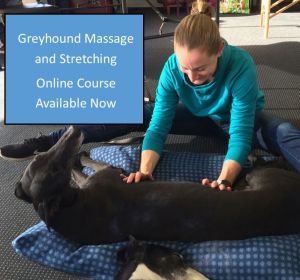
One of the best scenes in this film is when James massages Odin’s stump. Managing a tripod means paying a little extra attention to their comfort and mobility – and it shows the care and love he has for his dog.
Also of note – both Belmont and Odin suffer from PTSD with flashback scenes that are confronting. Let’s remember the harm that war does to those who fight it – particularly in these trying times.
You can safely watch this film as a dog lover – Odin doesn’t die which is something you learn in the opening scene. It’s not a relaxing film, however. You’ll be on tenterhooks throughout as Odin and James fight to survive.
For those of you with tripods – Odin’s character helps us celebrate the resilience of these special dogs. And for those of you who are nature lovers, I hope you will travel to New Zealand to see our country firsthand. God knows we need the tourist income!
Kathleen Crisley is Fear-Free certified dog massage therapist and canine fitness trainer. She has a particular passion for working with dogs and their families to ensure injury prevention and quality of life. She specialises in working with anxious and emotionally damaged dogs. Her mobile practice, The Balanced Dog, is based in Christchurch, New Zealand
Four years ago, there were heartbreaking photos of Ukrainians fleeing their country, some with their dogs on leash, in prams, and in backpacks. Many dogs were not so lucky.
Now, there is new research to show how the dog population has changed in just those four short years. A kind of natural selection, expedited by the impacts of living in a war zone. Small dogs survive because they are less likely to trigger land mines, there’s less body mass to be impacted by shrapnel and they are more able to hide in confined spaces. Troops and researchers alike report the impacts of ongoing fear, anxiety and stress in the dogs – the trauma of living in a war zone when once they were a loved pet.
Below I share this New York Times piece in its entirety to spread the word that wars are environmental disasters which are entirely man made…
The human cost of the war in Ukraine has been well documented. But Russia’s invasion is also affecting the country’s pets in surprising ways.
In a study published in December 2025, in the journal Evolutionary Applications, a group of researchers found that exposure to the conflict in Ukraine had, in a short period, transformed dogs that were formerly pets into the kind of dogs found in more wild environments.
Scientists gathered a variety of data from 763 dogs across nine regions of Ukraine. The team worked with animal shelters, while veterinarians and volunteers gathered data from stray dogs in potentially safe areas and, sometimes, areas designated as dangerous territories.
But gathering data on the front line was more difficult. That work was led by Ihor Dykyy, a zoologist at the Ivan Franko National University of Lviv. Dr. Dykyy served on the front line — near the city of Lyman in the Donetsk region, and later close to Kharkhiv near the border with Russia — for two years starting in 2022 as a volunteer with the Ukrainian Armed Forces.
“Many stray dogs lived with us in the village of Zarichne,” Dr. Dykyy remembered. “They were terrified by the hostilities; some suffered from shell shock. One small dog had a broken leg that hadn’t healed properly, leaving it with a permanent limp. Another was blind in one eye, having lost it in an explosion.”
Dr. Dykyy and his fellow soldiers “fed all of them, gave them shelter and provided medical care whenever possible,” he said.
Although the research focused on domestic dogs, many were no longer under the care of their owners, and were living as strays.
“From the beginning of the war, we saw a very sad situation with pets in Ukraine,” said Mariia Martsiv, who was the paper’s lead author and is a zoologist at the University of Lviv. “Some people took their pets with them, but some were simply left at train stations or left behind in the occupied territories.”
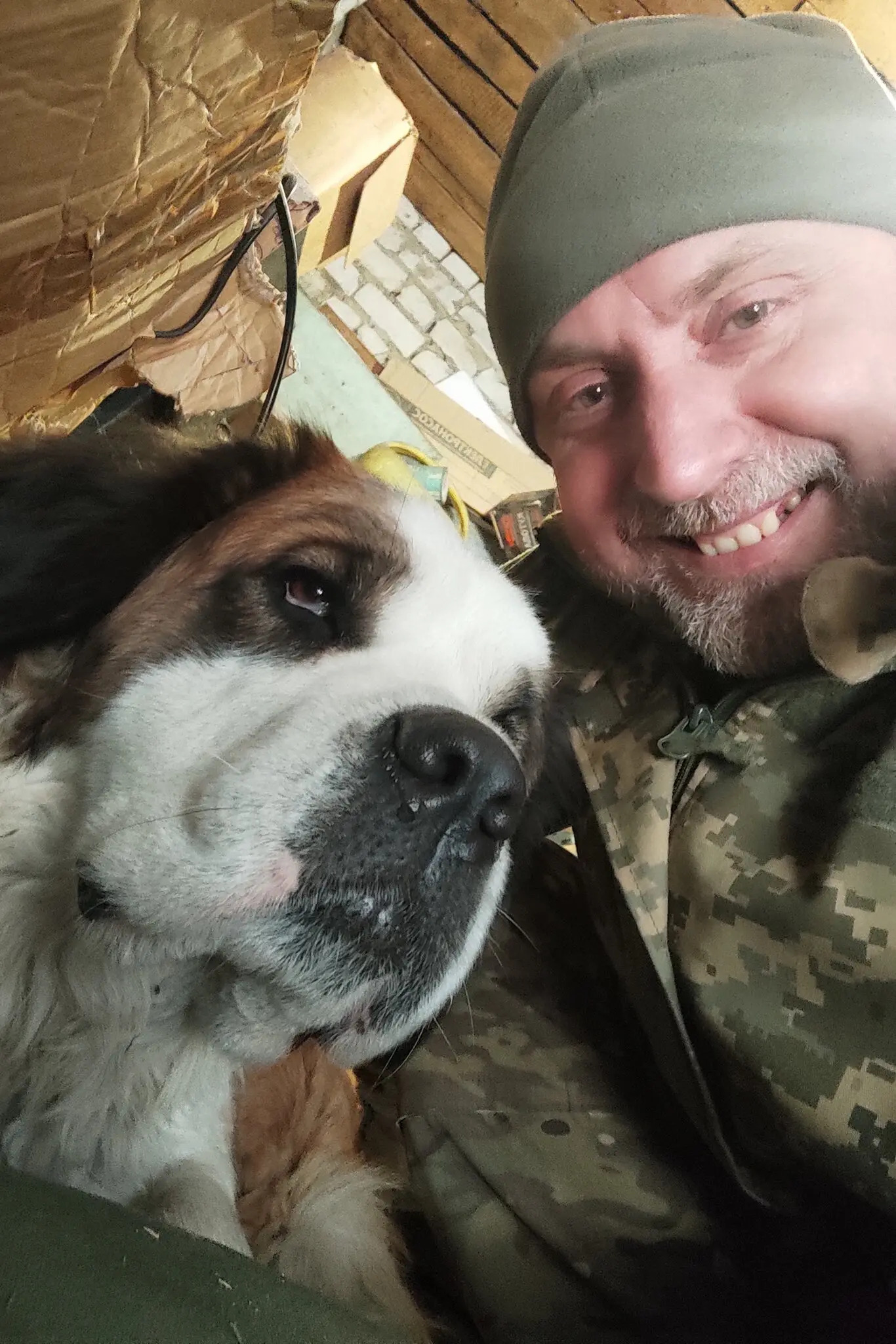
Ihor Dykyy, a zoologist at the Ivan Franko National University of Lviv, with Linda, a Saint Bernard who perished from a vehicle strike. Photo credit: Ihor Dykyy
Most of the team’s findings suggested that dogs on the front line, in a remarkably short period of time, had become more like wild dog species, such as wolves, coyotes or dingoes.
Examples of the transformation abounded in the data: The frontline dogs rarely had snouts that were either short like a French bulldog’s or elongated like a dachshund’s. Many also had reduced body mass. Even their ears took on a different shape, with pointed ears more frequent than floppy ears.
“On the front lines, dogs with signs of a ‘wild’ phenotype do indeed survive more often: straight ears, straight tail, less white,” Dr. Martsiv wrote in an email.
“War acts as a powerful filter, favoring traits that improve survival under extreme conditions,” said Małgorzata Witek, an author of the study and a doctoral student at the University of Gdansk in Poland.
Other characteristics more commonly associated with wild dog species were found in Ukraine’s conflict zones: There were fewer old, ill and injured dogs, and dogs on the front line were more likely to be found living in groups.
“What surprised us most was how quickly these changes appeared,” Ms. Witek said. “The war had been ongoing for a relatively short time, yet the differences between frontline dogs and other populations were already very pronounced.”
But the scientists did not want their findings interpreted as war-fueled accelerated evolution.
“The changes we observe in dogs are happening too quickly to be explained by molecular evolution,” Ms. Witek said.
What’s really happening is that the conditions of war favor animals that have certain characteristics. For example, a dog with less body mass is less likely to trigger land mines and more able to hide in confined spaces, and presents a smaller target for shrapnel.
Despite evidence of apparently wild personality traits and physical characteristics, most of the dogs remained dependent on humans for food, only supplementing their diet with plants and occasional hunting. At times, dogs survived by scavenging the bodies of fallen soldiers. Some were adopted by Ukrainian troops.
But the scientists did observe some dogs on the front line that no longer depended on people for their survival.
“This can be considered as feralization, a return to living independent of humans,” said Małgorzata Pilot, leader of the project and a biologist at the University of Gdansk.
While the study was restricted to dogs, it raises questions about the broader implications of environmental damage caused by war.
“Evidence that dogs are being strongly negatively affected by the horrors of war should serve as an alarm for other species that are far less mobile and more restricted in their diets and habitat requirements,” said Euan Ritchie, a wildlife ecologist at Deakin University in Australia who was not involved in the project.
Or as Dr. Pilot put it, “Wars are not only humanitarian crises. They are also environmental disasters.”