Tag Archives: nutrition

Fresh dog food supports healthier aging in seniors

This first-of-its-kind study found that feeding dogs food from The Farmer’s Dog can impact metabolic health and support healthier aging in dogs. ChristianaT | Pixabay.com

A year-long metabolomic study led by Dr. Heather Huson, associate professor of animal sciences at Cornell University, found that feeding dogs fresh, human-grade food can impact metabolic health and support healthier aging. The research, conducted with board-certified veterinary nutritionists employed by The Farmer’s Dog, analyzed the effects of fresh, minimally processed recipes versus kibble in 22 senior Alaskan sled dogs.

Results showed dogs fed The Farmer’s Dog fresh food experienced a rapid and sustained metabolic shift after just one month, marked by lower levels of advanced glycation end products (AGEs) – harmful compounds linked to aging and chronic disease. These dogs also showed reduced sucrose and 1,5-anhydroglucitol (a glycemic control biomarker), and notably lower concentrations of specific AGEs such as N6-carboxymethyllysine and pyrraline.

“For years, people have been telling us their dogs are thriving on fresh diets like The Farmer’s Dog, and this study finally shows what’s happening beneath the surface — a significant metabolic transformation,” said Jonathan Regev, co-founder and CEO of The Farmer’s Dog. “The gap between highly processed pet foods and minimally processed real food may be even wider than we imagined, and could redefine what’s possible for canine health and longevity.”

Additional findings include higher levels of ergothioneine, a potent antioxidant compound, as well as elevated levels of carnosine and anserine (histidine-related metabolites with antioxidant properties). These shifts suggest increased antioxidant capacity and reduced oxidative stress.

Dogs demonstrated elevated branched-chain amino acid (BCAA) metabolism, with increased levels of leucine, isoleucine, and valine and their derivatives. They also showed higher levels of glycerol and glycerol-3-phosphate (markers of lipolysis), alongside increased long-chain omega-3 fatty acids — including alpha-linolenic acid (ALA), eicosapentaenoate (EPA), docosapentaenoate (DPA), and docosahexaenoate (DHA). Serum 3-hydroxybutyrate (BHBA), a ketone body, rose reflecting enhanced fat utilization and healthy ketosis.

Malonate, a marker of fatty acid synthesis, was decreased in the fresh food group, suggesting a more efficient metabolic profile compared to the kibble-fed group.

“The magnitude and consistency of the metabolic impacts we observed were quick, sustained and striking,” said Dr. Joseph Wakshlag, DVM, PhD, DACVSMR, DACVIM (Nutrition), one of the board-certified veterinary nutritionists who was involved in the study. 

“Fresh, minimally processed food shifted the dogs’ metabolism toward a beneficial alternative metabolic profile in the aging dog with markers for improved muscle and neurological health along with implications for improved antioxidant defense, and diminished AGE formation,” added Dr. Wakshlag. “These results are an exciting milestone for understanding canine metabolic health and nutrition.”

The study was conducted under ethical approval from the Cornell University College of Veterinary Medicine and published in Metabolites.

Source: Petfoodindustry.com

Insect-based pet foods may be nutrient deficient, contain other animals

Some insect-based pet foods may not meet nutritional guidelines and may contain species not listed on the label. Researchers at Ghent University in Belgium evaluated the nutritional adequacy of insect-based dog and cat foods and found potential gaps in quality control and labeling accuracy.

The researchers analyzed 29 insect-based pet food products available in European pet food retail outlets. All the products were marketed as complete and balanced and included 24 for dogs and five for cats. These included foods designated for different life stages: four for growth, 17 for adult maintenance, and three for all life stages for dogs; two for adult cats and three for all life stages. Researchers assessed composition, essential amino acid profiles and minerals, such as calcium, phosphorus, potassium, magnesium, copper, iron, zinc, selenium, mercury and molybdenum.

Results showed that 76 percent of the products tested did not comply with their declared nutritional values, with some falling outside acceptable tolerances. When evaluated against nutritional recommendations, only three products (10 percent) met the standards set by the European Pet Food Industry Federation (FEDIAF), while 17 (59 percent) met guidelines from the National Research Council. Just one product fulfilled both its label declarations and FEDIAF recommendations. Nine products (31 percent) had discrepancies in two or more nutrient categories. Common issues included misreported crude fiber levels and metabolizable energy content. Deficiencies were found in selenium, calcium, phosphorus, and taurine, as well as improper calcium-to-phosphorus ratios, all of which could compromise pet health.

Undeclared species in insect-based pet foods

Pets with allergies to mammal or bird meats may be able to tolerate insect proteins, creating a market for insect-based pet foods as hypoallergenic. To evaluate this, the researchers used genetic sequencing on 20 insect-based products labeled as hypoallergenic to detect the presence of mammal or avian DNA. While 75 percent complied with their stated ingredient claims, five contained DNA from undeclared animals, which could present risks for pets with food sensitivities or allergies.

“Despite the potential benefits of insect-based pet foods, this study underscores the need for further research and stricter quality control to ensure safety and efficacy, ultimately improving pet nutrition and consumers’ trust,” the researchers wrote in the Journal of Insects and Food and Feed.

Source: Petfood Industry.com

Owning a Dog Boosts Brain Power in Older Adults

A new study has found that having a pet dog or cat can slow down cognitive decline.

Stock image of a puppy looking at its owner. Credit : Getty

NEED TO KNOW

  • A new study has found that having a cat or a dog may have a “protective factor” over cognitive abilities as you age, helping to “slow down” mental decline
  • The study looked at 18 years of data in adults over 50 and found a “slower decline in multiple cognitive domains” for dog and cat owners
  • Having a fish or a bird didn’t have an impact on cognitive abilities, the study found

The type of pet you have can impact how your brain ages — and dogs and cats have a “protective factor” that can “slow down cognitive decline.”

Dog and cat owners saw improved brain health — more than those who had birds or fish, or no pets — according to a new study, published in Scientific Reports, that used 18 years of data on cognitive decline in adults over 50

“Both cat and dog owners experienced slower decline in multiple cognitive domains — dog owners in immediate and delayed recall, cat owners in verbal fluency and delayed recall,” the study found. “Fish and bird ownership had no significant association with cognitive decline.”

“Several explanations may help explain the absence of this association in fish and bird owners, despite the reports of their ownership’ positive influence on wellbeing in ways that are usually associated with cognitive benefits,” study author Adriana Rostekova, from the University of Geneva’s lifespan developmental psychology research group said, per The Guardian.

The study theorized that the shorter lifespan of a bird or fish impacts “the level of emotional connection,” due to “frequently having to deal with the pet’s death.” The study also pointed out that birds can be incredibly loud: “Bird ownership may negatively affect the owner’s sleep quality due to the increased noise levels, which has been shown to be associated with cognitive decline.”

But the very nature of owning a cat or a dog may help the brain stay healthy, Rostekova explained: “There is also a possibility of increased social stimulation facilitated by cats and dogs, which may be linked to the slower cognitive decline experienced by their owners: an increased frequency of social interactions when accompanied by a dog – or for cats, a substitute for a social network.”

The study says that, since “dog and cat ownership might act as a protective factor aiding to slow down cognitive decline, thus contributing to healthy cognitive [aging],” these findings could help inform policies on healthy aging, specifically to make veterinary care or pet insurance “more accessible to older adults” — as well as advocate for “animal-friendly senior housing options, such as assisted living facilities or nursing homes.”

Source: People

Journal reference: Longitudinal relationships between pet ownership and cognitive functioning in later adulthood across pet types and individuals’ ages

Reading labels

As you’ve probably read in this blog before, I’m a self-confessed Science Geek. I like the details. So, it should come as no surprise that label reading is part of my routine as a dedicated Dog Mum and pet professional.

This week has provided some good food for thought – the importance of reading labels.

First up is Sox’s Vitamin B supplement, Cobalazorb. When the latest box arrived, it was immediately noticeable that the packaging had changed:

There were differences that could be alarming for us. I have been managing Sox’s inflammatory bowel disease for years now and this supplement is vital since his malfunctioning gut does not digest all the goodness from food as it should. I emailed the company, ADM Australia PTY Ltd.

I have just received a new pack of Cobalazorb for my dog, who has chronic enteropathy.  This pack prominently promotes that the product has a chicken flavour and also does not state that the capsule is a vegetable capsule – only “capsule.”

I’ve compared it to the previous pack, which states a flavouring but with no specific type and a vegetable capsule.

Given his sensitivities, I wanted to check that there have been no ingredient changes to the original product and that this is a change in packaging only. 

Great news! The company responded the same day with this reply:

Thanks for reaching out.

I can confirm that only the packaging has changed for Cobalazorb, everything else remains the same as before. The flavouring is still artificial chicken (no actual chicken) and the capsules are vegetarian, so OK to use in dogs and cats with allergies and sensitivities.

Please reach out should you have any further questions.

At this point, I was winning. That was until the delivery the next day of our latest 12 kg bag of Purina Pro Plan Gastrointestinal kibble, our mainstay dog food. Only this time, the bag came with a prominent label announcing “Coming Soon, New Look and Formula.”

New formula…and when you turn over that label there’s a reminder that new foods should be transitioned over 10 days.

I emailed Purina to ask what the formula changes will be, explaining that I am using this food for Sox’s chronic enteropathy (IBD). It took them 2 days to reply, “We have reached out to our wider team regarding your questions about the formula changes and we’ll get back in touch with you as soon as possible.

This reply doesn’t fill me with great confidence and history shows that whenever pet food companies change formulations, it is usually so they can reduce the cost of ingredients while improving profit margin. Decreasing cost of production often means decreasing the quality of the ingredients. Dog food is a big business.

Time will tell if I am going to need to find another food for Sox, and how long I will wait for a definitive reply from Purina.

I encourage all my clients to read labels – you’d be surprised how often products formulations are changed – a change in packaging is often a good reason to check the label.

P.S. A big shout out of thanks to ADM for such fabulous customer service (plus for not changing the formula of a valued supplement)

Kathleen Crisley is Fear-Free certified dog massage therapist and canine fitness trainer. She has a particular passion for working with dogs and their families to ensure injury prevention and quality of life. She specialises in working with anxious and emotionally damaged dogs. Her mobile practice, The Balanced Dog, is based in Christchurch, New Zealand

Prebiotic or Probiotic?

There is a growing awareness of the link between overall health and a healthy gut. If gut health is poor, your dog will not thrive. Whilst diet is the first port of call for good health, dog owners are also seeking to augment diet with the ”right” additions to food.

Prebiotics and probiotics offer support for gut health, but I find that dog owners can often confuse the two terms.

A healthy gastrointestinal tract contains an abundance of beneficial bacteria that help digest food into nutrients which the body then absorbs. These bacteria are probiotics; the most common strains are the Lactobacillis and Bifidobacterium families of bacteria. Probiotics are available in supplement form – too many brands to mention in this column!

Prebiotics are fermentable fibres that support the growth of the good bacteria. When the fibre reaches the large intestine, the bacteria are able to ferment certain types of fibre which result in short-chain fatty acids. These fatty acids support and protect the intestinal lining, help reduce inflammation and prevent the overgrowth of unwanted bacteria. Examples of prebiotics are beet pulp which is an ingredient in many commercial foods and psyllium husk.

Psyllium husk is my prebiotic of choice for managing Sox’s inflammatory bowel disease

A healthy bowel is able to absorb more nutritional value from food.

When should you consider the addition of prebiotics and probiotics? Conditions that respond well include:

  • Inflammatory bowel disease
  • Stress-related diarrhoea
  • Antibiotic-associated diarrhoea
  • Dietary intolerances

When the intestinal tract is working well, faecal odours are less and stool consistency improves. You will notice the difference when picking up after your dog – particularly if you have been managing soft stools and diarrhoea for extended periods of time.

Kathleen Crisley is Fear-Free certified dog massage therapist and canine fitness trainer. She has a particular passion for working with dogs and their families to ensure injury prevention and quality of life. She specialises in working with anxious and emotionally damaged dogs. Her mobile practice, The Balanced Dog, is based in Christchurch, New Zealand

Vitamin B12 (cobalamin) supplementation – good news for IBD dogs

Dogs with inflammatory bowel disease (technical name, chronic enteropathy) often exhibit a deficiency in Vitamin B12. The treatment for this has typically been parenteral (injections) of cobalamin. These injections are painful and I can speak from personal experience with my greyhound, Sox, that subjecting the dog to painful injections is a good way of making them fearful of vet visits. So, it is nice to see that there has been a study about whether oral supplementation can be just as effective as the injectable form. (Spoiler alert: it is)

IBD can often be a challenging condition to manage: finding foods that the dog tolerates and managing other stressors can be easier said than done. Every dog is different, so what works for one may not for another. If you are located in New Zealand, I have started a Canine IBD support group. We originally met in video calls but I have now placed the group on Facebook. This group discusses products and services that you can access in NZ; many online support groups mention products that are not available here.

Kathleen Crisley is Fear-Free certified dog massage therapist and canine fitness trainer. She has a particular passion for working with dogs and their families to ensure injury prevention and quality of life. She specialises in working with anxious and emotionally damaged dogs. Her mobile practice, The Balanced Dog, is based in Christchurch, New Zealand


The Research …

Cobalamin (ie, vitamin B12) is an important intracellular cofactor. Hypocobalaminemia can result in cellular cobalamin deficiency that leads to increased methylmalonic acid (MMA) concentrations, is identified in 19% to 38% of dogs with chronic enteropathy (CE), and warrants cobalamin supplementation.1-3 Parenteral administration of cyanocobalamin has been the main method of supplementation; however, recent studies have shown similar efficacy of oral and parenteral supplementation for achieving normal serum cobalamin and/or MMA concentrations.4-6

This prospective studya was designed to evaluate tolerance and efficacy of oral versus parenteral cyanocobalamin supplementation for normalizing serum cobalamin concentrations in client-owned hypocobalaminemic (<250 pg/mL; reference interval, 240-590 pg/mL) dogs with clinical signs of CE, including subgroups of dogs with protein-losing enteropathy, severe CE (based on canine inflammatory bowel disease activity index [CIBDAI] scores >9), or moderate to severe hypocobalaminemia (<200 pg/mL). Dogs (n = 37) at 3 referral centers were randomly assigned to receive oral (capsules every 24 hours for 12 weeks) or parenteral (SC injections weekly for 6 weeks with 1 additional injection 4 weeks later) cobalamin. Serum cobalamin and CIBDAI scores were assessed at inclusion, week 7, and week 13. Serum MMA concentration was measured at inclusion and week 13. Owners completed a questionnaire on treatment adherence, palatability (oral supplementation group only), tolerance, and satisfaction at week 13.

Nineteen dogs (11/18 in the oral treatment group and 8/19 in the parenteral treatment group) completed the study. All dogs in the oral treatment group and 7 dogs in the parenteral treatment group had normalized or increased serum cobalamin concentrations at weeks 7 and 13. No significant difference in serum cobalamin concentration between treatment groups was identified at week 13, regardless of presence of protein-losing enteropathy, severity of hypocobalaminemia, and CIBDAI score at inclusion. In addition, no significant differences in serum MMA concentrations, treatment adherence, satisfaction, or tolerance scores were identified between treatment groups at week 13.

… The Takeaways

Key pearls to put into practice:

  • Hypocobalaminemia is often identified in dogs with CE. Measuring serum cobalamin concentration is an important diagnostic step in dogs with chronic clinical signs of GI disease.
  • Oral cyanocobalamin supplementation is well tolerated and effective for normalizing serum cobalamin concentrations in most dogs with hypocobalaminemia secondary to CE—regardless of clinical disease status or severity of hypocobalaminemia (including serum cobalamin concentrations below the lower limit of the reference interval)—and can be considered as a treatment option.
  • Re-evaluation of serum cobalamin concentration is recommended 4 weeks after supplementation is completed because some dogs may not respond to oral or parenteral cobalamin.

a This study was partially funded by ADM Protexin.

Journal reference: Dor C, Nixon S, Schmitz SS, et al. Efficacy and tolerance of oral versus parenteral cyanocobalamin supplement in hypocobalaminaemic dogs with chronic enteropathy: a controlled randomised open-label trial. J Small Anim Pract. 2024;65(5):317-328. doi:10.1111/jsap.13705

Source: Clinician’s Brief

Early Antarctic explorers malnourished their dogs

It’s one of the iconic images of early Antarctica exploration: the heroic explorer sledding through the icy wastelands from his loyal team of canine companions.

But new research analyzing a centuries-old dog biscuit suggests that the animals in this picture were likely marching on a half-empty stomach: early British Antarctic expeditions malnourished their dogs.

In an article just published in Polar Record, researchers from the Canterbury Museum, Lincoln University and the University of Otago in New Zealand analyzed the history and contents of Spratt’s dog biscuits, the food of choice for canine members of early Antarctic expeditions.

The lead author, Canterbury Museum Curator Human History Dr. Jill Haley, has researched the life of dogs in Antarctica and curated the museum’s Dogs in Antarctica: Tales from the Pack 2018 exhibition.

“The early explorers valued their dogs not only because they pulled sleds, but also because of their company in the desolate seclusion of Antarctica,” she says.

“Our analysis of a partially crumbled Spratt dog biscuit, one of four cakes maintained by the Canterbury Museum, found that the contents of the cakes were not that different from modern dog biscuits. However, the amount of dogs fed on the expeditions did not differ not providing enough fuel for their high-energy activities. ”

Pet food was a relatively new invention in the early 20th century and was considered to be superior to older practices of feeding dogs table waste or letting them collect themselves.

Early polar explorers were particularly interested in Spratt’s dog biscuits because they were easy to transport, took no effort to prepare, and did not perish.

The cakes were used on two polar expeditions in the Arctic before being brought south by Captain Robert Falcon Scott’s Discovery Expedition (1901-1904). The 18 sled dogs of the expedition were fed the biscuits along with dried fish from Norway; all animals died after eating rancid fish on a sledge expedition.

Perhaps to avoid repeating this episode, the supervisors of Scott’s Terra Nova Expedition (1910-1913) fed the animals alone on Spratts. With a ration of 0.3 kg of biscuits per day, the dogs became very hungry and even ate their own excrement. They recovered when meat was added to their diet.

Ernest Shackleton took Spratts on his Nimrod (1907-1909) and Endurance (1914-1917) expeditions, where they were part of a dog diet that also included meat, bacon, cookies and pemmican, a high-energy blend of fat and protein.

University of Otago researchers, Professor Keith Gordon, Dr. Sara Fraser-Miller and Jeremy Rooney, used laser-based analysis to determine the composition of the materials in the cake with a resolution of micrometers and to identify a range of components such as wheat, oats and bones.

Dr. Craig Bunt, Associate Professor of Animal Science at Lincoln University, compared the cakes to similar foods, including modern dog foods, and calculated how many kilojoules of energy each cookie would have provided.

To meet the energy needs of modern sled dogs, the dogs on the early Antarctic expeditions would have had to eat between 2.6 and 3.2 kg of Spratts dog biscuits a day.

However, historical reports suggest that the daily dog ​​rations on some expeditions were only about 0.5 kg of cookies and sometimes only 0.3 kg.

The researchers concluded that Spratt’s dog biscuits were likely a suitable complete food for dogs in Antarctica; Dogs on the early expeditions just weren’t fed enough of it.

###

Feeding the Team: Analysis of a Spratts Antarctic Dog Biscuit by Sara Fraser-Miller, Jeremy Rooney, Keith Gordon, Craig Bunt and Jill Haley is published in Polar Record, 57, E19. doi: 10.1017 / S0032247421000103.

Source: Fior Reports

Doggy quote of the month for July

“Like humans, dogs should be eating a variety of nutritious foods, and not living on just one specific formula.”

– Dr Jean Dodds, DVM

Izzy the greyhound eats a varied diet

I don’t understand…

I often chat with my human clients (the ones who pay the bills) when working on their dog. This week, one my clients and I were chatting about her dog’s nutrition plan.  She mentioned that her neighbor was feeding a cheap food that wasn’t balanced.  And more importantly, he didn’t seem to care.

She said “I don’t understand why people get dogs, say they love them, and then don’t bother to feed a quality food.”

I, of course, agreed.

And then I got to thinking about the other things I don’t understand:

  • I don’t understand why some people get a dog and then never let it live inside the house with them and their family.
  • I don’t understand why dog owners think ‘cheap’ anything is appropriate for their dog’s health and well-being.
  • I don’t understand why people adopt puppies and then don’t take them to puppy training classes.
  • I don’t understand why people adopt older dogs and don’t invest the time to train them.
  • I don’t understand why anyone things it’s okay to hit a dog, or neglect it.
  • I don’t understand why some dog owners don’t take their dog out for daily exercise and enrichment.
  • I don’t understand why some people don’t accept their lifetime responsibility to their animal.
  • I don’t understand why people don’t spay or neuter their dog (and then some put it up for adoption and expect the new owner to do it).
  • I don’t understand why some people have children and then say they have to re-home their dog because they are too busy – the dog was there first.
  • I don’t understand why, when their dog is in pain or injured, the owner goes onto Facebook for advice rather than taking their dog to the vet (with urgency).

Daisy in sunshine 2014IMG_0577

I have been lucky enough to have some incredible dogs in my life (above are Daisy (now deceased) and Izzy (my retired racing greyhound).  I proudly say that they have always come first.

Kathleen Crisley, specialist in dog massage, rehabilitation and nutrition/food therapy, The Balanced Dog, Christchurch, New Zealand

Re-branding and going viral

It’s been particularly busy the last few days.  I had expected it to be busy – just not this busy.

The planned part of the weekend was my company re-branding.  At long last, my business is now The Balanced Dog Ltd – a practice focused on professional dog massage and natural care.

When I started in business in 2007, it was as a maker of preservative-free dog treats and cakes and so the company name of Canine Catering suited…but by 2010, my dog massage practice was growing and it is this aspect of natural dog care that has become my passion.

The new name also reflects my interests in Traditional Chinese Medicine and nutrition.  It’s all about balance and health.

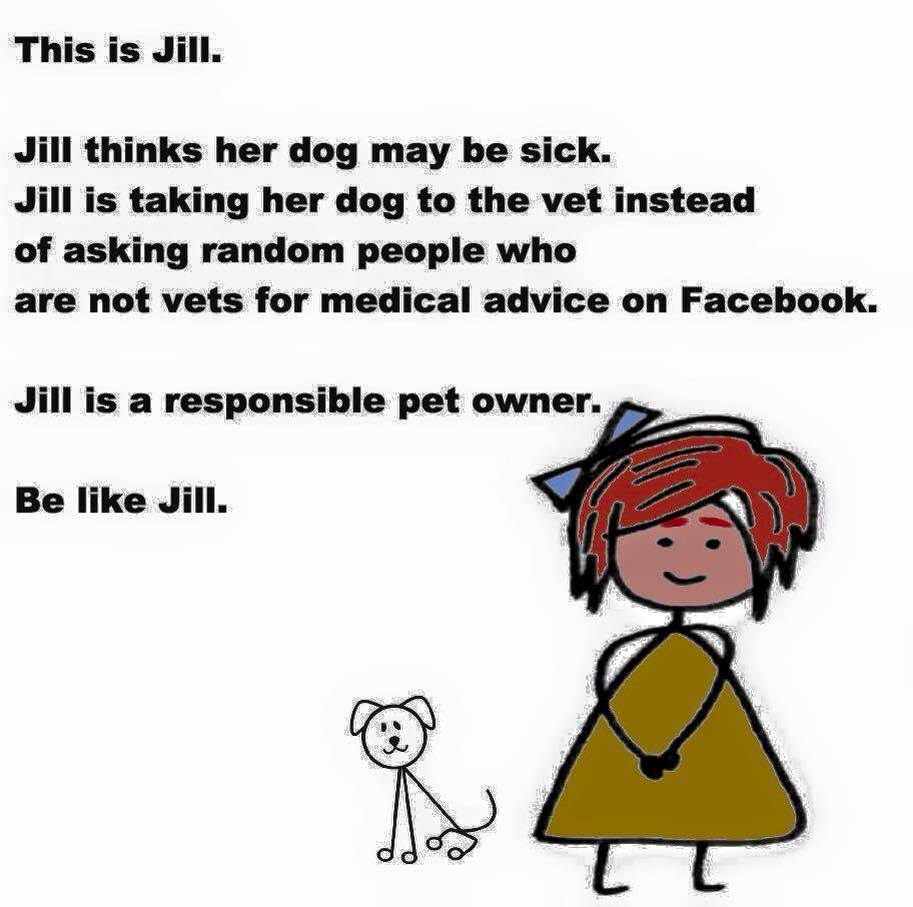
But what I didn’t expect this weekend was my first truly viral post on Facebook.  A client of mine shared this cartoon with me and it all took off from there:

This is Jill

You see, last month my column about this subject was published in NZ Dog World magazine.  I’m increasingly concerned about how people are taking to Facebook for medical diagnosis (instead of seeking professional veterinary care).

It’s okay to seek advice from peers when your dog has a known condition.  Support groups for all types of disorders exist on social media; I’ve used them myself.

And I guess a lot of people agree with me – I’ve tripled the number of Facebook likes on my page and have had over 1.5 million views.  Not bad for an independent canine massage practitioner from little old New Zealand…

Thanks for reading my blog; I’ve been writing it for five years now and I still enjoy it and the connections I have made with some dedicated dog parents.

Kathleen Crisley, specialist in dog massage, rehabilitation and nutrition/food therapy, The Balanced Dog, Christchurch, New Zealand

Oh…and here’s my column about “Dr Facebook” if you’re interested:

December 2015