Author Archives: DoggyMom.com

Who let the dogs out? (Monday smiles)

What is it about dogs that make us smile?   I can think of many reasons – things like:

  • they do funny things
  • they are soft and furry
  • they love to cuddle and play

But on this Monday (which has been particularly difficult) – it’s just nice to know that they are part of our lives.

Enjoy!

Take me out to the ballgame

It’s April and the 2013 Major League Baseball season is underway.   Did you know that many MLB teams hold special events for dogs to attend the game?

These events allow baseball fans to watch the game from a special section of the stadium.  Animal welfare charities are often supported through these events, which are accompanied by photo sessions and other activities (and some giveaways).

These games are so popular that some teams hold more than one event during the course of the season!

Here’s a list of the 2013 events:

  • Bark at the Park – Kansas City Royals vs Los Angeles Angels at Kansas City, May 26, 2013
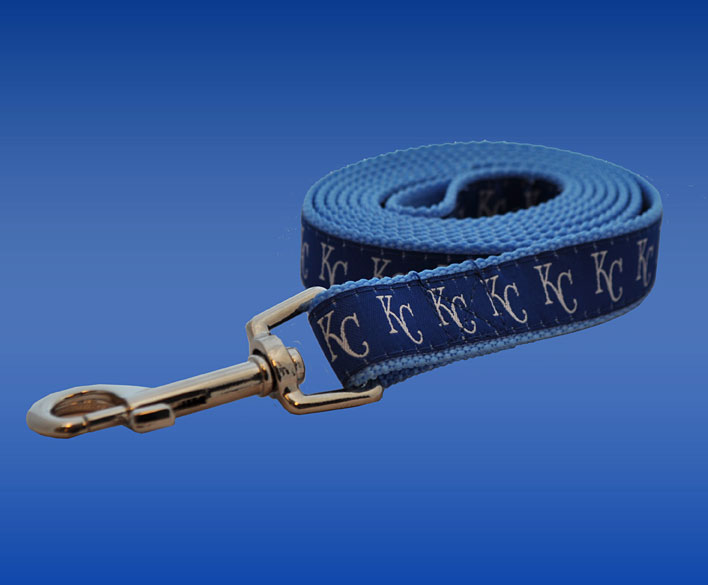
Dog owners will receive a free Kansas City dog leash at this year's Bark at The Park

Dog owners will receive a free Kansas City dog leash at this year’s Bark at the Park

  • Bark at the Park – Miami Marlins vs San Diego Padres at Miami – June 30, 2013 (Benefit for Humane Society of Broward County)
  • Bark at the Park – Miami Marlins vs Cleveland Indians  at Miami – August 4, 2013 (Benefit for Humane Society of Greater Miami Adopt-A-Pet)
  • Bark in the Park – Atlanta Braves vs New York Mets at Atlanta – May 5, 2013
  • Bark in the Park – Arizona Diamondbacks vs San Francisco Giants at Arizona – June 9, 2013
  • Bark in the Park – Arizona Diamondbacks vs Colorado Rockies at Arizona – September 15, 2013
  • Bark in the Park – Cincinnati Reds vs Philadelphia Phillies at Cincinnati – April 16, 2013 (Free ‘basebowl’ mat for the first 5,000 pet owners)
  • Bark in the Park – Cincinnati Reds vs New York Mets at Cincinnati – September 23, 2013
  • Bark in the Park – Los Angeles Dodgers vs Miami Marlins at Los Angeles –  May 11, 2013
  • Bark in the Park – Los Angeles Dodgers vs Colorado Rockies at Los Angeles – September 28, 2013
  • Bark in the Park – Texas Rangers vs Chicago White Sox at Texas – May 2, 2013
  • Dog Day – Chicago White Sox vs Cleveland Indians at Chicago – April 23, 2013
  • Dog Day – Chicago White Sox vs  Minnesota Twins at Chicago – September 16, 2013

Dog Day Chicago

  • Dog Day – Oakland Athletics vs St Louis Cardinals at Oakland – June 28, 2013
  • Dog Days of Summer – San Francisco Giants vs Pittsburgh Pirates at San Francisco – August 25, 2013
  • Pooches in the Ballpark – St Louis Cardinals vs Texas Rangers at St Louis – June 22, 2013
  • Puppypalooza – Cleveland Indians vs Kansas City Royals at Cleveland – June 17, 2013
  • Puppypalooza – Cleveland Indians vs Kansas City Royals at Cleveland – September 9, 2013
  • Pups in the Park #1 – Washington Nationals vs Atlanta Braves at Washington – April 14, 2013
  • Pups in the Park #2 – Washington Nationals vs Chicago Cubs at Washington – May 11, 2013
  • Pups in the Park #3 – Washington Nationals vs Minnesota Twins at Washington – June 9, 2013
Is your dog right for a MLB canine event?  (guidance courtesy of the Atlanta Braves)Yes, if your dog:

  • Is old enough to be around other dogs and people (at least 4 months of age)
  • Is up to date on all required vaccinations
  • Is in relatively good health and can walk up and down several flights of stairs
  • Does well on-leash and is not overly aggressive toward other dogs
  • Is friendly toward humans and not excessively fearful
  • Is a Braves fan!

Probably not, if your dog:

  • Is still too young to mix with a big crowd (under 4 months);
  • Is a senior dog that would have trouble navigating stairs and being outside for an extended period of time;
  • Has aggressive tendencies towards other dogs or humans while on-leash (or off);
  • Is an Astros fan! (Just kidding, all are welcome!)
  • Is exhibiting any signs of illness close to the day of the game (ie, cough, nasal discharge, lethargy, diarrhea, etc). These symptoms can be signs of potentially infectious illnesses and it would probably be best for your dog as well as the other dogs in attendance, if they did not attend.

Older dogs, dogs with short muzzles and/or dogs in general that are quickly prone to heat exhaustion should consider not attending this event or possibly plan on not staying for the entire game. Even though there will be cool water, pools, shady spots, misting machines and ice cream on hand, the direct sun and heat can be a deadly combination for dogs. Dogs cool themselves down by panting and are not nearly as efficient as us humans. Please keep the comfort and safety of your dog in the forefront of your mind when planning out this fun day at the park.

Designer dog miniatures

Artist Lucy Maloney has a unique business – Designer Dog Miniatures.  Lucy produces one-of-a-kind miniatures by commission using quality materials including alpaca, cashmere, silk and leather.

Scale reproductions of your precious pooch are created from photographs that you submit.  Some examples of Lucy’s work include:

Bichon Frise miniature

Bichon Frise miniature

Sealyham Terrier miniature

Sealyham Terrier miniature

What really impresses me is how lifelike and realistic these miniatures are.   Lucy is obviously very skilled at what she does, using natural materials to sculpt her miniatures.

Lucy also makes play-sized miniatures for dollhouses.  For example, here’s a Barbie with a doll-sized Papillon:

Barbie with Papillon

Lucy’s commissions start from about US$200 – but remember that you are buying an individual, handmade replica and not a mass-produced or amateur reproduction.

Miniatures don’t take up a lot of space in your home and are a wonderful option as a memorial to your dogs that have passed.

Good work, Lucy!

Animals matter in disasters

WSPA (The World Society for the Protection of Animals)  has a downloadable pack of information to help you prepare for your dog’s care in the event of a natural disaster.

WSPA_Header

This kit will show you what preparations you should undertake in case your dog and you face an emergency situation.

These are things like ensuring you have at least 3 days of food stored for both you and your dogs and that you have a sufficient supply of your dog’s medications, too.

The kit recommends that your dog is able to come to you on command and to practice moving to safe parts of your house in the event of an emergency, like a tornado or hurricane.

All very useful information!  Take it from those  of us who have faced natural disaster (earthquakes – too many of them!), being prepared gives you peace of mind and results in less stress during  very stressful events.

Download your pack here

Ashleigh and Pudsey

This dancing couple was the winner of last year’s Britain’s Got Talent…I love to see dog acts winning these contests – who needs just another singer?

Doggy quote of the month for April

“Look at our relationships with other people.  Most of us are not as dependable as animals.”

– Gregory Castle, CEO of Best Friends Animal Society

Double take

Dog costume

I’m generally not in support of dressing up dogs in costumes…but take a closer look at this one…

Happy Easter!


Black dog syndrome

A common challenge in the adoption business is finding homes for black dogs.  For many years, shelter workers worldwide have reported that black dogs (and cats) are less likely to be adopted than others and more likely to be euthanized.

It’s a case of judging a book by its cover – or is it?

In films, if there is an evil or menacing guard dog, it’s usually black or dark coloured (e.g. Rottweiler, Doberman).  Black cats are notoriously associated with the devil or witches, as well.

However, research published in early 2012 suggested that the issue isn’t colour – it’s breed.  And no one appears to be gathering statistics on the adoption of black dogs vs other dogs.  Plus there’s the fact that the Labrador (including black Labs) is routinely the top of the list when it comes to popular breeds.  This means that someone isn’t afraid of black dogs!

Practically speaking, however, it is usually more difficult to photograph a black dog.  Many shelters find that they can’t do a black dog justice in the photos that are mounted on the internet on shelter web pages and Facebook sites.   Rescue organisations are encouraged to place additional overhead lighting in the kennels of black dogs to make them more appealing to visitors.  Another suggestion is to take a black dog  for a run or brisk walk before photographing him/her – thus photographing them when they are panting which is more likely to look like a smile in their photograph.

Patricia McConnell has commented on Black Dog Syndrome (fact or fiction) on her website.

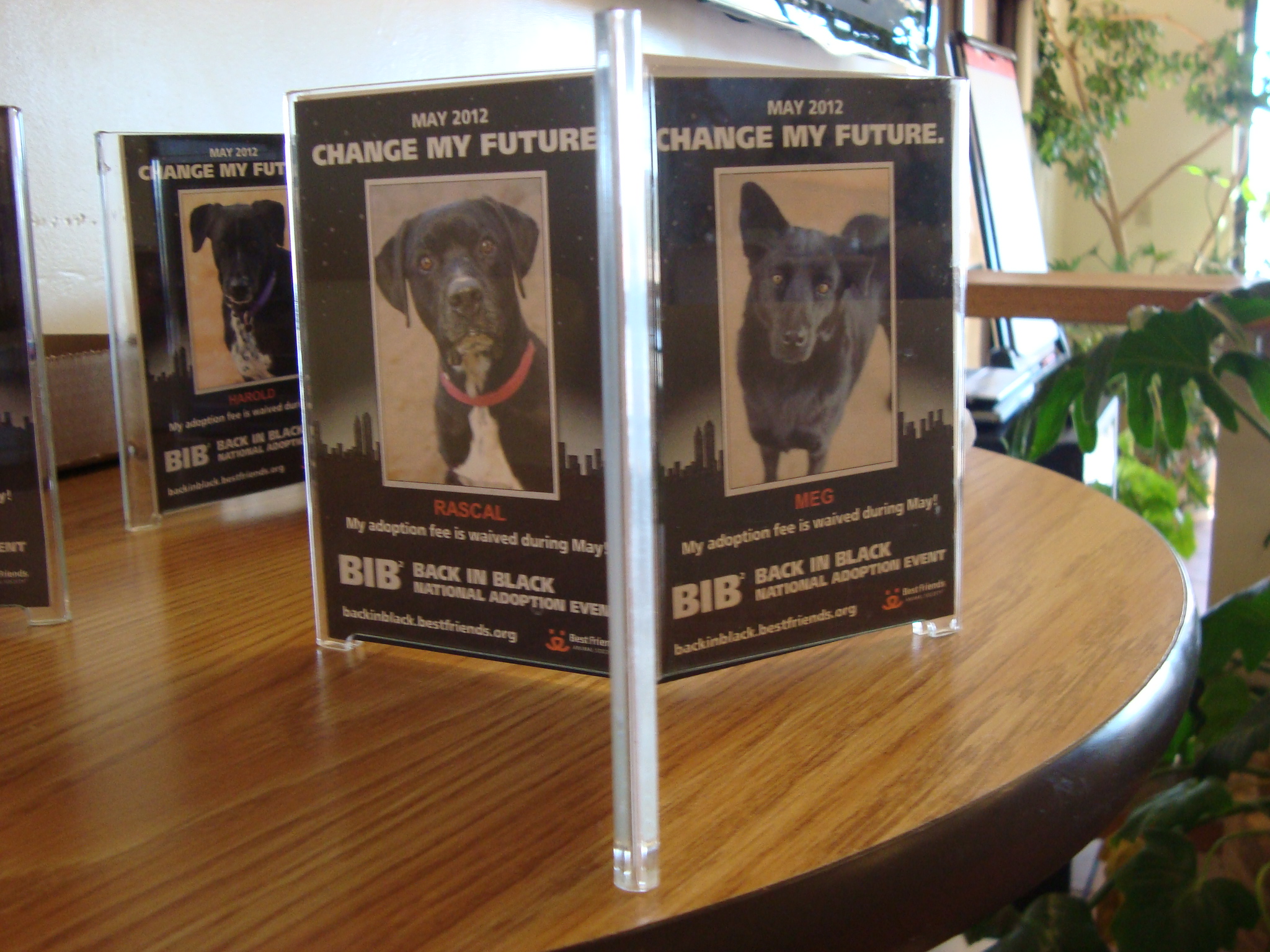
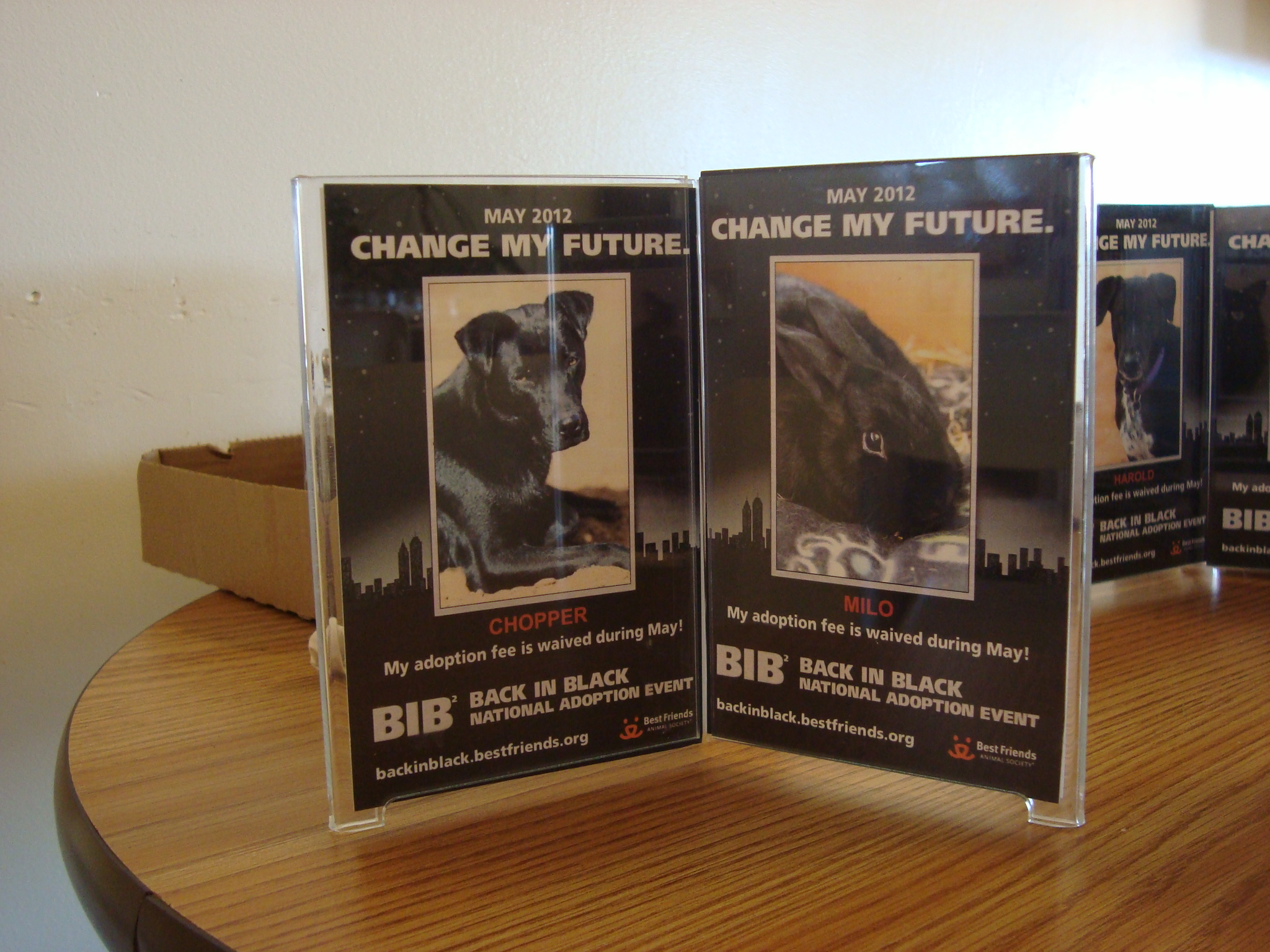
Meanwhile, rescue organisations often hold special events for the adoption of black-coated animals.  These are photos I took last year at Best Friends Animal Sanctuary during their May appeal – Back in Black… The adoption fee was waived for all black animals during the month.  Very creative!

Back in BlackBack in Black 2

Do you think Black Dog Syndrome is real?  What does your rescue organisation do to support the adoption of black dogs?

More fat and less protein for sniffing dogs

Sniffing dog checking luggage. (Credit: © Monika Wisniewska / Fotolia)

A detector dog checking luggage. (Credit: © Monika Wisniewska / Fotolia)

A study  funded with a $1 million grant from the U.S. Department of Justice, has found that detection dogs are more reliable detectors than previously thought.  The study has been conducted by Cornell’s College of Veterinary Medicine.

The study is the first to be conducted in the world’s only detection dog research facility designed in conjunction with a military dog trainer. The Alabama facility, which provides expert detection dogs to police and military forces, flushes out fumes between tests, ensuring a fresh field each time.

Researchers have found that the key to improving a dogs’ smelling skills through diet is achieved by limiting proteins and increasing fats.  Such a diet, the research team says, appears to help dogs return to lower body temperatures after exercise, which reduces panting and, thereby, improves sniffing.

‘Dogs tested in the new facility signaled with 90 percent and above accuracy. We also found we can push detection performance even further with the right kind of food.’ said Joseph Wakshlag, associate professor of clinical studies and chief of nutrition at Cornell’s College of Veterinary Medicine.

During an 18-month period, the research team rotated 17 trained dogs through three diets: a high-end performance diet, regular adult dog food, and regular adult dog food diluted with corn oil. Measuring how different diets affected each dog, they found that dogs eating the normal diet enhanced with corn oil returned to normal body temperatures most quickly after exercise and were better able to detect smokeless powder, ammonia nitrate and TNT.

‘Corn oil has lots of polyunsaturated fats, similar to what you’d find in a lot of nuts and common grocery store seed oils,’ said Wakshlag. ‘Past data from elsewhere suggest that these polyunsaturated fats might enhance the sense of smell, and it looks like that may be true for detection dogs. It could be that fat somehow improves nose-signaling structures or reduces body temperature or both. But lowering protein also played a part in improving olfaction.’

‘If you’re a dog, digesting protein raises body temperature, so the longer your body temperature is up, the longer you keep panting, and the harder it is to smell well,’ said Wakshlag.

Source:  Cornell University media release

The language of friendship

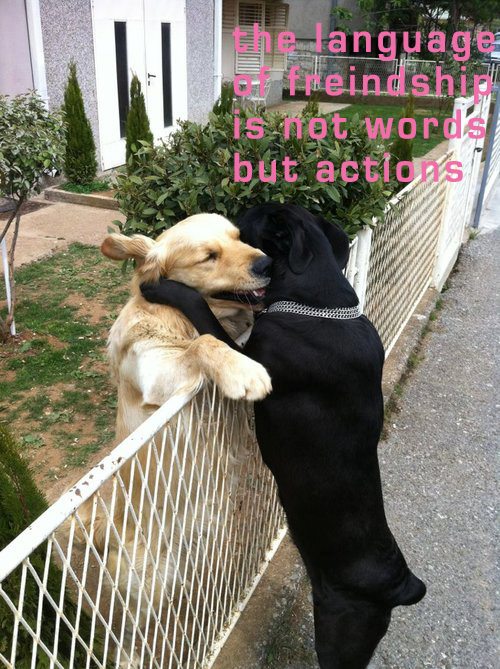
My thought for the day…(just ignore the spelling mistake!)

The language of friendship