Author Archives: DoggyMom.com

When your dog has the runs…

A client rang me this week to say that her dog had a major case of runny poos – the runs – or diarrhea to be exact.  She said her dog was her normal happy self but was going to the toilet regularly with fairly dramatic consequences – would I keep our massage appointment?

My answer was ‘no’ – not advisable – not because I was concerned that I’d have poo all over my massage table but because this dog’s body was telling us something.  Diarrhea is a symptom and not a disorder in itself and the dog’s body was working double-time to rid itself of an irritant.  Her system had enough to handle and a massage would only add to her metabolic load as lactic acid was released by the massage.  She didn’t need that.

My advice was to withhold food for 12 to 24 hours and to keep up the fluids.  Some people add low salt chicken or vegetable stock to the dog’s water bowl to encourage them to drink and keep hydrated, for example.  When food was again on the menu, I suggested replacing half the normal volume of food with cooked pumpkin to add fibre to the diet that the dog could easily tolerate and to keep this up for a few days until the stools returned to a normal consistency.

Other home remedies include a diet of boiled chicken with white rice, for example.

Typically, diarrhea is the result of a digestive indiscretion but it can be the result of poisoning from household or garden chemicals, a symptom of parasites such as hookworm, or a food allergy.  Some worming treatments can also stimulate a bought of diarrhea.

If a dog has additional symptoms such as lethargy, weakness, abdominal pain, blood in the diarrhea, vomiting and fever  then you need to see your veterinarian as soon as possible.   In this case, the dog seemed happy in herself and so that was a sign that she was probably not in danger.

A trip to the vet is a good idea if the diarrhea lasts for more than five days or so.

Diarrhea isn’t any fun for the dog owner or the dog.  Keeping an eye on symptoms is critically important to ensure you do the right thing when your dog has the runs…
What’s the diff, Cliff?

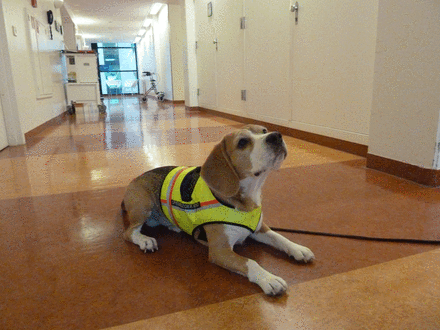
Cliff, a Beagle, is a specially trained detector dog working in two Dutch teaching hospitals.  He’s been the centre of a major study into detection of Clostridium difficile (‘C diff’ for those who are professionals in the field), an infectious bacteria that can run rampant through hospitals, rest homes and other healthcare facilities.

Detector dog on hospital ward

Symptoms range from mild diarrhoea to more severe conditions like colitis. The bacterium can be transmitted through either personal contact or the environment and the testing for the bacteria is time consuming.

The research involved 300 patients, 30 which had C diff infection.  Cliff was guided along the wards by his trainer and the trainer had no idea if the person was infected or not.  Cliff was trained to sit or lie down when C diff was detected.

The Results?  Cliff was an expert at identifying infections of C diff – with around 90% accuracy –  regardless of whether he was sniffing out stool samples or identifying infected patients in the hospital.  Cliff is only one dog, but with these results, the concept of using dogs to identify C diff infections has been proved.

This comprehensive video explains Cliff’s training and the research:

Source:  British Medical Journal

Comforting those left behind in Connecticut

Dogs have a connection to many human events.  In the case of the tragedy in Newtown, Connecticut, dogs have helped to provide comfort to the residents left traumatised by the mass shooting there last week.

Comfort dogs, typically Golden Retrievers, have been sent to the area to work with the children and adults to help them through their grief and loss.

The unconditional love and support given by dogs to humans is well documented, with physiological effects such as a lowering of blood pressure proving the impact that petting a dog can have.

Given what has happened in Newtown, any comfort that can be directed to this community will be welcomed.

The best things in life are free

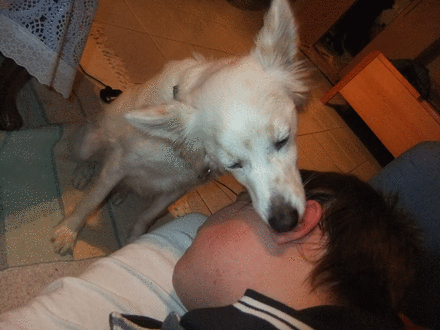
Free Kisses

In this busy holiday season, remember that the affection your dog shows you is absolutely FREE!  Don’t buy anything today – simply enjoy time with your dog.

The British Medical Journal’s Shaggy Dog Story

Two Belgian researchers have published their Shaggy Dog Story in the British Medical Journal this month.

They tell of a 35-year old patient with a severe sleep disorder that made traveling on public transport a problem because she would fall asleep and miss her stop, often becoming disoriented.

Dog waking patient

She was paired with a service dog that was trained to wake her for important noises and on public transport.   This type of success story points to even more roles for service dogs.

Wake me up, Shaggy!

Hearing Dogs NZ

Imagine being on duty 24/7 at your job and enjoying it.  Well – if you were – chances are you would be one of the 50 registered hearing dogs currently working in New Zealand.

Hearing dogs are the ‘other’ assistance dogs, less well known than their guide dog for the blind counterparts, but no less important to the lives of their human recipients.

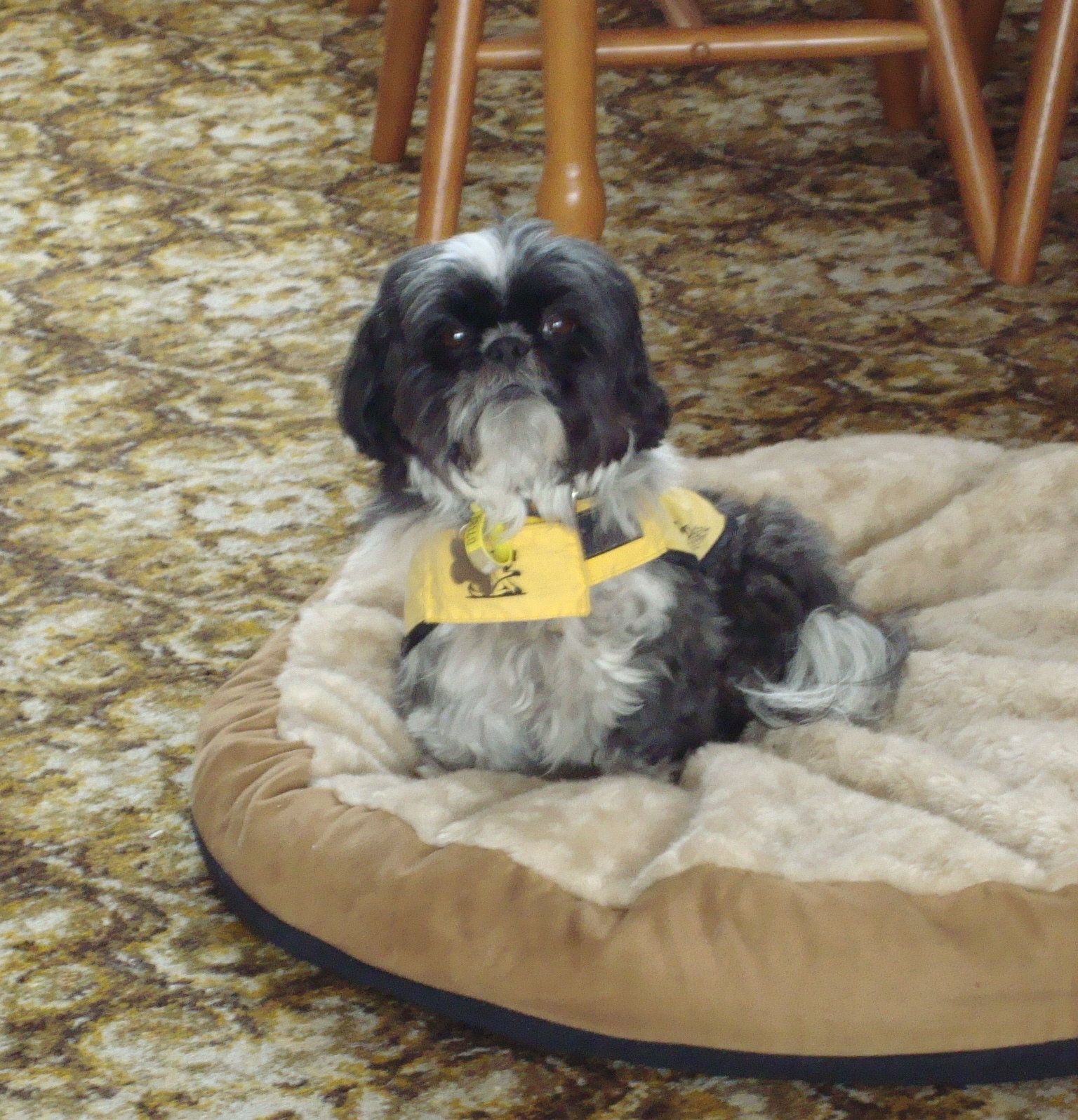
These dogs are trained to alert their deaf or severely hearing impaired owner to important sounds such as the door bell, kitchen timer, fire alarm, baby monitor, or telephone.  A hearing dog wears a distinctive yellow coat.

Tyra in her yellow Hearing Dogs coat

Tyra in her yellow Hearing Dogs coat

Hearing Dogs is an incorporated charitable trust established in 1998 that provides training for these special dogs at its National Training Centre in New Plymouth.  At any given time, there will be six dogs in training at the facility.  These dogs go to socialisers on the weekends as part of their initial training.  If you are in the New Plymouth area, this is one way of supporting the organisation.

A hearing dog may be any shape or size and most breeds are acceptable.  Training typically starts between the age of one year to 18 months.  Clare McLaughlin, General Manager, says “We look for excellent health followed by an even temperament.  The dog needs to be calm and confident and not react to sudden movements or sounds.  A well socialised dog is an advantage and one that is motivated by food makes it easier because our training is reward based.”

Another quality is willingness to learn.  Any breeder who has a dog with these qualities may want to consider offering the dog to Hearing Dogs for training.

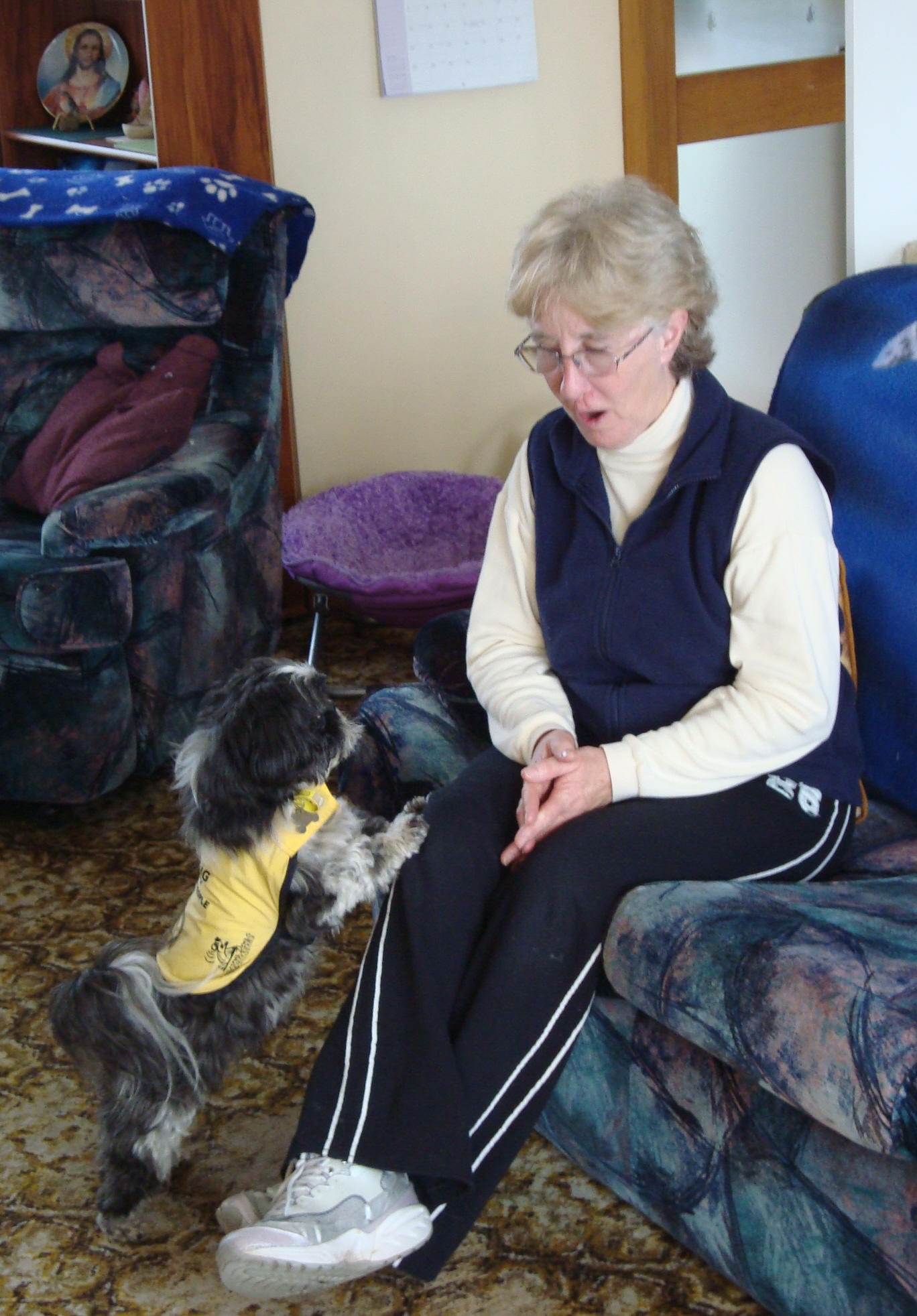
Caroline Boyce can testify to the value that a hearing dog brings to its recipient.  Caroline grew up in a hearing world, without support, and in her own words “I always felt that I wasn’t normal because there was so much going on around me.”  Despite this, she managed to travel overseas for work experience, find a loving husband, raise two children, and work.  Eight years ago she summoned the courage to go to a talk about Hearing Dogs and then put her name down to receive one.  Tyra, her second dog, has been with her for four years. Tyra demonstrated her skills for me by alerting Caroline when the kitchen timer sounded.

Tyra alerts Caroline to the timer on the kitchen oven

Tyra alerts Caroline to the timer on the kitchen oven

Hearing Dogs doesn’t have the wide corporate support or profile of some other charities, but there are many ways to help.   Dr Terryne Loney of Pet Doctors Harewood (Christchurch) has pledged two free examinations per year for all hearing dogs in Christchurch, saying “I think hearing dogs are vital for safety, wellbeing and assistance to hearing impaired people.  Hearing dogs do not get high levels of support and recognition so we wanted to help.”

 To learn more about Hearing Dogs, visit their website.

What’s in your dog’s plastic toy?

A research team at Texas Tech University has studied the levels of phthalates and bisphenol A (known as BPA) in dog training batons and other plastic toys.  They presented their findings at the Society of Environmental Toxicology and Chemistry conference held in California.

The research was conducted by Kimberly Wooten, a master’s student using the project as her thesis, and Phil Smith, an associate professor of terrestrial ecotoxicology.  Smith also raises and trains Labradors.

“In the process of training a lab, you do a lot of work with these plastic bumpers. I have a lot of bumpers in my garage, and they spend a lot of time in the mouths of my retrievers. Well, lots of attention has been given to chemicals in plastics lately regarding their effects on humans. Since we all care about our dogs, and we want them to be as healthy and smart and well-behaved as possible, we decided to look into this.”

BPA are used to give elasticity to plastic and vinyl and are known endocrine disruptors that mimic estrogen or act as anti-androgens and could lead to negative health effects.  In 2012, the US Government banned the use of these chemicals in baby bottles.

Training bumpers had higher levels of BPA than toys; but weathered and aged toys released more BPA than newer ones.

The research raises a number of questions, but it is hard to compare results because so few studies have been done – particularly in the area of how much of the BPA actually enters the dog’s system.

“The interaction of pet health and environmental chemicals is understudied,” Wooten said. “What may be a safe dose for one species isn’t always a good measure for another species. But the amount of BPA and phthalates we found from the bumpers would be considered on the high end of what you might find in children’s toys.”

Source:  Texas Tech University press release

The driving dogs of New Zealand

I’m so proud of the SPCA Auckland  (where I used to volunteer, when I lived up that way) for its imaginative holiday promotion for rescue dogs.

The SPCA teamed up with expert dog trainers to train three SPCA rescue dogs to drive a car – a Mini to be exact.

Driving Dog

Monty, Porter and Ginny went through extensive training before being put behind the wheel of the Mini.  Last night, on national television, Monty drove himself around a go-cart track.  Porter took on the dubious task of having the reporter accompany him on his drive – and I think he suffered the nerves for it because he took a turn rather widely.

This video covers the dog’s training and moment of glory:

Monty, Porter and Ginny prove that rescue dogs are intelligent and trainable.  If considering adopting a dog this Christmas, make sure you visit your local SPCA and rescue organisations.

You can read more about New Zealand’s driving dogs at www.drivingdogs.co.nz (which brings you to their Facebook page).

Driving Dogs 2

Your dog is not a garbage can

This is a garbage can...

This is a garbage can…

...and this is a dog.

…and this is a dog

Please understand the difference this Christmas!

Veterinarians around the world see a surge in cases of pancreatitis each year during the Christmas holiday season.  That’s because our homes are filled with rich, fatty foods that are as tempting to dogs as they are to us.  A single high-fat meal is enough to trigger the problem – and so the well-meaning family members who empty their plate in your dog’s bowl rather than the garbage are often at fault.

Low protein, high fat diets have been known to cause pancreatitis and it is a life-treatening condition. Symptoms of pancreatitis are acute vomiting, abdominal pain, diarrhea, lethargy, loss of appetite, and in some cases, fever. The dog may have a tucked-up belly and assume a prayer position. The abdominal pain is caused by the release of digestive enzymes into the pancreas and surrounding tissue.

More severe cases of pancreatitis can develop rapidly and a dog can go into shock – a trip to the emergency veterinary center is essential.

Vets will treat your dog with fluids, antibiotics and pain relief and will withdraw all foods for a number of days to rest the pancreas.   Assuming your dog survives,  its pancreas may be permanently damaged.  In these cases, your dog may develop diabetes mellitus if the islet cells have been destroyed or may develop exocrine pancreatic insufficiency if the acinar cells have been destroyed.

Dogs who have experienced one pancreatitis episode are susceptible to having future attacks that can be anywhere from mild to severe.

The lesson?  Your dog is not a garbage can.  Treats should be served in moderation and carefully monitored by one member of the family to ensure the dog isn’t over-fed.  Avoiding table scraps is always a good idea.

Bo inspects the 2012 White House holiday decorations