Author Archives: DoggyMom.com

The Mutt-cracker Ballet

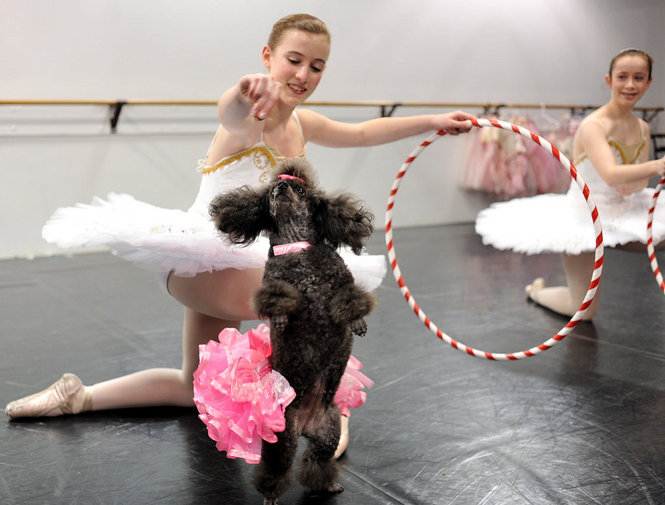
Tonight’s the night in Birmingham, Alabama for a holiday ballet with a new twist.  21 dogs will be performing alongside ballerinas in the Birmingham Ballet’s Mutt-cracker.

Proceeds from the performance go to the Greater Birmingham Humane Society.

Dogs had to audition for roles in the ballet with a dog trainer observing.  A few of the dogs are rescues.

Here’s a few photos of preparations for the big night, courtesy of Tamika Moore, photographer for Al.com:

Muttcracker 3 Muttcracker Muttcracker 2

For the full story, read Dogs in Tutus.

Heska Corporation – Inspiration in Action

From now until 10 December, you can vote in the Inspiration in Action awards.  This contest encourages innovation in veterinary medicine and impacts the human experience through our bond with animals.   There will be three winners of the competition:

  • $25,000 Grand Prize winner
  • $10,000 2nd prize
  • $5,000 3rd prize

One vote per person, per day.

Visit the Heska website to read more about the six finalists.  They are:

  • Navajo Nation Veterinary Shuttle
  • Nicaraguan Human & Animal Health Program
  • Peter Emily International Veterinary Dentistry Foundation
  • All Dogs May Bite
  • Innovation Education for Equine Therapeutic Riding
  • Kindred Canines in Motion

Meet Billy…

The Humane Society of the United States has introduced a new video this holiday season.  This is the story of Billy, a Chihuahua rescued from a puppy mill and Adam, his rescuer and new owner.

After you watch this video, please donate to the HSUS or the animal welfare agency of your choice this holiday season.  Animal rescues are always in need of funds and your donation can make a difference.

Putting your dog first

In one of my recent columns for the NZ Kennel Club, I wrote about making quality time for you and your dog.  It’s amazing to me as our Southern Hemisphere summer approaches that dog owners tell me they are having difficulty ‘finding the time’ for their dog.  Even with more daylight hours, the preparations for summer holidays and Christmas parties seem to take precedence.

The importance of putting your dog first was emphasised recently by American musician Fiona Apple.  She announced via her Facebook page in late November that she was postponing a tour of South America to stay at home with her elderly dog, Janet.  At 14, Janet (a rescued Pit Bull), is the priority in Ms Apple’s life.

I’m publishing her letter to fans here in its entirety because it expresses so clearly the importance of putting your dog first at key points in your life:

It’s 6 p.m. on Friday, and I’m writing to a few thousand friends I have not met yet. I am writing to ask them to change our plans and meet a little while later.

Here’s the thing.

I have a dog Janet, and she’s been ill for almost two years now, as a tumor has been idling in her chest, growing ever so slowly. She’s almost 14 years old now. I got her when she was 4 months old. I was 21 then, an adult officially — and she was my child.

She is a pitbull, and was found in Echo Park, with a rope around her neck, and bites all over her ears and face. She was the one the dogfighters use to puff up the confidence of the contenders. She’s almost 14 and I’ve never seen her start a fight, or bite, or even growl, so I can understand why they chose her for that awful role. She’s a pacifist.

Janet has been the most consistent relationship of my adult life, and that is just a fact. We’ve lived in numerous houses, and jumped a few make shift families, but it’s always really been the two of us. She slept in bed with me, her head on the pillow, and she accepted my hysterical, tearful face into her chest, with her paws around me, every time I was heartbroken, or spirit-broken, or just lost, and as years went by, she let me take the role of her child, as I fell asleep, with her chin resting above my head. She was under the piano when I wrote songs, barked any time I tried to record anything, and she was in the studio with me all the time we recorded the last album. The last time I came back from tour, she was spry as ever, and she’s used to me being gone for a few weeks every 6 or 7 years.

She has Addison’s Disease, which makes it dangerous for her to travel since she needs regular injections of Cortisol, because she reacts to stress and to excitement without the physiological tools which keep most of us from literally panicking to death. Despite all of this, she’s effortlessly joyful and playful, and only stopped acting like a puppy about 3 years ago. She’s my best friend and my mother and my daughter, my benefactor, and she’s the one who taught me what love is.

I can’t come to South America. Not now.

When I got back from the last leg of the US tour, there was a big, big difference. She doesn’t even want to go for walks anymore. I know that she’s not sad about aging or dying. Animals have a survival instinct, but a sense of mortality and vanity, they do not. That’s why they are so much more present than people.

But I know that she is coming close to point where she will stop being a dog, and instead, be part of everything. She’ll be in the wind, and in the soil, and the snow, and in me, wherever I go.

I just can’t leave her now, please understand. If I go away again, I’m afraid she’ll die and I won’t have the honor of singing her to sleep, of escorting her out.

Sometimes it takes me 20 minutes to pick which socks to wear to bed. But this decision is instant. These are the choices we make, which define us.

I will not be the woman who puts her career ahead of love and friendship. I am the woman who stays home and bakes Tilapia for my dearest, oldest friend. And helps her be comfortable, and comforted, and safe, and important. Many of us these days, we dread the death of a loved one. It is the ugly truth of Life, that keeps us feeling terrified and alone. I wish we could also appreciate the time that lies right beside the end of time. I know that I will feel the most overwhelming knowledge of her, and of her life and of my love for her, in the last moments. I need to do my damnedest to be there for that.

Because it will be the most beautiful, the most intense, the most enriching experience of life I’ve ever known. When she dies. So I am staying home, and I am listening to her snore and wheeze, and reveling in the swampiest, most awful breath that ever emanated from an angel.

And I am asking for your blessing.

Kathleen Crisley, Fear-Free certified professional and specialist in dog massage, rehabilitation and nutrition/food therapy, The Balanced DogChristchurch, New Zealand

Doggy quote of the month for December

“A dog is for Life, not just for Christmas”

– slogan of the National Canine Defence League

Snoopy’s Christmas

It’s officially the Christmas holiday season – celebrate with a montage of Snoopy pictures in this YouTube video of Snoopy’s Christmas!

The world’s tallest dog

His name is Zeus and he’s a three-year old Great Dane.    Living in Michigan, Zeus is 44 inches (1.1 m)  tall and 155 pounds (70 kg).  He’s a very big dog but he’s fit and trim for his size which is great to see since we are seeing more cases of obesity in dogs.

Here’s a brief video of Zeus at home:

Another reason to keep your dog fit and trim

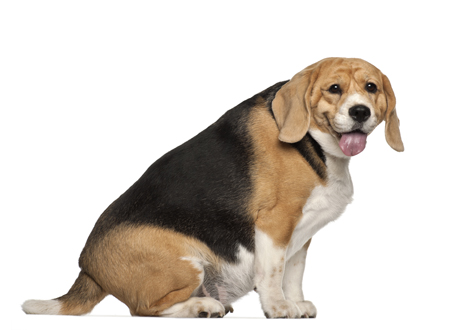
University of Liverpool researchers have found that obese dogs can experience metabolic syndrome, a condition that describes multiple health issues that occur in the body at the same time.  Obese humans suffer from the same syndrome.

The condition occurs when a number of health problems, such as increased blood glucose and increased cholesterol levels, develop together, with the potential to increase the risk of other diseases, such as cardiovascular disease and diabetes.

In a study of 35 obese dogs, 20% had metabolic syndrome.  These dogs had increased blood insulin which suggests that the pancreas is working harder than normal.  Blood adiponectin, a protein produced by fat cells that helps control sugars and fats, was also at lower levels than normal.

The metabolic abnormalities improved when the dogs successfully lost weight.

The research team admits that they have to study the impacts in more detail to understand the health implications of metabolic syndrome.

However, why wait for more studies?  If your dog is overweight we already know that their quality of life improves with weight loss.

Source: University of Liverpool media release

A special kind of service dog

Bet you didn’t know that a Great Dane can be a service dog!

These special needs dogs are ‘walker dogs’ – dogs to assist those people who have impairments to their mobility and balance.  These people can be Parkinson’s or MS patients and, more recently, it has been servicemen and women who have returned home with inner ear and brain injury.

The Service Dog Project exists to train dogs for the mobility impaired.

The Project has donated over 45 Great Danes to people with severe balance or mobility problems. They are located in Ipswich, Massachusetts on a 12-acre property.  Founder Carlene White was inspired to start the project because her father had Parkinson’s and she had a friend with MS.

Said Carlene in a recent Boston Globe article, ‘You can’t really balance with a walker or a cane, because you go over backwards.  You don’t go over backwards if you’ve got a 150-pound dog on handles.’

This YouTube video describe the Service Dog Project in more detail.

How your dog matches words to objects

Researchers at the University of Lincoln (UK) have published a study based on the learning patterns of a Border Collie named Gable.  They wanted to see if Gable could match words with objects based on shape, which is the learning pattern in humans of toddler age.

Credit: Sally Smith; van der Zee E, Zulch H, Mills D (2012) Word Generalization by a Dog (Canis familiaris): Is Shape Important?

Gable could identify an object by name, but over time he associated the same word with objects of similar texture or size (not shape).

The researchers concluded that where shape matters for humans, size or texture appears to be the dominating issue for a dog.

This is small study (using only one dog) but it does provide insight into the learning and development of dogs.  I’m sure there is more to come in this research field.

Source:  Word Generalization by a Dog (Canis familiaris): Is Shape Important?