Author Archives: DoggyMom.com

The growing trend of emotional support animals

A dog in the grocery store; a cat in the cabin of an airplane; a bird in a coffee shop – companion creatures labelled as Emotional Support Animals (ESAs) are showing up more and more in places previously understood to be animal-free. It’s part of a growing trend which includes “certifying” animals to provide emotional assistance to a person with a diagnosable mental condition or emotional disorder.

emotional support dog

Jeffrey Younggren, a forensic psychologist and clinical professor at The University of New Mexico’s Department of Psychiatry and Behavioral Sciences, recognized the growing trend presents an ethical challenge for therapists asked to certify emotional support animals for their patients. “Emotional Support Animal Assessments: Toward a Standard and Comprehensive Model for Mental Health Professionals” outlines the ethical challenge and offers possible solutions to better serve both people who feel they need ESAs and those who must comply with the animals such as landlords and airlines.

In their third paper on this topic, published by the American Psychological Association, Younggren and his coauthors propose a four-prong standard assessment model for practitioners to follow when asked to provide a patient with an ESA certificate. These guidelines include:

  1. Understanding, recognizing and applying the laws regulating ESAs.
  2. A thorough valid assessment of the individual requesting an ESA certification.
  3. An assessment of the animal in question to ensure it actually performs the valid functions of an ESA.
  4. An assessment of the interaction between the animal and the individual to determine whether the animal’s presence has a demonstrably beneficial effect on that individual.

“In this model, you have to take the animal into consideration. Somebody has to certify that the animal is able to do what you’re asking it to do. And there are avenues by which animals can be evaluated regarding their capacity for these kinds of experiences,” Younggren adds.

For example, a patient with an anxiety problem can takes a pill to calm down, and the effects of the drug are measurable and backed by scientific testing and research. But Younggren says there is very little evidence to scientifically support that animals ameliorate a patient’s symptoms.

By making such guidelines and practices standard, the hope is that there will be fewer instances like the one recently, which resulted in a flight attendant needing stitches after being bitten by an emotional support animal.

According to Younggren, service animals must be trained to provide a function otherwise inaccessible to their owner. But ESAs are not held to that standard, which is partially what his new research aims to correct.

“Our research has nothing to do with service animals. Seeing eye dogs and therapy dogs are animals that help individuals manage their disabilities in certain situations – but that’s not what an ESA is. An ESA is an example of a well-intended idea that has metastasized and developed into a world of nonsense,” Younggren said.

“One of our biggest goals is to disseminate this information in order to better educate mental health providers, as well as policy writers, about the need for ethical guidelines around ESAs,” Boness said.

In addition, Boness said her hope is that this paper will encourage others to pursue research on the impacts of ESAs on patients, so that there is a more scientific pool of data to cite.

“Mental health professionals who lack full awareness of the law will likely fail to recognize that writing such letters constitutes a disability determination that becomes a part of the individual’s clinical records,” the paper states.

Currently, in order to receive waivers for housing or travel purposes where animals are banned, the law requires patients must have a mental or emotional condition diagnosable by the Diagnostic and Statistical Manual of Mental Disorders (DSM-5). If patients are given certifications for an ESA, it means they, and the therapist signing the certification, are declaring the patient to be psychologically disabled with significant impairment in functioning.

“[The guidelines] will require that those individuals who certify these animals must conduct a comprehensive evaluation of the individual to determine that they have a disability under the DSM-5,” Younggren concluded. “That disability has to substantially interfere with the patient’s ability to function, which is what the ADA requires. And the presence of the animal has to ameliorate the condition, which means you have to see the person with the animal.”

Should this proposal influence an industry standard, Younggren says it will become more difficult for people to receive certification, but on the whole safer for society.


Source:  University of New Mexico media release

Dog show terms

I’ve been writing for NZ Dog World magazine since 2010; this is the magazine of Dogs New Zealand (formerly known as the NZ Kennel Club).

For those of you who have heard of shows like the Westminster Dog Show, but have never been to a dog show, here are some basic terms:

national-dog-show-2015

Handler, agent, or exhibitor (depending on what country you’re in)

This is the person who shows the dog in the ring.  The handler isn’t necessarily the dog’s owner and in high-stakes shows like Westminster, the handler may be paid to show the dog.

Bait

Usually treats or a toy that the handler uses to get a dog’s attention or to have the dog look alert in the ring

Best in Show

The final award which is presented to the dog that is judged to be the best of all dogs shown

Conformation show

A dog show which judges the dogs against a breed standard

Group show

A type of conformation show that is limited to a single group of dog such as Hunting Dogs or Sporting Dogs

Specialty show

A type of conformation show that is limited to either a single breed or a group of breeds, such as terriers

Stacking

The posing of the dog in a natural standing position for evaluation by the show’s judge

Dogs New Zealand

Kathleen Crisley, Fear-Free certified professional and specialist in dog massage, rehabilitation and nutrition/food therapy, The Balanced Dog, Christchurch, New Zealand

Demonstrating dog massage

I’ve been practising as a professional canine massage and rehab therapist for 10 years.

Because there are still dog parents out there that are unfamiliar with complementary care options for their dog, especially low impact ones that can be achieved in the home environment, I always look for ways to provide demonstrations – in person –  of what I do.

Last week, I was invited to participate in a pet night at our local PetStock branch.  Izzy, my greyhound, is very experienced at being a demo-dog.  In fact, I think she’s a very successful marketer!

Kathleen Crisley, Fear-Free certified professional and specialist in dog massage, rehabilitation and nutrition/food therapy, The Balanced Dog, Christchurch, New Zealand

Doggy quote of the month for August

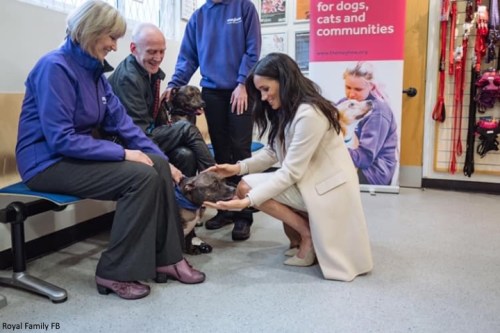
“The choice to adopt a pet is a big decision that comes with much responsibility but infinite return on the investment. It will undoubtedly change your life.”

Meghan, Duchess of Sussex, Patron of Mayhew animal welfare charity

Duchess Meghan with dog

Photo courtesy of the Royal Family Facebook page

At the vets

Today, Izzy was at the vets for her fourth Synovan injection for arthritis.

Izzy isn’t afraid of the vet, but she isn’t comfortable on the hard floor, either.   She’s used to carpet, a nice cushioning dog bed, or my bed – and because it’s winter, the hard floor can also be cold.   Physical discomfort is a form of stress.

My Fear Free solution has been to bring a cushioned mat with us to the vet for each visit and the mat has the added benefit of providing a surface that isn’t as slippery – also useful for a dog with arthritis.

Izzy can wait in comfort in the waiting room and the mat makes the exam room less stressful, too.

Kathleen Crisley, Fear-Free certified professional and specialist in dog massage, rehabilitation and nutrition/food therapy, The Balanced Dog, Christchurch, New Zealand

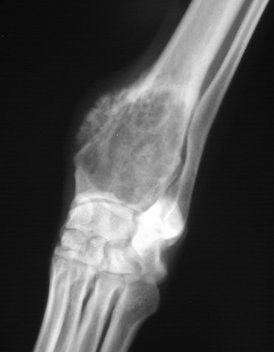
Genetic similarities of osteosarcoma between dogs and children

A bone cancer known as osteosarcoma is genetically similar in dogs and human children, according to the results of a study published today by Tufts University and the Translational Genomics Research Institute (TGen), an affiliate of City of Hope. The findings could help break the logjam in the treatment of this deadly disease, which hasn’t seen a significant medical breakthrough in nearly three decades.

osteosarcoma

“While osteosarcoma (OS) is rare in children, it is all too common in many dog breeds, which makes it a prime candidate for the kind of comparative cancer biology studies that could enhance drug development for both children and our canine friends,” said Will Hendricks, Ph.D., an Assistant Professor in TGen’s Integrated Cancer Genomics Division, and one of the study’s senior authors.

Using multiple molecular-level testing platforms, TGen and Tufts researchers sequenced the genomes of 59 dogs, finding that canine OS shares many of the genomic features of human OS, including low mutation rates, structural complexity, altered cellular pathways, and unique genetic features of metastatic tumors that spread to other parts of the body.

Study results appear in the Nature journal, Communications Biology.

“These findings set the stage for understanding OS development in dogs and humans, and establish genomic contexts for future comparative analyses,” said Cheryl A. London, DVM, Ph.D., the Anne Engen and Dusty Professor in Comparative Oncology at Cummings School of Veterinary Medicine at Tufts University, and the study’s other senior author.

The study also identified new features of canine OS, including recurrent and potentially cancer-causing mutations in two genes, SETD2 and DMD. The study suggests that these findings merit further exploration.

OS is an aggressive disease and the most commonly-diagnosed primary bone tumor in dogs and children. Though a relatively rare cancer in humans — with fewer than 1,000 cases each year — OS strikes more than 25,000 dogs annually.

Although surgery and chemotherapy can extend survival, about 30 percent of pediatric OS patients die from metastatic tumors within 5 years. The cancer moves much faster in dogs, with more than 90 percent succumbing to metastatic disease within 2 years.

“The genetic similarity between dogs and humans provides a unique opportunity and a comparative model that will enable the development of new therapies within a compressed timeline,” said Heather L. Gardner, DVM, a Ph.D. candidate in Tufts’ Sackler School of Graduate Biomedical Sciences, and the study’s lead author.

Jeffrey Trent, Ph.D., FACMG, TGen President and Research Director, and a contributing author, said the comparative oncology approach is vital to the rapid development of new treatments for people and pets that need help today.

“Leveraging the similarities between the human and canine forms of OS adds greatly to our understanding of how this aggressive cancer develops and spreads. More importantly, it provides an opportunity to develop therapies that make a difference in the lives of children and pets,” said Dr. Trent, who has been a proponent of comparative oncology for more than a decade.

Dana-Farber Cancer Institute, Broad Institute, Ohio State University, Colorado State University and University of Texas also contributed to this study: Canine osteosarcoma genome sequencing identifies recurrent mutations in DMD and the histone methyltransferase gene SETD2.

Funding for this research was provided by the National Institutes of Health, the National Cancer Institute, the National Center for Advancing Translational Sciences, the Dana-Farber/Harvard Cancer Center, and the Ohio State University Comprehensive Cancer Center.

No dogs were harmed during this research. Only tissue samples from pet dogs with naturally occurring cancers were examined.

Source:  TGen News

Air mattresses in winter (avoid these, please)

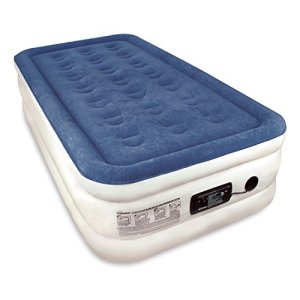
Air mattress

Air mattresses are often used as a part of a dog’s exercise programme for core strengthening.  And I have found that some pet parents are buying them for their dogs as an outside resting place in all seasons.

Here’s the thing:  have you ever slept on an air mattress in winter?  (It’s winter here in NZ).  If you have, I hope you understand where I’m heading with this post…

Air mattresses in winter are COLD.  Downright COLD.  Most camping websites recommend that you cover your air mattress with a sleeping bag for winter camping and that’s because the air mattress is COLD, even if supportive.

The issue is that many dogs tend to fluff up their bedding.  Some dogs end up removing it all together.

So if you are using an air mattress for a dog in winter, even with a blanket, there are no guarantees that your dog has enough warmth during cold winter days.  If your dog is arthritic, or has hip dysplasia, partially torn cruciate ligament or other orthopedic conditions, then you are really setting them up to be cold and uncomfortable – undoing any other interventions that may be part of their wellness programme.

During my home consultations, we cover things like bedding and the importance of rest.  In many cases, I recommend allowing the dog to remain inside during the winter months.

If we like to be warm, why shouldn’t they?

Kathleen Crisley, Fear-Free certified professional and specialist in dog massage, rehabilitation and nutrition/food therapy, The Balanced Dog, Christchurch, New Zealand

Cooking for my dog

For many of us, cooking for those we love is a way of expressing our affection.  I have always enjoyed cooking for my dogs – using fresh ingredients and creating tasty treats.  In fact, before I even decided to train in canine massage and rehab, I was already making treats for dogs as a business (Canine Catering).

Five years ago, I started my Cooking for Dogs class to teach other owners how easy it is to make yummy additions for dog food using simple and fresh ingredients.

Over the last 3 months, here are some of the things I’ve made:

This slideshow requires JavaScript.

Kathleen Crisley, Fear-Free certified professional and specialist in dog massage, rehabilitation and nutrition/food therapy, The Balanced Dog, Christchurch, New Zealand

I am the owner of a responsible dog

Izzy, my greyhound, is a responsible dog and I, according to the Christchurch City Council, am a responsible dog owner.

Her yellow tag this year denotes that she is registered with the Christchurch City Council for the 2019/20 year.

In our district, a Responsible Dog owner is one that has met these criteria:

Izzy responsible dog

Izzy the greyhound

  • have been the registered owner of a dog and have resided in the Christchurch City Council district for at least 12 months
  • have paid dog registration fees on or before 30 June for the last two years
  • have all dogs micro-chipped in accordance with the Dog Control Act, including providing the microchip number to the Council
  • have a licence to keep multiple dogs on their property (if applicable)
  • inform the Council of any dog registration or residential address changes, including information on the death, sale, or transfer of any dogs, and including the birth of any pups.

The dog owner must have a property at which the dog resides that:

  • is suitably fenced and gated to contain the dog
  • allows dog-free access to a door of the dwelling for authorised callers.

The owner must have complied with the requirements of the Dog Control Act 1996 and the current Christchurch City Council Dog Control Bylaw, and must not, in the last two years, have:

  • had a dog that has been found at large, been uncontrolled, or been chased, returned or impounded by Council Animal Management staff
  • been issued with a warning notice or infringement notice for any dog-related offence
  • been prosecuted for any dog-related offence.

My Responsible Dog Owner status qualifies me for substantial discounts for dog registration.  Instead of $93.00 for the year, I paid $59.00.

While some properties can be configured for a dog-free access door, others may not.  But that’s about the only criteria that I think should be difficult for owners to achieve.  Having a dog is a luxury, not a right.  And bringing a dog into your life means that you are prepared to invest the time and money to keep them healthy, happy and well-behaved.

And in Izzy’s opinion, being a Responsible Dog is also easy:

  • walk on a lead with your owner or have excellent recall off-lead
  • greet other dogs respectfully, regardless of their size
  • don’t jump up for attention
  • have your owner clean up after you
  • move over when it is time to share the bed or sofa
  • promote adoption because there are many dogs out there needing homes
  • show unconditional love to the members of your family – they need it.

Kathleen Crisley, Fear-Free certified professional and specialist in dog massage, rehabilitation and nutrition/food therapy, The Balanced Dog, Christchurch, New Zealand

Survey Finds Over Half of Dog Owners Kiss Their Pooches More Than Their Partners

If I am totally honest, I like this kind of simple research at times!

– DoggyMom.com


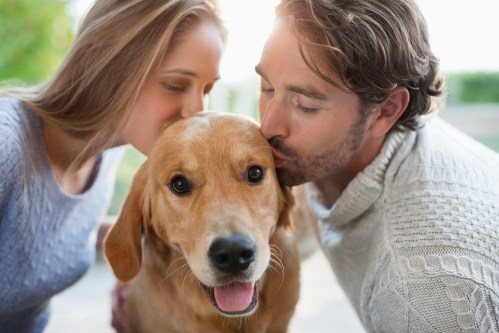
kissing-dog

Photo: Getty

Pucker up, pup!

Riley’s Organics, an organic dog treat company, recently conducted a survey to see just how close pet parents are to their dogs.

The company asked dog owners across the U.S. how much TLC they give their canines, and found that dogs often get more love than humans.

According to Riley’s results, 52% of respondents admitted to kissing their dog more than their partner. This trend continued into the respondents’ sleep habits. Out of those surveyed, 52% said they prefer to sleep in bed with their dog over their partner.

These numbers, while likely surprising to some who don’t own pets, make more sense when you learn that 94% of pet parents surveyed by Riley’s said they consider their dog to be one of their best friends.

Significant others can’t compete with the overwhelming love of a true blue BFF.

Source:  People.com