Author Archives: DoggyMom.com

Pets are a priority when moving

Is it a case of the tail wagging the dog, or every dog having his day? However you define it, the cat is out of the bag when it comes to pet owners and moving into a new home.

A new survey from US company Mayflower reveals pet priorities are often equal to or more important than human-focused amenities when American dog and cat owners decide on new homes and communities.

african american man with labrador dog in new apartment with cardboard boxes

Overall, pet owners say one-third of their overall decision to move was related to their pet, and survey respondents cited willingness to pay significantly more and even forgo perks like shorter commutes and updated kitchens in favor of pet-friendly features.

The 2019 Mayflower Mover Insights Survey explored the process of moving or preparing to move with a pet, including just how much pets factor into choices about home and community features. According to the survey, cat and dog owners who have moved recently say their pet influenced which new home they chose by 39 percent and which new community they chose by 26 percent. Additionally:

  • Pet owners who plan to move say their pet will influence their choice of home by 48 percent and their choice of community by 33 percent.
  • Pet owners who are likely to move in the next five years are willing to pay an average of 32 percent more each month to get the pet-friendly features they want, such as a fenced-in yard and plenty of indoor space, as compared to their current monthly housing costs.
  • Kitchen vs. Canine: Half of future movers (50 percent) want an updated kitchen, and the other half (50 percent) prioritize a pet-friendly feature.
  • Pet vs. Place of Business: While nearly half (49 percent) of future movers want to live close to work, the other half (51 percent) prioritizes pet-friendly features in their new home.

Mayflower’s survey also found more than three-fourths of past movers and future movers with pets didn’t stay close or don’t plan to stay close to their current neighborhood or part of town when choosing their next home. Yet, more than two-thirds of past movers tried to stay close to their pet’s favorite human and furry friends, their favorite park and their vet. The pet-related decisions meant more than staying near their old neighborhood.

“In the last few years, we’ve heard more and more from our customers about the impact moving has on pets. With every move, we strive to ensure the process is smooth for both our customers and their animals by providing expertise, information and constant support,” said Eily Cummings, director of corporate communications, Mayflower.

Settling in: Stressful or smooth for Fido and Fluffy  

Pets may get the priority for perks when their humans relocate, but moving is still a stressful activity for dogs and cats. Mayflower’s survey also shed light on pets’ experiences during moves.

  • Half of pet owners (50 percent) reported their pets struggled to adjust to their new home – especially the feline friends. Nearly two-thirds of all cat owners say their cat had difficulty adjusting.
  • Prior to a move, almost half of pet owners (47 percent) sought information about moving with a pet, including researching online, talking with others who have moved with a pet or speaking with a vet.
  • To smooth the transition, eight in 10 pet owners gave their pet extra attention and showed them where things were in the new home.
  • Nearly half of all future owners (48 percent) will introduce their pet to the new home prior to moving in to minimize their dog and/or cat’s stress.
  • More than half of all survey respondents (53 percent) said their spouse/partner added or will add more stress to the move than their pet did.

However, there’s still good news for pet owners: more than nine in 10 owners say their pets adjusted to their new setting in less than a month. And, more than 90 percent of pet owners agree that wherever they and their pets are together is instantly home.

Survey Background and Methodology

TRUE Global Intelligence, the in-house research practice of FleishmanHillard, fielded an online survey of 2,904 American cat and/or dog owners who have moved with their pet(s) within the past five years or are likely to move with their pet(s) within the next five years. The survey was fielded between January 11 to January 20, 2019. Sampling was conducted to balance age, gender, and, for the nationwide sample, geographic region. Some questions were asked with a “Not Applicable” option. Those questions have been reported based on the total number for whom the question/item was applicable. To clarify the different experiences of cat and dog owners, statistics referencing cat and dog owners specifically include only those respondents with a dog(s) or a cat(s) and exclude respondents who own both.

Editor’s note: Additional survey data is available by request. If interested, please contact Bonnie Stack at 314-982-1730 or bonnie.stack@fleishman.com.

About Mayflower

Mayflower is America’s most recognized and trusted moving company. With headquarters in suburban St. Louis, Mayflower maintains a network of 300 affiliated agencies.

Source:  Mayflower Mover press release
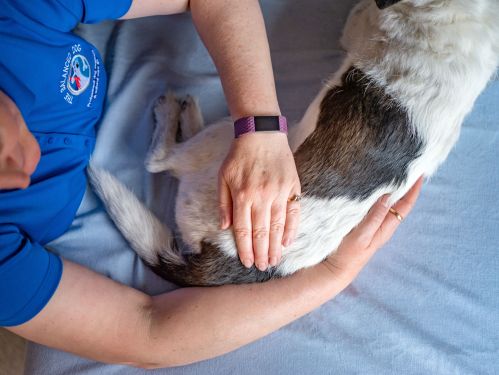
Top reasons for using dog massage

I’m often asked why people should employ a professional dog massage therapist.

balanced_dog-0002

In the 10 years I’ve been in professional practice, these are always the top reasons:

Care for an older dog

The dog whose been the love of your life is slowing down, possibly with a diagnosis of arthritis and medication from the vet.  This is often when I get the call…

A change in behaviour

The dog is doing something it hasn’t before; the family doesn’t know why.  And possibly they’ve been to the vet about it or possibly they haven’t.  We always need to rule out a physical reason for the behaviour and once I’ve seen the dog for myself, I often give the owners a list of questions to ask the vet.

General health & wellbeing

I love these enquiries!  They are from owners who tell me that “there’s nothing wrong with their dog” and they want to keep it that way.  Can I come and have a look and work on a fitness programme for them?  My answer is always yes!

Recovery from injuries and/or surgery

A dog on crate rest or restricted exercise gets all jammed up.  And many will need an exercise and rehab program.  My rehab programs always include ideas for mental stimulation and enrichment – key concepts behind my Fear Free practice.

Kathleen Crisley, Fear-Free certified professional and specialist in dog massage, rehabilitation and nutrition/food therapy, The Balanced Dog, Christchurch, New Zealand

Study shows dogs can accurately sniff out cancer in blood

Dogs have smell receptors 10,000 times more accurate than humans’, making them highly sensitive to odors we can’t perceive. A new study has shown that dogs can use their highly evolved sense of smell to pick out blood samples from people with cancer with almost 97 percent accuracy. The results could lead to new cancer-screening approaches that are inexpensive and accurate without being invasive.

Beagle sniffing cancer

A new study has shown that dogs can use their highly evolved sense of smell to pick out blood samples from people with cancer with almost 97 percent accuracy. Photo by: BioScentDx

“Although there is currently no cure for cancer, early detection offers the best hope of survival,” said Heather Junqueira, who is lead researcher at BioScentDx and performed the study. “A highly sensitive test for detecting cancer could potentially save thousands of lives and change the way the disease is treated.”

Junqueira will present this research at the American Society for Biochemistry and Molecular Biology annual meeting during the 2019 Experimental Biology meeting to be held April 6-9 2019 in Orlando, Fla.

For the new study, Junqueira and her colleagues used a form of clicker training to teach four beagles to distinguish between normal blood serum and samples from patients with malignant lung cancer. Although one beagle — aptly named Snuggles — was unmotivated to perform, the other three dogs correctly identified lung cancer samples 96.7 percent of the time and normal samples 97.5 percent of the time.

“This work is very exciting because it paves the way for further research along two paths, both of which could lead to new cancer-detection tools,” said Junqueira. “One is using canine scent detection as a screening method for cancers, and the other would be to determine the biologic compounds the dogs detect and then design cancer-screening tests based on those compounds.”

BioScentDx plans to use canine scent detection to develop a non-invasive way of screening for cancer and other life-threatening diseases. As a next step, the company launched a breast cancer study in November in which participants donate samples of their breath for screening by trained cancer-sniffing dogs. The researchers also plan to separate the samples into their chemical components and present these to the dogs to isolate the substances causing the odor that the dogs detect.

About Experimental Biology 2019

Experimental Biology is an annual meeting comprised of more than 14,000 scientists and exhibitors from five host societies and multiple guest societies. With a mission to share the newest scientific concepts and research findings shaping clinical advances, the meeting offers an unparalleled opportunity for exchange among scientists from across the United States and the world who represent dozens of scientific areas, from laboratory to translational to clinical research.

Source:  EurekAlert! media statement

How Pets Contribute to Healthy Aging

Two-thirds of all pet owners say that having an animal helps them stay physically active. But for some older adults, time commitment, cost and allergies stand in the way.

A curled-up cat, a tail-wagging dog, a chirping parakeet or even a serene goldfish may help older adults cope with mental and physical health issues, according to a new poll, the National Poll on Healthy Aging (USA).

But while pets come with benefits, they can also bring concerns, and some people may even put their animals’ needs ahead of their own health, the poll finds.

In all, 55 percent of adults ages 50 to 80 have a pet, according to the new findings — and more than half of those have multiple pets. More than three-quarters of pet owners say their animals reduce their stress, and nearly as many say pets give them a sense of purpose. But 18 percent also said having a pet or pets puts a strain on their budget.

Two-thirds of all pet owners, and 78 percent of dog owners, said their pet helps them be physically active, according to the new findings from the National Poll on Healthy Aging.

The poll is conducted by the University of Michigan Institute for Healthcare Policy & Innovation, and sponsored by AARP and Michigan Medicine, U-M’s academic medical center.

For those who reported that their health was fair or poor, pet ownership appeared to offer even more benefits. More than 70 percent of these older adults said their pet helps them cope with physical or emotional symptoms, and 46 percent said their pets help take their mind off of pain.

“We have long known that pets are a common and naturally occurring source of support,” says Cathleen Connell, Ph.D., a professor at the U-M School of Public Health who has studied the role of companion animals in older adults’ lives.

“Although the benefits of pets are significant, social connections and activities with friends and family are also key to quality of life across the life span,” she says. “Helping older adults find low-cost ways to support pet ownership while not sacrificing other important relationships and priorities is an investment in overall mental and physical health.”

Poll director Preeti Malani, M.D., a U-M Medical School professor who has training in caring for older adults, says the poll results indicate a need for physicians and other health care providers to ask older adults about the role of pets in their lives.

“More activity, through dog walking or other aspects of pet care, is almost always a good thing for older adults,” Malani says. “But the risk of falls is real for many, and 6 percent of those in our poll said they had fallen or injured themselves due to a pet.”

“At the same time, given the importance of pets to many people, the loss of a pet can deal a very real psychological blow that providers, family and friends should be attuned to,” she says.

Mich-AgingPollPet-Graphic_0

“This study highlights the many physical, psychological and social benefits that pets can have for older adults,” says Alison Bryant, Ph.D., senior vice president of research for AARP. “In recognition of these health benefits, more assisted living facilities today are allowing residents to have pets.”

Pet positives

Companionship and social connection were positive side effects of pet ownership for many poll respondents.

In fact, more than half of those who owned pets said they did so specifically to have a companion — and a slightly higher percentage said their pets sleep in bed with them. Sixty-five percent of pet owners said having a pet helps connect them to other people, too.

“Relationships with pets tend to be less complicated than those with humans, and pets are often a source of great enjoyment,” says Mary Janevic, Ph.D., MPH, an assistant research scientist at the U-M School of Public Health who helped design the poll. “They also provide older adults with a sense of being needed and loved.”

Pet problems

Other concerns about pet ownership emerged in the poll results. More than half of pet owners said that having a pet also made it difficult to travel or enjoy activities outside the home.

And 1 in 6 said that they put their pet’s needs ahead of their own health needs — a figure that was closer to 1 in 4 among those with health issues.

“Later life is often a time when people have more freedom to travel, and a long list of things they want to do with their free time, and sometimes having a pet can get in the way,” says Janevic.

“For people living on a fixed income, expenses related to health care for pets, and especially pets that have chronic health issues, can be a struggle,” she says. “Older adults can also develop health problems or disabilities that make pet care difficult.”

The non-pet-owner perspective

The 45 percent of older adults who said they don’t have pets gave many reasons for not keeping a dog, cat, fish, lizard, bird or small mammal around.

Among non-pet owners, 42 percent said they didn’t want to be tied down. Twenty percent said they didn’t have time, and 23 percent gave cost as the reason, while 16 percent said their own allergies, or those of someone in their household, kept them from getting a pet.

For those who can’t own pets due to allergies, budget constraints, housing circumstances or schedules, there’s often a need for volunteers at local animal shelters or pet-sitting for friends and family, the researchers say.

They note that health care providers and family may even want to recommend these options to older adults who have no pets and wish to have one.

The National Poll on Healthy Aging results are based on responses from a nationally representative sample of 2,051 adults ages 50 to 80 who answered a wide range of questions online. Questions were written, and data interpreted and compiled, by the IHPI team. Laptops and internet access were provided to poll respondents who did not already have them.

A full report of the findings and methodology is available at healthyagingpoll.org, along with past National Poll on Healthy Aging reports.

The essentials of sleep for dogs

What a great infographic about sleep and dogs.

Remember that our dogs need to sleep more than we do to get adequate rest because they enter REM sleep (deep sleep) less often.  Rest is important for the immune system and for recovery and inadequate rest can result in behavioral problems as well as other health problems.

Kathleen Crisley, Fear-Free certified professional and specialist in dog massage, rehabilitation and nutrition/food therapy, The Balanced Dog, Christchurch, New Zealand

DogSleepInfographic


Two new genes dis­covered in the de­vel­op­men­tal de­fects of can­ine enamel

In addition to humans, hereditary disorders of enamel development occur in dogs, greatly impacting their dental health and wellbeing. A recent study reveals canine enamel disorders similar to those found in humans, linking them with ENAM and ACP4, two genes previously described in humans.
Dog tooth enamel study

New variants in the ENAM gene that codes enamelin were discovered in Parson Russell Terriers

The enamel that covers teeth is the hardest structure in the entire body. Its development is a complex process, and related developmental disorders may result in low enamel quantity, its absence or structural weakness. Alongside aesthetic issues, enamel defects have an impact on dental health and general wellbeing. Amelogenesis imperfecta (AI) is a group of hereditary developmental disorders affecting enamel, with more than ten associated genes reported in humans.

AI causes a significant wellbeing problem for dogs as well, yet the diseases, poorly known in canine medicine, often remain undiagnosed. Canine AI has earlier been linked with the ENAM and SLC24A4 genes in two breeds. In a recent study conducted at the University of Helsinki, two novel recessively inherited enamel disorders were described in dogs, and associated with causative variants in ENAM and ACP4. The identified genes have previously been linked with hereditary enamel development defects also in humans.

“We have observed enamel defects in several breeds. In this study, we found new gene variants in the ENAM gene of Parson Russell Terriers and the ACP4 gene of Akitas and American Akitas. The ACP4 finding was of particular interest, as its role in the development of tooth enamel is not well known, and there are no previous descriptions for any animal models,” says Marjo Hytönen, PhD, the first author of the study.

ENAM codes for enamelin, the key enamel protein, and is significant for achieving the correct enamel thickness during tooth development. A considerable part of human AI disorders are associated with mutations in the ENAM gene, whereas ACP4 codes for the phosphatase enzyme, whose specific significance to tooth and enamel development is currently unclear, but which may influence cellular differentiation and mineralisation. Dogs with an ACP4 mutation expressed thinning of the enamel and a slight mineralisation disorder.

Unlike mice, dogs have primary and permanent teeth just as humans, and the number of teeth is also similar. Therefore, dogs serve as an excellent model for human dental diseases.

“The spontaneous enamel defects found in this study resemble earlier descriptions of human patients, and are also linked with the same genes. Through gene tests, the gene findings will provide new diagnostic tools for veterinarians and breeders, which will also help with understanding the causes, mechanisms and hereditary nature of enamel defects. This is important for the development of early and improved therapies,” explains Professor Hannes Lohi, director of the research group.

Earlier, the group discovered a mutation in the FAM20C gene, impacting tooth hypomineralisation. Gene mapping will continue on various dental diseases in different breeds, including a publication which is currently being prepared on an unknown AI gene.


Source:  University of Helsinki media release


Image

Doggy quote of the month for April

Joaquin Phoenix quote

Kibbles and Kale? Many Pet Owners Keen to Have Vegan Pets

A surprising number of pet owners, particularly those who are vegan, are interested in feeding their pets a plant-based diet, according to new University of Guelph research.

Researchers with U of G’s Ontario Veterinary College along with colleagues in New Zealand conducted an online survey of 3,673 dog and cat owners from around the world to learn about what kinds of foods they fed their pets and themselves.

Vegan diet photo

Photo by: Rarnie McCudden from Pexels

Published in the journal PLoS ONE, the survey found that 35 per cent of owners whose pets ate conventional diets were interested in switching their animals to a vegan diet.

More than half of them (55 per cent) added, though, that certain stipulations needed to be met before they would make the switch. Those stipulations included needing further evidence that a plant-based diet would meet their pets’ nutritional needs, wanting approval from their veterinarians and wanting plant-based pet foods to be easily available.

Just under six per cent of the survey respondents were vegan — meaning they ate no meat, dairy or fish – and more than a quarter (27 per cent) of them reported they already fed their pets plant-based diets.

Among the rest of the vegans, a full 78 per cent were interested in helping their pets to switch to a plant-based diet if one were available that met their needs.

Lead author Sarah Dodd, currently a PhD candidate at the OVC’s Department of Population Medicine, said even she was surprised by how many vegans had already chosen to eliminate meat from their pets’ diets.

“That percentage, 27 per cent, might sound like a small number, but when you think of the actual numbers of pets involved, that’s huge, and much higher than we expected.”

In total, 1.6 per cent of the 2,940 dogs in the survey and 0.7 per cent of the 1,545 cats were being fed a strictly plant-based diet; only vegans and one vegetarian chose to exclusively feed plant-based diets.

Another 10.4 per cent of the dogs and 3.3 per cent of cats were intermittently fed vegetarian diets or plant-based foods.

Of the 3,673 pet owners surveyed, 6 per cent were vegetarian (meaning they ate no meat but did eat dairy, eggs or honey), 4 per cent were pescatarian (meaning they ate no meat but fish, and may eat dairy, eggs or honey), and nearly 6 per cent were vegan (meaning they ate no animal products).

Dodd performed this study for her M.Sc. degree with Prof. Adronie Verbrugghe in OVC’s Department of Clinical Studies

Dodd said while her team’s research was not designed to assess whether vegan pet diets are a growing trend, she expects interest in the diets to increase.

“People have been hearing about how vegan diets are linked to lowered risks of cancer and other health benefits in humans. There is also growing concern about the environmental impact of animal agriculture.”

Previous studies have also shown that pet owners tend to offer the same kind of diets to their dogs and cats that they adopt for themselves.

“So, while only a small proportion of pet owners are currently feeding plant-based diets to their pets, it is safe to say that interest in the diets is likely to grow.”

However, there has not been much research on the nutritional suitability of vegan diets for dogs and cats, nor on the health benefits and risks of plant-based diets in these animals, said Dodd.

“This study shows there is a clear need for further research in this area.”

Source:  University of Guelph media statement

Who should Fido fear? Depends on relationship

As states around the country move to stiffen punishments for animal cruelty, Michigan State University researchers have found a correlation between the types of animal abuse committed and the perpetrator’s relationship to an animal and its owner.

For example, animal-neglect crimes (i.e. withholding food and water) tend to be perpetrated by the animal’s owner. On the other hand, with crimes that involve kicking or stabbing, the suspect is usually an owner’s family member or intimate partner, said Laura Reese, professor of urban and regional planning.

Laura Reese and Odie

Study leader Laura Reese and her dog, Odie Photo by Laura Reese

Reese and Cassie Richard, an MSU master’s of public policy student who now works for the Oregon Commission for the Blind, studied more than 300 animal cruelty police reports in Detroit between 2007 and 2015. They categorized abuse into eight types including dog fighting, shooting, poisoning, stabbing and neglect. The researchers coded the list of motivations for cruelty as listed by the perpetrators, who were then matched with the Detroit police crime feed to examine their other patterns of crime.

The researchers also found:

  • It’s usually owners – rather than anyone else – who engage their dogs in dog fighting as a form of abuse, often for the money. But owners are also less likely to commit more active forms of cruelty, possibly because of their role as guardians.
  • Most stabbings involve family members while poisonings are typically committed by neighbors.
  • Motivations differ. For intimate partners of pet owners, frustration with a relationship is often the cause of violence, whereas for neighbors, annoyance with an animal is often the impetus for cruelty.

“This isn’t just an animal problem – it’s a human problem,” Reese said. “For example, people who shoot other humans are more likely to shoot animals. At the same time, dog fighting is a public safety problem and dogs running loose biting people due to neglect is a public health problem. So, addressing human problems will help animal problems and vice versa, and we need to encourage public officials to think that way.”

However, most policymakers don’t, she said. Animal cruelty prevention needs to be a coordinated effort between law enforcement, public agencies and nonprofits. And because forms of animal cruelty vary, public policies and public health solutions should vary.

For example, dog fighting is related to gambling, drugs and weapon offenses. Thus, crackdowns on those issues would address that form of cruelty. Meanwhile, low-cost veterinary services and enforcement of existing ordinances, such as licensing requirements and leash laws, would target owner neglect.

“Simple education and informing people about proper nutrition, spaying and neutering could be done in schools,” Reese said. “Folks often want to do the right thing, but they may not have the resources. At the same time, cruelty is also tied up with domestic violence, which raises a separate and more complex set of concerns. That’s why we need our legislators and local officials to understand the complexities of animal cruelty and make solutions a priority.”

The study is published in the journal Anthrozoös.

The journal article can be read here:

https://www.tandfonline.com/doi/abs/10.1080/08927936.2019.1550282)

Source:  Michigan State University media release

Laying flowers in Christchurch

It has been a dark few days in Christchurch after Friday’s shootings at two mosques, which have made worldwide news.

Today, Izzy and I came into the city to lay flowers at the tribute to the 50 innocent people who had their lives taken from them, and for the wounded who hopefully will recover. We were not alone.

Our city is coming together over this tragedy and we appreciate your support and thoughts to all who have been affected.

Kathleen Crisley, Fear-Free certified professional and specialist in dog massage, rehabilitation and nutrition/food therapy, The Balanced Dog, Christchurch, New Zealand