Author Archives: DoggyMom.com

Flying first class

Last week, United Airlines made news for all the wrong reasons…  Did you know that American Airlines has a service on select flights from Los Angeles or San Francisco to New York for passengers traveling first class with their small pet?

If the pet fits into a carrier no larger than 19 inches by 13 inches by 9 inches, then by booking in advance and paying the $125 carry-on fee, the pet can ride in a special pet cabin adjacent to their owner’s seat.

Dog in American Airlines first class

The service is available only on the A321T planes offered on these routes.

For those that can afford first class (and the corresponding reduced risk of ejection if the flight is overbooked, I may add, check the small print on most conditions of carriage in the major airlines), it would be lovely to have your small-breed pet travel with you in comfort.

Kathleen Crisley, specialist in dog massage, rehabilitation and nutrition/food therapy, The Balanced Dog, Christchurch, New Zealand

Pet exposure may reduce allergies and obesity

If you need a reason to become a dog lover, how about their ability to help protect kids from allergies and obesity?

A new University of Alberta study showed that babies from families with pets—70 per cent of which were dogs—showed higher levels of two types of microbes associated with lower risks of allergic disease and obesity.

Puppy licking a baby's face

A dog licking a baby’s face. Credit: © Christin Lola / Fotolia

But don’t rush out to adopt a furry friend just yet.

“There’s definitely a critical window of time when gut immunity and microbes co-develop, and when disruptions to the process result in changes to gut immunity,” said Anita Kozyrskyj, a U of A pediatric epidemiologist and one of the world’s leading researchers on gut microbes—microorganisms or bacteria that live in the digestive tracts of humans and animals.

The latest findings from Kozyrskyj and her team’s work on fecal samples collected from infants registered in the Canadian Healthy Infant Longitudinal Development study build on two decades of research that show children who grow up with dogs have lower rates of asthma.

The theory is that exposure to dirt and bacteria early in life—for example, in a dog’s fur and on its paws—can create early immunity, though researchers aren’t sure whether the effect occurs from bacteria on the furry friends or from human transfer by touching the pets, said Kozyrskyj.

Her team of 12, including study co-author and U of A post-doctoral fellow Hein Min Tun, take the science one step closer to understanding the connection by identifying that exposure to pets in the womb or up to three months after birth increases the abundance of two bacteria, Ruminococcus and Oscillospira, which have been linked with reduced childhood allergies and obesity, respectively.

The abundance of these two bacteria were increased twofold when there was a pet in the house,” said Kozyrskyj, adding that the pet exposure was shown to affect the gut microbiome indirectly—from dog to mother to unborn baby—during pregnancy as well as during the first three months of the baby’s life. In other words, even if the dog had been given away for adoption just before the woman gave birth, the healthy microbiome exchange could still take place.

The study also showed that the immunity-boosting exchange occurred even in three birth scenarios known for reducing immunity, as shown in Kozyrskyj’s previous work: C-section versus vaginal delivery, antibiotics during birth and lack of breastfeeding.

What’s more, Kozyrskyj’s study suggested that the presence of pets in the house reduced the likelihood of the transmission of vaginal GBS (group B Strep) during birth, which causes pneumonia in newborns and is prevented by giving mothers antibiotics during delivery.

It’s far too early to predict how this finding will play out in the future, but Kozyrskyj doesn’t rule out the concept of a “dog in a pill” as a preventive tool for allergies and obesity.

“It’s not far-fetched that the pharmaceutical industry will try to create a supplement of these microbiomes, much like was done with probiotics,” she said.

The study, funded by the Canadian Institutes of Health Research and the Allergy, Genes and Environment Network (AllerGen NCE), was published in the journal Microbiome, along with an editorial in Nature.

Source:  University of Alberta media release

Job share: Boots and Rush

When this story came through my Facebook feed, I had to share it.

Yet another ‘working dogs/therapy dogs’ success story – this time in Western Australia at the Woodvale Secondary College using two special greyhounds.

Boots came first for three days of dog therapy support, and then Rush joined to fill in for the remaining two days.

Enjoy this video, which shows therapy dog work and benefits:

And the spin-off benefit from using the dogs at the school is the profile raised for greyhound adoption.

Kathleen Crisley, specialist in dog massage, rehabilitation and nutrition/food therapy, The Balanced Dog, Christchurch, New Zealand

San Diego therapy dog detects water contamination

It’s just a small news item in the Los Angeles and San Diego newspapers…but it’s another story of how special dogs are – and how they use their detection skills to help humans.

On 26 January 2017, a therapy dog at San Diego Cooperative Charter School in Mountain View wouldn’t drink the water a teacher had poured for it from the classroom sink.

The teacher noticed a sheen on the water, which was tested and initially revealed the substance vinyl chloride.  Subsequent testing has revealed levels of lead some of which exceed health standards.

A district-wide water testing program is underway in all City of San Diego schools.

All because of one keen-nosed therapy dog with discerning tastes!

Source:  LA Times; Voice of San Diego

The Dog Lawyer

Earlier this year, I had the opportunity to interview Jeremy Cohen of Boston Dog Lawyers.

Yes – your dog can have a lawyer.  Or, more accurately, you can hire a lawyer to advocate for you and your dog.

Boston Dog Lawyers picture

It’s a sad fact that many dogs are often destroyed because poor laws and policy deem them to be dangerous.  Jeremy thinks we can do better and has a range of trainers, behaviorists and other experts he can call upon to represent an alternative position.

Couples who haven’t married legally may find themselves fighting over ‘ownership’ of their pet.  Custody battles are another area of the practice.

Jeremy is profiled in my column this month in NZ Dog World magazine.

I particularly like Jeremy’s simple to understand bite prevention tips:

Boston Dog Lawyers – Bite Prevention Tips

Never allow your dog to be alone with children under age 12
Integrate your dog into your family and don’t segregate it
Follow the leash law
Use the leash when entering and exiting the car
Exercise your dog daily
Post signs if dog is aggressive
Keep current with licensing and shots

Boston Dog Lawyers logo

Kathleen Crisley, specialist in dog massage, rehabilitation and nutrition/food therapy, The Balanced Dog, Christchurch, New Zealand

Mutual Rescue™ – Tracy and Jack

I blogged about Mutual Rescue™ last year; it’s a a trademarked initiative of the Humane Society Silicon Valley.  Aimed at changing the way people think of animal welfare and adoption, each year the Society asks for submissions from people to share their story about a special connection they have made with an animal.

The first story of 2017 has been released.  Meet Tracy and Jack.  Note that Jack is a tripod as well as having only one eye.  It doesn’t stop him from living a full life.

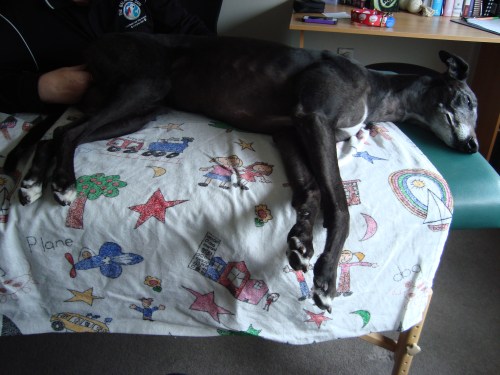
Note:  Tripods benefit from regular massage which helps to retain full range of motion in the remaining limbs.   Stretching and relieving tension in hard-working muscles helps to keep these special needs dogs moving.   I love working with tripods (I don’t live near Jack, so can’t work with him)!

Kathleen Crisley, specialist in dog massage, rehabilitation and nutrition/food therapy, The Balanced Dog, Christchurch, New Zealand

Dog massage etiquette – the therapist

I’ve been doing a bit of thinking about dog massage etiquette lately.  That’s because I pride myself on running a professional practice; I have committed to ongoing professional development, and I want my clients to value professional canine massage.

Lucy relaxed at massage

Here is what clients can expect from me:

  • I will be prepared to focus on your dog and his/her issues; this includes listening carefully to what you have to say
  • I will operate only within my scope of practice
  • I will keep notes that, on request, can be sent to your dog’s veterinarian or any other practitioner you choose as part of your healthcare team
  • I encourage and endorse regular veterinary care; I often say that your dog’s vet is its GP (General Practitioner or, in United States terms, ‘The Primary Care Physician’)
  • I will turn up on time and manage my appointments so that clients are not kept waiting and, when I am running late (which happens as a mobile practitioner), I will call you
  • If I ever use an assistant, and they are not fully qualified to the level that I am, you will be told you are seeing an assistant and have the option to opt out and reschedule with me personally if you prefer.  If you agree to use the assistant, you can expect to be charged a lower hourly rate
  • I will always offer suggestions with the best interest of the dog in mind; the decision to take up my suggestions rests with you as the dog’s owner
  • I will keep your records private (your dog’s records are a form of private information under the Privacy Act)
  • Clients often chat to me when I’m working and I appreciate their trust.  Anything you tell me will be kept in confidence.  If I write about a case, it will be described in generic terms to preserve privacy.

Kathleen Crisley, specialist in dog massage, rehabilitation and nutrition/food therapy, The Balanced Dog Ltd, Christchurch, New Zealand

Doggy quote of the month for April

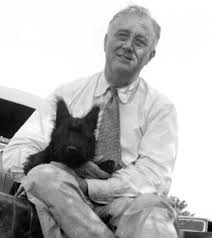
“These Republican leaders have not been content with attacks on me, or my wife, or on my sons. No, not content with that, they now include my little dog, Fala.

Well, of course, I don’t resent attacks, and my family don’t resent attacks, but Fala does resent them.

You know, Fala is Scotch, and being a Scottie, as soon as he learned that the Republican fiction writers in Congress and out had concocted a story that I’d left him behind on an Aleutian island and had sent a destroyer back to find him—at a cost to the taxpayers of two or three, or eight or twenty million dollars—his Scotch soul was furious. He has not been the same dog since.

I am accustomed to hearing malicious falsehoods about myself … But I think I have a right to resent, to object, to libelous statements about my dog.”

– Franklin Delano Roosevelt, US President

FDR and Fala

Background:  During the 1944 presidential campaign, Republicans alleged that Mr Roosevelt had left his Scottie dog, Fala, behind in the Aleutian Islands and sent a U.S. destroyer to collect him (at taxpayers’ cost).  President Roosevelt chose to respond during a speech to the International Teamsters Union.

Who Rescued Who?

I hear about it a lot from my clients and I’ve experienced it myself.

Your dog came into your life at a time when you really needed them.  Unconditional love & companionship.

So my thought for the day is simple:

Who Rescued Who

Kathleen Crisley, specialist in dog massage, rehabilitation and nutrition/food therapy, The Balanced Dog Ltd, Christchurch, New Zealand

Brain scans of service-dog trainees help sort weaker recruits from the pack

Brain scans of canine candidates to assist people with disabilities can help predict which dogs will fail a rigorous service training program, a study by Emory University finds.

The journal Scientific Reports published the results of the study, involving 43 dogs who underwent service training at Canine Companions for Independence (CCI) in Santa Rosa, California.

Dogs with MRI machine

Some of the service dog trainees that were involved in the study pose with an fMRI scanner. (Photo by Gregory Berns.)

“Data from functional magnetic resonance imaging (fMRI) provided a modest, but significant, improvement in the ability to identify dogs that were poor candidates,” says Emory neuroscientist Gregory Berns, who led the research. “What the brain imaging tells us is not just which dogs are more likely to fail, but why.”

All of the dogs in the study underwent a battery of behavioral tests showing that they had a calm temperament before being selected for training. Despite calm exteriors, however, some of the dogs showed higher activity in the amygdala – an area of the brain associated with excitability. These dogs were more likely to fail the training program.

“The brain scans may be like taking a dog’s mental temperature,” Berns says. “You could think of it as a medical test with a normal range for a service dog. And the heightened neural activity that we see in the amygdala of some dogs may be outside of that range, indicating an abnormal value for a successful service dog.”

The findings are important, he adds, since the cost of training a service dog ranges from $20,000 to $50,000. As many as 70 percent of the animals that start a six-to-nine-month training program have to be released for behavioral reasons.

“There are long waiting lists for service dogs, and the training is lengthy and expensive,” Berns says. “So the goal is to find more accurate ways to eliminate unsuitable dogs earlier in the process.”

The study found that fMRI boosted the ability to identify dogs that would ultimately fail to 67 percent, up from about 47 percent without the use of fMRI.

“This type of approach is not going to be feasible for individual trainers and their dogs because of the expense of fMRI,” Berns says. “It would only be practical for organizations that train large numbers of dogs every year.”

CCI is a non-profit that breeds, raises and trains dogs to assist human partners. Its service dog program, designed for disabled people, provides dogs to do tasks such as turn on lights, pick up dropped keys, open a door and pull a manual wheelchair.

Golden retrievers, Labradors — or crosses between the two — are the usual CCI service dog breeds, due to their generally calm and affable natures. After the puppies are weaned, they are adopted by volunteer puppy raisers for 15 months, before returning to CCI to undergo behavioral tests. Those that pass begin training.

For the Scientific Reports paper, the researchers taught the dogs how to remain still while undergoing an fMRI at the start of the training program.

The Berns’ lab was the first to conduct fMRI experiments on awake, unrestrained dogs, as part of an ongoing project to understand canine cognition and inter-species communication. In an early experiment, dogs were trained to respond to hand signals. One signal meant the dog would receive a food treat, and another signal meant that the dog would not receive one. The caudate region of the brain, associated with rewards in humans, showed activation when the dogs saw the signal for the treat, but not for the non-treat signal.

The researchers adapted this experiment for the current study — the largest yet involving dogs undergoing fMRI. The dogs were taught hand signals for “treat” and “no treat,” but sometimes the signals were given by the dog’s trainer and other times by a stranger.

The results found that dogs with stronger activity in the caudate in response to the treat signal – regardless of who gave the signal – were slightly more likely to successfully complete the service dog training program. However, if a dog had relatively more activity in the amygdala in response to the treat signal – particularly if the signal was given by a stranger – that increased the likelihood that the dog would fail.

“The ideal service dog is one that is highly motivated, but also doesn’t get excessively excited or nervous,” Berns says. “The two neural regions that we focused on – the caudate and the amygdala – seem to distinguish those two traits. Our findings suggest that we may be able to pick up variations in these internal mental states before they get to the level of overt behaviors.”

Berns hopes that the technology may become more refined and have applications for a broader range of working dogs, such as those used to assist the military and police forces.

Source:  Emory University