Category Archives: dog care

Ebony’s story

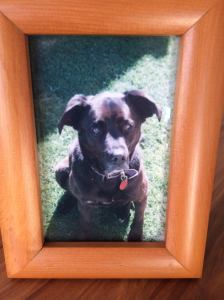
Ebony's photo

This is Ebony; she was a Chocolate Labrador cross – a deep dark chocolate in colour (not milk chocolate like many Labs).  She was my best friend from 1998, when I adopted her via Dogwatch which facilitated a private adoption, to October 2003, when she suddenly succumbed to cancer of the liver and pancreas.

Ebony was highly reactive to sounds and, particularly, fireworks.  So I think of her a lot around Guy Fawkes celebrations each year.

Each year, I’d go to the vet for a prescription for sedatives and then for many nights around the official celebration, I would have to try to dose her before any fireworks started.  This was easier said than done.  As many of us know, people sometimes set off fireworks even before darkness has fallen.  The label recommended intake within 1 hour before any stimulus…

Most of the time, sedatives weren’t enough.  Copious amounts of Rescue Remedy in her water bowl and sprayed around the house didn’t seem to help much, either.  Ebony would run and pace the house, hyperventilating and salivating.  It was heartbreaking to watch.  Sometimes, I would turn the radio on in the car, which was parked in the garage, and I’d put her in the back seat (as usual) with me in the front pretending that any minute we would be going out for a ride.  But in reality, I was just trying to get as many layers of sound-proofing between us and the fireworks that I could.

Ebony wasn’t fooled, although sometimes our car trips to nowhere did help alleviate some of the sounds.

The bottom line was that when Ebony was over-threshold with fear, there wasn’t much that could be done until the fireworks stopped.

One year, we were woken from a sound sleep when someone decided to light off fireworks.  It was late by our standards, past 10 pm when most families and working people would not be up lighting fireworks on a work night.

Ebony was immediately over-threshold, barking and pacing.  And then she lost control of her bowels in our bed.  She was doubly stressed by this, and I had to strip the bed and put everything in the washing machine and re-make the bed with fresh linens.

Another year, Ebony barked so badly that she suffered a rectal prolapse.  She had literally barked herself inside/out; part of her rectum had come out of the anus.   It was incredibly upsetting for the both of us and I knew she was in pain and discomfort, too.  The vet was able to lubricate the tissue and help replace it back inside and I had to feed a low-irritant food to her for a week to ensure that we gave the area a chance to rest.

I clearly remember after this incident how much noise her digestive system made – gurgling – for days.  Looking back, I’m sure that the stress and digestive upsets she endured because of fireworks had something to do with her succumbing to liver and pancreatic cancer – before she even reached aged 10.

So you might wonder why I’m so passionate about the banning of the private sale of fireworks and now you know.  They hurt my dog many times over and when you hurt my dog, I’m unlikely to forget.

Kathleen Crisley, specialist in dog massage, rehabilitation and nutrition/food therapy, The Balanced Dog, Christchurch, New Zealand

Here we go again…a day of sadness

fireworks sign

Today, 2 November 2017, is the day when fireworks legally go on sale in the name of celebrating Guy Fawkes night aka Bonfire Night (5 November each year).

I’m sad because I know that many dogs, including those of my clients and friends, will be in for a stretch of nights filled with fear and anxiety.

Their human owners will be doing everything they can to manage.  Some will have gone to the veterinarian for sedative drugs which they will need to give before the booming starts, others will be playing music, changing routines to ensure nighttime dog walks are finished before the sun sets, wrapping their dogs in Thundershirts, spraying essential oils to help calm…the list goes on…

And like being in a war, you never know when the next barrage will happen.  It’s not just on Guy Fawkes Night.  It could be tonight, tomorrow.  It could be next week.  It may even be in a month or two for the people who stockpile their fireworks for random use.

Where I grew up, the sale of fireworks was illegal.  Only public displays – properly licensed and advertised in advance – were allowed.   It was more manageable and humane.

I fail to see the reason why the sale of these items is still legal in New Zealand and I haven’t seen a political party (or coalition) yet that is prepared to take a stand on this issue.

I have other arguments against fireworks, including the fact that the waste left over just adds to our landfills and that many fireworks users disrespect our parks by leaving their fireworks packaging and other rubbish overflowing from rubbish bins or, worse, strewn across the park for someone else to pick up.

Today I’m sad because, for the animals, the war is about to begin again.

Kathleen Crisley, specialist in dog massage, rehabilitation and nutrition/food therapy, The Balanced Dog, Christchurch, New Zealand

Dogs are individuals!

All dogs are different

Earlier this week, I attended a seminar in human digestive issues at the local natural health practice, The Herbal Dispensary.  The naturopath made the point to say that everyone has a unique digestive system and so what works for one person, may not work for another.

Bingo!

I’m tired of seeing posts from dog owners on Facebook asking what they should feed their dog.  And then dozens of answers, few which agree, and typically from no one who is a professional in the field.

There are many considerations when choosing a dog’s diet.  It is why I use a TCM food therapy approach, augmented by tests like Nutriscan.  These tools help to determine food ingredients that match the dog.  Considerations into format, such as commercial dry kibble or raw, come later.  And then the new diet needs to be trialed to ensure it is a good match.

Dogs are individuals in all aspects of their life, not just diets.

This week alone I’ve dealt with a paraplegic dog who needs help and a new wheelchair, an older dog with intermittent lameness, a year-old puppy who just needs to slow down and relax, a dog with irritable bowel disease, and a dog who is anxious and reactive.

My approach is different with each of these dogs because the dogs are different.

Celebrate your dog’s uniqueness and address their health as a special journey!

Being unique is better

Kathleen Crisley, specialist in dog massage, rehabilitation and nutrition/food therapy, The Balanced Dog, Christchurch, New Zealand

Massage for dogs with neurological conditions

I love working with special needs dogs of all kinds.  Last month, I had the privilege of working with two very special puppies at Best Friends Animal Sanctuary – Kit and Caboodle.

These puppies, Siberian Husky crosses, are brother and sister and were abandoned at the age of 8 weeks in Missouri.  They found their way to Utah to be cared for and rehabilitated.  Their kennel is lined with layers of pillows and blankets because both dogs struggle to stand up, although they are getting stronger every day thanks to caregivers and volunteers who work with them on a regular basis.  They even have purpose-built mobility carts to help them!

These kids are approaching their first birthday and have puppy levels of energy and are interested in all that is going on around them; the veterinary team has managed their conditions through medications for nausea and nerve pain….

During my session, we filmed a number of videos with two of the volunteers observing what I was doing with the dogs – so they could replicate some of my actions.

With both dogs, I was interested in calming their central nervous system, relaxation, and lots and lots of stretching since their limbs are working very hard.  Despite their neurological status, both dogs had trigger points just like ‘normal’ dogs do.

I am very grateful for the staff who organized my work schedule so I could offer my skills to 10 dogs at the sanctuary.

And I watch with interest on the progress reports about my neurological babies.

Kathleen Crisley, specialist in dog massage, rehabilitation and nutrition/food therapy, The Balanced Dog, Christchurch, New Zealand

Pet obesity

October 12th is National Pet Obesity Awareness Day in the USA.  Pet obesity is a ‘first world’ problem; I often see dogs in my practice that are overweight or obese.

This handy obesity chart gives you an idea of how to score your dog’s (and cat’s) body condition:

Layout 1

A vet check is always advisable before starting your dog on a weight loss programme.  In my experience, weight loss isn’t just about dietary changes.  Massage and stretching combined with exercise can help your dog feel  better and move more freely – meaning more calories are burned to assist with any reduction in food intake.

Kathleen Crisley, specialist in dog massage, rehabilitation and nutrition/food therapy, The Balanced Dog, Christchurch, New Zealand

Common signs of pain in dogs

How do I know my dog is in pain?

(It’s a question I get fairly frequently)….

Here’s a list of things to look out for:

  • Decreased social interaction
  • Anxious expression
  • Submissive behavior
  • Refusal to move
  • Whimpering
  • Howling
  • Growling
  • Guarding behavior
  • Aggression, biting
  • Decreased appetite
  • Self-mutilation
  • Changes in posture

If you think your dog is in pain, then a visit to your vet is the first priority.  Once we have a working diagnosis, then consider what complementary therapies can do to manage your dog’s quality of life – often with reduced or no drugs.

Kathleen Crisley, specialist in dog massage, rehabilitation and nutrition/food therapy, The Balanced Dog, Christchurch, New Zealand

Owners of seriously ill pets at risk of stress, anxiety and depressive symptoms

Owners of seriously or terminally ill pets are more likely to suffer with stress and symptoms of depression and anxiety, as well as poorer quality of life, compared with owners of healthy animals, finds a study published by Veterinary Record.

old dog

Caring for a sick or dying pet can be a serious emotional burden. Credit: © tuaindeed / Fotolia

This ‘caregiver burden’ may also lead to increased veterinarian stress, say the authors.

Research on human caregiving describes ‘caregiver burden’ as a response to problems and challenges encountered while providing informal care for a sick family member. But little is known about the impact of caregiver burden on owners of animals with chronic or terminal diseases – and the veterinarians who care for them.

So a team of researchers, led by Mary Beth Spitznagel at Kent State University in Ohio, set out to assess caregiver burden and psychosocial function in 238 owners of a dog or cat.

They compared 119 owners of an animal diagnosed with a chronic or terminal disease with 119 healthy controls blindly matched for owner age and sex and animal species.

Symptoms of stress, anxiety and depression were measured using recognised scales, and quality of life was assessed by questionnaire. Owners’ demographic information was also recorded.

Results showed greater burden, stress and clinically meaningful symptoms of depression and anxiety, as well as poorer quality of life, in owners of animals with chronic or terminal disease. Higher burden was also related to poorer psychosocial functioning.

The authors outline some study limitations which could have introduced bias, but they say their findings “may help veterinarians understand and more effectively handle client distress in the context of managing the challenges of sick companion animal caregiving.”

And they suggest that future research is needed to better understand risks for caregiver burden in the client, how this might be reduced, and how it impacts veterinarian wellbeing.

In a linked commentary, Katherine Goldberg calls for improved training for veterinarians around provision of long term care for serious illness. This includes tailoring treatment plans to client preferences, recognising when clients are distressed, and partnering with mental health professionals to provide support.

“This inaugural exploration of caregiver burden within a veterinary setting is the first step in assessing the impact of veterinary caregiving on clients, as well as the impact of client emotional distress on veterinarian wellbeing,” writes Goldberg. “It is my hope that with continued dialogue, we will continue to build the literature in these essential areas.”

Source:  BMJ press release

Willa – Our Sweet Girl

Willa is a special dog.

An American Pit Bull x Boxer, Willa has breast cancer which has likely spread. She’s on medication, but with time being precious, it’s important to focus on quality of life.   Willa is a popular sleepover dog at Best Friends Animal Sanctuary – every precious sleepover adds to Willa’s quality of life and enrichment.  She really enjoys getting out of kennels, getting cuddles and having a good, deep sleep.

IMG_1818[1]

Willa loves rides in the car

IMG_1810[1]

A special tag for a special girl

I really enjoyed staying with Willa and seeing her sweet nature in person.  Let’s hope she gets a home soon.

Kathleen Crisley, specialist in dog massage, rehabilitation and nutrition/food therapy, The Balanced Dog, Christchurch, New Zealand

Massage in the sanctuary environment

I have taken myself on study leave to Best Friends Animal Sanctuary in Kanab, Utah and today, they lined up 10 dogs for me to work with.  It was a jam-packed day.

First on the list was return customer, Google.  A Blue Heeler x Australian Cattle dog cross, I massaged Google two years ago during my last visit (see Re-visiting Old Friends).  Google has long-standing neck issues thanks to being kept on a chain early in his life.  He receives chiropractic adjustments every two months.  Google has been at Dogtown for 7 years; he’s now 10.  Google prefers to be adopted into a home where he will be the only-dog (and possibly the reason why it is taking him so long to find a home).

Massage definitely has a role to play in animal sheltering.  Keeping a dog comfortable in the kennel environment, particularly when they have physical challenges, is essential so the dog puts his/her best paw forward when prospective adopters come visiting.

Massage therapists look for the ‘soft eyes’ of a relaxed client.  Here’s a selfie to show you what I mean.

Good boy, Google!

Google at Dogtown

Kathleen Crisley, specialist in dog massage, rehabilitation and nutrition/food therapy, The Balanced Dog, Christchurch, New Zealand

My Dog is My Home

One of the best parts of the day is when I return to my home after a long day’s work and Izzy is there to greet me.  I think most dog owners/parents feel that way.

Now imagine that you are homeless and you have a dog (or two).  Access to a homeless shelter and other social services is out of reach because you refuse to give up your dogs.

That’s the plight of many homeless Americans and the charity My Dog is My Home is working to help them by facilitating co-sheltering projects that allow both humans and pets to be supported.

The project did a series of YouTube videos to highlight the experience of human-animal homelessness.  Here’s one of the videos:  Spirit’s story alongside his dogs, Kyya and Miniaga, in Los Angeles.

Kathleen Crisley, specialist in dog massage, rehabilitation and nutrition/food therapy, The Balanced Dog, Christchurch, New Zealand


