Category Archives: dog care

A vaccine for canine osteosarcoma?

Osteosarcoma is a highly aggressive bone tumor that affects at least 10,000 dogs annually in the United States, alone.

Photo by osteosarcomaindogs.org

Photo by osteosarcomaindogs.org

It is estimated that 90-95 percent of canine osteosarcoma subjects have microscopic metastatic disease (spread of cancer cells to other parts of the body at the time of diagnosis). Standard of care includes removal of the primary tumor—usually by amputation—followed by chemotherapy. Systemic chemotherapy given after amputation delays the development of metastatic disease; however, despite treatment, most dogs die of the disease within one year of diagnosis.

A new option may be available in the future if Dr. Nicola Mason’s research at the University of Pennsylvania School of Veterinary Medicine produces satisfactory results. Mason, an assistant professor of medicine and a Board-certified ACVIM Diplomate in Small Animal Internal Medicine, is evaluating the first vaccine for canine osteosarcoma.

The approach harnesses the power of the dog’s immune system, “training” it to seek out and destroy cancer cells that remain after amputation and chemotherapy.

Over a century ago, an orthopedic surgeon named William Coley recognized that human sarcoma patients with concurrent bacterial infections that caused high fevers had improved overall survival times compared to those sarcoma patients without infection. This led him to develop a therapeutic concoction of live bacteria that he injected into patients with bone sarcomas. He documented improved survival and in some cases, complete remission in individuals with the aggressive disease by using this early form of “immune therapy.”

Mason’s team is employing similar immune therapeutic strategy to treat dogs with osteosarcoma that have undergone the standard of care treatment (amputation and chemotherapy) to prevent metastatic disease. “The concept is that administration of the Listeria-based (genetically modified bacteria) vaccine will activate the patient’s immune system and educate it to recognize cells that express the target molecule,” says Mason.

Dogs are given the live bacterial vaccine intravenously, Mason explains, and it induces a mild transient fever on the day of vaccination. The dogs are usually treated as outpatients and return home the same day. “We have found highly encouraging results when the vaccine is given to patients that have no evidence of metastatic disease at the time of the study enrollment, which is three weeks after the last chemotherapy is administered. Four out of the first five dogs vaccinated are alive at least two years after their initial diagnosis, which is more than twice their expected survival duration. The vaccine has not yet shown any serious short- or long-term side effects, either.”

Mason says the results have led researchers to evaluate whether this vaccine may be able to directly target and kill the bone tumor itself, perhaps eliminating the need for amputation in the future.

Source:  American College of Veterinary Internal Medicine media release

Support for a healthy dog

Preventive healthcare is essential both for you and your dog.  In the USA, the Partners for Healthy Pets website aims to help pet owners understand the value of preventive healthcare.  You can even register your dog to receive reminders that it is time for their annual checkup.

The site contains useful information about annual checkups, weight management, and other issues.  Here’s just one example to encourage good weight management.

If you have a 20 pound dog,

A treat of one hot dog....

a treat of one hot dog….

...is the human equivalent of eating 2 1/2 hamburgers!

…is the human equivalent of eating 2 1/2 hamburgers!

The site also contains a searchable database for veterinarians and veterinary hospitals.  Worth bookmarking if you are one of my USA readers.

Kathleen Crisley, specialist in dog massage, rehabilitation and nutrition/food therapy, Canine Catering Ltd, Christchurch, New Zealand


Pets quake victims, too

It is estimated that in the September 2010 Canterbury earthquake, 3000 animals died. This included one dog, who suffered a heart attack.

In today’s news, comes this story reporting that New Zealanders would put their animals before their own safety (no surprise to me – if Daisy couldn’t be evacuated with me, I’d be staying put).

Pets quake victims, too – national | Stuff.co.nz

Kathleen Crisley, specialist in dog massage, rehabilitation and nutrition/food therapy, The Balanced Dog, Christchurch, New Zealand

Tie a yellow ribbon…

It’s Dog Bite Prevention Week in the USA.  What a better time to consider the role of The Yellow Dog Project?

The Yellow Dog Project is a global movement for owners of dogs that need personal space. It aims to educate the public and dog owners so they can identify dogs needing their space and so they understand how to appropriately interact or approach these dogs.

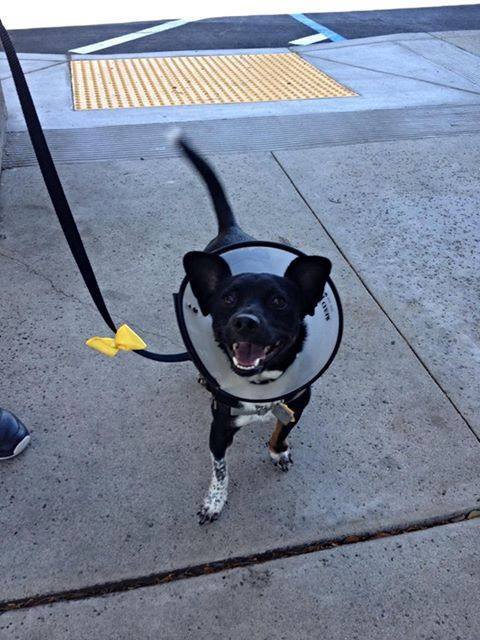
The Project promotes the use of a yellow ribbon, tied to the dog’s leash or collar, to show others that the dog is special and needs space.  Variations of the yellow ribbon include yellow bandanas or yellow leashes.

Photo courtesy of The Yellow Dog Project via Facebook

Photo courtesy of The Yellow Dog Project via Facebook

I personally like the use of leashes which not only are yellow, but have words to indicate the dog’s status:

Photo courtesy of The Yellow Dog Project via Facebook

Photo courtesy of The Yellow Dog Project via Facebook

Dogs wearing a yellow ribbon are not necessarily aggressive.  Many have fear issues which could be caused by pain from injuries, advancing arthritis, or surgery.  Others may be a rescue dog who has behavioral problems associated with a traumatic history.  Some dogs will be undergoing training for their behaviors, but haven’t passed their tests yet.

In my practice, I am working with some dogs who are reactive in public and would benefit from space.  I’m very happy to recommend to their owners that they tie a yellow ribbon to their dog’s leash to help indicate that their dog is special.

The Yellow Dog Project website contains links to country-specific websites that provide resources such as contact details for trainers who use positive reinforcement techniques.  The Yellow Dog Project is also on Facebook.

Kathleen Crisley, specialist in dog massage, rehabilitation and nutrition/food therapy, Canine Catering Ltd, Christchurch, New Zealand


Trends in US travel for dog owners

DogVacay, the online site the connects dog parents who need home dog boarding, pet sitting and day care with qualified caregivers, has released its second annual State of U.S. Pet Travel survey.

dogs and travelIt shows that dog parents still face obstacles when needing or wanting to travel.

For example:

  • 60% of dog owners say arranging accommodation for their dog adds complexity to travel planning
  • 34% of owners say they often struggle to find a pet sitter when they need to travel at short notice
  • 22% of owners have delayed or skipped a planned vacation because of challenges in arranging care for their dog(s)
  • 50% say finding a good kennel or pet sitter has affected planning for their vacation
  • Another three in ten (27%) say financial challenges such as kennel fees or paying a pet deposit at a hotel have impacted their vacation plans

Also, 46% of dog owners agree that worrying about their dog(s) while they’re away makes it harder to enjoy their trip (I admit that I worry about Daisy when I have to travel for work or vacation, even when I have made arrangements for her care with reputable caregivers).

What’s your travel story?


Detroit’s new dog loo

The Detroit Metropolitan Airport has just invested $75,000 for a dog loo primarily to support service dogs traveling with their owners.

ervice dogs Jello, right, and Cricket sniff around the new Service Animal Relief Area at the Detroit Metropolitan Airport. (AP Photo/Detroit Free Press, Mandi Wright)

Service dogs Jello, right, and Cricket sniff around the new Service Animal Relief Area at the Detroit Metropolitan Airport. (AP Photo/Detroit Free Press, Mandi Wright)

Most dogs in airports are certified service dogs but this facility will also help passengers who are flying with their dogs on holiday or to events like dog shows.  Small dogs can fly in the cabin of most US airlines providing they meet size restrictions.

For other blogs about dogs, relief areas and airports read these postings:

Kathleen Crisley, specialist in dog massage, rehabilitation and nutrition/food therapy, Canine Catering Ltd, Christchurch, New Zealand

Anatomy 101: the paw

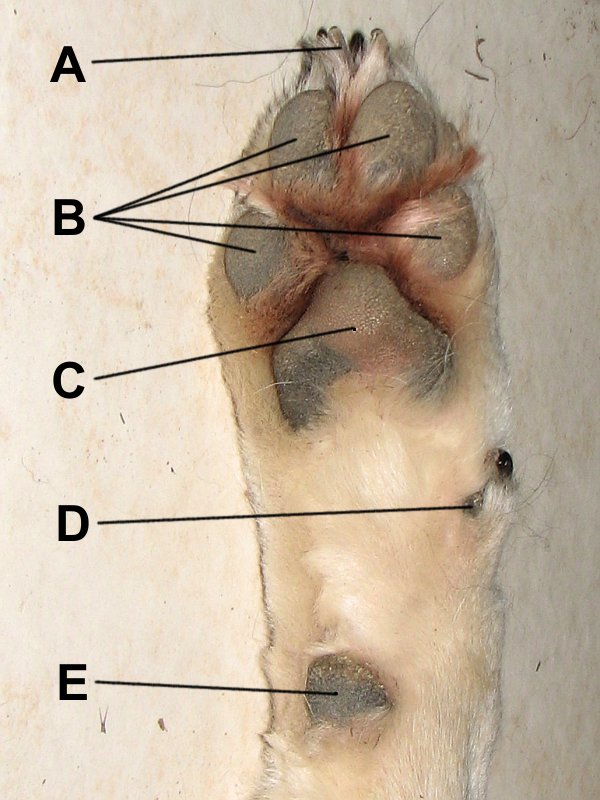
If you are a dog owner, you should know about the basic anatomy of the paw so you can describe to your vet or animal care practitioner about the location of pain or injuries.

Photo courtesy of Wikipedia

Photo courtesy of Wikipedia

A = the nails

B = digital pads

C = main metacarpal pad

D = dew claw

E = carpal pad

Canine circovirus

Circoviruses are small viruses that survive well in the environment once shed from affected animals.  There’s a canine circovirus that was first detected in the USA in 2012, but there’s still a lot to learn.

Dogs infected with circovirus may show symptoms like vomiting, diarrhea and even death.

“Last year in Ohio and California, some dogs died of diarrhea and they couldn’t figure out the causing agent because those routine diagnostics could not pick up any pathogens that are potentially causing the diarrhea deaths,” researcher Jianfa Bai said.  Bai is a molecular diagnostician and assistant professor at Kansas State University’s College of Veterinary Medicine.

The Kansas State Diagnostic Laboratory has recently developed tests to identify circovirus. Researchers are still unsure how deadly this disease is. While some dogs show symptoms, 3 to 11 percent of the dogs tested at the diagnostic laboratory have been confirmed as carrying the pathogen — but are healthy and do not show symptoms.

Bai says they can’t rule out that circovirus is causing deaths. It is also possible that the deaths are caused by a combination of circovirus and another disease.

The American Veterinary Medical Association (AVMA) recommends that your dog is checked by a veterinarian if they are vomiting or have diarrhea.  Your vet can contact the laboratory at 866-512-5650 if they want to submit samples for testing.

Source:  Kansas State University media release

Image

Wordless Wednesday, part 28

GSD with Buster CubeBP_Wordless_wed_Hop_Logo_2014

How dogs were trained for functional MRI research

I’m an absolute advocate for positive reinforcement training.  Here’s how Professor Gregory Berns and his research team trained dogs to remain still in a noisy MRI scanner.

You can also read my other blogs about functional MRI research and dogs: