Category Archives: dog ownership

No pet store puppies

The ASPCA has a new campaign to fight puppy mills.

Since most pet store puppies are sourced from puppy mills in the USA, the organisation is asking that you pledge not to buy anything from a shop that sells puppies.  That includes dog toys, food, treats and other items!

You can sign the pledge here.

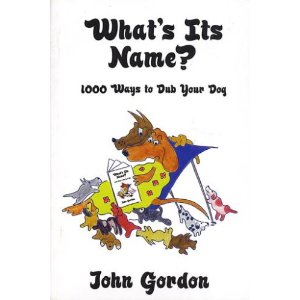
What’s its name?

Choosing the ‘right’ name for your dog and puppy is just as important as naming your children.   People will make assumptions based on your dog’s name and act accordingly.  Just ask a Bozo about being treated like a clown… Or wonder why people aren’t interested in petting Killer…

And let’s face it – most books of names out there are focused on naming of babies – so you’ve got the added problem when your partner/parents/friends think you might be expecting when really you are only after the perfect puppy name.

Here’s the solution:  What’s Its Name by John Gordon is a naming guide specifically for dogs.  The book contains ‘1000 ways to dub your dog’ and it was written in 1999.  You can still buy copies of it on Amazon.com and other outlets including used booksellers.

Forgive the language.  John is a New Zealander and some of his references are related to rugby.  Otherwise, it’s an essential reference book for the dog lover.

This book will make an ideal Christmas gift (it isn’t too soon to start setting aside gifts for the holiday!)

A city good for dogs is great for humans

I went to a talk earlier this week by Stephen Jenkinson, who is visiting New Zealand from the UK.  Stephen works as a consultant in the UK, with clients including kennel clubs and other agencies.  His area of interest is how public authorities can help reduce conflict over dogs and dog ownership by providing adequate facilities and opportunities for dog owners to do the right thing.

This type of urban planning helps to make dog ownership easy.  For example, you don’t have to drive across town to find an off-leash dog park because there will be dog exercise areas that are within walking distance. (This helps to reduce traffic, greenhouse gas emissions, and conflict when dog owners take their dog off-lead in a ‘normal’ park or reserve.)    Areas in larger recreational parks may be designated for use by dogs and their owners, thus keeping other tracks free for other users who do not want to play or engage with dogs.  And there is a growing body of knowledge around design of dog-friendly accommodation such as apartments and condominiums.

Stephen feels that there is opportunity for the rebuild of Christchurch to do better for dogs, their owners, and all non-dog people.   Sadly, no one from the Christchurch City Council, CERA, or Gerry Brownlee’s office participated in Mr Jenkinson’s public talk on Monday evening.  That signals a lack of senior level buy-in and support for the concepts.

I’ll be doing more research on this topic over the coming weeks and months, but if you’d like to get a flavour for what Mr Jenkinson talked about, you can listen to him speak with Kim Hill on Radio NZ National.

Consultant Stephen Jenkinson with his Border Collie

Be glad you’re not a dog owner in Jiangmen, China

The City of Jiangmen, China originally banned keeping of all dogs  effective from July 26, 2011.  Nine days later, after public pressure, the ban was lifted but only concerning ownership of dogs.   Dogs are still banned from all public places – which doesn’t bode well for the ongoing socialisation of dogs and puppies in that region, nor the efforts of owners to keep them stimulated and exercised.

This is a sad outcome for dogs and dog owners alike.  City officials say that the move was prompted by escalating rates of dog bites and attacks.  (For example, 4,000 dog-related complaints in the first six months 0f 2011.)

So, be glad you’re not a dog owner in Jiangmen, China.  Or a dog for that matter.

Read more about the ban in this UPI article.

CSI – dog style?

Pooprints, based in Tennessee (USA), is offering DNA testing of a different kind.  It is not about testing your mixed breed dog to find out their lineage, it’s about DNA testing of dog poo!

The number of subdivisions, condominium-style accommodation developments, and apartment complexes is on the rise in the US.  This is a result of a ‘downsizing’ of accommodation because of the economic recession as well as growth in population centres where work is available, but cost of living and commuting times are also an issue.  In these types of developments, there are dog owners living alongside non-dog owners.  And poop is  a problem.

(For my New Zealand readers, read my Last Word column in the March 2011 issue of NZ Dog World magazine.  In that column, I discussed the looming liability of infill housing, population growth,  and the growing problem of dog owners who do not clean up after their dog.)

The company’s service is rather straightforward.  First, a residential community decides to start a dog DNA testing programme.  Usually, this test is mandatory as part of signing up to live there. A mouth swab is taken of your dog and sent for  DNA testing and the results are entered into that site’s database.

Then, a site manager is probably responsible for poop patrol in your community.  They take samples of poop that has not been cleaned up and send the samples for DNA testing (because epithelial cells in the wall of the intestine are excreted every time a dog defecates).   The site manager will be given a report about the dog/owner match in order for followup to occur.

Communities will have rules about the number of infringements required for that person to be fined, or worse, kicked out of their residence.

It may sound ‘over the top’ but it is a symptom of how strongly some people feel about poop that is not cleaned up.

CNN covered the story of one residential development in New Hampshire that has signed up to use the Pooprints system.  Read about it here.

The Saving Lives campaign

The Royal NZ Society for the Prevention of Cruelty to Animals (RNZSPCA) has embraced the philosophy that ‘every life is precious’ and its Saving Lives campaign has a number of platforms to ensure that the lives of animals are saved and that they enjoy a quality of life.

When implemented, each of the platforms is aimed at supporting the goal of saving lives.  The platforms are:

  1.  Our Animals  – Every Life is Precious
  2. Pet retention
  3. Rehabilitation
  4. Desexing
  5. Maximising adoptions
  6. Rescue groups
  7. Foster homes and other volunteers
  8. Saving the strays
  9. Community involvement
  10. Can do!

The Hokitika SPCA has made headlines for achieving a no-kill shelter status, a direction that the RNZSPCA not only endorses, but says that it wants to see replicated throughout the country .  Read all about it in this article in the Greymouth Star.

Paws and Stripes helping US veterans

A man who is good enough to shed his blood for his country is good enough to be given a square deal afterwards.”
– Theodore Roosevelt

Paws and Stripes is a not-for-profit organisation working to place service dogs with US war veterans who are suffering from post traumatic stress disorder (PTSD) and traumatic brain injury.   Through their efforts dogs from shelters are trained to have a new life as a service dog – all at no cost to the veteran.

The wars in Iraq and Afghanistan has been going on for many years now, and with this the escalating numbers of returning veterans who are suffering from PTSD. Traumatic brain injury is often suffered because soldiers are injured by  ‘improvised explosive devices.’  Sadly, insurance companies will not pay to see these men and women given the use of a service dog.

Jim Stanek is the co-founder of Paws and Stripes (along with his wife).  He received injuries during his third tour of duty in Iraq and, during his nine months of treatment, he found solace in the presence of service dogs. In May of 2010, Jim and his wife unsuccessfully tried to find a trainer for their rescue dog named Sarge.  They founded Paws and Stripes in June 2010 to fill the need for these types of service dogs.

Veterans are able to choose their own dog from a shelter before entering the training programme and part of their rehabilitation is their involvement in the training.

This seems like a very special organisation combining the involvement of service dogs with shelter rescue – all whilst helping a group of people in need.   Visit the Paws and Stripes website to learn more about the programme and how to help.  While there, read stories like that of Master Sargeant Justin Jordan and his dog, Dallas (pictured below – photos copyright Paws and Stripes).

This slideshow requires JavaScript.

Kathleen Crisley, specialist in dog massage, rehabilitation and nutrition/food therapy, The Balanced Dog, Christchurch, New Zealand

Dogs and grief

Dogs are emotional creatures and they often form strong bonds to their owners, extended family, and other dogs in the household.  This, of course, is one of the many benefits of having a dog (or more) as members of your pack.   Because of these emotional connections, dogs also experience grief when a loved companion dies.

Symptoms of grief can include lethargy, loss of appetite and weight loss.  With the grief comes a depression of the immune system, possibly leaving your dog vulnerable to problems like kennel cough (even if they are vaccinated).  Being aware of these symptoms is important and when a loss is experienced, extra care and attention are needed to help the dog manage their grief.  Things like extra outings to new parks can help stimulate brain activity and keep the dog happy.   Ensuring the dog has a solid routine they can rely on is also very comforting.   I have even been called in to give grieving dogs a relaxation massage to provide them extra stimulation and help them feel better.

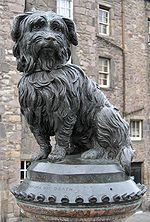
One of the most ‘celebrated’ cases of a dog’s loyalty to its dead master is the story of Greyfriars Bobby.  Bobby was a Skye Terrier owned by John Gray, who worked in Edinburgh, Scotland as a night watchman.    In February 1858, John Gray died from tuberculosis and his body was buried in the Greyfriars Kirkyard.  According to legend, for the next 14 years, Bobby spent most of his time at the grave mourning his master.  In 1872, following Bobby’s death, a statue of the dog by William Brodie was erected outside of the gates of the Kirkyard with funds from a local patron.

The Greyfriars Bobby statue located in Edinburgh, Scotland

For more recent stories about dogs who have grieved for their owners, read The phenomenon of grieving dogs.

Dogs as bed partners

Bedmaker Sleepyhead has released the results of New Zealand’s largest sleep survey.  The survey aimed to assess the sleeping habits of New Zealanders, primarily to make the connection between bedding and quality sleep.

The survey found that 60% of New Zealanders share their bed with a partner every night, 12% of us share our beds with our dogs or cats.

So, if you sleep with your dog – you are not alone!

(One of the benefits not mentioned in the survey is that your dog is an excellent bed warmer on cold winter nights.  Whereas a hot water bottle or wheat bag will cool down overnight, your warm and furry dog maintains your bed at a constant temperature.)

Choosing a veterinarian

As a dog owner as well as a canine massage therapist, I can honestly say that one of the most important things you can do for your dog is to have a good veterinarian.    However, many people I have met through my practice seem to move from vet practice to vet practice – never really giving a vet the chance to get to know their dog.

Of course, sometimes the moving around can’t be helped – people change jobs or other circumstances happen that require them to move house and location.  However, in other cases, it seems the owner is looking for the ‘best deal’ in a consultation fee or they have had a bad experience with an office (not necessarily the vet) and don’t want to return there.

So, here’s my advice on finding a good (and possibly great) veterinarian:

  • Ask your friends who own dogs who they use and why
  • Similarly, ask other dog owners you meet through obedience classes, dog park, etc.
  • Phone around and enquire about consultation fees and office hours that fit your schedule and lifestyle
  • Book a single, short consultation appointment to allow your dog to visit with the vet – see how he/she reacts to the vet and whether you like your experience at the practice.  If not – keep looking!
  • Most vet practices have more than one veterinarian; most owners and dogs develop a favourite vet.  However, it is always a good idea to have an appointment with the alternate vet once in a while so they have some  experience with your dog.  If you have an emergency on a day when your favourite vet isn’t on duty, you’ll understand the importance of having done this!
  • Ask about the staffing arrangements at the practice.  How many qualified nurses/technicians are there at any given time?  Is there a dedicated receptionist (because the best receptionists get to know the patients very well!)?
  • Is the facility set up for surgery if your pet needs it or will you have to go elsewhere to a ‘sister’ clinic?
  • What options are there for after-hours care or emergencies?
  • If you may want to pursue complementary therapies for your dog, how receptive is the vet to these?  Is the vet trained in homeopathy, for instance?
  •  Do other specialists work from the practice or, at a minimum, are they available through referral?
  • What type of payment options are offered at the practice?
  • Does the practice charge extra for filing insurance paperwork (if you choose to have pet insurance)?
  • Will the vet write a script for medicine that you choose to buy from a (reputable, of course) online pharmacy?

Dr Tim Nottage of Merivale-Papanui Veterinary Clinic with a happy client

Finally, if you have been using a veterinary practice for some time but have become concerned that the treatment and level of care/attention is no longer up to par – I advise you to raise it with the veterinarian.  All businesses need feedback.  For example, I had one client who felt that the changes in staff at her local veterinary practice meant that the standard of care had gone down.  The nurses were all new, young, and inexperienced.  She still liked the vet, however.  A short discussion to share her concerns didn’t solve the problem overnight, but it started the vet thinking that the staff needed more training particularly in the area of customer service.   My client’s next experience at the office improved and she didn’t have to go in search of another vet.

Kathleen Crisley, Fear-Free certified professional and specialist in dog massage, rehabilitation and nutrition/food therapy, The Balanced Dog, Christchurch, New Zealand