Category Archives: Dogs

Dogs on Prozac – but not exclusively for best results

Dogs who suffer with separation anxiety become more optimistic when taking the animal equivalent of Prozac during behavioural treatment, according to the results of an innovative new study.

Led by researchers at the University of Lincoln, UK, the research has for the first time revealed how the animals feel during the clinical treatment of behaviours associated with negative emotions.

Jess Cook signed up for the study as her dog Lexi would become so distraught when left alone in the house neighbours would complain about her howling.

Jess Cook and Lexi, photo courtesy of University of Lincoln, UK

Jess Cook and Lexi, photo courtesy of University of Lincoln, UK

For five weeks in 2013, Lexi, now seven, took two tablets a day in some butter. She also underwent behaviour management therapy, which taught her to cope better with being separated from her owner.

Miss Cook, who runs Like My Own Pet Care Services in Derbyshire and is studying for her MSc in Clinical Animal Behaviour at the University of Lincoln, slowly built up the amount of time Lexi was left unattended for. It proved successful and now she has come off her medication.

Canine separation-related problems – also described as separation anxiety or separation distress – are among the most common behavioural complaints of dog owners. But the issue of using psychoactive medication to help pets with behavioural problems is a widely debated one.

Treatment with psychoactive medication in parallel with a behaviour modification plan is well documented, but it is unknown if this is associated with an improvement in underlying emotion or mood, or simply an inhibition of the behaviour.

The new study, published in the peer-reviewed veterinary science journal BMC Veterinary Research, has thrown new light on the topic with researchers devising a method to evaluate animals’ emotional state when treated with fluoxetine – the active ingredient in Prozac for humans and Reconcile for pets. Prozac, the trade name for fluoxetine, is typically used to treat depression, obsessive compulsive disorder and anxiety in humans.

The researchers recruited dogs showing signs of separation anxiety, such as barking, howling, destruction of property and toileting when alone, and used a special behaviour test to determine if they were feeling ‘optimistic’ or ‘pessimistic’.

In the test, dogs were taught that when a food bowl was placed in one location it contained food, but when placed in another location that it was empty. The bowl was then placed in ambiguous locations, and the dogs’ response was assessed to determine whether they expected food (i.e. ‘optimistic’) or not (i.e. ‘pessimistic’).

The results indicated that when dogs were treated for separation problems using both a behaviour modification programme combined with fluoxetine treatment that they did become more optimistic, and as their mood improved so did the behaviour problem. The same results were not recorded for the control group.

Research lead Daniel Mills, Professor of Veterinary Behavioural Medicine at the School of Life Sciences, University of Lincoln, said: “For quite a while, I, like many others, have been concerned as to whether drugs such as Reconcile simply inhibit the behaviour and perhaps had no effect on the animal’s mood. With the advent of new methods to assess animal welfare, we were able to answer this question and were pleased to see that, when the drug is used within normal therapeutic ranges, the dogs do indeed seem better.”

“However, it is important to emphasise that animals were treated with both the drug and a behaviour modification programme – with both being essential for effective treatment. Using the drug does seem to bring about a rapid improvement in mood while the animal responds to the training programme. The reality is, whether we like it or not, there are animals who are suffering and we need to take measures to both prevent the problem but also manage it as effectively as possible when it arises.”

Source:  University of Lincoln media release

A closer relationship than with siblings

Matt Cassels had at least 10 pets when he was growing up and yet it had never occurred to him to think about how important his relationships with them were. Until he came to Cambridge and started working on a rich data set from the Toddlers Up Project led by Professor Claire Hughes at the Centre for Family Research.

This 10-year longitudinal study of children’s social and emotional development included a section on children’s relationships with their pets, as well as a broad range of other data from the children, their parents, teachers, and siblings.

William and Peaches 2008 Credit: Amy McCartney

William and Peaches 2008
Photo Credit: Amy McCartney

Matt was looking for a research topic for his MPhil in Social and Developmental Psychology. He says: “The data on pet relationships stood out as it had never occurred to me to consider looking at pet relationships although I had studied children’s other relationships for some time and even though my own experience of pets while I was growing up was so important.”

Research on pet relationships has been going on for some time, but few studies have used the same tool to compare children’s relationships with pets with their other relationships or have focused on how the quality of pet relationships affects outcomes for children.

Matt decided that was what he wanted to focus on. What he found surprised him. He had thought strong pet relationships would make for happier children, but the truth was more complex.

Instead he discovered that children who had suffered adversity in their lives, such as a bereavement, divorce, instability and illness or were from disadvantaged backgrounds, were more likely to have a stronger relationship with their pets than their peers, although they did less well academically and suffered more mental health problems.

Matt says this may be because they come from backgrounds that predispose them to such problems. Despite this, the study showed children with stronger relationships with their pets had a higher level of prosocial behaviour – such as helping, sharing, and co-operating – than their peers. The study also demonstrated that these children, particularly girls and those whose pet was a dog, were more likely to confide in their pets than in their siblings.

Matt says: “It is really surprising that these children not only turn to their pets for support when faced with adversity, but that they do so even more than they turn to their siblings. This is even though they know their pets don’t actually understand what they are saying. “

Asked why the research might show girls talk and argue with their pets more than boys when previous less detailed research tends to suggest it is boys who have a better relationship with their pets, Matt adds: “They may feel that their pets are not judging them and since pets don’t appear to have their own problems they just listen. Even confiding in a journal can be therapeutic, but pets may be even better since they can be empathetic.”

Matt’s research was based mostly on data collected when the children, 88 of whom had pets at the time, were 12 years old, 10 years after they had begun participating in this study. The children, their parents, siblings, and teachers all provided information on prosocial behaviour, emotional wellbeing, academic ability, and children’s relationship with their pet. Matt measured this information against how much children confided in their pet, how much they argued with their pet, what satisfaction they got out of their relationship with their pet, and how often they did things with their pet each day.

To do so he used a new pet attachment scale adapted from an established and psychometrically validated measure of human attachment. His results supported the validity of using the tool and of considering human-animal relationships in similar terms to human-human relationships. “I had to first prove that it was valid to talk about child pet relationships in the same way we talk about sibling relationships and that we were not indulging in anthropomorphism. My research found the tool was better than those that have previously been available so the possibilities for future research in this area are exciting.”

Matt, who is now doing a PhD in the Psychiatry Department with the support of a Gates Cambridge Scholarship, has written two papers on his research, which are currently under review for publication. He says there is a lot more that could be done with the Toddlers Up data, for instance, looking at the impact of pet deaths on children.

“Pets are relatable and ubiquitous,” he says. “In the US and England pets are more common in families with young children than resident fathers and yet we don’t quantify how important they are to us.”

Source:  University of Cambridge press release

Hey New Zealand…watch out for the new Pedigree global ad campaign

It looks like Pedigree pet food is about to launch a new campaign in New Zealand.

This is part of a new global campaign by the brand, owned by Mars, Inc.  Launched first in Brazil, it aired in Australia earlier this month and New Zealand’s version won’t be far away.

The commercials will be adapted to the local market and so I’m not sure if the ad below is what we’ll see:

Kathleen Crisley, specialist in dog massage, rehabilitation and nutrition/food therapy, Canine Catering Ltd, Christchurch, New Zealand

The consequences of rescuing a dog

Last week, a Georgia man named Michael Hammons spotted a Yorkie-type dog inside a hot car parked at a Athens, Georgia shopping mall.  He broke the window to rescue the dog.

When the dog’s owner returned, she was angry that he had damaged her vehicle and insisted that police charge him.  His and the dog’s story have gone viral in what I consider a welcome debate about animal welfare and the rights of individuals who step in to intervene.

It seems that Georgia isn’t one of the 16 US states that prohibits leaving animals in cars in unsafe conditions.   Advocates are now using this latest situation as evidence as to why the law needs changing.

Last year, I saw a couple leave their dog parked in the full sun at a local shopping mall with a large breed Lab cross in the back seat.  I phoned the police on 111 (New Zealand’s version of 911) and then waited by the car until they arrived.   I monitored the dog closely to see if he was showing signs of heat stress.

The police, followed by the SPCA, responded to my call quite quickly and the policeman took my details should I be needed as a witness.  And then he encouraged me to leave the scene since they would take care of the situation and wait for the people to come back to speak with them.

Have you ever helped rescue a dog from a hot car?  How were you treated?

Kathleen Crisley, specialist in dog massage, rehabilitation and nutrition/food therapy, Canine Catering Ltd, Christchurch, New Zealand

Robot dogs likened to Facebook

The Sony Aibo

The Sony Aibo

Sharing your live with a beloved dog is going to become unsustainable, says an Australian researcher, leading to a shift to companion robotic dogs.

Ugh.

Dr. Jean-Loup Rault, an animal welfare researcher at the University of Melbourne, Australia says that this prediction is similar to describing the power of Facebook to someone 20 years ago.  “If you’d described Facebook to someone 20 years ago, they’d think you were crazy. But we are already seeing people form strong emotional bonds with robot dogs in Japan.”

Dr Rault says that when a robot dog dies in Japan because it is not repairable, many owners hold a funeral  for it.

Dr Rault says the consequences of a shift towards robotic pets will be good for people who suffer from allergies, but may also cause a shift in ethics – with people more detached from the suffering of mortal beings.

I don’t want to live in a world that goes backwards in terms of animal welfare.  And I can’t cuddle up in bed at night with a robot, nor see the blissful look on its face when I massage it.

I hope Dr Rault is wrong.

Kathleen Crisley, specialist in dog massage, rehabilitation and nutrition/food therapy, Canine Catering Ltd, Christchurch, New Zealand

You can read Dr Rault’s article in the journal Frontiers of Veterinary Science by clicking here.

Source:  Market Business News

Innovative advertising to increase adoption rates

I am not, generally, an early adopter of technology.  That doesn’t mean that I am not grateful for all that technology can do for us, it’s just that I have to take time to learn things at my own pace and I’m frugal.  Let’s face it, I didn’t get a smartphone until last year.   I don’t think I would be without it now.

Now I hear that the Battersea Dogs and Cats Home has teamed with an ad agency to use specially chipped flyers to advertise and promote animal adoption.  Visitors to the Westfield Stratford Mall in East London were given the flyers.

As they walked around the mall, the chip would activate special billboards, allowing the dogs to follow their prospective adoptive family around the mall.

What a great way to combine advertising and technology for the good of animals in need of a home.  I wish my local mall would incorporate these types of ads – our local animal welfare groups could certainly use the help.  Not only would I do more of my shopping there, but I would also look forward to it!

Kathleen Crisley, specialist in dog massage, rehabilitation and nutrition/food therapy, Canine Catering Ltd, Christchurch, New Zealand


Want a compassionate child? Get a dog!

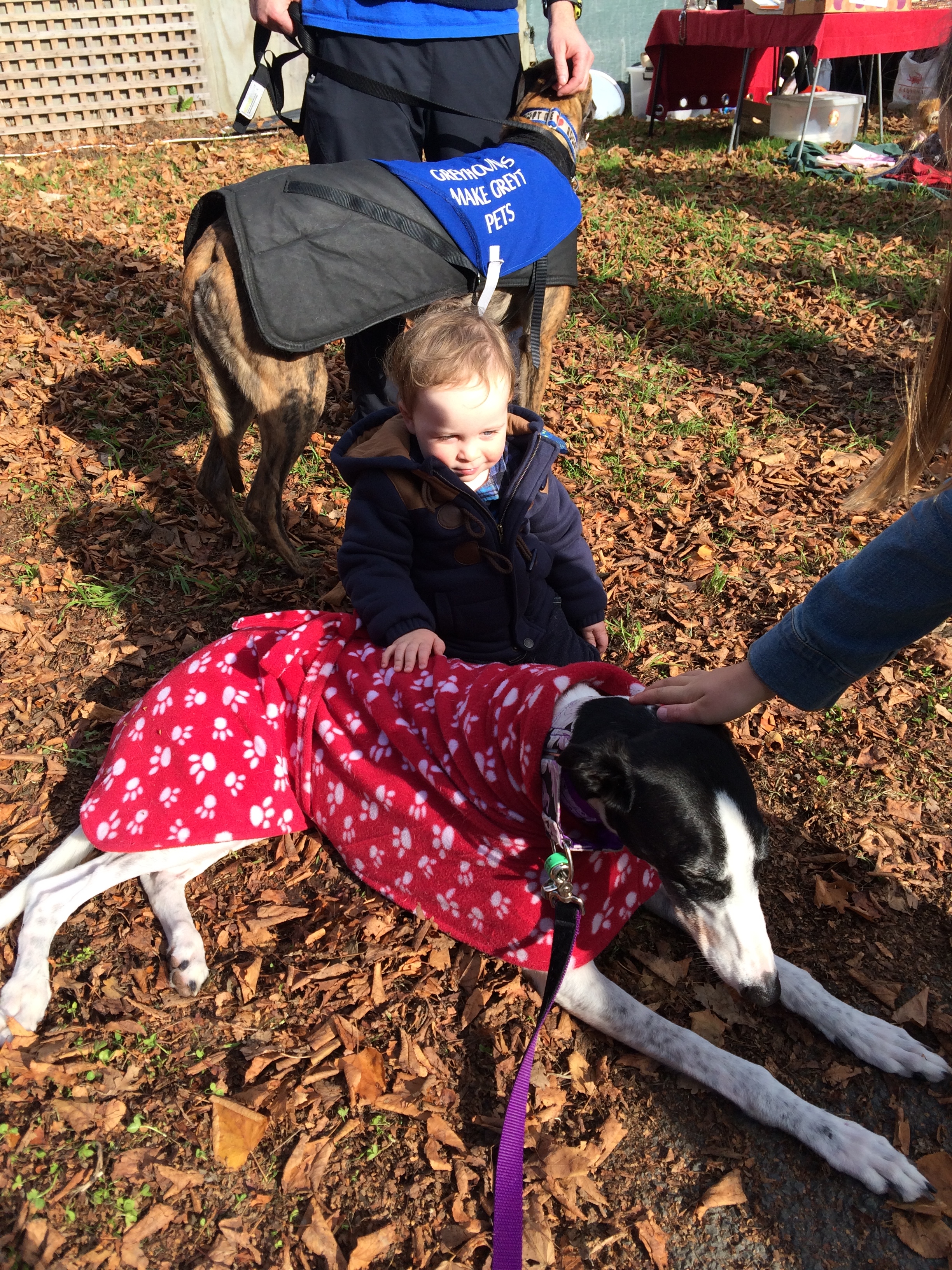
My dog Izzy meets a little boy at a promotion for Greyhounds as Pets

My dog Izzy meets a little boy at a promotion for Greyhounds as Pets

Children who grow up with dogs and cats develop a greater level of emotional intelligence, research shows.

Children living with a pet develop:

a) Compassion – by learning to care for someone other than themselves, and understanding that a dog has feelings

b)  Self-esteem – by being assigned tasks to help care for the family dog

c) Cognitive development – by playing, talking and even reading to the family dog

d) Understanding of life – because our dogs don’t live as long as we do, sometimes it is the loss of a family dog that is the child’s first real loss, teaching them to understand and manage grief.  If your dog has puppies, they also understand that other animals become parents and have little offspring to care for.

And, as in adults, dog ownership is linked to managing stress.  In today’s very modern world, children have more pressures on them at an earlier stage of life.  Having a dog is an outlet for managing stress; such as when a child plays with or walks the dog – exercise helps reduce stress.

Source:  Mother Nature Network


America’s pet friendly rental markets

Finding rental housing when you own a dog (or two, or more) is a big issue here in Christchurch.  Our housing market has done some very weird things since the earthquakes of 2010 and 2011 with sky-rocketing property prices and escalated rental costs (people getting their homes repaired move to temporary accommodation – paid by their homeowners insurance, adding to the competition for rental properties).

Those people who did not own their homes pre-quakes and were dog owners have been some of the most severely affected by the increases.

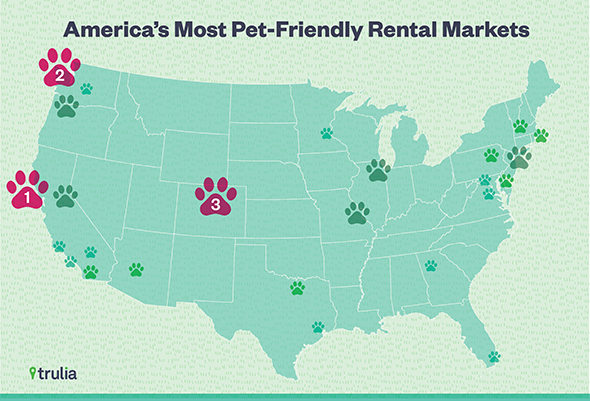
And so this article from Forbes Magazine caught my eye.  It’s about renting housing in the USA when you are a dog owner; the largest 25 property rental markets are compared.

Pet friendly rental markets

Three factors were used to rank the rental markets:

a) the percentage of landlords willing to allow pets (counted by reading the ads for rental properties)

b) the least expensive pet fees.  That’s a fee that you pay on top of any deposit because you own a pet.  Most fees are refunded when you leave the property in good condition.  Others are simply higher rents for pet owners that are non-refundable.  In Christchurch, pet fees, particularly in terms of higher deposits, suddenly appeared on many properties where there were none before.

c) and my favorite criteria:  a high concentration of pet stores and services.

The western cities of San Francisco, Seattle, Denver, Oakland and Portland topped the list.

Sadly for dog lovers, the survey revealed that landlords are much more tolerant of cats than they are of dogs.  And the larger the dog, the harder time you have when renting.  Only 4% of landlords were prepared to allow large breed dogs like a St Bernard.

What this information reinforces is that dog ownership costs money.  If you are considering adding a dog to your pack, spend some time considering your income and life situation before making the commitment.

Source:  The Forbes article cited used data from this Trulia Trends report

Kathleen Crisley, specialist in dog massage, rehabilitation and nutrition/food therapy, The Balanced Dog Ltd, Christchurch, New Zealand

Pet Cancer Awareness Month

Did you know that 1 out of every 4 dogs develops cancer?

Cancer is a devastating  diagnosis which many owners will face (and I speak from personal experience; I’ve loved and lost 2 dogs to cancer plus provided palliative care support to other dogs diagnosed with the disease).

The month of May is Pet Cancer Awareness Month.

Like humans, dogs are subject to a higher cancer risk because of genetic and lifestyle factors.  Good nutrition, exercise and maintaining a healthy body weight are as good for our dogs as they are for us!

In this video, Dr Gerald Post of the Veterinary Oncology Center in Connecticut talks about prevention, early indicators of cancer, and diagnostic tests.

There is a growing body of research into canine cancers and new treatments are being developed and tested.  This means that treatments such as chemotherapy exist for dogs when previously nothing could be done.

If you type the word ‘cancer’ into the search box on this blog, you will see a number of articles about dogs and cancer.  I regularly read new articles about cancer and treatments because I’m interested in the subject and I want to offer my customers the best possible advice and support when working with their veterinarian and others in their dog’s healthcare team.

Please feel free to share your canine cancer story by posting to this blog – so that others can learn from your experience.

Kathleen Crisley, specialist in dog massage, rehabilitation and nutrition/food therapy, Canine Catering Ltd, Christchurch, New Zealand


New Directions in Canine Behaviour

New directions in canine behavior

The January 2015 special edition of the journal Behavioural Processes is fully online (until January 2016).  This means you can download .pdf copies of fifteen  interesting research articles about dogs and behavior.

In the opening editorial of this journal, Monique A.R. Udell says that research into social development and cognitive evolution of dogs is just beginning to scratch the surface despite the long history of the human-canine relationship.

I am particularly interested in these fields of research (as my many blog postings under the category of ‘research’ show!) because of the work I do with dogs.  Understanding dogs is critical to working with them in a holistic approach to health.

My only criticism of journal articles generally (not just this journal) is the odd and often long names that researchers choose for the title of their articles.  It is just one indication that researchers work in a different world from generalist audiences; they are often judged in peer reviews for language this is technical.  In my experience as a research manager, I have also found that most academic researchers write in a style using long sentences and paragraphs.

Some of these articles are easier to read than others because of this.

The articles in this issue are:

  • Revisiting the concept of behavior patterns in animal behavior with an example from food-caching sequences in Wolves (Canis lupus), Coyotes (Canis latrans), and Red Foxes (Vulpes vulpes)
  • Assessment of attachment behaviour to human caregivers in wolf pups (Canis lupus lupus)
  • Self-regulatory depletion in dogs:  insulin release is not necessary for the replenishment of persistence
  • Dogs and their human companions:  The effect of familiarity on dog-human interactions
  • Scent of the familiar:  An fMRI study of canine brain responses to familiar and unfamiliar human and dog odors
  • Shut up and pet me!  Domestic dogs (Canis lupus familiaris) prefer petting to vocal praise in concurrent and single-alternative choice procedures
  • A comparison of pet and purpose-bred research dog (Canis familiaris) performance on human-guided object-choice tasks
  • Gazing toward humans:  A study on water rescue dogs using the impossible task paradigm
  • Is that fear?  Domestic dogs’ use of social referencing signals from an unfamiliar person
  • Why do adult dogs ‘play’?
  • Down but not out:  Supine postures as facilitators of play in domestic dogs
  • The advent of canine performance science:  Offering a sustainable future for working dogs
  • Do you see what I see?  Can non-experts with minimal training reproduce expert ratings in behavioral assessments of working dogs?
  • Which personality dimensions do puppy tests measure?  A systematic procedure for categorizing behavioral assays
  • Citizen science:  A new direction in canine behavior research

Kathleen Crisley, specialist in dog massage, rehabilitation and nutrition/food therapy, Canine Catering Ltd, Christchurch, New Zealand