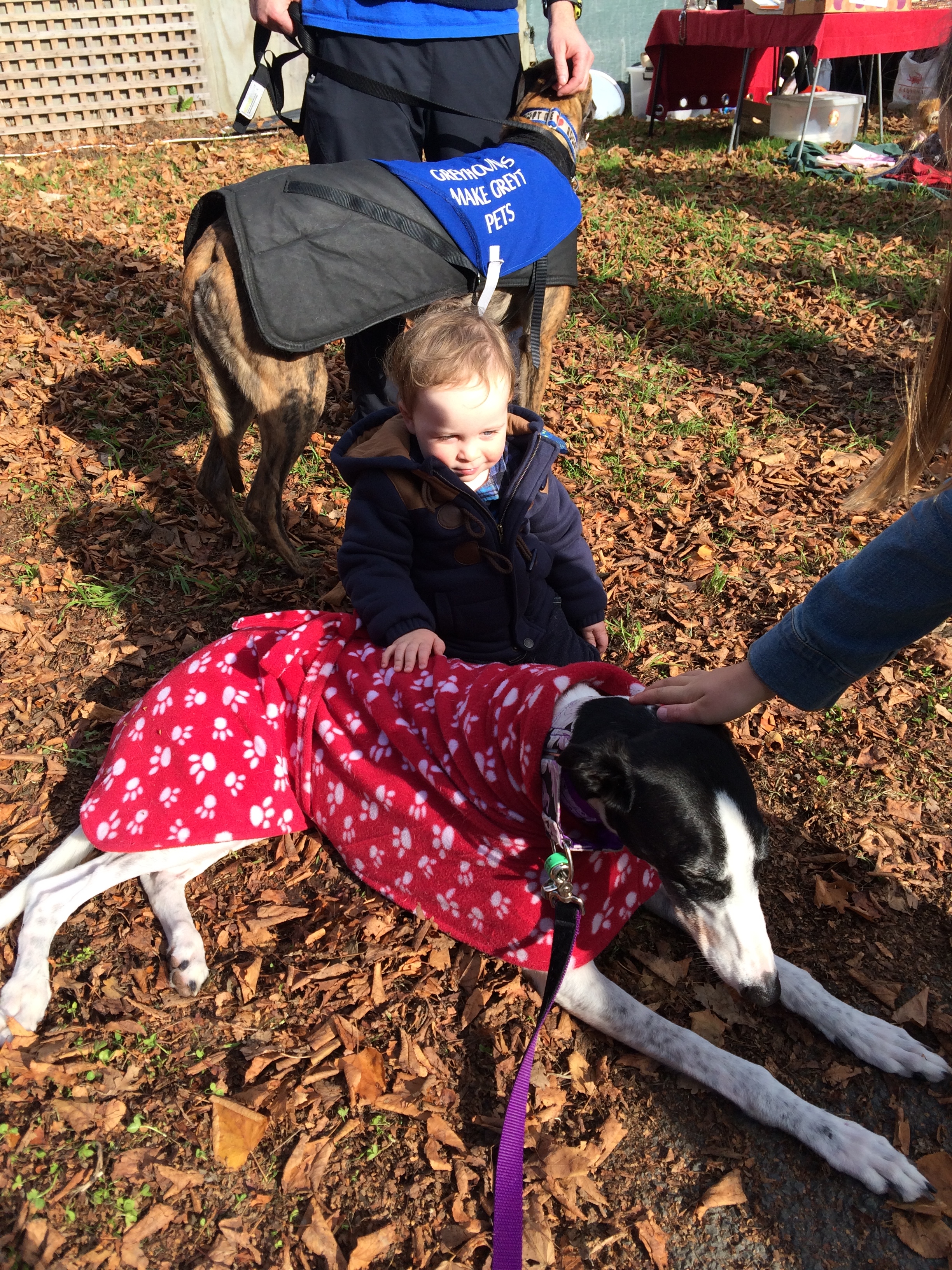
Read Buffy’s Story Here (courtesy of The Boston Globe Magazine)
Kathleen Crisley, specialist in dog massage, rehabilitation and nutrition/food therapy, Canine Catering Ltd, Christchurch, New Zealand
Read Buffy’s Story Here (courtesy of The Boston Globe Magazine)
Kathleen Crisley, specialist in dog massage, rehabilitation and nutrition/food therapy, Canine Catering Ltd, Christchurch, New Zealand
A bit of humor for the weekend…
Thunder Dog tells the story of Michael Hingson and Roselle, his guide dog. Michael was working in the World Trade Center’s North Tower on the 78th floor on the morning of September 11, 2001. The book gets its title from the fact that Roselle was very afraid of thunder and, during the wee hours of September 11th, there had been a thunder storm which woke both dog and handler – with handler providing emotional support.
The book starts with a chapter ‘Goodbye to a Hero’ in which Hingson tells us that Roselle died on June 26, 2011. This is not entirely surprising – virtually all of the dogs who had involvement in 9/11 have since passed away. It is, sadly, to be expected.
This book is written in a conversational style, as if Hingson was giving an interview (he did, many in fact, after the 9/11 attacks – television presenter Larry King writes the Foreward to the book). It makes for very easy reading.
Interspersed with chapters detailing the long walk down from the 78th floor as dog and handler evacuated, Hingson tells us more about his life. He wasn’t born blind, for example. He was a premature baby and back when he was born, babies were put into incubators with a very high oxygen environment (it wasn’t until later when many babies ended up surviving, but blind, that doctors became aware of the cause). Roselle was not Hingson’s first guide dog, either. And Hingson’s parents encouraged him to explore his world; he even rode a bicycle around his neighborhood without assistance – learning to navigate by echolocation.
But the horrors of that day, and the strong bond between man and dog are what this book is really about. How Hingson had to rely on Roselle more than ever, whilst remaining calm for her so she could do her job. And how Roselle offered terrified people emotional support on a day like no other. Hingson’s recollections of short conversations with firefighters who were climbing up the tower to fight the fire and assist in rescue are most poignant.
Roselle’s legacy lives on in the Roselle’s Dream Foundation which has since been established by Mr Hingson to honor her memory. Throughout the book, Hingson emphasizes that being blind did not stop him from having a normal life and so the Foundation does its best to support scholarships to enable blind people to live their lives to the fullest. The Foundation also exists to educate the sighted about blindness.
A book well worth reading. It spent time on the New York Times Bestseller list.
Kathleen Crisley, specialist in dog massage, rehabilitation and nutrition/food therapy, Canine Catering Ltd, Christchurch, New Zealand
It is the 15th of April – Tax Day in the United States. The deadline that comes around all too quickly, a date when every US resident must file a federal tax return with the Internal Revenue Service. Most states also have state tax returns that must be filed today, too.
Have you ever considered what your dog and taxes have to do with each other?
Unfortunately, unlike human dependents, our dogs are not tax-deductible. So, please don’t try this on your tax return.
In New York state, however, officials and animal rights advocates have filed a state bill that would give anyone who adopts a pet from a New York animal shelter a tax credit of $100, or $300 for up to three animals per year.
The bill is sponsored by Kevin Parker, a state senator from Brooklyn, and would cover all domesticated animals offered for adoption. City Councilwoman Julissa Ferreras, from Queens, introduced a resolution backing the bill, which would make New York the first state to grant such a credit. In New York State alone, shelters can care for up to 8 million dogs and cats each year; about 3 million are euthanized because there is no one to adopt them.
In terms of deductions, as I said earlier – don’t attempt to deduct your dog as a dependent. It will only cause you tax troubles.
But, there are some dog-related expenses that are deductible:
1. If you need a guide dog because you are visually impaired or for hearing assistance, you can deduct the costs of buying, training and caring (food, grooming, veterinary care) for your guide dog as a medical expense. The same holds true for dogs trained to help you with any other diagnosed physical or mental condition.
2. If you use a dog in your business, such as for security purposes, the cost of keeping the dog healthy – as with a guide dog – can be considered a legitimate business expense that is deductible.
3. If you have to move house, pet relocation costs are also deductible as part of your overall moving expenses.
4. Some people earn money from their dog-related hobbies – things like competing in dog shows, for example. If those hobbies result in an income, you have to declare it. But, the expenses you incur for pursuing your hobby are also deductible – provided that total of these expenses exceed 2 percent of your adjusted gross income before deductions.
5. If you volunteer for a pet-related charity, and the charity is a registered 501(c)(3) adoption center, you can deduct mileage you incur for working on behalf of the shelter. If you foster a dog and costs like food are not fully reimbursed – these are deductible too. It helps if the organisation you are working for provides you with a letter acknowledging your volunteer work on their behalf.
6. Some owners set up pet trusts to protect and care for their pet after they pass away. Trusts have tax advantages in terms of tax deductions. But, it is important to have a lawyer who understands your local estate planning laws to help you with the set up of your trust.
Really, with any tax-related matter it is best to seek professional advice and remember to keep good records!
Kathleen Crisley, specialist in dog massage, rehabilitation and nutrition/food therapy, Canine Catering Ltd, Christchurch, New Zealand
Sources: New York Post, Bankrate
Posted in animal welfare, dog care, Dogs
Tagged deductibles, dependents, Internal Revenue Service, IRS, New York, state taxes, tax deductions, tax return, tax returns, taxes
A survey by market research firm Relevation Research, based in Illinois, has shown that 1 out of every 6 US households buys fast food for a dog during at least some of their drive-thru or take-out window visits. At this rate, over 1,000,000,000 visits annually are catering to a dog.
One third of dog owners drive through with their dog in the car; four-fifths of those actually claim to order something specifically for the dog. McDonald’s is visited most often for the dog followed by Burger King and Wendy’s. Starbucks is patronized less despite offering Puppy Whip/Puppuccino.
Nan Martin, principal at Relevation Research, advises that QSRs (known as quick service restaurants in the ‘biz’) should team up with dog food/treat manufacturers to design dog-safe offerings at their establishments.
In Christchurch, McDonald’s outlets usually stock dog treats at their drive-thru windows. If your dog rides in the back seat, the window attendant doesn’t always notice and so you have to ask for dog treats. And the only surviving Starbucks outlet (thanks to our earthquakes) doesn’t offer a drive-thru, let alone Puppuccinos.
(I’m a big fan of Starbucks coffee and so – please – open a drive-thru branch here and please stock it with Puppuccinos. Izzy and I would be frequent customers.)
Kathleen Crisley, specialist in dog massage, rehabilitation and nutrition/food therapy, Canine Catering Ltd, Christchurch, New Zealand
Source: PR Newswire media release
The Department of Homeland Security (USA) has been conducting independent assessments and developing products to assist canine explosive teams.
One of the biggest challenges in the training and testing of canine teams results from the explosives materials themselves – especially new homemade explosives. Due to the potential safety risks of explosives, only specially trained federal explosive technicians can provide the material for training and testing. This not only limits training times and opportunities, but also increases the costs since the technicians must travel to a central location for multi-day training events.
Researchers have been developing a new training aid that matches the scent of explosive materials but poses no danger to the trainers, the canines or the environment. It is currently undergoing field testing within federal, state and local canine detection teams. A key objective was to for the canines to react to the non-hazardous, non-explosive training aid the same way they would actual explosive material.
“It doesn’t go boom if you drop it, hit it or light it on fire,” said Canine Program Manager, Don Roberts. “That allows teams to take the training from the very controlled environment we currently have to train in for safety reasons and put it in a real-world scenario – for example putting the odor in a cinderblock and seeing if the dog can find it. We can put this new training aid in car wheel wells, airports etc., without fear that they’ll explode.”
S&T’s partner, Johns Hopkins Applied Physics Lab, developed the new training aid, Roberts said. After a number of trials, they’re ready to transfer the technology to the Transportation Security Administration, the primary customer for the aid. The bigger news, according to Roberts, is that the product was also designed to fit first responders’ needs as well.
“The design price point and usability factor has been geared to the first responder community – state and local explosive detection dogs who don’t have the regular training support TSA has. They are the ones who really need these products,” said Roberts.
The training aids are made to be thrown away after being used. These aids can last for over eight hours and can be stored up to two years. The scent can be dissolved in water, as opposed to the previous explosive training materials, which required special handling, transport and had to be stored in a bunker.
Next steps for this program include developing a second scent for training the dogs, and licensing so that the products can be produced outside of the federal government.
Source: Department of Homeland Security media release
Read my other blog posts about explosives detector dogs:
The Opus Vancouver, a boutique hotel named one of the “Top 5 Trendiest Hotels in the World” by Trip Advisor, offers a Pampered Pooch add-on for guests traveling with their dogs.
The package includes:
Pet-friendly travel is a niche market that is growing; dog owners are looking for ways that they can treat their pets as well as themselves when on vacation.
What’s your favorite place to stay when traveling with your dog?
Kathleen Crisley, specialist in dog massage, rehabilitation and nutrition/food therapy, Canine Catering Ltd, Christchurch, New Zealand
Posted in dog-friendly accommodation
Tagged Opus, Pampered Pooches, Trip Advisor, Vancouver