Category Archives: Dogs

Acute or chronic?

I find that many of my clients don’t understand the terms ‘acute’ and ‘chronic’ when working with their veterinarian.  To manage a range of health conditions, it’s really important to differentiate between the two words.

If a problem is acute, its symptoms appear, change or worsen rapidly.

If a problem is chronic, the condition worsens or changes over a period of time.

Acute vs chronic – look out for these terms when working with your dog’s healthcare team!

The Paw Seasons luxury accommodation for dogs

It’s been a while since I blogged about some pet-friendly accommodation.  But this one really got my attention because it offers luxury breaks for dogs.  The venues do not accept human visitors so I guess technically this operation is about boutique kenneling for dogs, but who cares?

The Paw Seasons offers three luxury accommodation options for UK-based dogs.

At Long Ashton in Bristol the dogs can relax on a dog sofa in the conservatory or on the variety of soft beds in the kitchen.  Dogs are also welcome in the office (study).

At Long Ashton in Bristol the dogs can relax on a dog sofa in the conservatory or on the variety of soft beds in the kitchen. Dogs are also welcome in the office (study)

The Alderton in Wiltshire features a resident Golden Retriever, 2 retired horses and ducks and chickens who are carefully fenced off for safety

The Alderton in Wiltshire features a resident Golden Retriever, 2 retired horses and ducks and chickens who are carefully fenced off for safety

Hawkesbury Common, near Badminton in Wiltshire has restricted vehicle access, making it the perfect country retreat for your dog

Hawkesbury Common, near Badminton in Wiltshire has restricted vehicle access, making it the perfect country retreat for your dog

The Paw Seasons offers a shuttle service from London and points along the M4; free shuttle service is available for Bristol International Airport and the operators will also look after your car while you are away.

Rates per dog range from £30 – £50 depending on the season.

Paw Seasons Logo

The PupLight – helping an older dog see at night

As a dog gets older, it is common that they will experience a loss of eyesight or visual acuity.  I have found that many owners assume that their dog has cataracts but a more common problem is nuclear sclerosis.

Nuclear sclerosis, which is also called lenticular sclerosis, is a condition that causes the pupils of the eyes to look cloudy and often blue-gray in colour.  Nuclear sclerosis isn’t painful and it comes upon the dog gradually.  At some point you will notice that your dog isn’t seeing well at night and their peripheral vision may also be limited.

Such is the case with my Daisy.  We have stairs that go from our house to the outside garden and I noticed that she would stop dead at the top of the stairs because she couldn’t see the steps in the dark. It made sense that, although I could turn a light on in the house, the lighting in the garden wasn’t as easy.

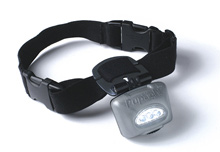
Then I found the PupLight, the lighted dog collar.  Although marketed most strongly for people who walk their dogs at night and need to be visible to traffic, I decided to give it a try…

The PupLight

The PupLight

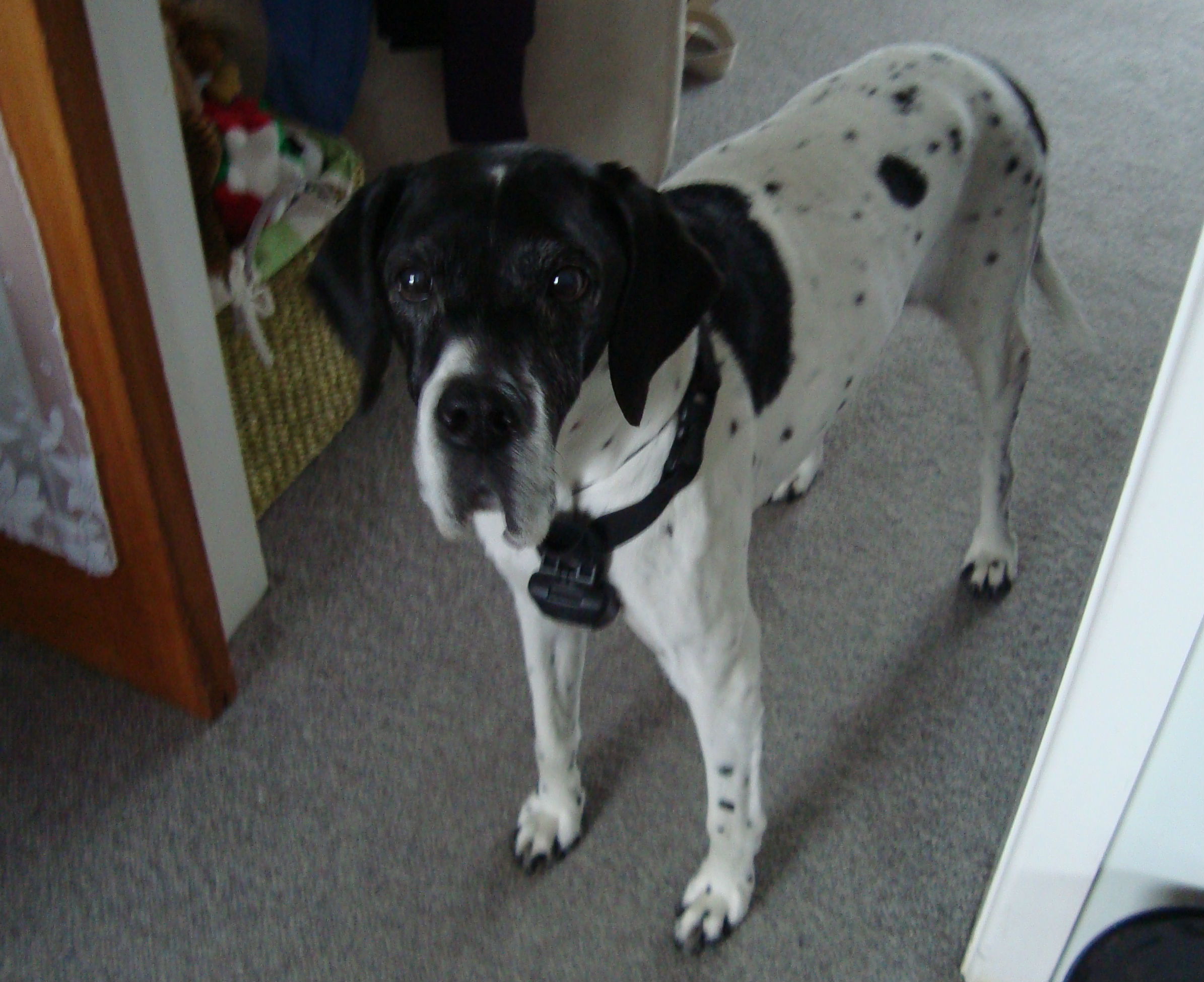
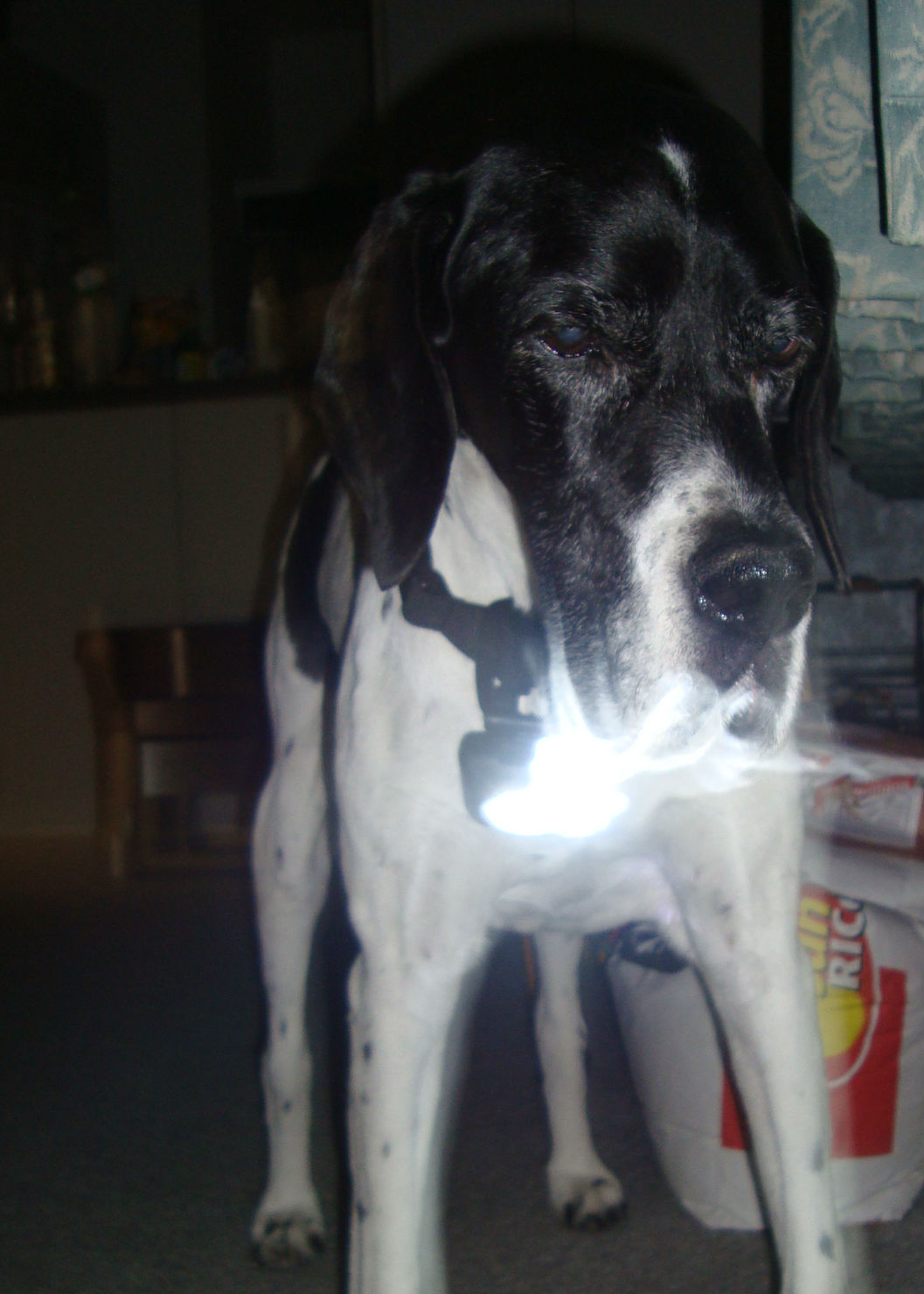
It’s been great!  Just what we needed.  I can clip the collar on before letting Daisy out at night and she can see the steps, and all the irregularities in the garden.  And she adjusted to its use very well.

Daisy shows off her PupLight dog collar

Daisy shows off her PupLight dog collar

The PupLight's bright light makes it much easier for Daisy to see at night

The PupLight’s bright light makes it much easier for Daisy to see at night

Bottom line:  Highly recommended product, particularly for senior dogs

Note:  This product endorsement is entirely my own and was not paid for by the PupLight company or its retailers.

Image

Wordless Wednesday, part 9

Daisy_Wordless Wed

The 2013 World Series (the puppies knew it all along)

My heart belongs to the Boston Red Sox.  Always has, always will.

The shine of their 2013 World Series win hasn’t come off yet (after all, it’s not even been a week!)  However, at this point I would like to remind everyone that the Golden Retriever puppies predicted the Red Sox win on Jimmy Fallon.

Dogs have an intuition that we are only beginning to understand!

Kathleen Crisley, specialist in dog massage, rehabilitation and nutrition/food therapy, The Balanced Dog, Christchurch, New Zealand

My dog wags on the right side (that’s the good side)

Whether your dog wags on the right side or the left means something – to other dogs and to observant humans…

Credit:  Siniscalchi et al.

Photo Credit: Siniscalchi et al.

Research by an Italian team has shown that dogs, like humans, have asymmetrically organized brains, with the left and right sides playing different roles.  The team has published their research in the journal Current Biology.

The research team had already found that dogs wag to the right when they feel positive emotions (upon seeing their owners, for instance) and to the left when they feel negative emotions (upon seeing an unfriendly dog, for example). That biased tail-wagging behavior reflects what is happening in the dogs’ brains. Left-brain activation produces a wag to the right, and right-brain activation produces a wag to the left.

The latest research, however, shows that the direction of tail-wagging means something to other dogs.  While monitoring their reactions, the researchers showed dogs videos of other dogs with either left- or right-asymmetric tail wagging. When dogs saw another dog wagging to the left, their heart rates picked up and they began to look anxious. When dogs saw another dog wagging to the right, they stayed perfectly relaxed.

Researcher Giorgio Vallortigara of the Center for Mind/Brain Sciences of the University of Trento says that the direction of tail-wagging a clear indication of right or left brain activation and could have many applications, such as determining state of mind during a visit to the vet.

So now that you know about this research, think about the wags on these dogs and what are they trying to say?

Doggy quote of the month for November

“I wonder if other dogs think poodles are members of a weird religious cult.”

– Rita Rudner, comedian

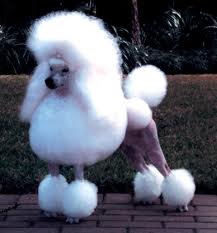
Groomed poodle

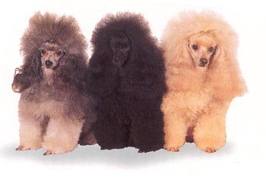
fluffy black poodle

pink poodletricolourpoodlesFor the record…I like Poodles.  In fact, I like all dogs.

Image

Wordless Wednesday, part 8

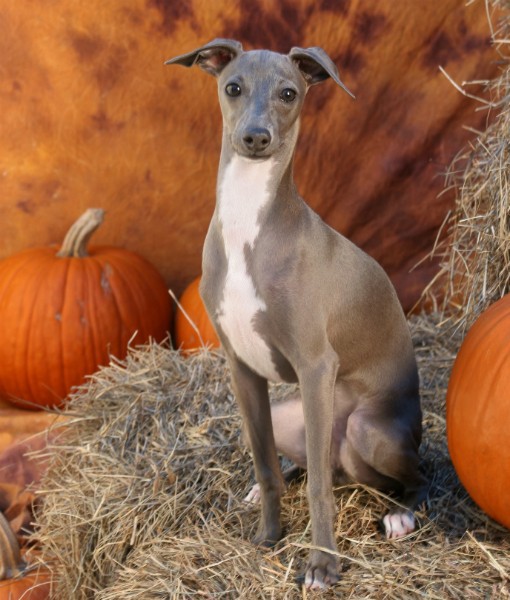
Greyhound with pumpkin

Pain management in dogs with bone cancer

A single injection eased severe, chronic pain caused by late-stage bone cancer in dogs, according to a study in the November issue of Anesthesiology. Dogs with bone cancer that received a neurotoxin injection had significantly more pain relief than those that got standard care without the injection.

“Dogs are part of the family and we do everything we can to relieve them of pain and discomfort when they are sick,” said Dorothy Cimino Brown, D.V.M., School of Veterinary Medicine, University of Pennsylvania, Philadelphia. “In addition to sharing emotional attachments with our dogs, humans share many of the same ailments our pets suffer when fighting cancer. By studying the positive pain relief this treatment afforded dogs, we are hopeful it may also be effective for humans.”
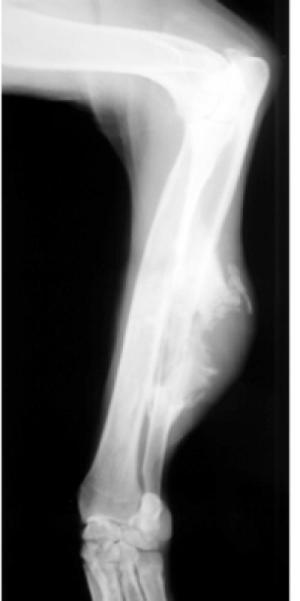
A radiograph of a dog's leg with a cancerous lesion. (Credit: Image courtesy of American Society of Anesthesiologists (ASA))

A radiograph of a dog’s leg with a cancerous lesion. (Credit: Image courtesy of American Society of Anesthesiologists (ASA))

The owners of 70 dogs enrolled their pets in this study. Half the dogs received an injection of a neurotoxin, called substance P-saporin (SP-sap), as well as standard care. The other half (i.e., the control group) received standard care without the neurotoxin injection. The average age of the dogs was between 8 and 9 years and their average weight was 90 pounds.  Multiple breeds participated in the study, including: Rottweilers, Labrador Retrievers, Golden Retrievers and mixed breeds.

The evolution of bone cancer pain in dogs parallels what occurs in humans, with the frequency and intensity of pain increasing over weeks and months. As the cancer advances, both canine and human patients experience life-altering pain, which greatly affects their daily activities and quality of life. The standard treatment for dogs with late-stage bone cancer can include opioids, steroids, and palliative radiation. All of these treatments can have negative side effects.

Within six weeks of beginning the study, 74 percent (26) of the dogs in the control group needed to be “unblinded” (i.e., their status in the study revealed) and their pain relief regimen adjusted compared to 24 percent of the dogs (eight) in the group that received the injection. This was a statistically significant difference.

Other study results included a 6 percent increase in pain severity scores for dogs in the control group, while the dogs in the SP-sap group had no change in pain severity score.  In addition, the dogs in the control group had an 8 percent increase in how pain interferes with their typical activities, while the SP-sap dogs had a 5 percent improvement in this pain impact score. Finally, one dog in the control group responded with improved lameness, while 6 dogs in the SP-sap group became less lame. While these secondary study results were not statistically significant because they were only assessed two weeks after injection, they are promising.

Source:  American Society of Anesthesiologists media release

The Daisy Hill Puppy Farm

Daisy (my Daisy) is (not surprisingly) a fan of Snoopy because he was born at the Daisy Hill Puppy Farm.  (I’ve tried to explain that the Farm was named long before Daisy was born, but she doesn’t quite grasp that concept.)

Mr Schultz, creator of Peanuts, clearly didn’t know about puppy mills when he was creating the story of Snoopy’s adoption – because the Farm looks nothing like the puppy mill operations we see today.  Snoopy was able to be raised with his mother and siblings in a ‘free range’ environment which included a healthy buffet for dinner and musical interludes…

This YouTube video shows what the Daisy Hill Puppy Farm looked like:

Wouldn’t it be wonderful if all puppies were raised in these conditions?