Tag Archives: UK

Greyhound racing says it’s transparent, so we used AI to check – dog by dog

When an industry publishes its own welfare data, how can anyone check it? We built AI agents to go through the public records on fatalities in greyhound racing and found a rising death rate

By Dr Mia Cobb and Dr Simon Coghlan, University of Melbourne

When we saw data published by a greyhound racing regulator in the UK, something about the dogs didn’t add up.

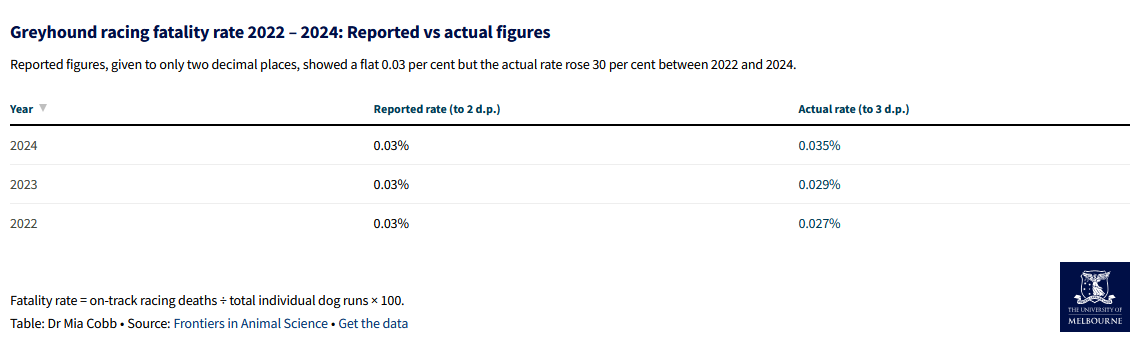
According to their report, the rate of dog deaths in races from 2022 to 2024 was stable. However, that number had actually risen from 99 to 123, while the number of races had fallen over the same period.
The maths was not mathing.

The fatality rate (which is calculated as the number of dogs that died on the track while racing, divided by the total number of individual dog runs, multiplied by 100 to express it as a percentage) was presented as 0.03 per cent across three consecutive years.

But when we ran the sums and reported them to an extra decimal place, we saw the fatality rate had risen by 30 per cent.

By reporting this information to only two decimal places, the increase in dogs dying in races was masked.

So, when an industry that relies on animals publishes welfare data, how can the public – or the policymakers making decisions about that industry’s future – know if the headline figures portray the real situation?

In the UK, there is a regulated industry with public-facing records, a governing body that publishes welfare data and a long-running debate about whether that data tells the full story.

For researchers interested in animal welfare, the UK greyhound industry also presents a genuine test case for a new method.

In fact, the question we wanted to answer was not specific to greyhound racing, it was broader.

When welfare-relevant information exists across multiple public sources but has never been systematically assembled, can AI agents do that work reliably, ethically, transparently and at scale? If so, what can we learn that the industry’s reporting doesn’t tell us?

Building our greyhound data set

The Greyhound Board of Great Britain (GBGB) is the governing body that licenses and regulates commercial greyhound racing in the UK.
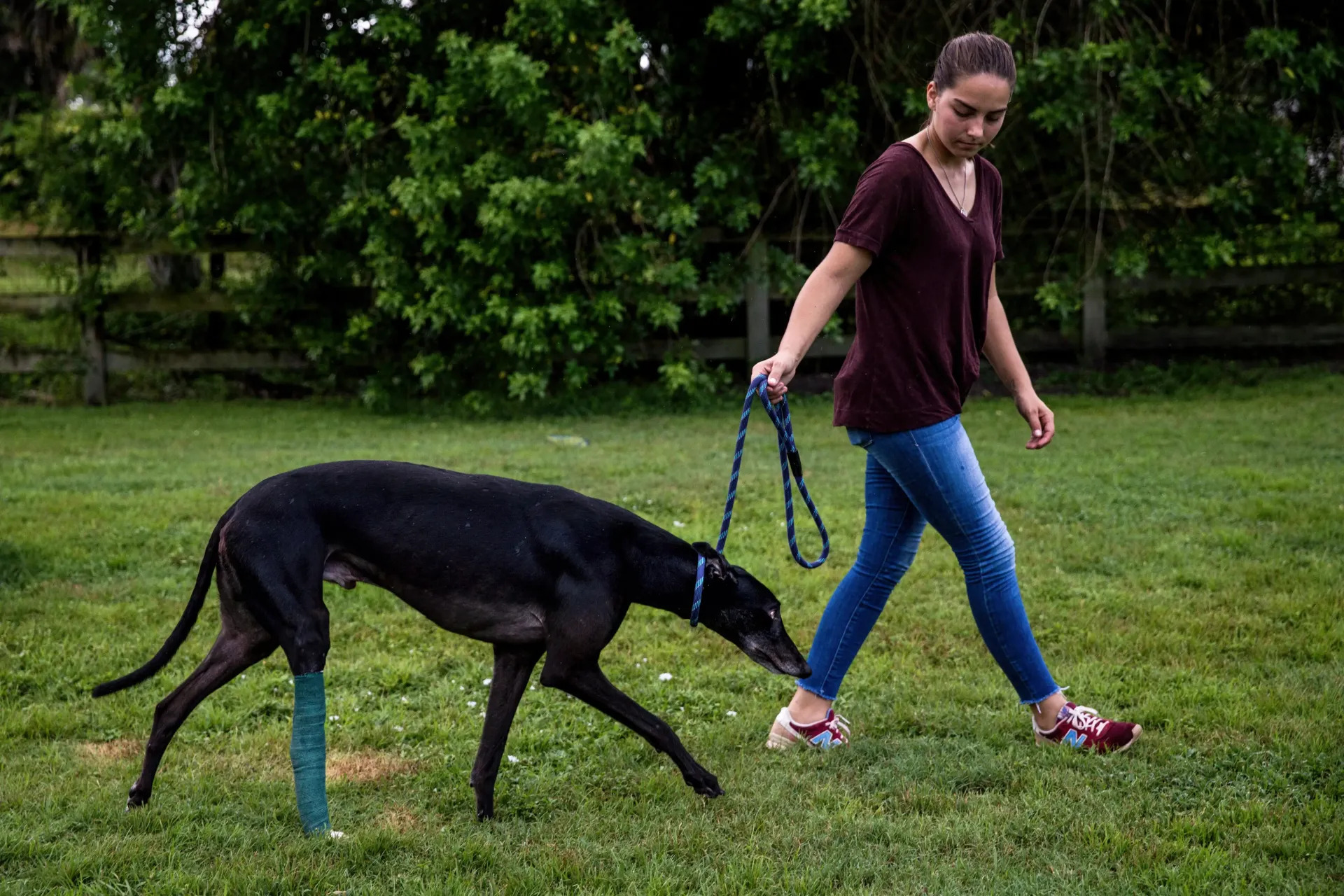
Falls affect one in six racing greyhounds. Picture: Getty Images

It holds detailed records on every dog registered there, including country of origin, racing history, injuries, destination when racing ends and reason for leaving racing.

While some of this information is publicly visible, a good deal of it is not.

We made six requests for access to GBGB data, but none gave us access to the data we needed. We were told that most of what we wanted was already on their website. It wasn’t – at least not in any form that allowed independent analysis.

So, we built the dataset ourselves.

Using AI agents – software that performs repetitive tasks under continuous human supervision – we pulled together information from several public websites to uncover animal welfare insights for 31,028 greyhounds that raced in licensed UK competitions. 

That’s around 1.27 million race starts across 22 licensed tracks between January 2022 and March 2026.

We gathered data from five public registries, and by cross-referencing these sources, we were able to get a relatively complete view of the whole population, not just a sample.

Thanks to the AI agents, what would have taken months of manual research was completed in days.

What the data tells us about greyhound racing

As we went through the data, we began to see things that the industry’s transparency has not previously revealed.

The typical greyhound’s racing career is 30 starts over 11.9 months. Most dogs race for less than a year.

More than 85 per cent of greyhounds racing in the UK were bred in Ireland.
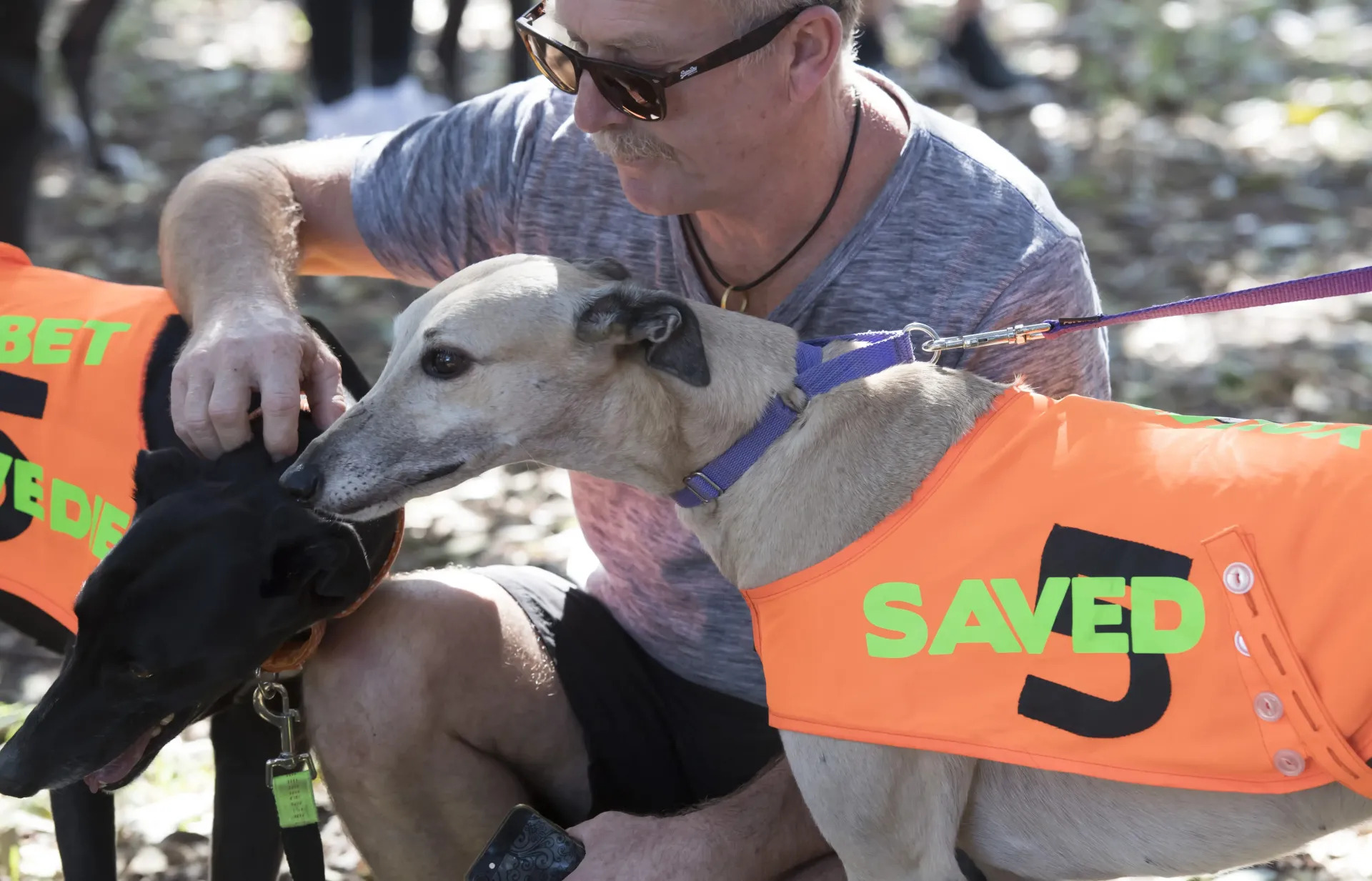
The typical greyhound’s racing career is 30 starts over 11.9 months. Picture: Getty Images

This matters because dog breeding and rearing in Ireland falls outside the jurisdiction of the British system which is later responsible for their welfare.

One in four racing dogs – around 24 per cent – experienced at least one adverse event (including injuries or fatalities) during our observation period, with falls affecting one in six dogs.

These ‘adverse events’ are recorded by track officials at the race but have not been made available to the public at a track level, even when the Scottish and Welsh parliamentary committees asked for it.

The GBGB publishes one annual list of aggregated injury figures that covers all licensed tracks.

This has meant that the public, researchers, regulators and even greyhound trainers have not been able to independently check whether conditions at one track carry greater risk.

Our data finds that some tracks are five times more likely to result in adverse events for dogs than other venues.

Where our trail goes cold

Of the 31,028 dogs in our dataset, 73 per cent had left GBGB-regulated racing by the end of March 2026.

The GBGB publishes an aggregate of annual figures on retirement destinations. It reported that 94 per cent of dogs leaving the industry in 2024 were rehomed or ‘retained by trainers’.

But, importantly, the wellbeing of these dogs cannot be independently verified because it falls outside the registered racing regulations.
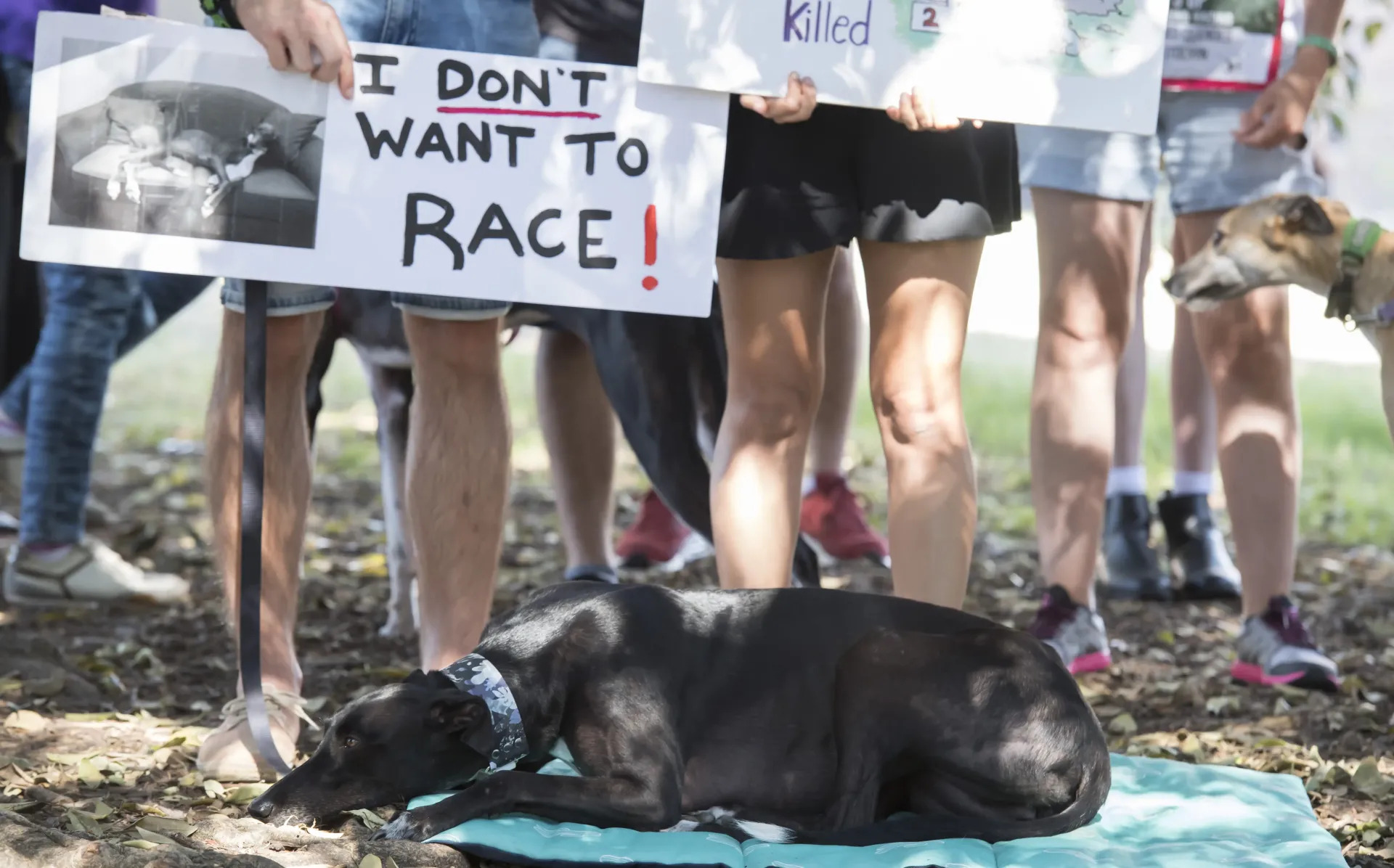
Over the last year, parliaments in New Zealand, Wales and Scotland have all decided to ban greyhound racing. Picture: Getty Images

Why this matters beyond greyhounds

An industry’s social license to operate depends on public trust. In an era of growing concern for animal welfare, that trust will increasingly require verifiable evidence.

The GBGB is not unusual in its approach to information disclosure.

Across animal-reliant industries, data tends to flow inward to self-governing bodies, and is only released outward in tightly controlled formats.

Independent researchers like us face fragmented public registries, opaque systems and, when we ask directly, deflection or refusal.

What our study shows is that technology can sometimes help overcome this information imbalance. AI agents, applied carefully and with human oversight, can compile population-level welfare datasets from publicly accessible sources, at a scale and speed that makes independent scrutiny genuinely and ethically feasible.

It does not give us the data the GBGB holds privately. Nothing can do that, short of the governing body releasing it.

Over the last year, parliaments in New Zealand, Wales and Scotland have all decided to ban greyhound racing.  

Here in Australia, Tasmania may follow. Western Australia is mid-way through a formal inquiry. South Australia’s greyhound racing industry faces a government-imposed reform deadline in July 2026.

In each of these places, the same question is being asked: how do we know the welfare assurance offered by the industry is real?

For the first time, we can describe the dogs racing in the UK in detail. It’s making these animals visible.
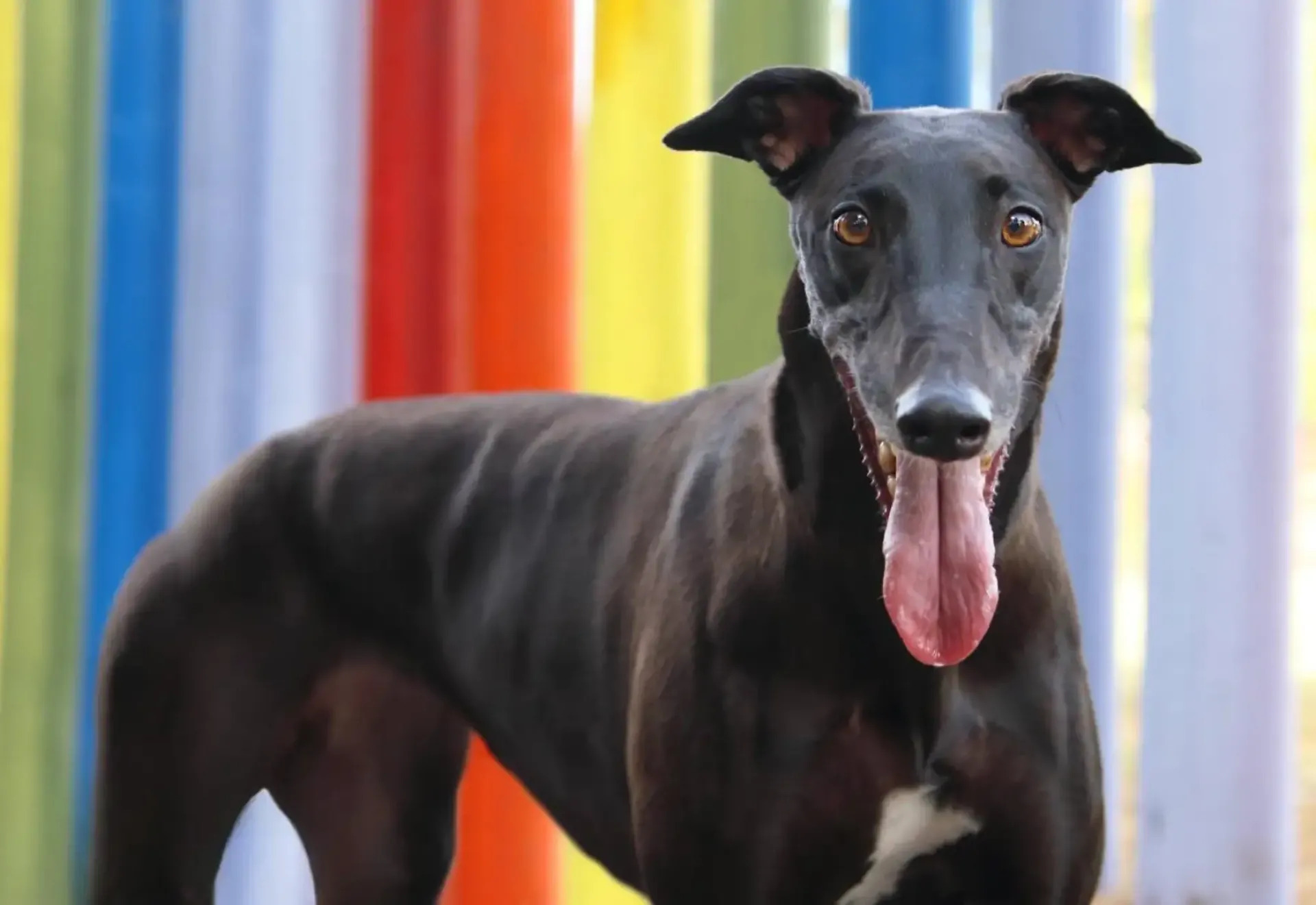
How do we know the welfare assurance offered by the industry is real? Picture: Waggles Photography

We know things we didn’t know before.

More than half of the greyhounds are black. There are as many females as males. Most of them are bred in Ireland. They start racing at around 21 months. And within a year of their first race, most have disappeared from public view.

Whether this visibility is used to hold the industry to account is a separate question.

Source: This article was first published on Pursuit. Read the original article.

The article has been republished on this blog thanks to a Creative Commons Attribution No Derivatives 4.0 International license

Pets save UK National Health Service

Pets account for millions of pounds worth of economic activity in the UK and may reduce National Health Service (NHS) costs by nearly two and a half billion pounds, according to a new report. companion-animal-economics

Drawing on multiple sources, and written by internationally respected animal welfare and business experts, Companion Animal Economics comprehensively documents the economic impact of pets in the UK – the first time such an assessment has been made for nearly 40 years. The study directly examines available evidence on the direct and indirect benefits and costs of companion animals to society, including their influence on human mental and physical health, illness prevention and well-being.

Published by CABI, Companion Animal Economics was developed by Daniel Mills, Professor of Veterinary Behavioural Medicine at the University of Lincoln UK, and Dr Sandra McCune, Human-Animal Interaction expert at Mars Petcare’s WALTHAM Centre for Pet Nutrition. Mars Petcare UK provided sponsorship towards the cost of producing the report. Other authors include Dr Sophie Hall from the University of Lincoln’s School of Life Sciences, Professor Ted Fuller and Luke Dolling from the Lincoln International Business School, and Katie Bristow-Wade of Dogs for Good.

“Vets are well aware how important companion animals are to their owners, but it is important that they appreciate the impact that they can have on the physical, mental and social health of both individuals and society more widely,” says Professor Daniel Mills. “This book should help raise awareness of this and their economic importance in times of economic uncertainty.”

First major study since 1988
“Almost half of households in the UK share their homes with animals cared for as companions – a relationship we consider to be valuable and enriching,” says Dr McCune. ‘This important report provides a modern day update on the impact of companion animals on the UK economy and society, without reducing the discussion to a simplistic cost-benefits ratio. Critically, it aims to raise awareness of the need for research to evaluate the complex routes by which pets make an economic impact on UK society.”

Relatively little information on the economic impact of pets has been published since the 1988 seminal Council for Science and Society (CSS) report on Companion Animals in Society, which inspired Companion Animal Economics. Since then, trends in pet ownership, and associated industries, have changed a great deal. The report’s methodology sought to capture this new context, including issues like pet tourism, pet obesity, and expanding veterinary services, identifying clear gaps where further high-quality data and additional research are needed.

Costs as well as benefits
When evaluating the contribution of companion animals to the UK economy, both positive and negative aspects were considered. The cost of NHS treatment for bites and strikes from dogs is estimated at £3 million per year. At the same time, the report also estimates that pet ownership in the UK may reduce use of the UK health service by up to £2.45 billion per year. This conservative conclusion is drawn through examining healthcare savings through reduced number of doctor visits.

Given the scale of the potential impact, the report concludes that research into companion animals and their economic impact on society needs further investigation and should be supported by government. While UK data were used in the report, many of the points raised relate to other industrialised nations, demonstrating the global nature of this issue.

Book details & Link:
Companion Animal Economics. The Economic Impact of Companion Animals in the UK.  S Hall, Research Fellow. University of Lincoln, UK, L Dolling, PhD student. University of Lincoln, UK, K Bristow, Dogs for Good, UK, T Fuller, Professor of Entrepreneurship and Strategic Foresight. University of Lincoln, UK, D Mills, University of Lincoln, UK

Source:  Waltham.com

The incredible flying dog of Leighton Buzzard

Leighton Buzzard is a village in Bedfordshire (UK).  It’s home to Callie, a Chocolate Labrador with flying credentials.

As an official member of air crew, Callie's identification card helps her to clear airport security.  The card was issued by the Aircraft Owners and Pilots Association (AOPA)

As an official member of air crew, Callie’s identification card helps her to clear airport security. The card was issued by the Aircraft Owners and Pilots Association (AOPA)

At the age of 3 months, her owner Graham Mountford  first took Callie in the his Cessna.  He said, “We first tried her in the plane when she was a few months old, just taxiing around the airfield, and she seemed to love it.”

Callie is now over 3 years old and has more than 250 hours of flying experience.  Her favorite trips are to beaches where she can run and play.

Callie tends to sleep on the plane, but apparently gets excited during take offs and landings

Callie tends to sleep on the plane, but apparently gets excited during take offs and landings

An AOPA spokeswoman said “She is the only dog we’ve issued with a card, and it’s going to be renewed.”

Source:  BBC News

The Paw Seasons luxury accommodation for dogs

It’s been a while since I blogged about some pet-friendly accommodation.  But this one really got my attention because it offers luxury breaks for dogs.  The venues do not accept human visitors so I guess technically this operation is about boutique kenneling for dogs, but who cares?

The Paw Seasons offers three luxury accommodation options for UK-based dogs.

At Long Ashton in Bristol the dogs can relax on a dog sofa in the conservatory or on the variety of soft beds in the kitchen.  Dogs are also welcome in the office (study).

At Long Ashton in Bristol the dogs can relax on a dog sofa in the conservatory or on the variety of soft beds in the kitchen. Dogs are also welcome in the office (study)

The Alderton in Wiltshire features a resident Golden Retriever, 2 retired horses and ducks and chickens who are carefully fenced off for safety

The Alderton in Wiltshire features a resident Golden Retriever, 2 retired horses and ducks and chickens who are carefully fenced off for safety

Hawkesbury Common, near Badminton in Wiltshire has restricted vehicle access, making it the perfect country retreat for your dog

Hawkesbury Common, near Badminton in Wiltshire has restricted vehicle access, making it the perfect country retreat for your dog

The Paw Seasons offers a shuttle service from London and points along the M4; free shuttle service is available for Bristol International Airport and the operators will also look after your car while you are away.

Rates per dog range from £30 – £50 depending on the season.

Paw Seasons Logo

The dog of the Mary Rose

The Mary Rose, vice-flagship of Henry VIII’s war fleet, had been in service for 34 years when she went into action against the French in the battle of the Solent in Portsmouth Harbour.   The year was 1545.  On the second day of the conflict, the Mary Rose turned to starboard and sank rapidly.

Among the 500 crew that perished in the sinking was the captain’s dog, a whippet-terrier cross whose job it was to hunt down the rats that were on board the ship.  The dog’s remains were found close to the door of the captain’s quarters, suggesting that it had been trapped inside when the ship sank.

The ship’s remains were preserved by the silt and clay of the harbour.  The ship was discovered in 1971 and excavated during the period 1979 to 1982, when many artifacts were saved and preserved.  The hull of the ship was raised in 1982.

The Mary Rose is now a museum in Portsmouth, England where on one side you can view the hull of the ship and on the other, you can observe the preserved contents of the ship, including the skeleton of the master’s dog, laid out as if in mirror image to the ship’s hull.

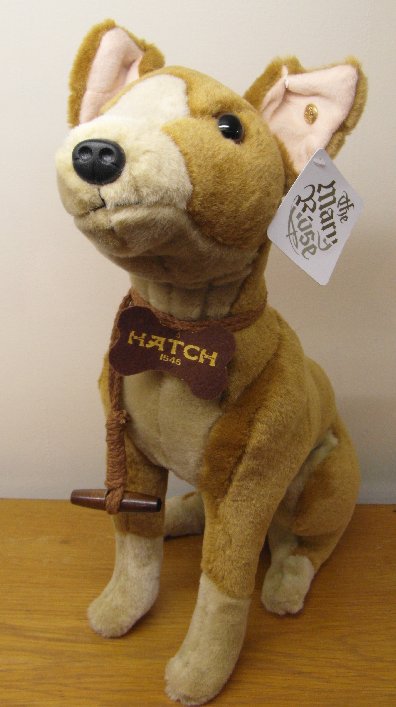
The museum’s gift shop sells a 37 cm tall stuffed dog- affectionately named ‘Hatch’, a replica of what the captain’s dog probably looked like.

You can buy Hatch at the Mary Rose gift shop for  £ 25.00

You can buy Hatch at the Mary Rose gift shop for £ 25.00

Battersea puts out urgent call for help

The Battersea Dogs and Cats Home in the UK has issued an urgent appeal for bedding and jumpers to keep its residents warm this winter.

One puppy grateful for her new jumper is Cilla, the three month old Staffordshire Bull Terrier, who was found abandoned in a box in a park . Photo courtesy of Battersea Dogs and Cats Home.

The dogs are also being wrapped up in hand knitted sweaters (jumpers) crafted by supporters.

Claire Porteous, Operations Manager at Battersea explains  “Here at Battersea our staff and volunteers are doing everything we can to keep our dogs and cats warm as the temperatures drop. We’ll be using thick bedding, knitted blankets and coats to keep the dogs and cats snug, but we are always incredibly grateful for donations of bedding and dog coats at this time of year.”

The Home would be grateful for dog or fleece blankets, warm bedding or fleece dog coats.

Anyone wishing to donate can bring their items to one of Battersea’s three sites in London, Old Windsor or Brands Hatch, or post them to:

Battersea Dogs & Cats Home
4 Battersea Park Road
London
SW8 4AA

Want to knit for the dogs but don’t know where to start?  Try the Big List of Free Dog Knitting Patterns.

  • The Battersea Dogs & Cats Home was established in 1860 and aims never to turn away a dog or cat in need of its help.
  • Since it was founded, Battersea has rescued, reunited and rehomed over 3.1 million dogs and cats.
  • In 2010 the Home cared for almost 7,000 dogs and 3,000 cats.
  • It costs over £14 million to run Battersea Dogs & Cats Home each year.
  • Battersea Dogs & Cats Home receives no government funding and relies entirely on the generosity and support of the public.
  • Battersea Dogs & Cats Home rehomes dogs and cats all over the UK.
  • Visit www.battersea.org.uk for more about the Home and its services.


Kathleen Crisley, specialist in dog massage, rehabilitation and nutrition/food therapy, The Balanced Dog, Christchurch, New Zealand