Category Archives: Dogs

Outmoded notion of the alpha wolf

It’s been almost a year and a half since I wrote about the alpha roll myth.  Yet, there are still dog trainers who are using methods that are based on outdated thinking about animal behaviour and training.

Here’s a great video by L David Mech, who wrote “The Wolf: Ecology and Behavior of an Endangered Species” in 1968.  The book, published in 1970 and re-published in paperback in 1981, is often cited as the reason why ‘dominance’ and ‘leadership’ models for dog training are acceptable.

L David Mech now admits he was wrong and has publicly announced on his website that he has pleaded with the publisher to stop publishing his book.

“Alpha” implies competing with others and becoming top dog by winning a contest or battle. However, most wolves who lead packs achieved their position simply by mating and producing pups, which then became their pack. In other words they are merely breeders, or parents, and that’s all we call them today, the “breeding male,” “breeding female,” or “male parent,” “female parent,” or the “adult male” or “adult female.”

In the rare packs that include more than one breeding animal, the “dominant breeder” can be called that, and any breeding daughter can be called a “subordinate breeder.”

I’m a supporter of positive reinforcement training.  Please be on the lookout for trainers who still use outdated information and possibly damaging training techniques.

Guest bedroom

When traveling, it helps when you can stay in the home of another dog lover.  Here’s just  a few of the decorations that were in my guest bedroom last night:

The quotation reads 'A friend is not a feller who is taken in by sham; a friend is one who knows our faults  and doesn't give a damn!' From the writings of J A McEvoy

The quotation reads ‘A friend is not a feller who is taken in by sham; a friend is one who knows our faults and doesn’t give a damn!’ From the writings of J A McEvoy

Guest room_A shelter dog

Guest room-One can never

With thanks to my hosts:

Abbie

Abbie

Rosie and Liam

Rosie and Liam

Louis

Louis

and their person, Betsy (sorry, no photo of Betsy!)

The dog behind Tito’s Handmade Vodka

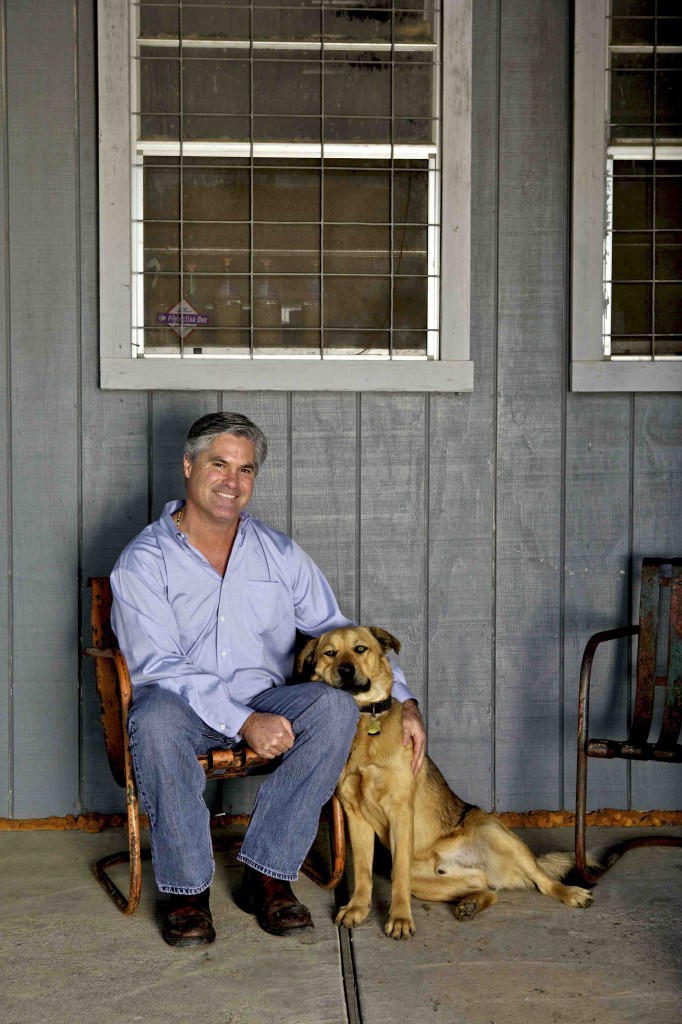
Open a copy of United Airlines’ flight magazine and there will be a full page ad of a man and his dog.  The ad is for Tito’s Handmade Vodka, a vodka made in Texas.   The man is Tito, and the dog is resident distillery dog, Roscoe.

TitoRoscoe3-1-682x1024

United is now serving Tito’s vodka, which is huge exposure for a company with humble beginnings.  The company also has a long association with animal rescue.

Over 30 homeless dogs and cats that have passed though the distillery grounds and all have been brought to good health and absorbed by Tito’s employees or their extended family.  The company also sponsors Emancipet‘s low-cost spay/neuter programs through events like its annual fundraising luncheon.

Roscoe was a rescue dog, too.  After claiming that Roscoe winked at him, Tito had a yard fenced and a house built for him.  He is now the ‘poster dog’ for the brand.

German Shepherd vs Alsatian

German Shepherd

I find it really interesting that some people refer to this dog as a German Shepherd (sometimes GSD – standing for ‘German Shepherd Dog’) and others as the Alsatian.

Strictly speaking, the name Alsatian is no longer valid.  It was officially removed as an identifier in 2010 by the American Kennel Club.

The change in name from German Shepherd dates back to the years after World War I, when it as felt that the name ‘German’ in the dog’s breed would affect its acceptability in society.  So, the UK Kennel Club decided to call the dog the ‘Alsatian Wolf Dog.’  The name caught on with other kennel clubs.

Over time, ‘wolf dog’ was dropped and the breed was simply referred to as the ‘Alsatian.’  (Alsace is the region of France in the north-east corner, bordering Germany.)

In the 1970s, there was a successful campaign to again have the dogs referred to as German Shepherd Dogs and the word (Alsatian) in parentheses followed.

Kathleen Crisley, specialist in dog massage, rehabilitation and nutrition/food therapy, The Balanced Dog, Christchurch, New Zealand

Dexter’s first birthday

I’m a caterer – but of the doggy kind.  I took an order a few weeks ago from the Herne Bay Local Eatery and Bar for a special Dog and Grog event (these events are held the last Sunday of every month when patrons and their dogs are all welcome to attend).

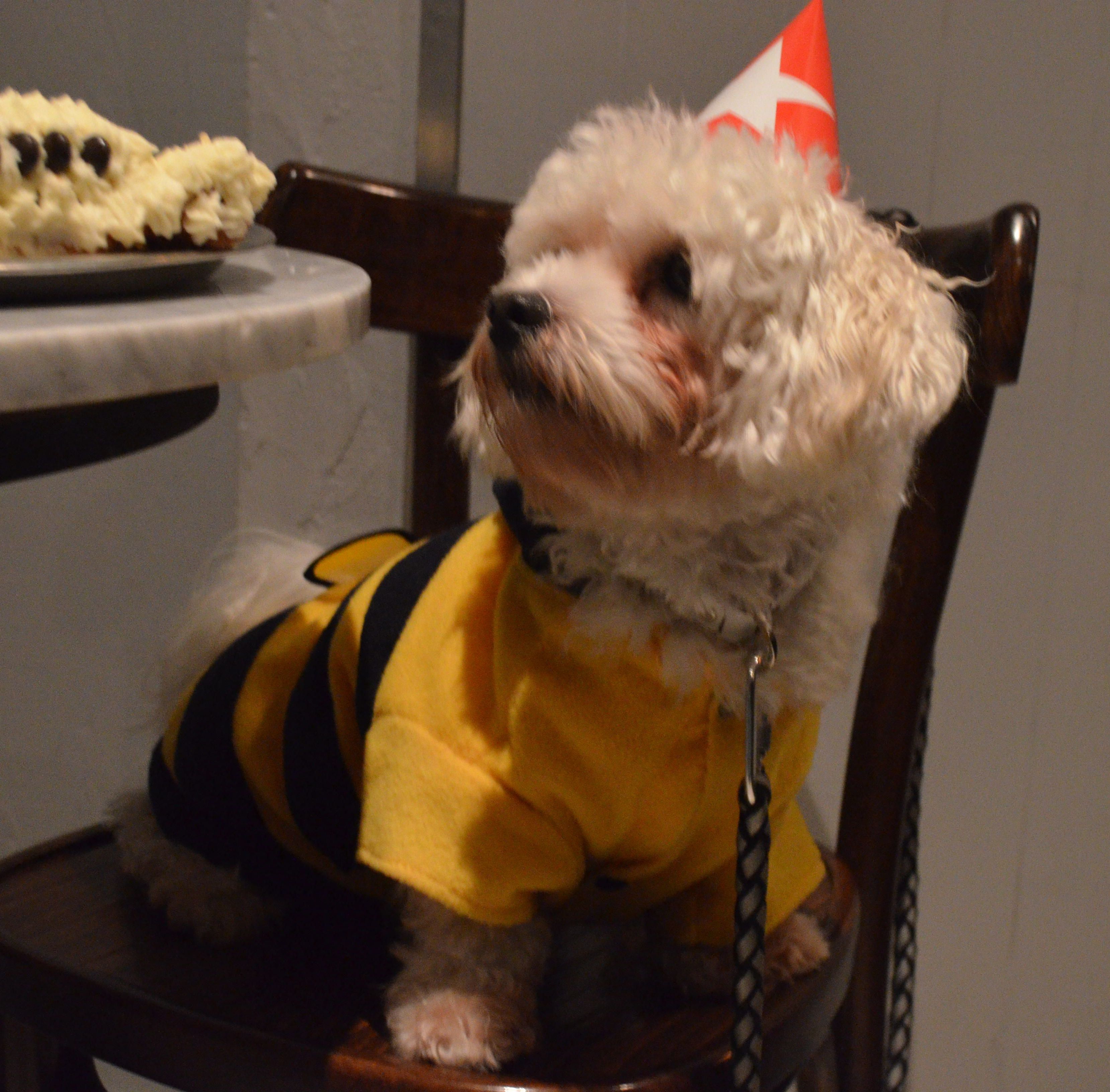
The special event was Dexter’s first birthday.

Anna is the manager of the restaurant and also Dexter’s mother.  From the photos she’s sent in, all had a wonderful time.  Thanks for your support of Canine Catering, Anna!

Birthday boy, Dexter

Birthday boy, Dexter

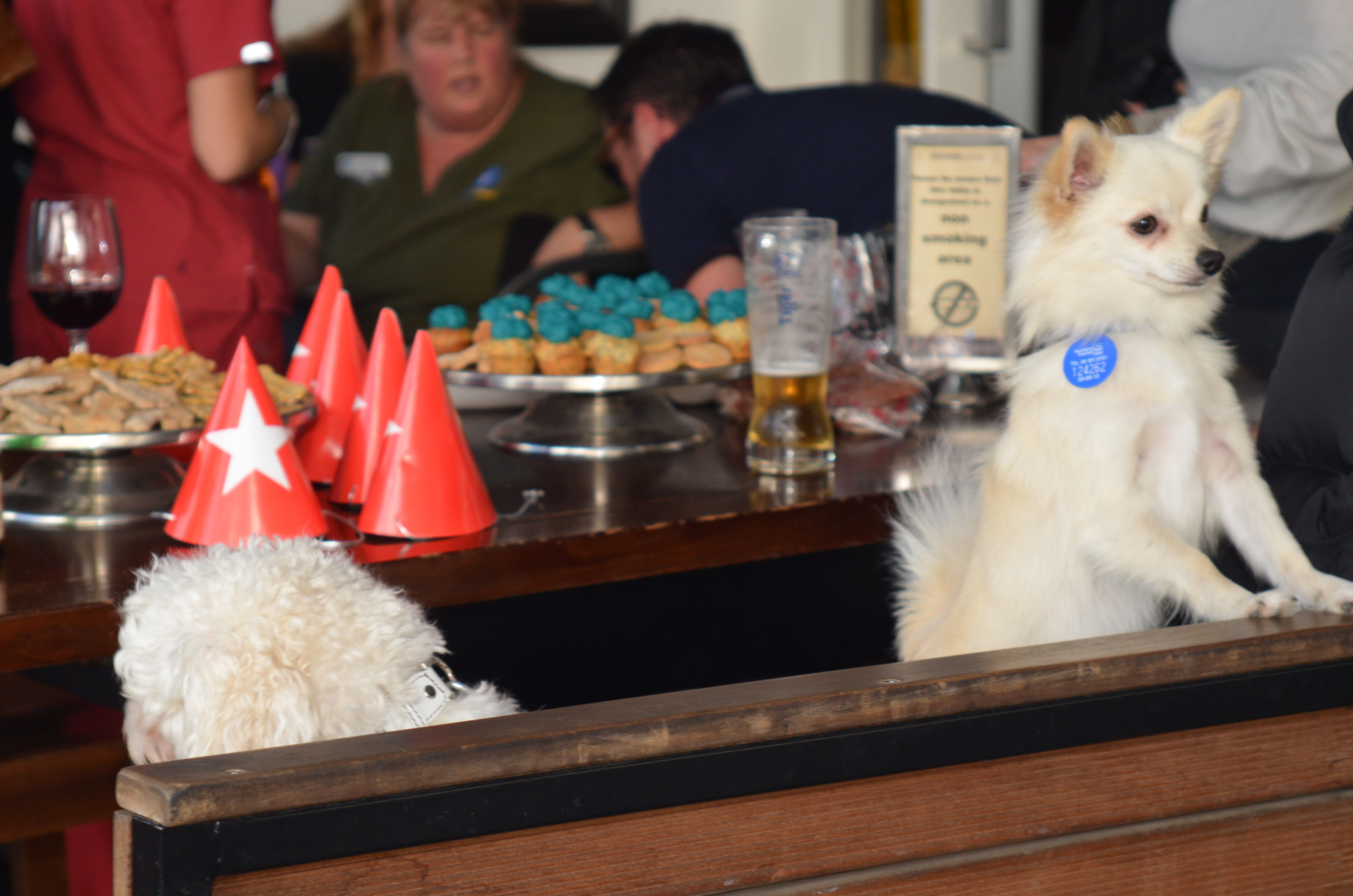
Party guests

Party guests

The 'spread' was a mixture of dog treats and people food.  (The beer and wine were for the human guests)

The ‘spread’ was a mixture of dog treats and people food. (The beer and wine were for the human guests)

A birthday party is a great place to meet and greet

A birthday party is a great place to meet and greet

Deaf pets

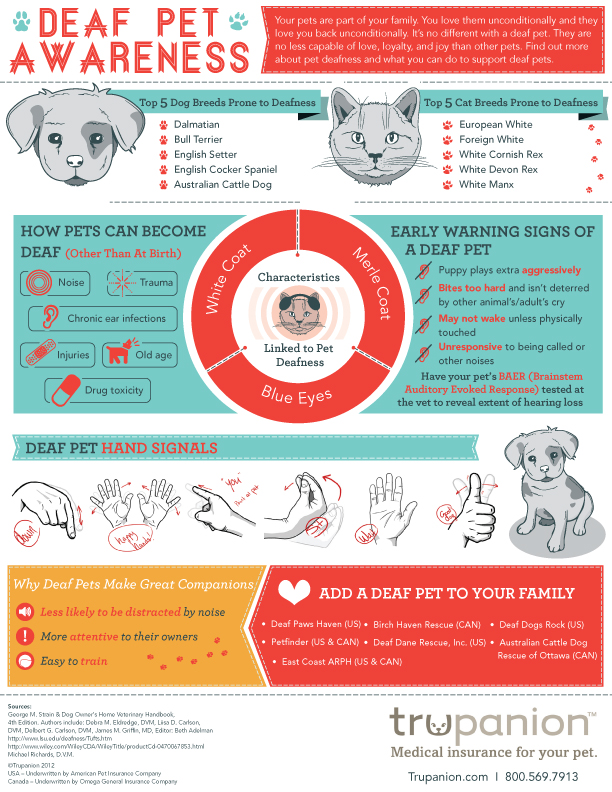
Trupanion, providers of pet insurance, have published this very useful guide to deaf animals.  Deaf pets make great pets.  Yes – they have special needs – but they are often even more attentive to their owners because of their deafness and they are easy to train.

Have you considered adopting a special needs pet?  Consider a deaf one!

DeafPets

When a poodle isn’t a poodle

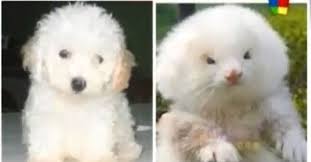
Poodle vs ferret

Last month, a story circulated worldwide about a man in Argentina who had purchased what he thought was two toy poodles from a local market for a bargain price.  The poodles turned out to be ferrets that had been loaded with steroids to plump them up and make them appear more like a poodle than a ferret.

I have two things that concern me:

1.  While some people focused on debates about ‘how dumb could the guy be….?’, my thoughts were – ‘what a shocking case of abuse.’

These ferrets were loaded with damaging steroids to make money.  There was no thought given to their welfare and the impacts on their health from the steroids.

2.  There is no such thing as a free lunch.  If something sounds too good to be true, it probably is…

When dealing with animals, people really need to think about quality.  Are they buying quality?  Is it a cheap product that could damage animal health (how many cases have we seen with cheap, spot-on flea treatments and the damage that they cause?)

In this case, the buyer should have questioned the bargain price.  At a minimum, he was probably purchasing a poodle with health problems resulting from poor breeding practice.  What he got was even worse, a different species of animal that had been altered to deceive…

So, in summary, I think it is good that this story was circulated.  However, I am disappointed the track that many media took about the story.    We need to put animals first.  Welfare of the animals is top priority.

What do you think?

Doggy quote of the month for May

“No matter how little money and how few possessions you own, having a dog makes you rich.”

–    Louis Sabin

What we share with our dogs

We all know that we share love with our dogs.  But microbes?

A new CU study indicates parents are more likely to share bacteria with their dogs than their kids,  a finding with biomedical implications. Photo courtesy Natural Resources Conservation Services

A new study indicates parents are more likely to share bacteria with their dogs than their kids. Photo courtesy Natural Resources Conservation Services

Researchers at the University of Colorado Boulder have looked at the types and transfer modes of microbes from the guts, tongues, foreheads and palms (or paws) of members of 60 American families, including dogs.  They found that humans shared more microbes with their dog than their own children.

The team swabbed various parts of the body to obtain microbial samples on  couples, children and dogs.  For humans, the team looked at the tongue, forehead, right and left palm and fecal samples to detect individual microbial communities. Dogs were sampled similarly, except that fur was sampled instead of skin on the forehead and all four paws were swabbed for bacteria in the absence of canine palms.

“One of the biggest surprises was that we could detect such a strong connection between their owners and pets,” said Associate Professor Rob Knight, the study’s leader.

The micro-organisms humans carry around have been linked to a broad spectrum of diseases ranging from malnutrition and obesity to diabetes, asthma and depression.  “There is mounting evidence that exposure to a variety of environmental sources of microbes can affect long-term health, findings known as the ‘hygiene hypothesis,’ ” said doctoral student Se Jin Song.

Proposed by British epidemiologist Richard Strachen in 1989, the hypothesis is that children who have had a lack of exposure to bacteria and micro-organisms might be more prone to getting sick because many microbes have co-evolved with people to be beneficial.

Dogs were a key part of this research, said Knight.  “Since so many people consider their pets truly a part of the family, it seemed appropriate to include them in a study involving family structure.”

The results of the study have been published in the journal eLIFE.

Source:  University of Colorado at Boulder media statement

NutriScan

Veterinarian Dr Jean Dodds is the inventor of patented NutriScan, a saliva test for food intolerance and sensitivities.

Many people confuse food allergy with intolerance.  Intolerances are the third most common disorder found in dogs and symptoms can include itchy skin or irritable bowel problems.   When people seek out my advice on nutrition, it is often because they know their dog is having a reaction to their food.   Sometimes, picking the culprit is easy (it depends on what the core diet is in the first place), but in others, there appears to be multiple ingredients that are the offenders.

Enter NutriScan, which tests for intolerances to 22 different food ingredients.

Food allergy is an immediate reaction mediated by production of IgE and IgG antibodies. Food sensitivity and intolerance, by contrast, measures a more delayed body response to offending foods by measuring production of IgA and IgM antibodies primarily in mucosal secretions from the bowel.

NutriScan is split into two test panels, so you can order one or both:

Panel 1:                         Panel 2:
Beef                               Chicken Eggs
Corn                               Barley
Wheat                            Millet
Soy                                 Oatmeal
Cow’s Milk                    Salmon
Lamb                             Rabbit
Venison/Deer               Rice
Chicken                         Quinoa
Turkey                            Potato
White Fish                     Peanut/Peanut Butter
Pork                                Sweet Potato

Dr. Dodds recommends that dogs are tested annually because canine food tolerances and intolerances change over time.

I’m pleased to be able to offer this testing to my clients, with NutriScan test kits on hand and ready to be sent to the United States once we take the saliva sample.  Within a week of ordering my test kit supply, my first canine saliva sample is on its way.