Category Archives: Dogs

Every home needs a Harvey

October is Adopt-A-Shelter-Dog month in the USA.  There are lots of great dogs in shelters all over the world.  I have always felt that you don’t choose a dog, a dog chooses you.

But, in a new twist on shelters helping to match dogs and their owners, check out this cute video showing how Harvey markets himself to prospective adopters.

No pet store puppies

The ASPCA has a new campaign to fight puppy mills.

Since most pet store puppies are sourced from puppy mills in the USA, the organisation is asking that you pledge not to buy anything from a shop that sells puppies.  That includes dog toys, food, treats and other items!

You can sign the pledge here.

Canine couture in Newport, Rhode Island

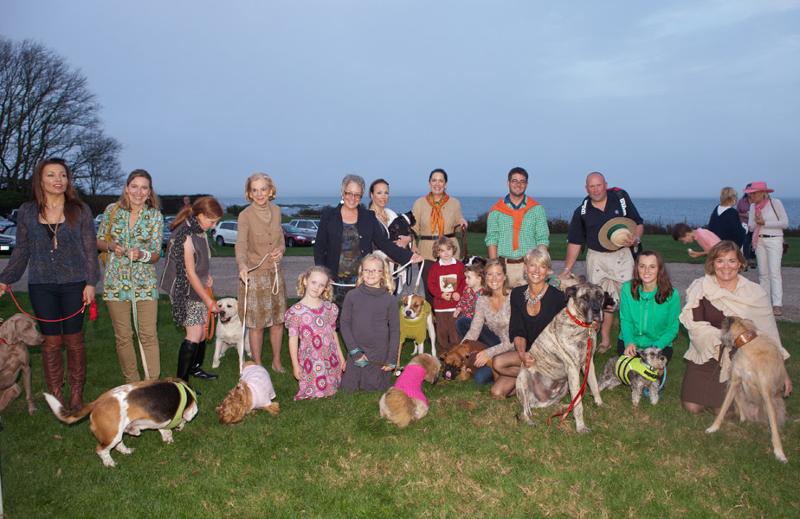
On September 22, Rough Point in Newport, Rhode Island,  hosted its 3rd annual Doggy Fashion Show.

The show was used to highlight autumn fashions for humans and their canine companions.  Proceeds from the event supported the Newport Restoration Foundation’s  education programs and the Potter League for Animals.   Newport pet boutique Wag Nation sponsored the show.

Photo by Meghan Sepe for the Newport Restoration Foundation

Rough Point is one of the homes of Doris Duke, an heiress to a tobacco fortune, philanthropist and art collector.  Located on historic Bellevue Avenue in Newport, Ms Duke ensured that her home would be preserved and opened to the public after her death in 1993.   She founded the Newport Restoration Foundation to preserve not only hers but other mansions in Newport.

Ms Duke was a lover of animals, including dogs.  She had camels at Rough Point every summer and the damage to top edges of the mirrors in her conservatory is lasting evidence of the presence of the animals.  When I last toured Rough Point, the tour guide recalled an exchange between Ms Duke and a housekeeper.  The housekeeper complained about the damage Ms Duke’s dogs were causing to the furniture.  Ms Duke replied

‘They live here, you don’t.’

Mind kind of lady!

For a beloved member of the family

This column, For a beloved member of the family in memoriam, was written by Bella English, a columnist for The Boston Globe newspaper.

It touches on that special relationship we have with our dogs, and the grief and mourning we experience when they pass.

I hope this item resonates with you as much as it does with me.

The record for most dogs in a costume parade

The Guiness Book of World Records certified a new record on July 27th in San Diego, California and Petco Park, home of the  San Diego Padres baseball team.

The record was for the number of costumed dogs in a parade and the new record was 337 – lots more than the 200+ of the previous record.

Baseball parks from around the United States hold ‘bring your dog to the baseball game’ events each year.    New Zealand is currently gripped with Rugby World Cup fever, but somehow I doubt people here are ready to see dogs at Eden Park for an All Blacks test…

I hope you enjoy this video of the big day in San Diego.

The 7 best pet-friendly hotel chains

Fodors has published its list of the 7 best hotel chains for travelling with your pet.  These hotels realise what many in the accommodation industry don’t – half of the households in the United States own a pet.  And family holidays mean ‘for the family’ – people don’t want to leave their beloved pet behind.

Admittedly, most of these hotel chains are top of the range and probably out of the reach of the budget traveler.  But, for those with some disposable income and fur children they adore, then these hotels are a must visit!

The hotel chains recognised are:

  • Kimpton Hotels
  • Loews Hotels
  • Mandarin Oriental Hotels
  • W Hotels
  • Ritz-Carlton Hotels
  • Hilton
  • Hotel Indigo

The benefits offered by these hotels are wide-ranging.  Hilton, for example, has William Wegman’s Weimaraners as the spokesdogs.  Hotel Indigo offers yappy hours where the resident dogs meet up with the dog guests and their owners for cocktails.

Read all about the 7 Best Pet Friendly Hotel Chains here.

What is PennHIP?

PennHIP (short for University of Pennyslvania Hip Improvement Program) is a programme of the University of Pennsylvania incorporating a new method for screening for hip dysplasia.

Hip dyplasia is a degenerative disease caused by poor quality in the hip joint; the disease is primarily one that is inherited although weight and age are other factors contributing to the problem.  Over time and with wear from even routine exercise, the hip joint will develop osteoarthritis and the dog may experience periods of lameness or stiffness with increasing frequency.

Until now, the screening method for poor hip condition involved waiting until a dog was approximately one year old and then sending x-rays to be scored through a national scheme.  I’ve seen dogs in my massage practice where the owner tells me that ‘ my breeder said that the parents both had excellent hip scores’ and sadly, the dog still has hip dysplasia.

The PennHIP method involves the taking of distinctive views of the dog’s hips with the radiograph images sent to the University for evaluation.  There is a particularly important view taken during the procedure – called the distraction view.   It is this view that is used primarily to measure the ‘laxity’ in the hip joint with a defined scoring system.  Loose hip joints are not a good sign – looser hips mean greater chances of developing osteoarthritis.

To read more about the scoring system used in the Distraction Index, read this page from the PennHIP site.

The PennHIP method can be performed on dogs as young as 16 weeks of age whereas the more conventional type of scoring methods cannot be performed until the age of one year.  This helps when dogs are being chosen for working dogs, agility dogs, or breeding.

The PennHIP programme keeps a database of dogs by breed and this is one of the advantages  of the programme.  Results are reported for the dog relative to other members in the same breed.  It is recommended that breeding dogs only be selected if their PennHIP score is in the top 40% for their breed.  Over time, this will mean that the breed average will move towards dogs with tighter hips.  For an owner of a pet dog, a Hip Evaluation Report will provide useful insight so the owner can prepare for the dog’s care.  Such care may involve keeping the dog at an ideal weight, incorporating supplements such as glucosamine and chondroitin, feeding a diet that supports healthy joints, and following a programme of regular massage physiotherapy with controlled and low impact exercise.

There are PennHIP member veterinarians all over the world who must be trained in the technique.  The training ensures that they develop an understanding of the screening method and the importance of accurately positioned x-rays.  The veterinarians are then required to return to their home practice and take the PennHIP x-rays of five dogs.  That’s a total of 25 scans that must be submitted for evaluation!

My vets at the Harewood Veterinary Hospital proudly displays their PennHIP membership status on the door of the practice.  Is your vet a member?

And here’s an example of the Hip Evaluation Report, courtesy of the PennHIP website:


Kathleen Crisley, Fear-Free certified professional and specialist in dog massage, rehabilitation and nutrition/food therapy, The Balanced Dog, Christchurch, New Zealand


Hearing dogs – a key to independence for the hearing impaired

Hearing Dogs, based in New Plymouth, New Zealand, is a registered charitable trust that works to train assistance dogs for deaf people and to offer them ongoing support.  The trained dogs are gifted to their recipients at no charge for the rest of their lives, although the teams do need to be assessed annually to maintain their registered status.

I was lucky enough to visit with Caroline Boyce and her hearing dog, Tyra, recently.  Caroline and Tyra live in Kaiapoi (Canterbury).  Caroline says there is a big difference in her quality of life when considering life before Tyra and after.  Tyra, a Shih Tzu, is a small dog.  Many people don’t realise that a hearing dog can be any shape or size and most breeds of dogs are acceptable for admittance into the programme.  You will notice a hearing dog because they wear a distinctive yellow coat.

Caroline has been hearing impaired for all of her life.  She has an implanted hearing aid that allows her to pick up some low level sound in her left ear only.  Growing up in New Zealand in the 1950s and 1960s wasn’t easy for Caroline.  She says:

I’ve spent most of my life in a near silent world.  I am the only one in my family who is hearing impaired which makes things very difficult at times.  People don’t have much patience when they are dealing with people who are deaf or hearing impaired. 

 I didn’t like going anywhere much.  Although there may have been plenty going on around you, you felt as though you were looking down on yourself.  If you asked what was being said, you were often told ‘oh don’t worry about it, it’s nothing.’

 When I went to school, I was always made to feel as though I wasn’t normal (whatever that is).  If I went for an interview and told people I was hearing impaired, they would ask me if I could read and write.  So I just tended to stay out of everything, including family birthday parties and barbeques, and spent a lot of time on my own in my room.

Despite these setbacks, Caroline went overseas for work experience and met her husband (they have now been married for 38 years).  She raised two children, a time she said was very hard because she never got much sleep.  She was always worried that she wouldn’t pick up on whether her babies were crying or needed attention.

Eight years ago, things changed for Caroline.  I mustered the courage to attend a talk about Hearing Dogs and I put my name down for one.  Tyra is her second hearing dog; her first dog developed behavioural issues and had to be retired after only two years.

Having a hearing dog has made a huge difference to me.  It’s given me courage to do things on my own and go out, and people actually treat me like a normal person.  They talk to me and ask about the dog and when I explain what she does and how she goes everywhere with me, they then have a bit more understanding about what life’s like for me and others like me. I don’t hide away any more.  If I’m a bit nervous going somewhere for the first time I just talk to Tyra and she gives me the courage to do it.  I take her to my work (as a caregiver) every day and my grandson adores her.

This slideshow requires JavaScript.

Ways to support the work of Hearing Dogs 
Hearing Dogs relies solely on support provided by members of the public, sponsors, and volunteers.  It takes approximately $13,500 to train a hearing dog.Here are ways you can support Hearing Dogs:

  • donate directly or through a payroll deduction
  • become a sponsor – levels of sponsorship vary from $50,000 per year for a minimum three year commitment (principal sponsor) to a bronze level sponsorship of $5,000 to $10,000 per year
  • enter the co-sponsor programme.  This involves a regular monthly donation of between $5 and $50 per month and co-sponsors receive a quarterly newsletter to keep them in touch with what’s happening at Hearing Dogs
  • volunteer to be a dog socialiser – this is an option particularly if you are based in New Plymouth and are willing to take in a dog each weekend for socialisation purposes
  • become a Friend of the Trust.  This option is for people who can’t afford a regular donation but are willing to give of their time to assist with fundraising activities and support of recipients in their local community
  • make a bequest in your will
  • volunteer to be a Trust Speaker.  You will receive training to speak to community groups and other stakeholders about the Hearing Dog organisation.
  • purchase Hearing Dog merchandise.  A good option with Christmas approaching, there are reasonably priced merchandise including greeting cards and tote bags for sale.

There are 50 registered hearing dogs working in New Zealand today and another six are in training.  40% of dogs successfully make it through the training programme.  Those dogs that don’t make it often end up re-homed with their weekend socialisers or offered through the National Dog Forum for another type of training as an assistance dog.

Hearing Dogs is happy to accept enquiries about re-homing of dogs that do not pass their training because, for busy people and seniors, adopting a dog who has been trained in the basics makes for an easier transition into dog ownership than trying to train a puppy.

To learn more about Hearing Dogs, visit their website: www.hearingdogs.org.nz

What’s its name?

Choosing the ‘right’ name for your dog and puppy is just as important as naming your children.   People will make assumptions based on your dog’s name and act accordingly.  Just ask a Bozo about being treated like a clown… Or wonder why people aren’t interested in petting Killer…

And let’s face it – most books of names out there are focused on naming of babies – so you’ve got the added problem when your partner/parents/friends think you might be expecting when really you are only after the perfect puppy name.

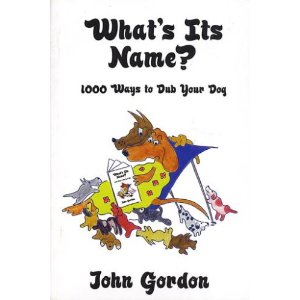
Here’s the solution:  What’s Its Name by John Gordon is a naming guide specifically for dogs.  The book contains ‘1000 ways to dub your dog’ and it was written in 1999.  You can still buy copies of it on Amazon.com and other outlets including used booksellers.

Forgive the language.  John is a New Zealander and some of his references are related to rugby.  Otherwise, it’s an essential reference book for the dog lover.

This book will make an ideal Christmas gift (it isn’t too soon to start setting aside gifts for the holiday!)

Doggy quote of the month for October

Before you get a dog, you can’t imagine what living with one might be like; afterward, you can’t imagine living any other way.

– the late Caroline Knapp, author of Pack of Two