USA bedding manufacturer, Casper, has produced a useful infographic about the research into the benefits of sleeping with your dog (and a few tips about when you probably shouldn’t).

Source: Casper.com
USA bedding manufacturer, Casper, has produced a useful infographic about the research into the benefits of sleeping with your dog (and a few tips about when you probably shouldn’t).

Source: Casper.com
This study’s lead author is Dr Lisa Moses. Back in 2012, Lisa allowed me to follow her at Angell Animal Medical Center as she worked with dogs in her pain management clinic.
Although no one will argue about the rates of suicide in the veterinary profession, I’d also suggest that complementary practitioners also suffer from a level of moral distress – I’ve seen dogs that could have significant improvement but their owners are prevented from pursuing full therapy for a variety of reasons. My very first tutor in canine massage prepared us by saying, “you will meet clients that don’t share your values or moral compass.”
Kathleen Crisley, Fear-Free certified professional and specialist in dog massage, rehabilitation and nutrition/food therapy, The Balanced Dog, Christchurch, New Zealand
In some ways, it can be harder to be a doctor of animals than a doctor of humans.
“We are in the really unenviable, and really difficult, position of caring for patients maybe for their entire lives, developing our own relationships with those animals — and then being asked to kill them,” says Dr. Lisa Moses, a veterinarian at the Massachusetts Society for the Prevention of Cruelty to Animals-Angell Animal Medical Center and a bioethicist at Harvard Medical School.

Dr Lisa Moses courtesy of MSPCA – Angell
She’s the lead author of a study published in the Journal of Veterinary Internal Medicine about “moral distress” among veterinarians. The survey of more than 800 vets found that most feel ethical qualms — at least sometimes — about what pet owners ask them to do. And that takes a toll on their mental health.
Dr. Virginia Sinnott-Stutzman is all too familiar with the results. As a senior staff veterinarian in emergency and critical care at Angell, she sees a lot of very sick animals — and quite a few decisions by owners that trouble her
Sometimes, owners elect to have their pets put to sleep because they can’t or won’t pay for treatment, she says. Or the opposite, “where we know in our heart of hearts that there is no hope to save the animal, or that the animal is suffering and the owners have a set of beliefs that make them want to keep going.”
Distress around choices such as those is pervasive among vets, Moses and her colleagues found. For example, 69 percent said they had felt moderate to severe distress about not being able to give animals what they thought was the right care. Almost two-thirds were bothered by inappropriate requests for euthanasia.
The study’s senior author, Cambridge Health Alliance psychiatrist and Harvard bioethicist J. Wesley Boyd, sees a connection between the study’s findings and daunting statistics about veterinarians’ suicide rates: “My assumption,” he says, “is that the findings from our survey are definitely part of, or even the majority of, the reason why veterinarians have higher-than-average suicide rates.”
And Moses says that while euthanizing an animal is often the right thing to do to end suffering, that doesn’t make it easy.
“I want to make a plea to the pet-owning public to understand that, no matter what you think, odds are the person who’s trying to help you take care of your animal has pretty strong feelings about how important that is,” she says. “And they feel it.”
The study’s authors are calling for better training — in veterinary school and beyond — on self-care and how to cope with moral distress and ethical conflict.
Sinnott-Stutzman defines moral distress as the feeling when the vet determines an optimal treatment course but is blocked from carrying it out — whether because of money, or an owner’s beliefs, or rules about, say, dogs that bite.
“The most poignant example is when a young dog has a fracture — so a totally fixable, non-life-threatening problem,” she says. But an owner neither wants to pay for a proper fix nor have a three-legged dog, and opts for euthanasia instead.
“That’s a really tough thing to go through,” she says. It’s also particularly hard, she says, when owners, caught up in their grief, project their anger onto the vet. “So in this example,” she says, they might say, ” ‘We have to kill our dog because you’re all about the money,’ which is of course not the case.”
In her 15 years doing emergency and critical care, Sinnott-Stutzman says, she has changed how she copes with moral distress. In the past, she would mainly talk tough cases through with colleagues. Now, she often tries to refocus her mind — meditate, take a walk, think about her kids. She might share an experience with her husband — who will focus on her feelings — rather than a colleague, who is likelier to focus on the medical aspects.
She strongly endorses the study authors’ call for better training for vets in how to handle moral distress. Everything she has learned about coping has come from mentors and friends outside the veterinary profession, she says, and “it absolutely needs to be part of how we teach vets.”
Source: WBUR
Tagged Angell, ethics, Harvard Medical School, Lisa Moses, MSPCA, pain management
A team of Swedish and British scientists have studied the heritability of dog ownership using information from 35,035 twin pairs from the Swedish Twin Registry. The results indicate that an individual’s genetic make-up has a great influence on whether they choose to acquire a dog. Genes appear to account for more than half of the difference in dog ownership.

“Perhaps some people have a higher innate propensity to care for a pet than others” Photograph: Mikael Wallerstedt
Dogs were the first domesticated animal and have had a close relationship with humans for at least 15,000 years. Today, dogs are common pets in our society and are considered to increase the well-being and health of their owners. The team compared the genetic make-up of twins (using the Swedish Twin Registry – the largest of its kind in the world) with dog ownership. The results are published for the first time in Scientific Reports. The goal was to determine whether dog ownership has a heritable component.
“We were surprised to see that a person’s genetic make-up appears to be a significant influence in whether they own a dog. As such, these findings have major implications in several different fields related to understanding dog-human interaction throughout history and in modern times. Although dogs and other pets are common household members across the globe, little is known how they impact our daily life and health. Perhaps some people have a higher innate propensity to care for a pet than others,” says Tove Fall, lead author of the study, and Professor in Molecular Epidemiology at the Department of Medical Sciences and the Science for Life Laboratory, Uppsala University.
Carri Westgarth, Lecturer in Human-Animal interaction at the University of Liverpool and co-author of the study, adds: “These findings are important as they suggest that supposed health benefits of owning a dog reported in some studies may be partly explained by different genetics of the people studied”.
Studying twins is a well-known method for disentangling the influences of environment and genes on our biology and behaviour. Because identical twins share their entire genome, and non-identical twins on average share only half of the genetic variation, comparisons of the within-pair concordance of dog ownership between groups can reveal whether genetics play a role in owning a dog.
The researchers found concordance rates of dog ownership to be much larger in identical twins than in non-identical ones – supporting the view that genetics indeed plays a major role in the choice of owning a dog.
“These kind of twin studies cannot tell us exactly which genes are involved, but at least demonstrate for the first time that genetics and environment play about equal roles in determining dog ownership. The next obvious step is to try to identify which genetic variants affect this choice and how they relate to personality traits and other factors such as allergy” says Patrik Magnusson, senior author of the study and Associate Professor in Epidemiology at the Department of Medical Epidemiology and Biostatistics at Karolinska Insitutet, Sweden and Head of the Swedish Twin Registry.
“The study has major implications for understanding the deep and enigmatic history of dog domestication” says zooarchaeologist and co-author of the study Keith Dobney, Chair of Human Palaeoecology in the Department of Archaeology, Classics and Egyptology at the University of Liverpool. “Decades of archaeological research have helped us construct a better picture of where and when dogs entered into the human world, but modern and ancient genetic data are now allowing us to directly explore why and how?”
Source: Uppsala University
Note from DoggyMom: I follow all types of research. But some – like this one – needs to be put into a larger context. Urban cities have a lot of runoff thanks to all the hard surfaces including roads and sidewalks. Urban designers look to institute green spaces to help with infiltration of water into soils and decrease runoff, which can be particularly helpful in high volume, storm events which overwhelm stormwater systems.
Urban runoff has a lot of contaminants from the oils, dust and debris of modern life. All meat-eating animals have high nitrogen in their urine – and that’s why countries like NZ have issues with groundwater quality because of the number of cows that are left to graze and urinate on open pastures. So of course dogs will have an impact on the soil quality and runoff in the very limited areas of green that they have to use in urban cities. The solution? Well, in my opinion, it’s partly an argument for creating more green space.
Nobody knows just how many dogs there are in the United States, but there are plenty—and many of them live (and pee) in human cities. Turns out, canine bathroom breaks may have more of an impact on the environment than you might think.
In a new study, a team of Columbia University undergraduate and graduate researchers led by ecologist Krista McGuire looked at the impact of pee on the urban soil microbiome. They found evidence that the nitrogen content and low pH of the urine can make city soil both harder and less absorbent of rainwater, while making the soil microbiome less diverse.

The project was born out of McGuire’s observations with colleagues during other research on green infrastructure in NYC. In sites like unfenced tree pits, “the soils seemed barren, compacted, and the water from rainfall didn’t seem to penetrate very well,” she says.
The team suspected soil’s characteristics had something to do with all the dogs that urinated on those sites, so they designed an experiment to check. “We obtained soil from the city environment,” says McGuire, along with one species of commonly-used plant from the same nursery the city uses.
Both of these factors replicate what’s used out in the real world. Getting actual dog pee turned out to be harder. They approached animal shelters, which mostly turned them away, while the one shelter that acquiesced didn’t yield enough pee—the experiment required a whopping 40 gallons.
“Despite visiting the shelter twice a week for a couple months, less than 40mL [1.35 oz] of urine was collected due to difficulty in predicting when the dogs will urinate and the dogs’ refusal to continue urinating when a collecting bowl was brought near them as they were about to urinate,” the paper states.
“Ultimately, we decided to use coyote urine since coyotes are very closely related to domestic dogs, and their urine is commercially available,” McGuire says. If you’re not a gardener looking to repel deer from your tulips, you may not be aware of this, but yes, you can buy 40 gallons of coyote pee pretty easily. (Note from DoggyMom: Coyotes are kept in captivity and their urine is collected through drainage systems. Some say that the income from the coyote urine farms help to support other conservation efforts. I will need to research this further.)
Over the course of a month, they ran a greenhouse experiment, watering the plants at regular intervals with either straight water or water mixed with urine at different concentrations. They checked the soil each week. The results were dramatic: the bacterial community diversity decreased by up to a third during the experiment, and the kinds of bacteria in the microbiome changed. Meanwhile, the “runoff” from pots increased significantly, signifying that the soil was becoming less absorbent.
Outside the lab (say, outside your door), “a variety of different events can affect the impact of urine deposition,” says Gary King, a Louisiana State University biology professor who studies urban microbiomes. This experiment doesn’t address those factors—like, what if it’s raining, or what if some other pollutant has recently entered the soil?
But the results point to an important direction of research, he says. “There is a huge gap in our knowledge about basic microbial functions in the soils that are part of the system in our own built environment.”
That’s a serious problem, because soils help keep a city running. Things like street trees and planted medians aren’t just there to make downtown look good. Cities are mostly built on hard surfaces like concrete and asphalt, which don’t absorb water and allow it to enter the soil, so the sewer system works to keep water off the roads and out of your basement. But sometimes, it rains too much for this system. That’s where what’s known as “green infrastructure” comes in, by helping to absorb all the extra water. Otherwise, says McGuire, “What happens is that the stormwater combines with raw sewage in these below-ground piping systems. Past a certain threshold, it gets spewed out into local waterways.”
To keep this from happening, cities like New York are investing lots of money in building and maintaining green infrastructure, from street trees to deliberately designed water capture landscapes called “bioswales.” But as this research indicates, our furry friends’ bathroom breaks may be making these interventions less effective.
Journal citation: Evaluating the effects of canine urine on urban soil microbial communities
Source: Popular Science
Tagged coyotes, environment, microbiome, soil, urban design
The discovery of a new mutation associated with breathing difficulties in popular dog breeds suggests that shortened skulls causing flat faces is not the only factor that contributes to the condition, but that swelling around the airways from edema may also play a role. Jeffrey Schoenebeck of the University of Edinburgh and colleagues report these findings in a new study published 9th May 2019 in PLOS Genetics.
Respiratory diseases are prevalent across dog breeds, particularly in brachycephalic breeds such as the Bulldog and French bulldog. The flat facial conformation of these breeds has long been assumed to be the major predisposing factor, however, the underlying genetics of their respiratory condition has never been elucidated.

The research team became interested in the Norwich Terrier, a breed presenting with many of the same respiratory disease symptoms as the Bulldog. A distinction, however, is that the Norwich terrier is not considered to be a brachycephalic breed and so presented an opportunity to dissociate respiratory disease from head conformation.
The researchers performed a genome-wide association analysis for respiratory disease severity in the Norwich Terrier and resolved an association on chromosome 13 to a missense mutation in ADAMTS3. Variants in this gene were previously shown to cause an oedematous phenotype–a disease characteristic in the airways of affected Norwich Terriers and brachycephalic dogs alike. The researchers screened over 100 breeds for the ADAMTS3 variant and found that it is enriched in the Norwich Terrier, Bulldog and French Bulldog. This discovery changes how we view respiratory disease predisposition in the dog, offers potential genetic screens and highlights a new biological function for ADAMTS3.
The study presents a new way of looking at these respiratory diseases in dogs, where fluid retention in the tissue that lines the airways makes it more likely that dogs with the mutation will develop breathing obstructions. “We conclude that there are additional genetic risk factors, that if inherited, will likely lead to airway disease in dogs regardless of their face shape,” stated author Jeffrey Schoenebeck. “The challenge ahead is to integrate these ideas, and implement sensible breeding practices and treatments that consider various health risks including those presented by the mutation of ADAMTS3.”
If scientists develop a test for this mutation, then dog breeders can develop better breeding practices to avoid passing on the faulty gene. Additionally, screening for the mutation may help veterinarians identify dogs which are at risk of UAS, and in particular identify the dogs at risk of swelling of their airways after surgical treatment, which is a common, life-threatening post-operative complication.
Sources: Science Daily and PLOS Genetics
Posted in dog breeds, Dogs, research
Tagged English Bulldog, French Bulldog, Norwich Terrier
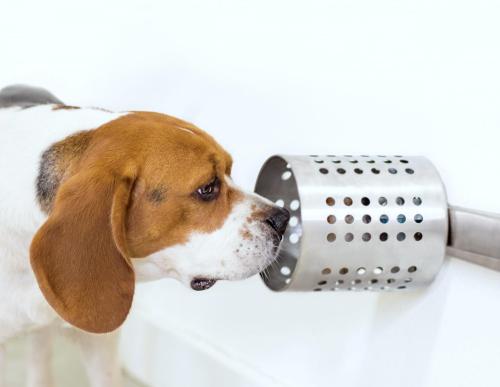
Dogs have smell receptors 10,000 times more accurate than humans’, making them highly sensitive to odors we can’t perceive. A new study has shown that dogs can use their highly evolved sense of smell to pick out blood samples from people with cancer with almost 97 percent accuracy. The results could lead to new cancer-screening approaches that are inexpensive and accurate without being invasive.

A new study has shown that dogs can use their highly evolved sense of smell to pick out blood samples from people with cancer with almost 97 percent accuracy. Photo by: BioScentDx
“Although there is currently no cure for cancer, early detection offers the best hope of survival,” said Heather Junqueira, who is lead researcher at BioScentDx and performed the study. “A highly sensitive test for detecting cancer could potentially save thousands of lives and change the way the disease is treated.”
Junqueira will present this research at the American Society for Biochemistry and Molecular Biology annual meeting during the 2019 Experimental Biology meeting to be held April 6-9 2019 in Orlando, Fla.
For the new study, Junqueira and her colleagues used a form of clicker training to teach four beagles to distinguish between normal blood serum and samples from patients with malignant lung cancer. Although one beagle — aptly named Snuggles — was unmotivated to perform, the other three dogs correctly identified lung cancer samples 96.7 percent of the time and normal samples 97.5 percent of the time.
“This work is very exciting because it paves the way for further research along two paths, both of which could lead to new cancer-detection tools,” said Junqueira. “One is using canine scent detection as a screening method for cancers, and the other would be to determine the biologic compounds the dogs detect and then design cancer-screening tests based on those compounds.”
BioScentDx plans to use canine scent detection to develop a non-invasive way of screening for cancer and other life-threatening diseases. As a next step, the company launched a breast cancer study in November in which participants donate samples of their breath for screening by trained cancer-sniffing dogs. The researchers also plan to separate the samples into their chemical components and present these to the dogs to isolate the substances causing the odor that the dogs detect.
About Experimental Biology 2019
Experimental Biology is an annual meeting comprised of more than 14,000 scientists and exhibitors from five host societies and multiple guest societies. With a mission to share the newest scientific concepts and research findings shaping clinical advances, the meeting offers an unparalleled opportunity for exchange among scientists from across the United States and the world who represent dozens of scientific areas, from laboratory to translational to clinical research.
Source: EurekAlert! media statement
Two-thirds of all pet owners say that having an animal helps them stay physically active. But for some older adults, time commitment, cost and allergies stand in the way.
A curled-up cat, a tail-wagging dog, a chirping parakeet or even a serene goldfish may help older adults cope with mental and physical health issues, according to a new poll, the National Poll on Healthy Aging (USA).
But while pets come with benefits, they can also bring concerns, and some people may even put their animals’ needs ahead of their own health, the poll finds.
In all, 55 percent of adults ages 50 to 80 have a pet, according to the new findings — and more than half of those have multiple pets. More than three-quarters of pet owners say their animals reduce their stress, and nearly as many say pets give them a sense of purpose. But 18 percent also said having a pet or pets puts a strain on their budget.
Two-thirds of all pet owners, and 78 percent of dog owners, said their pet helps them be physically active, according to the new findings from the National Poll on Healthy Aging.
The poll is conducted by the University of Michigan Institute for Healthcare Policy & Innovation, and sponsored by AARP and Michigan Medicine, U-M’s academic medical center.
For those who reported that their health was fair or poor, pet ownership appeared to offer even more benefits. More than 70 percent of these older adults said their pet helps them cope with physical or emotional symptoms, and 46 percent said their pets help take their mind off of pain.
“We have long known that pets are a common and naturally occurring source of support,” says Cathleen Connell, Ph.D., a professor at the U-M School of Public Health who has studied the role of companion animals in older adults’ lives.
“Although the benefits of pets are significant, social connections and activities with friends and family are also key to quality of life across the life span,” she says. “Helping older adults find low-cost ways to support pet ownership while not sacrificing other important relationships and priorities is an investment in overall mental and physical health.”
Poll director Preeti Malani, M.D., a U-M Medical School professor who has training in caring for older adults, says the poll results indicate a need for physicians and other health care providers to ask older adults about the role of pets in their lives.
“More activity, through dog walking or other aspects of pet care, is almost always a good thing for older adults,” Malani says. “But the risk of falls is real for many, and 6 percent of those in our poll said they had fallen or injured themselves due to a pet.”
“At the same time, given the importance of pets to many people, the loss of a pet can deal a very real psychological blow that providers, family and friends should be attuned to,” she says.

“This study highlights the many physical, psychological and social benefits that pets can have for older adults,” says Alison Bryant, Ph.D., senior vice president of research for AARP. “In recognition of these health benefits, more assisted living facilities today are allowing residents to have pets.”
Companionship and social connection were positive side effects of pet ownership for many poll respondents.
In fact, more than half of those who owned pets said they did so specifically to have a companion — and a slightly higher percentage said their pets sleep in bed with them. Sixty-five percent of pet owners said having a pet helps connect them to other people, too.
“Relationships with pets tend to be less complicated than those with humans, and pets are often a source of great enjoyment,” says Mary Janevic, Ph.D., MPH, an assistant research scientist at the U-M School of Public Health who helped design the poll. “They also provide older adults with a sense of being needed and loved.”
Other concerns about pet ownership emerged in the poll results. More than half of pet owners said that having a pet also made it difficult to travel or enjoy activities outside the home.
And 1 in 6 said that they put their pet’s needs ahead of their own health needs — a figure that was closer to 1 in 4 among those with health issues.
“Later life is often a time when people have more freedom to travel, and a long list of things they want to do with their free time, and sometimes having a pet can get in the way,” says Janevic.
“For people living on a fixed income, expenses related to health care for pets, and especially pets that have chronic health issues, can be a struggle,” she says. “Older adults can also develop health problems or disabilities that make pet care difficult.”
The 45 percent of older adults who said they don’t have pets gave many reasons for not keeping a dog, cat, fish, lizard, bird or small mammal around.
Among non-pet owners, 42 percent said they didn’t want to be tied down. Twenty percent said they didn’t have time, and 23 percent gave cost as the reason, while 16 percent said their own allergies, or those of someone in their household, kept them from getting a pet.
For those who can’t own pets due to allergies, budget constraints, housing circumstances or schedules, there’s often a need for volunteers at local animal shelters or pet-sitting for friends and family, the researchers say.
They note that health care providers and family may even want to recommend these options to older adults who have no pets and wish to have one.
The National Poll on Healthy Aging results are based on responses from a nationally representative sample of 2,051 adults ages 50 to 80 who answered a wide range of questions online. Questions were written, and data interpreted and compiled, by the IHPI team. Laptops and internet access were provided to poll respondents who did not already have them.
A full report of the findings and methodology is available at healthyagingpoll.org, along with past National Poll on Healthy Aging reports.
Source: Michigan Health News

New variants in the ENAM gene that codes enamelin were discovered in Parson Russell Terriers
The enamel that covers teeth is the hardest structure in the entire body. Its development is a complex process, and related developmental disorders may result in low enamel quantity, its absence or structural weakness. Alongside aesthetic issues, enamel defects have an impact on dental health and general wellbeing. Amelogenesis imperfecta (AI) is a group of hereditary developmental disorders affecting enamel, with more than ten associated genes reported in humans.
AI causes a significant wellbeing problem for dogs as well, yet the diseases, poorly known in canine medicine, often remain undiagnosed. Canine AI has earlier been linked with the ENAM and SLC24A4 genes in two breeds. In a recent study conducted at the University of Helsinki, two novel recessively inherited enamel disorders were described in dogs, and associated with causative variants in ENAM and ACP4. The identified genes have previously been linked with hereditary enamel development defects also in humans.
“We have observed enamel defects in several breeds. In this study, we found new gene variants in the ENAM gene of Parson Russell Terriers and the ACP4 gene of Akitas and American Akitas. The ACP4 finding was of particular interest, as its role in the development of tooth enamel is not well known, and there are no previous descriptions for any animal models,” says Marjo Hytönen, PhD, the first author of the study.
ENAM codes for enamelin, the key enamel protein, and is significant for achieving the correct enamel thickness during tooth development. A considerable part of human AI disorders are associated with mutations in the ENAM gene, whereas ACP4 codes for the phosphatase enzyme, whose specific significance to tooth and enamel development is currently unclear, but which may influence cellular differentiation and mineralisation. Dogs with an ACP4 mutation expressed thinning of the enamel and a slight mineralisation disorder.
Unlike mice, dogs have primary and permanent teeth just as humans, and the number of teeth is also similar. Therefore, dogs serve as an excellent model for human dental diseases.
“The spontaneous enamel defects found in this study resemble earlier descriptions of human patients, and are also linked with the same genes. Through gene tests, the gene findings will provide new diagnostic tools for veterinarians and breeders, which will also help with understanding the causes, mechanisms and hereditary nature of enamel defects. This is important for the development of early and improved therapies,” explains Professor Hannes Lohi, director of the research group.
Earlier, the group discovered a mutation in the FAM20C gene, impacting tooth hypomineralisation. Gene mapping will continue on various dental diseases in different breeds, including a publication which is currently being prepared on an unknown AI gene.
Source: University of Helsinki media release
Tagged Akita, dental care, dog teeth, enamel, genetics, Parson Russell Terrier
A surprising number of pet owners, particularly those who are vegan, are interested in feeding their pets a plant-based diet, according to new University of Guelph research.
Researchers with U of G’s Ontario Veterinary College along with colleagues in New Zealand conducted an online survey of 3,673 dog and cat owners from around the world to learn about what kinds of foods they fed their pets and themselves.

Photo by: Rarnie McCudden from Pexels
Published in the journal PLoS ONE, the survey found that 35 per cent of owners whose pets ate conventional diets were interested in switching their animals to a vegan diet.
More than half of them (55 per cent) added, though, that certain stipulations needed to be met before they would make the switch. Those stipulations included needing further evidence that a plant-based diet would meet their pets’ nutritional needs, wanting approval from their veterinarians and wanting plant-based pet foods to be easily available.
Just under six per cent of the survey respondents were vegan — meaning they ate no meat, dairy or fish – and more than a quarter (27 per cent) of them reported they already fed their pets plant-based diets.
Among the rest of the vegans, a full 78 per cent were interested in helping their pets to switch to a plant-based diet if one were available that met their needs.
Lead author Sarah Dodd, currently a PhD candidate at the OVC’s Department of Population Medicine, said even she was surprised by how many vegans had already chosen to eliminate meat from their pets’ diets.
“That percentage, 27 per cent, might sound like a small number, but when you think of the actual numbers of pets involved, that’s huge, and much higher than we expected.”
In total, 1.6 per cent of the 2,940 dogs in the survey and 0.7 per cent of the 1,545 cats were being fed a strictly plant-based diet; only vegans and one vegetarian chose to exclusively feed plant-based diets.
Another 10.4 per cent of the dogs and 3.3 per cent of cats were intermittently fed vegetarian diets or plant-based foods.
Of the 3,673 pet owners surveyed, 6 per cent were vegetarian (meaning they ate no meat but did eat dairy, eggs or honey), 4 per cent were pescatarian (meaning they ate no meat but fish, and may eat dairy, eggs or honey), and nearly 6 per cent were vegan (meaning they ate no animal products).
Dodd performed this study for her M.Sc. degree with Prof. Adronie Verbrugghe in OVC’s Department of Clinical Studies
Dodd said while her team’s research was not designed to assess whether vegan pet diets are a growing trend, she expects interest in the diets to increase.
“People have been hearing about how vegan diets are linked to lowered risks of cancer and other health benefits in humans. There is also growing concern about the environmental impact of animal agriculture.”
Previous studies have also shown that pet owners tend to offer the same kind of diets to their dogs and cats that they adopt for themselves.
“So, while only a small proportion of pet owners are currently feeding plant-based diets to their pets, it is safe to say that interest in the diets is likely to grow.”
However, there has not been much research on the nutritional suitability of vegan diets for dogs and cats, nor on the health benefits and risks of plant-based diets in these animals, said Dodd.
“This study shows there is a clear need for further research in this area.”
Posted in dog nutrition and labelling, Dogs, research
Tagged diet, special diets, vegan
As states around the country move to stiffen punishments for animal cruelty, Michigan State University researchers have found a correlation between the types of animal abuse committed and the perpetrator’s relationship to an animal and its owner.
For example, animal-neglect crimes (i.e. withholding food and water) tend to be perpetrated by the animal’s owner. On the other hand, with crimes that involve kicking or stabbing, the suspect is usually an owner’s family member or intimate partner, said Laura Reese, professor of urban and regional planning.

Study leader Laura Reese and her dog, Odie Photo by Laura Reese
Reese and Cassie Richard, an MSU master’s of public policy student who now works for the Oregon Commission for the Blind, studied more than 300 animal cruelty police reports in Detroit between 2007 and 2015. They categorized abuse into eight types including dog fighting, shooting, poisoning, stabbing and neglect. The researchers coded the list of motivations for cruelty as listed by the perpetrators, who were then matched with the Detroit police crime feed to examine their other patterns of crime.
The researchers also found:
“This isn’t just an animal problem – it’s a human problem,” Reese said. “For example, people who shoot other humans are more likely to shoot animals. At the same time, dog fighting is a public safety problem and dogs running loose biting people due to neglect is a public health problem. So, addressing human problems will help animal problems and vice versa, and we need to encourage public officials to think that way.”
However, most policymakers don’t, she said. Animal cruelty prevention needs to be a coordinated effort between law enforcement, public agencies and nonprofits. And because forms of animal cruelty vary, public policies and public health solutions should vary.
For example, dog fighting is related to gambling, drugs and weapon offenses. Thus, crackdowns on those issues would address that form of cruelty. Meanwhile, low-cost veterinary services and enforcement of existing ordinances, such as licensing requirements and leash laws, would target owner neglect.
“Simple education and informing people about proper nutrition, spaying and neutering could be done in schools,” Reese said. “Folks often want to do the right thing, but they may not have the resources. At the same time, cruelty is also tied up with domestic violence, which raises a separate and more complex set of concerns. That’s why we need our legislators and local officials to understand the complexities of animal cruelty and make solutions a priority.”
The study is published in the journal Anthrozoös.
The journal article can be read here:
https://www.tandfonline.com/doi/abs/10.1080/08927936.2019.1550282)
Posted in animal welfare, Dogs, research
Tagged animal abuse, Michigan State University, relationships, violence