Note from Doggy Mom: I’ve met parents who think that their asthmatic child shouldn’t keep a pet because of the risks of the pet bringing dander and other environmental allergens into the home. However, this piece of research refutes that belief. If asthmatic children are managed appropriately with medication, the dog (or cat) can probably stay!
And don’t forget that other research shows that children born into homes with pets have a lower risk of developing the disease (just type ‘asthma’ in the search box to bring up these citations).
A study from the Nationwide Children’s Hospital analyzed environmental exposures, like pet and secondhand smoke, to determine if they have a role in asthma control among children whose asthma is managed per NAEPP (EPR-3) guidelines. Researchers found that once asthma guidelines are followed, environmental exposures to pets or secondhand smoke were not significant factors in overall asthma improvement over time.
Children with the diagnosis of uncontrolled asthma and were followed at a pediatric asthma center were provided asthma care as per NAEPP guidelines. At each visit (3-6 months), families completed asthma questionnaires including acute care needs, symptom control and asthma control test (ACT). Asthma control in patients was evaluated at each visit. Results were compared between patients with or without exposure to secondhand smoking and between patients with or without exposure to pets (cats or dogs) at home at baseline and over time.
Three hundred and ninety-five children, ages 2 to 17 years, were included in this study; 25 percent were exposed to secondhand tobacco smoke, and 55 percent were exposed to a cat or dog at home. Clinical outcomes included over time in this cohort, and this improvement was independent of pet exposure. These findings suggest that asthma treatment is more important than certain types of environmental exposures.
DNA testing of more than 6,000 dogs has revealed that a duplication on canine chromosome 18 is strongly associated with blue eyes in Siberian Huskies, according to a study published October 4, 2018, in the open-access journal PLOS Genetics by Adam Boyko and Aaron Sams of Embark Veterinary, Inc., and colleagues.
Embark is a dog DNA startup company headquartered in Boston, MA, and Ithaca, NY, and research partner of the Cornell University College of Veterinary Medicine. According to the authors, this represents the first consumer genomics study ever conducted in a non-human model and the largest canine genome-wide association study to date.
Embark dog, Lakota, shows off bright blue eyes. Credit: Jamie Leszczak CCAL
Consumer genomics enables genetic discovery on an unprecedented scale by linking very large databases of genomic data with phenotype information voluntarily submitted via web-based surveys. But the promise of consumer genomic data is not limited to human research. Genomic tools for dogs are readily available but the genetic underpinnings of many important traits remain undiscovered. Although two genetic variants are known to underlie blue eye color in some dogs, these do not explain the trait in some other dogs, like Siberian Huskies.
To address this gap in knowledge, Boyko, Sams and colleagues used a diverse panel of 6,070 genetically tested dogs with owners that contributed phenotype data via web-based surveys and photo uploads. They found that a 98.6-kilobase duplication on chromosome 18 near the ALX4 gene, which plays an important role in mammalian eye development, was strongly associated with variation in blue eye color, primarily in Siberian Huskies but also in non-merle Australian Shepherds. One copy of the variant was enough to cause blue eyes or heterochromia (blue and brown eyes), although some dogs with the variant did not have blue eyes, so other genetic or environmental factors are still involved.
Future studies of the functional mechanism underlying this association may lead to the discovery of a novel pathway by which blue eyes develop in mammals. From a broader perspective, the results underscore the power of consumer data-driven discovery in non-human species, especially dogs, where there is intense owner interest in the personal genomic information of their pets, a high level of engagement with web-based surveys, and an underlying genetic architecture ideal for mapping studies.
Aaron J. Sams adds: “Using genetic data from the pets of our customers, combined with eye colors reported by customers for those same animals, we have discovered a genetic duplication that is strongly associated with blue eye color. This study demonstrates the power of the approach that Embark is taking towards improving canine health. In a single year, we collected enough data to conduct the largest canine study of its kind. Embark is currently pursuing similar research projects in a range of morphological and health-related traits and we hope to continue to use our platform to move canine genetics and health forward in a very real way.”
A new study in the journal Scientific Reports gets to the bottom of it: Why do dogs that are trained to locate poop sometimes find the wrong kind of poop?
Washington University researcher Karen DeMatteo and her scat-sniffing dog Train are on a mission to preserve jaguars, pumas, bush dogs and other carnivores in the forests of Northeastern Argentina. (Photo: courtesy of Karen DeMatteo/Washington University)
It happens anywhere from 4 percent to 45 percent of the time, said Karen DeMatteo, a biologist in Arts & Sciences at Washington University in St. Louis. Her new research confirms that there are three viable, alternative explanations beyond errors in handler or dog training that can explain the collection of non-target scats with detection dogs in some ecosystems.
Detection dogs are trained to use scent, not their eyes, to locate specific kinds of scat. They’re useful partners in conservation projects as an alternative to camera photo traps or other more invasive means of identifying which individual animals are present in an area.
And while finding the wrong kind of poop doesn’t ultimately muck up research results — researchers who use scat to track animals usually use DNA tests to confirm the identity of target and non-target evacuators — collecting and testing false positives costs a project time and resources.
“To date, when non-target samples are found in detection dog studies, it is assumed it may be due to errors in detection dog or handler training; however, our study determined that this is not always the case,” DeMatteo said. “Instead, the complexity of ecosystems where a study is conducted can affect the perceived accuracy of detection dog studies because the natural behaviors of non-target species, like coyotes in our study, can alter the genetic profile of target scat, like that from a puma.”
In her own work, DeMatteo has successfully used scat-detection dogs to identify the routes traveled by endangered pumas and other reclusive carnivores along a biologically important corridor in Argentina.
Detection dogs are great at determining the presence of specific animals because they can find droppings hidden in grass, droppings that have been rained on and disintegrated into the mud — or even droppings that have been eaten and then recycled.
Yes, that’s right, and it’s a normal part of life for many animals, DeMatteo said.
“Humans have a natural aversion to coprophagy, which is reflected in the visual horror on an owner’s face when they see their dog gobble down their own scat or the scat of another dog or cat,” DeMatteo said. “Once this shock subsides, the owner typically worries that the scat will cause health problems or there is something psychologically wrong with their four-legged friend.”
“While the reasons underlying coprophagy in domestic dogs are still fuzzy, it is known in wild canids that coprophagy is natural and is often associated with territoriality or nutritional benefits,” she said. “So while the finding that coyotes will consume puma scat is novel and has various ecological implications, coprophagy occurs naturally under a variety of circumstances.”
The tendency of one animal to eat another’s scat is one of three behaviors that might alter the type of scat, or the state of the scat, that a detector dog might encounter, and thus affect the perceived accuracy of the technique.
Researchers also considered how urine-marking by non-target species might affect a detector dog’s ability to locate scat from a species of interest, and also what happens if one animal picks up another’s scat and moves it using its mouth, potentially bringing it into contact with saliva. Field trials were conducted in the St. Louis area and in northwest Nebraska.
The researchers found that each of the proposed behaviors alters the genetic profile of the scat in question, and all were confirmed to play a role in the detection dog indicating on non-target scats.
The pool of conservation-trained detection dogs is constantly growing in number, as are the types of target species and the areas where they are being used, DeMatteo said. One of the continuing questions surrounding their use for these types of projects is how to maintain a high quality standard for training detection dogs and their handlers.
“In reality, the dog is easier to train than the handler, with the latter having a higher chance of introducing error,” DeMatteo said. “Even with these variables, these results are extendable to other dog-handler teams with less experience, as long as consistency is used.”
While this study, “How behavior of nontarget species affects perceived accuracy of scat detection dog surveys,” demonstrates that there are alternative explanations for why dogs sometimes collect non-target samples, it also shines a light on behaviors that humans may not understand — but that could play a role in ecosystem functioning.
“Genetic testing can eliminate these samples and maintain accuracy in the [detection dog-assisted] studies,” DeMatteo said. “However, this non-target interaction with target scat potentially has important implications for other ecological questions, including parasite/disease transmission, zoonotic diseases and general health of wild populations.”
Chicken necks are a common treat for dogs, but pet owners are being warned they have been linked with a potentially fatal form of paralysis
By Dr Nerissa Hannink, University of Melbourne
As pet ownership increases across the world, our furry (as well as feathered and scaly) friends have become firmly established members of the family.
Wanting the best for our pets, we often offer special treats, and chicken necks are a favourite in many families – often considered a ‘healthy’ option.
Vets are warning raw chicken could be dangerous and owners should stick with regular dog food. Picture: iStock
But vets are warning raw chicken, particularly chicken necks, can lead to a debilitating and potentially fatal form of paralysis in dogs.
A new study, led by the University of Melbourne’s U-Vet Werribee Animal Hospital, found the consumption of raw chicken meat increases the risk of dogs developing a paralysing condition called acute polyradiculoneuritis (APN) by more than 70 times.
Dr Matthias le Chevoir, chief investigator on the project, says the cause of APN in dogs has baffled the veterinary community for a long time.
“It is a rare but very debilitating condition where the dog’s hind legs first become weak. It can then progress to affect the front legs, neck, head and face. Some dogs may die from the disease if their chest becomes paralysed,” he says.
“Most dogs eventually recover without treatment but it may take up to six months or more in some cases.
“In our clinic alone we see around 30 cases per year and around three in ten cases would not recover. Watching your pet suffer is obviously very distressing and it can be difficult for owners to nurse their pet if the condition can gradually improve.”
Paralysis results from the dog’s immune system becoming unregulated and attacking its own nerve roots, progressively worsening over several days.
APN is the canine counterpart of Guillain-Barré syndrome (GBS) in humans, a condition that also causes muscle weakness and may require ventilation if chest muscles are affected.
Dr le Chevoir says the bacteria Campylobacter is now considered a triggering agent in up to 40 per cent of GBS patients. It may be present in undercooked chicken, unpasteurised milk products and contaminated water.
“Our team at U-Vet Animal Hospital wanted to understand if consuming raw chicken could also be triggering APN in dogs. Many of us have previously worked overseas and know that a raw meat diet is less common there, so we were intrigued by this potential connection,” Dr le Chevoir says.
The team studied 27 dogs with symptoms of APN and 47 dogs without, examining physical symptoms and interviewing the owners about recent behaviours and diet; focusing on the consumption of raw chicken meat.
Faecal samples collected within seven days of the presentation of clinical signs (such as changes in voice, hind limb weakness or a choppy gait) showed the dogs with APN were 9.4 times more likely to have had a Campylobacter infection than the control group without the disease.
“The microbe Campylobacter is likely to be the reason for the dysregulation of the dogs’ immunity and the symptoms of paralysis,” lead author Dr Lorena Martinez-Antòn says.
“These bacteriological results were consistent with the hypothesis that the uncooked chicken meat was the source of the Campylobacter and as a result, triggered APN.”
In humans, scientists think Campylobacter, which is most commonly found in commercial poultry products, contains molecules similar in structure to part of the nerve cell. This similarity confuses the immune system, which attacks the body’s own nerves, resulting in paralysis.
Dr Martinez-Antòn and Dr le Chevoir say there appears to be a growing trend for feeding dogs raw meat diets, which is concerning given the risks.
“A significant association is also found between APN and smaller dog breeds. Based on our clinical experience this seems to be because smaller dogs are more likely to be fed smaller bones like chicken necks,” the doctors say in the research paper.
“We recommend owners choose regular dog food rather than chicken necks until we know more about this debilitating condition.”
A virtual dog could soon be used as an educational tool to help prevent dog bites, thanks to an innovative project led by the University of Liverpool’s Virtual Engineering Centre (VEC).
In collaboration with Dogs Trust and University of Liverpool animal behaviour researchers, the VEC has created a proof of concept virtual reality (VR) experience in which people can approach and interact with a dog displaying signs of aggression in a safe and controlled way.
Virtual reality dog in its environment. Credit: Virtual Engineering Centre (VEC)
The experience aims to help adults and children recognise specific behaviours displayed by dogs, which could potentially lead to an attack or incident if not correctly identified.
6,740 hospital admissions for dog bites and strikes were recorded in the UK in 2013 and University of Liverpool research suggests that the burden of dog bites is considerably larger than those estimated from hospital records.
As part of a desire to better educate children and adults about dog bite prevention, Dogs Trust wanted to explore whether a digital tool could help people identify a range of stress and threat behaviours typically exhibited by dogs, which have the potential to lead to a bite.
In response to this challenge, a team animal behavioural specialists and psychologists from the University worked closely with the VEC to make certain that the body language and detail shown in the virtual environment was both realistic and a truthful reflection of real-world canine behaviour.
As the user approaches the dog, the behaviour and body language of the dog gradually changes, the dog’s behaviour begins to display signs of aggression including licking its lips, lowering of the head and body, front paw lifting, growling, and showing of teeth. These behaviours are referenced from the ‘Canine Ladder of Aggression’ which shows how a dog may behave when it does not want to be approached.
Iain Cant, VEC Visualisation Team Leader said: “This was a really interesting project to work on with a lot of exciting potential for the future.
“The next steps will look to enhance the detail within the immersive environment to ensure the simulation is as realistic as possible. Future developments will also show a wider range of dog behaviours and the dog’s reactions to user behaviour.”
“More broadly the project highlights how immersive experiences can be used by organisations such as Dogs Trust as a valuable educational tool.”
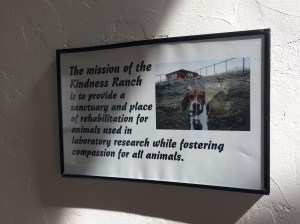
Kindness Ranch Animal Sanctuary is a unique place, the only sanctuary in the United States that cares for animals used in research and laboratory facilities. At this property, you’ll find horses, cows, sheep, pigs, cats and dogs.
The small team at Kindness, which is a fairly new sanctuary at only 12 years old (founded in 2006), work hard to care for the animals and maintain their large Wyoming property to the highest of standards. Animals that can be rehabilitated are put up for adoption; the others will simply remain at the property with a secure and safe home for life.
I have just finished a week of work with the dog care team at Kindness, discussing things like behavioral adjustment programs, enrichment, gait analysis, physical rehabilitation and senior dog care. I also introduced them to the range of flower essences I use to support emotional health whilst working on training and rehab.
I chose to travel to Kindness Ranch because, for anyone who follows my blog, I often include items about research. I’m a self-confessed science geek. But I am not naive. I know that much of the research which is published involves dogs as study subjects. The life of a lab animal, in most cases, isn’t pretty.
The ranch is in remote Wyoming – Hartville to be exact with a permanent population of 69 people. For this reason, if you’d like to visit Kindness (there are 4 guest yurts on the property which can be hired for your stay – and these are well-appointed and very comfortable), you need to book ahead. The ranch is also a good place for a digital detox, too, because the guest yurts do not have television and cell phone reception is patchy at best. WiFi is available but is slower than most are used to and not suitable for streaming.
Dogs coming from a laboratory situation often have unique needs. Most have never experienced grass under the feet, the sights and sounds of the home environment, and some will have healthcare issues that require attention before adoption is possible. Many have never been house trained. Their ages vary depending on how long they were used for study.
And while Beagles are the dogs most often associated with laboratory research, expect to see other breeds of dogs, too. Larger breed dogs are often used by veterinary schools, for example, so students can learn blood draws, how to vaccinate, etc. These dogs become living pin cushions and are not surprisingly fearful whenever a needle is presented.
I deliberately chose Kindness as a destination because of the special niche it holds in the animal rescue world. It takes special people to liaise with laboratories and encourage them to release their animals rather than choosing to simply euthanize them (described as the ‘cost effective’ option). Kindness walks a tightrope of sorts to ensure that the animals are given safe passage out of the lab and onto the sanctuary whilst maintaining the confidentiality of the labs.
And it also takes special people to live remotely and care for these animals.
I hope you enjoy these photos of my time at Kindness and, if you believe in their mission, please consider making a donation. Every bit helps.
Kathleen Crisley, Fear-Free certified professional and specialist in dog massage, rehabilitation and nutrition/food therapy, The Balanced Dog, Christchurch, New Zealand
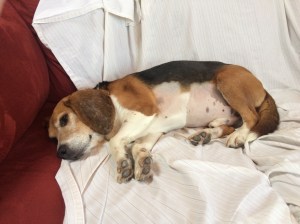
Hank was the first dog to stay with me overnight in my yurt. Hank is an older boy who spent the first 7 or 8 years of his life in a laboratory. He’s a bit stiff, and has trouble with stairs (as many of the Beagles do).
One of Hank’s favourite pastimes is being held like a baby on your lap. He makes himself totally relaxed and floppy and will stay for as long as you like. It’s amazing how trusting these dogs can be given their treatment at the hands of others.
Rocky is a big boy who doesn’t know his own strength (he needs more training about walking nicely on leash) and he’s afraid of men. We suspect his life as a veterinary school practice animal meant that he didn’t have a positive relationship with a male lab assistant and/or vet students. So we worked on setting up a system where the men on the ranch will visit and quietly enter and feed him high value treats. Handlers will praise Rocky when he is quiet and doesn’t bark and will start using a ‘click for quiet’ approach to clicker training.
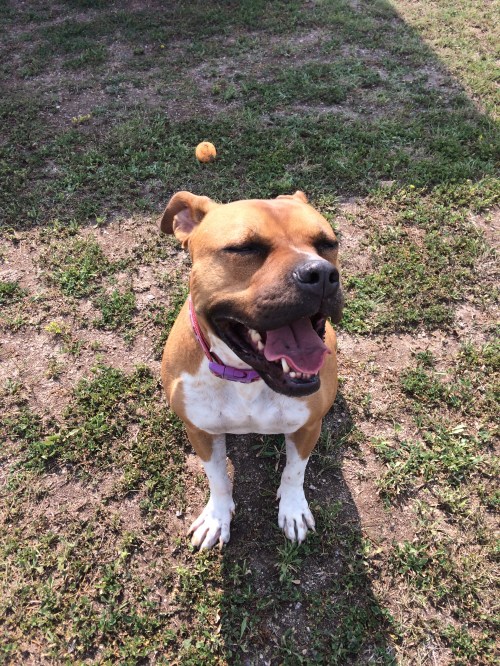
Frieda is a pit bull who loves to go to the dog park on the ranch, appropriately called the K9 Corral. She has good recall and knows most of her basic cues including sit and down. She’s very intelligent!
Gus is another senior Beagle used in pharmacokinetic studies for at least 7 years. (These studies introduce drugs and watch their effects on other organs in the body.) He’s a bit achy in the joints, too. Gabapentin and muscle relaxants prescribed by the vet have helped him a lot and his caregiver says that he is a different dog with the support of his meds.
Many dog owners think of their furry companions as part of the family, and now products are available to feed them that way, too. Some owners are moving away from traditional extruded kibble products, instead choosing ultra-premium fresh and raw diets found in the refrigerated aisle. The foods may look more similar to what we’d feed a member of the family, but many of the newer diets haven’t been rigorously tested for performance in dogs.
“A lot of companies test for complete and balanced nutrition, but don’t go beyond that,” says Kelly Swanson, corresponding author on a new study published in the Journal of Animal Science and Kraft Heinz Company Endowed Professor in Human Nutrition in the Department of Animal Sciences and the Division of Nutritional Sciences at the University of Illinois. “The company we worked with – Freshpet – wanted to see how some of their unique diets would perform. Would dogs like them? Were they digestible? Would they increase activity?”
The researchers tested the palatability and digestibility of three commercially marketed fresh and raw diets for dogs, as well as a traditional extruded kibble diet. The diets included a lightly cooked roasted-refrigerated diet; a lightly cooked grain-free roasted-refrigerated diet; and a raw diet. The lightly cooked roasted diets were pasteurized, and the raw diet was treated with an acidifying bacteria that makes the food inhospitable to harmful microbes.
“The roasted diets come in a meatball form, and the raw diet was more like a big sausage roll that you cut up and feed to the dog. All diets were chicken-based, but some had added beef, salmon, or chicken liver. Each diet also contained a vitamin and mineral mix, and a dry mix of plant products like sweet potatoes, kale, spinach, cranberries, and carrots,” Swanson says. “People are familiar with those ingredients so they like to see them included in their pets’ diets. Although specific ingredients are not needed in the diet of dogs and cats, as many options can result in an acceptable nutrient profile, those ingredients are of high quality and are nutrient dense.”
Eight beagles were successively fed each diet for one month. After a 14-day transition period onto each new diet, they were monitored for voluntary physical activity, and then urine, stool, and blood samples were collected and analyzed.
The roasted diets turned out to be more digestible than the kibble, and both the grain-free roasted diet and the raw diet resulted in lower blood triglyceride levels than the kibble diet, even though they were higher in fat. Swanson isn’t able to pinpoint the cause of the surprising result, but points to it as a potential benefit of the non-traditional diets. Voluntary activity didn’t differ across the diets.
The researchers also found major shifts in the microbiota – the suite of microbes inhabiting the gut – in the roasted and raw diets, compared with kibble. Swanson says the changes in the microbiota were neither good nor bad, just different. He suggests that the results showcase the flexibility of gut microbiota, and how little scientists know about the effects of diet on host-microbe relationships as a whole.
It is important to point out that all dogs were healthy throughout the study period, and that all diets were palatable, highly digestible, and resulted in good stool quality. Even though some of the diets were statistically more digestible or led to lower triglycerides, those metrics were within the normal range for all dogs on all diets. Therefore, Swanson emphasizes, all the diet formats tested in the study, including kibble, would be healthy choices.
“As far as diet format and market segment is concerned, it ultimately comes down to consumer preference and philosophy. As long as a diet is shown to be safe and meets the nutritional needs of the pet in question, it is an acceptable option to me. If an owner is willing to pay more for premium ingredients and/or an improved processing method, I am fully supportive. To me, the most important thing is testing these new diet formats and products before they are commercially available,” Swanson says.
The article, “Apparent total-tract macronutrient digestibility, serum chemistry, urinalysis, and fecal characteristics, metabolites and microbiota of adult dogs fed extruded, mildly cooked, and raw diets,” is published in the Journal of Animal Science [DOI: 10.1093/jas/sky235]. Authors include Kiley Algya, Tzu-Wen Cross, Kristen Leuck, Megan Kastner, Toshiro Baba, Lynn Lye, Maria de Godoy, and Kelly Swanson. Lynn Lye is from Freshpet, and all other authors are from U of I. The research was funded by Freshpet.
What if instead of daily insulin injections or wearing pumps, just getting a shot every few months could reverse Type 1 diabetes for you – or your dog?
It might take ushering in healthy pancreatic cells like a Trojan horse.
The Trojan horse, in this case, would be collagen, a protein that the body already makes for building muscles, bones, skin and blood vessels. A collagen formulation mixed with pancreatic cells, developed by Purdue University researchers in collaboration with the Indiana University School of Medicine, is the first minimally invasive therapy to successfully reverse Type 1 diabetes within 24 hours and maintain insulin independence for at least 90 days, a pre-clinical animal study shows.
For diabetic pets, the next step is a pilot clinical study in dogs with naturally occurring Type 1 diabetes, which will be conducted in collaboration with Purdue’s College of Veterinary Medicine.
“We plan to account for differences from mouse to human by helping dogs first. This way, the dogs can inform us on how well the treatment might work in humans,” said Clarissa Hernandez Stephens, first author on the work and a graduate researcher in Purdue’s Weldon School of Biomedical Engineering. Findings appear in early view for a forthcoming issue of the American Journal of Physiology – Endocrinology and Metabolism.
“With giving my dog shots twice a day, I have to constantly be thinking about where I am and when I need to be home. It greatly affects my work and my personal life,” said Jan Goetz, owner of a diabetic dog named Lexi. “Not having to give these shots would mean freedom.”
Type 1 diabetes affects about one in every 100 companion animals in the U.S., including dogs and cats, and approximately 1.25 million American children and adults.
David Taylor, an Indiana resident, has struggled with Type 1 diabetes for almost 50 years.
“A Type 1 diabetes diagnosis was my 18th birthday present, and since that first insulin injection, managing diabetes has been my ‘other’ full time job,” Taylor said. “Treatment methods have improved enormously over 50 years, but they still permit no time off for the patient. Receiving an injection every few months would restore the near-normal life to me that I haven’t had as an adult – and I could retire from that full-time diabetes management job.”
Because diabetes in dogs happens similarly in humans, treatment has so far been largely the same: Both need their glucose to be monitored throughout the day and insulin to be administered after meals.
This also means that dogs and humans could potentially benefit from the same cure: A new set of pancreatic cells to replace the clusters of cells, called islets, that aren’t releasing insulin to monitor blood glucose levels.
Still, 20 years of research and clinical trials hasn’t produced an effective islet transplantation therapy because multiple donors are needed, the current method of delivering islets through the portal vein of the liver is too invasive and the human immune system tends to destroy a large percentage of transplanted islets.
Purdue researchers simply changed how the islets were packaged – first, within a solution containing collagen, and second, as an injection through the skin instead of all the way at the liver, saving patients from a nasty procedure.
“Traditionally, we transplant islets in the liver of the animal and never do it under the skin, in large part because the skin doesn’t have the blood flow that the liver has for transporting insulin released by islets. And there are a lot of immune cells in the skin, so chances of rejection are high,” said Raghu Mirmira, professor of pediatrics and medicine and director of the Diabetes Research Center at the Indiana University School of Medicine.
The team removed the need for transplanting in the liver by thoroughly mixing mouse islets, provided by Mirmira’s lab, with the collagen solution. Upon injection just under the skin, the solution solidifies, the body recognizes the collagen and supplies it with blood flow to exchange insulin and glucose.
“It’s minimally invasive; you don’t have to go to the operating room and have this infusion into the portal vein. It’s as easy as it comes, just like getting a shot,” said Sherry Voytik Harbin, Purdue professor of biomedical engineering and basic medical sciences.
The researchers tested the effects of the solution between mouse twins and non-twins to check for discrepancies. Initial studies showed if the mouse donor were a twin to the recipient, the diabetic mouse could go at least 90 days without needing another shot. If not twins, the mouse would have normal blood sugar levels for at least 40 days. Nearly all transplanted islets survived either scenario, removing the need for multiple donors to compensate for those killed off by the immune system.
As they transition to testing the formulation in naturally diabetic dogs, the researchers will explore the feasibility of transplanting pig islets or stem cells programmed to produce insulin, in hopes that either method will further increase donor availability.
The islet transplantation therapy might also have implications for better treating severe pancreatitis.
Vets have developed a blood test that quickly spots early signs of liver disease in dogs, a study suggests.
Experts say that the test – based on insights gained from human patients – could help vets identify damage and start treatment early, saving the lives of many dogs.
The test – which is to be launched worldwide – means that fewer dogs will have to undergo invasive liver biopsies, findings by the University of Edinburgh suggest.
Diagnosis challenge
Diagnosing canine liver disease is challenging and catching early signs of damage is key to its treatment, vets say.
Current diagnosis is based on biopsies, which are expensive and can lead to complications.
Joining forces
Vets based at the University’s Royal (Dick) School of Veterinary Studies teamed up with medical doctors to look at blood levels of a molecule known as miR-122 in dogs. This molecule is found in high levels in people living with liver disease.
They worked with pets and their owners to test miR-122 levels in 250 dogs, including cocker-spaniels, labradoodles and Old English sheepdogs.
Testing kits
Dogs with liver disease were found to have significantly higher levels of a miR-122 compared with healthy dogs and dogs who had a different disease that did not affect the liver.
The team now plan to launch a testing kit to help vets worldwide quickly assess if their patient pooches have liver damage.
The study is published in the Journal of Veterinary Internal Medicine.
Lead vet researcher, Professor Richard Mellanby, Head of Companion Animal Sciences at The Hospital for Small Animals at the University of Edinburgh, said: “We have found a specific, sensitive and non-invasive way to detect liver damage in dogs. We hope that our test will greatly improve outcomes by allowing vets to make rapid and accurate diagnosis.”
Dr James Dear, Reader at the University of Edinburgh’s Centre for Cardiovascular Science and NHS doctor, who co-led the study, said: “‘I am delighted that the blood test we developed to improve the diagnosis of liver disease in humans can be used to help dogs too.”
Dogs, known for their extraordinarily keen senses of smell, can be trained to use their sensitive sniffers to find drugs, bombs, bed bugs, missing hikers and even cancer. Among dogs and other animals that rely on smell, at least one factor that may give them an advantage is a sheet of tissue in the nasal cavity.
In humans, this tissue — called the olfactory epithelium — is a single flat sheet lining the roof of the nasal cavity. In dogs, however, the olfactory epithelium forms a complex maze, folding and curling over a number of bony protrusions, called turbinates, that form in the nasal cavity. The olfactory epithelium contains specialized neurons that bind to odor molecules and send signals to the brain that are interpreted as smell. Dogs have hundreds of millions more of these neurons than people do. It is assumed this added structural complexity is responsible for dogs’ superior ability to smell. But, surprisingly, that has never been shown scientifically.
Now, researchers at Washington University School of Medicine in St. Louis have uncovered new details in how the olfactory epithelium develops. The new knowledge could help scientists prove that turbinates and the resulting larger surface area of the olfactory epithelium are one definitive reason dogs smell so well.
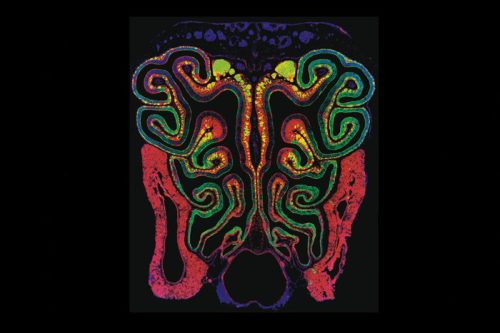
The olfactory epithelium — a mouse’s is pictured in green — is a sheet of tissue that develops in the nasal cavity. Researchers at Washington University School of Medicine in St. Louis have uncovered new details on how the olfactory epithelium develops and why it is that some animals have such great senses of smell, compared with others that lack such ability.
“We think the surface area of the sheet matters in how well animals smell and in the types of smells they can detect,” said David M. Ornitz, MD, PhD, the Alumni Endowed Professor of Developmental Biology. “One reason we think this stems from differences in the complexity of these turbinates. Animals that we think of as having a great sense of smell have really complex turbinate systems.”
The study, published Aug. 9 in the journal Developmental Cell, also could help answer a longstanding evolutionary question: How did animals’ senses of smell become so enormously variable? The way these abilities came to diverge over evolutionary history remains a mystery. Understanding these signals could help scientists tease out how dogs evolved an extraordinary olfactory system and humans wound up with a comparatively stunted one.
First author Lu M. Yang, a graduate student in Ornitz’s lab, found that a newly discovered stem cell the researchers dubbed FEP cells control the size of the surface area of the olfactory epithelium. These stem cells also send a specific signaling molecule to the underlying turbinates, telling them to grow. The evidence suggests that this signaling crosstalk between the epithelium and the turbinates regulates the scale of the olfactory system that ends up developing, sometimes resulting in olfactory epithelia with larger surface areas, such as in dogs.
When the stem cells can’t signal properly, turbinate growth and olfactory epithelium surface area experience an arrested development. To study this in the lab, mice with such olfactory stunting could, in theory, be compared with typical mice to learn more about how these signals govern the final complexity of an animal’s olfactory system.
“Before our study, we didn’t know how the epithelium expands from a tiny patch of cells to a large sheet that develops in conjunction with complex turbinates,” Yang said. “We can use this to help understand why dogs, for example, have such a good sense of smell. They have extremely complex turbinate structures, and now we know some of the details about how those structures develop.”