Category Archives: research

Dogs understand what’s written all over your face

Dogs can understand

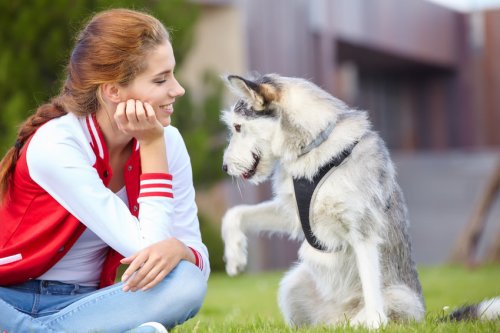
Dogs can understand emotional expressions of humans. Credit: © ZoomTeam / Fotolia

Dogs are capable of understanding the emotions behind an expression on a human face. For example, if a dog turns its head to the left, it could be picking up that someone is angry, fearful or happy. If there is a look of surprise on a person’s face, dogs tend to turn their head to the right. The heart rates of dogs also go up when they see someone who is having a bad day, say Marcello Siniscalchi, Serenella d’Ingeo and Angelo Quaranta of the University of Bari Aldo Moro in Italy.

The study in Springer’s journal Learning & Behavior is the latest to reveal just how connected dogs are with people. The research also provides evidence that dogs use different parts of their brains to process human emotions.

By living in close contact with humans, dogs have developed specific skills that enable them to interact and communicate efficiently with people. Recent studies have shown that the canine brain can pick up on emotional cues contained in a person’s voice, body odour and posture, and read their faces.

In this study, the authors watched what happened when they presented photographs of the same two adults’ faces (a man and a woman) to 26 feeding dogs. The images were placed strategically to the sides of the animals’ line of sight and the photos showed a human face expressing one of the six basic human emotions: anger, fear, happiness, sadness, surprise, disgust or being neutral.

The dogs showed greater response and cardiac activity when shown photographs that expressed arousing emotional states such as anger, fear and happiness. They also took longer to resume feeding after seeing these images. The dogs’ increased heart rate indicated that in these cases they experienced higher levels of stress.

In addition, dogs tended to turn their heads to the left when they saw human faces expressing anger, fear or happiness. The reverse happened when the faces looked surprised, possibly because dogs view it as a non-threatening, relaxed expression. These findings therefore support the existence of an asymmetrical emotional modulation of dogs’ brains to process basic human emotions.

“Clearly arousing, negative emotions seem to be processed by the right hemisphere of a dog’s brain, and more positive emotions by the left side,” says Siniscalchi.

The results support that of other studies done on dogs and other mammals. These show that the right side of the brain plays a more important part in regulating the sympathetic outflow to the heart. This is a fundamental organ for the control of the ‘fight or flight’ behavioural response necessary for survival.

Source:  Springer.com

Which are smarter, cats or dogs?

This debate among pet owners can still get quite heated.

In this short video, a scientist explains why she concludes that dogs have the greater cognitive capabilities:

Kathleen Crisley, specialist in dog massage, rehabilitation and nutrition/food therapy, The Balanced Dog, Christchurch, New Zealand


Veterans with PTSD receive physiological and behavioral benefits thanks to service dogs

A new study shows how veterans with PTSD may benefit physiologically from using service dogs.

This study, led by the Purdue University College of Veterinary Medicine, is the first published research to use a physiological marker to define the biobehavioral effects of service dogs on veterans with PTSD.

The findings were published in the journal Psychoneuroendocrinology, and they may be significant as scientific evidence of potential mental health benefits experienced by veterans with PTSD who have service dogs.

rodriguez-ohaire

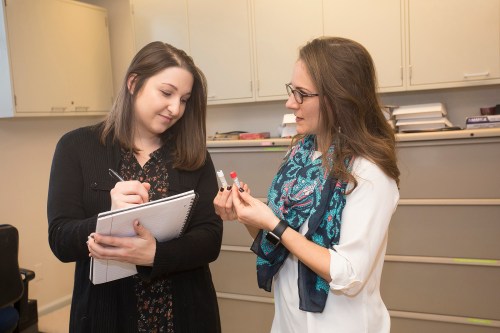
Kerri Rodriguez, human-animal interaction graduate student (left), and Maggie O’Haire, assistant professor of human-animal interaction in the College of Veterinary Medicine, look at cortisol samples. Cortisol was one of the measurements used in a new study that shows how veterans with PTSD may benefit physiologically from using service dogs. (Purdue University photo/ Kevin Doerr)

The study was co-funded by the Human Animal Bond Research Institute (HABRI) and Bayer Animal Health.  The research was led by Maggie O’Haire, assistant professor of human-animal interaction in the College of Veterinary Medicine, and Kerri Rodriguez, human-animal interaction graduate student, with the help of K9s For Warriors, an accredited nonprofit organization that provides veterans with service dogs. The study also was in collaboration with the Institute for Interdisciplinary Salivary Bioscience Research at the University of California, Irvine.

“Our long-term research goal is to quantify how service dogs may affect the health and well-being of military members and veterans with PTSD,” O’Haire said. “This study compared a group of veterans with PTSD who had a service dog to a group on the waitlist to receive one. Our previous research suggests that the presence of a service dog reduced clinical PTSD symptoms and improved quality of life. In this study, we wanted to determine if those beneficial effects also included changes in the physiology of stress.”

“We chose to focus our assessments on cortisol as it is a biomarker centrally involved in the stress response system,” said Rodriguez, lead author on the paper. In this way, the study seeks to improve the understanding of the potential mechanisms for how and why a service dog may help this population.

Cortisol can be measured non-invasively in saliva, which enabled the veterans to collect samples themselves at home immediately after waking up in the morning and about 30 minutes later. This allowed researchers to look at how much cortisol was being produced during the morning. The magnitude of the “cortisol awakening response” has been extensively studied and is used as a metric of the effects of chronic and acute stress. Non-PTSD, healthy adults experience an increase in cortisol after waking up.

“We found that military veterans with a service dog in the home produced more cortisol in the mornings than those on the waitlist,” Rodriguez said. “This pattern is closer to the cortisol profile expected in healthy adults without PTSD. Having a service dog was also associated with less anger, less anxiety, and better sleep.”

O’Haire says, though, while this finding is important, it should be taken in context.

“These findings present exciting initial data regarding the physiological response to living with a service dog. However, the study did not establish a direct correlation, on an individual level, between cortisol levels and levels of PTSD symptoms, and further study is needed. It is important to keep in mind that service dogs do not appear to be a cure for PTSD,” O’Haire said.

The next step, already underway, involves a large-scale National Institutes of Health clinical trial in which the researchers are studying veterans with and without service dogs over an extended period of time.

“Our research team will be able to look at morning cortisol levels both before and after getting a service dog to see how these physiological effects manifest over time,” O’Haire said. “The longitudinal nature of this clinical trial should bring about a better understanding of the interrelationships between physiological and behavioral processes, PTSD symptoms, and service dogs.”

She also emphasizes that the participation of veterans in the studies should not be taken for granted. “We are most grateful to the military veterans and their families who have participated in the research thus far,” O’Haire said. “We are honored to be collaborating with these individuals to advance the science behind our interactions with animals and how they affect human lives.”

Source:  Purdue University media release

Older Adults and Animal Programming

The Human-Animal Bond Research Initiative and the National Council on Aging have published a new guide to assist senior centers in implementing animal programmes.

There’s a large and growing body of evidence on the value of animals (especially dogs and other companion animals) in combating obesity, loneliness, mental health issues and inspiring memory recall in dementia patients.  In the western world, we also have a growing population of senior citizens and so there’s a strong rationale for rolling out animal programs in senior centers.

The guide cites real-life policy examples and literature in an easy-to-read guide.

Key recommendations on getting started include:

• Establish clear and measurable goals for your senior center
• Develop policies, protocols, and training programs for staff, volunteers, and animals
• Gain acceptance of your program and ensure participant awareness of policies and programming, including the benefits
• Assess risk and develop appropriate procedures to mitigate risk
• Measure successes and failures of your programs through record keeping, questionnaires, and other research

Back in the late 1990s, my Labrador Ebony and I were a therapy team at a local rest home as part of Canine Friends.  I saw first hand the faces of our human friends who looked forward to our visits, with conversations about pets they had in their lives.  The power of a dog sitting at their feet was strong!

This slideshow requires JavaScript.

Kathleen Crisley, specialist in dog massage, rehabilitation and nutrition/food therapy, The Balanced Dog, Christchurch, New Zealand

Human encouragement and how it may help dogs solve problems

Human encouragement might influence how dogs solve problems, according to a new Oregon State University study.

The study, published in the journal Applied Animal Behaviour Science, sheds light on how people influence animal behavior, said study lead author Lauren Brubaker, a doctoral student in OSU’s Human-Animal Interaction Lab.

Brubaker evaluated the behavior of search and rescue dogs and pet dogs when presented with the same problem-solving task. Both sets of dogs persisted at the task for about the same proportion of time, but the search and rescue dogs were more successful at solving the task when encouraged by their owners.

However, the search and rescue dogs didn’t solve the task when they were alone. Further, pet dogs that solved the task with their owner present – but not encouraging them – also solved it when they were alone, Brubaker said.

“We thought that was unusual,” Brubaker said. “Because search and rescue dogs are trained to work independently, we expected that they would out-perform pet dogs on this independent task and that wasn’t the case. This suggests that the behavior of the owner, including their expectation of their dog and how they engage with their dog on a day-to-day basis, may influence the dog during a problem-solving task.

“This leads us to believe that communication between search and rescue dogs and their owner could be more effective than communication between pet dogs and their owners,” she said.

In the study, the dogs were given a solvable task with a person present: open a puzzle box containing a sausage within two minutes. They compared a group of 28 search and rescue dogs and a group of 31 pet dogs.

Search and rescue dogs were used as a comparison to pet dogs because they are traditionally trained to work independently from their owner. The search and rescue dogs were provided by Mountain Wave Search and rescue in Portland, Douglas County Search and Rescue in Roseburg, and Benton County Search and Rescue in Corvallis.

Pet dogs were recruited at random from the community through online advertisement and by way of word of mouth. Data from pet dogs from a 2015 study conducted by Udell were also used in the analysis. The dogs in both groups were from a variety of breeds.

The dogs were given the puzzle box under two conditions: alone in the room, and with their owner in the room standing neutrally. During the neutral phase, owners were instructed to stand in the room with their arms by their side and to avoid communicating with the dog. In the encouragement condition, the owner was instructed to encourage the dog however they saw appropriate, typically by using verbal praise or gestures, but without touching the dog or the container and without making contact with the dog or the container.

Before each condition the owner was instructed to “bait” the container by picking the container up, placing the food inside the container while the dog watched, and showing it to the dog to allow the dog to see that the container had food in it. Then they placed it on the ground in a designated location. In the neutral-human condition, the owner took three steps back and stood neutrally for two minutes. During the alone condition the owner left the room after placing the object on the ground.

In the human-neutral condition, three of the pet dogs and two of search and rescue dogs solved the task. Two pet dogs solved the task in the alone condition. In the encouragement condition, nine of the search and rescue dogs solved the task, while only two pet dogs did.

“When the owner’s social cues direct the dog towards the independent problem-solving task, then we see something interesting,” said Monique Udell, an animal scientist who directs the Human-Animal Interaction Lab in the College of Agricultural Sciences. “While most dogs increase the amount of time they spend attending to the puzzle when encouraged, pet dogs often end up treating the puzzle like a toy. Instead of engaging in goal directed behavior, they act as if their owner was encouraging them to play.”

Udell continued, “It’s possible that when directed by their owners, search and rescue dogs instead see opening the box as their job. Their owners may be more effective at communicating about the task at hand. Or maybe there is something inherently different about dogs that are selected for search and rescue that makes them more apt to solve the problem. More research is needed to know for sure.”

Source:  Oregon State University media statement

The puppy cuteness study

The popular meme proclaiming that all dogs are puppies assumes that humans’ adoration of canines is not conditional on their age. But a new study led by Clive Wynne, professor of psychology and director of Arizona State University’s Canine Science Collaboratory, suggests otherwise.

In a paper published this month in Anthrozoos: A Multidisciplinary Journal of the Interactions of People and Animals, Wynne and colleagues describe the study, which found dogs’ attractiveness to humans peaks at roughly eight weeks, the same point in time at which their mother weans them and leaves them to fend for themselves.

While spending time in the Bahamas, Wynne was able to observe the many street dogs there. According to him, there are around a billion dogs in the world, 80 percent of whom are feral. For those dogs, human intervention is crucial to their survival. Wynne wondered if there was a connection between pups’ weaning age — when they are at their most vulnerable — and their level of attractiveness to humans. So he designed an experiment to test his query.

“It came out exactly as I’d hoped it would — that there is indeed an optimal age of maximum cuteness, and that age does line up pretty closely with the age at which mothers wean their pups,” Wynne said.

“This could be a signal coming through to us of how dogs have evolved to rely on human care. This could be dogs showing us how the bond between human and dog is not just something that we find immensely satisfying in our lives. … But for them, it’s the absolute bedrock of their existence. That being able to connect with us, to find an emotional hook with us is what actually makes their lives possible.”

The study was carried out using a series of photographs of puppies at different ages, from the first weeks of life through young adulthood. Fifty-one participants were asked to rank the puppies’ level of attractiveness in each photo. Three distinctive-looking breeds were ranked: Jack Russell terriers, cane corsos and white shepherds.

Results showed that the pups’ attractiveness was lowest at birth and increased to a maximum before 10 weeks of age before declining and then leveling off.

Cane corsos showed a maximum attractiveness at 6.3 weeks of age; Jack Russell terriers showed a maximum attractiveness at 7.7 weeks of age; and white shepherds showed a maximum attractiveness at 8.3 weeks of age.

puppies

Sample images of three breeds at different ages. The top row of images depicts a cane corso, the middle row depicts a Jack Russell terrier and the bottom row depicts a white shepherd. The middle column shows each dog at it’s “most attractive” age, as rated by participants: six weeks for Cane corsos; a little over seven weeks for Jack Russell terriers; and eight weeks for white shepherds

“Around seven or eight weeks of age, just as their mother is getting sick of them and is going to kick them out of the den and they’re going to have to make their own way in life, at that age, that is exactly when they are most attractive to human beings,” Wynne said.

The findings provide insight into the depth and origin of the relationship between humans and dogs, the oldest and most enduring of any human-animal relationship. And while some theories attribute the survival of the canine species to their intelligence, Wynne dissents.

“I think that the intelligence of dogs is not the fundamental issue,” he said. “It’s this tremendous capacity to form intimate, strong, affectionate bonds. And that starts at maybe eight weeks of life, when they’re so compelling to us.”

Though humans and other animals, such as cats and birds, have the capacity to form strong bonds, dogs in particular are especially suited to the task because of their gregarious nature. Even in hand-reared wolves, the species from which all dogs are descended, the willingness to engage humans does not match that of the domestic dog.

“It does seem to me that the dog has something rather special,” Wynne said. “Dogs have a very open-ended social program. That they are ready and willing to make friends with anybody.”

Wynne has thought of a couple of interesting ways to follow up on the cuteness study. One way is to show participants video of puppies at different ages, instead of still photos, to determine if perhaps there is something in the pups’ movement that attracts people. Another is to determine what the pups’ mother thinks about their level of attractiveness at different ages, though that is obviously easier said than done.

The takeaway from the study for Wynne is that extra piece of the puzzle that makes up the human-dog connection.

“[The study] doesn’t mean to say that we stop loving our dogs past [eight weeks],” he said. “The eight-week point is just the point where the hook is biggest, the ability of the animal to grab our interest is strongest. But, having grabbed our interest, we continue to love them all their lives.”

Source:  Arizona State University

These 59 genes may make your dog more athletic

Compare the sprinting Shetland sheepdog with the sluggish St. Bernard, and it’s clear a dog’s genes play a large role in how athletic it is. Now, at the Biology of Genomes meeting here, scientists report identifying 59 genes linked to canine athletics, which apparently affect everything from heart rate to muscle strength. Early results suggest some may eventually help us understand human superstars.

Athletic dog

Some dogs are great athletes and genome studies are showing why. Gallia Painter Mackinnon/500px

“Across dogs, all sorts of traits have been selected for in an extreme way,” says Alexander Godfrey, a genomicist at the Massachusetts Institute of Technology Whitehead Institute in Cambridge, who was not involved in the work. As such, dog genomics represents “a pretty unique and powerful system” for studying how genotypes, or sets of genes, result in phenotypes, or sets of observable characteristics in all types of animals, he says.

Past work on dogs has yielded genes for friendliness, hair type, and other relatively simple traits. But this new study looked at more complex ones, thanks to a new resource: a soon-to-be-released global database of the whole-genome sequences of 722 dogs across about 450 breeds, along with sequences for canine relatives, including wolves, foxes, and jackals.

Jaemin Kim, a postdoc working with canine genomicist Elaine Ostrander at the National Human Genome Research Institute in Bethesda, Maryland, focused on athleticism, in part because he wondered why he wasn’t any better at his favorite sport: basketball. He decided to start with the genes that turn sport dogs such as pointers, setters, and retrievers into the Michael Jordans of the canine world. He and colleagues compared the genomes of 21 individuals from 10 sport hunting breeds with 27 individuals from nine terrier breeds.

Fifty-nine genes, or the regions that control them, stood out, with certain versions of the DNA much more common in the sport dogs, Kim reported at the meeting. He and his colleagues could not easily verify their effects on athletic performance, but most are linked to traits including blood flow, heart rate, muscle strength, and even pain perception. One seems to help dogs remain calm after they hear a gunshot, he added, which may make them stable hunting companions; a different version in terriers may account for their well-known neuroticism.

To examine the role of these genes in other breeds, Kim needed a standard way of assessing athleticism. He decided to use agility trials, competitions in which dogs, guided by their owners, maneuver through an obstacle course in the shortest time possible. Data from the United States Dog Agility Association allowed him to calculate the best performing breeds: border collies and Shetland sheepdogs. The worst were Newfoundlands, bulldogs, and mastiffs.

Then, he compared whole genomes from the best and the worst, looking for differences in the 59 genes. Only one proved to be significant, a gene called ROBO1 that affects learning ability. So when it comes to agility, Kim said, it seems that a mental attribute may matter more than physical ones do. “It looks like it’s more of a training thing,” says Sarah Tishkoff, an evolutionary geneticist at the University of Pennsylvania who was not involved with the work.

“It’s interesting to think about what genes are associated with what traits,” Godfrey says. “That it would be a gene that’s not involved with muscles is not obvious.” Even though agility trials are a good measure, Godfrey cautions that in general humans are notoriously bad at objectively evaluating their own and other people’s dogs. And he wonders whether, even in agility, judges wind up “scoring aspects of human[like] behavior that they like” and not agility per se, he points out. Another issue is that there are other types of athleticism. Herding dogs, for example, are great athletes that race around keeping livestock together and headed in the right direction, even though they are not that muscular looking. Kim is starting to look at the genetic basis of that behavior.

Ostrander says the new results might one day help us better understand the genetic basis of athleticism in humans. Already, other researchers have implicated one of the 59 genes in improving human performance by improving blood flow, and it’s likely, she says, that others will also prove important. Dogs suffer many of the same health problems that people do, and canine versions of the relevant genes will be easier to track down. Because breeders work hard to bring out specific traits in their dogs, “you get mutations in pathways that have dramatic effects,” Tishkoff explains.

Source:  Science

Hunting dogs may benefit from antioxidant boost in diet

Free radicals, those DNA-damaging single-oxygen atoms, are produced in spades during exercise. Dogs that exercise a lot, like hunting dogs, may need to consume more antioxidants than their less-active counterparts to protect against this damage. But what diet formulation best meets the needs of these furry athletes? A new University of Illinois study provides some answers in a real-world scenario.

Hunting dogs

Researchers visited a kennel of American Foxhounds in Alabama over the course of a hunting season, providing one group a high-performance commercial diet and another group a test diet similar to the commercial diet, but with added antioxidants (vitamins C and E, and lutein), zinc, and taurine. During the study, dogs from both groups went on two to three hunts per week, each 2 to 5 hours in length.

“We think of it as unstructured endurance exercise. They’re not running the entire time. They might stop to sniff or go more slowly to pick up a scent,” says Kelly Swanson, corresponding author on the study and Kraft Heinz Company Endowed Professor in Human Nutrition in the Department of Animal Sciences and the Division of Nutritional Sciences at U of I.

Before starting the diets and on four occasions during the seven-month study, researchers took blood samples from the dogs to examine oxidative stress markers and other blood metabolites.

“We hypothesized that dogs fed the test diet would have a lower concentration of oxidative stress markers and improved performance compared to the dogs fed the commercial diet,” Swanson says. “It turns out performance wasn’t affected by diet, but the test diet did improve indirect measures of oxidative stress. Therefore, improved performance may be expected with more strenuous exercise when metabolic demands are higher.”

The amino acid taurine, once thought to be non-essential for dogs but now recognized as an important nutrient for heart health, declined over the course of the season for dogs fed the commercial diet. The same pattern occurred with vitamin E. Although one dog did come close to a critically low level of taurine during the study, all dogs fed the commercial diet stayed within the normal range for all blood metabolites.

For dogs fed the test diet, taurine and vitamin E levels were maintained at or above the baseline. The results suggest to Swanson and his co-authors that these compounds are compromised in athletic dogs over months of unstructured exercise, and more-active dogs such as sled dogs may experience greater depletion.

“We can conclude that athletic dogs may benefit from supplementation of vitamin E and taurine to minimize oxidation and maintain taurine status,” he says.

The article, “Longitudinal changes in blood metabolites, amino acid profile, and oxidative stress markers in American Foxhounds fed a nutrient-fortified diet,” is published in the Journal of Animal Science [DOI: 10.1093/jas/skx070]. Funding was provided by The Nutro Company.

Source:  University of Illinois press release

Demography and disorders of the French Bulldog population

French Bulldogs, predicted soon to become the most popular dog breed in the UK, are vulnerable to a number of health conditions, according to a new study published in the open access journal Canine Genetics and Epidemiology.

Researchers at The Royal Veterinary College (RVC), UK found that the most common issues in French Bulldogs over a one year period were ear infections, diarrhea and conjunctivitis (inflammation of the eye surface).

FB

French Bulldog puppy. Credit: © Mary Swift / Fotolia

Dr. Dan O’Neill, RVC Senior Lecturer and the main author, said: “French Bulldogs are a relatively new arrival to the list of common UK breeds so there is very little current research on them in the UK. Our study — the first on this breed in the UK — is based on anonymised records gathered from hundreds of UK vet clinics. It provides owners with information on the issues that they could expect and should look out for in French Bulldogs. It may also help potential new owners to decide if a French Bulldog really is for them.”

Dr. O’Neill adds: “One of the interesting finding from our research is that male French Bulldogs appear to be less healthy than females. Males were more likely to get 8 of the 26 most common health problems while there were no issues that females were more likely to get than males.”

The authors suggest that the distinctive appearance of the French Bulldog, with their short muzzles and wide, prominent eyes, may be a key factor influencing their popularity. However, these characteristics may also increase the risk for some of the health problems seen in French Bulldogs. For example breathing issues, seen in 12.7% of the dogs in this study, are a known problem in breeds with short noses and flat faces. Skin problems overall were the most common group of health issues and the authors suggest that this may be due to the skin folds that are characteristic of the breed.

Dr. O’Neill said: “This study also documents the dramatic rise in popularity of the French Bulldog, from 0.02% of puppies born in 2003 to 1.46% of puppies born in 2013. This level of population growth in a single dog breed is unprecedented. There is a worry that increased demand for the French Bulldog is damaging to these dogs’ welfare because of the health risks associated with their extreme physical features.”

The authors analyzed data on 2,228 French Bulldogs under veterinary care during 2013 from 304 UK clinics, collected in the VetCompass™ database. The French Bulldogs had a median age of 1.3 years old compared to a median age of 4.5 years for the other dog breeds in the VetCompass™ database. This reflects the growth in popularity of French Bulldogs.

The authors caution that the study may even under-estimate the true number of dogs with health problems as the data may include more severely affected animals that require veterinary management. Additionally, as French Bulldogs have only recently become popular the data was mostly collected from young dogs and it is well recognized that health problems generally become more common with age.

Source:  Science Daily

Read the journal article here


Is There A Link Between Your Pets and Your Food Choices?

People who grow up with a greater variety of pets are significantly more likely to follow a vegetarian diet as adults, according to research by a professor-student team in the University at Albany psychology department.

Sydney Heiss, graduate student in the department of psychology, worked with assistant professor Julia Hormes to gain a better understanding of the factors that play a role in a person’s decision to refrain from animal products as adults.

pets_and_vegetarians_550(1)

Assistant Professor of Psychology Julia Hormes, left, and graduate student Sydney Heiss, both with their dogs, conducted research on the influence that childhood pets have on a person’s diet choices in adulthood. Photo by State University of New York, Albany

The two recruited study participants from social media webpages focused on food in general, including those focused on vegetarianism and veganism, resulting in a pool of 325 participants with a mean age of 30 years.

Participants provided their demographic information and whether they followed any vegetarian diet, including “flexitarian” (mostly vegetarian, but sometimes eats meat), “semi-vegetarian” (eats some types of meat but refrains from others), “pescetarian” (eats fish, eggs and dairy but refrains from other meat products), “lacto-ovo-vegetarian” (eats eggs and dairy, but refrains from all animal flesh), “vegan” (no animal products whatsoever), and “raw vegan” (consumes exclusively uncooked non-animal products).

Heiss and Hormes then assessed the individual’s beliefs and attitudes regarding the use of animals in food, clothing and research and surveyed them on their ownership and relationship with any childhood pets. Participants were asked about the number and types of their childhood pets, how often they were responsible for their animal(s) care, how close they felt to the animal(s), etc.

After a statistical analyses of all responses, the duo found:

  • Those who owned pets in childhood were significantly more likely than those without pets to follow a vegetarian or vegan diet as an adult.
  • Those who owned a variety of pets (i.e. hamsters, dogs and cats, as opposed to just dogs) were more likely to avoid a wider range of animal products (e.g., refrain from all animal products as opposed to only meat) than those who owned fewer pets.
  • A wider variety of pets led to a stronger opposition towards animal exploitation, which in turn led to less animal product consumption.
  • Closeness to ones’ pet was a significant predictor of a person’s likelihood to refrain from animal products as an adult.

“It seems as though individuals who had different types of pets more easily empathize with farmed animals or those used in research,” said Heiss. “For example, someone who had only a dog may have difficulty feeling empathy for a cow, whereas someone who grew up with farm animals may be more attuned to characteristics that are shared across all species and therefore, better able to empathize with all animals.”

Though research previously existed suggesting a potential link between pet ownership and animal product restriction, Hormes notes there’s a key difference about this most recent study.

“Past research has suggested that closeness to a childhood pet is the key factor that predicts increased empathy and vegetarianism in adulthood,” said Hormes. “Our findings suggest that there may be more than one pathway to vegetarianism in adulthood – the number of pets in childhood, ethical concerns towards animal use, and level of vegetarianism is significant.”

The full study can be read here.

Source:  State University of New York press release