Category Archives: research

What Makes A Good Working Dog? Canine ‘Aptitude Test’ Might Offer Clues

The canine labor market is diverse and expansive. Assistance dogs may be trained to work with the visually or hearing impaired, or with people in wheelchairs. Detection dogs may be trained to sniff out explosives, narcotics or bedbugs. Other pups even learn to jump out of helicopters on daring rescue missions.

Despite the wide variety of working roles available for man’s best friend, those jobs can be tough to fill, since not every dog will qualify. Even among dogs specifically bred to be assistance dogs, for example, only about 50 percent that start a training program will successfully complete it, while the rest go on to be very well-trained family pets.

As a result, the wait list for a trained assistance dog can be up to two years.

Working Dogs

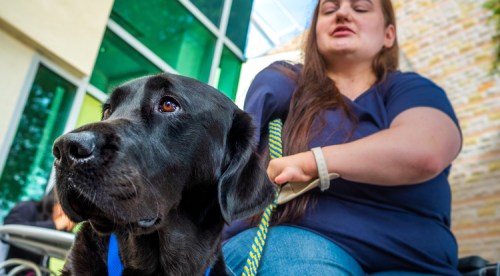
Shelby Smith was matched with her assistance dog Picasso through the nonprofit Canine Companions for Independence. UA researcher Evan MacLean is looking for ways to help organizations like Canine Companions identify promising assistance dogs sooner. (Photo: Bob Demers/UANews)

Evan MacLean, director of the Arizona Canine Cognition Center at the University of Arizona, is exploring ways to identify the best dogs for different jobs – before they start the long and expensive training process — by looking at their cognitive abilities.

He is lead author of a new study in Frontiers in Veterinary Science that looks at whether canines’ cognitive abilities can help predict their success as working dogs.

While a dog’s physical characteristics and temperament are often considered when thinking about which dog will be right for a given job, cognition is an area that’s received far less attention.

“People have really focused on temperament and how reactive a dog is to certain things in the environment,” said MacLean, assistant professor in the UA School of Anthropology. “What we were interested in was the fact that these dogs also face cognitive challenges. They have to learn all these things in the course of their training, and they have to be able to flexibly solve problems when things go wrong.”

MacLean’s study focuses on two types of working dogs: assistance dogs in training, which will go on to be paired with people with disabilities, and explosive detection dogs working for the U.S. Navy.

MacLean and his colleagues looked at the performance of both types of dogs on 25 different cognitive measures by using a battery of game-based tests, like hiding and finding objects and other forms of canine play.

What they found: A different set of skills predict whether a dog will be a good detection dog or a good assistance dog.

In the case of assistance dogs, social skills — including the ability to pay close attention to and maintain eye contact with humans — appear to be especially important. In detection dogs, good short-term memory and sensitivity to human body language, such as pointing gestures, were the best predictors of success.

“Dog jobs are just about as diverse as human jobs are,” MacLean said. “People sometimes think of working dogs as this general category of dogs that have jobs in society, but they actually have to do really, really different things, and because these jobs are so diverse, we didn’t expect that there was going to be one litmus test for what would make a good dog. It’s like if you think about aptitude testing with people – there are certain questions that will tell you something about one job but not another.”

The study involved 164 dogs from the California-based organization Canine Companions for Independence, which trains assistance dogs, and 222 dogs from the Navy.

The researchers tested the assistance dogs at 18 months old, when they first started a full-time, intensive six-month training program. Dogs in the study were considered “successful” based on whether or not they ultimately graduated from the training. Through cognitive testing, MacLean and his colleagues were able to predict the top 25 percent of graduates with 86 percent accuracy.

The success of the Navy dogs, whose training is ongoing and not marked by a single graduation date, was measured based on trainers’ records of the dogs’ performance on training exercises, as well as questionnaires with people who trained or deployed with the dogs.

MacLean’s findings suggest that cognition could be considered alongside temperament and physicality to predict working dog success.

If organizations that train dogs could better predict which dogs are most worth the investment, it could save tens of thousands of dollars in unnecessary training costs and also ensure that people in need get the right dogs faster, MacLean said.

He and his colleagues are now working on determining if cognitive testing could be informative even earlier — when a dog is just 8 weeks old. They also are looking at whether these skills have a genetic basis that could be targeted in breeding programs.

“One of the most exciting parts of all this is that it tells us cognition does something in animals,” MacLean said. “We study these abstract questions about how animals think about the world and how they solve problems, but there aren’t always a lot of situations where you can say, ‘Why does that matter? What does it allow an animal to actually do?’ This is some of the first evidence that suggests that these processes that we measure, which differ between individual dogs, have some real consequences related to something that’s quite worthy in society.”

Source:  University of Arizona media release

Yes, your pet can tell time

Are you taking your time when feeding your pet? Fluffy and Fido are on to you — and they can tell when you are dawdling.

time dog

A new study from Northwestern University has found some of the clearest evidence yet that animals can judge time. By examining the brain’s medial entorhinal cortex, the researchers discovered a previously unknown set of neurons that turn on like a clock when an animal is waiting.

“Does your dog know that it took you twice as long to get its food as it took yesterday? There wasn’t a good answer for that before,” said Daniel Dombeck, who led the study. “This is one of the most convincing experiments to show that animals really do have an explicit representation of time in their brains when they are challenged to measure a time interval.”

The research was published online this week in the journal Nature Neuroscience. Dombeck is an associate professor of neurobiology in Northwestern’s Weinberg College of Arts and Sciences.

When planning the study, Dombeck’s team focused on the medial entorhinal cortex, an area located in the brain’s temporal lobe that is associated with memory and navigation. Because that part of the brain encodes spatial information in episodic memories, Dombeck hypothesized that the area could also be responsible for encoding time.

“Every memory is a bit different,” said James Heys, a postdoctoral fellow in Dombeck’s laboratory. “But there are two central features to all episodic memories: space and time. They always happen in a particular environment and are always structured in time.”

To test their hypothesis, Dombeck and Heys set up an experiment called the virtual “door stop” task. In the experiment, a mouse runs on a physical treadmill in a virtual reality environment. The mouse learns to run down a hallway to a door that is located about halfway down the track. After six seconds, the door opens, allowing the mouse to continue down the hallway to receive its reward.

After running several training sessions, researchers made the door invisible in the virtual reality scene. In the new scenario, the mouse still knew where the now-invisible “door” was located based on the floor’s changing textures. And it still waited six seconds at the “door” before abruptly racing down the track to collect its reward.

“The important point here is that the mouse doesn’t know when the door is open or closed because it’s invisible,” said Heys, the paper’s first author. “The only way he can solve this task efficiently is by using his brain’s internal sense of time.”

By using virtual reality, Dombeck and his team can neatly control potentially influencing factors, such as the sound of the door opening. “We wouldn’t be able to make the door completely invisible in a real environment,” Dombeck said. “The animal could touch it, hear it, smell it or sense it in some way. They wouldn’t have to judge time; they would just sense when the door opened. In virtual reality, we can take away all sensory cues.”

But Dombeck and his team did more than watch the mice complete the door stop task over and over again. They took the experiment one step further by imaging the mice’s brain activity. Using two-photon microscopy, which allows advanced, high-resolution imaging of the brain, Dombeck and Heys watched the mice’s neurons fire.

“As the animals run along the track and get to the invisible door, we see the cells firing that control spatial encoding,” Dombeck said. “Then, when the animal stops at the door, we see those cells turned off and a new set of cells turn on. This was a big surprise and a new discovery.”

Dombeck noted these “timing cells” did not fire during active running — only during rest. “Not only are the cells active during rest,” he said, “but they actually encode how much time the animal has been resting.”

The implication of the work expands well beyond your impatient pooch. Now that researchers have found these new time-encoding neurons, they can study how neurodegenerative diseases might affect this set of cells.

“Patients with Alzheimer’s disease notably forget when things happened in time,” Heys said. “Perhaps this is because they are losing some of the basic functions of the entorhinal cortex, which is one of the first brain regions affected by the disease.”

“So this could lead to new early-detection tests for Alzheimer’s,” Dombeck added. “We could start asking people to judge how much time has elapsed or ask them to navigate a virtual reality environment — essentially having a human do a ‘door stop’ task.”

Source:   Northwestern University media statement

A dog’s colour could impact longevity, increase health problems

New research led by the University of Sydney has revealed the life expectancy of chocolate Labradors is significantly lower than their black and yellow counterparts.
Chocolate Labrador

The study of more than 33,000 United Kingdom-based Labrador retrievers of all colours shows chocolate Labradors also have a higher incidence of ear infections and skin disease. Its findings were published in the open access journal Canine Genetics and Epidemiology.

Part of the University’s VetCompass™ Programme, which collects and analyses electronic patient data on dogs, the research is being replicated in Australia, where Labradors are the most popular breed of dog.

In the UK, the median longevity of non-chocolate Labradors is 12.1 years, more than 10 percent longer than those with chocolate coats. The prevalence of ear inflammation (otitis externa) was twice as high in chocolate Labradors, who were four times more likely to have suffered from pyo-traumatic dermatitis (also known as hot-spot).

Lead author Professor Paul McGreevy, from the University’s Faculty of Science, said the relationship between coat colour and disease came as a surprise to researchers. The UK findings may not hold in Australian Labradors, he said, but warrant investigation.

“The relationships between coat colour and disease may reflect an inadvertent consequence of breeding certain pigmentations,” he said. “Because chocolate colour is recessive in dogs, the gene for this colour must be present in both parents for their puppies to be chocolate. Breeders targeting this colour may therefore be more likely to breed only Labradors carrying the chocolate coat gene. It may be that the resulting reduced gene pool includes a higher proportion of genes conducive to ear and skin conditions.”

Across the entire Labrador population, the most common health conditions found were obesity, ear infections and joint conditions.

“We found that 8.8 percent of UK Labradors are overweight or obese, one of the highest percentages among dog breeds in the VetCompass™ database,” Professor McGreevy said.

The prevalence was higher among male dogs who had been neutered.

Source:  University of Sydney media statement

Scientists chase mystery of how dogs process words

When some dogs hear their owners say “squirrel,” they perk up, become agitated. They may even run to a window and look out of it. But what does the word mean to the dog? Does it mean, “Pay attention, something is happening?” Or does the dog actually picture a small, bushy-tailed rodent in its mind?

scanner_eddie

Eddie, one of the dogs that participated in the study, poses in the fMRI scanner with two of the toys used in the experiments, “Monkey” and “Piggy.” (Photo courtesy Gregory Berns)

Frontiers in Neuroscience published one of the first studies using brain imaging to probe how our canine companions process words they have been taught to associate with objects, conducted by scientists at Emory University. The results suggest that dogs have at least a rudimentary neural representation of meaning for words they have been taught, differentiating words they have heard before from those they have not.

“Many dog owners think that their dogs know what some words mean, but there really isn’t much scientific evidence to support that,” says Ashley Prichard, a PhD candidate in Emory’s Department of Psychology and first author of the study. “We wanted to get data from the dogs themselves — not just owner reports.”

“We know that dogs have the capacity to process at least some aspects of human language since they can learn to follow verbal commands,” adds Emory neuroscientist Gregory Berns, senior author of the study. “Previous research, however, suggests dogs may rely on many other cues to follow a verbal command, such as gaze, gestures and even emotional expressions from their owners.”

The Emory researchers focused on questions surrounding the brain mechanisms dogs use to differentiate between words, or even what constitutes a word to a dog.

Berns is founder of the Dog Project, which is researching evolutionary questions surrounding man’s best, and oldest friend. The project was the first to train dogs to voluntarily enter a functional magnetic resonance imaging (fMRI) scanner and remain motionless during scanning, without restraint or sedation. Studies by the Dog Project have furthered understanding of dogs’ neural response to expected reward, identified specialized areas in the dog brain for processing faces, demonstrated olfactory responses to human and dog odors, and linked prefrontal function to inhibitory control.

For the current study, 12 dogs of varying breeds were trained for months by their owners to retrieve two different objects, based on the objects’ names. Each dog’s pair of objects consisted of one with a soft texture, such as a stuffed animal, and another of a different texture, such as rubber, to facilitate discrimination. Training consisted of instructing the dogs to fetch one of the objects and then rewarding them with food or praise. Training was considered complete when a dog showed that it could discriminate between the two objects by consistently fetching the one requested by the owner when presented with both of the objects.

During one experiment, the trained dog lay in the fMRI scanner while the dog’s owner stood directly in front of the dog at the opening of the machine and said the names of the dog’s toys at set intervals, then showed the dog the corresponding toys.

Eddie, a golden retriever-Labrador mix, for instance, heard his owner say the words “Piggy” or “Monkey,” then his owner held up the matching toy. As a control, the owner then spoke gibberish words, such as “bobbu” and “bodmick,” then held up novel objects like a hat or a doll.

The results showed greater activation in auditory regions of the brain to the novel pseudowords relative to the trained words.

“We expected to see that dogs neurally discriminate between words that they know and words that they don’t,” Prichard says. “What’s surprising is that the result is opposite to that of research on humans — people typically show greater neural activation for known words than novel words.”

The researchers hypothesize that the dogs may show greater neural activation to a novel word because they sense their owners want them to understand what they are saying, and they are trying to do so. “Dogs ultimately want to please their owners, and perhaps also receive praise or food,” Berns says.

Half of the dogs in the experiment showed the increased activation for the novel words in their parietotemporal cortex, an area of the brain that the researchers believe may be analogous to the angular gyrus in humans, where lexical differences are processed.

The other half of the dogs, however, showed heightened activity to novel words in other brain regions, including the other parts of the left temporal cortex and amygdala, caudate nucleus, and the thalamus.

These differences may be related to a limitation of the study — the varying range in breeds and sizes of the dogs, as well as possible variations in their cognitive abilities. A major challenge in mapping the cognitive processes of the canine brain, the researchers acknowledge, is the variety of shapes and sizes of dogs’ brains across breeds.

“Dogs may have varying capacity and motivation for learning and understanding human words,” Berns says, “but they appear to have a neural representation for the meaning of words they have been taught, beyond just a low-level Pavlovian response.”

This conclusion does not mean that spoken words are the most effective way for an owner to communicate with a dog. In fact, other research also led by Prichard and Berns and recently published in Scientific Reports, showed that the neural reward system of dogs is more attuned to visual and to scent cues than to verbal ones.

“When people want to teach their dog a trick, they often use a verbal command because that’s what we humans prefer,” Prichard says. “From the dog’s perspective, however, a visual command might be more effective, helping the dog learn the trick faster.”

Source:  Emory University

Dog intelligence ‘not exceptional’

Note from DoggyMom:

This research hit mainstream media at the beginning of the month.  It’s an important part of the research process to have results peer reviewed and it is also common for reviews of this nature – across multiple pieces of research.

I don’t necessarily think that dogs must be exceptional, however.  And so the results of cognition research that have been published so far shouldn’t be discounted because of this review.  Rather, the cognition research undertaken with dogs helps to prove that they are sentient (very important for animal welfare laws) and more intelligent than many people (and policy makers) believe.

I certainly don’t expect my dogs to be Einstein, but I do see that they have intelligence and emotions – both of which we should respect.


Scientists reviewed evidence that compared the brain power of dogs with other domestic animals, other social hunters and other carnivorous (an order including animals such as dogs, wolves, bears, lions and hyenas).Dog intelligence photo

The researchers, from the University of Exeter and Canterbury Christ Church University, found the cognitive abilities of dogs were at least matched by several species in each of these groups.

The study examined more than 300 papers on the intelligence of dogs and other animals, and found several cases of “over interpretation” in favour of dogs’ abilities.

“During our work it seemed to us that many studies in dog cognition research set out to ‘prove’ how clever dogs are,” said Professor Stephen Lea, of the University of Exeter.

“They are often compared to chimpanzees and whenever dogs ‘win’, this gets added to their reputation as something exceptional.

“Yet in each and every case we found other valid comparison species that do at least as well as dogs do in those tasks.”

The review focussed on sensory cognition, physical cognition, spatial cognition, social cognition and self-awareness.

“Taking all three groups (domestic animals, social hunters and carnivorans) into account, dog cognition does not look exceptional,” said Dr Britta Osthaus, of Canterbury Christ Church University.

“We are doing dogs no favour by expecting too much of them. Dogs are dogs, and we need to take their needs and true abilities into account when considering how we treat them.”

The paper, published in the journal Learning & Behavior, is entitled: “In what sense are dogs special? Canine cognition in comparative context.”

Source:  University of Exeter media release

Have asthma & a pet? Re-homing your cat or dog may not be necessary

Note from Doggy Mom:  I’ve met parents who think that their asthmatic child shouldn’t keep a pet because of the risks of the pet bringing dander and other environmental allergens into the home.    However, this piece of research refutes that belief.  If asthmatic children are managed appropriately with medication, the dog (or cat) can probably stay!

And don’t forget that other research shows that children born into homes with pets have a lower risk of developing the disease (just type ‘asthma’ in the search box to bring up these citations).

boy-and-dog


A study from the Nationwide Children’s Hospital analyzed environmental exposures, like pet and secondhand smoke, to determine if they have a role in asthma control among children whose asthma is managed per NAEPP (EPR-3) guidelines. Researchers found that once asthma guidelines are followed, environmental exposures to pets or secondhand smoke were not significant factors in overall asthma improvement over time.

Children with the diagnosis of uncontrolled asthma and were followed at a pediatric asthma center were provided asthma care as per NAEPP guidelines. At each visit (3-6 months), families completed asthma questionnaires including acute care needs, symptom control and asthma control test (ACT). Asthma control in patients was evaluated at each visit. Results were compared between patients with or without exposure to secondhand smoking and between patients with or without exposure to pets (cats or dogs) at home at baseline and over time.

Three hundred and ninety-five children, ages 2 to 17 years, were included in this study; 25 percent were exposed to secondhand tobacco smoke, and 55 percent were exposed to a cat or dog at home. Clinical outcomes included over time in this cohort, and this improvement was independent of pet exposure. These findings suggest that asthma treatment is more important than certain types of environmental exposures.

Journal citation here.

Source:  American College of Chest Physicians


Why huskies have blue eyes

DNA testing of more than 6,000 dogs has revealed that a duplication on canine chromosome 18 is strongly associated with blue eyes in Siberian Huskies, according to a study published October 4, 2018, in the open-access journal PLOS Genetics by Adam Boyko and Aaron Sams of Embark Veterinary, Inc., and colleagues.

Embark is a dog DNA startup company headquartered in Boston, MA, and Ithaca, NY, and research partner of the Cornell University College of Veterinary Medicine. According to the authors, this represents the first consumer genomics study ever conducted in a non-human model and the largest canine genome-wide association study to date.

Lakota

Embark dog, Lakota, shows off bright blue eyes. Credit: Jamie Leszczak CCAL

Consumer genomics enables genetic discovery on an unprecedented scale by linking very large databases of genomic data with phenotype information voluntarily submitted via web-based surveys. But the promise of consumer genomic data is not limited to human research. Genomic tools for dogs are readily available but the genetic underpinnings of many important traits remain undiscovered. Although two genetic variants are known to underlie blue eye color in some dogs, these do not explain the trait in some other dogs, like Siberian Huskies.

To address this gap in knowledge, Boyko, Sams and colleagues used a diverse panel of 6,070 genetically tested dogs with owners that contributed phenotype data via web-based surveys and photo uploads. They found that a 98.6-kilobase duplication on chromosome 18 near the ALX4 gene, which plays an important role in mammalian eye development, was strongly associated with variation in blue eye color, primarily in Siberian Huskies but also in non-merle Australian Shepherds. One copy of the variant was enough to cause blue eyes or heterochromia (blue and brown eyes), although some dogs with the variant did not have blue eyes, so other genetic or environmental factors are still involved.

Future studies of the functional mechanism underlying this association may lead to the discovery of a novel pathway by which blue eyes develop in mammals. From a broader perspective, the results underscore the power of consumer data-driven discovery in non-human species, especially dogs, where there is intense owner interest in the personal genomic information of their pets, a high level of engagement with web-based surveys, and an underlying genetic architecture ideal for mapping studies.

Aaron J. Sams adds: “Using genetic data from the pets of our customers, combined with eye colors reported by customers for those same animals, we have discovered a genetic duplication that is strongly associated with blue eye color. This study demonstrates the power of the approach that Embark is taking towards improving canine health. In a single year, we collected enough data to conduct the largest canine study of its kind. Embark is currently pursuing similar research projects in a range of morphological and health-related traits and we hope to continue to use our platform to move canine genetics and health forward in a very real way.”

Source:  Science Daily and PLOS Genetics

Sniffing out error in detection dog data

A new study in the journal Scientific Reports gets to the bottom of it: Why do dogs that are trained to locate poop sometimes find the wrong kind of poop?

Sniffer dog reseawrcgh

Washington University researcher Karen DeMatteo and her scat-sniffing dog Train are on a mission to preserve jaguars, pumas, bush dogs and other carnivores in the forests of Northeastern Argentina. (Photo: courtesy of Karen DeMatteo/Washington University)

It happens anywhere from 4 percent to 45 percent of the time, said Karen DeMatteo, a biologist in Arts & Sciences at Washington University in St. Louis. Her new research confirms that there are three viable, alternative explanations beyond errors in handler or dog training that can explain the collection of non-target scats with detection dogs in some ecosystems.

Detection dogs are trained to use scent, not their eyes, to locate specific kinds of scat. They’re useful partners in conservation projects as an alternative to camera photo traps or other more invasive means of identifying which individual animals are present in an area.

And while finding the wrong kind of poop doesn’t ultimately muck up research results — researchers who use scat to track animals usually use DNA tests to confirm the identity of target and non-target evacuators — collecting and testing false positives costs a project time and resources.

“To date, when non-target samples are found in detection dog studies, it is assumed it may be due to errors in detection dog or handler training; however, our study determined that this is not always the case,” DeMatteo said. “Instead, the complexity of ecosystems where a study is conducted can affect the perceived accuracy of detection dog studies because the natural behaviors of non-target species, like coyotes in our study, can alter the genetic profile of target scat, like that from a puma.”

In her own work, DeMatteo has successfully used scat-detection dogs to identify the routes traveled by endangered pumas and other reclusive carnivores along a biologically important corridor in Argentina.

Detection dogs are great at determining the presence of specific animals because they can find droppings hidden in grass, droppings that have been rained on and disintegrated into the mud — or even droppings that have been eaten and then recycled.

Yes, that’s right, and it’s a normal part of life for many animals, DeMatteo said.

“Humans have a natural aversion to coprophagy, which is reflected in the visual horror on an owner’s face when they see their dog gobble down their own scat or the scat of another dog or cat,” DeMatteo said. “Once this shock subsides, the owner typically worries that the scat will cause health problems or there is something psychologically wrong with their four-legged friend.”

“While the reasons underlying coprophagy in domestic dogs are still fuzzy, it is known in wild canids that coprophagy is natural and is often associated with territoriality or nutritional benefits,” she said. “So while the finding that coyotes will consume puma scat is novel and has various ecological implications, coprophagy occurs naturally under a variety of circumstances.”

The tendency of one animal to eat another’s scat is one of three behaviors that might alter the type of scat, or the state of the scat, that a detector dog might encounter, and thus affect the perceived accuracy of the technique.

Researchers also considered how urine-marking by non-target species might affect a detector dog’s ability to locate scat from a species of interest, and also what happens if one animal picks up another’s scat and moves it using its mouth, potentially bringing it into contact with saliva. Field trials were conducted in the St. Louis area and in northwest Nebraska.

The researchers found that each of the proposed behaviors alters the genetic profile of the scat in question, and all were confirmed to play a role in the detection dog indicating on non-target scats.

The pool of conservation-trained detection dogs is constantly growing in number, as are the types of target species and the areas where they are being used, DeMatteo said. One of the continuing questions surrounding their use for these types of projects is how to maintain a high quality standard for training detection dogs and their handlers.

“In reality, the dog is easier to train than the handler, with the latter having a higher chance of introducing error,” DeMatteo said. “Even with these variables, these results are extendable to other dog-handler teams with less experience, as long as consistency is used.”

While this study, “How behavior of nontarget species affects perceived accuracy of scat detection dog surveys,” demonstrates that there are alternative explanations for why dogs sometimes collect non-target samples, it also shines a light on behaviors that humans may not understand — but that could play a role in ecosystem functioning.

“Genetic testing can eliminate these samples and maintain accuracy in the [detection dog-assisted] studies,” DeMatteo said. “However, this non-target interaction with target scat potentially has important implications for other ecological questions, including parasite/disease transmission, zoonotic diseases and general health of wild populations.”


Source:  Washington University in St Louis media statement


Raw chicken linked to paralysis in dogs

Chicken necks are a common treat for dogs, but pet owners are being warned they have been linked with a potentially fatal form of paralysis


As pet ownership increases across the world, our furry (as well as feathered and scaly) friends have become firmly established members of the family.

Wanting the best for our pets, we often offer special treats, and chicken necks are a favourite in many families – often considered a ‘healthy’ option.

Raw chicken photo

Vets are warning raw chicken could be dangerous and owners should stick with regular dog food. Picture: iStock

But vets are warning raw chicken, particularly chicken necks, can lead to a debilitating and potentially fatal form of paralysis in dogs.

A new study, led by the University of Melbourne’s U-Vet Werribee Animal Hospital, found the consumption of raw chicken meat increases the risk of dogs developing a paralysing condition called acute polyradiculoneuritis (APN) by more than 70 times.

Dr Matthias le Chevoir, chief investigator on the project, says the cause of APN in dogs has baffled the veterinary community for a long time.

“It is a rare but very debilitating condition where the dog’s hind legs first become weak. It can then progress to affect the front legs, neck, head and face. Some dogs may die from the disease if their chest becomes paralysed,” he says.

“Most dogs eventually recover without treatment but it may take up to six months or more in some cases.

“In our clinic alone we see around 30 cases per year and around three in ten cases would not recover. Watching your pet suffer is obviously very distressing and it can be difficult for owners to nurse their pet if the condition can gradually improve.”

Paralysis results from the dog’s immune system becoming unregulated and attacking its own nerve roots, progressively worsening over several days.

APN is the canine counterpart of Guillain-Barré syndrome (GBS) in humans, a condition that also causes muscle weakness and may require ventilation if chest muscles are affected.

Dr le Chevoir says the bacteria Campylobacter is now considered a triggering agent in up to 40 per cent of GBS patients. It may be present in undercooked chicken, unpasteurised milk products and contaminated water.

“Our team at U-Vet Animal Hospital wanted to understand if consuming raw chicken could also be triggering APN in dogs. Many of us have previously worked overseas and know that a raw meat diet is less common there, so we were intrigued by this potential connection,” Dr le Chevoir says.

The team studied 27 dogs with symptoms of APN and 47 dogs without, examining physical symptoms and interviewing the owners about recent behaviours and diet; focusing on the consumption of raw chicken meat.

Faecal samples collected within seven days of the presentation of clinical signs (such as changes in voice, hind limb weakness or a choppy gait) showed the dogs with APN were 9.4 times more likely to have had a Campylobacter infection than the control group without the disease.

“The microbe Campylobacter is likely to be the reason for the dysregulation of the dogs’ immunity and the symptoms of paralysis,” lead author Dr Lorena Martinez-Antòn says.

“These bacteriological results were consistent with the hypothesis that the uncooked chicken meat was the source of the Campylobacter and as a result, triggered APN.”

In humans, scientists think Campylobacter, which is most commonly found in commercial poultry products, contains molecules similar in structure to part of the nerve cell. This similarity confuses the immune system, which attacks the body’s own nerves, resulting in paralysis.

Dr Martinez-Antòn and Dr le Chevoir say there appears to be a growing trend for feeding dogs raw meat diets, which is concerning given the risks.

“A significant association is also found between APN and smaller dog breeds. Based on our clinical experience this seems to be because smaller dogs are more likely to be fed smaller bones like chicken necks,” the doctors say in the research paper.

“We recommend owners choose regular dog food rather than chicken necks until we know more about this debilitating condition.”

Source:  University of Melbourne press release

The virtual pooch that could help prevent dog bites

A virtual dog could soon be used as an educational tool to help prevent dog bites, thanks to an innovative project led by the University of Liverpool’s Virtual Engineering Centre (VEC).

In collaboration with Dogs Trust and University of Liverpool animal behaviour researchers, the VEC has created a proof of concept virtual reality (VR) experience in which people can approach and interact with a dog displaying signs of aggression in a safe and controlled way.

Virtual reality dog

Virtual reality dog in its environment. Credit: Virtual Engineering Centre (VEC)

The experience aims to help adults and children recognise specific behaviours displayed by dogs, which could potentially lead to an attack or incident if not correctly identified.

6,740 hospital admissions for dog bites and strikes were recorded in the UK in 2013 and University of Liverpool research suggests that the burden of dog bites is considerably larger than those estimated from hospital records.

As part of a desire to better educate children and adults about dog bite prevention, Dogs Trust wanted to explore whether a digital tool could help people identify a range of stress and threat behaviours typically exhibited by dogs, which have the potential to lead to a bite.

In response to this challenge, a team animal behavioural specialists and psychologists from the University worked closely with the VEC to make certain that the body language and detail shown in the virtual environment was both realistic and a truthful reflection of real-world canine behaviour.

As the user approaches the dog, the behaviour and body language of the dog gradually changes, the dog’s behaviour begins to display signs of aggression including licking its lips, lowering of the head and body, front paw lifting, growling, and showing of teeth. These behaviours are referenced from the ‘Canine Ladder of Aggression’ which shows how a dog may behave when it does not want to be approached.

Iain Cant, VEC Visualisation Team Leader said: “This was a really interesting project to work on with a lot of exciting potential for the future.

“The next steps will look to enhance the detail within the immersive environment to ensure the simulation is as realistic as possible. Future developments will also show a wider range of dog behaviours and the dog’s reactions to user behaviour.”

“More broadly the project highlights how immersive experiences can be used by organisations such as Dogs Trust as a valuable educational tool.”

Source:  Science Daily