Category Archives: research

Homeless youth with pets

Homeless youth can benefit from owning pets but not without a few challenges, according to a new study from the University of Guelph.

Led by researchers from the Ontario Veterinary College (OVC), the team found that homeless youth with pets are less likely to engage in potentially harmful behaviour, more likely to open up to veterinarians about their personal challenges and generally less depressed.
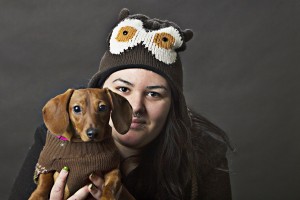
Homeless youth

(Photo courtesy Community Veterinary Outreach)

However, the team found that pets can make it difficult for their owners to obtain social services.

The study was published today in the journal Anthrozoӧs. 

Its findings mirror what researchers had been hearing anecdotally, said Prof. Jason Coe, Population Medicine.

“Those homeless youth with pets don’t want to risk incarceration or anything that would prevent them from being with their pets, so they are less likely to abuse alcohol or use hard drugs,” said Coe. He studies the human-animal bond and communication in veterinary care.

“We also found those without pets are three times more likely to be depressed, though we have not yet determined if this is directly relatable to having a pet.”

Among major challenges, he said, “Many shelters do not allow pets, so these youth may be limited in where they can sleep.”

Many youth are very open to discussing their struggles and issues with veterinarians, said lead author Michelle Lem, an OVC graduate.

She is the founder and director of Community Veterinary Outreach (CVO), a volunteer group providing mobile veterinary services to homeless people in Toronto, Hamilton, Kitchener-Waterloo, Guelph and Ottawa.

“We’re able to collaborate with public health and social workers as they attempt to reach these marginalized people, essentially using the human-animal bond and veterinary care as a gateway to provide accessible social support and healthcare,” Lem said.

“So many of these youth have lost trust in people, and the animal gives them unconditional love. They will do anything for their pets, which means they are less likely to commit potentially harmful acts, but also face more challenges with accessing housing, healthcare or addiction treatment services.”

Prof. Bill O’Grady, Sociology and Anthropology, studies youth homelessness and helped design the study.

Calling for pet-friendly shelters, he said “many homeless youth are prohibited from using services offered by the shelter system because they have pets, particularly dogs. There is an opportunity here to use this information when we’re developing services and plans for young people.”
Source:  University of Guelph media release

Odorology – the science behind training scent dogs

Dog training for scent tracking

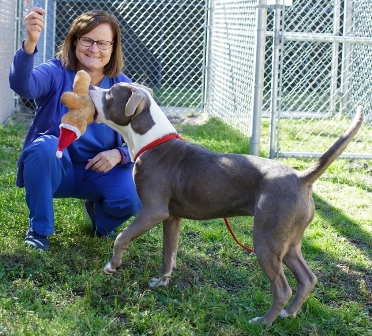
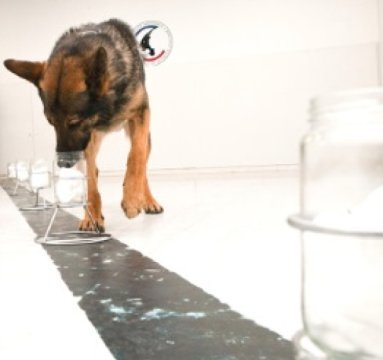
Cisko, one of the police dogs, during a scent detection test. The dog sniffs the reference scent and then smells a series of five jars containing human scents, one of which corresponds to the reference. If the dog recognizes the reference scent it lies down in front of the relevant jar; if the dog does not find a match, then it does not stop or lie down. Credit: © DGPN – SICOP

Odorology is a technique that uses specially-trained dogs to identify human scent. It is used in police investigations to establish that an individual has been at the scene of a crime. However, there is no international norm on how these dogs are trained. At the Centre de recherche en neurosciences de Lyon (CNRS/Université Claude Bernard Lyon 1/Inserm), researchers specializing in scents and their memorization have analyzed data, provided since 2003 by the Division of the Technical and Scientific Police (DTSP, Ecully) on dog performances in scent identification tasks.

Their results show that, at the end of a 24-month training program, the dogs are able to recognize the smell of an individual in 80-90% of cases and never mistake it for that of another. These findings validate the procedures that are currently in use and should convince the international community of the reliability of this method.

Odorology, or the science of smells, is a method of identifying human scents. It has been used in France since 2003 in police investigations to establish that an individual has been present at a crime scene. The method is based on the fact that each person has their own scent and relies on the powerful canine sense of smell (which can be 200 to 10,000 times more sensitive than that of a human being1). It involves a long period of dog training.

This technique consists in using a specially-trained dog to compare a human scent collected from an object found at a crime scene with scents from several people, including that of a suspect or victim. As the results of these tests are of critical importance for investigators, they need to be obtained through viable and reproducible methods. However, there are no internationally recognized norms for the training of these dogs or for their inclusion in investigations—hence the occasional reluctance to treat their evidence as proof. By analyzing results collected since 2003 at the Division of the Technical and Scientific Police (DTSP, Ecully), researchers from the Centre de recherche en neurosciences de Lyon have succeeded in demonstrating the viability of the technique used.

During basic training, the German and Belgian shepherd police dogs must learn to make the link between two scents from the same individual through the completion of increasingly complex tasks. By the end of this training, the dogs are able to carry out identification exercises during which they sniff a reference human scent and then compare it with five different human odors, one of which is the reference scent. When a dog matches the scent in the jar to the reference one (which it shows by lying down in front of the correct jar) it is rewarded with a treat or a game. The human odors may consist of traces collected from an object that someone has touched or of a scent collected directly from a person.

The analysis of the data obtained with the 13 DTSP dogs since 2003 shows that after they have learned the task’s principles, 24 months of regular training is necessary for stable and optimal performances. At the end of the first twelve months, the dogs no longer made any recognition errors, i.e., they did not confuse the scent of one person with that of another. Furthermore, their olfactory sensitivity increased significantly over the training period: on average, after two years, the dogs managed to recognize two scents from the same person in 85% of cases. The remaining 15% of cases in which no match was obtained, were mostly the result of poor scent sampling rather than poor recognition.

The researchers also found that German shepherds were better than Belgian shepherds.

At the end of their basic training, the dogs are able to participate in criminal cases and receive continuing training throughout their lives. In practice, each identification test is carried out by at least two dogs. Additionally, each dog performs at least two tests with the same panel of scents: the collected scent is presented either as a sample to be sniffed at the start of the task, or in one of the jars that the dog sniffs successively. Between 2003 and 2016, odorology was used in 522 cases at the SDPTS and helped to resolve 162 cases.

In these criminal cases, the sampled scents were only a few hours or days old. The researchers now want to study how the dogs perform on older scents. Scent samples can in fact be stored in scent libraries over several years.

Canine compulsive disorder genetics

Research led by investigators in veterinary and human medicine has identified genetic pathways that exacerbate severity of canine compulsive disorder in Doberman Pinschers, a discovery that could lead to better therapies for obsessive compulsive disorder (OCD) in people.  The discovery appears in the International Journal of Applied Research in Veterinary Medicine.

OLYMPUS DIGITAL CAMERA

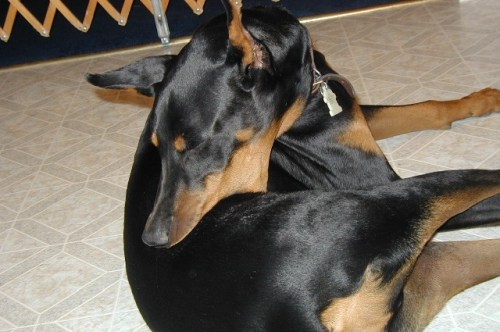
A Doberman pinscher flank sucking, an example of canine compulsive behavior

“Dogs naturally suffer complex diseases, including mental disorders that are similar to those in humans. Among those is canine compulsive disorder (CCD), the counterpart to human obsessive compulsive disorder (OCD),” says the study’s first and corresponding author Nicholas Dodman, BVMS, DACVA, DACVB, professor in clinical sciences and section head and program director of animal behavior at Cummings School of Veterinary Medicine at Tufts University.

OCD is one of the world’s most common neuropsychiatric disorders, affecting an estimated 1 to 3 percent of people and listed by the World Health Organization as among the 20 most disabling diseases. OCD is often characterized by distressing thoughts and time-consuming, repetitive behaviors, while canine compulsions may include repetitive tail chasing, excessive grooming and flank and blanket sucking. Current OCD therapies are not as effective as they could be; medicinal treatment benefits only about half of all human patients.

No previously recorded study in humans or dogs has addressed the factors that drive severity in OCD and CCD.

“Genomic research on human neuropsychiatric disorders can be challenging due to the genetic heterogeneity of disease in humans,” says neurologist Edward Ginns, MD, PhD, professor of psychiatry, neurology, pediatrics and clinical pathology, and director, program in medical genetics at the University of Massachusetts Medical School and a co-author on the new study. “Canine compulsive disorder shares behavioral hallmarks, pharmacological responsiveness, and brain structural homology with human OCD, and thus is expected to be an important animal model.”

The research team compared whole genome sequencing of 70 Doberman pinschers to search for inherited factors that exacerbate CCD. Researchers identified two loci on chromosomes that were strongly correlated with severe CCD, as well as a third locus that showed evidence of association.

The locus most strongly associated with severe CCD was found on chromosome 34 – a region containing three serotonin receptor genes.

“This is particularly significant because drugs that work on the serotonin system are the mainstay treatment for OCD in humans, which demonstrates further correlation between the human and animal models,” says Dodman.

The second locus significantly correlated with severe CCD was on chromosome 11, the same chromosome that contains a gene thought to increase the risk of schizophrenia in humans. This discovery, along with suggestive evidence found on chromosome 16 linking CCD to stress tolerance, may also be relevant to the pathophysiology of OCD, according to the study authors. “Comparative genomics is a particularly attractive approach to reveal the molecular underpinnings of disease in inbred animals with the hope of gaining new insights into these diseases in dogs and humans,” says Ginns.

“If the canine construct is fully accepted by other OCD researchers, this spontaneously-occurring model of the condition in humans, right down to the biological pathways involved, could help point the way to novel and more effective treatments for such a debilitating condition,” Dodman says.

Source:  Tufts Now media release

How dogs sense the Earth’s magnetic field

The perception of the Earth’s magnetic field is used by many animal species for orientation and navigation. A magnetic sense is found in some insects, fish, reptiles, birds and mammals, whereas humans do not appear to be able to perceive the Earth’s magnetic field.

The magnetic sense in migratory birds has been studied in considerable detail: unlike a boy scout’s compass, which shows the compass direction, a bird’s compass recognizes the inclination of the magnetic field lines relative to the Earth’s surface. Surprisingly, this inclination compass in birds is linked to the visual system as the magnetic field activates the light-sensitive molecule cryptochrome 1a in the retina of the bird’s eye. Cryptochrome 1a is located in the blue- to UV-sensitive cone photoreceptors and only reacts to the magnetic field if it is simultaneously excited by light.

dogs and magnetic field

Dogs and some primates can sense the earth magnetic field with the help of molecules in their eyes. © L. Peichl

Cryptochrome-distribution among mammals

Together with colleagues from the Ludwig-Maximilians-University Munich, the Goethe University Frankfurt, and the Universities of Duisburg-Essen and Göttingen, Christine Nießner and Leo Peichl from the Max Planck Institute for Brain Research in Frankfurt investigated the presence of cryptochrome 1 in the retinas of 90 species of mammal. Mammalian cryptochrome 1 is the equivalent of bird cryptochrome 1a. With the help of antibodies against the light-activated form of the molecule, the scientists found cryptochrome 1 only in a few species from the carnivore and primate groups.

As is the case in birds, it is found in the blue-sensitive cones in these animals. The molecule is present in dog-like carnivores such as dogs, wolves, bears, foxes and badgers, but is not found in cat-like carnivores such as cats, lions and tigers.

The active cryptochrome 1 is found in the light-sensitive outer segments of the cone cells. It is therefore unlikely that it controls the animals’ circadian rhythms from there, as this control occurs in the cell nucleus which is located a considerable distance away. It is also unlikely that cryptochrome 1 acts as an additional visual pigment for colour perception. The researchers thus suspect that some mammals may use the cryptochrome 1 to perceive the Earth’s magnetic field. In evolutionary terms, the blue cones in mammals correspond to the blue- to UV-sensitive cones in birds. It is therefore entirely possible that the cryptochrome 1 in mammals has a comparable function.

Observations of foxes, dogs and even humans actually indicate that they can perceive the Earth’s magnetic field. For example, foxes are more successful at catching mice when they pounce on them in a north-east direction. “Nevertheless, we were very surprised to find active cryptochrome 1 in the cone cells of only two mammalian groups, as species whose cones do not contain active cryptochrome 1, for example some rodents and bats, also react to the magnetic field,” says Christine Nießner.

Many fundamental questions remain open in the research on the magnetic sense. Future studies will have to reveal whether the cryptochrome 1 in the blue cones is also part of a magnetic sense in mammals or whether it fulfils other tasks in the retina.

Source:  Max-Planck Institute for Brain Research media release

Inhibitory control in dogs

Inhibitory control may be an indicator of a dog’s ability to solve a problem, according to a study published February 10, 2016 in the open-access journal PLOS ONE.

Playing with objects may help dogs learn about their environment, similar to how it helps human infants. Scientists think dogs’ inhibitory control, or the ability to inhibit or regulate attentional or emotional responses, may play a role in their individual differences in physical problem-solving task performance.

Wait for it border collie

A Border Collie during the wait-for-treat task.Credit Clever Dog Lab/Vetmeduni Vienna

The authors of this study investigated the effects of pet dogs’ experiences interacting with the physical environment and their individual differences in inhibitory control on their physical problem-solving ability. A cohort of ~40 pet Border Collie dogs were assigned to three different conditions, and tested in an intensive series of inhibitory control tasks, such as wait-for-treat, and cognitive measures, such as size constancy over a period of 18 months.

The authors found that differences in previous object-related experiences do not explain variability in performance in problem solving tasks. Depending on the cognitive task, inhibitory control had a positive or a negative effect on performance and turned out to be the best predictors of individual performance in the different tasks.

The authors think that dogs likely do not transfer knowledge about physical rules from one physical problem-solving task to another, but rather approach each task as a novel problem. In addition, individual performance in these tasks may be influenced by the subject’s level of inhibitory control. The authors suggest that studying the interplay between inhibitory control and problem-solving performance may make an important contribution to our understanding of individual and species differences in physical problem-solving performance.

Journal article may be found here.

Source:  EurekAlert! media release

The mis-labelling of pit bulls

DNA results show that shelter workers are often mistaken when they label a dog as a pit bull, with potentially devastating consequences for the dogs, a new University of Florida study has found.

DNA pit bull study

Dr. Julie Levy holds a dog currently up for adoption at the Alachua County Animal Services facility in Gainesville, Florida

“Animal shelter staff and veterinarians are frequently expected to guess the breed of dogs based on appearance alone,” said Julie Levy, D.V.M., Ph.D., a professor of shelter medicine at the UF College of Veterinary Medicine and the lead author of a study published recently in The Veterinary Journal.

“Unlike many other things people can’t quite define but ‘know when they see it,’ identification of dogs as pit bulls can trigger an array of negative consequences, from the loss of housing, to being seized by animal control, to the taking of the dog’s life,” she said. “In the high-stakes world of animal shelters, a dog’s life might depend on a potential adopter’s momentary glimpse and assumptions about its suitability as a pet. If the shelter staff has labeled the dog as a pit bull, its chances for adoption automatically go down in many shelters.”

The past few decades have brought an increase in ownership restrictions on breeds including pit bulls and dogs that resemble them. The restrictions are based on assumptions that certain breeds are inherently dangerous, that such dogs can be reliably identified and that the restrictions will improve public safety, the study states.

The study focused on how accurately shelter staff identified dogs believed to be pit bulls. ‘Pit bull’ is not a recognized breed, but a term applied to dogs derived from the heritage breeds American Staffordshire terrier or Staffordshire bull terrier. The purebred American pit bull terrier is also derived from these breeds and is often included in the loose definition of ‘pit bull.’

The research team evaluated breed assessments of 120 dogs made by 16 shelter staff members, including four veterinarians, at four shelters. These staff members all had at least three years of experience working in a shelter environment. The researchers then took blood samples from the dogs, developed DNA profiles for each animal and compared the DNA findings against the staff’s initial assessments.

“We found that different shelter staffers who evaluated the same dogs at the same time had only a moderate level of agreement among themselves,” Levy said. Results of the study also showed that while limitations in available DNA profiles make absolute breed identification problematic, when visual identification was compared with DNA test results, the assessors in the study fared even worse.

Dogs with pit bull heritage breed DNA were identified only 33 to 75 percent of the time, depending on which of the staff members was judging them. Conversely, dogs lacking any genetic evidence of relevant breeds were labeled as pit bull-type dogs from 0 to 48 percent of the time, the researchers reported.

“Essentially we found that the marked lack of agreement observed among shelter staff members in categorizing the breeds of shelter dogs illustrates that reliable inclusion or exclusion of dogs as ‘pit bulls’ is not possible, even by experts,” Levy said. “These results raise difficult questions because shelter workers and veterinarians are expected to determine the breeds of dogs in their facilities on a daily basis.

Additionally, they are often called on as experts as to whether a dog’s breed will trigger confiscation or regulatory action. The stakes for these dogs and their owners are in many cases very high.”

Dog breeds contain many genetic traits and variants, and the behavior of any individual dog is impossible to predict based on possible combinations.

“A dog’s physical appearance cannot tell observers anything about its behavior. Even dogs of similar appearance and the same breed often have diverse behavioral traits in the same way that human siblings often have very different personalities,”Levy said.

Even though most pet dogs are of unknown mixed breeds, there is a natural inclination among pet owners to speculate on what their dog’s breed heritage might be, the authors said.

“This has fueled an entire industry of pet dog DNA analysis,” Levy said. “These tests are fun, but they won’t help predict behavior or health traits. Shelters and veterinary clinics are better off entering ‘mixed breed’ or ‘unknown’ in their records unless the actual pedigrees are available.”

As for legal restrictions on dogs based on their appearance, Levy said public safety would be better served by reducing risk factors for dog bites, such as supervising children, recognizing canine body language, avoiding an unfamiliar dog in its territory, neutering dogs and raising puppies to be social companions.

Source:  University of Florida media release

See also my 2013 post on Visual identification of breed – one reason why BSL doesn’t work

Mensa dogs

Dogs have measurable IQs, like people, suggests new research from the London School of Economics and Political Science (LSE) and the University of Edinburgh.

The research, published in the journal Intelligence, looked at whether dog intelligence is structured in a similar way as in humans. When IQ, or ‘general intelligence’, is tested in people, individuals tend to perform comparably across different types of cognitive tasks –  those who do well in one type of task, tend to do well in others.

Dog intelligence test

The researchers created a proto-type dog ‘IQ test’ which they used to assess the intelligence of 68 working border collies. These tests included: navigation, tested by timing how long it took the dogs to get food that was behind different types of barriers; assessing whether they could tell the difference between quantities of food and; their ability to follow a human pointing gesture to an object.

The researchers found that dogs that did well on one test tended be better at the other tests. Furthermore, dogs that did tests faster were likely to do them more accurately.

Dr Rosalind Arden, a Research Associate at LSE, said: “Just as people vary in their problem solving abilities, so do dogs, even within one breed. This is significant because in humans there is a small but measurable tendency for people who are brighter to be healthier and live longer.  So if, as our research suggests, dog intelligence is structured similarly to ours, studying a species that doesn’t smoke, drink, use recreational drugs and does not have large differences in education and income, may help us understand this link between intelligence and health better.

“In addition, dogs are one of the few animals that reproduce many of the key features of dementia, so understanding their cognitive abilities could be valuable in helping us to understand the causes this disorder in humans and possibly test treatments for it.”

The suite of tests was conducted in under an hour per dog, which is comparable with the time it takes a person to do an IQ-type test.  Previous research on canine cognitive abilities has taken much longer to administer.

Dr Mark Adams, Research Fellow at the University of Edinburgh, said: “This is only a first step, but we are aiming to create a dog IQ test that is reliable, valid and can be administered quickly.  Such a test could rapidly improve our understanding of the connection between dog intelligence, health, even lifespan, and be the foundation of ‘dognitive epidemiology’

“Dogs are excellent for this kind of work because they are willing to participate and seem to enjoy taking part.”

In order to get a large sample of dogs from similar backgrounds the researchers recruited working border collies, which meant that there weren’t big differences in how they were raised.

Source:  London School of Economics and Political Science media release

Personal comment:  Dogs must be a popular research topic if even the London School of Economics is getting into the act!

Dogs – part of the coping for kids of military families

Janelle Casson says it never gets any easier when her husband deploys as a U.S. Army combat engineer. But after four tours of duty in the last 12 years—assignments ranging from a year to 15 months each in Iraq—she and her four children eventually fall into a well-learned routine. “You have a muscle memory of how it feels to be without him and what we all need to do to keep moving forward,” she says.

Even Ebony, the family’s 9-year-old Scottish terrier-schnauzer mix, takes the deployments hard, moping about the house and keeping to herself. “It takes a couple of weeks for her to come to terms with the fact that dad is not here,” says Casson, of Killeen, Texas. Ebony inevitably forgoes her normal bed in the master bedroom to seek comfort sleeping alongside one of the children.

Terrier Schnauzer mix

This article didn’t come with a photograph of Ebony, but I imagine she looks something like this.

Fourteen-year-old Elijah, the oldest, is the main support for the dog, which joined the family when the boy was 5. “He’s been Ebony’s primary caretaker” whenever his father is away, says Casson. “He feeds her and takes her on walks. He just fell into the role of taking care of her, much the way [many military] kids fall into other typically dad roles when they’re gone.”

Ebony is probably helping Elijah, too. Recent Tufts University research finds that a strong relationship with a pet is associated with better coping skills in children who are managing the stress of having a parent deployed. The study came out of the new Tufts Institute for Human-Animal Interaction (TIHAI), which seeks to discover exactly how animals help us better handle physical and emotional stress, commit to fitness and educational goals, overcome physical disabilities and recover from psychological trauma.

Animals have been a part of our lives for thousands of years. We started keeping company with them as soon as we realized that dogs could help us hunt, cats would exterminate the rodents pilfering our grain stores and horses offered transportation.

But that’s not the whole story. Why do we continue to embrace these domesticated animals like members of our family, even though they no longer fulfill our pragmatic needs? The new Tufts institute, launched in 2015, is examining the importance of our relationships with other species. But instead of working in the traditional silos of fields such as veterinary medicine, human medicine and psychology, TIHAI draws on faculty, staff and students from myriad areas of expertise.

“We bring together all these different disciplines to put some sound evidence behind what we intuitively know is true: animals can enhance our lives in so many ways,” says Lisa Freeman, J86, V91, N96, a professor at Cummings School of Veterinary Medicine who directs the Institute.

Source:  TuftsNow

Emotions matter: a dog’s view of facial expressions

A recent study from the University of Helsinki shows that the social gazing behavior of domestic dogs resembles that of humans: dogs view facial expressions systematically, preferring eyes. In addition, the facial expression alters their viewing behavior, especially in the face of threat. The study was published in the science journal PLOS ONE.

The study uused eye gaze tracking to demonstrate how dogs view the emotional expressions of dog and human faces. Dogs looked first at the eye region and generally examined eyes longer than nose or mouth areas. Species-specific characteristics of certain expressions attracted their attention, for example the mouths of threatening dogs. However, dogs appeared to base their perception of facial expressions on the whole face.

Threatening faces evoked attentional bias, which may be based on an evolutionary adaptive mechanism: the sensitivity to detect and avoid threats represents a survival advantage.

“The tolerant behavior strategy of dogs toward humans may partially explain the results. Domestication may have equipped dogs with a sensitivity to detect the threat signals of humans and respond them with pronounced appeasement signals”, says researcher Sanni Somppi from the University of Helsinki.

This is the first evidence of emotion-related gaze patterns in non-primates. Already 150 years ago Charles Darwin proposed that the analogies in the form and function of human and non-human animal emotional expressions suggest shared evolutionary roots.  Recent findings provide modern scientific support for Darwin’s old argument.

Facial expressions research

Dogs view facial expressions on a monitor

A total of 31 dogs of 13 different breeds attended the study. Prior to the experiment the dogs were clicker-trained to stay still in front of a monitor without being cued or restrained.

Source:  AlphaGalileo media release

I have previously blogged about other University of Helsinki research.  These posts include:


Treating heart disorders in dogs

A novel therapy tested by University of Guelph scientists for treating a fatal heart disorder in dogs might ultimately help in diagnosing and treating heart disease in humans.

Ontario Veterinary College (OVC) professors Glen Pyle and Lynne O’Sullivan have also identified potential causes of inherited dilated cardiomyopathy (DCM) or “weak heart.”

The groundbreaking study was published this month in the American Journal of Physiology.

Cardiology exam

“The cardiovascular systems of dogs and people are very similar,” said Pyle, a professor in OVC’s Department of Biomedical Sciences and a member of U of G’s Centre for Cardiovascular Investigations.

“It allows us to do comparative investigations that can advance understanding of this fatal condition.”

In both dogs and people with DCM, the weakened heart muscle becomes unable to pump blood around the body. The cause of the problem is often unknown, although it’s common to involve genetics.

Researchers suspect malfunctioning muscle proteins cause the heart to weaken, allowing it to dilate like an overfilled balloon.

DCM is the second leading cause of heart failure in dogs, and it’s especially common in large breeds. Dogs typically show no symptoms until the disease is well-advanced.

The condition is often inherited; up to 60 per cent of Doberman Pinschers are affected during their lifetime.  Other breeds such as Irish wolfhounds and Great Danes also have high rates.

In people, 30 to 50 per cent of DCM cases are hereditary.

The end result of DCM is congestive heart failure. While medical advances have reduced deaths from congestive heart failure by 40 per cent in the past decade, the condition still afflicts hundreds of thousands of Canadians, and the five-year mortality rate remains high.

Aging populations worldwide are likely to cause dramatic increases in the rate of heart failure in the upcoming decades, Pyle said.

“The cause of a substantial percentage of DCM cases remains unknown,” he said.  “This is why it’s urgent to develop novel agents that can improve heart function.”

For the study, Pyle and O’Sullivan, a clinical cardiologist in OVC’s Health Sciences Centre, worked with researchers at the University of Washington to test a novel therapy in diseased heart cells.

 The therapy involves introducing a molecule involved in muscle contraction. In heart cells from dogs with DCM, it restored normal function. The next step is developing a gene therapy that would allow the molecule to be produced in heart muscle cells in patients with DCM.

“This suggests it’s a promising therapeutic approach worth further investigating for the treatment of DCM,” said O’Sullivan. One of 10 board-certified veterinary cardiologists in Canada, she runs OVC’s Doberman DCM screening program.

The researchers also discovered some problems in the heart muscle that likely contribute to DCM.  “This may shed light on the mechanical impairment in failing hearts,” Pyle said.

The Guelph scientists are also working with researchers in Finland on DCM genetics and proteins. That work might lead to development of therapies for targeting specific proteins, said Pyle.

Both researchers belong to U of G’s Centre for Cardiovascular Investigations, one of a few centres worldwide studying heart disease from single molecules to clinical applications.

Source:  University of Guelph media release