Category Archives: special dogs and awards

Trained dogs most efficient in monitoring hermit beetle larvae

Hermit beetles (Osmoderma eremita) are considered at risk, but in order to be effectively protected, they first need to be identified and consistently monitored.

However, this turns out to be a tough task, given that the species is only present for a short time as an adult while it is also extremely elusive. On the other hand, although it remains as a larva for up to three years, once again, it is difficult to spot as it hides inside hollow trees living in the wood mould.

The standard method for detecting hermit beetles involves wood mould sampling which is not only arguable in its overall efficiency, but is also unreasonably time-consuming and quite damaging to both the species communities and their habitat.

Searching for an alternative, Italian scientists, led by Dr. Fabio Mosconi of the Italian Agricultural Research Council and Sapienza University of Rome, suggested that trained dogs might be more successful. Such conservation detection dogs are currently being widely deployed when searching for mammals, reptiles and birds and have already been tested for locating a number of invertebrates.

In their paper, published in the open access journal Nature Conservation, the team tested a training programme before comparing it with the traditional method. The study has been conducted as part of the MIPP Project aimed at the development of non-invasive methods for monitoring selected saproxylic beetles.

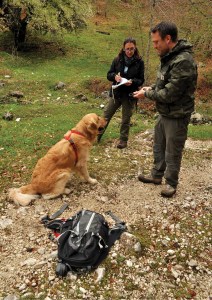
Starting from the choice of a dog, the scientists carefully made their choice from a number of individuals as well as breeds. They settled on a Golden Retriever – a breed widely used in searches for biological targets. As for the particular dog, they chose Teseo – a six-month pup coming from a line with a strong background in locating illegally imported animals and animal parts.

Conservation dog

The training of Teseo began with the assignment of a trainer/handler and some basic obedience training, involving teaching simple commands, search games and agility activities.

The next step was introducing the dog to various types of odours, since the hermit beetles might give off a different odour dependent on their habitats, such as the presence of fungi, sawdust and other organic materials. Immediately after detecting the target smell, the animal would be given a reward such as food or play, so that its behaviour could be positively reinforced.

Then, the dog was taught to differentiate between different odours. The researchers presented a number of targets to the animal where it needed to select the right one. At this stage, the dog was only rewarded for correct signalling. Should the dog be distant from the trainer, a special clicker was used to ‘announce’ the treat in advance. The researchers noted that it was at this stage when the relationship between the dog and the handler needed to be really strong, so that the training was as efficient as possible.

In conclusion, the scientists reported a significantly higher probability (73%) of Teseo successfully detecting a tree colonised by the larvae, as opposed to two people conducting the traditional wood mould sampling (34-50%). Moreover, the dog would cover a particular area in a very short time when compared to the traditional method – on average it would take it 6 minutes and 50 seconds to examine the whole tree, while the operators using wood mould sampling would need about 80 minutes. Additionally, searching for larvae with dogs poses no risk to either the insects or other organisms that might be living in the trees.

Furthermore, the researchers provided a list of precautions in order to increase the efficiency when searching for beetle larvae with the help of trained dogs. The list included familiarising the dog with the survey site beforehand, opting for the part of the day with the most favourable atmospheric conditions and carefully monitoring the dog for signs of fatigue.

“A conservation detection dog is a powerful tool for locating O. eremita and these results can be useful for other related European species of Osmoderma“, commented the scientists.

“In fact, the use of a trained dog is a fast, accurate and non-invasive method that allows the detection of a target species in an area and to identify the colonised trees; this means that a conservation detection dog can locate new populations, can confirm the presence of the target species and can assist in the mapping of colonised trees in an area, accurately and efficiently.”

Source:  Pensoft Blog

Cena’s story

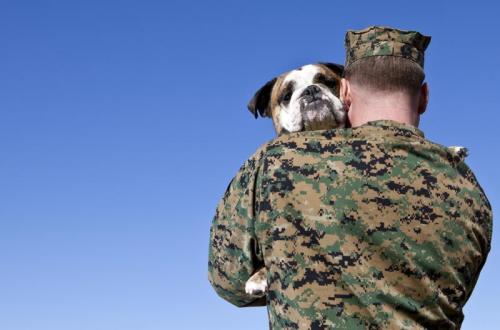
Last month, a Marine veteran said goodbye to his canine companion, Cena, who was suffering from bone cancer.

Giving Cena one last ride became a community event that Lance Corporal Jeff DeYoung hopes will help raise the profile of the dogs that serve the military, and why they deserve care.

This is their story.

Kathleen Crisley, specialist in dog massage, rehabilitation and nutrition/food therapy, The Balanced Dog, Christchurch, New Zealand

Successful guide dogs have ‘tough love’ moms

Much has been written on the pitfalls of being a “helicopter parent,” one who insulates children from adversity rather than encouraging their independence.

A new study seems to back up this finding — in dogs. Researchers showed that doting mothers seem to handicap their puppies, in this case reducing their likelihood of successfully completing a training program to become guide dogs.

Mother dogs nursing style

Mother dogs’ nursing style is one factor that seems to predict their offspring’s success in guide dog training. (Photo courtesy of The Seeing Eye)

The study, published in Proceedings of the National Academy of Sciences, was conducted at The Seeing Eye, an organization in Morristown, New Jersey, that breeds, raises and trains dogs to guide visually impaired people.

“You need your mom, but moms that are too attentive don’t give their puppies a chance to respond to small challenges on their own,” said lead study author Emily Bray, a postdoctoral researcher in the Arizona Canine Cognition Center at the University of Arizona’s School of Anthropology. “Puppies need opportunities to deal with obstacles without their mom always being there.”

Early interactions between puppies and their mothers seem to have lasting effects.

“These puppies were with their mom for only five weeks, and it’s having an effect on their success two years later,” Bray said. “It seems that puppies need to learn how to deal with small challenges at this early age, and if they don’t, it hurts them later.”

Bray’s results contribute to an understanding of the long-term effects of maternal style and suggest ways that guide-dog-training organizations might better identify dogs who are more likely to succeed.

Observing Mother-Pup Interactions

Scientists have long been interested in the impact of early-life experiences on adult behavior, studying the phenomenon in rodents, primates and people. But hardly any studies had been done in dogs.

Guide dogs presented a useful group to study for several reasons. First, at The Seeing Eye, many puppies are raised in a single location under fairly controlled conditions. Second, the dogs have a clear measure of success: Either they graduate from the program to become a working guide dog or they are released. And third, success as a guide dog isn’t easy; the dog must be willing and able to navigate a complex and often-unpredictable environment while remaining obedient and attentive to its owner.

To gather information about the puppies’ early-life experiences, Bray and a team of undergraduate research assistants essentially embedded themselves at The Seeing Eye’s breeding facility, taking video and closely observing 23 mothers and their 98 puppies for their first five weeks of life.

“We wanted to know if we could differentiate the moms based on how they interacted with their puppies,” Bray said. “We documented things like her nursing position, how much time she spent looking away from the puppies and how much time she spent in close proximity to her puppies or licking and grooming them.”

Analysis of the data revealed differences across the mothers, with some being particularly attentive and others less so.

When the researchers tracked the puppies a couple of years down the line, they found that those with mothers that were more attentive were less likely to graduate from The Seeing Eye’s training program to become guide dogs. In particular, those dogs whose mothers nursed more often lying down, as opposed to sitting or standing up, were less likely to succeed.

“If a mother is lying on her stomach, the puppies basically have free access to milk, but if the mother is standing up, then the puppies have to work to get it,” said study co-author Robert Seyfarth, a psychology professor at the University of Pennsylvania. “A hypothesis might be that you have to provide your offspring with minor obstacles that they can overcome for them to succeed later in life because, as we know, life as an adult involves obstacles.”

Cognition, Temperament Also Predict Success

The study also found that dogs’ cognition and temperament were associated with program success or failure.

The researchers conducted a second part of the study after the puppies had gone to live with foster families and then returned to The Seeing Eye for specific guide-dog training. The dogs — at this point young adults at 14 to 17 months old — were given tests to measure their cognition and temperament. A test of cognitive problem-solving skills, for example, involved a game in which the dog has to perform a multistep task to reach a treat. Tests of temperament included observing the dogs’ reactions, such as how long they took to bark at an umbrella being opened or how they reacted when they entered a room with a mechanical cat they had never seen before.

“We saw that some dogs were calm and collected and solved problems quickly, while others were more reactive and perseverated at the problem-solving tasks,” Bray said.

Perhaps unsurprisingly, dogs that did well at the problem-solving tasks and took longer to bark at novel objects were more likely to succeed in the guide-dog-training program.

Although Bray’s work underscores the connection between maternal behavior and offspring’s behavior later in life, further research is needed to tease out exactly why the attentive mothers were more likely to have puppies that were released from the program, and whether or not genetics could be a factor.

“With mothering, it seems like it’s a delicate balance,” Bray said. “It’s easy to be like, ‘Oh, smothering moms are the worst,’ but we aren’t exactly sure of the mechanisms yet and we don’t want to tip too far in the other direction, either.”

Source  University of Arizona media release


The truffle dog

In Canterbury (New Zealand), we are halfway through the third annual Truffle Festival.

This is a celebration of the gourmet fungus known as truffles and of course the food and wine that go with these delicacies.  You can think of truffles as a sort of underground mushroom that only grows in certain soils.

The alkaline soils of Waipara and surrounding areas of North Canterbury make ideal growing media for truffles.

Hard at work in Waipara is Rosie the Beagle who lives at Limestone Hills.  Back in 2013, I visited the farm and watched Rosie in action – she’s a truffle dog – trained to sniff out the truffles so they can be harvested.

Good girl, Rosie!

Rosie the Beagle 2013

Kathleen Crisley, specialist in dog massage, rehabilitation and nutrition/food therapy, The Balanced Dog, Christchurch, New Zealand


Training of explosive-detecting dogs

With a sense of smell much greater than humans, dogs are considered the gold standard for explosive detection in many situations. But that doesn’t mean there isn’t room for improvement.

In a study appearing in the journal Analytical Chemistry, scientists report on a new, more rigorous approach to training dogs and their handlers based on real-time analysis of what canines actually smell when they are exposed to explosive materials.

Vapor analysis training

New training techniques based on real-time analysis of what a dog smells could improve explosives detection. Credit: wellphoto/Shutterstock.com

Explosives are often used in terrorist attacks. Dogs trained to detect odors emanating from TNT, nitroglycerin and other explosives are a crucial part of the first-line defense against these incidents. But delivering low-concentration vapor during training sessions is a challenging task. Cross-contamination of training materials with samples from different explosives can skew results and confuse both dogs and handlers. To address these concerns, Ta-Hsuan Ong and colleagues sought to better understand the components within explosive odors that cue a dog’s reaction.

The researchers developed a real-time vapor analysis mass spectrometer to more accurately measure the vapor plumes from explosives that trigger a canine response.

In field trials, they used the device and found that some mistakes the dogs made were indeed correct identifications. For example, some “blanks” were used that were ostensibly prepared without explosive material, but the dogs indicated an explosive was present. When the researchers used the mass spectrometer on such blanks, they found evidence of explosive vapors, indicating cross contamination occurred or other interferents were present.

Based on these findings, the researchers suggest that use of real-time vapor analysis could help differentiate canine mistakes from cross contamination and other issues during training.

Source:  American Chemical Society

Quantifying the Effects of Service Dogs for Veterans with PTSD

veteran with dog


Researchers from the Purdue University College of Veterinary Medicine’s Center for the Human Animal Bond will analyze the influence service dogs have on the lives of military veterans suffering from post-traumatic stress disorder (PTSD) in a unique clinical trial.

According to the United States Veterans Administration, 22 veterans commit suicide each day, and at least 40 percent have been diagnosed with PTSD. The rate could be even higher, as many cases of PTSD go undiagnosed.

Previous studies have suggested that individuals who bond with their pet dogs exhibit elevated levels of oxytocin – sometimes referred to as the “cuddle hormone” because it sparks emotional responses that contribute to relaxation and trust. Additionally, the National Center for PTSD claims dogs can encourage veterans to communicate more through commands and training, and prompt them to spend more time outdoors and meet new people.

These benefits support anecdotal reports that show an increase in the prevalence of service dogs for individuals with PTSD, but scientific evidence examining this growing trend and its effects on PTSD patients is still lacking.

“Many veterans are increasingly seeking complementary interventions for PTSD, including service dogs,” stated Maggie O’Haire, lead researcher and assistant professor of human-animal interaction at Purdue. “Yet, even with the well-meaning intentions of service dog organizations that are working to meet the demand, our systematic review of scientific literature confirms a lack of published, empirical research on the effects that service dogs have on veterans and their spouses.”

To help carry out the study, the research team has partnered with K9s for Warriors – one of the nation’s leading providers of service dogs to military vets suffering from a variety of conditions including PTSD, traumatic brain injuries, or sexual trauma as a result of service post-9/11.

The team hopes to determine what sort of PTSD symptom changes veterans may experience as a result of having a service dog, as well as any effects on social functioning and physiological biomarkers.

According to a university release, standardized survey instruments and objective measures of physiology will be used to track stress and functioning. The researchers will also use a novel ecological momentary assessment protocol to capture the role and function of the dogs in everyday life.

The results will be the first evidence-based data to be published that quantitatively identifies the roles and effects of service dogs for military veterans with PTSD.

The study is unique because it applies research methodology and evidence-based science to an area that has typically relied on emotion, according to O’Haire.

“Without scientifically sound studies that establish proof-of-concept for the therapeutic efficacy of PTSD service dogs, this animal-assisted intervention strategy will continue to be minimized as an unsupported and potentially unsound practice, despite anecdotal reports that the dogs may have a significant impact,” added O’Haire.

Source:  www.laboratoryequipment.com

Improving the lives of kids with disabilities – one family dog at a time

The family dog could serve as a partner and ally in efforts to help children with disabilities incorporate more physical activity into their daily lives, a new study from Oregon State University indicates.

In a case study of one 10-year-old boy with cerebral palsy and his family’s dog, researchers found the intervention program led to a wide range of improvements for the child, including physical activity as well as motor skills, quality of life and human-animal interactions.

“These initial findings indicate that we can improve the quality of life for children with disabilities, and we can get them to be more active,” said Megan MacDonald, an assistant professor in OSU’s College of Public Health and Human Sciences and corresponding author on the study. “And in this case, both are happening simultaneously, which is fantastic.”

CP-kid-and-dog-2-e1402346844838

A boy with cerebral palsy and a therapy dog (not the dog in this study) Photo courtesy of: http://www.michigancerebralpalsyattorneys.com

The researchers detailed the child’s experience in the adapted physical activity intervention program in a case study just published in the journal Animals.

Children with physical disabilities such as cerebral palsy spend significantly less time participating in physical activity compared to their peers and are considered a health disparity group, meaning they generally face more health concerns than their peers.

Researchers designed an adapted physical activity, animal-assisted intervention where the family dog would serve as a partner with the child in physical activities designed to help improve overall physical activity, motor skills and quality of life. The family dog is a good choice for this type of intervention because the animal is already known to the child and there is an existing relationship – and both the dog and the child will benefit from the activities, MacDonald said.

Researchers took initial assessments of the child’s daily physical activity, motor skills and quality of life before starting the eight-week intervention. A veterinarian examined the dog’s fitness for participation and the human-animal interaction between the dog, a year-old Pomeranian, and the child was also assessed.

Then the pair began the eight-week intervention, which included a supervised physical activity program once a week for 60 minutes and participation in activities such as brushing the dog with each hand; playing fetch and alternating hands; balancing on a wobble board; and marching on a balancing disc.

“The dog would also balance on the wobble board, so it became a challenge for the child – if the dog can do it, I can, too,” MacDonald said. “It was so cool to see the relationship between the child and the dog evolve over time. They develop a partnership and the activities become more fun and challenging for the child. It becomes, in part, about the dog and the responsibility of taking care of it.”

The dog and the child also had “homework,” which included brushing the dog, playing fetch and going on daily walks. The child wore an accelerometer to measure physical activity levels at home.

At the conclusion of the intervention, researchers re-assessed and found that the child’s quality of life had increased significantly in several areas, including emotional, social and physical health, as assessed by the child as well as the parent. In addition, the child’s sedentary behavior decreased and time spent on moderate to vigorous activity increased dramatically.

“The findings so far are very encouraging,” MacDonald said. “There’s a chance down the road we could be encouraging families to adopt a dog for the public health benefits. How cool would that be?” 

The researchers also found that the relationship between the dog and the child improved over the course of the therapy as they worked together on various tasks. The dog’s prosocial, or positive, behavior toward the child is a sign of wellbeing for both members of the team, said Udell, who is director of the Human-Animal Interaction Lab at OSU.

“A closer child-dog bond increases the likelihood of lasting emotional benefits and may also facilitate long-term joint activity at home, such as taking walks, simply because it is enjoyable for all involved,” she said.

This study is one of the first to evaluate how a dog’s behavior and wellbeing are affected by their participation in animal-assisted therapy, Udell noted. From an animal welfare standpoint, it is promising that the dog’s behavior and performance on cognitive and physical tasks improved alongside the child’s.

Though the case study features only one child, the research team recruited several families with children with disabilities and their dogs to participate in the larger project, which was designed in part to test the design and methodology of the experiment and determine if it could be implemented on a larger scale.

Based on the initial results, researchers hope to pursue additional studies involving children with disabilities and their family dogs, if funding can be secured. They would like to examine other benefits such a pairing might have, including the sense of responsibility the child appears to gain during the course of the intervention.

“We’re also learning a lot from our child participants,” MacDonald said. “They’re teaching us stuff about friendship with the animal and the responsibility of taking care of a pet, which allows us to ask more research questions about the influence of a pet on the child and their family.” 

Source:  Oregon State University media statement

Job share: Boots and Rush

When this story came through my Facebook feed, I had to share it.

Yet another ‘working dogs/therapy dogs’ success story – this time in Western Australia at the Woodvale Secondary College using two special greyhounds.

Boots came first for three days of dog therapy support, and then Rush joined to fill in for the remaining two days.

Enjoy this video, which shows therapy dog work and benefits:

And the spin-off benefit from using the dogs at the school is the profile raised for greyhound adoption.

Kathleen Crisley, specialist in dog massage, rehabilitation and nutrition/food therapy, The Balanced Dog, Christchurch, New Zealand

San Diego therapy dog detects water contamination

It’s just a small news item in the Los Angeles and San Diego newspapers…but it’s another story of how special dogs are – and how they use their detection skills to help humans.

On 26 January 2017, a therapy dog at San Diego Cooperative Charter School in Mountain View wouldn’t drink the water a teacher had poured for it from the classroom sink.

The teacher noticed a sheen on the water, which was tested and initially revealed the substance vinyl chloride.  Subsequent testing has revealed levels of lead some of which exceed health standards.

A district-wide water testing program is underway in all City of San Diego schools.

All because of one keen-nosed therapy dog with discerning tastes!

Source:  LA Times; Voice of San Diego

Mutual Rescue™ – Tracy and Jack

I blogged about Mutual Rescue™ last year; it’s a a trademarked initiative of the Humane Society Silicon Valley.  Aimed at changing the way people think of animal welfare and adoption, each year the Society asks for submissions from people to share their story about a special connection they have made with an animal.

The first story of 2017 has been released.  Meet Tracy and Jack.  Note that Jack is a tripod as well as having only one eye.  It doesn’t stop him from living a full life.

Note:  Tripods benefit from regular massage which helps to retain full range of motion in the remaining limbs.   Stretching and relieving tension in hard-working muscles helps to keep these special needs dogs moving.   I love working with tripods (I don’t live near Jack, so can’t work with him)!

Kathleen Crisley, specialist in dog massage, rehabilitation and nutrition/food therapy, The Balanced Dog, Christchurch, New Zealand