Leptospirosis, a disease that dogs can get from drinking water contaminated with Leptospira bacteria, can cause kidney failure, liver disease and severe bleeding into the lungs. Early detection of the disease is crucial and may mean the difference between life and death.
Veterinarians and researchers at the University of California, Davis, School of Veterinary Medicine have discovered a technique to predict leptospirosis in dogs through the use of artificial intelligence. After many months of testing various models, the team has developed one that outperformed traditional testing methods and provided accurate early detection of the disease. The groundbreaking discovery was published in Journal of Veterinary Diagnostic Investigation.
“Traditional testing for Leptospira lacks sensitivity early in the disease process,” said lead author Krystle Reagan, a board-certified internal medicine specialist and assistant professor focusing on infectious diseases. “Detection also can take more than two weeks because of the need to demonstrate a rise in the level of antibodies in a blood sample. Our AI model eliminates those two roadblocks to a swift and accurate diagnosis.”
The research involved historical data of patients at the UC Davis Veterinary Medical Teaching Hospital that had been tested for leptospirosis. Routinely collected blood work from these 413 dogs was used to train an AI prediction model. Over the next year, the hospital treated an additional 53 dogs with suspected leptospirosis. The model correctly identified all nine dogs that were positive for leptospirosis (100% sensitivity). The model also correctly identified approximately 90% of the 44 dogs that were ultimately leptospirosis negative.
The goal for the model is for it to become an online resource for veterinarians to enter patient data and receive a timely prediction.
“AI-based, clinical decision making is going to be the future for many aspects of veterinary medicine,” said School of Veterinary Medicine Dean Mark Stetter. “I am thrilled to see UC Davis veterinarians and scientists leading that charge. We are committed to putting resources behind AI ventures and look forward to partnering with researchers, philanthropists, and industry to advance this science.”
Detection model may help people
Leptospirosis is a life-threatening zoonotic disease, meaning it can transfer from animals to humans. As the disease is also difficult to diagnose in people, Reagan hopes the technology behind this groundbreaking detection model has translational ability into human medicine.
“My hope is this technology will be able to recognize cases of leptospirosis in near real time, giving clinicians and owners important information about the disease process and prognosis,” said Reagan. “As we move forward, we hope to apply AI methods to improve our ability to quickly diagnose other types of infections.”
Reagan is a founding member of the school’s Artificial Intelligence in Veterinary Medicine Interest Group comprising veterinarians promoting the use of AI in the profession. This research was done in collaboration with members of UC Davis’ Center for Data Science and Artificial Intelligence Research, led by professor of mathematics Thomas Strohmer. He and his students were involved in the algorithm building. The center strives to bring together world-renowned experts from many fields of study with top data science and AI researchers to advance data science foundations, methods, and applications.
Reagan’s group is actively pursuing AI for prediction of outcome for other types of infections, including a prediction model for antimicrobial resistant infections, which is a growing problem in veterinary and human medicine. Previously, the group developed an AI algorithm to predict Addison’s disease with an accuracy rate greater than 99%.
Other authors include Shaofeng Deng, Junda Sheng, Jamie Sebastian, Zhe Wang, Sara N. Huebner, Louise A. Wenke, Sarah R. Michalak and Jane E. Sykes. Funding support comes from the National Science Foundation.
Cornell researchers have provided the first documentation that dogs’ sense of smell is integrated with their vision and other unique parts of the brain, shedding new light on how dogs experience and navigate the world.
Cornell researchers have provided the first documentation that dogs’ sense of smell is integrated with their vision and other unique parts of the brain. Photo credit: Michael Carroll/CVM
“It makes a ton of sense in dogs,” she said. “When we walk into a room, we primarily use our vision to work out where the door is, who’s in the room, where the table is. Whereas in dogs, this study shows that olfaction is really integrated with vision in terms of how they learn about their environment and orient themselves in it.”
Erica Andrews, a former analyst in Johnson’s lab, is the paper’s first author and currently works in canine aging research.
Johnson and her team performed MRI scans on 23 healthy dogs and used diffusion tensor imaging, an advanced neuroimaging technique, to locate the dog brain’s white matter pathways, the information highways of the brain. They found connections between the olfactory bulb and the limbic system and piriform lobe, where the brain processes memory and emotion, which are similar to those in humans, as well as never-documented connections to the spinal cord and the occipital lobe that are not found in humans.
“It was really consistent,” Johnson said. “And size-wise, these tracts were really dramatic compared to what is described in the human olfactory system, more like what you’d see in our visual systems.”
Tractography, a 3D-modeling process, allowed Johnson and her team to map and virtually dissect the white matter tracts. The findings in the digital images were later confirmed by a co-author and white matter expert at Johns Hopkins University.
Johnson said the research corroborates her clinical experiences with blind dogs, who function remarkably well. “They can still play fetch and navigate their surroundings much better than humans with the same condition,” Johnson said. “Knowing there’s that information freeway going between those two areas could be hugely comforting to owners of dogs with incurable eye diseases.”
Identifying new connections in the brain also opens up new lines of questioning. “To see this variation in the brain allows us to see what’s possible in the mammalian brain and to wonder – maybe we have a vestigial connection between those two areas from when we were more ape-like and scent-oriented, or maybe other species have significant variations that we haven’t explored,” Johnson said.
Johnson plans to examine the olfactory system’s structure in the brains of cats and horses, which aligns with the broader goals of her research program – to leverage the most advanced imaging techniques, used commonly in human clinical research, to better understand animal brain physiology and disease.
Earlier this month, owner Helen Fraser was found not guilty of a single charge – owning a dog that caused serious injury. Now that the initial flurry of social and traditional media coverage has died down, I want to put my thoughts together about what this case means.
This post is entirely my opinion as a Fear Free certified professional; I am not a veterinarian but I work with dogs every day in my canine massage and rehabilitation practice. I specialise in in-home care and my caseload of clients with reactive dogs is steadily increasing. One reason for this is that I receive referrals from a reputable dog training business which recognises that some behaviours may be caused by pain and discomfort. Referrals from previous clients with reactive dogs are also common.
You can disagree with my opinion. If you do simply be kind, courteous and professional when making comments.
The charge under the Dog Control Act was laid by the Tauranga District Council after vet Dr Liza Schneider was bitten by Chopper on 14 October 2021 when he was brought to her clinic for de-sexing. Dr Schneider fractured her arm, requiring screws and a plate to fix it, and had consequent nerve and muscle damage.
Dr Schneider was injured badly and no one has disputed that (nor should they). I have great regard for Dr Schneider because she was an early adopter of integrative therapies (her practice is called Holistic Vets). She is the President of the Complementary Medicine branch of the NZ Veterinary Association. She is knowledgeable in her field and is well-respected by her colleagues.
After the incident, Chopper was seized by the Council and kept locked in the Tauranga Pound – all up he was kept there for 271 days.
The issue before the court was whether Ms Fraser had taken all reasonable steps to ensure Chopper did not hurt anyone. Judge David Cameron had to weigh up the evidence including statements from witnesses; these statements were conflicting including differing information from Dr Schneider and staff working at her practice about what instructions Ms Fraser had been given for when she arrived at the clinic.
In his decision, Judge Cameron felt that Ms Fraser’s account of the incident and the circumstances she, her son, and Chopper found themselves in was more believable. With the not guilty verdict, Chopper has been allowed to go back to his family.
Care of impounded dogs , the Animal Welfare Act, and the Save Chopper campaign
Advocates for Chopper have sought, in my view rightfully so, to highlight the conditions Chopper was kept in. During his confinement, he was never allowed out to exercise and, having been labelled as an aggressive dog, he was kept in an enclosure measuring 4x4m, 2.5m high. The enclosure would be hosed out to clean it with him in it and it was reported that Chopper developed pressure sores from being kept in the enclosure with only a plastic bed for bedding. Ms Fraser was allowed to visit (many councils in New Zealand do not allow visitors) and so she witnessed him living in these conditions many times.
Anyone who has ever called the SPCA about a dog left outdoors in all weather conditions will know that the definition of what is shelter, food and water is so basic that dogs are frequently left in poor conditions around New Zealand on a regular basis with no one able to legally intervene on their behalf.
Since dogs are not allowed out on bail, like humans accused of crimes are, supporters of Ms Fraser and Chopper started the Save Chopper campaign to highlight Chopper’s situation.
It has been said that from this case there are No Winners because Dr Schneider has been hurt and suffers lasting damage, Chopper has likely been emotionally scarred from his time in captivity, and his owners have had to incur legal costs to defend themselves. These are the lowlights.
In my opinion, however, there are also some highlights:
#1 We now have some case law that looks at the merits of the circumstances leading up to a dog bite.
This is critically important for animal welfare advocates. If you are appalled by the conditions Chopper was kept in, please understand that this was allowed in large part because in New Zealand, it is assumed the dog will be destroyed at the end of the case with a guilty verdict. Judges rely on case law – the collective body of knowledge of all decisions made in the past, considered to be a powerful source of law. Previous cases have always resulted in a guilty verdict (that is, if the dog owner has even defended the charge in the first place); therefore having a case with a not guilty verdict is incredibly powerful.
#2 Ms Fraser was doing the right thing – it’s lost in the media, but let’s remember that she was taking Chopper to the vet to be neutered. This has now been done at another clinic since Chopper’s release. The spay/neuter message is critically important to managing the number of unwanted animals in NZ.
#3 The case is a wake-up call for animal professionals about the principles of working with potentially anxious and stressed dogs and the need to educate staff and clients so they can work as a team. It’s an endorsement of the Fear Free approach, too.
There are things we can do to reduce the stress of a clinic visit and that is well beyond the ‘muzzle the dog and keep them in the car’ evidence that was discussed in the court proceedings. Anxious dogs can be given a pre-med at home, for example, to help reduce their starting point before they even arrive at their vet’s clinic. This is called the Chill Protocol in some of the practices that I deal with, and it is something I often recommend to clients to talk with their vet about.
Fear Free veterinary professionals learn about the concept of Considered Approach, understanding a dog’s body language, being prepared to take your time, and also being willing for the owner and the professional to delay procedures while visits are undertaken to de-sensitise the dog to the fear of the clinic and unfamiliar people wearing masks. All of these things could have, in hindsight, been implemented to help with Chopper’s reactions on the day. (It should also be noted that owners have to be willing to fund the time it takes for professionals working with them using Fear Free principles, something that I have found is not always the case.)
Like it or not, Ms Fraser and her family have a lot resting on their shoulders. They need the right support to ensure that Chopper is able to recover from his ordeal, set him up to succeed through training and the gaining of good dog citizen/life skills, and to never-ever have another incident where Chopper bites or hurts another creature. If that happens, all the case law in the world will not save him and the animal welfare agenda in NZ will be set back for years to come.
From what I understand, the family has already sought assistance from a trainer and had Chopper fitted for a muzzle. Fingers crossed, they have started a long and effective journey together.
It is said that the Tauranga District Council is considering an appeal. I hope they do not and I hope that organisations like the NZ Veterinary Association do not push for an appeal with the goal of a guilty verdict so that Chopper can be destroyed.
Instead, it is my hope that these organisations will use the verdict as a learning opportunity – working together to help dog owners and animal professionals to understand their obligations and what they can and should do to set up all dogs for success and to keep humans safe.
Will my hopes be realised? Only time will tell.
Kathleen Crisley, Fear-Free certified professional and specialist in dog massage, rehabilitation and nutrition/food therapy, The Balanced Dog, Christchurch, New Zealand
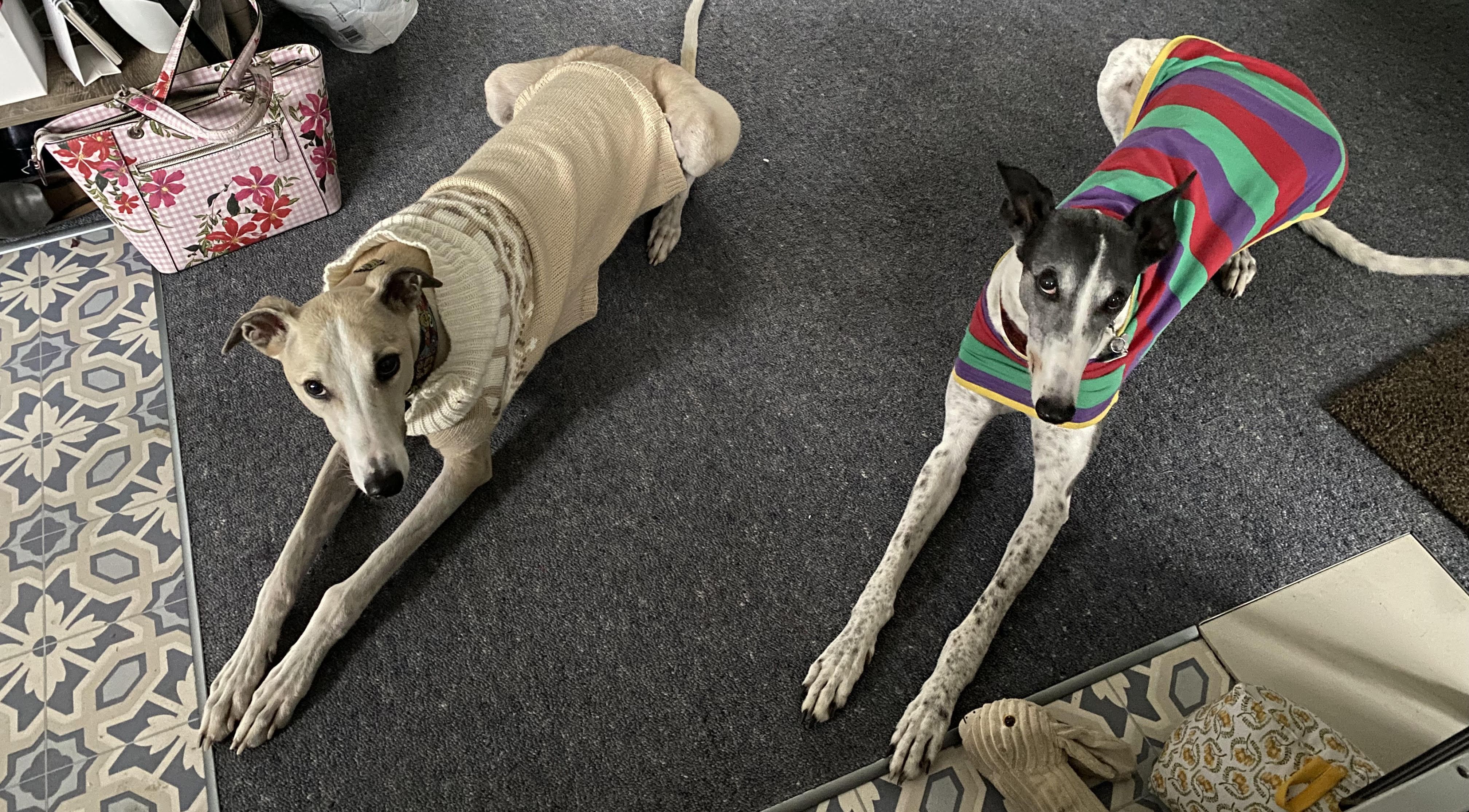
Sox is on a journey to be an experienced pet greyhound, with added company responsibilities for The Balanced Dog such as teaching massage workshops and presenting at events. Sox is an only-dog and, as such, he doesn’t have another dog in the household to show him right from wrong.
He has a mentor, though. His name is Spot.
Just as Yoda was the experienced Jedi master to Luke Skywalker, Spot is acting as Greyhound Master to Sox. Spot is wise in the greyhound ways.
Here they are together last week, Spot reinforcing for Sox what ”drop” means and how to be a good boy when your Mummy has to go out for work during the day.
I am looking forward to the warmer weather when Spot can teach Sox about beach walks and dining at outdoor cafes. (It was -4 degrees yesterday morning, too cold for cafe dining.)
Sox has already nailed what the dog massage table means; he jumps up as soon as I have it ready. I am considering whether he should co-teach a massage class with Spot before I ask him to lead a class by himself…
Kathleen Crisley, Fear-Free certified professional and specialist in dog massage, rehabilitation and nutrition/food therapy, The Balanced Dog, Christchurch, New Zealand
If you want to find a safe neighborhood to live in, choose one where the residents trust each other – and have a lot of dogs to walk.
More people walking their dogs means less crime in high-trust neighborhoods. Photo: Getty Photos
In a study conducted in Columbus, researchers found that neighborhoods with more dogs had lower rates of homicide, robbery and, to a lesser extent, aggravated assaults compared to areas with fewer dogs, at least when residents also had high levels of trust in each other.
The results suggest that people walking their dogs puts more “eyes on the street,” which can discourage crime, said Nicolo Pinchak, lead author of the study and a doctoral student in sociology at The Ohio State University.
“People walking their dogs are essentially patrolling their neighborhoods,” Pinchak said. “They see when things are not right, and when there are suspect outsiders in the area. It can be a crime deterrent.”
The study was published recently in the journal Social Forces.
Sociologists have long theorized that a combination of mutual trust and local surveillance among residents of a neighborhood can deter criminals, said study co-author Christopher Browning, a professor of sociology at Ohio State.
But there hasn’t been a good measure of how residents provide surveillance of neighborhood streets. “We thought that dog walking probably captures that pretty well, which is one reason why we decided to do this study,” Browning said.
For the study, researchers looked at crime statistics from 2014 to 2016 for 595 census block groups – the equivalent of neighborhoods – in the Columbus area.
They obtained survey data from a marketing firm that asked Columbus residents in 2013 if they had a dog in their household.
Finally, they used data from the Adolescent Health and Development in Context study (which Browning runs) to measure trust in individual neighborhoods. As part of that study, residents were asked to rate how much they agreed that “people on the streets can be trusted” in their neighborhoods.
Research has shown that trust among neighbors is an important part of deterring crime, because it suggests residents will help each other when facing a threat and have a sense of “collective efficacy” that they can have a positive impact on their area, Pinchak said.
Results of this study showed, as expected, that neighborhoods with high levels of trust had lower levels of homicide, robbery and aggravated assaults when compared to neighborhoods with low levels of trust.
But among high-trust neighborhoods, those with high concentrations of dogs showed an additional drop in crime compared to those with low concentrations of dogs.
Among the high-trust neighborhoods, neighborhoods high in dog concentration had about two-thirds the robbery rates of those low in dog concentration and about half the homicide rates, the study found.
It really has to do with the dog walking, Pinchak said.
“Trust doesn’t help neighborhoods as much if you don’t have people out there on the streets noticing what is going on. That’s what dog walking does,” Pinchak said. And that’s why dogs have a crime-fighting advantage over cats and other pets that don’t need walking.
“When people are out walking their dogs, they have conversations, they pet each other’s dogs. Sometimes they know the dog’s name and not even the owners. They learn what’s going on and can spot potential problems.”
Results showed that the trust and dog-walking combination helped reduce street crimes: those crimes like homicides and robberies that tend to occur in public locations, including streets and sidewalks.
The study found that more dogs in a neighborhood was also related to fewer property crimes, like burglaries, irrespective of how much residents trust each other, Pinchak said.
That’s because barking and visible dogs can keep criminals away from buildings where the dogs are found – and neighborhood trust and surveillance is not needed as a factor, as it is in street crimes.
The protective effect of dogs and trust was found even when a wide range of other factors related to crime was taken into account, including the proportion of young males in the neighborhood, residential instability and socioeconomic status.
Overall, the results suggest that it is beneficial to have a lot of trust in your neighbors to prevent crime – particularly if you add a lot of dogs and dog walkers.
“There has already been a lot of research that shows dogs are good for the health and well-being of their human companions,” Pinchak said.
“Our study adds another reason why dogs are good for us.”
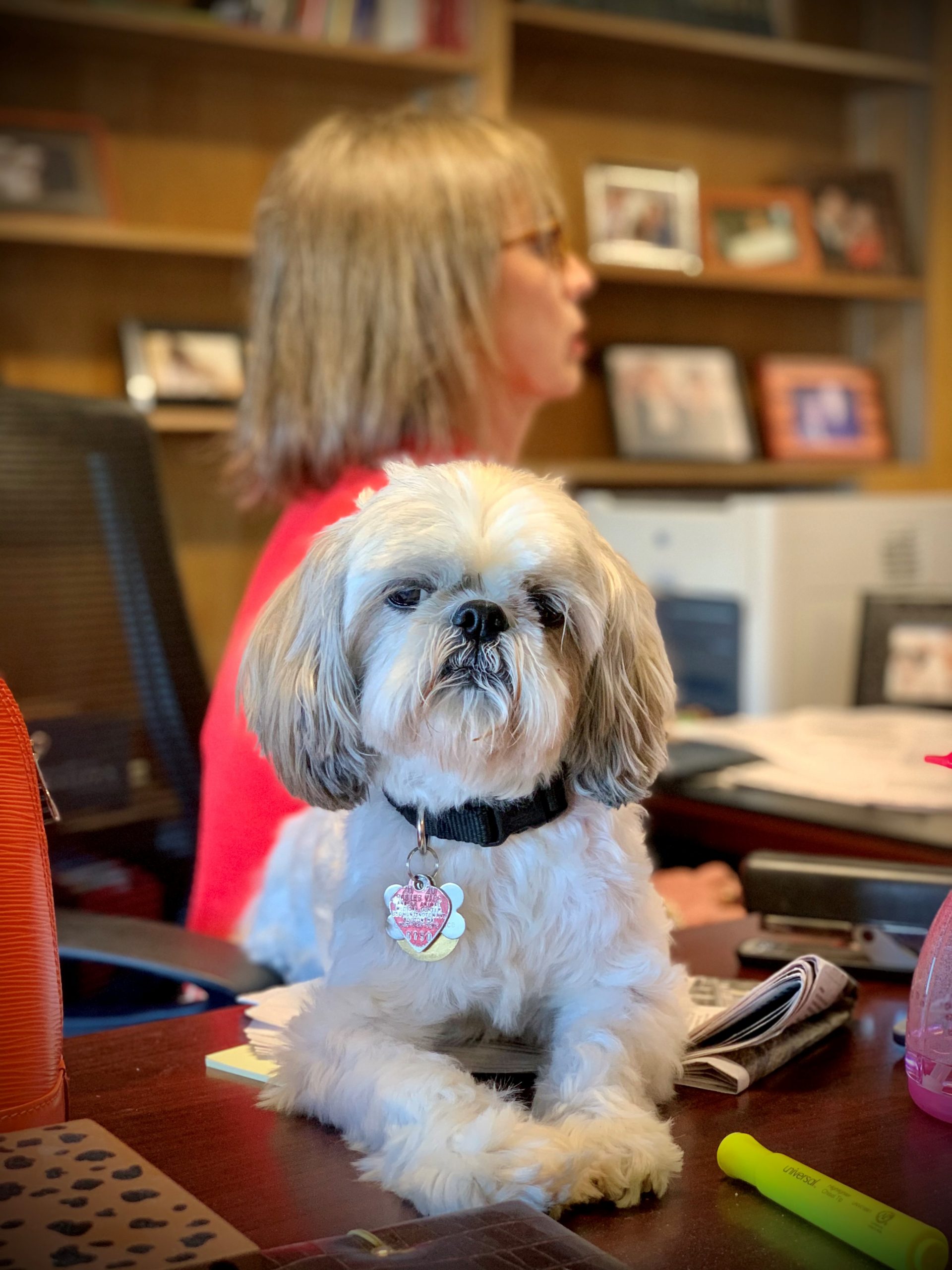
As employers the world over mull return-to-office plans, pitting managers and workers against one another over how much time is enough time at the office, an MSPCA-Angell poll of 500 pet owners found that a whopping 92% support pet friendly offices.
As the MSPCA marks Take Your Dog to Work Day on June 24, the survey also revealed that three quarters of those polled say their office enforces a strict “no pets” policy.
Employees on the Move?
In a historically tight labor market, 53% of respondents said they would consider leaving their current roles to join an organization with a pet friendly office policy, while 4% said they are actively looking to make the move. Only 22% said they would not consider switching jobs as a result of their pet policy at work.
These findings should worry even the most hardened bosses, as the labor market remains intensely competitive.
“The survey underscores what we’ve always known to be true: That a large majority want the option to bring their pets to work, and that some workers are willing to seek out employers who value pets as much as they do. The poll makes clear that now is the time for employers to start thinking about developing pet friendly office policies as both a recruiting and retention incentive,” said Kara Holmquist, director of Advocacy for the MSPCA-Angell.
Holmquist noted that the MSPCA’s survey maps to previous polls, such as a 2021 survey that found 71% of Gen Z workers—and nearly half of millennials—planned to ask, or have already asked, their employer to implement a pet friendly office policy.
Forty four percent of respondents said concerns about pet care have impacted their decision on whether and when to return to the office. More than half of those people voiced concern about their pet experiencing separation anxiety and just over a third said they were worried about finding daycare for their animal.
Thirty four percent said that they are working a hybrid schedule, splitting time between a remote setting and their office, while nearly 28% are back in the office full time.
Experts: Everyone Can be Happy in a Pet Friendly Office
While it may seem to be a daunting change for organizations to implement, Holmquist says establishing clear guidelines and rules will lead to a pet friendly policy that can work for everyone. “Having clear and consistent rules can mitigate any potential conflicts with pets in the office,” she said.
Holmquist offers the following recommendations for pet friendly offices:
Be transparent: Use signs to indicate when a pet is in an office. “A simple sign can go a long way. It can tell people whether your pet is friendly and wants attention or if it should be left alone. The sign also alerts workers who do not want to interact with animals to steer clear of the area,” said Holmquist.
Be considerate: Leave animals that bark or make noise repetitively at home. “Everyone should be happy and comfortable in their office,” said Holmquist. “If your dog barks a lot, it could disturb your colleagues, so it’s best to leave the dog at home.”
Keep it clean: Keep pets out of cafeterias and break rooms where people are eating, and clean up after your pet. “Only animals that are housebroken should be allowed in the office, but accidents happen. If they do, clean up immediately,” Holmquist advised. “Also, don’t leave pet food on the floor overnight or between shifts.”
The MSPCA has an entire online resource devoted to the establishment of pet friendly office policies and anyone who’s interested can review it at mspca.org/petfriendly.
Survey Methodology
The MSPCA-Angell survey was conducted via email from May 25 – 30, 2022. The 556 responses were anonymous, but all were members of the MSPCA-Angell email list, which is composed almost entirely of Massachusetts and New England residents.
The Human Animal Bond Research Institute (HABRI) revealed results of a new publication led by researchers at the Telethon Kids Institute and The University of Western Australia (UWA), which found a simple health intervention using text messaging may encourage children to spend more time being physically active with their family dog.
“This study shows that a simple text message reminder to play or walk with the family dog can result in increased physical activity for children and their caregivers,” said Steven Feldman, president of HABRI. “HABRI looks forward to raising awareness of the results of this publication which outline new and simple ways to encourage families to spend more quality time playing with and walking their dogs.”
The randomized controlled trial was published in the journal BMC Pediatrics.
“We found texting parents to remind them of how easy and important it is to be active with the family dog is a low-cost intervention with the potential to boost public health, which can be easily implemented across entire communities,” said Telethon Kids and UWA associate professor Hayley Christian, principal investigator on the study. “Interventions, policies and community programs should capitalize on the high level of dog ownership and incorporate dog walking or play into physical activity campaigns.”
Dr. Christian and colleagues led the Play Spaces and Environments for Children’s Physical Activity’ (PLAYCE) PAWS mHealth intervention, a randomized controlled trial conducted in Perth, Western Australia. Families of children between the ages of 5 and 10 with a family dog were placed into three experiment groups: one group of parents received regular text reminders about family play with the dog, one group received text reminders while also receiving a dog pedometer to further engage them with the dog, and the third group carried on as usual. This study was the first of its kind to utilize a mobile-based dog-facilitated strategy to increase children’s physical activity.
At baseline, approximately 60 percent of families walked their dogs more than once a week, and this increased to more than 75 percent at the 3-month follow-up. No differences were observed in dog walking or dog play at 1-month. The text-message only group were 2.6 times more likely to increase their frequency of total dog-facilitated activity at 3-months, compared to the usual care group. The combined intervention group were twice as likely to increase their frequency of total dog-facilitated physical activity compared with the usual care group at 3-months.
Similar findings were reported by a HABRI-funded study conducted by Richards et al., which found that significant increases in family dog walking in the intervention group only occurred at 6 months and were also sustained at 12 months. The positive associations with total dog-facilitated physical activity lost significance after adjusting for socio-demographic factors. Most parents found the intervention strategies acceptable, with 81 percent satisfied with the text-messaging program, and 83 percent satisfied with using the dog pedometer. Parents indicated that the text messages were good motivators to engage in more play with the dog.












 DoggyMom.com