Fukushima – the animal tragedy continues

This week marks the first anniversary of the  earthquake and tsunami that triggered the nuclear disaster at the nearby Daiichi power plant in Fukushima, Japan.  Animals are victims of this disaster and the effects on these animals’ lives continues even now…

A rescue group called Save Fukushima Animals, based in Vancouver and Tokyo, is working to rescue animals still alive but has to do so in secrecy since people are not allowed into the area.   The group is petitioning the Japanese government to take action to evacuate and save animals that have been left behind, although rescuers caught in the exclusion zone have been threatened with arrest.  This video tells the story of the animal rescue efforts:

When the region was evacuated, people left their pets behind and were unable to return to the area.  Those that haven’t died are fending for themselves – an estimated 3,000 animals are still in the exclusion zone.

Animals saved are taken to vets to be checked for radiation and then reunited with their owners, if possible.  Otherwise, a good home is found for them.

There is no law in Japan requiring pets to be saved during disasters and the group is lobbying the government to change that so this never happens again.  Donations go towards funding rescue efforts.

As for farm animals, many were left to die.  This week, Euro news carried this story about a farmer who has stayed to feed and take care of animals.

And The Telegraph (UK) has carried this story about Elizabeth Oliver and the charity Animal Rescue Kansai (ARK) which is also working to save animals.  Although some 5,900 dogs were registered, ARK estimates that three times that number were in the area because the Japanese have a reputation for not registering their dogs.  Dogs that survived are going feral and breeding; many are shy of humans.

Ms Oliver is outspoken saying, “The whole situation for pets and farm animals after the disaster has been a shambles, with many dying of dehydration or starvation, while there is also cannibalism.   The government has done nothing for them.”

One year on and the tragedy continues.  It’s up to us never to let such widespread neglect happen again.
Maddie the Coonhound

Theron Humphrey is a photographer who is currently traveling across the United States with the aim of meeting one new person each day and documenting their story.

He’s also the owner of Maddie the Coonhound.  Humphrey photographs Maddie balancing in all sorts of crazy positions.

Humphrey adds to his website Maddie on Things (subtitled Maddie the Coonhound a super serious project about dogs and physics) on a regular basis.    Visit this creative website today!

This slideshow requires JavaScript.

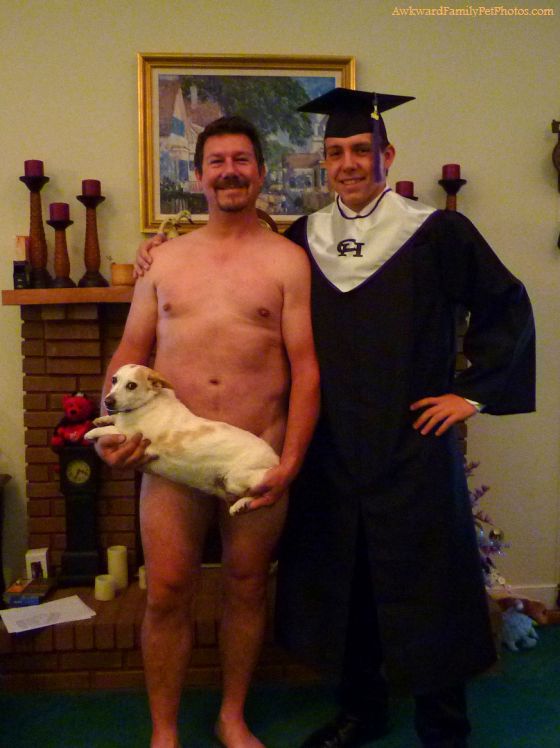
AwkwardFamilyPetPhotos.com for a bit of fun!

I needed to laugh today.

Visit this website to view photos uploaded by real people who suggest a fitting title for their family’s photo such as:

Biscuit felt there were times “lap-dog” shouldn’t apply.

Lady royals delight – in dog biscuits!

I think I’m becoming a royalist.  The top ladies (the Queen, the Duchess of Cornwall and the Duchess of Cambridge) are all dog owners.  And this week the people at Fortnum &  Mason knew how to please them.

Each of the royals was gifted with a hamper which included Hearty Treats for Happy Hounds when they visited the retailer based in Piccadilly.

The Royals open their hampers (photo courtesy of Fortnum & Mason website)

“Of course they all have dogs and we do want to think about what our customers like,” said Fortnum’s managing director Beverley Aspinall.

Doing business with heart

Two great things happened to me yesterday:  I shopped at local Christchurch businesses and pleasantly found that they both trade with animal care and ethics in mind.

First, I had to go to Papanui Eyes (formerly Papanui Optometrists) to have my eyeglasses repaired.  A small screw had fallen out and so the lens had dropped out too.  The ladies behind the countered fixed the problem quickly and would not charge for the service.  However, they said “If you have a gold coin, why don’t you put it on our donation box for the Guide Dogs (Royal NZ Foundation for the Blind)?”   What a great idea!  I was happy to donate.

Then, I went to the Mediterranean Food Company on Tuam Street to buy some pasta and other supplies.  This retailer doesn’t provide shopping bags and I had forgotten my re-usable bags which were still in the car.  No problem.  For a donation to WSPA (World Society for the Protection of Animals), I got a  plastic shopping bag (which I will re-use for doggy clean-up when when we go walkkies).

Well done to these local businesses which prove that Christchurch is open for business and doing it with heart!

Quality of life improves when obese dogs shed excess weight

Researchers at the University of Liverpool have published the results of a study into the quality of life of obese dogs in The Veterinary Journal.

The researchers tracked various quality of life indicators with the owners of 50 dogs who were classified as obese.  These dogs were of various breeds and a mixture of males and females.   The same questionnaire was repeated once the dogs went through a weight loss programme (for the dogs that were successful in losing weight, and those that were not).

Photo courtesy of University of Liverpool

The vitality scores for the dogs that lost weight increased and their scores for emotional disturbance and pain decreased. The more body fat that the dogs lost, the greater their improvement in vitality.

Some people may think ‘these results are a no-brainer’ but in veterinary and other clinical medicine fields, the norm is ‘evidence-based medicine.’  That is, practitioners like veterinarians want results from research that is measurable and defensible when applying or recommending treatments.

Since obesity is linked to problems with the heart, arthritis and other conditions, research likes this helps to underpin the importance of the healthy weight message.

The same basic principles for weight loss in dogs apply to humans:  use portion control, increase exercise and activity, and eat healthy foods.

Doggy quote of the month for March

“Love of animals is a universal impulse, a common ground on which all of us may meet.  By loving and understanding animals, perhaps we humans shall come to understand each other.”

– Dr Louis J Camuti

Dogs run amok?

Dogs run amok | Canterbury News | Local News in Canterbury.

This article was published in the Monday 27th February 2012 edition of the News Advertiser.  I wrote to the reporter, Anna Turner, today because the article encourages you to “Have your say” at the end but only encourages submissions from those who have had problems with dogs (not cyclists) on the shared path.

I wrote:

Dear Ms Turner,

For the record, the pathway from Northlands Shopping Centre to Mona Vale is not a cycleway – it is a shared corridor for use by cyclists, pedestrians and dog walkers.  As a shared space, it is essential that all users are polite, respectful and allow safe passage to other users.  It is unfortunately true that some dog walkers do not have their dogs under effective control (which can be on lead or off lead, if the dog is suitably trained).  To encourage responsible dog ownership, I favour a system where the offending dog owner is required to attend dog training (rather than a spot fine).  This would be a similar system to when drink drivers are required to attend alcohol education.

The pathway also needs a monitored speed limit for cyclists and a requirement for them to ring a bell or sound a horn when they are approaching pedestrians/dog walkers from behind.  You cannot hear a cyclist coming up behind you and they speed around you frightening both you and your dog (even a dog under effective control will respond if they are suddenly scared or threatened).  The cyclists using this pathway often use it as a speedway to get them from Point A to Point B and show little regard for anyone on foot (regardless of whether they have a dog or not).

And what can we learn from these types of conflicts?  The need for better urban design.  The proposed Otakaro green space along the Avon River presents us with an excellent opportunity to design an open green space for cyclists and dog owners plus other walkers who want to be dog-free in a seamless design.  There are examples from overseas about such design.  Sadly, when an overseas expert on dog-friendly design visited the city last year, not a single community board or city council representative attended his public talk. 

Your newspaper would serve our community better by investigating issues more thoroughly and reporting them in a balanced way rather than going for the inflammatory headline.  Please contact me if you’d like more information about urban design, responsible dog ownership and other issues facing dog owners.

I then got this reply from Ms Turner:

Hi Kathleen,

 If you read the story it says several times that this is a shared cycleway/walkway. You’ll also see that Mr Talbot acknowledges that some cyclists should monitor their behaviour as well.

And then I wrote back to say:

Hello Anna,

First impressions count.  The headline on the front page is “Dogs run amok” and the headline on page 3 is “Dogs running rampant on narrow cycleway”  (not narrow shared path)

My point is that you should encourage submissions about cyclists as well as dogs and take some time to investigate the issues of better urban planning so that all users can peacefully co-exist .

And her final reply said:

I’ll pass on your comments to the subeditors who write the headlines, I have no part in that.

Thanks for your input

Is this a case of buck passing?  It sounds like it to me.  How do we get our journalists to be more receptive to issues facing urban dog owners – that we need to encourage responsible ownership but at the same time provide facilities for them?

Are speeding cyclists not newsworthy?


With a few rules, dogs and offices can mix well

“No one at the Ohio chapter of The Nature Conservancy enjoys going to meetings more than Annie. Once, she was even disciplined for attending a meeting to which she was not invited.”

The San Jose Mercury News has picked up this story by Associated Press reporter Melissa Kossler Dutton about the value of having a pet-friendly workplace.  This article profiles companies such as The Nature Conservancy, Replacements (which I’ve previously covered) and Extrovertic.

A dog in the workplace can help to reduce stress and provide another way for staff to interact with one another.  And walking the dog at break time forces people to get out and get some fresh air and stretch their legs (all positives for health & safety programmes!)

Of course, there have to be rules – such as excluding the cafeteria from the pet-friendly policy, and having behavioural standards which dogs must adhere to…but the firms that have adopted dog-friendly workplace strategies are in no doubt that they are effective.

(Oh, how I wish I could say that I enjoy meetings (I don’t).  I’m sure if I could bring Daisy to meetings, I’d enjoy them a lot more!)

A resort where your dog is as welcome as you are

That’s the motto of Fess Parker’s Doubletree Resort in Santa Barbara, California.  This resort doesn’t place a limit on the size of dog that can stay – so your Newfoundland, Great Dane, and St Bernard are welcome (along with your Chihuahua and Papillon)!

A pet-friendly room is an additional $25 per night.  Toys and treats are available at the resort gift shop and there is doggy room service to order your dog’s meal and treats (2 pigs ears will set you back $7.00)

The concierge can supply you with details of local pet-friendly attractions and establishments, veterinarians and pet sitters.

Best of all in two of the resort’s restaurants they have established “Pet Posts” where you can tether your dog in the patio area adjacent to your dining table.  (this is the best the resort can do because of Santa Barbara laws that prohibit pets in the dining area).

So, if you are planning a trip to California – Fess Parker’s Doubletree Resort should be on your itinerary (please send photos)


