Unique Sled Dogs Helped the Inuit Thrive in the North American Arctic

Inuit sled dogs have changed little since people migrated with them to the North American Arctic across the Bering Strait from Siberia, according to researchers who have examined DNA from the dogs from that time span. The legacy of these Inuit dogs survives today in Arctic sled dogs, making them one of the last remaining descendant populations of indigenous, pre-European dog lineages in the Americas.

Inuit sled dogs

A team of Greenland sled dogs pulls in Greenland’s Disko Bay. The ancestors of these dogs arrived with the Inuit to the North American Arctic. (Courtesy/Tatiana Feuerborn)

The latest research is the result of nearly a decade’s work by University of California, Davis, researchers in anthropology and veterinary genetics, who analyzed the DNA of hundreds of dogs’ ancient skeletal remains to determine that the Inuit dog had significantly different DNA than other Arctic dogs, including malamutes and huskies.

Dogs continue to play role in Arctic communities

Qimmiit (dogs in Inuktitut) were viewed by the Inuit as particularly well-suited to long-distance hauling of people and their goods across the Arctic and consuming local resources, such as sea mammals, for food.

The unique group of dogs helped the Inuit conquer the tough terrain of the North American Arctic 2,000 years ago, researchers said. Inuit dogs are the direct ancestors of modern Arctic sled dogs, and although their appearance has continued to change over time, they continue to play an important role in Arctic communities.

Experts examined the DNA from 921 dogs and wolves who lived during the last 4,500 years. Analysis of the DNA, and the locations and time periods in which they were recovered archaeologically, shows dogs from Inuit sites occupied beginning around 2,000 years ago were genetically different from dogs already in the region.

According to Sacks “the genetic profiles of ancient dogs of the American Arctic dating to 2,000 years ago were nearly identical to those of older dogs from Siberia, but contrasted starkly with those of more ancient dogs in the Americas, providing an unusually clear and definitive picture of the canine replacement event that coincided with the expansion of Thule peoples across the American Arctic two millennia ago.”

Preserving an important history

Research confirms that native peoples maintained their own dogs. By analyzing the shape of elements from 391 dogs, the study also shows that the Inuit had larger dogs with a proportionally narrower cranium to earlier dogs belonging to pre-Inuit groups.

The National Science Foundation-funded portion of the research at UC Davis was inspired by Inuit activist and author Sheila Watt-Cloutier, who told Darwent about Inuit sled-dog culling undertaken by Canadian police in the 1950s and asked if there was a way to use scientific methods to tell the history and importance of sled dogs in the Arctic. Preservation of these distinctive Inuit dogs is likely a reflection of the highly specialized role that dogs played in both long-range transportation and daily subsistence practices in Inuit society.

The article, “Specialized sledge dogs accompanied the Inuit dispersal across the North American Arctic,” was published in the Proceedings of the Royal Society B: Biological Sciences.

Source:  UC Davis media release
Misplaced priorities (why does Giving Tuesday come last)?

When I was growing up, Thanksgiving Day was always the start of the holiday season.  In fact, Santa Claus would enter Macy’s Department Store at the end of the Thanksgiving Day parade to officially open Christmas shopping season.

The retail industry has changed a lot since then.

The 2019 holiday shopping season has officially begun with reports of traffic around every shopping mall in the area – shoppers taking advantage of Black Friday sales.  And it wasn’t just on Friday, of course.  These retail sales last the entire weekend through Monday.

Then someone came up with the idea of Small Business Saturday, contrived to help small business make some sales while customers may still have some money left to spend.

Then Cyber Monday.  Another date created by retailers to encourage people to shop online.

And at the end of the line – Giving Tuesday – a day designed to be the international day of charitable giving.  Animal shelters and re-homing agencies always need your donations and hopefully, you will have some left over.

Giving Tuesday

Giving Tuesday banner from the Michigan Humane Society

It seems to me that the priorities are backwards.  I’d rather see the Friday after Thanksgiving be the day of giving.  Give thanks and then give to others who are more in need…

(All of this focus on buying stuff does my head in)

Kathleen Crisley, Fear-Free certified professional and specialist in dog massage, rehabilitation and nutrition/food therapy, The Balanced Dog, Christchurch, New Zealand

Doggy quote of the month for December

pets-like-owners-expand-over-christmas-fanny-wright

Fanny Wright was born in Scotland and was a lecturer, social reformer and feminist.

If you are concerned about your dog’s caloric intake over Christmas, I strongly recommend a massage voucher for a gift – no calories, and we will get your dog moving better so they actually burn more calories which helps with weight loss.

Kathleen Crisley, Fear-Free certified professional and specialist in dog massage, rehabilitation and nutrition/food therapy, The Balanced Dog, Christchurch, New Zealand

Detection Dogs and DNA on the Trail of Endangered Lizards

Detection dogs trained to sniff out the scat of an endangered lizard in California’s San Joaquin Valley, combined with genetic species identification, could represent a new, noninvasive sampling technique for lizard conservation worldwide. That is according to a study published by the University of California, Davis, in partnership with the nonprofit Working Dogs for Conservation, U.S. Geological Survey and the U.S. Bureau of Land Management.

Scientists have used trained conservation dogs to locate scat and collect DNA samples for everything from bears and foxes to gorillas and whales. But the technique had not been used for reptiles until this study, for which scientists developed a novel approach to identify the presence of the blunt-nosed leopard lizard in the Panoche Hills Recreation Area and Carrizo Plain National Monument, both managed by BLM.

They developed new methods to recover DNA from feces and genetically identify lizard species in the same area. The study, published in the Journal of Wildlife Management, is a proof of concept for a host of reptiles.

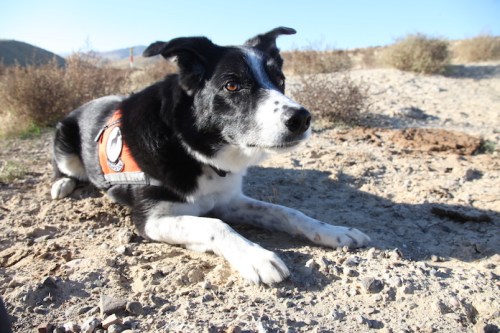
Lizard detection dog

Seamus, a trained detection dog, alerts his handler to the presence of scat. (Mike Westphal, Bureau of Land Management)

“So many reptilian species have been hit so hard,” said lead author Mark Statham, an associate researcher with the Mammalian Ecology and Conservation Unit of the UC Davis School of Veterinary Medicine. “A large proportion of them are endangered or threatened. This is a really valuable way for people to be able to survey them.”

No direct contact needed

Current methods for surveying lizard species typically rely on live capture or visual surveys. Scat sampling allows biologists to study elusive, rare or dangerous animals without the need for direct contact. In addition to informing about the presence, habitat and genetics of an animal, scat can also be analyzed to inform researchers about diet, hormones, parasites and other health factors.

Using the new method, the authors genetically identified specific species for 78 percent of the 327 samples collected by dog-handler teams across four years. Most (82 percent) of those identified were confirmed as being from blunt-nosed leopard lizards.

To meet regulatory monitoring requirements, more research is needed to assess the viability of using detection dogs to recover usable DNA at larger scales. But the research highlights the broad potential this method holds for surveying and monitoring reptiles.

Funding was provided by the Bureau of Land Management.

Source:  UC Davis media release

The housewarming

This weekend we were invited to Ben the Greyhound’s housewarming (his parents were there, too).  This was a chance to get together with some of our closest hound friends in a dog-friendly and informal setting.  Of course, I brought the treats for the dogs:  salmon squares and my newest recipe:  a frozen yoghurt treat with peanut butter, banana and honey.

There is nothing more enjoyable than being able to relax and talk and you don’t have to leave your dog at home alone.

Since dogs are family, I think it’s important to include them in special moments.

The next day, I had to attend an event called the Miniature Schnauzer Christmas Picnic which I had agreed to sponsor.  At our stall, we were signing dogs up for our Birthday Club.  Membership is free – and qualifies dogs for special offers when their birthday comes around.  We will help the parents book their dog’s massage, order a cake, organise a massage party for the birthday dog and guests, or schedule a bake-your-own dog treat party.

Both my friend and I were speechless when a woman told us, “Oh, I don’t celebrate any of those things with my dogs.  I don’t know their birthdays and we’ve never celebrated on a certain day.  I don’t give them Christmas gifts, either”

As she walked away, we both found our voices and asked each other why anyone would have a dog and not mark anniversaries, birthdays, and other special occasions? Dogs are such simple creatures, that almost anything can be special and a reward for them.

So my advice is get celebrating – with your dog and their friends – because it is these special moments that you will remember.

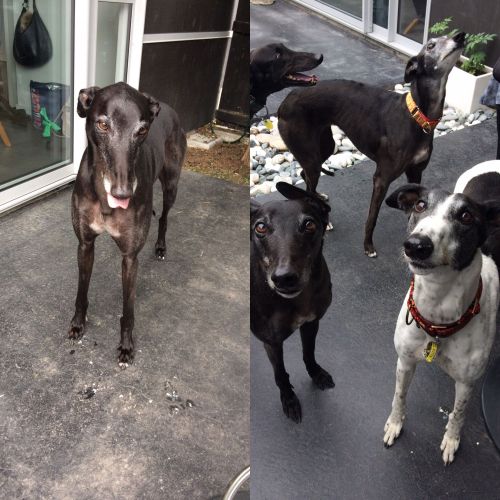
Bens housewarming

Ben the host and guests

Kathleen Crisley, Fear-Free certified professional and specialist in dog massage, rehabilitation and nutrition/food therapy, The Balanced Dog, Christchurch, New Zealand

Does training method matter?: Evidence for the negative impact of aversive-based methods on companion dog welfare

Your dog may be the apple of your eye, but let’s be honest: she is an animal, with her own instincts and idiosyncrasies, and there are going to be times when she makes you want to tear your hair out.

Much you want to, however, new research suggests that you should never yell at or otherwise punish a mischievous mutt.

No Yelloing

Photo ref: smrm1977/iStock

According to a new study uploaded to pre-print server bioRxiv, aversive training such as positive punishment and negative reinforcement can have long-term negative effects on your dog’s mental state.

“Our results show that companion dogs trained using aversive-based methods experienced poorer welfare as compared to companion dogs trained using reward-based methods, at both the short- and the long-term level,” the researchers write in their paper.

“Specifically, dogs attending schools using aversive-based methods displayed more stress-related behaviours and body postures during training, higher elevations in cortisol levels after training, and were more ‘pessimistic’ in a cognitive bias task.”

This sort of research has been conducted before, and found that aversive training has negative effects, but it’s primarily been on police and laboratory dogs. In addition, the aversive training tends to be shock collar training, which is only one of several tools used.

So, led by biologist Ana Catarina Vieira de Castro of the Universidade do Porto in Portugal, the international team of researchers conducted their new study on companion dogs.

The animals were recruited from a number of training schools in Porto – 42 dogs from three schools that use reward-based training like food treats or play, and 50 dogs from four schools that use aversive-based training, such as yelling, physically manipulating the dog, or leash-jerking.

Each dog was filmed during the first 15 minutes of three training sessions, and saliva samples were taken to assess stress levels from training – three from each dog relaxing at home to establish baseline levels of stress hormone cortisol, and three from each dog after training.

The researchers also analysed the dogs’ behaviour during training to look for stress behaviours, such as yawning, lip-licking, paw-raising and yelping.

Unsurprisingly, the dogs in the aversive training classes showed elevated stress behaviours, particularly yawning and lip-licking. Their saliva also had significantly increased levels of cortisol compared to when they were relaxing at home.

By contrast, the positive reinforcement dogs were pretty chill – far fewer stress behaviours, and much more normal cortisol levels.

The next step was to assess the longer term effects of this stress. A month after the dogs were assessed at training, 79 of them were then trained to associate a bowl on one side of a room with a sausage snack. If the bowl was on that side, it always held a delicious treat; if located on the other side, the bowl never had the treat. (All bowls were rubbed with sausage to ensure the smell didn’t give the game away.)

Then, the researchers moved the bowls around the room to ambiguous locations to see how quickly the dogs would approach in search of the treat. Higher speed was interpreted to mean the dog was anticipating a mouthful of deliciousness, whereas a slower speed meant the dog was more pessimistic about the bowl’s contents.

Sure enough, the more aversive training a dog had received, the more slowly it approached the bowl. Interestingly, dogs from the reward-based training group actually learnt the bowl location task faster than the aversive-training dogs.

This suggests that reward-based training may actually be more effective, although the researchers suggest this may be because the dogs already understand treat-based training methods. It’s possible that the other group would learn more quickly were an aversive method applied – more research needs to be done to determine this.

Overall, though, the results seem to imply that aversive training doesn’t necessarily have an edge over reward training, and that reward training is much better for your dog’s happiness.

“Critically,” the researchers said, “our study points to the fact that the welfare of companion dogs trained with aversive-based methods appears to be at risk.”

The full paper is available on bioRxiv ahead of peer review.

Source:  Sciencealert

AI could help diagnose dogs suffering from chronic pain

A new artificial intelligence (AI) technique developed by the University of Surrey could eventually help veterinarians quickly identify Cavalier King Charles Spaniel (CKCS) dogs with a chronic disease that causes crippling pain. The same technique identified unique biomarkers which inspired further research into the facial changes in dogs affected by Chiari-like malformation (CM).

CKCS

Photo by Getty Images

Cavalier King Charles Spaniels are predisposed to CM – a disease which causes deformity of the skull, the neck (cranial cervical vertebrae) and, in some extreme cases, lead to spinal cord damage called syringomyelia (SM). While SM is straightforward to diagnose, pain associated with CM is challenging to confirm and why this research is innovative.

In a paper published by the Journal of Veterinary Internal Medicine, researchers from Surrey’s Centre for Vision, Speech and Signal Processing (CVSSP) and School of Veterinary Medicine (SVM) detail how they used a completely automated, image mapping method to discover patterns in MRI data that could help vets identify dogs that suffer from CM associated pain. The research helped identify features that characterise the differences in the MRI images of dogs with clinical signs of pain associated with CM and those with syringomyelia from healthy dogs. The AI identified the floor of the third ventricle and its close neural tissue, and the region in the sphenoid bone as biomarkers for pain associated with CM and the presphenoid bone and the region between the soft palate and the tongue for SM.

Dr Michaela Spiteri, lead author of the study from CVSSP, said: “The success of our technique suggests machine learning can be developed as a diagnostic tool to help treat Cavalier King Charles Spaniel’s that are suffering from this enigmatic and terrible disease. We believe that AI can be a useful tool for veterinarians caring for our four-legged family members.”

Identification of these biomarkers inspired a further study, also published in the Journal of Veterinary Internal Medicine, which found that dogs with pain associated with CM had more brachycephalic features (having a relatively broad, short skull) with reduction of nasal tissue and a well-defined stop.

SVM student, Eleonore Dumas, whose 3rd year project formed part of the study data, said: “Being able to contribute to the development of diagnostic tools that allow for earlier diagnosis of patients suffering from this painful condition has been both challenging and incredibly rewarding.”

Dr Penny Knowler, lead author of the study from SVM, said: “This study suggests that the whole skull, rather than just the hindbrain, should be analysed in diagnostic tests. It also impacts on how we should interpret MRI from affected dogs and the choices we make when we breed predisposed dogs and develop breeding recommendations.”

Adrian Hilton, Distinguished Professor from the University of Surrey and Director of CVSSP, said: “This project demonstrates the potential for AI using machine learning to provide new diagnostic tools for animal health. Collaboration between experts in CVSSP and Surrey’s School of Veterinary Medicine is pioneering new approaches to improve animal health and welfare.”

Both studies were funded by the Memory of Hannah Hasty Research Fund. Hannah was a CKCS unaffected by CM/ SM and a much beloved companion, giving her owner much support and joy. The AI study was also supported by the Pet Plan Charitable Trust.

The findings of the studies are available to read on the Journal of Veterinary Internal Medicine website here and here.

Our ability to read dogs’ facial expressions is learned, not innate

In a recent study published in Scientific Reports, a team of researchers from Germany and the United Kingdom assessed how experience with dogs affects humans’ ability to recognize dog emotions. Participants who grew up in a cultural context with a dog-friendly attitude were more proficient at recognizing dog emotions. This suggests that the ability to recognize dogs’ expressions is learned through age and experience and is not an evolutionary adaptation.

Facial expressions study

The study used photos of dogs with wolf-like faces and upright ears for emotion recognition © Juliane Bräuer

Dogs were the first domesticated animal, with humans and dogs sharing more than 40,000 years of social interactions and life together. According to the co-domestication hypothesis, this process allowed humans and dogs to evolve special emotional signals and cognitive skills that favor mutual understanding. We know, for example, that over the millennia, dogs have evolved the ability to understand human words, iconic signs, and other gestures, and research has shown that dogs can even use tone of voice and facial expressions to recognize human emotions. Beyond personal testimony from dog lovers, however, little attention has been paid to how well humans can understand their canine counterparts.

In the current study, led by Federica Amici of the Max Planck Institute for Evolutionary Anthropology and Juliane Bräuer of the Max Planck Institute for the Science of Human History, the researchers set out to understand how well humans can understand the emotional displays of dogs, and where that understanding comes from.

How well do we understand our species’ best friend?

In order to test how well humans can understand the emotions behind dog facial expressions, researchers collected photographs of dogs, chimpanzees, and humans displaying either happy, sad, angry, neutral, or fearful emotions as substantiated by the photographers. They then recruited 89 adult participants and 77 child participants and categorized them according to their age, the dog-positivity of their cultural context, and the participants’ personal history of dog ownership.

Each participant was presented with photographs of dogs, chimps, and humans, and asked to rate how much the individual in the picture displayed happiness, sadness, anger, or fear. Adults were also asked to determine the context in which the picture had been taken (e.g., playing with a trusted conspecific partner; directly before attacking a conspecific). The results of the study showed that, while some dog emotions can be recognized from early on, the ability to reliably recognize dog emotions is mainly acquired through age and experience. In adults, the probability of recognizing dog emotions was higher for participants who grew up in a cultural context with a positive attitude towards dogs, regardless of whether they owned a dog themselves.

Without a dog-positive context, we could be barking up the wrong tree

A dog-postive cultural background, one in which dogs are closely integrated into human life and considered highly important, may result in a higher level of passive exposure and increased inclination and interest in dogs, making humans better at recognizing dogs’ emotions even without a history of personal dog ownership. “These results are noteworthy,” says Amici, “because they suggest that it is not necessarily direct experience with dogs that affects humans’ ability to recognize their emotions, but rather the cultural milieu in which humans develop.”

The researchers also found that regardless of age or experience with dogs, all participants were able to identify anger and happiness reliably. While these results may suggest an innate ability favored by the co-domestication hypothesis, it is also possible that humans learn to recognize these emotions quickly, even with limited exposure. Other than anger and happiness, the children in the study were not good at identifying dog emotions. They recognized anger and happiness more reliably in dogs than in chimps, but otherwise identified dog emotions as poorly as they did chimpanzee emotions, suggesting that the ability to understand how dogs are feeling is not innate.

“We think it would be valuable to conduct future studies that seek to determine exactly which cultural aspects affect one’s ability to read dog emotions, and to include real-life stimuli and body expressions in addition to instructed stimuli and facial expressions,” states Bräuer. “In this way, we could develop a better understanding of inter-cultural variation in emotion recognition. Hopefully this information could be used to reduce the occurrence of negative incidents between humans and dogs that are caused by humans’ inability to read dog signals.”

Source:  Max Planck Institute for the Science of Human History


Your dog might be hiding its true colors

If you have a purebred dog, it’s likely that he or she looks fairly similar to other dogs of the same breed, especially when it comes to the color of their coats.

But what happens if a purebred puppy doesn’t look exactly like its siblings when it’s born? Chances are, it might not be a flaw – but rather a hidden gene variant that decided to show itself.

New research from Purdue University’s College of Veterinary Medicine shows that some breeds of dogs have hidden coat colors – and in some cases, other traits – that have been lurking all along.

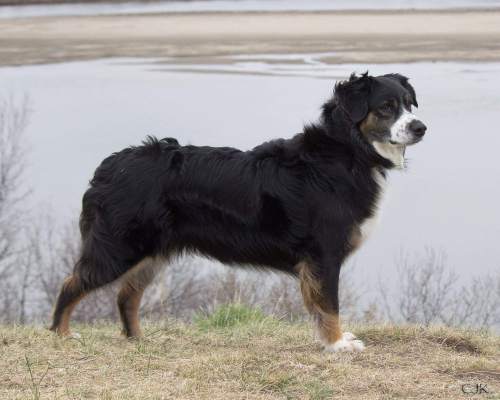
Purdue university research into coat color

New research from Purdue University’s College of Veterinary Medicine shows that some breeds of dogs have hidden coat colors – and in some cases, other traits – that have been lurking all along. Example: There are around 18 recognized breeds of dogs that have the genetic potential to be born without a tail – such as the popular Australian Shepherd (shown in photo). But the data shows that up to 48 of the breeds analyzed possess the tailless gene variant, usually at a very low frequency.

Led by Kari Ekenstedt, DVM, Ph.D., assistant professor of anatomy and genetics, and Dayna Dreger, Ph.D., the lead scientist in Ekenstedt’s canine genetics research laboratory, the team looked at a dozen different genes in 212 dog breeds. Purdue researchers, together with industry partners at Wisdom Health, analyzed data that had been initially collected by WISDOM PANEL™ for the development of canine DNA tests. The work was published Oct. 28 in PLOS ONE.

“These are purebred dogs with traits that their breed clubs say they’re not supposed to have,” said Ekenstedt, whose research program focuses on canine genetics. “The message of this paper is, ‘Hey, these gene variants exist in your breed, and if a few dogs are born with these traits, it’s not caused by accidental breeding and it’s not a mutt; it’s a purebred showing this known genetic potential.’”

Along with analyzing the data, researchers used standard breed descriptions from major American and international dog breed registries to determine coat colors and tail lengths that were accepted within each breed.

“There was a lot of information we didn’t expect,” Dreger said. “When it comes to different dog breeds, their standards are mostly based on preference and aesthetics. We make assumptions for certain breeds based on what we expect their coat colors to be.”

Ekenstedt says coat color genes have a significant amount of epistasis between them, meaning that what happens at one gene can mask what’s happening at another gene. Because of epistasis, it’s rare to see those masked genes actually expressed in a dog’s coat color.

One example of a “fault” allele – a gene variant that would cause a trait that is not allowed in a breed standard – is an allele that causes the brown color, which affects both hair pigment and skin pigment. The color is allowed in breeds like the Labrador Retriever where it causes the chocolate color. However, researchers observed that in breeds where brown is not allowed, such as the Rottweiler and the German Shepherd Dog, brown alleles exist at low frequencies.

Another example of a fault allele is in the Weimaraner, which exists in both longhaired and shorthaired varieties. At least one dog breed organization does not allow longhaired Weimaraners while several others do allow them.  Of the Weimaraners sampled in this data, the longhaired allele is present at a 4% frequency.

The same goes for other traits, too, Dreger said. For example, there are around 18 recognized breeds of dogs that have the genetic potential to be born without a tail – such as the popular Australian Shepherd. But the data shows that up to 48 of the breeds analyzed possess the tailless gene variant, usually at a very low frequency; one of those breeds is the Dachshund.

“A breeder would certainly be surprised to see a Dachshund born without a tail,” Dreger said. “The chances are low, but our research shows that the potential is there.”

Both Dreger and Ekenstedt hope the research prompts some discussions within the dog community.

“I want this to start science-based conversations,” Dreger said. “We’re not here to make decisions on what a breed should or shouldn’t look like or what a breed club should do. We’re here to say these are the facts, and these are the gene variants that naturally exist in these breeds.”

They also hope it changes some perspectives when it comes to what is to be expected with certain breeds of dogs.

“There’s an assumption that the standards for these different breeds of dogs are set in stone,” Dreger said. “People will often make assumptions that if it doesn’t match this, it’s not purebred. This data shows that there is a lot of variation in some of these breeds, and the standards are not as concrete as we expect them to be.”

Wisdom Health funded a Veterinary Summer Scholar position to Blair Hooser, a student at the Purdue College of Veterinary Medicine and coauthor on the paper, for this work. Partial support for Dr. Ekenstedt was provided by the National Institutes of Health.

Source:  Purdue University media release

Come on, Jacinda, Ban the Boom

Successive governments, including the current Labour Government led by Prime Minister Jacinda Ardern, have refused to heed the growing calls from animal lovers to ban the private sales of fireworks.

That’s a real shame.  Let’s face it, a lot has been said about the Prime Minister because she chose to become a mother while acting as PM.

Here’s Zoe, one of Izzy’s friends, all rugged up for Guy Fawkes.  She’s in a thundershirt, with ear muffs, and music and still nervous and anxious.  There are lots of similar photos and videos of stressed out animals on Facebook this week.

Zoe for Guy Fawkes

Now I wonder if Jacinda would like it if one of these stressed out dogs was her baby, Neve Te Aroha Ardern Gayford?  Not a nice thought, is it?  I wouldn’t wish it on the Prime Minister’s baby.  Maybe she and her Government shouldn’t wish it on ours.

Maybe what will get action from this government is to remind them that all fireworks are single use and disposable.  Just like the plastic bags that they and their coalition partners banned earlier this year.  These fireworks are filling up our landfills, too.   What’s the deal, Green Party?

I’m not going to apologise if this post is a lot more ‘in your face’ than most of my posts.  I’m entirely sick of the inaction.  Are you?

Kathleen Crisley, Fear-Free certified professional and specialist in dog massage, rehabilitation and nutrition/food therapy, The Balanced Dog, Christchurch, New Zealand