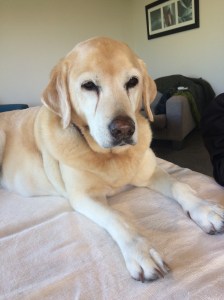
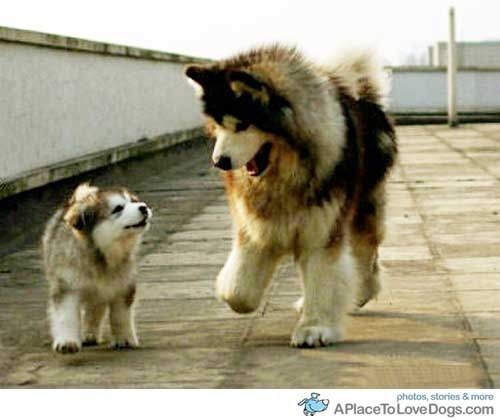
I only recently watched the film about Oddball, although I blogged about the Maremma project in 2011….our thoughts go out to everyone who knew Oddball or loved the story
Greeting loyal readers and fellow maremmas. We three were sad to learn of the passing over the Rainbow Bridge of Odball, a world famous maremma.
Oddball the pioneer passes away
Everard Himmelreich and Monique Patterson 15 Feb 2017, 10:33 a.m
12.20PM: Warrnambool’s former tourism services manager Peter Abbott has described how the story of Oddball tugged at heartstrings across the world.
He said there were a number of Qantas passengers on international flights to Australia who changed their travel plans to visit Warrnambool and the home of the pioneering Maremma.
“When I was there we had people changing their travel patterns because they had seen the movie on their flight,” Mr Abbott said.
He joked Oddball took the glory for the work the other Maremmas had kept up.
“We always laughed that Oddball took all the glory and our current dogs have been doing it for nine years and Oddball…
Dogs can be trained to find almost anything (people, drugs, weapons, poached ivory) but one York University researcher had them detect something a little unusual – the scat of endangered blunt-nosed leopard lizards.
The scat detection dogs helped biology PhD student Alex Filazzola discover not only scat, but the importance of shrubs in preserving lizard populations in the face of climate change.
“The loss of these lizards would likely have a cascade effect on other species,” said Filazzola, the study lead.
The research team geo-tagged 700 Ephedra californica shrubs in a 32.3-hectare area of the Panoche Hills Management Area in San Joaquin Valley, California. They then took two scat detection dogs from Working Dogs for Conservation on the hunt for lizard scat in 2013 and 2014.
In 2014, there was a drought during which time lizard scat was found more frequently under shrubs, especially those with dense canopy cover, than out in the open. The shrubs proved instrumental in providing critical micro-environments for the blunt-nosed leopard lizards, in particular, shady places to regulate their body temperature in extreme heat, as well as refuge from predators. The lizards use rodent burrows, most often found under shrubs, to escape predators.
“As the climate warms and lizards find it more difficult to regulate their body temperatures in the heat, these findings could help preserve them not only in California, but globally,” said Filazzola of York U’s Faculty of Science. “It demonstrates how much animals rely on plants for survival that goes beyond that of simply eating them. Positive plant-animal interactions could further support animal populations that are already threatened.”
The research, “Non-trophic interactions in deserts: Facilitation, interference, and an endangered lizard species,” was published in the journal Basic and Applied Ecology.
Once abundant in the San Joaquin Valley, agriculture and industrialization has reduced the lizards’ range by close to 85 per cent. Predictions of increased drought in the area put the lizards at a high risk of being wiped out. The study also pointed out that management techniques used over the past 50 years have done little to change the endangered status of the lizards.
“Planting shrubs, such as the Ephedra californica, could prove critical in managing and preserving endangered species in high-stress or arid ecosystems, such as a desert,” said Filazzola. “Continuing to remove these shrubs to install solar panels, however, further endangers this species.”
In addition, the study found that invasive grasses in the desert were not beneficial. They interfered with the lizards’ ability to move around and limited available habitat by reducing the variety of rodent species which create burrows. The invasive grasses also competed for space with shrubs and caused diminished shrub growth. Managing invasive plant species is therefore crucial in these ecosystems.
The research was funded by the Central Coast Field Office of the Bureau of Land Management, Department of the Interior, a Discovery Grant from the Natural Sciences and Engineering Research Council of Canada and York University.
On Saturday, we celebrated Izzy’s 8th birthday with a walk at the beach and an afternoon tea at The Beach Cafe on Waimairi Beach. It was a gathering of our closest friends – all who have dogs in their families.
Here are my tips for holding a successful dog birthday party:
Know your guests – if your friends have a dog that is aggressive or anxious, then maybe these dogs are best left at home.
Go for a walk first. Our party started with a group dog walk at the beach; everyone was tired and happy when it came time to sit down for food.
Keep the number of guests manageable. I suggest no more than 15 people and 10 dogs
Book the party in advance with the cafe so they can set aside an appropriate table location for you. In our case, I asked specifically for a table in the corner (away from the main entrance to the cafe) and where we had some shade and would be sheltered from the wind. Some cafes may want to limit the number of dogs they have on their premises – so they’ll be prepared for the arrival of your party.
Serve dog-and human-appropriate fare – and keep them separate. No one wants to have an upset tummy after a party. I booked a set menu of sandwiches, savouries and cake for the humans. The dogs were given party bags of treats and I also baked the dog birthday cake which had layers of liver and salmon. I brought my own paper plates for the dogs to eat their cake – so there were no risks or concerns about hygiene.
Casual dress only – dog parties are no place to become a fashionista. Tidy and casual dress is recommended. One of our guests was wearing leggings (a good choice) which came in handy when she was slobbered on by a Bernese Mountain Dog.
Finally, relax and have fun. If you are stressed out about arrangements, neither you or your dog will find the event enjoyable.
I’m happy to report a good time was had by all. Happy birthday, Izzy!
Kathleen Crisley, specialist in dog massage, rehabilitation and nutrition/food therapy, The Balanced Dog Ltd, Christchurch, New Zealand
If you are like me, you find it pretty heart-wrenching to see posts on Facebook and to walk by posters hanging from telephone poles pleading for information about a missing dog.
Pet theft is a reality. And there are things you can do to prevent it.
Keep your dog inside, this is particularly important for the long hours when you are at work and away from home
Padlock gates to your section
Never leave your dog tied outside of a shop such as a supermarket; thieves are opportunists and they can snatch a dog that is unattended very quickly
Do not let your dog roam in the neighbourhood
Spaying or neutering your dog will discourage them from the urge to roam
Make sure your dog has its licence tag and identification tag on its collar; in New Zealand micro-chipping of dogs is now mandatory
When returning a stray animal to an owner, request proof of ownership, including photos of the animal, vet records, etc (in practice, I have not always needed to be so vigilant of this step because the dog has been SOOO excited to see its family)
Be aware of strangers in the neighborhood and join your local neighbourhood watch group. It pays to keep a close eye on what is happening in your community. If you see something suspicious, snap photos with your phone, report it to the police ASAP, and let your neighbours know, too.
Kathleen Crisley, specialist in dog massage, rehabilitation and nutrition/food therapy, The Balanced Dog Ltd, Christchurch, New Zealand
Continuing to build on their specialist work in this area, researchers in collaboration with neurologists at Fitzpatrick Referrals and Helsinki University and a geneticist at the University of Montreal, have developed two separate studies, published the journal PLOS ONE last month, to learn more about these painful conditions affecting toy dogs.
Study one focused on how the Chiari malformation and Syringomyelia disorder affects the Cavalier King Charles Spaniel, a breed which is predisposed to the condition.
Chiari malformation is the premature fusion of bones in the skull, which alters the flow of cerebrospinal fluid, resulting in a collection of fluid pockets within the spinal cord. These fluid pockets are commonly known as Syringomyelia and over time can cause irreversible damage to a dog’s spinal cord.
Using a novel MRI mapping technique, which can standardise images for different size dogs, researchers were able to examine a section of the dog’s skull, brain and vertebrae in greater detail and highlight via a movie clip how such disorders develop in the Cavalier King Charles Spaniel.
Examining the footage from the MRI movie clip, researchers were able to observe the compression of a dog’s brain caused by the premature fusion of bones in the skull. Such fusions also occur at the front of the head causing a dog’s face to become flatter, creating the often desirable doll like features common in this breed.
Study two examined characteristics that increased the risk of Syringomyelia in the Cavalier King Charles Spaniel, Chihuahua and the Affenpinscher dog breeds. Using a similar technique to study one, the study found that skull and neck conformation that increased the risk for Syringomyelia associated with Chiari-like malformation were subtly different between breeds.
Researchers found that Syringomyelia-affected Chihuahua’s tended to have a smaller angle between the base of the skull and the first and second neck vertebrae, whereas the Affenpinshers had a smaller distance between the first and second vertebrae. Cavalier King Charles Spaniels had reduced space between the joint on the skull base and the first cervical vertebrae. All breeds had a reduced hind skull which altered the angulation of the skull base with neighbouring bones in affected dogs and observed in the movie clips.
Dr Clare Rusbridge, from the University of Surrey, said: “Toy dogs are increasingly popular and as such demand for these breeds is unprecedented. Due to selection for rounded head shapes with short muzzles we are seeing more and more dogs with the painful Chiari malformation and Syringomyelia disorder.”
“The innovative mapping technique used in this study has the potential to provide a diagnostic tool for vets, helping them to quickly identify dogs suffering from these painful disorders.”
I finished reading this New York Times bestseller yesterday – it’s been on my reading list for some time and I was lucky to have been given a copy as a Christmas present.
I have not been disappointed. This story follows a dog who is reincarnated several times and, each time, he looks for his life’s purpose. Starting his life as a stray born to a feral mother, this first life is a short one and gives insight into shelter life and euthanasia from the dog’s point of view.
The dog has a much longer life with his ‘boy’ Ethan as a Golden Retriever named Bailey, witnessing Ethan’s first love and encountering a psychotic neighbor with a penchant for animal cruelty (this part of the book is the darkest).
Reincarnated again, Bailey returns as a girl dog who becomes trained in search and rescue…
And then finally reincarnated again, during this final life of the book the dog is reunited with his Ethan, who is now a much older man…
There are many humorous scenes in this book, such as the dog’s observations about wearing the ‘cone of shame’ during several of his experiences when being neutered/spayed.
The book has been made into a movie that has only recently been released, and with controversy concerning the animal welfare standards on the film’s set, I’m not sure I will be interested in seeing the movie. But I highly recommend the book – it’s a keeper in my dog book collection.
Kathleen Crisley, specialist in dog massage, rehabilitation and nutrition/food therapy, The Balanced Dog Ltd, Christchurch, New Zealand
Dogs of many breeds have been depicted in collectibles and decorative arts over the ages. Earlier this week, I was given this bronze of a greyhound…it was found in a load of scrap metal.
After a little elbow grease (polished first with toothpaste and a brush and then soaked overnight in Coca Cola), I have a second hand treasure.
Kathleen Crisley, specialist in dog massage, rehabilitation and nutrition/food therapy, The Balanced Dog Ltd, Christchurch, New Zealand
I am thoroughly happy with the BarkCam app. It contains a range of sounds to attract your dog’s attention – a squeaky toy, keys jangling, a cat, and more.
I’ve been using the app for a couple of weeks now to snap photos of my massage clients. They are turning out great!
BarkCam is a free app for Android and iphone.
Highly recommended (this is an unsolicited endorsement)
Kathleen Crisley, specialist in dog massage, rehabilitation and nutrition/food therapy,The Balanced Dog Ltd, Christchurch, New Zealand