Doggy quote of the month for January

“I don’t believe, despite all the gurus in the pet section of the bookstore and on TV, that there is a single way to train every dog, any more than that there is one way to buy a dog or put one down.  I think this idea causes much grief for dog lovers, as it does for dog choosers.

– Jon Katz, author

The Second Chance Dog – book review

Subtitled ‘A Love Story’ – this book by Jon Katz lives up to its name.

Jon Katz is a prolific writer of books about his dogs and life on his beloved upstate New York farm, Bedlam Farm.  the-second-chance-dog

At this point in Katz’s life, his marriage is all but over and divorce is inevitable.  He meets a kindred spirit in artist Maria who owns Frieda – a German Shepherd/Rottweiler cross whom she adopted from a local shelter.   But Frieda is incredibly protective of Maria and cannot be trusted around Katz’s other dogs or the animals on the farm.  Her ability to hunt and attack is readily evident.

Katz concludes that he must train Frieda and reach a truce with this dog so that all dogs can live peacefully in the house together and, as a consequence, so too can he and Maria.

Perhaps the most touching part of this book is when Katz attempts to learn about Frieda’s life before she ended up in the shelter.  Frieda is a very intelligent dog and she escaped capture by her would-be rescuers for months.  Katz interviews students on the college campus where Frieda was often seen scavenging for food and learns about how she was ‘trained’ to protect the property of her original owners and teased through the fence of her property.   And ultimately how she was abandoned – pregnant.

Katz is determined and his story for love of Maria, Frieda, and all of his animals, is well worth reading.

Kathleen Crisley, specialist in dog massage, rehabilitation and nutrition/food therapy, The Balanced Dog, Christchurch, New Zealand

How to Deal with a Crotch Hound

We all know the type…but are probably afraid to classify our own dogs as Crotch Hounds since it sounds so rude.  The dog trainer is this video calls the behavior ‘checking the oil’ when visitors arrive!

Here’s a new video with some advice on how to re-train your dog so your visitors are greeted in a more socially acceptable way.

Kathleen Crisley, specialist in dog massage, rehabilitation and nutrition/food therapy, The Balanced Dog, Christchurch, New Zealand

Mutual Rescue™

Mutual Rescue™ is a trademarked initiative of the Humane Society Silicon Valley.  Aimed at changing the way people think of animal welfare and adoption, each year the Society asks for submissions from people to share their story about a special connection they have made with an animal.

These stories of inspiration and transformation have come about because a person walked into an animal shelter and adopted a pet.

Four new videos will be released in early 2017 after over 400 stories were submitted for consideration.

Below is the first Mutual Rescue™ video released last year – the story of Eric & Peety.  I particularly love the way the drawings have been introduced to the film.

Please also note that Eric’s naturopathic doctor recommended a dog as a key part of his treatment for obesity…

Kathleen Crisley, specialist in dog massage, rehabilitation and nutrition/food therapy, The Balanced Dog, Christchurch, New Zealand

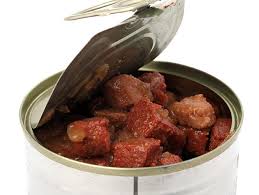
BPA (Bisphenol A) in Canned Dog Foods

Note from DoggyMom:

When buying plastic containers for temporary food storage, drink bottles, etc, I always look for “BPA free” labeling.  BPA is an endocrine disruptor and many consumers don’t know to look for this – most of the plastic containers being sold in the ‘$2 shops’ in New Zealand are not BPA free, for example.   In this study, the researchers fed dogs only canned (tinned) food and found significant increases in the levels of the BPA in the dogs – even in tins that were supposedly BPA free.

Very concerning if you are feeding only canned food!


Bisphenol A (BPA) is a widely used industrial chemical found in many household items, including resins used to line metal storage containers, such as food cans. Now, researchers at the University of Missouri have found that short-term feeding of canned dog food resulted in a significant increase of BPA in dogs. Scientists believe that because of shared environments, dog exposure to BPA through canned foods could have human health implications.  tinned-dog-food

“Bisphenol A is a prevalent endocrine-disrupting chemical found in canned foods and beverages,” said Cheryl Rosenfeld, an associate professor of biomedical sciences in the MU College of Veterinary Medicine and an investigator in the Bond Life Sciences Center. “We wanted to determine if short-term feeding of widely available commercial canned food could alter BPA concentrations in dogs. Thus, we assessed BPA contained within pet food cans. We also analyzed whether disturbances in bacteria found in the gut and metabolic changes could be associated with exposure to BPA from the canned food.”

Dog owners volunteered their healthy pets for the study. Blood and fecal samples were collected prior to the dogs being placed on one of two commonly used, commercial canned food diets for two weeks; one diet was presumed to be BPA-free. Robert Backus, an associate professor in the Department of Veterinary Medicine and Surgery in the MU College of Veterinary Medicine, and other researchers on the team then analyzed the cans and the food contained in the cans for BPA levels and performed gut microbiome assessments.

“The dogs in the study did have minimal circulating BPA in their blood when it was drawn for the baseline,” Rosenfeld said. “However, BPA increased nearly three-fold after being on the either of the two canned diets for two weeks. We also found that increased serum BPA concentrations were correlated with gut microbiome and metabolic changes in the dogs analyzed. Increased BPA may also reduce one bacterium that has the ability to metabolize BPA and related environmental chemicals.”

Dogs who share internal and external environments with their owners are likely excellent indicators of the effects of BPA and other industrial chemicals on human health.

“We share our homes with our dogs,” Rosenfeld said. “Thus, these findings could have implications and relevance to humans. Indeed, our canine companions may be the best bio-sentinels for human health concerns.”

Source: University of Missouri press statement

Season’s greetings

In 2012, I went to Best Friends in Kanab, Utah for the first time.  I was there to take a workshop and to volunteer my skills.  What I didn’t expect was to fall in love with a dog, Dumpling, in the Old Friends section of the Sanctuary.

Unfortunately, Best Friends has a policy about adopting dogs to overseas locations where quarantine is required (rightfully so, they feel their dogs have been through enough and the USA and Canada offer plenty of re-homing opportunities).  The situation was further complicated because Dumpling had heartworm and would require treatment.

She was my sleepover dog for several nights including my last night and then I returned her with a heavy heart.  I watched her status on the Best Friends website and had mixed feelings when the site confirmed that she had been adopted in December 2012 (and successfully treated for heartworm) – because I was heading back there again in 2013 and she would not be there.

But I did manage to check in with the Adoptions Coordinator when I arrived and asked if they would be willing to pass on my contact details to the adoptive family. And now each year around Christmas (Dumpling’s anniversary), I get an email from Dumpling’s Dad, Stuart, about her.  dumpling-sleeping

This year was my fourth update:

Kathleen, Good morning and Happy Holidays.  It’s time for our annual update on Dumpling.

Hard to believe it has been four years now since this sweet girl joined our family.   Given all her issues, we had no idea how long we would have her, but I am very happy to say she is showing little signs of slowing down.  She does have some minor medical issues but nothing that cause her any problems.

She still dances about when it’s time for her walk or when I get home from work.  Her energy level is still great.

Over the past year she has stopped getting up on most of the furniture.  The exception is the love seat in the bedroom which she claims early in the morning (3:00-4:00 AM) and will stay there until mom calls her for breakfast.  I don’t think it’s that she can’t get on the furniture, I just think she likes to be able to choose the bed she wants to sleep in depending on if she wants to be alone or with us.  There are 8 dog beds in the house & garage for two dogs.  Not like they’re spoiled or anything.

The Lab in her comes out anytime she is near water.  Get her close to any body of water and she walks right in.  Even the rain doesn’t bother her.  Her sister Callie will avoid the rain at all costs but Dumpling will go out and run around like any other day.  One new thing is she does like to be dried off now.  I think she likes the physical contact more than the drying.

I just wanted to check in and let you know she is doing great.  We consider ourselves very lucky to have her.

Please have a very Happy Holiday.

Warmest Regards,

Stuart

I hope Dumpling has another good year and there will be a 5th update in 2017.  Most of all, I am forever grateful that she found such a safe and happy home after many rough years.

Kathleen Crisley, specialist in dog massage, rehabilitation and nutrition/food therapy, The Balanced Dog, Christchurch, New Zealand

Pets save UK National Health Service

Pets account for millions of pounds worth of economic activity in the UK and may reduce National Health Service (NHS) costs by nearly two and a half billion pounds, according to a new report. companion-animal-economics

Drawing on multiple sources, and written by internationally respected animal welfare and business experts, Companion Animal Economics comprehensively documents the economic impact of pets in the UK – the first time such an assessment has been made for nearly 40 years. The study directly examines available evidence on the direct and indirect benefits and costs of companion animals to society, including their influence on human mental and physical health, illness prevention and well-being.

Published by CABI, Companion Animal Economics was developed by Daniel Mills, Professor of Veterinary Behavioural Medicine at the University of Lincoln UK, and Dr Sandra McCune, Human-Animal Interaction expert at Mars Petcare’s WALTHAM Centre for Pet Nutrition. Mars Petcare UK provided sponsorship towards the cost of producing the report. Other authors include Dr Sophie Hall from the University of Lincoln’s School of Life Sciences, Professor Ted Fuller and Luke Dolling from the Lincoln International Business School, and Katie Bristow-Wade of Dogs for Good.

“Vets are well aware how important companion animals are to their owners, but it is important that they appreciate the impact that they can have on the physical, mental and social health of both individuals and society more widely,” says Professor Daniel Mills. “This book should help raise awareness of this and their economic importance in times of economic uncertainty.”

First major study since 1988
“Almost half of households in the UK share their homes with animals cared for as companions – a relationship we consider to be valuable and enriching,” says Dr McCune. ‘This important report provides a modern day update on the impact of companion animals on the UK economy and society, without reducing the discussion to a simplistic cost-benefits ratio. Critically, it aims to raise awareness of the need for research to evaluate the complex routes by which pets make an economic impact on UK society.”

Relatively little information on the economic impact of pets has been published since the 1988 seminal Council for Science and Society (CSS) report on Companion Animals in Society, which inspired Companion Animal Economics. Since then, trends in pet ownership, and associated industries, have changed a great deal. The report’s methodology sought to capture this new context, including issues like pet tourism, pet obesity, and expanding veterinary services, identifying clear gaps where further high-quality data and additional research are needed.

Costs as well as benefits
When evaluating the contribution of companion animals to the UK economy, both positive and negative aspects were considered. The cost of NHS treatment for bites and strikes from dogs is estimated at £3 million per year. At the same time, the report also estimates that pet ownership in the UK may reduce use of the UK health service by up to £2.45 billion per year. This conservative conclusion is drawn through examining healthcare savings through reduced number of doctor visits.

Given the scale of the potential impact, the report concludes that research into companion animals and their economic impact on society needs further investigation and should be supported by government. While UK data were used in the report, many of the points raised relate to other industrialised nations, demonstrating the global nature of this issue.

Book details & Link:
Companion Animal Economics. The Economic Impact of Companion Animals in the UK.  S Hall, Research Fellow. University of Lincoln, UK, L Dolling, PhD student. University of Lincoln, UK, K Bristow, Dogs for Good, UK, T Fuller, Professor of Entrepreneurship and Strategic Foresight. University of Lincoln, UK, D Mills, University of Lincoln, UK

Source:  Waltham.com

The blessing and curse of a thick file

I keep paper records in my massage practice; sometimes the time-tested way is the best.  I use diagrams as well as text in my treatment notes, something that is hard to do on a laptop or tablet without wasting a lot of contact time with the client.  I’ve also lost count of the number of times I’ve traced back through notes in discussion with an owner.  Being able to lay out these notes in sequential order is much more powerful than huddling over a computer screen.

And, as the end of the year approaches and I reflect on progress made during the year, I start to take note of the thickness of some of my files.  These are dogs that have been with my practice for a while – usually more than a year and often much longer than that.file-folder

The thick file is both a blessing and a curse.

It’s a blessing because the owners of these wonderful dogs have allowed me to work with their animal regularly, and I get the satisfaction of seeing them make progress and stay healthy through a wellness program that changes as their needs change.  And I also get the satisfaction of playing a part in giving these dogs and their owners quality time together.

It’s a curse because it’s a sure sign that the dog is getting older.  The passage of time becomes more pressing; we are all aware that the dog is aging and slowing down. And as much as we want to keep them with us forever, our window of quality time is closing.

For some of my dogs, this will be their last Christmas.  Their families will ensure it is a good one.

Kathleen Crisley, specialist in dog massage, rehabilitation and nutrition/food therapy, The Balanced Dog, Christchurch, New Zealand

Premature greying in dogs

A research team including the legendary Temple Grandin have published a study into the premature greying of dogs and linked behavioral factors such as anxiety, fear and impulsivity as causes of a dog becoming prematurely grey.

Dog with greying muzzle

A sample of 400 dogs, ages 1–4 years was obtained at dog parks, shows, veterinary clinics, and other venues. Each dog was photographed and the degree of muzzle greyness was rated on an ordinal scale ranging from “no grey” to “full grey.” White, merle or pale colored dogs were dropped from the study because it was impossible to determine degree of greyness.

Each owner filled out a questionnaire assessing the constructs of anxiety and impulsivity, as well as other behaviours and characteristics. To prevent response bias, owners were told that the purpose of the study involved dog lifestyle. Distractor items were added to the survey to prevent the owner from guessing the purpose of the survey. Examples of survey items indicating anxiety included: destruction when left alone; hair loss on vet exam or being in a new place; and cringes/cowers in response to groups of people.

Examples of survey items indicating impulsivity included: jumping on people, inability to calm, loss of focus, hyperactivity after exercise.

In this sample of young dogs, latent variable regression showed that the extent of muzzle greyness was significantly and positively predicted by anxiety (p = 0.005) and impulsivity (p < 0.001). Dog size, spay/neuter status, or medical problems did not predict extent of muzzle greyness. Fear responses to loud noise, unfamiliar animals and people were associated with increased greyness. Ordinal regression analysis showed that muzzle greyness was significantly predicted by fear of loud noises (p = 0.001), unfamiliar animals (p = 0.031), and unfamiliar people (p < 0.001).

The team concluded that premature greying in young dogs may be a possible indicator of anxiety, fear or impulsivity issues in dogs under four years of age.

Source: Anxiety and impulsivity: Factors associated with premature graying in young dogs, Applied Animal Behaviour Science, December 2016

Presidential pets

On 20th January, the reins of power at the White House get handed over from Barack Obama to Donald Trump.  With the departure of the Obamas from the White House, Donald Trump is set to become the first U.S. President in a 150 years who does not include a pet as part of his family.

For me, that’s a real shame and a bit depressing, too.

Pets are something that bonds us – a shared love for a creature that offers affection unconditionally and depends on us for their care and welfare.   This role enhances our humanity.

The Obamas have done a great job at making Sunny and Bo part of the First Family.  So much so that Michelle Obama has had to approve official schedules for both Portuguese Water Dogs.

Barack Obama and family

President Obama, first lady Michelle Obama, and daughters Malia, left, and Sasha pose for a family portrait with dogs Bo and Sunny on Easter Sunday. (Pete Souza/The White House via Getty Images)

Lauren Wright of The Washington Post has recently written about why Donald Trump really needs to get a dog

There’s a whole museum – The Presidential Pet Museum dedicated to documenting the history of U.S. Presidents and their pets.  (The Museum is currently in limbo awaiting a new owner, but – for now – it operates online only.)

I hope that Mr Trump and his wife and son choose to include a dog at the White House; they will certainly need the stress relief that a dog can provide – and it will show us a side of humanity that so far has been lacking.

Kathleen Crisley, specialist in dog massage, rehabilitation and nutrition/food therapy, The Balanced Dog, Christchurch, New Zealand