Emotions matter: a dog’s view of facial expressions

A recent study from the University of Helsinki shows that the social gazing behavior of domestic dogs resembles that of humans: dogs view facial expressions systematically, preferring eyes. In addition, the facial expression alters their viewing behavior, especially in the face of threat. The study was published in the science journal PLOS ONE.

The study uused eye gaze tracking to demonstrate how dogs view the emotional expressions of dog and human faces. Dogs looked first at the eye region and generally examined eyes longer than nose or mouth areas. Species-specific characteristics of certain expressions attracted their attention, for example the mouths of threatening dogs. However, dogs appeared to base their perception of facial expressions on the whole face.

Threatening faces evoked attentional bias, which may be based on an evolutionary adaptive mechanism: the sensitivity to detect and avoid threats represents a survival advantage.

“The tolerant behavior strategy of dogs toward humans may partially explain the results. Domestication may have equipped dogs with a sensitivity to detect the threat signals of humans and respond them with pronounced appeasement signals”, says researcher Sanni Somppi from the University of Helsinki.

This is the first evidence of emotion-related gaze patterns in non-primates. Already 150 years ago Charles Darwin proposed that the analogies in the form and function of human and non-human animal emotional expressions suggest shared evolutionary roots.  Recent findings provide modern scientific support for Darwin’s old argument.

Facial expressions research

Dogs view facial expressions on a monitor

A total of 31 dogs of 13 different breeds attended the study. Prior to the experiment the dogs were clicker-trained to stay still in front of a monitor without being cued or restrained.

Source:  AlphaGalileo media release

I have previously blogged about other University of Helsinki research.  These posts include:


Image

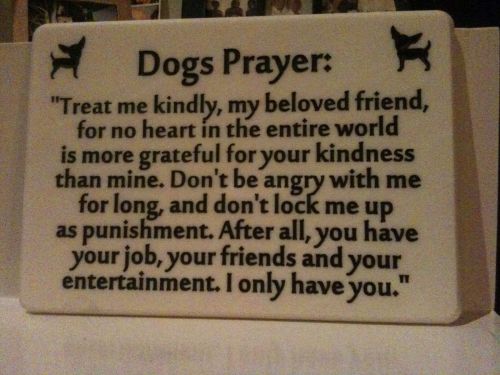
A dog’s prayer

A dog's prayer

Dogs in history

As man’s best friend, dogs have been at our side through important moments in history.  Today, I came across this photo in a collection of photos from scrap metal drives held during World War II.

America needed raw materials for the war; a single tank weighed 18 tons.

Scrap metal drives were a way for the community to get behind the war effort, often competing with one another to see who could collect the most metals.

And of course dogs helped…

Dog in World War II scrap metal drive

Image: Leslie Jones/Boston Public Library

Kathleen Crisley, specialist in dog massage, rehabilitation and nutrition/food therapy, The Balanced Dog, Christchurch, New Zealand

Brushing your dog’s teeth

I see a lot of dogs in my massage practice who have bad breath and/or other noticeable signs of dental disease.  Ask most veterinarians and they’ll tell you that they do a lot of ‘dentals’ during the course of any given week.  If your dog requires teeth to be extracted because of infection, cracking, or gum disease, your healthcare bill will quickly increase.

The first line of defense in keeping your dog’s teeth healthy is a good diet of wholesome ingredients.  That includes chews and bones.  Raw diets excel in this because they use bones as a staple part of the diet but I have also seen dogs with excellent teeth who are fed commercial dog foods – typically supplemented with fresh ingredients – and with bones and chews a regular part of the regime.

Some owners feed a combination of raw and commercial diets; I personally like this balanced approach and it is what I feed my own dog.

But, and here’s the but…bones and chews don’t solve the dental disease problem for a good number of dogs.   Why?

  • Some dogs just aren’t naturally strong chewers; they aren’t motivated by chewing for very long – even on a fresh and meaty bone
  • Dogs who have been rescued or adopted may already have already experienced damage to their teeth or suffered early in life because of a poor diet or starvation
  • I believe that some dogs, like people, have a mouth chemistry that pre-disposes them to tartar build-up.  Dogs are individuals and we simply can’t rule out that nature deals the bad-teeth card to some dogs
  • Dogs who have been born with defects such as cleft palates usually have something wrong with their teeth from the outset; bones and chews may be difficult for these dogs

So what’s the next step?

My view is definitely teeth-brushing.  We train our children to do this daily.  Why would it be any different for a domesticated dog?

[And, with hand on heart, most vets will choose teeth brushing over a special ‘dental diet’ any day.]  The issue here is having the patience and persistence to brush teeth effectively.  Unfortunately, a lot of owners simply give up because of their dog’s protests and vets then become conditioned to ‘water down’ the advice by saying ‘try it a couple of days per week..’ and ‘feed a dental diet.’

I brush my dog’s teeth daily.  Izzy is a retired racing greyhound, a breed known for their bad teeth.  By the time Izzy was adopted at age 5 1/2, her teeth were noticeably unstable and worn down from what must have been chewing on the bars of a kennel or some other surface equally as unforgiving.  She had teeth extracted as part of her adoption medical visit.

I like this very straightforward video from The Whole Dog Journal on the subject of teeth brushing.  The only oversight is that the video doesn’t cover the triple-headed toothbrush design which I prefer.  My concern with the long-handled toothbrushes is that it is easy to poke a dog in the mouth with them, particularly if they are fussing with you over getting their teeth brushed in the first place…

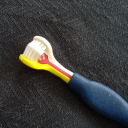
Triple headed dog toothbrush

A triple-headed dog toothbrush – my choice!

There are other natural solutions to dental care which include the use of homeopathics and herbs.  All of these are my choice before a dental diet.  Why?

Well here’s the ingredient list off the label of a well-known prescription diet product.  Does it sound healthy/wholesome to you?

Brewers Rice, Whole Grain Corn, Chicken By-Product Meal, Powdered Cellulose, Pork Fat, Soybean Mill Run, Lactic Acid, Chicken Liver Flavor, Soybean Oil, Calcium Sulfate, Potassium Chloride, L-Lysine, Iodized Salt, Choline Chloride, vitamins (Vitamin E Supplement, L-Ascorbyl-2-Polyphosphate (source of Vitamin C), Niacin Supplement, Thiamine Mononitrate, Vitamin A Supplement, Calcium Pantothenate, Vitamin B12 Supplement, Pyridoxine Hydrochloride, Riboflavin Supplement, Biotin, Folic Acid, Vitamin D3 Supplement), minerals (Ferrous Sulfate, Zinc Oxide, Copper Sulfate, Manganous Oxide, Calcium Iodate, Sodium Selenite), Taurine, Mixed Tocopherols for freshness, Natural Flavors, Beta-Carotene

Kathleen Crisley, specialist in dog massage, rehabilitation and nutrition/food therapy, The Balanced Dog, Christchurch, New Zealand

Image

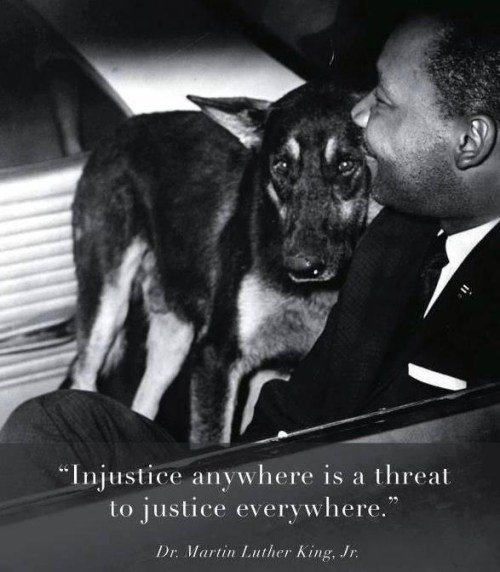
Doggy quote of the month for February

Martin Luther King

Treating heart disorders in dogs

A novel therapy tested by University of Guelph scientists for treating a fatal heart disorder in dogs might ultimately help in diagnosing and treating heart disease in humans.

Ontario Veterinary College (OVC) professors Glen Pyle and Lynne O’Sullivan have also identified potential causes of inherited dilated cardiomyopathy (DCM) or “weak heart.”

The groundbreaking study was published this month in the American Journal of Physiology.

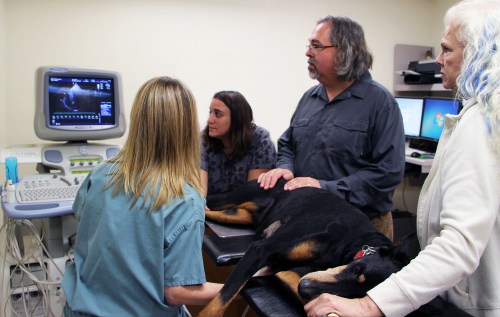
Cardiology exam

“The cardiovascular systems of dogs and people are very similar,” said Pyle, a professor in OVC’s Department of Biomedical Sciences and a member of U of G’s Centre for Cardiovascular Investigations.

“It allows us to do comparative investigations that can advance understanding of this fatal condition.”

In both dogs and people with DCM, the weakened heart muscle becomes unable to pump blood around the body. The cause of the problem is often unknown, although it’s common to involve genetics.

Researchers suspect malfunctioning muscle proteins cause the heart to weaken, allowing it to dilate like an overfilled balloon.

DCM is the second leading cause of heart failure in dogs, and it’s especially common in large breeds. Dogs typically show no symptoms until the disease is well-advanced.

The condition is often inherited; up to 60 per cent of Doberman Pinschers are affected during their lifetime.  Other breeds such as Irish wolfhounds and Great Danes also have high rates.

In people, 30 to 50 per cent of DCM cases are hereditary.

The end result of DCM is congestive heart failure. While medical advances have reduced deaths from congestive heart failure by 40 per cent in the past decade, the condition still afflicts hundreds of thousands of Canadians, and the five-year mortality rate remains high.

Aging populations worldwide are likely to cause dramatic increases in the rate of heart failure in the upcoming decades, Pyle said.

“The cause of a substantial percentage of DCM cases remains unknown,” he said.  “This is why it’s urgent to develop novel agents that can improve heart function.”

For the study, Pyle and O’Sullivan, a clinical cardiologist in OVC’s Health Sciences Centre, worked with researchers at the University of Washington to test a novel therapy in diseased heart cells.

 The therapy involves introducing a molecule involved in muscle contraction. In heart cells from dogs with DCM, it restored normal function. The next step is developing a gene therapy that would allow the molecule to be produced in heart muscle cells in patients with DCM.

“This suggests it’s a promising therapeutic approach worth further investigating for the treatment of DCM,” said O’Sullivan. One of 10 board-certified veterinary cardiologists in Canada, she runs OVC’s Doberman DCM screening program.

The researchers also discovered some problems in the heart muscle that likely contribute to DCM.  “This may shed light on the mechanical impairment in failing hearts,” Pyle said.

The Guelph scientists are also working with researchers in Finland on DCM genetics and proteins. That work might lead to development of therapies for targeting specific proteins, said Pyle.

Both researchers belong to U of G’s Centre for Cardiovascular Investigations, one of a few centres worldwide studying heart disease from single molecules to clinical applications.

Source:  University of Guelph media release

Izzy’s cabin fever

For the last few days it has been raining when we normally go out for morning walks.  And Izzy doesn’t like walking when it is really raining.  She prefers to do her business and head for home.

But those shorter walks (thankfully, the afternoon walks haven’t been affected by rain) have meant that she has excess energy.  This energy burst forth this afternoon when she had to play with a range of toys before she settled for dinner and a rest. This went on for over 30 minutes – most unusual for my sedate greyhound.

Here she is, in all her glory, playing with her basketball:

Kathleen Crisley, specialist in dog massage, rehabilitation and nutrition/food therapy, The Balanced Dog Ltd, Christchurch, New Zealand

Re-branding and going viral

It’s been particularly busy the last few days.  I had expected it to be busy – just not this busy.

The planned part of the weekend was my company re-branding.  At long last, my business is now The Balanced Dog Ltd – a practice focused on professional dog massage and natural care.

When I started in business in 2007, it was as a maker of preservative-free dog treats and cakes and so the company name of Canine Catering suited…but by 2010, my dog massage practice was growing and it is this aspect of natural dog care that has become my passion.

The new name also reflects my interests in Traditional Chinese Medicine and nutrition.  It’s all about balance and health.

But what I didn’t expect this weekend was my first truly viral post on Facebook.  A client of mine shared this cartoon with me and it all took off from there:

This is Jill

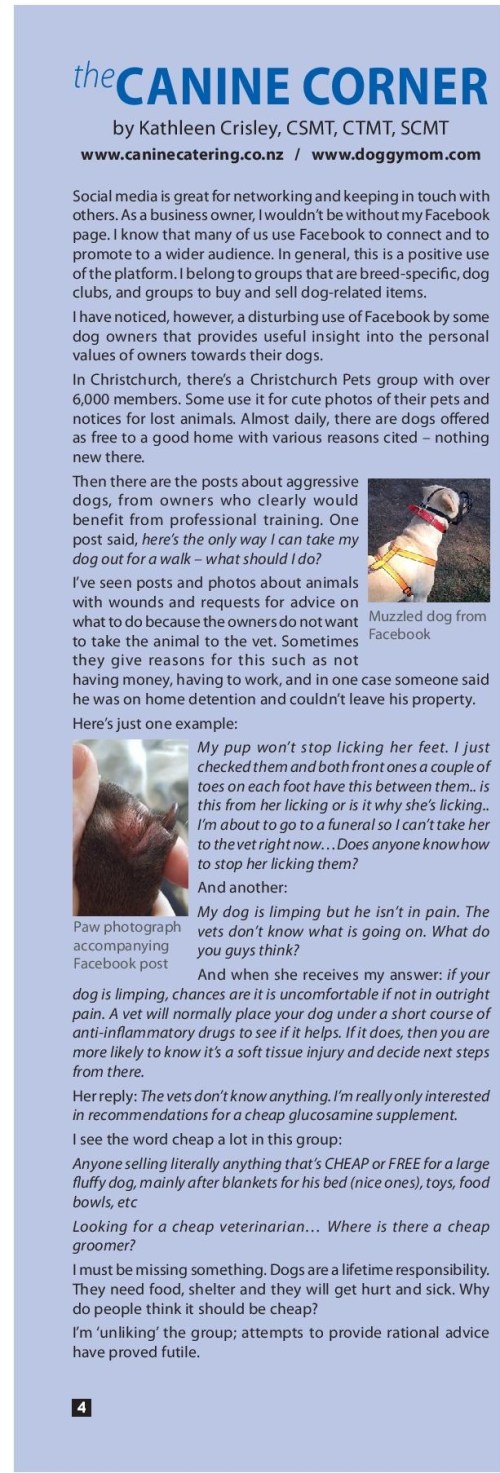
You see, last month my column about this subject was published in NZ Dog World magazine.  I’m increasingly concerned about how people are taking to Facebook for medical diagnosis (instead of seeking professional veterinary care).

It’s okay to seek advice from peers when your dog has a known condition.  Support groups for all types of disorders exist on social media; I’ve used them myself.

And I guess a lot of people agree with me – I’ve tripled the number of Facebook likes on my page and have had over 1.5 million views.  Not bad for an independent canine massage practitioner from little old New Zealand…

Thanks for reading my blog; I’ve been writing it for five years now and I still enjoy it and the connections I have made with some dedicated dog parents.

Kathleen Crisley, specialist in dog massage, rehabilitation and nutrition/food therapy, The Balanced Dog, Christchurch, New Zealand

Oh…and here’s my column about “Dr Facebook” if you’re interested:

December 2015

Bear’s best friends

Detection dog for bears

Camas, of Working Dogs for Conservation, on the job in the Centennial Mountains.  Photo credit:  Julie Larsen Maher

A recently released study from WCS (Wildlife Conservation Society) details a new method using  “detection dogs,” genetic analysis, and scientific models to assess habitat suitability for bears in an area linking the Greater Yellowstone Ecosystem (GYE) to the northern U.S. Rockies.

The method, according to the authors, offers an effective, non-invasive approach to the collection of data that could play a vital role in the further recovery of grizzly bears during the coming decades.

“The use of detection dogs allowed us to quantify and map key areas of habitat for black bears in the Centennial Mountains located along the Idaho-Montana border west of Yellowstone National Park,” said Jon Beckmann, WCS Scientist and lead author of the study. “Black bears are a proxy species useful for predicting likely grizzly bear habitat. With recovery, a larger grizzly bear population needs room to roam and to reconnect with other populations. The Centennial Mountains region of the U.S. northern Rockies can provide room and safe linkages— critical to connecting the bear population in the GYE area to others further north and west”. 

During the study, two Labrador retrievers and two German shepherds owned and trained by Working Dogs for Conservation, located 616 scat samples of black bears and 24 of grizzly bears (identified by DNA extraction and analysis) in the 2500 square kilometer (965 square mile) study area.

“Dogs excel at searching for multiple scents at once, even if one is far more common than the other,” according to Aimee Hurt, Working Dogs for Conservation co-founder. “In this case, the dogs easily alerted us to a multitude of black bear scat, while also readily locating the rare grizzly bear scat, resulting in a multitude of data points and a robust model.”

“We recognize that black bears do not always utilize the landscape in precisely the same manner as grizzly bears,” said Beckmann. “But given the paucity of grizzly bears in the study area—especially  during the years of our study—our  approach, data, and model have value to grizzly bear conservation and management. This is especially true given that black bears and grizzly bears in the GYE are known to utilize very similar habitats spatially, but at different times.” 

Plugging the scat sample location data into their scientific model, the scientists examined the landscape with respect to habitat parameters, private lands, public land management and human activity in the area. Results of modeling provided insight into bear habitat use and resource selection patterns.

Among the findings it was determined that distance to roads matters; bears use habitat that is farther from roads, and when road density increased within 4 kilometers of a location bears used that habitat less. Bears also used a habitat less if it were high elevation, or privately owned. With this information land managers, land trusts, and others will be better informed to make bear habitat management and conservation decisions. This study may also inform human-bear conflict avoidance, and so help people and bears better co-exist.

“Using Detection Dogs and RSPF Models to Assess Habitat Suitability for Bears in Greater Yellowstone,” appears in the current edition of Western North American Naturalist. Co-authors include: Jon P. Beckmann of WCS; Lisette P. Waits of the Department of Fish and Wildlife, University of Idaho; Aimee Hurt and Alice Whitelaw of Working Dogs for Conservation; and Scott Bergen of Idaho Department of Fish and Game.

WCS’s work in this region is supported by the Turner Foundation, Wilburforce Foundation, Brainerd Foundation, The New York Community Trust, and the Bureau of Land Management–Dillon, Montana office.

Source:  Wildlife Conservation Society media release


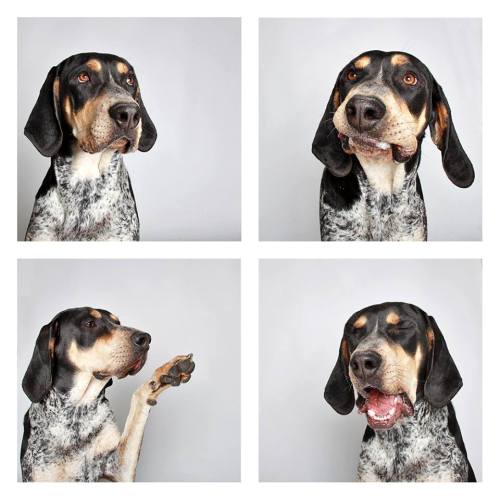
Dogs in the photo booth

Rescue groups who want to increase their adoption rates may want to look at the great work being done by Guinnevere Shuster, who is social media coordinator at the Humane Society of Utah and also a professional photographer.

Ms Shuster has taken dogs out of the shelter environment and put the dogs in a photo booth setting to help show off their good looks and individual personalities.  (There are no bars in these adoption photos).

Adoption photo booth photo

When interviewed by website DIY Photography, she said It helps a great deal, almost all of these dogs have been adopted within a couple days of being posted, some even have people lining up at the front door before we open.”

What shelter wouldn’t want these results?  (And if the shelter isn’t lucky enough to have a photographer on staff, then it’s an opportunity to ask for this support from a local photographer – helping to promote their business, too).

Due to time constraints, Guinnevere can only photograph two dogs per week.  It’s a worthwhile investment of time to see the dogs placed in new forever homes.

Adoption photo 2

Kathleen Crisley, specialist in dog massage, rehabilitation and nutrition/food therapy, The Balanced Dog Ltd, Christchurch, New Zealand