Tag Archives: companionship

With a nuzzle, paw and kiss, dogs offer a potent antidote to human loneliness

Loneliness has become an increased concern nationally since the pandemic. However, studies have shown companionship with dogs can greatly reduce the effects. (VCU Center of Human-Animal Interaction)

By Mia Stephens

Framed by the isolation of the pandemic, loneliness has become a huge concern across the world in recent years. Loneliness is considered as harmful as smoking 15 cigarettes a day and may be a greater public health threat than obesity

Long known as man’s best friend, dogs are being embraced even more now as a means of combatting loneliness. In one study, frequent interactions with dogs, either through ownerships or through long-term interventions, have been associated with positive psychological outcomes across the human lifespan.  

“They are skilled at socializing with humans, sensitive to our emotional states and gestures – they can communicate using complex cues and form complex attachment relationships with humans,” said Nancy Gee, Ph.D., C-AISS, professor of psychiatry and the director of Virginia Commonwealth University’s Center for Human-Animal Interaction and Bill Balaban Chair in Human-Animal Interaction. “Their attachment to their human owners mirrors that of human babies to their mothers.”  

Gee, whose been studying the relationship between therapy dogs and humans for more than two decades, spoke with VCU Health News about how interactions with dogs can relieve loneliness and increase connection with others.   

How can dogs combat human loneliness?  

Dogs are thought to fulfill the four roles of an attachment figure: They are enjoyable, comforting, missed when absent and sought in times of distress. Adults and children alike confide in their pets because they relieve us from the worry of confidentiality, judgments, or meeting expectations.  

Dogs are known as wonderful “social icebreakers” and referred to as the “great leveler” – people will risk directly engaging with unfamiliar people when there is a dog present. Additionally, research shows that pet owners have made friends through their companion animals, which have helped them engage more in the community.  

When humans interact with a dog in a calm way – where they are stroking the dog and making eye contact, or even talking to the dog – we see that both species release oxytocin (bonding/feel-good hormone), and their cortisol (stress hormone) levels drop. Additionally, their blood pressure and muscle tension lower, and their mood elevates.  

When you combine these responses together, it indicates the interactions are relaxing and enjoyable, which helps to reduce a person’s overall experience of loneliness. 

Is there a difference from other animals?  

Probably, yes, but there is not enough research on the subject to know for certain. We do know that dogs are unique in the animal kingdom. Through domestication and selection, dogs emerged from the grey wolf over a period of at least 35,000 years, and there is probably no other species on the planet as well-matched to human social needs as dogs.  

What are common types of service dogs, and do they differ in addressing human loneliness?  

There are three prominent classifications: 

  • A Service Dog (also called an Assistance Dog) has one handler who has a medically recognized disability. The dog is specially trained to assist that one person (their handler) with some aspect of that disability. For example, some dogs are trained to alert a person with a seizure disorder that a seizure is about to occur. This will allow the person to take medicine, call for assistance and/or get into a safe place/position so that they are not harmed during the actual seizure.  Service Dogs are covered under the American’s with Disabilities Act and are granted access to public facilities and housing that otherwise excludes pets. 
  • An Emotional Support Animal can be any animal species and requires no specific training. An ESA supports one person with a mental disability by comforting that person in a way that reduces symptoms. ESA status is determined by a mental health professional who writes a letter attesting to the animal’s role and housing status if pets are otherwise not allowed. However, ESAs are not permitted any other public access. 
  • A Therapy Dog is handled by one person, but the dog’s job is to interact with many people who may benefit from the interaction. Therapy dogs, like those in our center’s Dogs on Call program, are granted access to facilities and transportation based on the permission of the administration of the facility or transportation provider, and the requirements of the program in which the dogs participate. 

Currently, there is very little research that compares the three classifications of animals and the effects of SDs or ESAs in reducing loneliness. However, Dogs on Call specifically, and other therapy dogs in general, have been found to significantly reduce loneliness in the people they visit. 

Does human age matter in regard to loneliness and the benefits of interacting with dogs?  

We have results back from our own randomized clinical trials showing that for older adults and for adults with mental illness, interacting with Dogs on Call dogs and handlers is effective at reducing loneliness.  

We’ve just completed data collection on our pediatric study, so we don’t know the answer just yet, but we have reason to believe that across the human lifespan, interacting with a therapy dog can reduce loneliness. Additionally, one study showed that adolescents derive more satisfaction from, and engage in less conflict with, their pets than with their human siblings.

Source: VCU Health (Virginia Commonwealth University)

An Unexpected Way to Lower Your Dementia Risk: Pet Ownership

What if reducing your dementia risk could be as simple as owning a dog? Several observational studies published last year suggest pet ownership could meaningfully reduce your risk among proving other emotional and physical benefits. Sixty-six percent of households in the United States own a pet, with dogs being the most popular companion. Pets can bring us joy, help alleviate stress, offer companionship, and even help us lead a more active lifestyle.

Researchers have now found an added benefit of being a pet owner — pets could stave off brain aging in humans. People who own pets are less lonely — a major risk factor for dementia. Now, scientists are interested in seeing whether people who owned cats or dogs had a lower risk of cognitive decline or dementia.

Owning a dog or cat could meaningfully reduce your risk of developing dementia, several observational studies published last year found, especially if you’re over the age of 50.

What does the science say about dementia, dogs and cats?

In 2023, Japanese researchers published a study that looked at 11,194 older adults to see whether owning dogs or cats provided a protective effect against dementia. 

Compared to those without pets, dog owners were 40 percent less likely to develop dementia over a four year period. Additionally, dog owners who were social or exercised regularly experienced an extra 20 percent decrease in dementia risk. The study didn’t find evidence that owning cats had a similar effect.

Chinese researchers published a similar study last year, also looking at the link between pet ownership and cognitive decline. The study’s participants received psychological tests to assess their memory, verbal fluency, and thinking eight years apart. The cohort was composed of 7,495 adults over the age of 50 living in the UK. 

Among individuals who were living alone, owning a cat or dog was associated with a slower rate of cognitive decline. However, older adults living with other people saw no significant benefit, which suggests that companionship from dogs or cats could offset some of the negative effects of living alone.

This field of research is still very new, and for people who have already developed Alzheimer’s or dementia, there isn’t a lot of research yet on how interactions with pets or trained therapy animals affect further cognitive decline. 

Despite the lack of concrete research on cognitive decline, many long-term care facilities have also started implementing animal-assisted therapy for their residents facilitated by certified handlers and trained dogs. Dogs can still improve their quality of life and have been shown to offer stress-reducing benefits. Spending time with a furry friend could ease agitation, aggression, depression, and even help residents cope with sundowning, emotional and behavioral issues that worsen as daytime fades.

While more research is needed to determine whether adopting pets can have a protective effect on the brains of isolated older adults, pet ownership can offer many benefits to your emotional and physical health.

Source: Being Patient – Alzheimer’s news, advice, stories & support

Dogs can age healthier by socializing with humans and pets, study says

Social interaction is good for human health, and a new study suggests it might be good for your dog, too.

“Where we live and who we interact with has a really strong effect on our health and well-being,” said Noah Snyder-Mackler, who is lead author of the study and an associate professor at Arizona State University’s school of life sciences and its center for evolution and medicine. “This link between our social environments and our health extends to many social animals. Animals with stronger social relationships live longer, healthier lives.”

Social companionship helps with healthy aging for dogs, a study says. (Katherine Frey/The Washington Post)

The research, published in Evolution, Medicine & Public Health, surveyed the human parents of more than 21,000 dogs and found that social companionship — with both people and other animals — had the largest influence on healthier aging among dogs. The effect was five times greater than anything else they looked at, such as family finances, household children or the pet parent’s age.

Improving dog and human health

The study is part of the Dog Aging Project, a large community-science research effort started in 2018 and funded by the National Institute on Aging and private donations. It’s led by the University of Washington and Texas A&M schools of medicine and includes more than a dozen institutions, including Arizona State University.

Its goal is to learn how genes, lifestyle and the environment influence aging and disease among dogs. Researchers also hope the insights can help human health.

“Dogs are often considered our closest animal companions and share many aspects of our daily lives,” said Brianah McCoy, an ASU doctoral student and a co-author of the paper. “By studying how the social environment affects dog health, we can gain insights that may also be relevant to human health.”

More than 45,000 dogs overall are enrolled in the aging project. A subset, about 1,000 dogs, are part of a more focused cohort from whom Snyder-Mackler and his collaborators are collecting blood and other biological samples over many years to uncover additional clues.

Having furry friends is linked to better health

The researchers used statistical tools to analyze factors in the dogs’ social environments obtained from surveys completed by dog parents. The questionnaires asked about, among other things, physical activity, environment, dog behavior, diet, medications and preventive medications, health status and owner demographics.

The scientists narrowed their analysis to five key factors — neighborhood stability, total household income, social time with children, social time with animals and owner age — that together might explain how the social environment could affect a dog’s well-being.

They found poorer health among dogs who lived in households with financial difficulties and other stressors, and better health among dogs who experienced more social companionship, such as living with other dogs.

The researchers, however, did not quantify life span, although they plan to do so in the future. “While we can’t say ‘having another dog in the house adds X years to your dog’s life,’ we were able to compare the strengths of the effect of different environmental factors on health,” Snyder-Mackler said.

The researchers cautioned that the results don’t mean that pet parents need to add more dogs to the family or rush their pets to dog parks or doggy day-care.

“We don’t know if the environmental factors we measured caused the health outcomes, so we don’t want to make any strong statements about what owners should or shouldn’t do,” Snyder-Mackler said. “The study just looked at whether you had other animal companions in the house. But it does suggest that having more furry friends is linked to better health outcomes.”

Some dogs may not benefit from social interactions

Scientists not involved in the study pointed out that not all dogs respond similarly.

“Some dogs may find social interactions stressful,” said Clara Wilson, a postdoctoral researcher in the Penn Vet Working Dog Center at the University of Pennsylvania School of Veterinary Medicine, “and it may not be in the dog’s best interests to force these interactions.”

Courtney Sexton, postdoctoral researcher at Virginia-Maryland College of Vet Med — and who contributes other research to the Dog Aging Project — said her dog would rather play with a ball than with other dogs, and it’s the pet parents’ “job to pay attention to the signals dogs give us.”

Surprising findings

Several findings were surprising, the study authors said.

  • Having children in the household had a negative impact on a dog’s health.
  • Dogs in wealthier households were diagnosed with more diseases than those in less affluent homes.
  • Dogs seemed to be healthier when they lived with older humans, and this effect was stronger in younger dogs.

Children may be detrimental to the health of dogs because of resource allocation, the researchers suggested. “It’s not that kids hurt the dogs or directly affect their health,” said Layla Brassington, a doctoral student at Vanderbilt University, who worked on the study as a master’s student at Arizona State University. “The more children or time that owners dedicate to their children likely leads to less time and effort they can dedicate to their furry children.”

The authors theorize that wealthier households have better access to medical care, and pet parents might seek veterinary services more frequently, which leads to identifying more diseases.

The ages of the dogs also affected the findings, with younger dogs seeming to be “more tuned into the age of their owner and how it impacts their well-being,” McCoy said.

Could dogs benefit from a cat companion?

The researchers did not specifically look at the effect of breeds — they did not have enough detail on individual breeds — or exercise, Snyder-Mackler said. (The Dog Aging Project recently released a study that found physical activity is associated with a better cognitive outcome in dogs.) “What we did see was that the strength of the relationship between the environment and health was similar when we looked separately at mixed-breed versus purebred dogs,” he said.

They also acknowledged one study limitation — the sample consisted of mostly high-income dog parents. A more diverse set could help “unravel the true magnitude of certain variables’ influence on canine well-being,” McCoy said. “It is possible that the effects we found in this study would be even stronger if we had a more varied and inclusive population.”

Most of the pets in the multi-animal households were dogs, and the scientists said there was insufficient data to distinguish between the effects of having additional dogs vs. other species.

“It could be that having other pets — even cats — provides health benefits through companionship,” Snyder-Mackler said.

Source: Washington Post

Image

Doggy quote of the month for June

Doris Day quotation

Doggy quote of the month for August

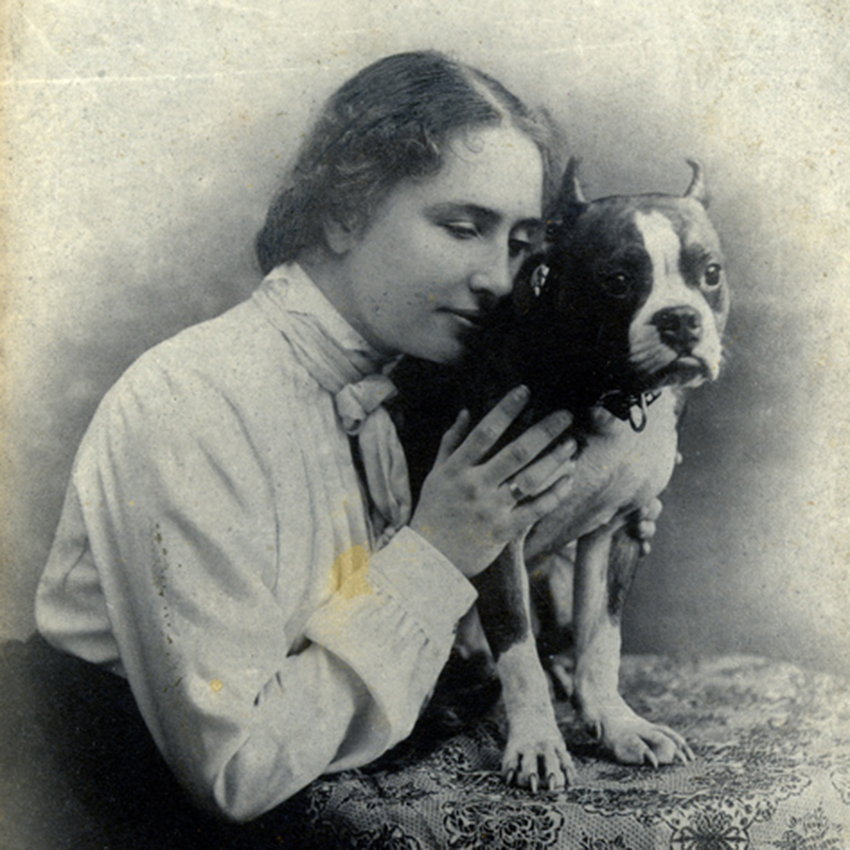
“The charming relations I have had with a long succession of dogs results from their happy spontaneity.  Usually they are quick to discover that I can not see or hear.  Considerately they rise as I come near, so that I may not stumble.  It is not training but love which impels them to break the silence about me with the thud of a tail rippling against my chair, or gambols round the study, or news conveyed by expressive ear, nose, and paw.  Often I yearn to give them speech, their motions are so eloquent with things they can not say.  Truly, as companions, friends, equals in opportunities of self-expression, they unfold to me the dignity of creation, and in their joy smiles the blessing of St. Francis.”

– Helen Keller in A Tribute to a Dog

Helen Keller with companions

Helen Keller with Phiz (a Boston Terrier). Photo courtesy of Perkins School for the Blind

Dogs benefit children with autism

A University of Missouri researcher has studied dog ownership decisions in families of children with autism and found that parents report a range of benefits of dog ownership including companionship, stress relief and opportunities for their children to learn responsibility.

Photo credit: Noël Zia Lee, Wikimedia Commons

Photo credit: Noël Zia Lee, Wikimedia Commons

‘Children with autism spectrum disorders often struggle with interacting with others, which can make it difficult for them to form friendships,’ said Gretchen Carlisle, the study’s author. ‘Children with autism may especially benefit from interacting with dogs, which can provide unconditional, nonjudgmental love and companionship to the children.’

Carlisle interviewed 70 parents of children with autism.  Nearly two-thirds of the parents in the study owned dogs, and of those parents, 94 percent reported their children with autism were bonded to their dogs. Even in families without dogs, 70 percent of parents said their children with autism liked dogs.

‘Bringing a dog into any family is a big step, but for families of children with autism, getting a dog should be a decision that’s taken very seriously.  If a child with autism is sensitive to loud noises, choosing a dog that is likely to bark will not provide the best match for the child and the family. If the child has touch sensitivities, perhaps a dog with a softer coat, such as a poodle, would be better than a dog with a wiry or rough coat, such as a terrier.’

The study, “Pet Dog Ownership Decisions for Parents of Children With Autism Spectrum Disorder,” was published in the Journal of Pediatric Nursing earlier this year.

Source:  University of Missouri media release

For more about the benefits of dogs for people with autism, read my post Dogs are a ‘social lubricant’ in helping people with autism

There are no bad days

There are no bad days

A thought for your weekend as you come home after work on a Friday.  (I feel this way every day that I come home to Daisy)