Tag Archives: dogs

Pet Night on Capitol Hill

Congresswoman Claudia Tenney (NY-24) introduces the PAW Act during Pet Night on Capitol Hill

The Human Animal Bond Research Institute (HABRI), the Pet Food Institute (PFI) and the Pet Advocacy Network co-hosted Pet Night on Capitol Hill on 11 September 2024, paying special tribute to the important role of service animals for our nation’s disabled veterans, and celebrating the positive impact of pets in America. Pet Night on Capitol Hill brought together Members of Congress, congressional staff, and leaders in the pet care community to share programs and policies that protect human and animal well-being.

“Pet Night on Capitol Hill is more than just an evening spent with some incredible pets—it’s a chance to convey to Congress the vital message that policies and programs keeping people and pets together promote better health and well-being for all,” said Vic Mason, President of the World Pet Association (WPA) and presenting sponsor of Pet Night.

“HABRI is proud to co-host Pet Night on Capitol Hill, a night dedicated to honoring the human-animal bond and its positive impact on the well-being of individuals, families and communities, including our nation’s veterans who rely on the healing support of service dogs,” said Steven Feldman, President of HABRI.

At the event, attendees interacted with Pet Partners therapy animals, show cats provided by the Cat Fanciers’ Association, and adoptable puppies from Petco Love.

Veterans and their service dogs were recognized during the Ceremony for their service to our country, and the National Service Dog Memorial displayed a replica of the resin casting of “Sully”, President George H.W. Bush’s Service dog by Susan Bahary, which will be placed in the permanent collection of the George H. W. Bush Presidential Library and Museum in College Station, TX.

The Animal Health Institute (AHI) honored the winners of the Cutest Pets on Capitol Hill contest, now in its sixteenth year, recognizing the most adorable animals belonging to Members of Congress and their staff.

Cutest Dog: Palmer
Owner: Joe Ballard
Office of Rep. Kelly Armstrong (ND)

Cutest Cat: Moony
Owner: Izzah Yousuf
Office of Rep. Al Green (TX-9)

Cutest Exotic: Froth
Owner: Larson Church
Office of Rep. Andrew Clyde (GA-9)

“I’m happy to once again partner with AHI to be a part of this event, which brings together members from both parties to share our mutual affection for our beloved pets. This event is also a fantastic reminder that ensuring our pets’ and animals’ health and safety is crucial for both their wellbeing and ours,” said Congresswoman Schrier. “That’s why in Congress, I’ve advocated for animal health through legislation like ADUFA to get new, innovative, and safe veterinary medications to market, and I am incredibly proud that this legislation was signed into law last September.”

“I’m honored to be a congressional judge for this year’s AHI Cutest Pets Contest,” said Rep. Cammack (R-FL-03). “Folks on the Hill know my office is home to our three pups who often greet guests and visitors, so we always appreciate the opportunity to support our furry friends! This year’s Pet Night is also special as we pay homage to the heroes and animals who have served our nation. I’m grateful to the Animal Health Institute for inviting me to participate in this year’s event.”

“The Animal Health Institute’s Cutest Pets on Capitol Hill is always a highlight, but there’s so much more to it than just cuteness – it’s all about the importance of pets in people’s lives,” said Alex Mathews, President and CEO of AHI. “The animal health industry serves not only to keep pets healthy, but also to keep families healthy and happy together, and we’re proud to celebrate this each year at Pet Night on Capitol Hill.”

HABRI’s “Human Animal Bond Leadership Award” was conferred upon Representative Claudia Tenney (NY-24) and Representative Deborah Ross (NC-02) for their sponsorship of the People and Animals Well-being (PAW) Act, a newly introduced bill that would allow people to use up to $1,000 of their Health Savings Accounts (HSAs) or Flexible Spending Accounts (FSAs) for veterinary care or a pet health insurance policy for their pets. The bill would impose no limit on veterinary care for service animals, providing even more support for people with disabilities, including our nation’s veterans.

“Our pets and service animals are cherished members of our families, and it’s essential that owners have the ability to pay for quality care,” said Congresswoman Tenney. “The PAW Act offers greater flexibility to pet owners by allowing them to use HSAs and FSAs for pet care expenses. This legislation will help veterans, and all pet owners afford veterinary care for their beloved pets and service animals.”

“The Pet Advocacy Network’s “Pets’ Best Friend” award was conferred upon three Members of Congress and Senators who have demonstrated a commitment to supporting pets and pet owners. Congressman Jake LaTurner of Kansas was jointly recognized by PAN and PFI, and Senator Chuck Grassley of Iowa and Congressman Glenn “GT” Thompson of Pennsylvania were recognized for their tireless service on behalf of companion animals and those who serve and support them.

“We were thrilled to recognize these Members of Congress with the Pets’ Best Friend award and to once again co-host this important celebration of pets and pet ownership in America,” said Pet Advocacy Network President and CEO Mike Bober.

“Just as complete and balanced nutrition is critical for pets, policies and programs that ensure healthy lives for people and pets are also important. Pet Night on Capitol Hill is a wonderful opportunity for the pet care community to showcase its longstanding commitment to the importance of service dogs for veterans, pets in classrooms for children, and the dire need for more pet-friendly housing, especially for domestic violence shelters,” said Dana Brooks, President & CEO of PFI.

Pet Night is part of Pet Week on Capitol Hill, a week-long series of virtual programming and in-person visits. Virtual sessions share key data about how pets are important for human health and quality of life and highlight the most pressing issues relating to pet ownership in America. All recorded sessions from Pet Week on Capitol Hill are now available to view on-demand at http://www.petnight.com

Source: Pet Business

When Dogs Smell Your Stress, They Act Sad

Hailey Seelig/Getty Images

Humans and dogs have been close companions for perhaps 30,000 years, according to anthropological and DNA evidence. So it would make sense that dogs would be uniquely qualified to interpret human emotion. They have evolved to read verbal and visual cues from their owners, and previous research has shown that with their acute sense of smell, they can even detect the odor of stress in human sweat. Now researchers have found that not only can dogs smell stress—in this case represented by higher levels of the hormone cortisol—they also react to it emotionally.

For the new study, published Monday in Scientific Reports, scientists at the University of Bristol in England recruited 18 dogs of varying breeds, along with their owners. Eleven volunteers who were unfamiliar to the dogs were put through a stress test involving public speaking and arithmetic while samples of their underarm sweat were gathered on pieces of cloth. Next, the human participants underwent a relaxation exercise that included watching a nature video on a beanbag chair under dim lighting, after which new sweat samples were taken. Sweat samples from three of these volunteers were used in the study.

Participating canines were put into three groups and smelled sweat samples from one of the three volunteers. Prior to doing so, the dogs were trained to know that a food bowl at one location contained a treat and that a bowl at another location did not. During testing, bowls that did not contain a treat were sometimes placed in one of three “ambiguous” locations. In one testing session, when the dogs smelled the sample from a stressed volunteer, compared with the scent of a cloth without a sample, they were less likely to approach the bowl in one of the ambiguous locations, suggesting that they thought this bowl did not contain a treat. Previous research has shown that an expectation of a negative outcome reflects a down mood in dogs.

The results imply that when dogs are around stressed individuals, they’re more pessimistic about uncertain situations, whereas proximity to people with the relaxed odor does not have this effect, says Zoe Parr-Cortes, lead study author and a Ph.D. student at Bristol Veterinary School at the University of Bristol. “For thousands of years, dogs have learned to live with us, and a lot of their evolution has been alongside us. Both humans and dogs are social animals, and there’s an emotional contagion between us,” she says. “Being able to sense stress from another member of the pack was likely beneficial because it alerted them of a threat that another member of the group had already detected.”

The fact that the odor came from an individual who was unfamiliar to the dogs speaks to the importance of smell for the animals and to the way it affects emotions in such practical situations, says Katherine A. Houpt, a professor emeritus of behavioral medicine at Cornell University’s College of Veterinary Medicine. Houpt, who was not involved in the new study, suggests that the smell of stress may have reduced the dogs’ hunger because it’s known to impact appetite. “It might not be that it’s changing their decision-making but more that it’s changing their motivation for food,” she says. “It makes sense because when you’re super stressed, you’re not quite as interested in that candy bar.”

This research, Houpt adds, shows that dogs have empathy based on smell in addition to visual and verbal cues. And when you’re stressed, that could translate into behaviors that your dog doesn’t normally display, she says. What’s more, it leaves us to wonder how stress impacts the animals under the more intense weight of an anxious owner. “If the dogs are responding to more mild stress like this, I’d be interested to see how they responded to something more serious like an impending tornado, losing your job or failing a test,” Houpt says. “One would expect the dog to be even more attuned to an actual threat.”

Source: Scientific American

Doggy quote of the month for July

“Dogs are the leaders of the planet. If you see two life forms, one of them’s making a poop, the other one’s carrying it for him, who would you assume is in charge.”

– Jerry Seinfeld, comedian and actor

Interactions with dogs can increase brainwaves associated with stress relief and heightened concentration

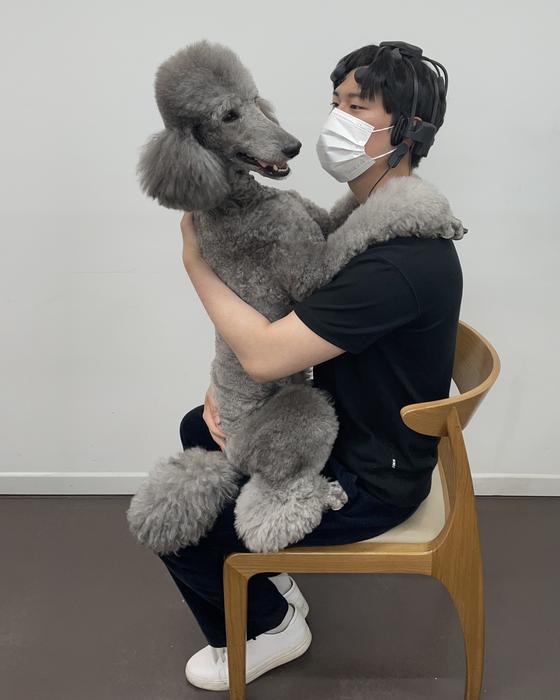
Spending quality time with dogs reduces stress and increases the power of brain waves associated with relaxation and concentration, according to a study published on March 13, 2024 in the open-access journal PLOS ONE by Onyoo Yoo from Konkuk University, South Korea, and colleagues.

An animal-assisted activity (hug) performed by a participant. Photo credit
Yoo et al., 2024, PLOS ONE, CC-BY 4.0

Animal-assisted interventions, like canine therapy, are widely used in hospitals, schools, and beyond to help reduce anxiety, relieve stress, and foster feelings of trust. Studies of the potential benefits of animal interactions often take a holistic approach, comparing people’s mood or hormone levels before and after spending time with a service animal. But this approach doesn’t differentiate between types of interactions, like grooming, feeding, or playing with an animal, limiting our understanding of how each specific interaction impacts a person’s health and well-being.

To better understand how such animal-related activities affect mood, Yoo and colleagues recruited a small sample of 30 adult participants to each perform eight different activities with a well-trained dog, such as playing with a hand-held toy, giving her treats, and taking pictures with her. Participants wore electroencephalography (EEG) electrodes to record electrical activity from the brain while they interacted with the dog, and they recorded their subjective emotional state immediately following each activity.

The relative strength of alpha-band oscillations in the brain increased while participants played with and walked the dog, reflecting a state of relaxed wakefulness. When grooming, gently massaging, or playing with the dog, relative beta-band oscillation strength increased, a boost typically linked to heightened concentration. Participants also reported feeling significantly less fatigued, depressed, and stressed after all dog-related activities.

While not all participants had pets of their own, their fondness for animals likely motivated their willingness to participate in the experiment, potentially biasing the results. Nonetheless, the authors state that the unique relationships between specific activities and their physiological effects could serve as a reference for programming targeted animal-assisted interventions in the future.

The authors add: “This study provides valuable information for elucidating the therapeutic effects and underlying mechanisms of animal-assisted interventions.”

Source: Eurekalert

Nearly half of Americans believe their loved ones are more excited to see their pets on the holidays

According to a new survey of 2,000 cat and dog owners, 32% admit they’re more excited to see a family member or friend’s pet than they are to see them. kerkezz – stock.adobe.com

Nearly half of Americans (43%) believe that their loved ones are more excited to see their pet this holiday season than they are to see them. 

According to a new survey of 2,000 cat and dog owners, that’s a two-way street as 32% admit they’re more excited to see a family member or friend’s pet than they are to see them. 

In fact, 20% believe that their pet enjoys the holiday season more than they do. 

Almost half (48%) of respondents do something special for their pet during the most wonderful time of the year.

This includes custom ornaments or decorations (64%), dressing them up in holiday clothing or pajamas (60%) as well as giving them their own tree (49%) and stocking (47%).

Half (49%) also like to give them extra treats, and 45% admit they give their pet more treats at Christmas than any other time of the year.

More than two-thirds (68%) are likely to give their four-legged friend their own special holiday meal.

Conducted by OnePoll on behalf of Nulo, the survey found that more than three-quarters (77%) of pet owners believe that their pet is happier with increased visitors during the holiday season.

Begging for attention (51%), welcoming guests (47%) and playing with a new holiday toy (34%) are some of the top ways respondents can tell if their pet is in the holiday spirit. 

Forty-two percent give them gifts for the holidays.

Those respondents give an average of three gifts and will spend over $100 total ($106.54).

The most popular gifts include toys (61%), clothing (59%) and treats (56%).

But who’s most likely to spoil their pet?

According to the results, their brother comes out on top (37%), followed by their pets’ grand”paw”rents, or the respondents’ father (36%) and mother (34%).

Healthy treats and special occasion meals are a great way to involve your dog or cat in fun holiday moments – and can add a nutritional boost as a bonus,” said Heather Mendoza, Ph.D., Nulo’s Director of Research & Development. 

“It’s wonderful to see that pet owners are already giving their pets special meals that align with their own holiday feasts (30%) or their favorite kind (49%) this season. The holidays offer the opportunity for quality time and memorable experiences with our families, including finding meaningful ways to show extra affection for our incredible pets.”

During the holiday season, pets are spoiled by having their person home with them (60%), going on more walks or adventures (42%) and getting to sleep more (40%).

Pets also partake in traditions such as bringing them along to celebrations at other people’s homes (59%), “opening presents” with the rest of the family (50%) and even going to visit Santa (45%).

Almost one-third (30%) have a bed for their pet in the dining room so they can be near the table during holiday meals, and 73% admit their pet is likely to be underfoot while cooking in the kitchen.

This may be because an overwhelming 78% of pet owners agree that it doesn’t feel like the holiday season if they aren’t able to spend it with their pet.

“Results showed that 40% of respondents believe Christmas is their pet’s favorite holiday – far ahead of the second favorite (New Year’s Day) at 19%,” said Mendoza.

“Between more together time, more treats and more spoiling, it’s no surprise that pets love this most wonderful time of the year. Giving your pet the highest quality treats and meals can make the holiday celebrations extra tasty and nutritious!”

Source: New York Post

Image

Doggy quote of the month for September

Image

Doggy quote of the month for August

Doggy quote of the month for December

“Dogs and philosophers do the greatest good and get the fewest rewards”

-Diogenes, Greek philosopher

Doggy quote of the month for April

“I look at dogs as furry Prozac”

-Rick Springfield, musician, author, actor and sufferer from depression

Doggy quote of the month for March

“Fall in love with a dog, and in many ways you enter a new orbit, a universe that features not just new colors but new rituals, new rules, a new way of experiencing attachment.”

– the late Caroline Knapp, author of Pack of Two (one of my favourite books)