Tag Archives: german shepherd

Rin Tin Tin: The Life and the Legend

rin tin tin book cover

I have just finished reading Rin Tin Tin:  The Life and the Legend by Susan Orlean.  Having previously blogged about the Dogs on the Hollywood Walk of Fame, I was intrigued when this book made the New York Times bestseller list.

If you like biography, you will like this book.  It has been expertly researched by Orlean who spent weeks reviewing the archived personal files of Lee Duncan, the owner and trainer of the original Rin Tin Tin.  Duncan fought in France during WWI and found the young ‘Rinty’ in an abandoned kennels.  He was able to secret Rin Tin Tin away on a ship returning servicemen to the United States along with his sister, who unfortunately died shortly after arriving in the USA.

Duncan bonded with the dog like no other individual (human or otherwise) in his life and found the dog exceptionally bright (although cranky with other humans).  In the 1920s, he was certain that Rinty was movie material.  Orlean does a superb job describing old Hollywood – before sound was even introduced to films and Duncan’s efforts to make his dog a film star.

Rin Tin Tin’s popularity is the main reason why German Shepherd dogs became a popular breed in the United States.

During this period in American history, dog training was not even recognised as a discipline.  In large part thanks to Rin Tin Tin’s popularity, the benefits of dog training were introduced to the American public.  Orlean again does a superb job in explaining how trained dogs were exhibited to Americans as entertainment, eventually spawning an entire industry.

It is very entertaining to read about Rin Tin Tin’s early success and the challenges posed by the introduction of sound to the movies.  Duncan, perhaps in denial, didn’t make provisions for a successor to Rin Tin Tin and – as was inevitable – the original Rinty died.  Rinty’s son was not up to scratch for acting duties and there was a time before a suitable successor was trained.

From there, the story becomes one of how Rin Tin Tin became a legend and an industry.   Other dogs, including subsequent descendents, take on the role of Rin Tin Tin and he is even transformed to a television star in the Adventures of Rin Tin Tin.  At this point, there are spin-off benefits of merchandising.

So many people invested emotional energy (as well as lots of money) in keeping Rin Tin Tin in front of the American public, well into the 1970s.  By the 1980s, however, American tastes had changed.

This book is well written and with a good pace throughout.  I recommend it  particularly if you have a German Shepherd in your life, or someone who is a German Shepherd fan, this book would make an excellent Christmas gift.

Tell me where it hurts

Tell me where it hurts
I have thoroughly enjoyed reading Tell Me Where It Hurts by Dr Nick Trout.  Appropriately subtitled “A Day of Humor, Healing and Hope in My Life as an Animal Surgeon,”  this book tells the story of one very long day in Dr Trout’s professional life.  As the day unfolds, a range of human-animal stories are revealed with wit and compassion.

The book opens in the wee hours of the morning with the story of Sage,  a German Shepherd who requires emergency surgery on her stomach.  We later meet her devoted elderly owner whose daughter isn’t so impressed with Dr Trout’s efforts to save ‘just a dog.’

There’s also the owner of Belle who, as a demonstration of how much the dog means to him, has legally changed his middle name to Belle.  (You read that right, a man with the middle name of Belle.)

This book reads a little like the veterinary version of ER, since the Angell Memorial Animal Center where Trout works is a teaching hospital.  If you liked the television show ER and you love animals, you’ll like this book.

Appropriately, the cover of the book features a Boston Terrier.  The Angell Memorial Animal Center is located in Boston.

Image

Wordless Wednesday, part 3

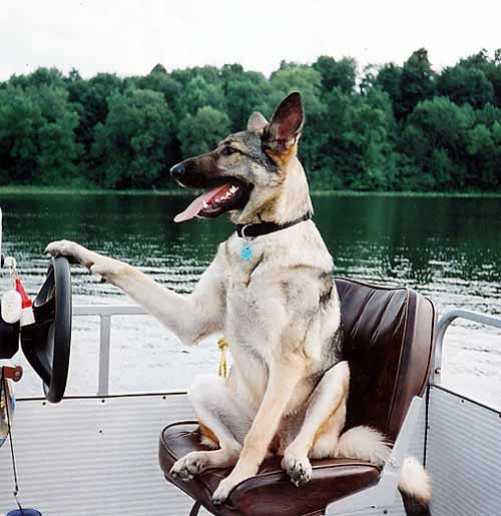
Dog steering boat

Saying goodbye – a special tribute

When Kaiser, a two-year old German Shepherd member of the Plymouth, Massachusetts Police Department, was struck suddenly by severe kidney disease, it was decided to end his suffering.

On Friday, members of the Department gathered to give Kaiser a final salute as he entered the vet’s office.

photo courtesy of the Plymouth Police Working Dog Foundation

photo courtesy of the Plymouth Police Working Dog Foundation

Officer Jamie Lebretton, Kaiser’s handler, told followers on the Foundation’s Facebook page that  I feel privileged to have had a front row seat to witness his bravery and heroic actions while serving the people of Plymouth and my brothers and sisters in blue.  Out of love and respect for Kaiser, and with the input from our excellent vet, trainer, and family, I have made the heart wrenching decision to end Kaiser’s suffering. ‘

Kaiser was laid to rest at the Angel View Pet Cemetery in Middleborough.  He joined the police dog squad at the age of 5 months in 2011 and is gone too soon.

The care and love shown for Kaiser is just another story of so many – stand up and be proud that we love and bond with our dogs!

Professional dog walkers in Washington DC

Washington, DC is full of attractions like memorials, museums and other events.  Today, I also came across a group of three professional dog walkers…

Professional dog walker

Professional dog walkers _ near bus shelter

Each of the dogs is tethered to the handler with a hands-free clip

Each of the dogs is tethered to the handler with a hands-free clip

… and when we got to the front of the line, they happily posed for a picture.  How many breeds can you identify?  There’s one little dog wearing a dress and another wearing a thundershirt for anxiety.  The German Shepherd was the largest in the group.

Professional dog walkers _ front view

Researchers identify gene associated with eczema in dogs

A novel gene associated with canine atopic dermatitis has been identified by a team of researchers led by professors Kerstin Lindblad-Toh, Uppsala University and Åke Hedhammar, SLU, Sweden. The gene encodes a protein called plakophilin 2, which is crucial for the formation and proper functioning of the skin structure, suggesting an aberrant skin barrier as a potential risk factor for atopic dermatitis.

Details appear in the open-access journal PLoS Genetics.

Atopic dermatitis (or eczema) is an inflammatory, relapsing non-contagious skin disease affecting about 3-10 percent of dogs. The skin of a patient with atopic dermatitis becomes easily irritated by various allergens such as certain types of food, pollens or house mites. Such irritation causes very strong itching which leads to scratching, redness and flaky skin that becomes vulnerable to bacterial and yeast infections.

Despite many scientific efforts, little has been known about the genetics of the disease. In their study, researchers from Uppsala University, SLU and Broad Institute, compared DNA samples from a large group of German shepherd dogs affected by atopic dermatitis with DNA coming from healthy dogs to reveal the specific DNA segment associated with the disease.

“With the help of pet owners, we have managed to collect a unique set of DNA samples from sick and healthy dogs which allowed us to gain insight into atopic dermatitis genetics,” said first author Katarina Tengvall, Uppsala University.

Purebred dogs such as German shepherds have been selected for specific physical features for several generations. Selection led to an inadvertent enrichment for disease-risk genes in certain breeds. Moreover, the resulting architecture of canine DNA makes it easier to pinpoint segments that carry these disease risk-genes. This helped the researchers to reveal the genetics of atopic dermatitis. They found a region associated with the atopic dermatitis containing the gene PKP-2, which encodes Plakophilin-2, a protein involved in the formation and maintaining of the proper skin structure.

“The finding that certain variants of the PKP-2 gene may increase the risk of developing the disease opens new possibilities in understanding the disease mechanism leading to atopic dermatitis,” continues Katarina Tengvall.

These findings will not only lead to better understanding of the disease, which may lead to better treatment strategies long term. It also opens up the possibilities of development of a genetic test for the disease.

“Our study suggests that plakophilin-2 and an intact skin barrier is important to avoid atopic dermatitis”, says senior author, Kerstin Lindblad-Toh, professor at Uppsala University and Director of SciLifeLab Uppsala. “Another gene involved in the skin barrier has recently been linked to human atopic dermatitis emphasizing the similarity between canine and human atopic dermatitis” said Kerstin Lindblad-Toh.

Source:  AlphaGalileo Foundation media statement

Dog-friendly Las Vegas

The Riviera Hotel and Casino in Las Vegas is pet-friendly.  Through discount site Coupaw, it is currently offering a 3-day/2-night stay for 2 adults at the Riviera Hotel and Casino in Las Vegas for $30.  The voucher for this deal includes a Las Vegas BITE card which provides the cardholder with other excellent deals on a wide array of food and entertainment throughout Las Vegas.

Riviera Hotel

As with many pet-friendly hotels, there are restrictions including breed specific ones 😦

The fine print says:

2 Dog maximum – $25 additional fee – per dog/per night. Pet fees are paid directly to the Riviera Hotel. All pet arrangements must be made directly with the Riviera Hotel. Pet friendly rooms are located in classic room types – San Remo tower. Dogs cannot exceed 50 lbs. Dog Owner must provide proof of current vaccinations including exhibiting current rabies tag on check in. Dogs that are excluded to stay in pet friendly rooms include but are not limited to: Akitas, Alaskan Malamutes, Chows, Doberman Pinschers, English Bull, Terriers, German Shepherds, Mastiffs, Pit Bulls, Presa, Canaries, Rottweiler, or any dog with a bite history. Coupaw is not responsible for the Riviera hotel refusing to accommodate specific dogs for any reason.

German Shepherd vs Alsatian

German Shepherd

I find it really interesting that some people refer to this dog as a German Shepherd (sometimes GSD – standing for ‘German Shepherd Dog’) and others as the Alsatian.

Strictly speaking, the name Alsatian is no longer valid.  It was officially removed as an identifier in 2010 by the American Kennel Club.

The change in name from German Shepherd dates back to the years after World War I, when it as felt that the name ‘German’ in the dog’s breed would affect its acceptability in society.  So, the UK Kennel Club decided to call the dog the ‘Alsatian Wolf Dog.’  The name caught on with other kennel clubs.

Over time, ‘wolf dog’ was dropped and the breed was simply referred to as the ‘Alsatian.’  (Alsace is the region of France in the north-east corner, bordering Germany.)

In the 1970s, there was a successful campaign to again have the dogs referred to as German Shepherd Dogs and the word (Alsatian) in parentheses followed.

Kathleen Crisley, specialist in dog massage, rehabilitation and nutrition/food therapy, The Balanced Dog, Christchurch, New Zealand

A university where your dog can come too

It’s autumn in the northern hemisphere and the time of year when students are going to colleges and universities for the first time.   If they are enrolled at Stephens College in Columbia, Missouri – there’s a high chance that their dog can come too!

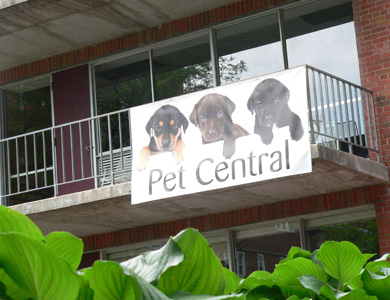
Searcy Hall at the college is better known as Pet Central and houses 40 students and their pets.  Pets have been accepted at the college since 2004.  The college also has a pet fostering program.  They’ve partnered with a local no-kill shelter and students can foster a dog during their time at college and train and socialise them in preparation for adoption.

A scholarship, room discount, paid food and medications, and pet deposit waiver are just a few of the benefits available to freshmen and transfer students who apply to participate in the pet fostering program.

Sadly,  the college’s insurance policy excludes these breeds from staying at Pet Central:  Pit Bull, Rottweiler, Chow, Akita and German Shepherd.  I’m not a supporter of breed-specific legislation and so it’s hard to accept these types of restrictions but that’s the influence of the underwriters, unfortunately.

How Chinese medicine may help dogs with cancer

Research from the University of Pennsylvania School of Veterinary Medicine has been published which shows promise in treating dogs with a specific type of cancer.

Hemangiosarcoma is a type of cancer that can occur in any dog, but German Shepherds and Golden Retrievers seem to be the most prone to developing it.  The cancer is an aggressive and malignant tumor of blood vessel cells.   The most common area it affects is the spleen but can appear in the skin, other soft tissues and the liver.  This is a type of cancer that is metastatic and it will frequently spread to other parts of the body.

In the study, 15 dogs were divided into three groups of 5 and given a different dose of a product called I’m-Yunity, which contains polysaccharopeptide or PSP.  PSP is derived from Yunzhi mushrooms and appears to have an immune-boosting effect – it’s been used in traditional Chinese medicine for more than 2,000 years.

The findings?

‘We were shocked,’ says Professor Dorothy Cimino-Brown.  ‘Prior to this, the longest reported median survival time of dogs with hemangiosarcoma of the spleen that underwent no further treatment was 86 days.  We had dogs that lived beyond a year with nothing other than this mushroom as treatment.’

The treatment may offer a way for owners to extend the life of their pet and there were no adverse effects reported.

The researchers plan to study the effect of the compound further, using groups of candidates that are given a placebo, others which undergo chemotherapy, and other groups given the mushroom-based treatment.

Source:  University of Pennsylvania media statement