New Zealand’s Animal Welfare Amendment Bill is now before a Parliamentary select committee. Submissions from the public are being accepted from now until 4 October.
Here’s why I’m making a submission:
I want to make a difference for animals and having good animal welfare laws is essential to achieving this
Silence is acquiescence. Too many New Zealanders do not engage and this allows poor legislation to pass. MPs like to say that they voted in favor of the ‘silent majority’
The Animal Welfare Amendment Bill is lacking in many areas and now is our chance to improve it
The Bill doesn’t ban testing of party bills on animals, nor does it ban the use of animal testing in the cosmetic industry. As far as animal welfare issues go, these are ‘no brainers.’
I’d also like to see an independent Commissioner for Animals because I don’t think the Ministry of Primary Industries, with its focus on economy and production, can make good choices.
I’m ‘on the record’ that I don’t support breed specific legislation (BSL) and I consider it one of New Zealand’s great shames that it has adopted such laws (just one of the issues I raised when I submitted to the review of the Animal Welfare Act).
Breed specific legislation doesn’t work because, in part, these laws rely on visual identification of breeds. If a dog is identified as one of the banned or dangerous breeds, it can (literally) be ‘all over, Rover.’
There’s scientific research that shows why visual identification is a fatal flaw in BSL. Some of this research has been conducted by Dr Victoria Lea Voith who is based at the Western University of Health Sciences, College of Veterinary Medicine.
In 2009, Voith and her colleagues published results of a study comparing visual identification of dog breed with DNA results. They showed that there was a very low accuracy rate when visual identifications were verified with DNA. The research team concluded:
There is little correlation between dog adoption agencies’ identification of probable breed composition with the identification of breeds by DNA analysis
Further evaluation of the reliability and validity of visual dog breed identification is warranted
Justification of current public and private policies pertaining to breed specific regulations should be reviewed
This year (2013), Voith and her colleagues published another paper entitled “Comparison of Visual and DNA Breed Identification of Dogs and Inter-Observer Reliability” Since their previous paper was based on the identification of breed by a single person, the research team wanted to see if the success rate of breed identification improved when multiple people were involved. The research team presented one-minute video clips of the same 20 dogs to over 900 people who were engaged in dog-related professions or services.
For 14 of the dogs, fewer than 50% of the respondents visually identified breeds of dogs that matched DNA identification. For only 7 of the dogs was there agreement among more than 50% of the respondents regarding the most predominant breed of a mixed breed. In 3 of those 7 cases, the visual identification did not match the DNA analysis.
This time, the research team concluded:
This study reveals large disparities between visual and DNA breed identification as well as differences among peoples’ visual identifications of dogs. These discrepancies raise questions concerning the accuracy of databases which supply demographic data on dog breeds for publications such as public health reports, articles on canine behavior, and the rationale for public and private restrictions pertaining to dog breeds.
Dr Voith explains her research in this YouTube video:
If you still want to know more about this issue, you can visit the Breed Identification page of the National Canine Research Council. On this page, you can download color posters that further explain the problems associated with visual identification of breeds.
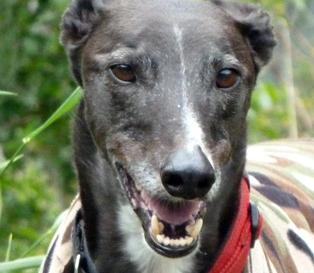
The Greyhound Protection League in New Zealand claims that there are over 10,000 greyhounds unaccounted for in the country at present, with a further one thousand unaccounted for annually. You can sign a petition that requests that the relevant Ministers use their statutory powers to conduct an independent investigation into New Zealand’s greyhound racing industry, and that this information be made publicly available.
By signing this petition, you ask for an independent investigation that makes public:
The number of greyhounds bred and imported annually for the racing industry
The number of greyhounds retired annually through the Greyhounds as Pets scheme, other agencies or privately*
The number of injuries which occur annually in all racing-related activities (such as training, trialing, and competing)
The number of greyhounds euthanased annually due to race-related injuries
The number of greyhounds euthanased annually for other reasons (and what these reasons are).
*Private rehoming can typically fall into two categories: household pets or breeding stock for pig hunting. As the welfare implications of greyhounds as pig hunting stock may be significantly different than those of a household pet, it would be prudent to define whether a “private adoption” is for the purpose of hunting stock or pet.
Here’s an example of democracy in action in the city of Nelson on the South Island of New Zealand.
The Council consulted on revisions to its dog bylaws and dog owners responded about the unnecessary restrictions.
On 3 May, the Council announced “Nelson City Council has responded to submissions on its Dog Control Policy and Bylaw Review by developing a new proposal based on feedback from submitters.”
Deputy Mayor Ali Boswijk said, “Ultimately, the dog bylaw we are proposing will take a default position where dogs can be off-leash everywhere, except areas which are identified as prohibited or on-lead.”
“Hindsight is a wonderful thing and perhaps we should have spent more time talking with the wider community before we drafted the original Statement of Proposal. This is a good learning for us and something we will take on board in future.”
The new summary of Council’s preferred direction for the Dog Control Policy and Bylaw:
Dogs to be prohibited from the part of Marsden Valley Reserve to the east of the Barnicoat Walkway
Retain Girlies Hole and Black Hole as swimming holes for dogs during summer (December to March) and allow dogs in all holes during the remainder of the year
Add Sand Island to the list of dog prohibited areas
Dogs to be prohibited from the Maitai Cricket Ground during the cricket season but they can exercise there from April to September.
The shared pathways (Railway Reserve and Atawhai Shared Pathway) will become off-leash areas
The Maitai Walkway to remain an off-leash area for dogs
Seventeen neighbourhood reserves will remain on-lead areas for dogs as requested by submitters
The Good Dog Owner Policy will be amended with input from the Dog Owner’s Group and other interested parties.
In addition, Council is looking at establishing a dedicated dog park at Saxton Field where dogs can exercise off-lead.
Well done to the Nelson City Council for recognising that its constituents wanted something else for dogs and their owners and well done to all who submitted on the dog control bylaw.
If you don’t participate in your local community to represent your interests and the interests of dog owners in general, be prepared for restrictions that will inhibit your ability to socialise your dog and enjoy their company in public places.
Perhaps a lesson for dog owners elsewhere in NZ and overseas?
Keeping with the theme of dog-friendly accommodation… If you are in New Zealand then you should check out the Pets Can Come Too website.
This website lists holiday homes where pets are allowed. The search function on the site is easy to use. You will need to read the fine print, however. For example, some properties only accept cats and others may require that your dog is crated when indoors.
If you own a holiday home and accept pets, then please do your part to grow this community-of-interest in New Zealand by registering your property. Heather at Pets Can Come Too says:
We offer all new advertisers six months free advertising after which it costs $95.00 p.a. however there is no obligation to continue advertising with us if you do not wish to do so.
Kathleen Crisley, specialist in dog massage, rehabilitation and nutrition/food therapy, The Balanced Dog, Christchurch, New Zealand









 DoggyMom.com